Beauty Kit Zipper Pouches Cost: Get a Custom Quote Today
Comparing beauty kit zipper pouches cost with rigid boxes, folding cartons, or tote-style gift packaging usually changes the conversation once the full packaging stack is laid out. A zipper pouch can look polished, travel easily, store flat, and cut shipping weight in ways that affect the budget from several directions at once. That matters for PR kits, subscription boxes, retail bundles, and sample sets, because packaging does more than contain product; it also shapes freight, storage, and the first impression a kit makes when it lands.
Most buyers start with the bag price, which is understandable, but that number only tells part of the story. The real beauty kit zipper pouches cost drivers are size, material structure, print coverage, zipper style, finish, and order quantity. A pouch that looks simple on a screen can get pricey once it needs heavy ink coverage, specialty lamination, a custom zipper color, or a low MOQ. The reverse happens too: a well-specified pouch can deliver a strong presentation at a lower landed cost than a more elaborate box set. That is the part people sometimes miss, and it can throw off planning if nobody does the math all the way through.
Why Beauty Kit Zipper Pouches Cost Less Than You Expect
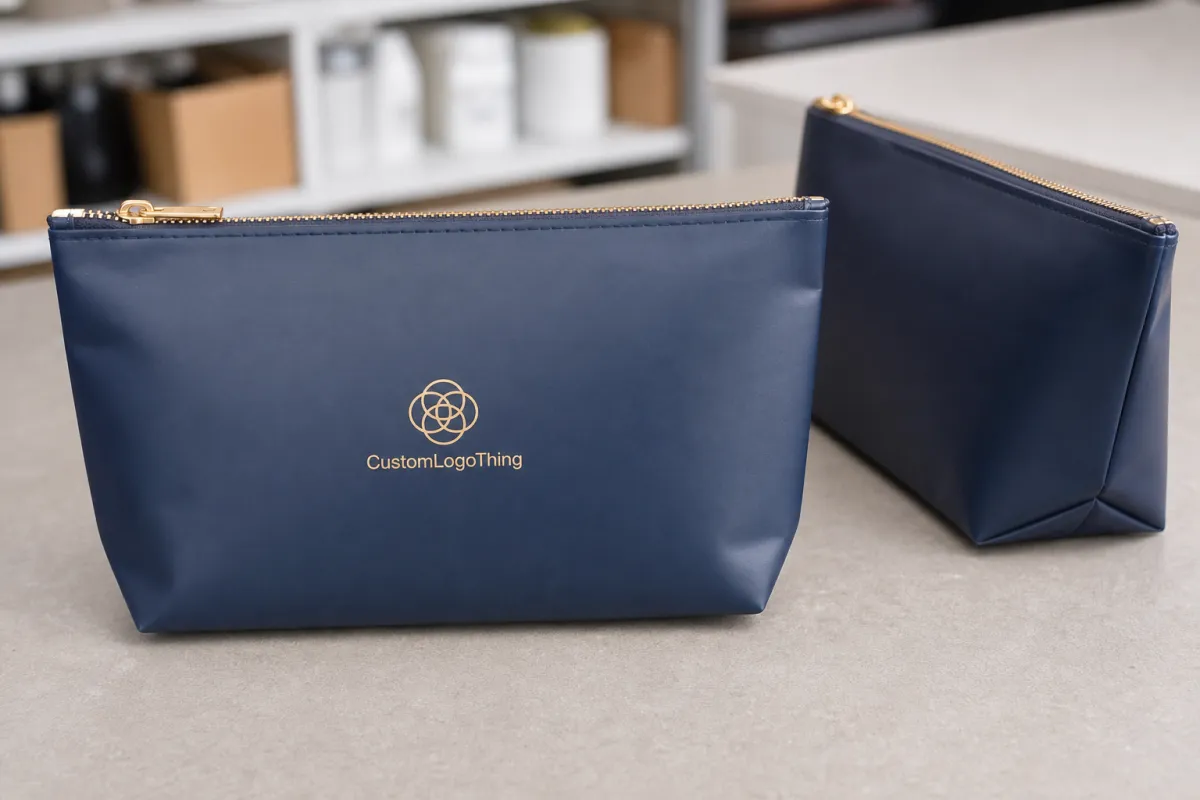
Beauty packaging has to carry a lot of weight. It needs to protect product, support the brand story, ship efficiently, and survive transit without creating headaches for the operations team. A zipper pouch often handles those jobs without the added weight and structure cost of a rigid carton. That is one reason beauty kit zipper pouches cost can come in lower than the combined expense of a box, insert, and outer mailer once freight is included.
The pouch itself is only one line in the budget. A rigid box may look tidy on a spreadsheet until assembly labor, dividers, void fill, and higher shipping charges are added in. A pouch usually ships flatter, uses less warehouse space, and lowers dimensional weight. In practice, those savings can matter more than a small unit-price gap. A difference of $0.08 per unit sounds meaningful until the box adds $0.22 in freight and handling. I have seen that kind of spread turn an apparently cheaper carton program into the more expensive option, and it happens more often than people expect.
That is why experienced buyers compare beauty kit zipper pouches cost on a landed basis rather than as a standalone factory price. A pouch used for a seasonal gift set can also make inventory planning easier. Flat-packed packaging is simpler to stage, easier to count, and less risky to store than assembled rigid packaging. For subscription programs, where every ounce carries a cost, that difference can decide whether a campaign stays healthy or quietly eats margin.
Another common assumption needs clearing up. Premium does not always mean expensive. A well-printed pouch with a matte finish, crisp zipper closure, and a clean window can look more polished than a poorly executed rigid box. Buyers often find that beauty kit zipper pouches cost less than expected because the visual impact comes from design discipline, not from piling on material. In other words, a clean spec does a lot of the heavy lifting.
Buyer reality: If the packaging will sit inside a PR kit, on a counter, or in an influencer box, perceived value matters more than the format alone. A pouch that feels intentional can outperform a heavier package that was simply harder to make.
Packaging selection is usually evaluated against broader performance expectations as well. Industry groups such as the Institute of Packaging Professionals and testing bodies like ISTA focus on fit-for-use, transport performance, and distribution realities. That is the right lens for beauty kits: not only “How much does it cost?” but also “What does it save, protect, and communicate?”
Beauty Kit Zipper Pouches Product Details That Matter
Before comparing beauty kit zipper pouches cost, define the product clearly. The word “pouch” covers a wide range of constructions, and each one behaves differently in production. A flat zipper pouch is usually the simplest option. It stores compactly, uses less film, and works well for sachets, minis, and sampling kits. A stand-up pouch uses a gusseted bottom for shelf presence and is often a better fit for retail display or a kit that needs to stand upright in photos.
Material choice shapes the customer experience. Opaque laminated film creates a polished, controlled look. Clear or translucent bodies reveal the contents and can reduce the need for separate labeling, yet they also expose product variation, which is not always welcome in cosmetic kits. Kraft-look laminate can support a natural or clean beauty message, while soft-touch or matte lamination creates a more tactile premium feel. The best choice depends on how the pouch will be handled and where it will be seen.
Functional details matter just as much. A pouch for makeup samples may only need light resealability. A pouch for skincare travel kits may need stronger leak resistance and better seal integrity. Buyers should also think about the zipper feel itself. A smooth closure can make a low-cost pouch feel more premium, while a stiff or misaligned zipper undermines the whole presentation. That is why beauty kit zipper pouches cost should always be read alongside functional requirements.
Common product formats include:
- Flat zipper pouches: simple, light, and efficient for internal bundling.
- Stand-up zipper pouches: better shelf presence and stronger display value.
- Window pouches: useful when contents should be visible without opening the kit.
- Fully opaque luxury pouches: preferred for a more curated, controlled reveal.
- Special finish pouches: matte, gloss, metallic, or soft-touch treatments that change the brand feel.
From a packaging buyer’s point of view, the key question is not whether the pouch looks good in a mockup. It is whether the pouch performs under normal use, supports the brand story, and keeps beauty kit zipper pouches cost inside the target margin. A pouch that feels flimsy or prints inconsistently may be cheap on paper and costly in brand damage. That tradeoff is real, and it is why sample approval matters so much.
Pay attention to the closure method as well. Standard zipper tracks, press-to-close zippers, child-resistant options, and slider styles all behave differently in production. Not every beauty kit needs a premium closure, but if the pouch is meant to be reused, displayed, or opened repeatedly during travel, closure quality should be part of the spec sheet from the start. Otherwise, the packaging may look fine on day one and feel kind of annoying in actual use, which is not where you want to be.
Specifications That Change Beauty Kit Zipper Pouches Cost
Once the format is defined, the specifications determine the real quote. This is where beauty kit zipper pouches cost can move more than buyers expect. A pouch that is 6 x 8 inches may price differently from a 5 x 7 inch pouch not only because of size, but because the material yield changes across a production run. Even a small dimensional shift can affect film waste, sealing efficiency, and packing speed.
Film thickness is another important variable. Many cosmetic pouches sit in the 80-120 micron range, depending on structure and intended use. Thicker film can improve feel and durability, though it also pushes beauty kit zipper pouches cost upward. Laminated structures, such as PET/PE or PET/CPP, offer different clarity, seal strength, and print performance. If you are comparing suppliers, ask for the exact material stack rather than a vague “premium plastic” or “laminated pouch” description. That detail alone can explain a quote difference.
Finish changes both appearance and cost. Gloss is often more economical than matte soft-touch, and metallic or specialty effects usually add more cost again. A clear window may save on print coverage but increase handling complexity depending on the size and placement. If the pouch requires edge-to-edge printing, white ink underlays, or multiple spot colors, expect the quote to rise. That is not a markup trick. It is a function of press time, setup charges, and inspection demands.
Artwork complexity deserves its own line in the estimate. A single-color logo on a solid background is simpler than a multi-SKU design with ingredient panels, brand marks, and variable language versions. Custom pouches can also incur tooling fees if a new zipper style, die line adjustment, or special feature is required. In many programs, the pouch price is manageable, but the packaging art system drives the total. That part can sneak up on teams that assume a clean mockup means a simple production job.
To make this more concrete, here is a practical comparison that buyers often find useful:
| Option | Typical Build | Approx. Unit Cost at 5,000 pcs | Best Use | Cost Notes |
|---|---|---|---|---|
| Flat zipper pouch | 80-100 micron PET/PE, one-color print | $0.18-$0.30 | Sampling, internal bundling | Often the lowest beauty kit zipper pouches cost option |
| Stand-up zipper pouch | 100-120 micron laminated film, full-color print | $0.28-$0.48 | Retail sets, PR kits | Higher material use and stronger shelf presence |
| Window pouch | Opaque body with clear panel and zipper | $0.30-$0.55 | Products meant to be partially visible | Window placement can affect scrap and labor |
| Premium soft-touch pouch | Matte laminate, edge-to-edge print | $0.38-$0.70 | Luxury beauty kits | Premium finish raises beauty kit zipper pouches cost but also perceived value |
These are directional ranges, not promises. Quantity, packaging size, zipper style, shipping destination, and artwork can change the number. Even so, the table shows why buyers should compare beauty kit zipper pouches cost by structure rather than by a generic quote line. A “cheap” quote may reflect a completely different build, and that can make budget comparisons look better than they really are.
Material sourcing can matter too, especially for brands that want sustainability credentials. FSC-certified paper components, recyclable laminations, or reduced-plastic structures can improve positioning, but they may also add cost depending on supply availability and certification requirements. If sustainability claims are part of the packaging brief, check documentation carefully and verify what is actually certified rather than merely recyclable in theory. For chain-of-custody and forest stewardship references, FSC is a useful starting point.
Beauty Kit Zipper Pouches Cost, MOQ, and Quote Factors
MOQ and unit price are tied together more tightly than many buyers expect. A low MOQ can help a launch, yet it often increases beauty kit zipper pouches cost because setup work is spread across fewer pieces. A larger order usually reduces cost per piece because tooling, prepress, and machine setup get absorbed over more units. That is basic manufacturing math, and it is why one quote can look better than another only if quantity is ignored.
The pricing formula usually includes five parts: material cost, production labor, setup charges, tooling fees where applicable, and freight. For printed pouches, the printing method can affect everything. Digital runs may suit lower quantities and frequent artwork changes. Gravure or flexographic production can make sense at higher volumes, though they may introduce plate or cylinder costs. If you do not ask where the fixed charges are hiding, it is easy to misread the quote.
Here is a useful way to think about the quote structure:
- Size and structure: larger or thicker pouches use more material.
- Print coverage: more ink and more passes increase cost.
- Finish: matte, soft-touch, or metallic details add labor and material steps.
- MOQ: smaller runs carry higher unit cost and sometimes higher setup charges.
- Shipping: freight can swing the landed price more than the pouch itself on smaller orders.
Buyers should also compare quotes by total commercial value, not just the lowest unit cost. A supplier offering lower beauty kit zipper pouches cost may be quoting a longer lead time, a thinner material, or a narrower proofing process. If freight is excluded or revisions cost extra, the final number may no longer be lower. Bulk pricing should be judged against the complete order scope, not a headline rate. That extra discipline pays off, because the cheapest quote on paper is not always the cheapest package in the warehouse.
In practice, the most useful comparison is often a three-tier request. Ask for pricing at 3,000, 5,000, and 10,000 pieces. That shows the break point where the unit cost begins to move meaningfully. It also clarifies whether a better MOQ creates enough savings to justify carrying more inventory. For seasonal beauty kits, that can be decisive.
Quote discipline matters: the best supplier is not always the lowest price. It is the one that gives you a clean spec, a realistic timeline, and no surprises once artwork is approved.
If your packaging has multiple SKUs, ask whether each version shares the same base structure. A shared base design with different artwork can reduce setup charges. Separate sizes, zipper colors, or window placements may introduce additional tooling fees. That is one reason beauty kit zipper pouches cost can climb quickly on a single campaign with many variants.
For buyers who want a better margin picture, the right question is simple: what is the cost per piece at the volume you can actually commit to? That answer is usually more useful than a low teaser quote that only applies after you cross a volume threshold you never intended to reach.
Process, Timeline, and Lead Time for Custom Orders
Clear process reduces risk, and it also protects beauty kit zipper pouches cost from creeping upward because of avoidable delays. A typical order starts with a quote request, then moves to dieline review, artwork submission, proof approval, production, inspection, and shipment. Each step has its own failure points: missing dimensions, unclear artwork resolution, or late revision requests. Those issues sound small, yet they create real schedule pressure and can make the whole job more expensive.
A realistic timeline depends on complexity. Simple custom pouches may move through production faster than highly finished luxury versions, while complex packaging with multiple print colors or special laminate effects may need more time. For many projects, 12-18 business days after proof approval is a reasonable production target, but that should never be assumed without confirming the supplier’s current schedule. Freight and inspection can add more time, especially for export shipments. If the launch date is fixed, build the buffer now instead of hoping the carton gods are feeling generous.
The proof stage deserves special attention. A good proof should show not just the graphic layout but also zipper placement, bleed, seam margins, and any clear-panel location. If the artwork is revised after proof approval, the order can slip. In some cases, late changes also affect beauty kit zipper pouches cost because the supplier may need to regenerate plates, reset machines, or recheck color matching. That is one of those annoying realities that sounds bureaucratic until it shows up on the invoice.
Here is a practical production sequence buyers can use to stay organized:
- Confirm pouch size, structure, zipper style, finish, and quantity.
- Send artwork with outlined fonts and print-ready dimensions.
- Review the digital proof and check panel orientation carefully.
- Approve samples or a pre-production proof before mass run.
- Book freight early if the launch date is fixed.
If you are planning a retail launch or influencer mailer, speed comes from decisiveness. Lock the quantity early. Decide whether a window is truly necessary. Confirm the finish before revisions start. Those decisions help the supplier quote more precisely and keep beauty kit zipper pouches cost stable. Buyers often lose time by asking for “a few options” when one clear spec would have been enough.
The strongest packaging orders are usually the least ambiguous. That is true across the industry, not just for beauty kits. Testing standards such as ISTA focus on distribution integrity because damage prevention is cheaper than replacement, and the same logic applies to pouch production. A supplier who understands transport, shelf use, and carton packing will usually give better guidance than one who only quotes the print side.
Why Choose Us for Beauty Kit Zipper Pouches
Custom Logo Things is a practical fit for brands that want packaging to do more than hold products. A strong packaging partner should translate the brand brief into production-ready specifications, not just send a generic pouch price. That distinction matters because the wrong material, zipper, or finish can make beauty kit zipper pouches cost look attractive at quote stage and disappointing after the sample arrives.
What should buyers expect from a serious supplier relationship? Clear communication, tight spec control, predictable timelines, and reliable print quality. Those are not luxury features. They are the basics. A pouch with good print alignment, consistent seals, and color that matches the brand standard is far easier to sell in a retail environment than a slightly cheaper pouch with visible inconsistencies.
From a procurement standpoint, supplier selection affects more than the unit price. It affects documentation, revision speed, quality inspection, and the ability to answer questions fast. If a buyer needs to compare beauty kit zipper pouches cost across multiple sizes or finishes, a supplier that can break down options clearly saves time and reduces mistakes. That becomes even more valuable when a project includes multiple fragrance, skincare, or makeup SKUs.
Marketplace sourcing can be tempting because it appears fast. The tradeoff is that you often get less visibility into material specs, weaker guidance on artwork setup, and more uncertainty around production consistency. A packaging-focused manufacturer can usually explain why a quote moved, where the setup charges sit, and which features are driving the price. That transparency makes it easier to protect margin and avoid the kind of surprise that only shows up after approval.
There is also a brand-side benefit that is easy to overlook. The pouch is part of the customer experience. The zipper feel, the crispness of the print, and the hand-feel of the finish all shape how a kit is judged. In beauty, perception is not soft data. It is conversion data. A pouch that feels intentional supports the product story, which helps justify the spend behind beauty kit zipper pouches cost.
Why this matters for buyers:
- Better spec guidance can reduce revisions and save time.
- Cleaner production control lowers the risk of inconsistent units.
- Transparent bulk pricing helps you choose the right quantity tier.
- Accurate proofing avoids costly delays and rework.
That combination is what most beauty buyers are really purchasing: not only a pouch, but a smoother order path and fewer surprises. If the supplier can deliver that, the quote is easier to justify even when it is not the absolute lowest number on paper. And honestly, that is usually the better place to land.
Next Steps to Lock in Beauty Kit Zipper Pouches Cost
To Get an Accurate Quote, start with the basics. Share the pouch size, target quantity, product type, print colors, finish, zipper preference, and delivery deadline. If you already have a dieline, send it. If not, send the product dimensions and the intended use. That is enough for a supplier to build a realistic first estimate and narrow down beauty kit zipper pouches cost without guessing.
Reference images help too. A simple mood board or rough layout can tell the supplier whether you want clean minimal branding, high-contrast retail graphics, or a more luxurious presentation. If the pouch must match existing packaging, include the brand colors and any prior print standards. The tighter the brief, the less chance of quote drift later. That matters especially for buyers comparing beauty kit zipper pouches cost across several vendors.
Use this checklist before requesting pricing:
- Dimensions: width, height, and gusset depth if needed.
- Quantity: one target and two backup tiers for comparison.
- Material preference: opaque, clear, matte, gloss, or soft-touch.
- Print details: logo only, full coverage, or variable artwork.
- Functional needs: resealability, leak resistance, window, or display use.
- Timeline: approval date, launch date, and shipping destination.
If you are still deciding between options, ask for quotes on more than one structure. For example, compare a flat pouch, a stand-up pouch, and a premium soft-touch version. That side-by-side view makes beauty kit zipper pouches cost much easier to evaluate because it exposes the tradeoff between appearance, function, and budget. Buyers often discover that a slightly upgraded format creates more brand value than expected, even if the sticker price rises a little.
Do not forget freight. A pouch quote that looks attractive can change once delivery is added. On smaller runs, shipping can be a meaningful share of the total. On larger runs, order weight and carton count become important. That is one reason landed cost is the best measure for planning a beauty kit, not just the factory price.
If you want the fastest path to a useful estimate, ask for a quote based on a clear spec sheet, a target launch date, and a quantity range. That gives the supplier enough information to price materials, setup charges, and production accurately. It also helps you compare beauty kit zipper pouches cost across alternatives without relying on incomplete numbers. A clean brief usually saves more money than haggling over the first quote.
Final takeaway: the right pouch should support the product, the presentation, and the budget in the same order. If your brief is clear, beauty kit zipper pouches cost becomes easier to control, easier to compare, and much easier to justify to the rest of the team. That is the practical place to start, and it is gonna save time later.
What affects beauty kit zipper pouches cost the most?
The biggest drivers are pouch size, material structure, print coverage, and order quantity. Special finishes, clear windows, and custom zipper colors can raise the unit price. Shipping and setup charges also matter, especially on smaller runs. If a quote seems unusually low, check whether it excludes one of those pieces.
Is there a low MOQ for beauty kit zipper pouches?
MOQ depends on the material and print method, but custom runs usually start higher than stock packaging. Higher quantities usually lower the unit cost and make premium finishes more affordable. Ask for pricing at two or three quantity tiers to find the best break point. That is usually the simplest way to see where the real savings begin.
How do I get an accurate quote for beauty kit zipper pouches?
Provide dimensions, quantity, artwork details, and the type of beauty products inside the pouch. Share your preferred finish, zipper style, and any window or reseal requirements. A clear delivery timeline helps the supplier quote both production and freight accurately. The more complete the brief, the less back-and-forth you will need later.
How long does production usually take for custom zipper pouches?
Lead time depends on artwork approval, material availability, and order size. Simple runs can move faster than highly customized packaging with multiple finishes. Build in time for proofing, because delayed approvals are one of the most common schedule risks. If the launch date is fixed, leave a buffer for freight too.
Are beauty kit zipper pouches better than boxes for retail sets?
Pouches are often lighter, easier to store, and less expensive to ship than rigid boxes. They can still look premium when the print, zipper, and finish are chosen well. Boxes may fit certain luxury presentations better, but pouches usually win on efficiency. For many beauty programs, that balance is exactly what keeps the budget on track.

