Fitness PVC Garment Bags Packaging Insert Checklist
Fitness PVC Garment Bags Packaging Insert Checklist
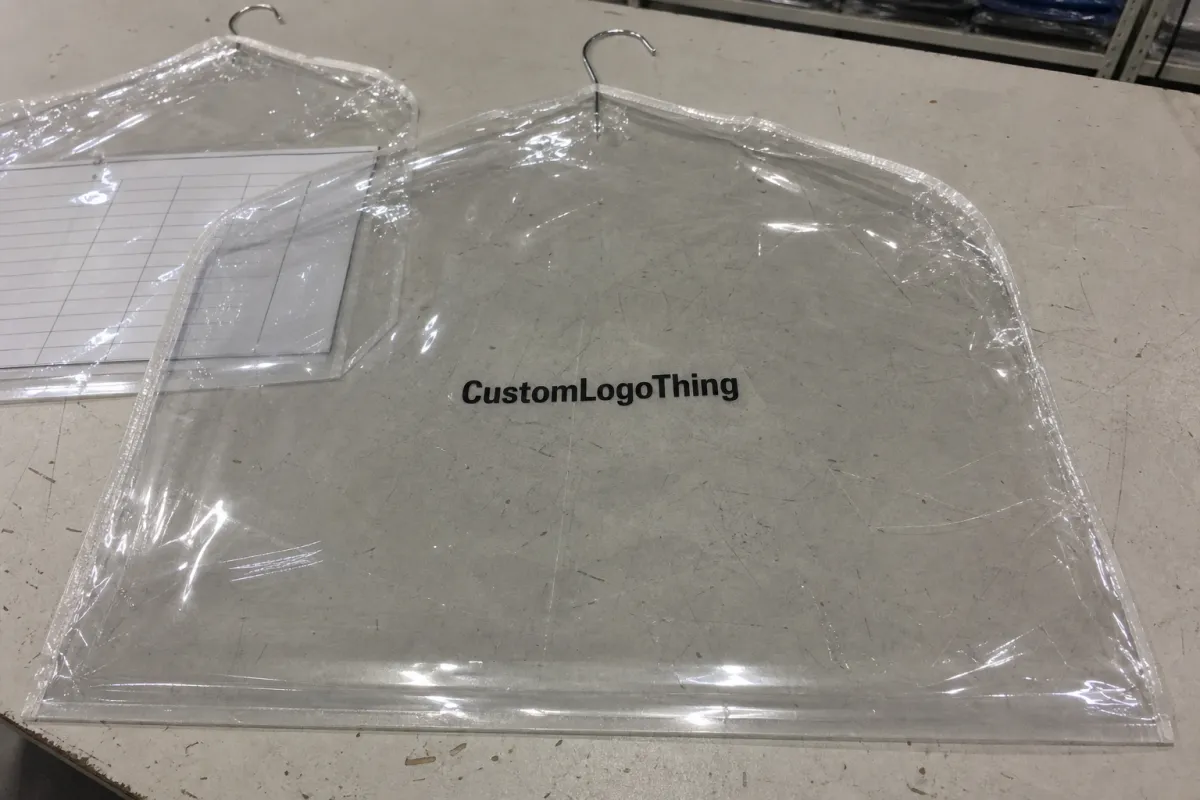
A PVC garment bag can look clean on a sample table and still fail once real apparel goes inside it. The insert card curls. The zipper slider drags across the printed logo. A folded pair of leggings creates a hard ridge during carton packing, and the flat, polished presentation shown in the mockup turns into a swollen pouch with pressure marks. That is why a fitness PVC Garment Bags packaging insert checklist is not administrative clutter; it is a practical control sheet for aligning bag size, PVC thickness, ventilation, print placement, insert structure, and packing method before sampling money and production time are committed.
For Custom Logo Things buyers, this package usually means a flexible clear, frosted, or lightly tinted PVC garment bag used for activewear, gym apparel, uniforms, retail sets, influencer kits, or membership welcome packs. Most versions include a zipper, snap, handle, hanger hole, gusset, or some combination of those features. Many also use a printed paperboard insert to keep the garment flat while carrying the brand message, SKU, barcode, size details, care notes, or kit contents.
Fitness apparel behaves differently from a folded cotton shirt. Stretch fabrics, elastane blends, moisture-wicking finishes, padded sports bras, compression shorts, socks, towels, and bundled accessory sets all create moving pressure points. A tidy stack at the design desk may gain 8 to 15 mm once operators fold at normal production speed, especially if the garment has pads, elastic waistbands, thick seams, attached tags, or accessories tucked into the pack.
The common mistake is treating the insert as decoration and the PVC bag as a simple pouch. In use, they function as one package. The insert controls shape and information. The bag controls visibility, protection, handling, and reuse. If one is specified without the other, small fit problems show up late, usually after artwork has been approved and the schedule has little room left for correction.
Packaging-floor rule: approve the bag with the real folded garment inside, not empty and not with a paper mockup. Empty samples hide most of the problems that appear during production packing.
How PVC Garment Bags and Inserts Work Together
The basic construction is straightforward: a PVC body, heat-sealed seams, a zipper or snap closure, a hanger hole or handle if the product needs to hang, printed branding, and a paperboard or art-card insert. If the apparel set is thick, a bottom or side gusset may be added so the bag can expand in a controlled way rather than rounding out like a pillow.
PVC is flexible, transparent or tinted, heat-sealable, printable, and more structured than thin LDPE or OPP film. Common garment bag gauges often sit around 0.12 mm to 0.30 mm, though the right choice depends on bag size, garment weight, seam design, and the level of reuse expected. A lighter gauge reduces cost and carton weight. A heavier gauge gives the package more body, but it also increases freight weight and may require more attention to seam strength.
The insert does far more than fill blank space. It supports the folded garment, reduces sagging, creates a consistent front face for photography or shelf display, gives packers a placement guide, and provides a flat area for barcode, care, size, membership, or promotional messaging. For retail presentation, that stable front panel can be the difference between a premium-looking activewear kit and a soft bundle that wrinkles under store lighting.
Common insert materials include SBS paperboard, coated card, recycled board, kraft board, and laminated cards. A typical insert might use 300gsm to 400gsm board, while larger bags or heavier sets may need 500gsm or a mounted construction. The choice depends on stiffness, ink coverage, sustainability goals, budget, and whether the board touches white, cream, or pastel fabric. If the insert will sit directly against fabric, ask about ink rub resistance and coating transfer before approving production.
Closures change both the cost and the feel of the package. Zipper sliders create a reusable, more finished impression, yet they add assembly time and can become a scratch point if the slider passes over printed artwork. Snaps are low-profile and simple, but they may pop open if the folded stack is too thick. Adhesive flaps are less common on reusable garment bags because lint and repeated opening reduce tack. None of these options is automatically superior; the right one matches the garment, the expected handling, and the packing routine.
If the garment bag will sit inside mailer kits, outer cartons, or other Custom Packaging Products, treat the bag-and-insert set as the inner presentation layer. A custom printed box can protect and elevate the kit, but the PVC bag still needs to hold its shape once the customer removes it from the shipper.
Key Specs to Confirm Before Sampling
Start with the folded garment stack, not the flat clothing dimensions. Fold the item exactly as it will be packed, including pads, tags, socks, bands, instruction cards, or accessories. Measure width, height, and stack depth with light hand pressure, then add controlled clearance for seam tolerance, zipper travel, insert thickness, and normal operator variation. For many activewear packs, 5 to 10 mm of extra width and height is safer than a bag that must be forced closed.
PVC thickness should be stated in numbers, not vague words such as “standard” or “premium.” Slim compression shorts or a single sports top may work in a lighter gauge. A hoodie, jacket, yoga set, or multi-piece kit usually needs more body so the bag does not sag or crease around the zipper. Ask the supplier what tolerance applies to the film, because a nominal 0.20 mm material can vary slightly across rolls.
Gussets are useful, but they are not free. A side or bottom gusset helps the bag sit cleaner around bundled apparel, especially sets over roughly 25 to 35 mm deep, but it changes the die setup, heat-seal path, folded profile, and sometimes the insert design. A flat insert in a gusseted bag can still buckle if the board is too narrow or if the garment presses from the center outward.
Print specifications need the same discipline. Confirm color count, print method, logo position, opacity, registration tolerance, and whether artwork crosses seams, zipper tracks, or fold zones. Screen printing works well for simple solid logos on many PVC bags. Heat transfer or digital methods may suit more detailed branding, though heavy ink coverage on flexible clear material can scuff, crack, or look uneven after repeated bending.
Ventilation is a small detail with a large effect on packing speed. Small vent holes can release trapped air during filling and carton compression, helping prevent the balloon effect that slows line work and strains seams. Also smell the sample. PVC can carry a material odor depending on formulation and storage, and clean performance fabrics should not arrive smelling like plastic. A 24 to 48 hour packed test gives a better read than opening a fresh sample for a few seconds.
Insert details deserve their own line on the fitness PVC Garment Bags Packaging Insert checklist: board thickness, corner radius, grain direction, coating, ink rub resistance, barcode placement, hang tag alignment, and any notch, slot, score, or fold line. Grain direction is easy to overlook, yet it can influence curling, especially on cards with heavy ink on one side.
- Bag size: finished inner dimensions plus practical clearance, not only outside dimensions.
- PVC gauge: matched to garment weight, reuse expectation, and bag size.
- Print area: kept away from friction points, seams, and zipper travel.
- Insert board: tested for stiffness, curl, ink rub, and fabric contact.
- Packing method: checked with the real fold, real accessories, and final carton layout.
Build a one-page approval sheet with every measurable spec in one place. A sample should not pass because it “looks nice.” It should be checked against dimensions, color callouts, closure function, barcode scan, insert flatness, and packed presentation after handling.
Cost, MOQ, and Unit Cost Drivers for Custom PVC Bags
Unit cost is not only the price of plastic. It reflects PVC gauge, bag dimensions, closure hardware, print method, insert board, insert print coverage, packing labor, carton count, and whether screens, dies, or special tooling are required. A clear PVC bag with one-color branding and a flat insert has a very different cost structure from a frosted gusseted bag with a custom zipper pull, full-color insert, foil detail, and individual carton packing.
Size has a larger cost impact than many buyers expect. Add 20 mm to the width and 20 mm to the height across 10,000 pieces, and the extra film usage becomes visible in the quote. An oversized insert can also push the printer onto a larger parent sheet, increasing paper waste. That may only change the unit cost by a few cents, but repeat retail programs are often built on those cents.
Custom PVC Garment Bags usually require minimum production quantities because roll material, cutting, sealing, printing, and insert printing need efficient run sizes. Lower quantities may be possible for simple constructions, but the unit cost rises because setup time is spread across fewer units. For planning purposes, buyers may see custom runs discussed in the 500 to 5,000 piece range for smaller projects, with higher MOQs for fully customized material color, tint, hardware, or specialty print work. Exact numbers depend on the supplier and specification.
| Choice | Typical Cost Effect | Practical Buyer Note |
|---|---|---|
| Clear PVC, one-color logo, flat insert | Lower to moderate | Often the most efficient route for branded packaging with strong product visibility. |
| Frosted or tinted PVC | Moderate to higher | Stock colors help control cost; custom tint may add MOQ and material lead time. |
| Zipper closure | Moderate increase | Gives a reusable feel, but the slider path must be tested against print and garment thickness. |
| Gusseted construction | Moderate increase | Better for bulky sets, with added sealing and packing considerations. |
| Laminated or die-cut insert | Higher | Useful for premium presentation, while flat cards remain more economical. |
As a broad working range, a custom PVC garment bag with a basic printed insert might land around $0.35 to $1.20 per unit at mid-level quantities, depending heavily on size, thickness, closure, print, and packing. Larger premium reusable bags can cost more. Simple inserts alone might range from about $0.08 to $0.35 each at practical quantities, while soft-touch lamination, foil stamping, spot UV, or multi-panel folding can push that higher.
Freight and carton efficiency belong in the same calculation. Heavier PVC gauges, rigid inserts, and bulky gusseted bags may look excellent, but they can increase shipping weight, warehouse space, and downstream handling. If the garment bag will sit inside Custom Packaging Products such as mailer boxes or launch kits, confirm the finished packed dimensions early so the outer packaging does not need to be resized after approval.
For an accurate quote, send target quantity, bag dimensions, PVC thickness, closure type, artwork files, insert size, board preference, packing method, delivery location, and required in-hands date. If the garment is available, send a packed photo with a ruler from the front and side. For tight fits, padded sports bras, thick waistbands, or multi-item kits, a physical garment sample is far more useful than a measurement list alone.
Process and Lead Time From Artwork to Packed Bags
A clean production path usually runs in stages: confirm specifications, prepare dielines or templates, review artwork, produce a pre-production sample or proof, approve materials and colors, manufacture bags and inserts, complete quality control, then pack and ship. Rushing one of those steps usually moves the problem downstream instead of removing it.
Artwork review is more than spelling and logo size. The manufacturer should verify bleed, safe zones, barcode size, ink coverage, color callouts, logo placement, and whether printed areas cross seams, folds, or zipper movement. For PVC printing, ask how close artwork can safely sit to the seal edge. A logo placed 3 mm from a welded seam may look balanced on a PDF and still become risky once production tolerance is included.
A physical sample remains the strongest approval tool. It lets the buyer judge PVC hand-feel, zipper movement, insert stiffness, garment fit, fold presentation, and how the final pack looks under warehouse, retail, or photography lighting. Color can shift on clear or frosted materials, so compare the bag over the actual garment color rather than only on a white desk.
Timelines stretch for predictable reasons: late artwork, unclear measurements, changes after sampling, custom material colors, special hardware, insert die-cuts, holiday congestion, or slow internal approval loops. A simple custom run may move in roughly 12 to 20 business days after final proof or sample approval. More complex constructions, custom colors, larger quantities, or special inserts can take longer. Shipping may add a few days or several weeks depending on destination and freight method.
Speed improves when the variables are controlled early. Choose a standard size if it fits, keep print colors disciplined, use available zipper or snap options, finalize insert copy before sampling, and provide garment samples before the first sample is made. A shared checklist also helps design, purchasing, fulfillment, and the supplier work from the same facts rather than scattered email notes.
Build the schedule backward from the launch date. Include internal review, sample transit, revisions, production, freight, receiving inspection, and any kit assembly or carton packing. Ask the supplier when the clock starts. Some count lead time from deposit, others from artwork approval, sample approval, or material arrival. That difference matters if the packaging supports a product drop, retail delivery window, or influencer mailing date.
For broader testing discipline, many packaging teams reference transit standards from groups such as ISTA, especially if the garment bags are part of a larger e-commerce shipper or retail master carton program. A full lab protocol is not always needed for an inner bag, but the mindset is valuable: test the package as it will actually travel.
Common Mistakes That Make Fitness Packaging Look Cheap
The most common mistake is choosing the bag size from garment dimensions alone. A flat top may measure one size, but the finished folded set can bulge at the waistband, bend the insert, or push against the zipper when packed at production speed. Measure the stack, then test it again after the pack has been compressed in a carton for a day.
Overprinting on clear PVC is another easy way to weaken the presentation. Large solid logos, dense ink panels, or heavy full-coverage artwork can scratch, block garment visibility, or look uneven as the bag flexes. PVC is not flat paper. Good packaging design respects the material, uses clear space, and places the logo where fingers, zipper sliders, and carton pressure will not wear it down.
Insert curling is a quiet presentation killer. Thin board, poor grain direction, heavy ink on one side, or high humidity can cause the insert to bow, especially with compression apparel packed tightly against it. If the insert curls forward, the bag face looks cheap. If it curls backward, the garment can look lumpy. A 24 to 48 hour packed test under normal storage conditions reveals problems that an empty sample cannot show.
Zipper and seam tolerances deserve respect. A few millimeters can matter when the folded stack is firm. Tight packs put more stress on welded seams, zipper ends, snap points, and handle cutouts. Ask the manufacturer for expected dimensional tolerance and avoid designing a bag that only works if every piece is perfect.
Fabric transfer and marking need practical testing, especially on light colors. Dark inserts, fresh ink, rough card edges, or certain coatings can rub against white leggings, pale sports bras, or cream-colored tops. If the insert touches fabric, request a rub test, check after pressure packing, and consider rounded corners or a cleaner coating choice.
Barcode and compliance planning can slow fulfillment if handled late. Buyers sometimes place SKU labels where the bag wrinkles, the insert slides, or the scanner has to fight glare from glossy PVC. Keep barcodes flat, visible, and sized for the scanning distance. For environmental claims or recycling language, be specific; the EPA recycling resources are a useful starting point for general packaging language, although local rules and material streams vary.
Do not approve samples empty. A bag that looks crisp with only an insert can behave completely differently once leggings, tops, socks, resistance bands, cards, or accessories are packed inside. The best approval sample has been filled, opened, closed, stacked, handled, and photographed before the decision is made.
Next Steps Before You Request a Quote
Before requesting pricing, fold the actual garment exactly the way it will ship. Measure width, height, and stack depth. Photograph the pack from the front and side with a ruler visible. Note whether the finished bag needs to hang, stack, ship flat, fit inside a kit box, or sit in a retail bin. These practical details shape the specification more than a polished reference image.
Prepare a simple spec packet. Include bag dimensions, target PVC thickness, clear or frosted finish, closure type, handle or hanger details, print colors, insert dimensions, board preference, quantity, delivery deadline, and carton packing needs. If sustainability is part of the brief, define it in measurable terms: recycled board insert, FSC-certified paperboard, reduced plastic gauge, reusable construction, or fewer secondary packing materials. For paper sourcing, FSC certification may be relevant to the insert or outer carton, depending on your goals.
Send real artwork files, not screenshots. Vector logos, Pantone or CMYK references, barcode files, care copy, recycling language, size tables, and retail partner rules should be included early. If you are building a broader launch kit with Custom Packaging Products, keep the inner bag, insert, outer box, and fulfillment label plan connected from the beginning.
- Test how easily the garment slides in without folded corners or scuffed print.
- Leave the packed sample closed for 24 to 48 hours and check insert flatness.
- Open and close the zipper or snap repeatedly, at least 10 to 20 cycles for a basic feel check.
- Scan the barcode through the bag under the lighting used by your warehouse or retail partner.
- Place packed samples in the intended carton and check pressure marks after stacking.
Ask focused manufacturer questions: What tolerance should be allowed? Which PVC gauge fits this garment weight? Will the insert curl? What setup costs apply? Which changes would reduce unit cost without weakening the presentation? A capable supplier should explain the trade-offs plainly, including where a cheaper option is acceptable and where it creates risk.
The strongest packaging buyers are rarely the ones who ask for the fanciest bag. They are the ones who control the variables early. A fitness PVC Garment Bags Packaging Insert checklist works best as a shared production document between purchasing, design, fulfillment, and the bag manufacturer, because that is how a good-looking sample becomes repeatable retail packaging.
FAQs
What should be included in a fitness PVC garment bag packaging checklist?
Include folded garment measurements, bag size, PVC thickness, finish, closure type, print method, logo placement, insert size, board thickness, barcode location, quantity, packing method, carton requirements, and target delivery date. Add notes about fabric color, garment stack depth, and whether the finished package must hang, stack, ship flat, or fit inside a larger kit box.
How thick should PVC garment bags be for fitness apparel?
The right thickness depends on garment weight, reuse expectations, and package size. Lighter PVC can work for slim items, while heavier gauges are better for sets, hoodies, jackets, or premium reusable bags. Always test thickness with the actual folded garment and insert, because stiffness, seam strength, and zipper feel are easier to judge in a packed sample than on a material swatch.
Do PVC garment bags need a printed insert for activewear packaging?
Not always, but an insert helps the package keep its shape, improves front-facing presentation, creates room for branding and product information, and makes barcode placement more reliable. For soft stretch garments, the insert often prevents the bag from looking saggy or uneven, especially when products are stacked, photographed, or handled in fulfillment.
What affects the cost of custom PVC garment bags with inserts?
Major cost drivers include bag size, PVC gauge, closure type, print colors, print coverage, insert board grade, insert printing, die-cutting, order quantity, packing labor, and freight volume. A manufacturer can usually quote more accurately when you provide exact dimensions, artwork, quantity, insert requirements, and the actual garment or detailed folded measurements.
How long does production take for fitness PVC garment bags packaging?
Production timing depends on artwork readiness, sampling requirements, material availability, print complexity, insert construction, order quantity, QC steps, and shipping method. To reduce avoidable delays, finalize artwork early, approve physical samples with the real garment inside, and confirm whether lead time begins at deposit, artwork approval, or sample approval.

