Beauty ribbon handle paper bags Unit Cost Review sounds narrow, but it usually determines the rest of the packaging decision. Buyers want a carrier that feels giftable, survives transit, and does not drift into rigid-box pricing. That balance depends less on the handle alone than on the full build: paper, reinforcement, print, packing, and freight.
The common mistake is overbuying finish and underbuying structure. A bag can look premium on a spec sheet and still fail in use if the stock is too light, the handle attachment is weak, or the bottom cannot carry the real load. The useful question is not just what the bag costs, but what it costs landed, approved, and repeated at scale.
Why Ribbon Handles Change the Shelf Signal Fast
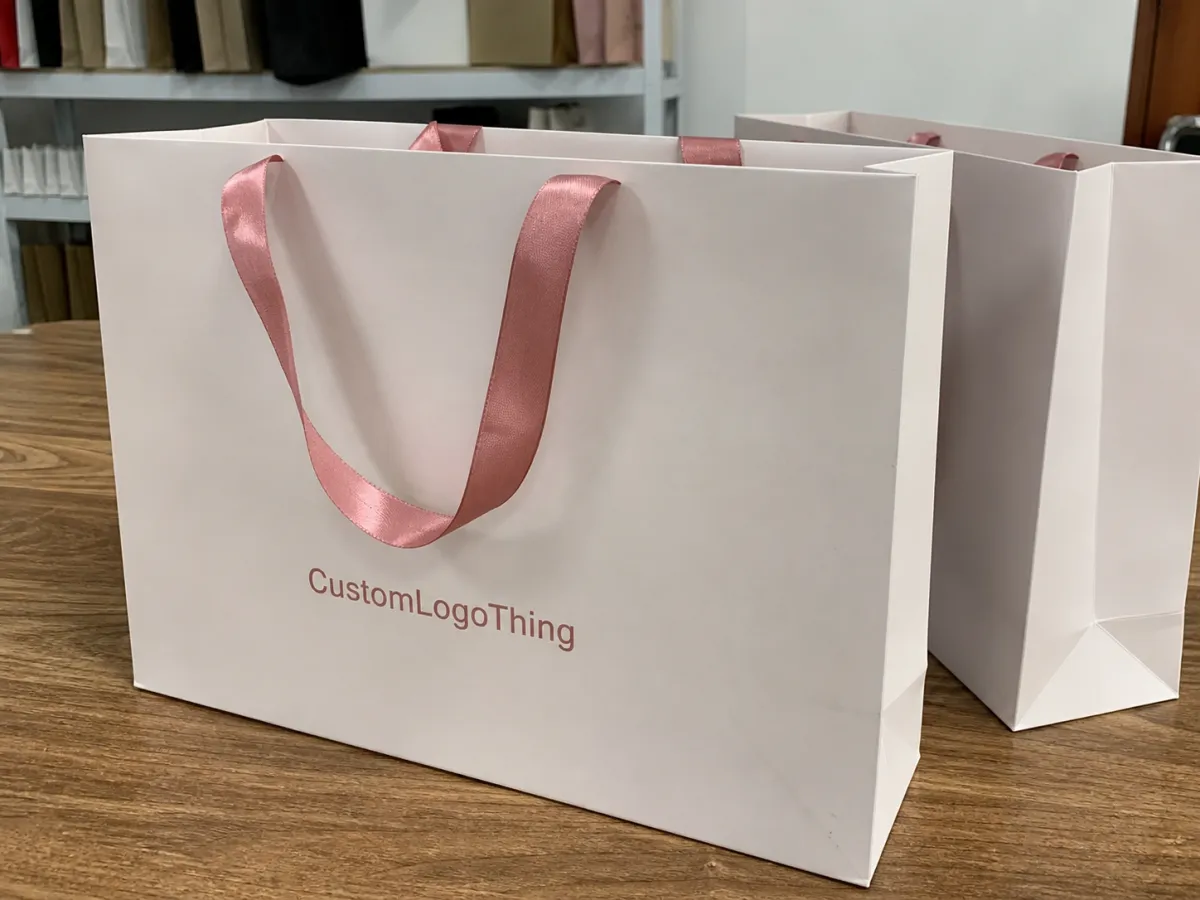
A ribbon handle changes the category signal immediately. Twisted paper handles read functional. Ribbon handles read intentional, which matters in beauty packaging because the bag is often part of the perceived product value before the customer opens it.
That shift is practical, not decorative. Ribbon handles usually make a bag feel more like a gift carrier than a shopping bag, which works for counter sales, press kits, seasonal sets, and limited-edition bundles. The added material cost is often modest, but the perceived upgrade is large enough to justify the format for the right SKU.
Handle choice also affects comfort and load behavior. Satin feels softer and more gift-like. Grosgrain has more texture and grip, and it tends to hold its shape better. Neither is automatically right. The choice should follow the brand position and the weight distribution of the product inside the bag.
Buyer reality: a ribbon handle can lift perceived value more than the price delta suggests, but only when the stock, reinforcement, and carry comfort support the rest of the package.
For heavier or awkward contents, the handle and the base need to be designed together. A polished exterior with weak seams or a light bottom board creates a failure that shows up after production, not during quote review. That is where money is lost.
Paper Stock, Handle Build, and Print Choices
Paper stock sets the first impression. Kraft paper gives a natural, muted look that fits clean beauty, apothecary styling, and earthy palettes. Coated art paper gives sharper print reproduction and a more polished retail finish, which is usually better for bright cosmetic campaigns and fashion-led brands. Specialty stocks can look strong, but they increase cost quickly and do not always improve durability.
Most ribbon-handle bags for beauty land between 180gsm and 250gsm. That range covers lighter promotional bags through more serious gift packaging. Once the contents get heavier or the shape becomes less compact, a reinforced bottom or board insert becomes worth the added cost. A premium finish does not compensate for a weak structure.
The handle build needs equal attention. Wider ribbon, often around 20mm to 25mm, usually feels more substantial than a narrow strip. Satin gives a smoother gift-bag effect; grosgrain adds texture and a more restrained look. The attachment method matters too, because a knot, rivet, or internal tie that looks sloppy will be noticed immediately.
Printing and finishing affect both price and shelf impact:
- Spot color printing suits logos, limited palettes, and lower coverage.
- Full-bleed printing suits campaign graphics but adds ink use and proof sensitivity.
- Foil stamping creates contrast and works well on restrained layouts.
- Embossing adds tactile value when the artwork stays simple.
- Matte or gloss lamination changes scuff resistance, color depth, and hand feel.
Not every upgrade earns its keep. A small foil mark or a clean single-color layout often does more for perceived value than a crowded combination of finishes. Heavy decoration can slow production, increase proofing time, and add freight weight without improving the buyer decision.
If sustainability is part of the brief, FSC certification is a common paper reference point. For transit performance, many teams ask for pack-out and compression checks that mirror ISTA-style thinking, especially when bags ship inside outer cartons with mixed items.
Sizing, Load Rating, and Beauty-Category Specs
Size has to be locked before pricing is meaningful. Width, gusset, height, and handle drop all affect material usage, carton efficiency, and the finished price. A bag for a lipstick trio is not the same structure as a bag for a fragrance set with a secondary carton, even if the artwork is identical.
Handle drop is one of the easiest details to get wrong. Too short, and the bag feels awkward to carry. Too long, and the bag hangs low and loses its premium profile. The correct drop should be checked against the finished pack, not estimated from a drawing or reused from a previous project.
Load rating matters just as much. A visually clean bag can still fail if the base is weak, the side seams are thin, or the stock is too light for the real contents. Glass bottles, pump packs, and boxed sets all behave differently. For hard-edged or top-heavy products, a board insert and stronger bottom construction are usually low-cost insurance.
Beauty buyers also need to think about shelf and counter behavior. A bag that stands upright is easier to pack, easier to present, and more durable in day-to-day store use. One that twists or bows at the panel looks tired before it is even handed to a customer.
A usable spec sheet should cover the essentials plainly:
- Finished size and allowed variance
- Paper type and gsm
- Handle material, width, and attachment method
- Print colors, coverage, and finish
- Base reinforcement or board insert
- Packing method and carton count
That list prevents the common failure mode where design, procurement, and production each assume a different version of the same bag. The cost of an assumption is usually higher than the cost of clarifying it early.
Pricing, MOQ, and Unit Cost Tradeoffs for Bulk Orders
The first quote rarely tells the whole story. Paper grade, size, ribbon type, print coverage, and finishing all move the number. MOQ changes it again. Setup charges, plate costs, sample fees, and freight can matter as much as the unit price when the order is still in the planning stage.
Heavier stock costs more. More colors cost more. Foil, embossing, lamination, and specialty ribbon handles add labor and material cost. If a supplier shows only one number, the comparison is incomplete because fixed charges may be hidden elsewhere in the proposal.
| Option | Typical Build | MOQ | Indicative Cost per Piece | Best Fit |
|---|---|---|---|---|
| Value build | 180gsm kraft, 1-color print, 20mm satin ribbon, no lamination | 3,000-5,000 | $0.22-$0.38 | Promotions, sample sets, entry-level gifting |
| Mid-premium build | 250gsm coated paper, 4-color print, matte lamination, reinforced base | 5,000 | $0.35-$0.58 | Retail beauty launches, seasonal bundles |
| Premium build | Specialty paper, foil or embossing, grosgrain ribbon, board insert | 5,000-10,000 | $0.60-$1.10 | Hero SKUs, press kits, luxury gift programs |
Use these ranges carefully. Small bags with simple printing can land below them. Large bags with heavy coverage, special finishes, or tight tolerances can go above them quickly. Freight also changes the final number more than many buyers expect because larger bags consume carton volume quickly.
A low quote can hide the real cost. One supplier may be using thinner stock. Another may skip reinforcement. A third may price the bag competitively and recover margin in freight or tooling. The useful number is landed cost: production, setup, sample rounds, and shipping together.
- Sample fees confirm structure before mass production.
- Tooling fees apply when custom dies, plates, or handle work are needed.
- Setup charges affect the first run more than the reprint.
- Carton packing affects how safely the bags travel.
- Transit costs often decide which quote is actually cheaper.
MOQ changes the economics quickly. A 3,000-piece order carries more fixed cost per unit than a 10,000-piece run, even if the spec is unchanged. Buyers often save more by consolidating campaigns than by trimming a single finishing step. It is worth asking for the next pricing tier, because the jump can reveal the real breakpoint.
Production Process and Lead Time From Proof to Delivery
A normal production flow runs through RFQ, dieline confirmation, artwork proofing, sample approval, production, inspection, and shipment. Most delays come from missing information or late changes, not from the factory being slow.
Lead time should be treated realistically. A complete proof can often return in 2 to 4 business days. A physical sample may take 5 to 8 business days depending on finish and handle structure. Bulk production after approval often runs 12 to 18 business days, with transit added on top. Complex finishes, holiday demand, or multiple revision rounds can push the schedule longer.
Rush freight can save a deadline, but it usually raises total cost enough to erase part of the packaging savings. The better move is to finalize the spec early. Vector artwork, Pantone references, and a clear answer on size, quantity, and packing method keep the schedule moving.
Some steps can happen in parallel. Artwork can be finalized while the sample is being built. Carton planning can be reviewed while the sample is in transit. Inspection standards can be agreed before production begins. That prevents the late-stage problem where everyone discovers they were working from a different assumption.
For e-commerce beauty packaging, the outer shipper matters too. Bags often fail in transit because of compression, corner crush, or surface rubbing inside the carton. If a supplier can talk clearly about pack-out and handling, that is a better sign than vague claims about durability.
How We Keep Repeat Orders Consistent Across Reprints
Repeat orders are where packaging either becomes dependable or starts creating new work. A reorder should not feel like a fresh experiment. The best control points are saved specs, approved artwork files, reference samples, and color targets that survive staff turnover.
Material variation is normal. Paper lots differ, white stock can shift slightly, and coated surfaces can take ink differently from one batch to the next. That does not automatically mean something went wrong. It means the supplier needs a comparison process instead of relying on memory.
For color-critical work, a Delta E target helps, but only if it is tied to the chosen stock and print method. A number that works on coated paper may be unrealistic on kraft. Honest limits are better than vague promises, especially when the same bag needs to appear consistent across stores, seasons, or subscriptions.
Quality checks should cover print alignment, handle security, glue strength, bottom integrity, carton count, and surface defects before shipment leaves. That is not overcautious. It is what keeps a reprint from becoming a complaint round.
How to Request a Quote, Sample, and Final Spec Check
The best quote request gives a supplier enough detail to price the real job. Send finished size, quantity, paper preference, handle style, print coverage, and target delivery date. If there are storage or shipping constraints, include those too, because carton efficiency can change the freight cost.
Ask for a unit-cost breakdown rather than a single number. You want to know what changes with MOQ, with finishing, and with shipping. If sample fees or tooling fees apply, keep them separate from production unit cost so the comparison stays clean.
A physical sample is worth the time when the bag needs to hold its shape on a counter, carry glass bottles or boxed sets, match a strict color system, or feel premium enough for gifting or press use. Before production starts, do a final spec check on the dieline, handle drop, paper weight, finish, and packing method. Also confirm the approved artwork by file name.
The strongest beauty ribbon handle paper Bags Unit Cost Review is not the one that finds the lowest number. It is the one that connects structure, finish, volume, inspection, and delivery into one workable decision. If the bag fits the product, survives the route, and supports the shelf price, the cost is doing its job.
FAQ
What affects the unit cost of beauty ribbon handle paper bags most?
Paper grade, size, and print coverage usually drive the biggest changes. Ribbon type, reinforcement, and finishing add more cost as the build gets more complex. MOQ matters too because fixed charges are spread across fewer or more units depending on order size.
What MOQ is typical for custom ribbon-handle paper bags?
MOQ depends on print method, stock choice, and whether the bag uses special finishes or custom handle work. Simple builds often support lower minimums than premium versions. It helps to ask for the next pricing tier as well, since the jump can change the economics more than the first quote suggests.
How do foil, embossing, and lamination change the quote?
Each finish adds setup work and material cost. Foil and embossing usually increase perceived value faster than a plain color change, but they also slow production and increase proofing scrutiny. Lamination can improve surface protection, although it changes the feel and can complicate recycling claims.
How long does production usually take after approval?
Standard jobs often need 12 to 18 business days after approval, plus transit. Samples and proofing take extra time before that. Complex finishes, busy seasonal periods, or multiple revision rounds can extend the schedule further.
What details should I send for an accurate quote?
Send finished size, quantity, paper preference, handle style, and print coverage. Include your target delivery date and whether you need a sample first. Artwork files or a logo file help the supplier price the actual build instead of guessing.

