trade show PVC Garment Bags unit cost review sounds dry until a bag fails under pressure. Then it is suddenly the most expensive “cheap” item in the booth. If the zipper sticks, the film clouds up, or the garment shifts into a wrinkle ball during transit, the sample does not look premium anymore. It looks rushed.
That is why buyers need to review unit cost and construction together. A clear PVC garment bag has one job: protect the sample and keep it presentable from packing to display. It should also make the booth team faster, not slower. If the bag adds friction every time someone opens, hangs, or repacks it, the price was never the real problem. The spec was.
Trade show packaging gets judged in brutal conditions. Bright lights show every scuff. Staff open and close the same piece repeatedly. Freight crews handle the cartons like they are all the same. The bag needs enough clarity for presentation, enough strength for the trip, and enough consistency for reorders. That balance is where the real buying decision lives.
Clear PVC is popular for a reason. Buyers can see the product without removing it, which helps during line reviews, sales meetings, and booth traffic. The garment stays visible, but it is still protected from dust, light handling, and the usual transit abuse. For many teams, that combination beats boxes, soft covers, and plain poly sleeves. Each of those options has a place. None of them do quite the same job.
One more thing: unit cost is not a single number. It is a stack of decisions hiding behind one line on a quote. Size, film thickness, zipper style, print method, reinforcement, packaging, and freight all move the final figure. If those variables are not pinned down early, the comparison is fake.
Why Clear PVC Garment Bags Win at Trade Shows
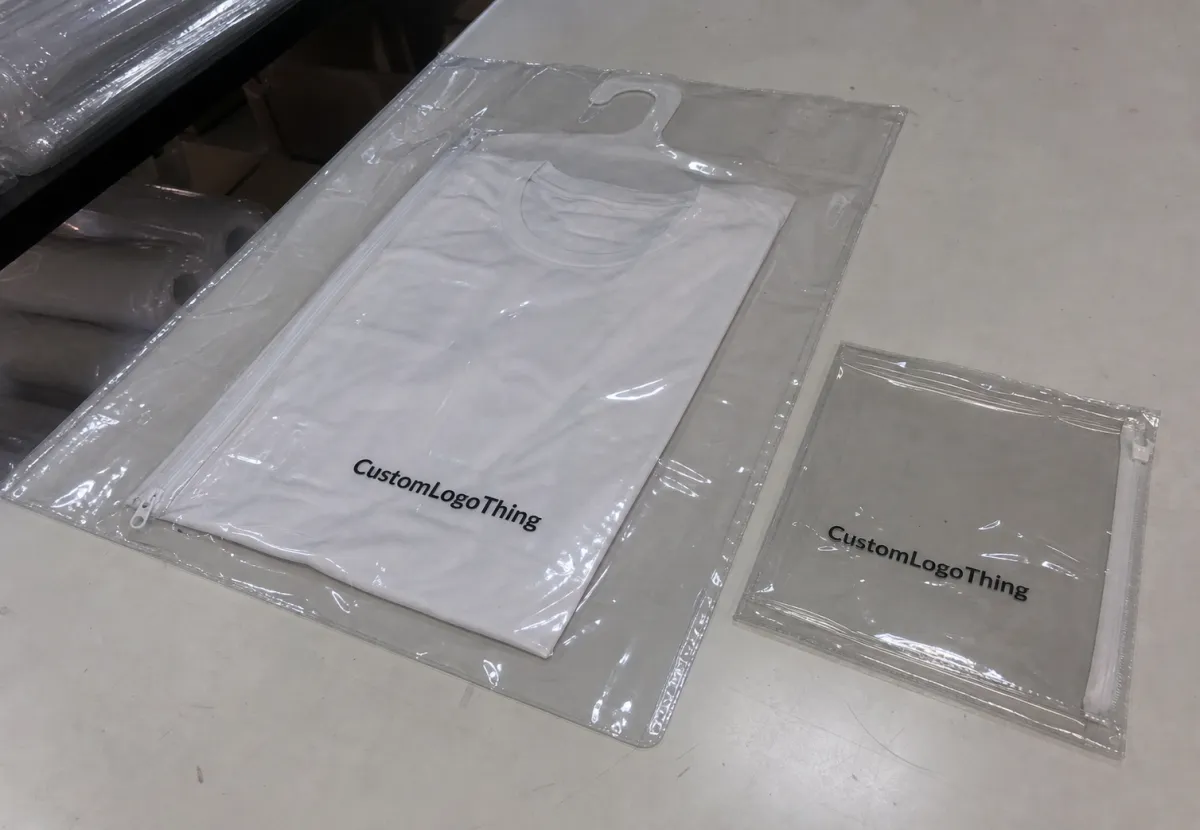
Trade show teams work on a clock. They need to get product on the rack, make it look right, and move on to the next appointment. Clear PVC Garment Bags help because they remove a step. The garment stays visible, so staff do not have to unzip, unfold, and refold every sample just to answer a basic buyer question. That saves time across dozens of pieces.
They also protect the selling surface of the product. A jacket with sharp stitching or a dress with a clean drape loses impact if it arrives dusty, creased, or half-crushed in a carton. A decent bag keeps the silhouette cleaner and makes the item feel showroom-ready sooner. That matters more than most teams admit.
For hanging samples, line sheets, VIP handoffs, and press kits, visibility is a practical advantage. Buyers can inspect trims, fabric, and color without handling the garment as much. Less handling means fewer fingerprints, fewer snags, and fewer chances to disturb the sample before the meeting starts. It sounds small. It is not.
There is also a logistics benefit. Samples often move from warehouse to freight, from freight to booth, then back again. Every transfer is a chance for damage or disorder. A garment bag creates a repeatable wrapper around the product, which makes packing easier and reduces the odds of losing accessories or mixing sample sets.
Boxes still make sense for some products, especially if crush protection is the main concern. Poly mailers are fine for shipping soft goods. Fabric covers can look polished in a showroom. But if the buyer needs to see the garment quickly and the team needs quick access on the floor, clear PVC is usually the more practical choice.
There is a tradeoff, of course. PVC is only as good as the build around it. A flimsy zipper, cloudy film, or bad hanger cut can undermine the whole presentation. The material is not the issue by itself. The spec is.
If you want a basic reference point for handling and packaging thinking, the ISTA library and the Packaging School / packaging resources pages are useful starting points. They will not tell you how to spec a fashion sample bag line by line, but they do reinforce the discipline that good packaging work depends on.
PVC Film, Stitching, and Hardware That Change the Look
Most buyers start with the obvious question: how clear is the film? That matters, but it is only the first layer. The wrong film can haze under booth lighting, lean blue, or feel stiff in a way that makes the garment look boxed in. Better clarity gives the item a cleaner first impression and keeps the presentation closer to the actual product.
Thickness matters too. Too thin, and the bag feels cheap and can tear near stress points. Too thick, and it gets bulky, heavy, and awkward to handle. There is no prize for maxing out the gauge. The goal is enough body to protect the sample without turning the bag into a rigid shell. For most trade show use, the sweet spot is usually somewhere in the middle, not at the extremes.
Stitching and seams decide how well the bag survives repeated handling. Welded seams can look cleaner and reduce fraying. Sewn reinforcement can improve strength around handles, openings, and corners. The right approach depends on how the bag will be used. A bag that hangs on a rack all day has different needs from a bag that gets carried between a hotel room and the show floor multiple times.
Hardware is where many quotes get separated. Zipper quality affects user experience more than people expect. Cheap zipper teeth misalign, snag on lining, or feel fragile in the hand. Pulls that bend or detach after a few uses are a headache no one wants during setup. Hanger openings should fit standard racks without twisting the bag off center. Handles, if included, should be built for real use, not just for a photo sample.
There is a simple rule here: every upgrade to the build changes both the appearance and the cost. Better film, stronger seam construction, and smoother hardware all add expense. That does not make them optional. It just means buyers should understand exactly what they are paying for.
Buyer note: a bag can look acceptable in a proof image and still feel wrong in hand. Zipper action, seam finish, and hanger alignment are easier to judge on the sample than in a PDF.
If sustainability documentation matters in your vendor review, ask for the exact resin type, film structure, and any available compliance paperwork. The EPA has helpful packaging and waste references for broader material planning. That is not a marketing badge. It is a record trail.
Size, Gauge, and Branding Specs Buyers Need to Lock In
Bag size is where bad comparisons start. A shirt bag, a jacket bag, and a coat bag are not interchangeable. If the dimensions are loose, every quote becomes a little fictional. One supplier may be pricing a roomy cut, another may be assuming a tighter fit, and the buyer ends up comparing numbers that do not describe the same thing.
Lock in the finished width, finished height, film thickness, closure type, hanger opening, and whether a gusset is needed. Those are the basic pieces. Everything else sits on top of them. Add handles, pockets, custom zipper pulls, or special inserts and the quote moves again. A clean spec sheet cuts the noise fast.
Useful sizing logic usually looks like this:
- Shirts and tops: slimmer profiles for lighter samples and quicker hanging.
- Jackets and blazers: more shoulder room and usually a little more height.
- Dresses and coats: longer panels with enough clearance to avoid crushing the hem or collar.
- Multi-piece sets: wider fit, sometimes with gusseting so the contents do not press against the sides.
Branding can be simple or surprisingly expensive. A one-color logo with a small print area is usually manageable. A large graphic, multi-pass print, or custom tint raises the cost and can slow production. Frosted film, color-matched zipper tape, woven labels, and custom inserts all create extra steps. None of that is bad. It just needs to be planned instead of discovered after the quote lands.
One practical warning: if dimensions are vague, lead times and minimums start drifting too. The supplier needs enough detail to set the tooling, estimate waste, and plan the run. A difference of two inches sounds minor on paper. On the production line, it can change material usage and packing efficiency enough to matter.
Brands that reorder for multiple shows benefit most from tight specs. The more exact the dimensions and materials, the easier it is to keep samples consistent across booths, seasons, and reprint cycles. That consistency usually matters more than squeezing out a tiny price advantage on one order.
Pricing, MOQ, and Trade Show PVC Garment Bags Unit Cost Review Breakpoints to Compare
This is where buyers get caught by the headline number. A low quote can look efficient until setup charges appear, freight lands, or the supplier realizes the spec was broader than expected. A real trade show pvc garment bags Unit Cost Review looks at the full cost picture, not just the per-piece number printed in bold.
The main drivers are predictable: size, film thickness, print method, zipper style, hanger reinforcement, packaging format, and custom tooling. If the bag uses special film colors, unusual cuts, or added hardware, the price climbs. That is normal. The factory is not being dramatic. The build costs more.
MOQ works the same way. Smaller runs carry a higher unit cost because setup and waste are spread across fewer pieces. Larger runs usually drop the price per bag because the fixed costs are diluted. That does not mean the biggest order is always the right order. It means the buyer should ask for tiered pricing and compare the breakpoints honestly.
For planning, simple clear PVC construction often falls into ranges like these:
| Quantity | Typical Unit Cost Range | What Usually Changes |
|---|---|---|
| 300-500 pcs | $1.20-$2.40 | Higher setup burden, lower freight efficiency, less room to absorb waste |
| 1,000-2,000 pcs | $0.78-$1.45 | Setup costs spread better, production becomes more efficient |
| 5,000+ pcs | $0.45-$0.95 | Stronger bulk pricing if the spec stays simple and consistent |
Those numbers are planning ranges, not guarantees. Add print coverage, heavier film, handles, reinforced seams, or custom zipper pulls and the cost rises. Ask for the quote to separate the base bag from every add-on. Otherwise, the price looks cleaner than it really is.
Freight and duties matter too. A low ex-factory price can become a mediocre landed cost once shipping and import charges are included. Sampling, rush fees, and carton changes can also affect the total. The cheapest factory quote is not always the best deal. Sometimes it is just the least complete one.
Ask each supplier the same questions: what is included, what is optional, what changes if the size changes, and what changes if the artwork changes. Clean answers make clean comparisons. If the answers are vague, the quote is not ready for decision-making.
Useful comparison rule: a plain clear bag with no print and a basic hanger opening should always be cheaper than a printed bag with reinforced seams and custom hardware. If the numbers do not reflect that logic, something is off in the spec or the quote.
Production Steps and Lead Time From Approval to Delivery
The production process should be boring. Inquiry, spec confirmation, artwork check, proof approval, production, inspection, packing, and shipment. That is the sequence. If a supplier makes those steps feel unclear, the calendar usually suffers later.
The most common delay starts with unclear artwork. The second is a late spec change. The third is internal approval that arrives after the proof was already good enough to move forward. Small tweaks sound harmless. They are not free. Every change resets part of the schedule.
Once the spec is locked, simple clear PVC orders can move fairly quickly. A straightforward run often takes about 10-15 business days after proof approval. More involved orders, especially those with print, specialty hardware, or custom packaging, can move into the 15-25 business day range. Shipping time is separate and should always be treated as separate. Trade show teams that blur those numbers usually end up paying for expedited freight.
Rush orders are possible, but only within limits. If the bag is simple and the factory line is open, the schedule can tighten. If the order has special film, custom print, or nonstandard construction, the rush window gets small very quickly. A promise that ignores those limits is not helpful. It is just a future apology.
Pre-production deserves its own buffer. Sampling, proof revisions, and freight booking all take time. A one-day delay in proof approval can erase a shipping cushion that looked comfortable on paper. That is why timeline planning should start before the event calendar gets tight.
A practical approval sequence looks like this:
- Confirm size, thickness, closure, and branding before asking for final pricing.
- Review the proof for construction, print placement, and dimensions.
- Approve only after the quote and the spec sheet match.
- Lock the production slot before the show date squeezes the schedule.
That sequence sounds basic because it is. The problem is that teams skip one step and then expect the rest to behave. Production rarely forgives that.
How We Keep Reorders Consistent Across Booths
Reorders expose the difference between a supplier who can manufacture and one who can manage a program. One good batch is easy. Keeping the second, third, and fourth batch consistent is the real test. For brands that show in multiple venues or send samples through several teams, repeatability matters a lot.
Quality control should cover film thickness, seam condition, zipper pull function, print placement, and hanger opening dimensions. If the first order used 0.25 mm film and the next run quietly drops thinner, the bag may still close, but it will not feel the same. People notice that right away, especially when the sample has to stand next to a premium product.
The best reorder process starts with documentation. One approved spec sheet. One approved artwork file. One reference sample. If those three items are missing, every reorder becomes a new project. That is where mistakes creep in. A supplier should be able to pull the last approved version quickly and match it without drama.
Good rule: if the exact last-approved spec cannot be found quickly, the process is too loose for repeat production.
Different booths can also create different use patterns. One team may keep the bag on a rack all day. Another may carry it from meeting to meeting. A third may store garments for a regional roadshow. The packaging needs to survive all of that without changing character halfway through the season.
When problems happen, the fix should be direct. Damage reports need to tie back to the batch. Partial reorders need the original spec and quantity. Brand updates need a clear note about what changed, whether that is a logo revision, a new zipper color, or an altered insert card. Starting from scratch every time wastes money and slows everything down.
Documentation is not flashy. It does, however, keep the bag from slowly drifting away from what was approved. That is worth more than a few cents off a one-time order.
What to Send for a Fast Quote and the Next Move
The fastest quote comes from the cleanest input. Send garment type, finished bag size, film thickness, quantity, branding needs, and delivery date. If those details are missing, the supplier has to guess, and guessing is how budgets slide around.
Artwork does not have to be final to start pricing. A rough logo file is usually enough to estimate print coverage and setup cost. What matters is clarity about placement and scale. If the logo area is vague, the quote will be vague too. That is not a supplier problem. It is a data problem.
Ask for a comparison that separates unit cost, setup cost, sample cost, and freight. That makes it easier to judge the real total and easier to explain internally. It also exposes fake savings. A low per-piece price with oversized setup charges and expensive shipping is not actually low.
A practical request list looks like this:
- Confirm the garment type and finished dimensions.
- Choose the film thickness and any reinforcement points.
- Send logo art, even if the artwork is still preliminary.
- Request tiered pricing at more than one MOQ.
- Approve the proof only after the spec matches the quote.
- Reserve production time before the show calendar gets tight.
That process saves time and reduces the chance that the final unit cost changes after the budget is already approved. Nobody wants to reopen a purchase conversation because a missing detail turned into a fee.
The point of a trade show garment bag is simple. It should show the product clearly, protect the sample in transit, and keep the booth moving without a bunch of unnecessary handling. That is what a proper trade show pvc garment bags Unit Cost Review is supposed to solve. Not just the cheapest number on the page, but the best balance of cost, consistency, and real use.
What affects trade show PVC garment bags unit cost the most?
Size and film thickness usually drive the biggest swings. Custom printing, zipper style, hanger reinforcement, and packaging format can push the price up fast. Lower quantities spread setup charges across fewer bags, so the cost per piece rises. Freight and duties can matter just as much once the order ships.
What MOQ should I expect for custom PVC garment bags?
MOQ depends on the build. Plain clear bags often allow smaller runs than printed or specially reinforced versions. Custom sizes, special film colors, and unique hardware usually raise the minimum. Ask for multiple quantity tiers so you can see where pricing starts to improve.
How long is the usual turnaround after proof approval?
Simple orders often take about 10-15 business days after proof approval. More complex jobs with print, specialty hardware, or custom packaging can run 15-25 business days or more. Shipping time is separate and should be added on top of production time, not mixed into it.
Can I get a quote before final artwork is ready?
Yes. If you can provide dimensions, quantity, and logo placement goals, a supplier can usually build a useful estimate. A rough file is enough for early pricing. Final approval still needs clean artwork and a proof that matches the spec sheet.
What should I compare besides the price on the quote?
Check film thickness, seam quality, zipper hardware, and hanger opening dimensions. Confirm whether freight, sampling, and setup are included or billed separately. Compare lead time, proof process, and reorder consistency, not just the lowest number. A cheap quote that misses the show date is not a bargain.


