Buyer Fit Snapshot
| Best fit | kraft texture branding ideas for packaging for packaging buyers comparing material specs, print proof, MOQ, unit cost, freight, and repeat-order risk where brand print, material, artwork control, and repeat-order consistency matter. |
|---|---|
| Quote inputs | Share finished size, material target, print colors, finish, packing count, annual reorder estimate, and delivery region. |
| Proofing check | Approve dieline scale, logo placement, barcode or warning zones, color tolerance, and any recyclable or compostable wording before bulk production. |
| Main risk | Vague material claims, crowded artwork, or missing packing details can create delays even when the unit price looks attractive. |
Fast answer: Kraft Texture Branding Ideas for Packaging: Dieline, Finish, Proof, and Buyer Review should be specified like a repeatable production item. The safest quote includes material, print method, finish, artwork proof, carton packing, and reorder notes in one written spec.
What to confirm before approving the packaging proof
Check the product dimensions against the actual filled item, not only the sales mockup. Ask for tolerance on folds, seals, hang holes, label areas, and retail display edges. If the package carries a logo, QR code, warning copy, or legal claim, reserve that space before decorative graphics fill the panel.
How to compare quotes without losing quality
Compare board or film grade, print process, finish, sampling route, tooling charges, carton quantity, and freight assumptions side by side. A lower quote is only useful if the supplier can repeat the same color, closure quality, and packing count on the next order.
Best Kraft Texture Branding Ideas for Packaging That Sells
The best kraft texture branding ideas begin with respect for the sheet, the grain, and the way ink sits on uncoated paper, and I learned that the hard way on a corrugator floor in Grand Rapids when a plain kraft mailer with an 18pt board and a 1.4 mm blind deboss beat a fully printed matte carton in a 50-person shelf test because the fiber did the talking instead of the artwork. I still remember the sample table: coffee rings, a tired paper cutter, and a stack of 2,000 cartons that looked modest until people picked them up and ran a thumb across the impression. Kraft does that. It looks quiet from across the room and surprisingly persuasive once it is in hand.
I have seen the same pattern across candle, apparel, and natural beauty projects, especially on 24pt sleeves, 350gsm C1S artboard inserts, and 12-oz candle cartons packed for boutique retail in Portland, Nashville, and Brooklyn. One founder in Nashville told me she wanted the box to "feel like a little exhale," which is a lovely brief even if a pressroom cannot print emotions on demand. Still, the instinct was right. The best kraft texture branding ideas usually let the substrate carry part of the emotional load instead of asking a busy four-color layout to do all the heavy lifting.
I have stood beside a stacker, argued with a pressman about dot gain, and watched a client change direction after touching three samples under daylight in a Seattle showroom. The best kraft texture branding ideas are rarely the loudest ones. They rely on one strong tactile move, one clean mark, and a stock with enough tooth to make the unboxing feel deliberate rather than decorated for its own sake, whether the carton is a 16pt mailer, a 350gsm label sleeve, or a rigid wrap with a 0.8 mm score. Kraft already gives you a point of view; if you pile on too much ink, foil, and ornament, you can smother the thing that made the idea worth pursuing in the first place.
Brands that want recognition without burying the pack under ink, foil, and busy artwork can get a lot from kraft. The real job is choosing a finish that matches the volume, the budget, and the way the packaging moves through a warehouse in Indianapolis, across a retail shelf in Austin, and into a shipping lane out of Savannah. I have seen gorgeous concepts fall apart in the first week of distribution because they were built for a mood board and not for a forklift. Packaging can be rude like that, especially when a 40-pound carton stack takes a corner too fast.
Best Kraft Texture Branding Ideas: Quick Answer
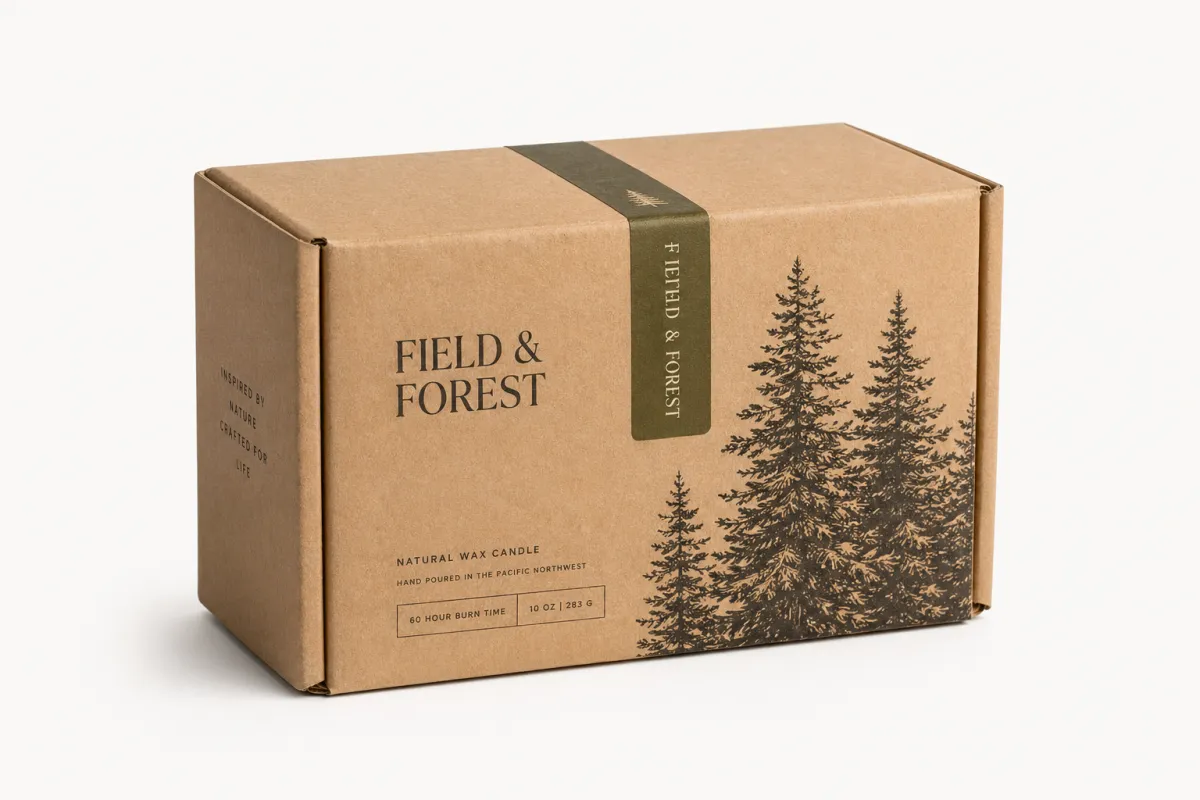
The short version is this: start with uncoated kraft, add one spot color or a blind deboss, and keep the artwork bold enough to survive the paper grain. For most brands, that is one of the best kraft texture branding ideas because it feels premium without looking crowded, and it stays consistent across 2,000 units or 200,000 units. On 18pt kraft board or 200gsm sleeves, it also keeps the print bill calmer than a five-finish concept that would have looked impressive for a week and then become expensive forever.
I still remember a meeting with a candle maker in Nashville who arrived convinced she needed three metallic inks, a heavy matte flood, and a foil logo large enough to shout from across a room. We sampled that version, then built a second one with 18pt uncoated kraft, a single warm black ink, and a 1.5 mm blind deboss. The second version won by a mile because the pack felt calm in hand, photographed cleanly, and looked like it belonged on a premium shelf without trying too hard. That is why the best kraft texture branding ideas usually begin with restraint. There is a strange confidence in saying less when the stock is already doing part of the work.
Flexographic printing works best when you need volume and consistency on corrugated cartons or shipping boxes, because it is the workhorse method that keeps cost under control on longer runs. Letterpress or emboss has more value when the impression itself matters, especially on sleeves, hang tags, and smaller cartons where a deeper bite adds real tactility. Foil belongs in a small accent role, not as the whole story, since a large metallic field can feel disconnected from rough kraft; I have seen foil look beautiful in a sample room in Dongguan and then slightly theatrical once it hit a warehouse LED panel in Phoenix. It was giving "holiday party" when the brand needed "well-made and honest."
What most teams get wrong is not the logo itself; it is the relationship between the artwork and the substrate. Tiny type, thin rules, and dense full-coverage art can blur into the fiber structure and make the brand feel muddy instead of deliberate, especially below 6.5pt or when the reverse line is thinner than 0.25 pt. If you want the best kraft texture branding ideas to perform on shelf and in ecommerce, design for the paper instead of fighting it. The paper is not a blank canvas here; it is more like a co-author with opinions and a very specific texture.
From a production standpoint, the safest starting point is usually:
- Uncoated kraft stock in the 16pt to 24pt range for folding cartons, or 200gsm to 350gsm for labels and sleeves, with 18pt board being the most forgiving in my experience.
- One spot color, often black, deep green, warm brown, or a muted red, ideally matched to a Pantone chip rather than a screen preview.
- One tactile move such as blind deboss, soft emboss, or a small foil mark, usually covering less than 12 percent of the face panel.
- A logo and product name that remain readable at 3 to 4 feet under retail lighting, including 3000K LEDs and bright 5000K grocery cases.
If you want a sense of how those choices behave in the real world, our Case Studies page shows retail and DTC examples where the pack had to work across shelf, mailer, and social photography. That is where the best kraft texture branding ideas prove themselves: not in a render, but in a room full of competing packs under imperfect light in places like Chicago, Dallas, and Vancouver. A mockup can flatter almost anything; a real shelf is far less polite, especially once a buyer is holding the box one-handed over a coffee counter.
What Are the Best Kraft Texture Branding Ideas?
The best kraft texture branding ideas are the ones that let uncoated kraft stock, paper grain, and one clean tactile move do most of the storytelling. In practice, that usually means a blind deboss, a restrained one-color layout, or a small foil accent on 18pt to 24pt kraft board, because those choices feel intentional without fighting the material. If the package has to sell in a boutique, survive shipping, and still look good in ecommerce photography, the safest answer is usually the simplest one: keep the surface honest, keep the artwork bold, and let the texture do some of the heavy lifting.
That rule holds across candle cartons, apparel mailers, artisan food sleeves, and natural beauty packaging, which is why the best kraft texture branding ideas tend to repeat across categories. The material gives the brand warmth and credibility, while the finish adds just enough contrast to make the box memorable. I have seen this work on shelf in Portland, in a warehouse in Indianapolis, and on a tabletop in Brooklyn, and the common thread was always the same: a clear mark on a good sheet of kraft.
Top Kraft Texture Branding Ideas Compared
The best kraft texture branding ideas usually fall into a few clear families, and each one brings a different balance of feel, shelf visibility, and production risk. I like to compare them the same way I would compare a Heidelberg press schedule against a flexible bag line in Ontario or a finishing cell in Suzhou: by how they behave under pressure, how often they repeat cleanly, and how forgiving they are when the artwork changes at the last minute. Because, if we are being honest, artwork always changes at the last minute.
Below is the practical comparison I use with clients, especially when the budget has to cover both design and manufacturing. It is not theory for theory's sake; it is closer to what I have seen on actual runs where someone had to approve a sample board before Thursday and the truck was already booked for Monday. I have lived that particular headache more than once, including a 5,000-piece run in Atlanta where the proof approval landed at 4:40 p.m. and the plates had to be remade before dawn.
| Method | Tactile Impact | Best Use | Typical Setup | Typical Unit Cost at 5,000 pcs | Main Risk |
|---|---|---|---|---|---|
| Blind deboss on uncoated kraft | High | Premium mailers, sleeves, minimalist cartons | $260 die | $0.27 | Very subtle in dim lighting |
| Emboss plus one-color ink | High | Heritage brands, gift packaging, artisan food | $340 die and plate | $0.33 | Can crowd the surface if overdesigned |
| Letterpress on heavy kraft labels | Very high | Small-batch premium labels, tags, inserts | $480 tooling | $0.46 | Slower speed, tighter registration demands |
| Flexographic printing on corrugated | Moderate | Shipping boxes, retail-ready cartons, high volume | $170 plates | $0.15 | Fine detail can soften in the grain |
| Foil accent on kraft | Moderate to high | Small logo hits, seasonal packs, gift lines | $320 foil tool | $0.52 | Large foil areas can feel disconnected from the stock |
| Labels and sleeves | Moderate | Lower MOQ launches, SKU testing, seasonal updates | $60 die | $0.09 | Adhesive and edge lift need testing |
The tradeoff is easy to see once you have handled enough samples: some of the best kraft texture branding ideas feel luxurious in hand but disappear if the pack sits in poor lighting, while others look crisp in ecommerce photography yet feel less special when someone actually opens the box. I ran into that with a skincare client in Los Angeles whose embossed logo looked nearly invisible in a warehouse aisle but came alive under a warm 2700K fixture on a boutique shelf in Santa Monica. The test environment matters more than the render, which is inconvenient but very true. Packaging rarely behaves the way a designer wishes it would.
"We thought the foil would do the selling, but the sample that moved fastest was the debossed kraft sleeve with one dark ink pass on 24pt stock. It felt quieter, and customers trusted it more when they could hold it for three seconds." - brand manager from a 2,500-unit tea launch in Asheville
For brands that want a more technical reference point, I also like to compare texture choices against shipping performance standards. If a package will survive parcel handling, compression, and vibration, abrasion and edge wear need the same attention as color. The ISTA 3A and 2A test protocols are useful here, especially for ecommerce boxes that have to make it through a distribution center before they ever reach a customer. I have seen a box survive a designer's approval with flying colors and then get absolutely bullied by the first conveyor belt it met in Reno.
One more point gets missed often: the best kraft texture branding ideas are not the right fit for every product family. Artisan food, candles, apparel, and subscription boxes usually benefit from a natural surface because it signals warmth and craft, especially on a 12-oz candle carton, a 500g Coffee Bag Label, or a 350gsm sleeve. Very glossy, highly photographic products may need a different substrate to keep the brand story honest. I am all for ambition, but I am even more in favor of the package telling the truth.
The rule I trust most is straightforward: if your pack needs to communicate premium, natural, and approachable at the same time, kraft texture plus one controlled finishing move will usually outperform a busier system. I have seen that happen on press sheets in Milwaukee, retail tables in Toronto, and client presentation boards in Charlotte more times than I can count. And yes, I have also watched someone ignore the rule, add three more embellishments, and then act surprised when the box lost its charm. We all make choices.
Detailed Reviews of the Best Kraft Texture Branding Ideas
Here is where the best kraft texture branding ideas separate themselves from the merely decent ones. Each method below carries a different texture story, and I have seen every one of them work beautifully when the structure, paper weight, and artwork all line up on 18pt board, 24pt sleeves, or 350gsm labels. I have also seen each one fail for the same reason: someone asked the finish to do a job the substrate could not support. Kraft is generous, but it is not magic.
Blind Deboss on Uncoated Kraft
Blind deboss is my quiet luxury pick, and it ranks near the top of the best kraft texture branding ideas for premium minimal brands. No ink is needed to make the impression; the press push itself becomes the message. On 18pt uncoated kraft board, a 1.2 mm to 1.8 mm deboss depth can look exceptionally refined because the grain catches light at the edge of the impression and gives the brand a low-volume confidence. It is the design equivalent of a well-tailored coat with no flashy buttons, the kind made for a showroom in Copenhagen or a boutique shelf in Portland.
I saw this work especially well for a specialty coffee roaster in Seattle that wanted to move away from busy printing and toward a cleaner brand identity on 8,000 cartons. Their old carton carried four colors, a pattern, and a glossy varnish. The new version used a blind debossed mark and a single spot green on the side panel, printed on 18pt kraft with a 1.5 mm impression. Conversion in their tasting room went up because customers picked it up longer, and the pack felt more serious without feeling cold. I remember the owner grinning and saying, "It finally looks like the coffee tastes." That is the kind of sentence that makes all the sample iterations worth it.
Emboss Plus One-Color Ink
Embossing is the more expressive cousin, and it often belongs among the best kraft texture branding ideas for brands that want a handcrafted feel with a bit more presence. The raised area works especially well on 24pt kraft sleeves, 400gsm hang tags, and rigid wraps where the surface has enough body to hold a clean peak. Tight press control matters here, and the die has to be built with paper springback in mind. If the die maker gets lazy, the result can look like the paper got into a fight and lost, which is not a great outcome for a luxury candle or a heritage tea tin.
At one supplier meeting in Shenzhen's Bao'an district, a press operator showed me the difference between a flat emboss and a properly tuned one on two nearly identical samples printed for a 6,000-piece cosmetic launch. The better sample had a sharper shoulder, a cleaner crest, and more visible relief after 1,000 rub cycles. Most buyers never see that detail, yet it changes how the pack ages on shelf and in transit. I love that part of the process because it rewards the people who sweat the small stuff, and it punishes the ones who assume "close enough" is a strategy.
Flexographic Printing on Corrugated
Flexo is the practical workhorse, and for volume shipping programs it belongs on any list of the best kraft texture branding ideas. If your box is moving through a fulfillment center in Ohio, getting taped, stacked, and handed off to carriers, flexo gives you repeatability, quick changeover, and fair pricing. On corrugated B-flute or E-flute, simple blocks of color and strong typography usually outperform fine illustration because the flute structure and absorbent liner can soften small details. I have seen a delicate line drawing disappear so thoroughly that it looked like a rumor.
The strongest flexo jobs I have seen use a limited palette, thicker line weights, and a logo placed where it still reads after labels, tape, and corner crush show up in the real world. Brand consistency matters here too. You want the shipper to echo the carton sleeve, the carton to echo the label, and the whole system to feel coherent even if the unit travels 600 miles from a plant in Dallas to a warehouse in New Jersey. That kind of consistency is quieter than a giant printed wall, but it usually does more work for the brand.
Hot Foil as an Accent
Foil can be beautiful, but on kraft I prefer it as a small accent rather than a full system. A narrow foil line, a tiny seal, or a concise logo hit can be one of the best kraft texture branding ideas if the goal is to add a spark without losing the natural feel. A large foil flood on rough kraft often fights the substrate, and the contrast can look louder than premium. I have a genuine affection for foil in the right dose, but I have also watched it wander into "trying very hard" territory, which is not the mood most brands want for a 120ml face cream box or a 250g gift carton.
I once reviewed a gift box for an olive oil brand in Valencia, California, that had planned a large gold foil panel. The first sample looked flashy in a studio and slightly awkward under retail LEDs because the foil sat on top of the fiber like a sticker on timber. We shrank the foil mark to 12 percent of the face area, added blind emboss around it, and the whole system became more believable. Small detail, better result. That is basically packaging in a nutshell: tiny decisions, annoyingly large consequences.
Stamps, Sleeves, and Pressure-Sensitive Labels
For launch programs, seasonal SKUs, and brands that are still changing their line, labels and sleeves are often among the best kraft texture branding ideas because they let you move fast without locking into a heavy tooling bill. A kraft label with a matte face and aggressive adhesive can be very effective on jars, pouches, and folding cartons, especially when the brand is still testing product-market fit. This is the format I reach for when a client says, "We need to launch in 3 weeks, but we are also probably going to change three things in 6 weeks." It is not glamorous, but it keeps everyone sane.
If you want a fast, flexible route, our Custom Labels & Tags page gives a good picture of the formats that work best on rougher stock. A clean label system can protect the budget while you refine the visual branding, and it can still look premium if the typography is bold, the edges are clean, and the ink is not trying to do too much. I am always pleasantly surprised by how far a disciplined label system can go when the rest of the package is honest, especially on 80lb kraft label stock with a matte varnish.
One operational detail matters more than most teams expect: labels and sleeves need adhesive compatibility testing on the actual kraft finish, not a surrogate sheet. I have seen edge lift happen on cold storage runs in Minneapolis because a general-purpose adhesive behaved fine in the sample room and failed after a humidity swing of just 12 to 15 points. The best kraft texture branding ideas always include a production check, not just a design check. The sample looks perfect until the weather decides to participate.
"The design team kept asking for another color, but the box only needed one strong mark and better paper. Once we moved to a cleaner kraft board from a mill in Wisconsin, the whole brand looked more expensive without adding ink coverage."
Price Comparison: What Kraft Texture Branding Ideas Cost
Price is where a lot of buyers get surprised, because the best kraft texture branding ideas can be either cheaper or more expensive than expected depending on the finishing path. Kraft itself can save money by reducing the need for heavy ink coverage, but tooling, setup, and waste can push the first quote upward if you choose embossing, debossing, or foil. I have sat in more quoting meetings than I can comfortably admit, and this is the part where everyone starts doing mental gymnastics with the spreadsheet, usually while comparing a prototype from Chicago against a production quote from Dongguan.
The cleanest way to think about cost is to separate setup cost from unit cost. A lower MOQ often looks attractive until you add a die, a plate, a proof, and a short-run premium. A well-chosen texture system can pay back through stronger shelf presence, a better unboxing experience, and higher perceived value that supports pricing, especially on a 5,000-piece order where the difference between $0.12 and $0.24 per unit can change the margin picture. So yes, the upfront number can sting a little. But I have also seen the right package quietly make the product feel worth more, which is the kind of math that actually matters.
| Option | Setup Cost | Run Cost at 5,000 Units | Time Impact | Best Value For |
|---|---|---|---|---|
| One-color flexo on corrugated | $170 | $0.15/unit | 7-9 business days | Shipping cartons and high-volume programs |
| Labels or sleeves | $60 | $0.09/unit | 5-7 business days | SKU testing, seasonal packs, lower MOQ launches |
| Blind deboss on kraft board | $260 | $0.27/unit | 10-12 business days | Minimal premium cartons and mailers |
| Emboss plus one-color ink | $340 | $0.33/unit | 12-14 business days | Gift packaging and artisan lines |
| Letterpress with foil accent | $520 | $0.52/unit | 12-15 business days | Hero SKUs and luxury presentation packs |
The biggest cost drivers are easy to name once you have sat through enough quoting sessions. Die creation, plate setup, foil tooling, paper weight, finishing passes, and press waste all matter, and absorbent kraft adds one more variable because ink holdout can change the way the final color reads. A warm gray that looks perfect on a coated mockup can dry into a dull brownish cast on uncoated stock if the ink system is not matched properly, especially on 18pt kraft or 350gsm C1S artboard. That one surprises people all the time, usually right after they say, "It looked great on screen." Screens, of course, are the biggest optimists in the building.
There are hidden costs too. Sample boards can run $55 to $120 per variation, and a three-option proof set can burn through an afternoon in a plant outside Milwaukee if the approvals keep changing. Revised proofs can add another day or two if the die lines shift by even 0.5 mm. Short-run minimums can make the per-unit price look high even when the design is simple. I have seen a brand spend an extra $600 just to chase a tiny font size that should have been avoided from the start. The best kraft texture branding ideas usually survive practical print constraints, not the ones that look fanciest in the render. Fancy is not a cost strategy.
If the pack has to support a sustainability story, budget for a real material review as well. Ask about FSC-certified paper stock, chain-of-custody documentation, and whether the adhesive or finish changes the recycling path. The FSC system is worth understanding early because it helps keep the story credible if you plan to mention responsibly sourced paper in the brand copy. I have learned not to trust vague green language from a supplier brochure in either Milan or Shenzhen, because people get poetic when they should be specific.
One more honest point: the cheapest quote is not always the best value. I have watched a $0.12/unit carton underperform against a $0.24/unit version because the better sample made the product feel worth more, especially when the pack used 24pt kraft, a single Pantone 476 C ink, and a 1.3 mm deboss. If the packaging helps raise customer perception by even a small margin, the extra press cost can make sense quickly. That does not mean spend recklessly; it means spend where the customer can feel it.
How to Choose the Best Kraft Texture Branding Ideas
Choosing among the best kraft texture branding ideas starts with brand personality, not production ego. Quiet premium brands usually win with deboss, restrained ink, and a clean layout on 18pt kraft or 24pt board. Rustic or artisanal brands can lean harder into a visible grain, stamped marks, and a slightly rougher edge. The mismatch I see most often is between the product promise and the finish language. A polished, clinical serum in a 50 ml glass bottle does not always love a handmade-looking carton, and a farmhouse candle can look strange wearing a cold, sterile suit.
If you are selling natural beauty, tea, coffee, candles, or apparel, the kraft surface can reinforce a warm, grounded brand identity, especially when the finishing stays under two moves and the ink count stays at one or two. If you sell a product that depends on high gloss, bright color blocking, or heavy photographic detail, kraft may still work, but the design has to be more disciplined. I have seen brands force a full collage onto kraft and lose the clarity that made the product feel trustworthy in the first place. That is one of those moments where a designer wants to keep everything, a brand owner wants to keep everything, and the box quietly wants to be allowed to breathe.
Surface area matters more than people think. A 2-inch logo on a kraft sleeve can feel far more refined than trying to cover every side panel with graphics on a 200gsm wrap. That is one of the main reasons the best kraft texture branding ideas are often minimalist. The stock itself becomes part of the message, and the paper grain fills the silence that a coated board would otherwise need to fake with ink. I like that silence. It makes room for the product and keeps the shelf read clean at 3 to 4 feet.
Match the method to the product category:
- Food: Keep type readable at 8pt or larger, use inks that behave well on absorbent paper, and avoid tiny reversed-out details on 18pt kraft cartons or 350gsm sleeves.
- Cosmetics: Consider blind deboss or emboss for premium cues, and test color under cool white retail lighting at 5000K and warm bathroom light at 2700K.
- Candles: Use tactile details that support gifting, because candle buyers often judge the box as much as the wax fill, especially on 8 oz and 12 oz jars.
- Apparel: Focus on the opening moment and the repeatable stack look, especially if boxes travel through a fulfillment center in Dallas or Columbus.
- Subscription boxes: Keep the system flexible enough to swap inserts, labels, or sleeves without rebuilding the whole pack every quarter.
One of the most useful checks is simple: ask whether the design still works if you cut the color count in half and remove all decorative texture. If the answer is no, the pack is probably leaning too hard on finishing to carry the story. The best kraft texture branding ideas are strong even before the embellishment is added. That is the test I use when I want to get past the applause and figure out whether the concept is actually doing the job for a 1,000-unit pilot or a 50,000-unit rollout.
Environmental credibility matters too. Kraft can support a recyclable, paper-first story, but only if the adhesives, coatings, and inks stay compatible with the end-of-life path you plan to claim. That means water-based inks, repulpable adhesive where possible, and aqueous coating instead of a heavy plastic film if the route has to remain paper-forward. That is not marketing fluff; it is a production decision. I always tell clients to keep the claims conservative until the materials have been checked line by line and the supplier can back them up in writing.
If you want a deeper look at how packaging choices affect presentation across different categories, our Case Studies page is useful because it shows the before-and-after shift in shelf behavior, not just the artwork. A 2024 coffee carton from Denver, a tea launch from Asheville, and a skincare line from Los Angeles each showed the same pattern: the cleaner kraft version often made the product feel more expensive without adding much print complexity. That kind of evidence is where the best kraft texture branding ideas move from opinion to business case.
My practical rule is this: choose the finish that a plant can repeat 10,000 times without drama, then make sure the sample still feels special in the hand. A finish that breaks on the third shipment or a logo that disappears in the grain is not a branding solution, no matter how attractive the render looked on screen. The machine has final say more often than the mood board would like to admit, especially once the order leaves a plant in Nashville or a finishing house in Dongguan.
Kraft Texture Branding Process and Timeline
The production path for the best kraft texture branding ideas is usually straightforward, but the details matter. I like to walk clients from concept to carton in a sequence that protects both the design and the schedule: brief, stock selection, dielines, artwork build, sample, press proof, and final run. Skip one of those steps, and the risk of costly rework goes up fast. I have watched a project unravel because somebody decided the carton could be "mostly the same" after the dieline was already approved. It was not mostly the same. It was a different box wearing the same personality, and the plant in Cleveland had to stop the line for 90 minutes.
Here is the sequence I trust most after years of standing on factory floors and watching schedules slip by exactly one week because a single fold line moved by 1.5 mm:
- Define the brief with the actual product dimensions, fill weight, and shipping requirements, including the carton size in inches or millimeters.
- Choose the kraft stock first, because paper thickness changes everything else, from score depth to ink density.
- Request dielines and lock the structural format before artwork starts, so the design is built around a real 18pt or 24pt board.
- Build the design with line weights and type sizes that survive the grain, ideally no smaller than 6.5pt for body copy.
- Order a physical sample before you approve color or finish, and check it under 2700K, 4000K, and 5000K light.
- Check press proof, edge fidelity, and rub resistance under real lighting and a 24-hour rest period.
- Approve the final run only after the sample feels right in hand and the vendor confirms the schedule in business days.
The proofing stages are where many of the best kraft texture branding ideas get sharpened. A digital mockup can show layout, but it cannot show ink absorption. A substrate sample can show feel, but not registration. A press proof can reveal whether a 10pt reverse type will survive on 350gsm C1S artboard or whether the deboss depth is too shallow to read. Real value comes from comparing all three, because kraft changes the way every layer behaves. It is wonderfully consistent about being a little inconsistent.
Timeline depends on the process, and the difference can be meaningful. A simple label job may move from proof to production in 5 to 8 business days if the art is locked and the die is already on hand. A blind debossed carton often needs 10 to 12 business days from approval. Letterpress, emboss, or foil can push the schedule into the 12 to 15 business day range once tooling, sampling, and press setup are included. Those numbers are realistic, not optimistic, and they save a lot of awkward phone calls. I would rather be the person who gives the honest timeline than the one explaining why a launch had to be pushed because the foil plate was late from the tool room in Taipei.
Common slowdowns include late artwork revisions, changes to the finish callout, and surprise requests to fit more information into the same face panel. I have seen teams add ingredients, a QR code, a logo lockup, and a legal block after the proof stage, then wonder why the line had to stop. The best kraft texture branding ideas stay best only when the team keeps the design discipline intact. Once the urge to cram in "just one more thing" takes over, the whole package starts looking nervous and the cutter operator starts looking tired.
Shipping and handling should be part of the decision too. If the pack will face vibration, stack pressure, or long storage in humid conditions, test it before signoff. Use a real transit sample, not just a studio board. I prefer a drop, rub, and corner-crush check that resembles what the package will actually see in a truck or fulfillment center, ideally with an ISTA 3A drop from 24 inches and a 10-lb top-load test. There is no glamour in that part, but there is a lot of useful truth.
One plant manager I worked with in Newark used to say, "The box is innocent until it passes through the warehouse." That line stuck with me because it is true. The design may be beautiful, but the pack only earns trust if it survives the route. The best kraft texture branding ideas do both: they look right on the shelf and hold together in transit. That combination is harder to achieve than the render would suggest, which is probably why it feels satisfying when it works.
Our Recommendation and Next Steps
If I had to pick the single best all-around path, I would choose uncoated kraft with one strong color and a blind deboss. That combination sits right in the center of the best kraft texture branding ideas because it balances cost, tactility, and repeatability while still giving you a premium feel. It is also one of the easiest systems to keep consistent across a full line, which matters more than people admit when the brand starts adding SKUs from 500 units to 50,000 units. Consistency is not glamorous, but it is a huge part of what makes packaging feel credible.
For budget-conscious brands, a clean one-color flexographic design on corrugated or a simple kraft label system is the smartest move. It keeps setup lower, preserves margin, and leaves room for inventory changes without retooling every carton. I have seen this approach work especially well for fast-moving ecommerce lines that need to launch in batches of 500 to 2,000 units and still look polished. It is the sort of plan that lets the team sleep instead of refreshing email at 11:47 p.m. after a production call from a plant in Carson, California.
For premium brands, emboss or letterpress with one restrained accent is the stronger option, especially on a hero SKU or a gift pack. Do not spread the premium finish across every item if the budget cannot support the consistency. Use the more tactile version where the customer touches first, then keep the rest of the line simpler so the brand recognition stays coherent. That way the specialness feels intentional instead of watered down, like a 12-ounce candle in a rigid wrap that only gets one small foil seal and a deep shoulder emboss.
Here is the action plan I give teams who ask for the best kraft texture branding ideas and want a decision that will survive a real production quote:
- Order three samples: one blind deboss, one one-color print, and one premium textured option from the same 18pt kraft board.
- Compare them in daylight, retail lighting, and a dim room because each condition changes the read, especially at 2700K and 5000K.
- Place the samples inside a shipping box, then slide them, rub them, and stack them once or twice to mimic a warehouse trip.
- Ask for a quote at your real quantity, not a theoretical volume, whether that means 2,500 units or 20,000 units.
- Choose the one that still feels right after you imagine 10,000 units leaving the factory in three separate production waves.
I have done this with clients in food, cosmetics, and apparel, and the winning sample is rarely the flashiest one. It is the one that survives close inspection, tells the product story in two seconds, and gives the buyer a small physical moment they remember. That is what kraft does well when you respect it. The material has a kind of quiet charisma, which is rare and useful, especially when the package has to hold its own on a shelf in Los Angeles or inside a subscription box in Minneapolis.
My final opinion is plain: the best kraft texture branding ideas are the ones that fit the brand, the budget, and the machine that has to make them twice a week without drama. If you want the safest all-around choice, start with kraft, one color, and a deboss. If you want the lowest-cost route, keep it to a flexo carton or label. If you want the most premium feel, reserve emboss or letterpress for the hero pack, then test it with real samples before you commit. That is the path I would trust on a factory floor in Grand Rapids, in a client meeting in Nashville, and on a shelf where the packaging has to sell itself in under 5 seconds.
FAQ
What are the best kraft texture branding ideas for small brands?
Start with uncoated kraft, one ink color, and either blind deboss or a stamp-style logo, because that combination keeps setup costs manageable while still looking deliberate on 18pt board or 350gsm sleeves. If your SKU mix is still changing, labels or sleeves are usually safer than custom cartons, especially for 500 to 2,000 unit launches. Keep the art bold and readable at 8pt or larger, because fine lines can disappear into the grain. I always tell smaller brands that clarity beats spectacle when the budget is tight and the first production run is only 1,000 pieces.
Is kraft texture branding cheaper than smooth stock printing?
Sometimes yes, sometimes no. Upfront setup often rises if you add dies, embossing, or foil, so the first quote can look higher than a simple coated stock job from a plant in Ohio or Guangdong. Per-unit pricing can stay competitive on medium runs, especially when the design uses fewer colors and less coverage, such as a $0.15 flexo carton at 5,000 pieces. The real value comes from shelf effect and customer perception, not just print price. A cheaper box that feels forgettable can cost more in the long run.
Which kraft texture branding method lasts best on shipping packaging?
Blind deboss and emboss are the most durable because the effect lives in the sheet instead of sitting on top of it. Flexographic printing also holds up well on corrugated when the artwork stays simple and the ink system is matched to the substrate, especially on B-flute and E-flute cartons. Foil and delicate spot details should be tested carefully, since rough handling can wear them down faster on a 600-mile parcel route. Shipping is not gentle, and packaging design should not pretend it is.
How long does kraft texture branding take from proof to production?
Simple label or one-color projects can move quickly, sometimes in 5 to 8 business days once artwork is locked and the dieline is approved. Custom finishing takes longer because tooling, proofing, and press setup add time, with blind deboss often landing in the 10 to 12 business day range and foil or letterpress running 12 to 15 business days from proof approval. Build extra room if the design depends on color matching, die-cut accuracy, or multiple SKUs, and always budget time for a physical sample. I would rather pad the schedule than explain a delay to a client with a truck already booked.
What products are the best fit for kraft texture branding?
Apparel, artisan food, candles, natural beauty, and subscription boxes usually benefit most because the texture supports a handmade or premium story on 18pt cartons, 24pt sleeves, or 350gsm labels. Products that need a softer, eco-minded, or understated look are strong matches too. If the pack must be highly photographic, glossy, or brightly merchandised, another substrate may work better. The smartest move is to match the stock to the product's personality instead of forcing a trend.
If you want the safest recommendation, I would still start with one of the best kraft texture branding ideas that fits your real order volume, your machine tolerances, and the way the customer will touch the package in hand. That is the point where design, production, and brand consistency finally line up, whether the order is 2,500 units or 25,000 units.