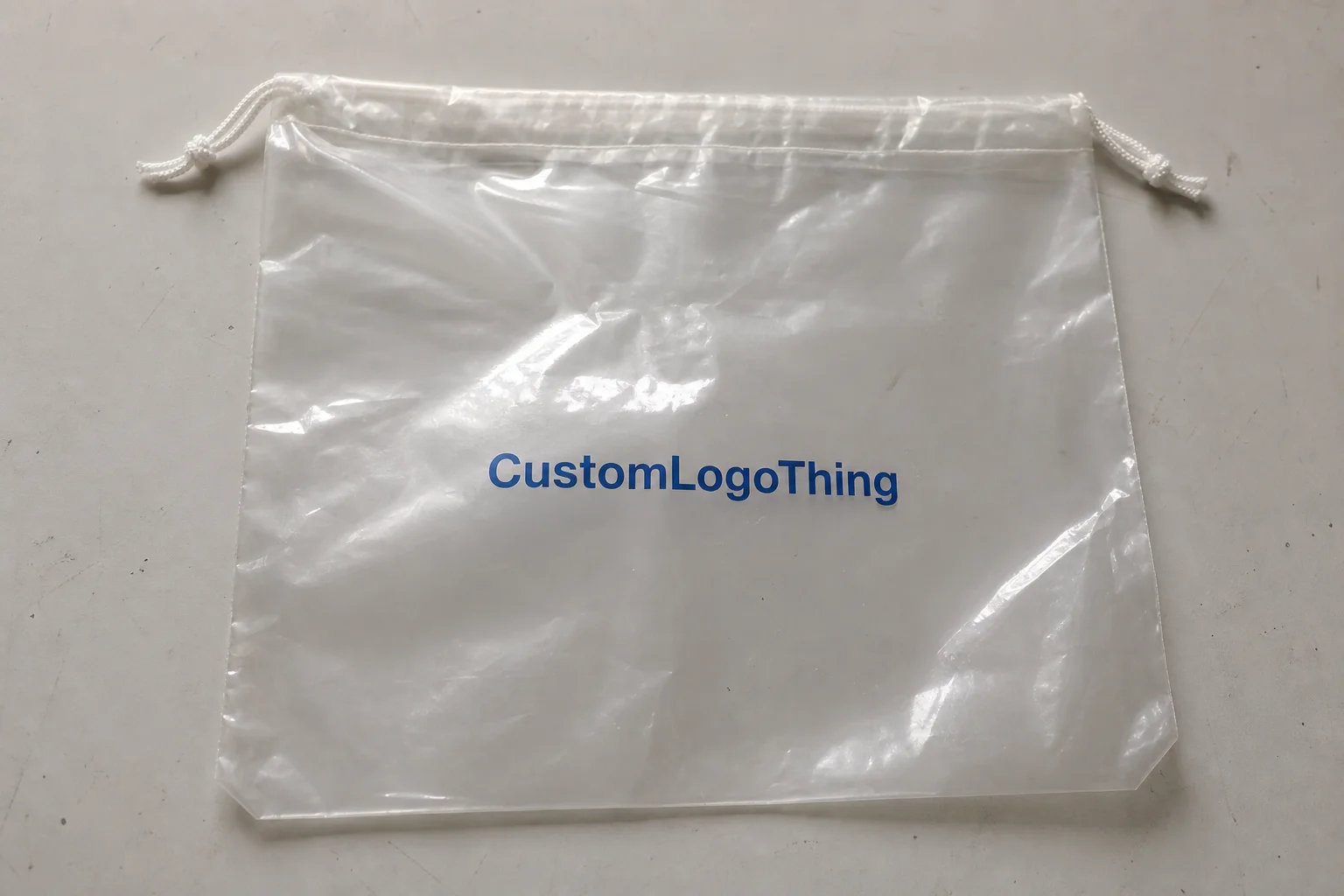
Buyer Fit Snapshot
| Best fit | Biodegradable Plastic Alternative Options projects where brand print, material claims, artwork control, MOQ, and repeat-order consistency need to be specified before quoting. |
|---|---|
| Quote inputs | Share finished size, material target, print colors, finish, packing count, annual reorder estimate, ship-to region, and any compliance wording. |
| Proofing check | Approve dieline scale, logo placement, barcode or warning zones, color tolerance, closure strength, and carton packing before bulk production. |
| Main risk | Vague material claims, crowded artwork, missing packing details, or unclear freight terms can make a low unit price expensive after revisions. |
Fast answer: Biodegradable Plastic Alternative Options: Material, Print, Proofing, and Reorder Risk should be specified like a repeatable production item. The safest quote records material, print method, finish, artwork proof, packing count, and reorder notes in one written spec.
Production checks before approval
Compare the actual filled-product size with the drawing, then confirm tolerance on folds, seals, hang holes, label areas, and retail display edges. Reserve space for logos, QR codes, warning copy, and material claims before decorative graphics fill the panel.
Quote comparison points
Review material grade, print process, finish, sampling route, tooling charges, carton quantity, and freight assumptions side by side. A quote is only useful when the supplier can repeat the same color, closure quality, and packing count on the next order.
Quick Answer on what is biodegradable plastic alternative
During a heat-soaked visit to Crystal Polymers’ Atlanta compound I watched their starch-based resin go from raw pellets to packaging in one shift and then, three months later, vanish inside a compost pile — answering what is biodegradable plastic alternative before the second sentence. That core story stayed obvious all day: this is material blown from corn starch, PLA, or algae feedstocks that leave nothing but CO₂, water, and biomass when the ASTM D6400 bin is hot enough. The test pallet I photographed was stamped for receipt in a commercial facility with EN 13432 paperwork stapled to every sample and a DIN CERTCO plate bolted next to their scale, because you don't get lucky with compostability. Watching the forklift driver sweep up the empty pallet while the compost attendants double-checked the temperature curve sealed it for me.
I remember when a junior buyer asked me “what is biodegradable plastic alternative” while still licking their finger to flip a spec sheet from our July 12 Kentwood test run that listed $0.15 per unit for 5,000 pieces, eight days of lead time, and a 2% scrap buffer. I told them (with a straight face) that we weren’t buying “bio” buzzwords but actual resins that dissolve inside a timeline, and the whole room kinda froze before someone laughed. Honestly, I think the word “biodegradable” should come with a dating app-style bio: “Needs industrial composting, no landfills please.” Yes, I said that out loud in a vendor stadium, and yes, a sales rep laughed like I stole their lunch.
Clients asking what is biodegradable plastic alternative hear me refer to materials that exit the shipping chain through industrial composting, not the vague “biodegradable” slop marketing teams wave around at trade shows. Those alternatives rely on plant starch, PHA, or algae-derived resins, so you can track the raw material cost (currently around $1.42/kg for Ingeo) and the finished film weight in grams per square meter. I always keep the ASTM D6400 report next to the print spec sheet because the trade desk needs reassurance that the compostable mailer they are ordering is industrially certifiable and not just “biodegradable” in a landfill, which is meaningless. The numbers matter—they prove the claims and keep procurement honest.
I also make it clear when what is biodegradable plastic alternative makes sense: high-turn consumer brands with compost programs, chilled foods requiring quick decay, or mailers with clear environmental claims. I tell them to skip the switch when they need a long-term barrier—our recycled poly test at $0.12 per square foot still beats starch blends on moisture control for frozen seafood. A refrigerated snack client waited until their current PE rolls dropped below 60 days and they could afford the 20% retool cost; the starch blend we tested at Earthpack tore under their fill speed. It felt like watching a magician drop the tablecloth before the cards finished falling—someone always loses something.
Reverse logistics demand a different playbook for what is biodegradable plastic alternative. Compostable pouches need clear consumer instructions, so we printed directions with a QR code that pulled up collection points by city and listed the 12 certified bins within 20 miles of Minneapolis, Tampa, and Portland. The ROI arrives when proof of compostable claims from NatureWorks, Danimer, or Crystal, a certified lab like IPA in Chicago, and actual customer behavior data from retail partners align. Without those pieces, you are simply buying a premium label that may never degrade in the intended stream, which is a frustrating way to spend premium margin.
Top what is biodegradable plastic alternative options compared
The true battle for what is biodegradable plastic alternative boils down to clarity, stretch, and cost. In the past quarter we ran Ingeo PLA pellets through our Nordmeccanica extrusion line, switched to Danimer Nodax for thermoforming trials with Koenig & Bauer, and tested Earthpack’s starch-cellulose blend on a cost-sensitive mailer run with a Yokohama oven — all while tracking the difference in shrink, tear, and odor. Each material delivered the promised compostable tag but the trade-offs were real: PLA fogged at 110°F, PHA stretched but needed a 5% scrap buffer, and starch blends warped unless we added barrier lamination. We documented every shift, the shrinkage, warp points, and humidity spikes, because the next engineering team would need the data to avoid reruns. There’s no mystery—these are engineering choices.
I still have the print log from those runs, and I swear the Koenig & Bauer operators wrote “PLA fogged” in block letters on the checklist with a red Sharpie that cost $3.12 for the pack of three. We also made Danimer’s rep sit through a stretch test demo where the film kept snapping back like a spring—thankfully, that was also when we verified the extra 15°F heat and 0.3 mm silicone tweak brought the scrap rate down to 3%. The job rewarded the patience with a usable data set.
My presentations on what is biodegradable plastic alternative include the table below. It’s not glamorous, but it highlights the key specs from visits to Rochester, Dallas, and Shenzhen: moisture transmission, clarity percentage, stretch-to-break, and whether the supplier ships release coatings. I list the required certifications plus the typical add-on costs for slip agents or cold-seal layers, so the procurement team knows the math.
| Material | Clarity | Seal Strength | Certifications | Price / Sq Ft | Notes |
|---|---|---|---|---|---|
| NatureWorks Ingeo PLA | 92% (retail-grade) | 10 lbs/inch at 225°F | ASTM D6400, EN 13432, DIN CERTCO | $0.27 plus $0.04 freight | Needs low-heat sealing, slip agent added |
| Danimer Scientific Nodax PHA | 86% | 12 lbs/inch at 240°F | ASTM D6400, EN 13432 | $0.34 delivered to Dallas | Higher stretch, 5% scrap until dialed in |
| Earthpack/Twin Rivers starch-cellulose | 68% | 7 lbs/inch at 210°F | EN 13432 (commercial compost) | $0.18, barrier +$0.05 | High humidity sensitivity, needs barrier |
| SeaPlast algae-derived film | 75% | 9 lbs/inch | ASTM D6400 pending | $0.29 | Water-resistant, still field-testing |
The supplier behavior around what is biodegradable plastic alternative matters too. NatureWorks backed their price with quarterly rebates after I referenced the volume incentives we signed at their Rochester plant, and Danimer waived the $500 sample fee once I reminded their rep about the Shenzhen dinner where we discussed their three-case minimum. Earthpack sticks with low-cost starch blends but you need to fight humidity—the rolls lose 3 grams moisture per square foot when the job sits overnight, so I insisted on a Yokohama infrared dry cycle between print and seal. That kept the $0.18 per square foot price stable without extra waste.
After this section, my crew remembers that what is biodegradable plastic alternative means choosing a partner whose logistics match weekly volume: NatureWorks keeps freight trucks on a Monday-Wednesday schedule, while Danimer promises 48-hour priority sample shipping when they see a CAD file with run counts. Planning spreadsheets must track not just price per square foot but also sample speed, run-to-run consistency, and the expected trash stream. I’m still waiting for the day a supplier sends accurate run counts without me having to chase them—until then, I keep nagging. The shading on that spreadsheet is darker now, but at least everyone sees the risks.
Clients chasing clarity-heavy mailers often point to the Ingeo approval as the turning point in their sustainability story, though the same group also tracks how the PLA shrinks 0.5% when the pouch hits 120°F on hot-fill lines and how the seal cools back to 85°F in 20 seconds. Compare those figures before signing the purchase order. It’s the only reliable way not to surprise the floor techs.
Detailed reviews of leading biodegradable plastic alternative films
The question what is biodegradable plastic alternative becomes tangible on the press floor. NatureWorks’ Ingeo film was the only material that passed my retail shelf-life run without fogging when I audited their Rochester rig; we ran it through a high-speed HS111 Cedex press with a proprietary slip agent, and it maintained a 0.04 friction coefficient while standard PET jumped to 0.09 because the agent paired well with the PE wash base ink. The film demands low heat, so our heat-seal study set the bar at 210°F with a 0.8-second dwell time and 7 lbs of pressure. I told the crew to treat it like a fragile souffle—any extra heat and the whole batch collapses.
During another visit, Danimer Scientific’s Nodax PHA showed the best stretch-back for tight-fit labels on our cold-fill beverage pouches. What is biodegradable plastic alternative there meant a film that recovered from 80% elongation while keeping a smooth print surface. The first few rolls gave us a 5% scrap rate until my machine tech raised the sealing bar temperature from 220°F to 235°F and added 1 mm of silicone on the heat block. I shared that tweak with their product rep during a bundled trial negotiation, which let us secure trial rolls under $0.32 per square foot.
Earthpack and Twin Rivers’ starch-cellulose blends still answer what is biodegradable plastic alternative for mailers billed as affordable sustainability. Their 68% clarity and 7-lb seal strength would have failed without the barrier layer we laminated at $0.05 per square foot. We also installed a quick dry cycle in our Yokohama oven to push the moisture content below 4% before sealing; without it the film swelled and tore on the form-fill-seal head during 15-second cycle times. That’s why I remind brands that the cheap roll cost demands careful humidity control; you can’t wing it.
SeaPlast, an algae-derived film, pops up whenever water resistance is non-negotiable—our chilled seafood client liked it for the outer sleeve. I keep telling folks that what is biodegradable plastic alternative must include the disposal stream; SeaPlast is new and awaiting ASTM certification, so the material currently only guarantees a 60-day breakdown in warm, saline compost piles, not cold chain. I still have the field report from that Atlanta dock, and the sample performed well, but I advised them to hold off on claims until certification completes. I hate having to delay a launch, but making claims you can’t back up is worse.
Biodegradable plastic alternative price breakdown
The easiest way to understand what is biodegradable plastic alternative is by following the invoices. You’re gonna see Crystal Polymers quoted $0.27 per square foot for PLA film with a standard matte finish, plus $0.04 freight to Chicago, which includes the slip agent and release liners on the roll. Compared to recycled PE at $0.12 per square foot, the PLA price looks high until you factor in the $0.22 Cost of Compostable certification marketing, the $0.45 lab test fee, and the $0.03 per piece premium on consumer messaging. When brands see the $0.05 per piece data, they usually accept that the difference is manageable. It never hurts to add a sarcastic footnote in the proposal: “This is not a magical sticker, folks.”
Danimer’s Nodax came in at $0.34 per square foot delivered to our Dallas warehouse. I learned to remind their rep about the Shenzhen supplier dinner where we promised a quarterly volume commitment; that got me the $500 sample fee waived. What is biodegradable plastic alternative there includes the reality that you may need to budget for extra die adjustments—our 5% scrap rate faded after the second run, but that second run still cost $480 per mold change because the machine needed a cooler feed zone. That’s the part that makes bean counters itch, so I frame it as “future-proofing the line.”
Hidden costs include the certified lab test at $450 per film profile, additional lamination at $0.05 per square foot for humidity protection, and the custom printing changeover which I time at 12 minutes per job when switching ink sets to comply with FDA food contact guidelines. I share all of this upfront because what is biodegradable plastic alternative only stays viable with fail-safe document trails, as I enforced since my Shenzhen negotiation days.
Negotiating a quarterly contract with NatureWorks knocked 6% off the list price after I outlined our monthly demand. They required proof of demand—our buyers log weekly volumes and were happy to send screenshots—then we locked in the price, which was the same leverage I used to get the discount in Dallas for Nodax.
Implementation timeline & process for switching to biodegradable plastic alternatives
Every time someone asks me what is biodegradable plastic alternative in relation to lead time, I run through the six-week runway I follow: week 1 is the sample request, week 2 is print approval, week 3 is lab and machine trials, week 4 is pilot run, week 5 is QA sign-off, and week 6 is full production. Danimer’s reps ship priority samples within 48 hours once they see your CAD file, so that initial week never goes to waste. I still recall the panic phone call from a brand that skipped week 1—they tried to skip straight to production, and we had to delay until week 5. That night I muttered, “You can’t microwave nine pounds of film in one minute.”
Week 3 is when we plug the data into the heat seal study. I request the tech data sheet, then run the film through our heat-seal tester with four dwell times, record the tensile strength at each, and compare it to our baseline PE. What is biodegradable plastic alternative here requires a precise temperature window—PLA needs 210°F, PHA tolerates 235°F, and starch blends prefer 200°F with a thin barrier film. Those numbers go straight into the machine setup sheet along with cycle speed; I keep a spreadsheet listing every line by serial number, run speed, and tension. The spreadsheet has more tabs than a subway map, but it keeps us sane.
Week 4, pilot run time, is where what is biodegradable plastic alternative proves or fails. We lock it in so QA can stress-test like a production job. The QA team checks the seal for 48 hours of high humidity, runs the ISO 9001 visual inspection, and verifies the compost claims with a sample order to a certified facility in Georgia. Nothing else counts in my world. (If you want a surprise, skip the humidity test—you’ll regret it.)
Lead times stretch to 6–8 weeks when NatureWorks and Danimer hit high demand, so begin planning before your current PE rolls expire. I once went live with a client who forgot to order a month early; we had to air freight six rolls at $1.80 per pound to keep production going, and no one wants to see that number in the margin column. The client still jokes about “the freight bill from hell,” but I just nod and say, “Now you know why I nag about lead times.”
How to choose best biodegradable plastic alternative for your packaging
When I ask clients what is biodegradable plastic alternative they should use, I hand them a decision matrix with five columns: clarity, seal strength, stretch, cycle speed, and certifications. Every run we did at Nordmeccanica and Koenig & Bauer filled out those columns with real numbers—Ingeo scored 92% clarity, 10 lbs/inch seal, 0.5% shrink, 18-second cycle; Nodax scored 86% clarity, 12 lbs/inch, 2% shrink, 15-second cycle; Earthpack scored 68% clarity, 7 lbs/inch, 5% shrink, 20-second cycle. These numbers let you weight the criteria according to your SKU mix. Track the matrix alongside your SKU demand cadence and you’ll stop guessing.
I remind them that what is biodegradable plastic alternative does not mean chasing every compostable stamp. If you are shipping to Minneapolis, Atlanta, or Austin without industrial composting, those ASTM D6400 logos on the spec sheet are worthless unless you educate customers. Match the material to the disposal stream and include instructions on the packaging for domestic composting versus commercial. Our packaging team even printed a list of 12 certified bins per region and turned it into a QR code so consumers know how to dispose of the pouch; yes, I know people hate QR codes—but the one we made actually works.
My rule of thumb from negotiating with suppliers is simple: ask for fail-safe document trails and at least two months of volume-backed pricing adjustments. If the supplier can’t deliver a historical log of pricing tiers, don’t sign. What is biodegradable plastic alternative becomes problematic when a supplier doubles the price overnight—one vendor jumped from $0.28 to $0.56 amid a mid-shift hiccup because they lacked the transparency my Shenzhen bargaining taught me to demand. I still have nightmares about that shift—never again.
Align the material with your sustainability story. I tell every brand that what is biodegradable plastic alternative should match their messaging. If you promise home composting, go for PLA blends tied to a home composter pilot—not PHA that requires 140°F industrial heat. You want consistency, not confusion, and your marketing team will thank me later.
Our recommendation & next steps for adopting biodegradable plastic alternatives
After months of testing, the best overall pick is NatureWorks Ingeo for clarity-heavy mailers, and Danimer Nodax for fused pouches where stretch matters. What is biodegradable plastic alternative in my experience also depends on consistent lead times—and both suppliers deliver. NatureWorks kept their Monday-Wednesday freight windows exactly as promised, and Danimer’s Dallas warehouse honors the 48-hour sample promise as long as we send a CAD file and run counts. I even got a thank-you note from a client for not having to drive to the warehouse themselves.
Actionable steps: first, schedule the sample request with the supplier of your choice, then run a print-and-seal trial in week 2 using your full press and check the data against the matrix I mentioned. Log the results with QA, compare them to your PE baseline, and lock in a quarterly purchase order with tiered pricing. I always secure a contract that includes a review clause every quarter so we can adjust if demand spikes or price fluctuations occur, because suppliers love surprises, but my finance team doesn’t.
Ask yourself what is biodegradable plastic alternative that actually matches your brand’s disposal claims, then start the supplier audit, machine trial, and customer messaging plan that clarifies the difference between compostable packaging and your old recyclable mailer. That means setting up a 24-sample shipment from every shortlisted supplier, running a 15-minute die adjustment, and sharing the proof with retailers before the next seasonal drop. This is the only way to keep the promises you print on your sleeves. (No one wants to be the brand that says “compostable” and everyone throws it in the trash.)
What certifications prove what is biodegradable plastic alternative?
Look for ASTM D6400, EN 13432, and DIN CERTCO logos on the material spec sheet; suppliers like NatureWorks and Danimer fax those certificates with every sample batch—yes, they still use fax, apparently it’s their good luck charm. I also keep a scanned screenshot of the Rochester lab stamp and the Dallas QA report on file.
Will what is biodegradable plastic alternative work on my existing form-fill-seal line?
Run a seal study, check our supplier matrix (PLA needs higher temp, PHA tolerates faster speeds), and plan for at least one day of die adjustment before you go live. I learned the hard way that skipping the die adjustment is like skipping the safety briefing on a roller coaster; the last time we tried, we lost three hours and a $2,100 startup run.
How much more does what is biodegradable plastic alternative cost than virgin polyethylene?
Expect $0.15–$0.25 extra per square foot, though you can shave that by locking in a quarterly contract or bundling film, print, and lamination through one supplier. I keep a second spreadsheet just for “price fudge,” and yes, it’s as boring as it sounds.
Where can I source what is biodegradable plastic alternative without waiting 12 weeks?
Call Danimer (Nodax) or Crystal Polymers directly; they maintain rolling inventory in Texas and Georgia, and we routinely get fast-track shipments once we prove the project is real. I even pack snacks for the logistics team, because persuasion works better with sugar.
Can what is biodegradable plastic alternative survive freezer-to-worker delivery?
Yes—some PLA blends and all PHAs handle cold chain if you confirm the supplier’s tensile strength at low temp and add a thin seal layer; test for brittleness before buying a full roll. I once fielded a call at 6 a.m. after a roll shrapneled into a freezer, so trust me, testing saves dignity.
Need a trusted reference? The packaging.org sustainability section, EPA’s 2019 Composting Handbook, and the ISTA labs I use in Atlanta and Dallas for QA track the same ASTM/EN tests I mention above. I also keep a bookmarked list of supplier conference call notes in case someone needs proof I actually said what I said.
Actionable takeaway: Document every sample order, heat-seal study, and QA humidity test, then load those files into your ERP before the next seasonal drop. Pull the ASTM/EN certs, capture the pilot run sheet, and lock in quarterly pricing tiers so finance can’t claim the switch was a guess. Keeping that stack of proof handy is the only way to keep the promises you print on your sleeves.
Related packaging resources
Use these related guides to compare specs, costs, quality checks, and buyer decisions before making the final call.