Buyer Fit Snapshot
| Best fit | Custom Kraft Gift Bags Bulk projects where brand print, material claims, artwork control, MOQ, and repeat-order consistency need to be specified before quoting. |
|---|---|
| Quote inputs | Share finished size, material target, print colors, finish, packing count, annual reorder estimate, ship-to region, and any compliance wording. |
| Proofing check | Approve dieline scale, logo placement, barcode or warning zones, color tolerance, closure strength, and carton packing before bulk production. |
| Main risk | Vague material claims, crowded artwork, missing packing details, or unclear freight terms can make a low unit price expensive after revisions. |
Fast answer: Custom Kraft Gift Bags Bulk: Pricing, Specs, and Lead Times should be specified like a repeatable production item. The safest quote records material, print method, finish, artwork proof, packing count, and reorder notes in one written spec.
Production checks before approval
Compare the actual filled-product size with the drawing, then confirm tolerance on folds, seals, hang holes, label areas, and retail display edges. Reserve space for logos, QR codes, warning copy, and material claims before decorative graphics fill the panel.
Quote comparison points
Review material grade, print process, finish, sampling route, tooling charges, carton quantity, and freight assumptions side by side. A quote is only useful when the supplier can repeat the same color, closure quality, and packing count on the next order.
Custom Kraft Gift Bags bulk orders make sense when packaging has to survive real use, not just sit there looking neat on a sample sheet. If you are stocking a retail floor, packing event kits, or building a gifting program that needs the same branded bag from one shipment to the next, the details stop being decoration and start being business. Bag size, handle construction, paper weight, print area, and lead time all decide whether the finished piece feels solid or cheap.
Packaging buyers know the strongest programs are rarely the flashiest ones. They are the bags that fit the product cleanly, hold weight without sagging at the handle, and keep brand colors in line across repeat orders. That is why kraft keeps showing up in retail packaging, product packaging, and seasonal promotions. It prints well, stores well, and presents well without a lot of fuss. Buyers comparing Custom Packaging Products or building a broader branded lineup through Wholesale Programs usually find kraft gift bags land in the practical middle ground between cost control and a polished handoff.
For teams ordering with confidence, the goal is not the cheapest bag on paper. It is the bag that survives handling, supports the brand, and arrives in a repeatable spec so the next reorder matches the first one. That is the point of bulk ordering. Fewer surprises. Fewer awkward emails. Better odds the bags actually do their job.
If you have ever watched a last-minute bag crack under a box set, you already know why spec discipline matters. Packaging failures usually start small. A gusset is too narrow. A handle is too light. A logo sits too close to a fold and gets lost in the crease. None of that is dramatic in a proof. It becomes dramatic on a busy counter.
Why Custom Kraft Gift Bags Bulk Beat Last-Minute Packaging
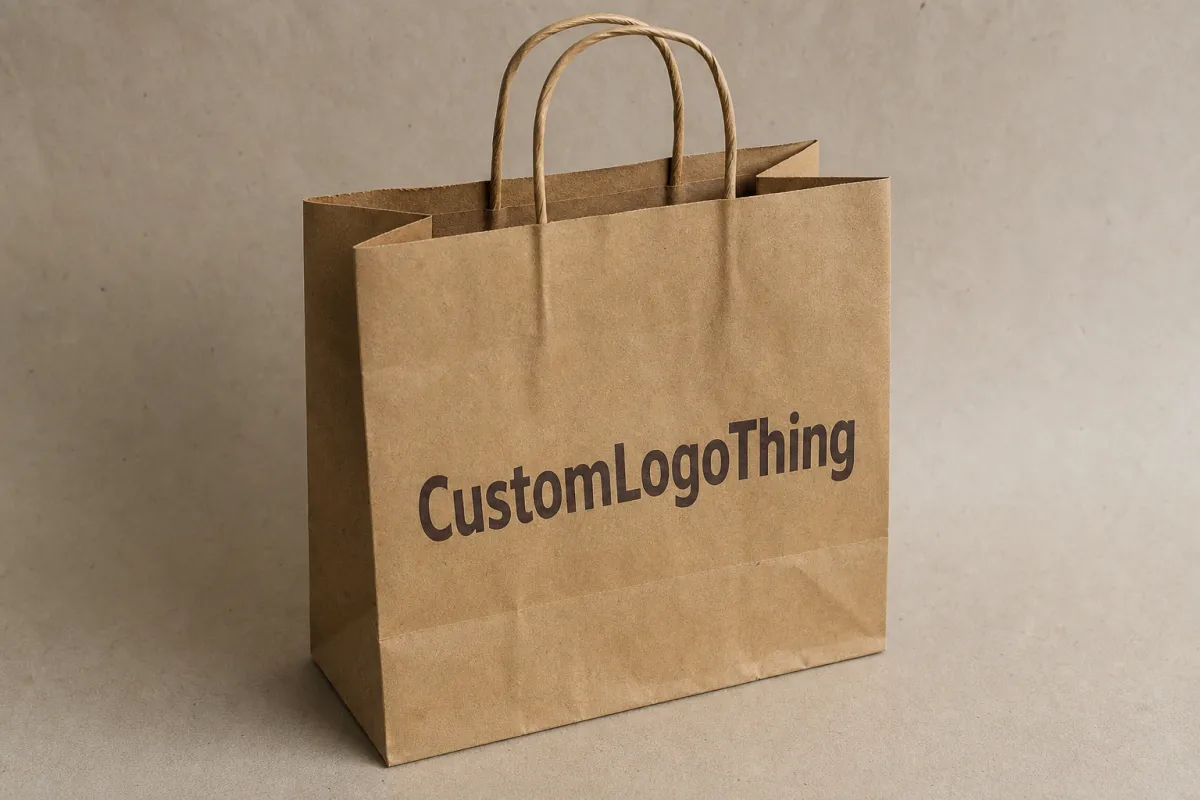
When stores, promotions, and events scale up fast, packaging mistakes usually show up at the worst possible time. A bag that is one inch too narrow forces product edges to fold or crush. A handle that felt fine in a sample tears after heavier items go in. A logo that looked crisp on a screen prints too faintly on kraft. Those problems usually come from bad dimensions or weak construction, not from kraft itself. The material is rarely the villain. The spec is.
Ordering custom kraft gift bags bulk reduces those headaches because the bag program can be built around the actual contents, the actual load, and the actual branding needs. That matters whether the bags are used for boutique apparel, bakery items, Trade Show Gifts, bottle sets, or holiday retail packaging. Bulk purchasing also keeps color, structure, and print placement aligned from shipment to shipment, which matters more than people like to admit when every touchpoint has to feel intentional.
There is also a floor-efficiency win. Teams working with a consistent bag size do not waste time digging through mismatched inventory or forcing oversized products into undersized packaging. Staff pack faster, the presentation stays uniform, and the store or event booth looks more put together. If you run multiple locations or repeat campaigns, consistency is not a luxury. It is part of the operating model.
"A good kraft bag program should feel boring in the best possible way: predictable dimensions, clean print, sturdy handles, and no surprises when the order arrives."
Kraft bags are especially useful for programs that want a natural look without giving up function. Brown kraft gives a warm, earthy presentation; white kraft gives a brighter canvas for logos and artwork; both work well for branded packaging that needs to be practical first and attractive second. That balance is why kraft keeps showing up across retail packaging, food service, corporate gifting, and event giveaways. It is not trying to do everything. It just works.
For buyers comparing custom printed boxes with carry bags, the decision usually comes down to product shape, customer carry distance, and the handoff moment. Boxes protect rigid goods better, but gift bags are faster to fill, easier to distribute, and often lower in total packaging cost for many retail uses. In a bulk program, that efficiency stacks up quickly.
Reliable bulk supply also makes replenishment easier. Once a spec is approved, reordering gets simpler, and the brand can keep the same look across months or quarters. That repeatability is one of the quiet strengths of kraft bags. They fit a steady purchasing rhythm instead of a one-off scramble.
There is one caveat. Not every product should live in a paper bag, even a well-made one. Dense glass, sharp corners, or moisture-heavy items may need reinforcement, inserts, or a different packaging format altogether. A good supplier should say that out loud before the order is placed.
Product Details: Materials, Handles, Printing, and Finishes
Kraft paper is not one single material. It comes in different surface colors, paper weights, and construction styles that change how the bag feels in hand and how much load it can carry. Natural brown kraft is common for a warm, understated look. Bleached white kraft gives a cleaner background for logos, especially when a brand wants stronger contrast or more accurate color reproduction on the front panel.
Paper weight matters because it affects stiffness, appearance, and durability. A lighter kraft bag can work for tissue-wrapped apparel or small accessories, while a heavier build is better for boxed goods, bottles, and gift sets. Buyers usually talk about paper thickness in gsm or paper weight, and that specification deserves attention early. A bag with stronger stock resists wrinkling better and holds shape more cleanly on a counter or shelf.
Handle style matters just as much as the paper. Twisted paper handles are common because they are cost-effective, printable, and suitable for many midweight retail uses. Flat paper handles can be comfortable and practical for lighter loads. Rope handles usually feel more premium and can support heavier gifting programs. Die-cut handles are efficient for certain presentation uses, especially where the bag is more about visual simplicity than long carry comfort. The right choice depends on contents, use length, and the impression the brand wants to leave.
Printing on kraft needs some planning. One-color logos often look sharp and economical, especially on brown kraft. Full-color graphics can work well, but the print has to account for the kraft surface because the paper tone changes the result. Foil accents, used sparingly, can lift the presentation for premium retail packaging or holiday gifting. A simple brand mark often works better than crowded graphics because it stays readable at a distance and avoids muddy print areas.
Finishing details can improve both appearance and performance. Matte varnish gives a softer surface feel. Spot gloss can highlight a logo or band without covering the full bag. Reinforced tops improve the opening structure, which helps when bags are packed quickly on a retail floor. Gusset sizing is another detail that gets overlooked; a wider gusset makes the bag easier to use for items that are not flat, while a narrower gusset keeps the profile cleaner for smaller gifts.
Many kraft bag programs also benefit from small construction upgrades: folded tops for a cleaner edge, bottom reinforcement for heavier contents, and stronger glue lines at key stress points. None of that is glamorous. All of it matters. Those choices are the difference between a bag that looks fine in a product photo and a bag that performs on a live sales floor.
For brands building a broader package branding system, kraft bags pair well with labels, tissue, inserts, and coordinated ribbon or sticker programs. That makes them useful across seasonal promotions and recurring retail campaigns, where the packaging needs to look cohesive without pushing per-unit cost too far. In many cases, kraft bags become the everyday workhorse while more elaborate custom printed boxes are reserved for premium items or special launches.
For sustainability-minded buyers, kraft can also fit naturally because it is often sourced from fiber-based material streams and can align with recyclable packaging goals, depending on coatings, inks, and handle construction. For broader packaging and recovery guidance, the EPA recycling resources and FSC materials information can help procurement teams set internal requirements. Final recyclability still depends on the full build, not the paper alone.
That distinction matters. A paper bag is not automatically a recyclable bag in every market. Lamination, heavy coatings, and mixed-material handles can change the outcome. Buyers who need sustainability claims for a retail program should verify the full build instead of assuming the paper face tells the whole story.
Specifications to Confirm Before You Order
The fastest way to avoid quoting errors is to define the bag spec before asking for pricing. The first measurement to lock down is width, gusset, and height. Those three numbers determine the usable interior space, the look of the front panel, and whether the bag can carry the product without bulging awkwardly. If tissue paper, inserts, or a product box will go inside, that space has to be counted too.
Load expectation comes next. A bag intended for folded apparel does not need the same build as a bag holding glass bottles or dense boxed goods. This is one of the most common ways a project goes off track: the bag looks right on paper, but the actual contents are heavier or taller than expected. When possible, specify the item weight and whether the bag will be carried for short handoff use or longer customer carry use.
Printing specs affect both appearance and cost. The quote should clearly state how many ink colors are needed, whether the print covers one side or both sides, and how large the logo area needs to be. Some artwork prints cleanly with one color and strong negative space. Other layouts need a fuller ink build or more careful registration. If the brand uses specific Pantone references, include those early so the supplier can assess the print method realistically.
Structural choices also shape durability. Paper thickness, handle attachment, top folding, and bottom reinforcement all affect how the bag behaves in use. A small change in handle reinforcement can make a noticeable difference in performance. A small change in bottom glue or board support can do the same. Those details rarely show up in a marketing mockup, but they matter on the packing table.
When the contents are unusual, send product photos or sample units. A real sample is often more useful than a verbal description because it shows the true footprint, the sharp edges, and the clearance needed to close the bag cleanly. A cylindrical jar, a rigid gift box, and a soft garment all need different thinking even if their nominal dimensions look similar on a spreadsheet.
It also helps to define the packaging use case. Is the bag meant to be handed over at checkout, used for event gifting, or included as part of a premium retail purchase? The answer affects handle choice, print emphasis, and how much durability matters. A checkout bag and a premium gift bag may share the same material family, but they should not always share the same construction.
- Measure the product in its final packed state, not just the bare item.
- Confirm load weight so the handle and bottom structure match the use.
- State the print method clearly, including one-side or two-side decoration.
- Share artwork files with vector logos when possible for cleaner registration.
- Send reference photos if the product shape is unusual or premium presentation matters.
Those simple steps cut down on back-and-forth and lower the risk of getting a quote that looks fine until the contents are reviewed. Good specifications make the rest of the process faster and a lot less annoying.
Cost, Pricing, and MOQ for Custom Kraft Gift Bags Bulk
Pricing for kraft gift bags comes down to a handful of variables: bag size, paper weight, handle style, print complexity, finish, and total order quantity. A smaller bag with a one-color logo and twisted handles will usually price lower than a larger bag with rope handles, heavy board reinforcement, and full-color printing on both sides. That pattern is consistent across most packaging programs because material usage, labor, and setup all change with the spec.
MOQ, or minimum order quantity, is where buyers usually have to balance flexibility and unit cost. Lower quantities tend to carry a higher per-unit price because setup time gets spread across fewer pieces. Larger runs often improve efficiency and lower the cost per bag, especially when the size and print are standard. If a program is still being tested, starting with a manageable quantity and scaling once the bag proves itself in use is usually the sane move.
For planning, many buyers ask for a quote tiered by quantity so they can see where the cost drops in a meaningful way. That is smart. It shows whether ordering 3,000 pieces versus 5,000 pieces changes the unit cost enough to justify more inventory. It also helps procurement decide how much warehouse space to reserve and whether the bags should support a single seasonal launch or a longer replenishment cycle.
Here is a practical way to think about pricing ranges for common bulk kraft bag projects. These are illustrative ranges only, because shipping lane, artwork complexity, and material choice can move the numbers a lot:
| Bag Type | Typical Use | Common MOQ | Indicative Unit Range | Notes |
|---|---|---|---|---|
| Small twisted-handle kraft bag | Jewelry, small gifts, accessories | 3,000-5,000 pcs | $0.18-$0.35 | Usually best with one-color logo and standard paper weight |
| Medium retail gift bag | Apparel, boxed gifts, event packs | 3,000-5,000 pcs | $0.24-$0.48 | Handle style and print coverage affect cost quickly |
| Large premium kraft bag | Bulk apparel, heavier gifts, bottles | 5,000 pcs+ | $0.38-$0.78 | Reinforcement, rope handles, and larger panels add cost |
| Custom printed premium build | High-end retail packaging | 5,000 pcs+ | $0.55-$1.10 | Foil, double-sided print, or specialty finishes raise pricing |
Those figures are best used for budget planning, not final purchasing. A quote still needs to account for setup charges, plate or color charges, freight, packaging requirements, and any special packing instructions. A buyer who asks only for a unit price can miss the real landed cost. A buyer who asks for unit price, setup, and shipping together gets a much more useful comparison.
It also pays to be selective with customization. A single strong logo, a clean brand color, and a standard kraft base often deliver better value than piling on finishing effects that do not improve the buyer's actual experience. Not every order needs foil or complex artwork. In many retail packaging programs, restraint looks more professional than excess.
When comparing suppliers, ask whether the quote assumes one print side or both, whether the handle material is included in the stated price, and whether the bag ships flat-packed or assembled. Those details can change the practical cost per use. A quote that seems cheaper may not be cheaper once freight, packing density, and production steps are counted.
To keep spend under control without weakening the brand presence, many teams choose one or two print colors, standard dimensions, and a straightforward finish. That approach usually gives the best balance of presentation and cost. It also keeps repeat orders easier to manage, which matters when a seasonal campaign turns into a standing program.
One more point on budgeting: unit price is only useful if the product actually works for the contents. Saving a few cents per bag means very little if the handles fail on the floor or if staff need to double-bag the order. That kind of saving is fake.
Process and Timeline: From Quote to Delivery
Most bulk bag orders follow a clear production path. The first step is specification review. That includes dimensions, paper choice, handle type, print method, quantity, and delivery location. The second step is artwork check, where the supplier confirms file quality, print area, and whether the design needs adjustment for the kraft surface. After that comes quote approval, then sample or proof confirmation, production, inspection, and shipping.
The timeline moves faster when the artwork is ready to print. Vector logos, clean outlines, and confirmed color references save time. So does a clear target quantity. If the order is likely to sit between two pricing tiers, the supplier may need to confirm material usage and run planning before locking the quote. That is normal and worth doing carefully.
Delays usually come from avoidable problems. Late artwork approvals are common. So are changes to bag dimensions after pricing has already been confirmed. Another frequent delay is uncertainty about the print area, especially when a logo is scaled too close to a fold, gusset, or handle anchor point. These issues are not complicated, but they do add days if they are discovered late.
For planning, it helps to separate proof time, production time, and transit time. Proofing may take a few days depending on artwork revisions. Production may take longer for custom constructions or higher quantities. Transit time depends on destination and shipping method. A buyer who builds the schedule with all three steps in mind is less likely to get caught by a retail launch date or event deadline.
Typical production windows for a straightforward kraft bag order can often fall in the 12-20 business day range after final proof approval, though this depends heavily on order volume, decoration method, and factory workload. Transit can add several more days, especially for larger shipments. If the program is seasonal, the safest move is to start earlier than feels necessary. Packing deadlines have a habit of arriving faster than procurement calendars suggest.
From an operations standpoint, bulk orders work best when the spec is stable. If the goal is to launch a campaign in stores, at an event, or through a recurring mailer, the packaging should be locked before marketing starts designing around it. That is especially true for branded packaging that needs to coordinate with tissue, inserts, stickers, or shelf signage. The more moving parts, the more important it becomes to freeze the bag spec early.
Industry standards can also guide how buyers think about testing. For shipping-related use, ISTA guidance is useful for understanding how packaging behaves under transit stress; for material and sustainability expectations, groups like ISTA and the FSC framework help define what should be verified rather than assumed. For packaging buyers, that mindset matters because it keeps the discussion focused on performance, not just appearance.
When a supplier is organized, the process feels straightforward: confirm the spec, approve the proof, and keep the schedule moving. That is what buyers should expect from a good kraft bag program.
If a quote feels vague, push it back. A clean packaging project is built on clear assumptions. The order should not start as guesswork and end as guesswork.
Why Choose Us for Bulk Kraft Gift Bags
A reliable supplier should do more than accept an order. The better partner translates your retail goal or gifting program into a bag that is actually practical to run at scale. That means helping you choose a handle style that matches the load, a paper weight that supports the contents, and a print layout that looks clean on kraft instead of crowded or muddy. The goal is simple: the bag should work in real hands, on real counters, under real deadlines.
Consistency matters most on larger orders. When a production run reaches several thousand pieces, small variations in cut size, glue application, handle placement, and print registration become more visible. Good quality control reduces those swings. That is why buyers should ask about inspection points, especially for handle attachment, glue strength, dimensional accuracy, and print alignment. Those are the details that separate a dependable batch from a frustrating one.
It also helps when the supplier speaks plainly about what can and cannot be done. If a design needs a heavier paper stock to hold a bottle set, that should be said clearly. If a full-bleed look will not reproduce well on brown kraft, that should be addressed before production starts. Straight answers save time and keep procurement from having to solve problems after the order is already moving.
For brands building a broader packaging program, kraft bags can sit alongside retail packaging, product packaging, and custom printed boxes without creating visual conflict. That flexibility is useful. A company may use cartons for shipping or premium packaging and still rely on kraft bags for carryout, gifting, or point-of-sale handoff. The best suppliers understand how those pieces fit together rather than treating each item in isolation.
There is also value in straightforward service. Clear pricing, clear timelines, and clear assumptions reduce friction for the buyer and make internal approvals easier. Procurement teams, marketing teams, and store operations all want the same thing here: a bag that arrives on time, looks right, and does the job. A supplier that communicates well makes that outcome much more likely.
"The right kraft bag partner should help you choose the spec that fits the actual use, not the spec that only looks good in a proposal."
That is the standard to hold. A good bulk packaging program should be predictable, repeatable, and sensible to reorder. If the supplier can support that, the bags become a dependable part of the brand rather than a recurring headache.
A practical supplier should also flag the hidden risks. For example, if your artwork depends on tiny reverse type, kraft may not give you enough contrast. If your launch date is fixed, the supplier should tell you whether the schedule is realistic instead of pretending there is wiggle room where none exists.
Next Steps: What to Send for an Accurate Quote
If you want an accurate quote, send the details that drive production, not just the headline idea. Start with the preferred size, quantity, paper color, handle style, print artwork, target delivery date, and destination ZIP or country. Those seven items give a supplier enough information to estimate material usage, production method, and freight with far better accuracy than a vague request ever will.
If the product has an unusual shape or weight, include reference photos, a sample bag, or the product dimensions in its final packed state. That small step can save a lot of back-and-forth because it tells the supplier whether the gusset should be wider, whether the bag needs reinforcement, or whether a different size would reduce waste and improve presentation. In packaging, fit is often the difference between a clean program and a frustrating one.
Ask the quote to separate unit cost, setup, and freight. That way you can compare options in a useful way rather than comparing numbers that hide different assumptions. It is also worth asking whether the MOQ changes by print method or handle style. Sometimes a small design change has a big effect on order economics, and that can be valuable information before approval goes to finance or operations.
Once the spec sheet is reviewed, confirm the MOQ, approve the proof, and lock the production slot before the deadline gets too close. That sequence keeps the order moving and lowers the odds of missing a sales window, event date, or seasonal launch. Bulk packaging is easier when the schedule is protected early.
For buyers who want packaging that looks clean and feels dependable, custom kraft gift bags bulk remain one of the most practical options available. They balance presentation, function, and repeatability in a way that works for retail, events, and gifting alike. When the spec is clear and the timeline is planned well, the result is a package that supports the brand instead of complicating it.
The takeaway is simple: define the contents, confirm the load, Choose the Right handle and paper weight, and ask for pricing that shows the real landed cost. Do that before you compare suppliers, and the order gets easier immediately.
FAQ
What sizes are most common for custom kraft gift bags bulk orders?
Common sizes usually cover small retail items, medium gift sets, and larger apparel or bottle packaging. The right size depends on the product footprint, gusset depth, and whether tissue, inserts, or boxes will be added. A supplier can often recommend a standard size that lowers cost while still fitting the contents cleanly.
What is a typical MOQ for custom kraft gift bags bulk?
MOQ depends on the bag style, print method, and level of customization requested. Simpler designs and standard constructions usually allow more flexible quantities than highly customized builds. Ask for the MOQ together with unit price, because the best value is often tied to the order tier.
Can custom kraft gift bags bulk include printing on both sides?
Yes, many bulk kraft bags can be printed on one side or both sides, depending on layout and budget. Double-sided printing increases decorating area but may also affect setup cost and lead time. Artwork should be checked carefully to make sure logos, text, and placement stay readable on the kraft surface.
How long does production usually take for custom kraft gift bags bulk?
Production time depends on artwork approval, material availability, order quantity, and print complexity. Proofing and revisions can add time, so ready artwork and fast approvals help keep the schedule on track. Shipping time should be added separately so the bags arrive before the retail launch or event date.
What details do you need to quote custom kraft gift bags bulk accurately?
The most important details are size, quantity, paper color, handle style, print colors, and delivery location. Photos of the product or existing packaging help confirm whether the bag needs reinforcement or a specific gusset. The clearer the specification, the faster the quote and the lower the risk of changes later in production.
Are kraft gift bags always recyclable?
No. Recyclability depends on the full build, including coatings, inks, adhesives, and handles. A plain paper bag is usually easier to recover than a bag with heavy lamination or mixed materials, but local rules still matter. If recycling claims matter to your program, verify the exact construction before you approve the order.

