Buyer Fit Snapshot
| Best fit | Display Boxes Wholesale projects where brand print, material claims, artwork control, MOQ, and repeat-order consistency need to be specified before quoting. |
|---|---|
| Quote inputs | Share finished size, material target, print colors, finish, packing count, annual reorder estimate, ship-to region, and any compliance wording. |
| Proofing check | Approve dieline scale, logo placement, barcode or warning zones, color tolerance, closure strength, and carton packing before bulk production. |
| Main risk | Vague material claims, crowded artwork, missing packing details, or unclear freight terms can make a low unit price expensive after revisions. |
Fast answer: Display Boxes Wholesale: Pricing, Specs, and Process should be specified like a repeatable production item. The safest quote records material, print method, finish, artwork proof, packing count, and reorder notes in one written spec.
Production checks before approval
Compare the actual filled-product size with the drawing, then confirm tolerance on folds, seals, hang holes, label areas, and retail display edges. Reserve space for logos, QR codes, warning copy, and material claims before decorative graphics fill the panel.
Quote comparison points
Review material grade, print process, finish, sampling route, tooling charges, carton quantity, and freight assumptions side by side. A quote is only useful when the supplier can repeat the same color, closure quality, and packing count on the next order.
Display Boxes Wholesale: Pricing, Specs, and Process
If you are shopping for display boxes wholesale, the cheapest quote can be the most expensive mistake. A display box that saves a few cents but hides half the product usually costs more in lost sales than it saves in packaging. Shelf space is expensive. So is a bad first impression.
Why Display Boxes Wholesale Work on the Shelf
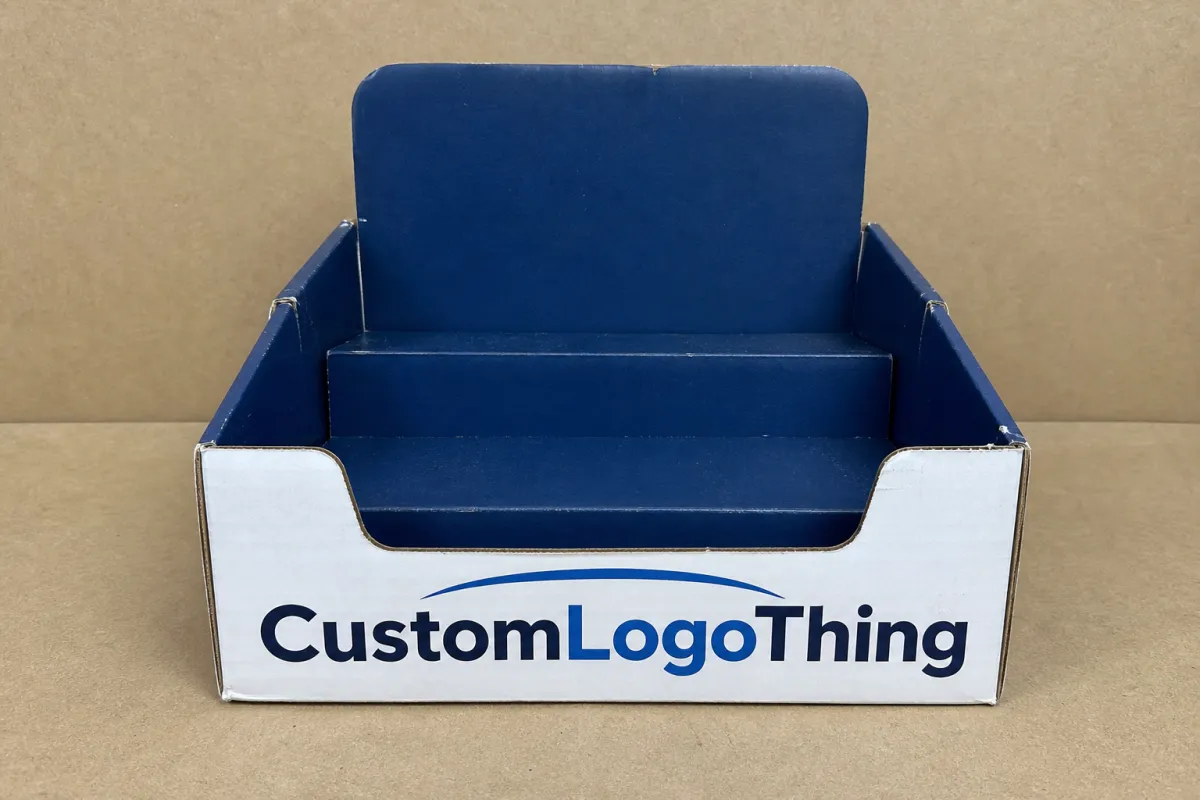
Retail is blunt. If shoppers can see the product fast, grab it without a struggle, and compare it without squinting, the item usually moves. That is the core value of display boxes wholesale: they turn shelf space, a counter, or an endcap into a selling surface instead of a pile of inventory.
Picture a countertop full of loose items. The shopper has to dig, lift, compare, and guess. A display box clears that clutter and forces a faster decision. That matters for impulse buys, seasonal launches, and smaller retail spaces where every inch needs a job. Store staff benefit too. Less loose stock means fewer drops, fewer spills, less rework, and a display that still looks decent after a few rounds of handling.
Wholesale packaging makes sense when the same product has to show up in multiple stores with the same width, the same count, and the same face-out presentation. A custom display box saves time when repeatability matters more than a one-time presentation stunt. If the box arrives ready to place and cuts labor at store level, that is not a nice extra. That is the whole point.
From a buyer’s point of view, the shelf math looks like this:
- Visibility: The front panel should show enough of the product for quick identification.
- Merchandising: The structure should hold count, shape, and orientation without constant repair.
- Speed: The store should be able to open, place, and sell it without extra steps.
- Repeatability: Every unit should look the same, because inconsistent packaging looks cheap immediately.
That last part gets ignored too often. A display that looks sharp in a mockup but drifts in production does not build confidence. It creates complaints, reprints, and way too many emails. If you are planning multiple runs, the packaging has to behave the same way every time. That is where wholesale packaging earns its keep.
A display box should earn its shelf space. If it slows shoppers down, blocks the product, or collapses after one store reset, the packaging missed the point.
If you are standardizing several SKUs, our Wholesale Programs page is the right starting point. For related formats that may fit the same product line, browse our Custom Packaging Products.
Product Details: Styles, Materials, and Print Options
Display boxes do not all solve the same problem. Some are built for a counter, some for a shelf, and some for a club-store pallet where speed matters more than polish. Pick the wrong style and the product gets buried or the freight bill gets ugly. Pick the right one and the packaging carries part of the sales load.
The main display box styles worth comparing are straightforward:
- Counter displays: Small footprint units placed near the register or service desk. Best for impulse items, samples, travel-size products, candy, lip balms, packets, and accessories.
- PDQ trays: “Pretty darn quick” trays designed for fast retail set-up. Good for shelf-ready replenishment, multi-pack items, and assortments that need to stay neat while shipping flat.
- Retail-ready cartons: Corrugated or paperboard cartons that open into a display with minimal store handling. Better for heavier loads or club-store style presentation.
- Shelf displays: Wider formats made to sit directly on shelf or endcap, usually with a stronger back panel and a front cutaway for product visibility.
Material choice should follow the product, not the other way around. Cardstock works well for light cosmetics, promo items, sachets, and small cartons. CCNB, or clay-coated news back, gives a cost-effective surface for vivid print and decent stiffness. Kraft board fits brands that want a natural look and a lower-gloss finish. Corrugated board is the workhorse when the load is heavier, the shipping distance is longer, or the display needs more crush resistance.
For reference, a light counter display for 6 to 24 small items may work on 16pt to 24pt cardstock or folded CCNB. A tray holding bottles, jars, or heavier pouches usually needs E-flute or B-flute corrugated board so the sides do not sag. That is the tradeoff: paperboard gives you sharper print and lower weight, corrugated gives you more strength and better transit protection.
Print and finishing choices change both the look and the cost. A matte aqueous coating reads clean and professional, especially on natural or minimalist designs. Gloss can make bright color blocks punchier, but it also shows fingerprints and dust faster. Soft-touch feels premium, though it costs more and can scuff if the run is packed too tightly. Foil stamping and embossing can pull attention in a crowded aisle, but they need restraint. Too much decoration and the product starts looking like it is trying too hard.
I would rather see one finish that suits the product than three finishes fighting for attention. That is not me being precious. It is what happens when a good pack gets busy for no reason.
If the display is for food, supplements, or personal care, ask about ink, coating, and migration requirements before artwork starts. Not every board or finish is the right fit for every category. A supplier should tell you that plainly instead of guessing and hoping the customer service team can clean up the mess later.
Specifications That Matter Before You Order
Most bad packaging orders start with vague specs. “About this size” and “something sturdy” are not specs. They are trouble with a shipping label.
Before you place a wholesale order, lock down the details that affect fit, durability, and retail performance. These are the ones that matter most:
- Internal dimensions: Measure the product, then the pack count, then the display footprint. Outer size alone is not enough.
- Product weight: A display that holds light sachets may fail fast with glass jars or filled pouches.
- Face height: Shoppers should see the brand and the product type without lifting the tray.
- Shelf depth: Endcaps and shelf sets have real limits. A display that overhangs will get trimmed or rejected.
- Board grade and caliper: Thickness affects stiffness, print quality, and folding behavior. Too thin looks flimsy. Too thick can crack at the score.
- Glue area and lock style: Automatic bottoms, tabs, and tuck flaps each have different tolerances. A strong-looking design can still fail if the fold geometry is wrong.
- Counter or shipper use: Some packs only need to sit pretty. Others must survive fulfillment, pallet stacking, and store resets.
- Artwork placement: Keep barcodes, legal copy, and warnings away from folds and cut lines. That mistake is common and avoidable.
There is also one practical question that gets skipped all the time: who is doing the final setup? A display that is easy for a brand team to assemble in a warehouse may still be annoying for store staff working fast with a box cutter and no time. If the box needs to be set up in under a minute, build it for that reality. Not for the mockup table.
For repeat programs, ask for a flat sample or an assembled sample before production begins. I prefer a physical check over a polished rendering every time. A mockup can hide a bad fold line. Cardboard cannot.
Display Boxes Wholesale Pricing, MOQ, and Unit Cost
Wholesale pricing is usually a mix of board cost, print complexity, finishing, setup, and quantity. That sounds obvious, but buyers still get tripped up by the same thing: a low unit price that only applies after the run gets big enough to matter. If you are buying display boxes wholesale, ask for pricing at several quantities. One price is not enough.
The biggest drivers are predictable:
- Quantity: Higher volume usually lowers the unit cost because setup work gets spread across more boxes.
- Material: Corrugated and specialty boards cost more than basic paperboard.
- Print coverage: Full-bleed graphics, multiple PMS inks, or heavy coverage raise cost and may affect drying time.
- Finishing: Lamination, spot UV, foil, embossing, and die-cut windows add labor and tooling.
- Structure: A simple tray is cheaper than a complex pop-up display with multiple locking points.
- Sampling and tooling: Dielines, plates, and cutting dies may be one-time or shared costs depending on the project.
Minimum order quantities vary a lot by plant and structure. A plain paperboard display may start lower than a litho-laminated corrugated unit. Custom shapes usually need a higher MOQ because tooling has to be justified. If someone promises a tiny run at a rock-bottom price without asking for dimensions or artwork, they are either guessing or padding the quote later. Neither option is great.
There are also hidden costs worth watching. Freight can be a bigger piece of the budget than expected if the display ships bulky but light. Assembly can add labor if the pack is not designed for quick folding. Rework is the real budget killer, though. A run that needs a second proof, a correction, or a warehouse relabel can erase every penny saved on paper.
A useful pricing question is not “What is the cheapest box?” It is “What box gives the lowest total cost after freight, labor, and store setup?” That answer often points to a sturdier or simpler design, not the flashiest one.
If you are comparing suppliers, ask them to separate material, print, tooling, and freight in the quote. That makes it much easier to compare like with like. It also shows who actually understands the job.
Process, Timeline, and Lead Time for Custom Orders
Custom Display Boxes move through a fairly standard process. The details change by supplier, but the sequence should not. If a vendor cannot explain the steps clearly, expect delays later.
- Brief and quote: You send dimensions, quantity, material preference, and artwork needs. A serious supplier will ask questions instead of pretending they already know the answer.
- Dieline and structure review: The box layout is checked for fit, folds, glue zones, and product clearance. This is where bad assumptions get exposed.
- Artwork prep: Files are adjusted to match the dieline, print method, and color requirements. Clear files save time. Messy files create long email chains.
- Sampling or proofing: You approve a flat proof, digital proof, or physical sample depending on the project. For retail-ready packaging, a physical sample is often worth the extra day.
- Production: Printing, cutting, folding, gluing, and finishing happen in sequence. Small changes during production can affect the schedule, so the sign-off stage matters.
- Packing and shipping: Finished boxes are bundled, carton-packed, and shipped to the warehouse or fulfillment point.
Lead time depends on quantity, complexity, and the time it takes to approve artwork. Simple runs can move quickly. Custom printed displays with special finishes take longer. If a project has a hard retail date, build in buffer time. Retail calendars are unforgiving, and holiday resets do not care that the printer had a busy week.
A realistic timeline for many custom wholesale projects looks like this: quote and die review in a few business days, proofing in a few more, production in one to three weeks, then transit time on top of that. Faster is possible. So is slower. The honest answer depends on the spec, not on optimism.
One more thing. Rush jobs usually cost more for a reason. Extra shifts, tighter scheduling, and compressed QC are not free. If a supplier says they can rush it, ask what gets compressed. If the answer is “nothing,” that is not an answer.
What a Good Supplier Should Prove
A good display box partner should do more than print a pretty mockup. They should help you avoid a bad fit, a weak structure, or a production surprise that shows up after the freight bill clears.
Here is what that looks like in practice:
- Clear prepress support: The supplier checks the dieline, image resolution, bleed, and fold-safe zones before printing starts.
- Honest material guidance: If a board is too light for the load, they say so. If a premium finish will fight the budget, they say that too.
- Sample approval: A physical sample or reliable proof is part of the process, not an afterthought.
- Consistent batch quality: The first hundred units and the last hundred should look the same. That sounds basic. It is not always basic in the real world.
- Packaging for transit: Flat-packed or nested packing should protect the box without crushing the print or the structure.
- Practical QC: Cartons should be checked for fold integrity, glue adhesion, print alignment, and color consistency before they ship.
That is the standard worth holding. Not fancy language. Not a glossy sales deck. A display box is successful when it moves through production cleanly, lands in store intact, and helps the product sell without making the staff hate it.
Experience matters here because display packaging fails in predictable ways. Too much ink on a low-grade board. A window cut too close to a fold. A tray depth that looked fine on paper but tipped in transit. A supplier who has lived through those problems will spot them early. That is the difference between a quote and a solution.
What to Send for a Fast Display Boxes Wholesale Quote
If you want a fast, useful quote, send the information that actually changes the build. “Need Boxes for Retail” is too vague to help anyone.
- Product dimensions: Length, width, height, and weight of the item or pack.
- Target count: How many units each display should hold.
- Display location: Counter, shelf, endcap, club store, or floor placement.
- Material preference: Cardstock, CCNB, kraft, corrugated, or a recommendation request.
- Print requirements: Full color, PMS colors, inside print, coatings, or special finishes.
- Artwork files: Logos, copy, regulatory text, and any existing brand guide.
- Quantity and ship date: The order size and the date that matters. Be specific.
- Ship-to location: Freight changes with destination, carton count, and pallet needs.
If you do not have a dieline, send photos of the product with a ruler, or send a sample pack if one exists. That is often enough to start a proper structure recommendation. A decent packaging team can work from rough inputs. It cannot work from wishful thinking.
Also say what the display has to survive. Will it sit in a dry backroom for a month? Get shipped to stores in hot weather? Be opened by field merchandisers? Those details matter because packaging is not just about appearance. It has to live in the supply chain too.
Final Take
display boxes wholesale is not just a pricing search. It is a structure, material, and logistics decision that affects sales on the shelf and labor in the store. Start with the product, the retail setting, and the way the box will ship. Then match the board, print, and finish to that job.
The cleanest path is simple: define the dimensions, choose the display style, confirm the count, and get a sample before volume production. That one habit prevents most of the expensive mistakes. A display box that fits, holds up, and presents the product clearly will always beat a cheaper box that looks good only in a mockup.
If you remember one thing, make it this: buy the box for the shelf, not for the quote.
FAQ
What is the minimum order for display boxes wholesale?
MOQ depends on the style, board, print method, and finish. Simple paperboard displays can often start lower than complex corrugated or litho-laminated units. Ask for tiered pricing so you can see how the unit cost changes at different volumes.
Which material is best for display boxes?
It depends on the product weight and the retail environment. Cardstock and CCNB work well for light items. Kraft gives a natural look. Corrugated is the safer choice for heavier products, longer shipping routes, or displays that need stronger sidewalls.
How long does a custom display box order take?
Many projects move from quote to ship in a few weeks, but the exact timeline depends on artwork approval, sampling, quantity, and finish complexity. Rush jobs are possible, though they usually cost more and leave less room for corrections.
Can I get a sample before production?
Yes, and you should. A flat proof or physical sample helps confirm fit, fold lines, print placement, and material choice before the full run starts. It is much cheaper to fix a sample than a pallet of finished boxes.
What if I only have a rough idea and no dieline?
That is fine. Send product dimensions, photos, and the target retail setup. A packaging supplier can build a recommendation from that, then refine the dieline after the structure is chosen.


