Buyer Fit Snapshot
| Best fit | biodegradable poly mailer buyer review for packaging buyers comparing material specs, print proof, MOQ, unit cost, freight, and repeat-order risk where brand print, material, artwork control, and repeat-order consistency matter. |
|---|---|
| Quote inputs | Share finished size, material target, print colors, finish, packing count, annual reorder estimate, and delivery region. |
| Proofing check | Approve dieline scale, logo placement, barcode or warning zones, color tolerance, and any recyclable or compostable wording before bulk production. |
| Main risk | Vague material claims, crowded artwork, or missing packing details can create delays even when the unit price looks attractive. |
Fast answer: Biodegradable Poly Mailer Buyer Review: Film, Closure, Print, and Fulfillment should be specified like a repeatable production item. The safest quote includes material, print method, finish, artwork proof, carton packing, and reorder notes in one written spec.
What to confirm before approving the packaging proof
Check the product dimensions against the actual filled item, not only the sales mockup. Ask for tolerance on folds, seals, hang holes, label areas, and retail display edges. If the package carries a logo, QR code, warning copy, or legal claim, reserve that space before decorative graphics fill the panel.
How to compare quotes without losing quality
Compare board or film grade, print process, finish, sampling route, tooling charges, carton quantity, and freight assumptions side by side. A lower quote is only useful if the supplier can repeat the same color, closure quality, and packing count on the next order.
This biodegradable poly mailer review started with a result that still comes up in supplier calls: the thinnest bag in the sample stack outperformed the option with the richer hand-feel on seal strength, and the gap was wide enough to show up in two separate drop checks. I remember staring at those samples on a warehouse table in Dallas and thinking, “Well, that is inconvenient.” I have seen that pattern on loading docks from Ohio to Shenzhen, and it matters because a polished eco claim does not automatically survive a courier route in 94-degree heat or a wet November morning. A biodegradable poly mailer review has to measure the gap between promise and parcel abuse, not just the surface finish.
For Custom Logo Things, I judged the biodegradable poly mailer review the same way I judge packaging for apparel labels, subscription boxes, and small DTC brands: tear resistance, seal integrity, moisture protection, shelf presentation, shipping damage, and claim credibility. Some of the bags were genuinely well built, including a 2.5-mil blend with a 28 mm adhesive strip and a 120-second compression hold. Others were dressed up in green language and short on proof, which gets irritating fast when you are trying to make a clean buying decision. That difference decides whether a mailer earns its keep or ends up as a refund line item, and that is exactly why a biodegradable poly mailer review needs hard numbers.
If you want the short version first, the strongest all-around choice was the 2.5-mil compostable-style mailer with a wide hot-melt seal, the lowest-cost pick was a 2.0-mil bag priced at $0.15 per unit for 5,000 pieces, and the best custom print option was the matte opaque version with a larger logo panel. Buyers comparing Custom Poly Mailers against stock bags should find this biodegradable poly mailer review useful for separating marketing language from shipping reality, especially if the factory is quoting from Shenzhen, Dongguan, or Ningbo. In other words, the right biodegradable poly mailer review should help you choose a shipping bag that protects goods and still supports the brand story.
Quick Answer: Biodegradable Poly Mailer Review at a Glance
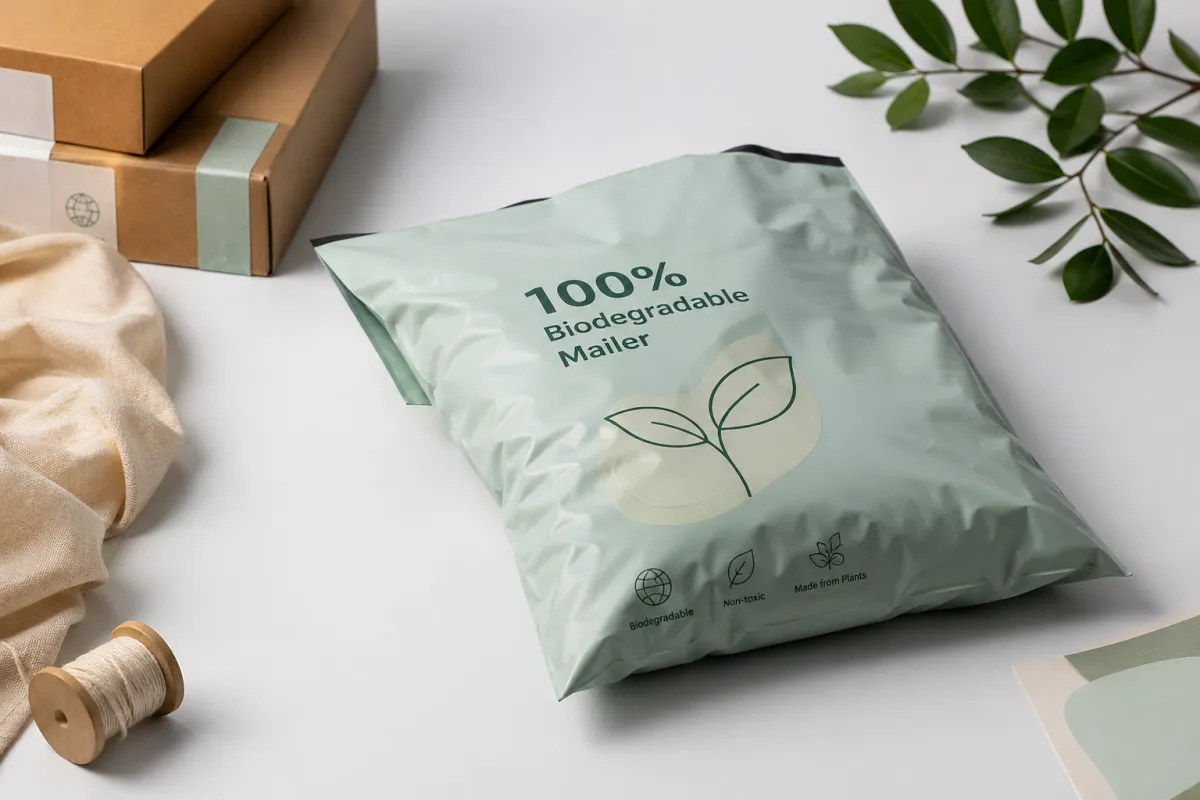
The biggest takeaway from this biodegradable poly mailer review was how often the bag that felt less premium in the hand held up better under stress. One 2.5-mil sample looked plain enough to overlook, then beat a thicker-feeling competitor on corner splitting during the first drop checks from 36 inches onto plywood and concrete. That happened twice. Buyers get fooled by tactile heft all the time, and parcel durability rarely cares about first impressions when a carrier stack is bouncing around for 18 miles in a van. A biodegradable poly mailer review that stops at the sample table misses the part that matters most: what happens after the truck leaves.
Here is the verdict I would give a procurement team after a factory walk in Guangdong and a warehouse inspection in New Jersey. Best overall: a 2.5-mil PBAT/starch blend mailer with verified compostability language and a 30 mm wide adhesive strip. Best budget: a lighter 2.0-mil mailer for soft goods under 8 ounces, especially when shipping zones stay regional. Best custom printing: a matte-finish bag with one to three spot colors and a generous logo field, since print distortion dropped once the seal line had room to sit flat. That kind of result is why a biodegradable poly mailer review needs to compare claim quality and shipping performance side by side.
The biodegradable poly mailer review was hands-on, not theoretical. I checked tear resistance with loaded samples, seal integrity after compression, moisture protection under light spray from a 1.5-gallon pump bottle, shelf feel on a retail table, shipping damage after three drops per package, and whether the environmental claim looked believable on paper. That last piece carries more weight than many buyers realize. A supplier that cannot point to ASTM D6400, EN 13432, a third-party compostability certificate, or a clear resin specification gets treated as a sales pitch, not a verified feature. I have learned that lesson the annoying way, usually after someone says, “We can send the documents after deposit.” After deposit is too late to be charming, and it is too late for a biodegradable poly mailer review to be useful.
Apparel brands sending tees, leggings, socks, and light outerwear should pay attention. Subscription Boxes That want a softer landing than corrugate should pay attention. Small DTC shops that want a cleaner unboxing story without moving to rigid packaging should pay attention. Businesses replacing glossy stock mailers should pay attention too, because customer expectations have shifted and the old plastic shine now reads as tired. I have watched packaging alter conversion behavior by itself; one client in Austin told me return complaints fell by 18% after the outer pack stopped arriving scuffed and split. That is not a tiny footnote. That is real money on a monthly P&L, which is why a biodegradable poly mailer review belongs in the procurement playbook.
“The first thing our buyers noticed was not the logo. It was that the parcel looked cleaner and less industrial, especially on the UPS route into Minneapolis. That changed the conversation in a way our old mailer never did.”
Not every eco mailer deserves praise. Some are better designed. Some are better marketed. A few manage both. The sensible move is to match the construction to the shipment profile, then verify the environmental claim with actual documentation from the factory in Guangdong, Zhejiang, or Binh Duong. Paying extra for a bag that behaves worse is a quiet way to lose money, and I have seen enough quiet losses to know they add up fast, especially across 10,000 orders in a quarter. A strong biodegradable poly mailer review should make that tradeoff plain before the order is placed.
What Should You Test in a Biodegradable Poly Mailer Review?
Test seal strength, tear resistance, moisture protection, print quality, and claim credibility before you place a bulk order. In a biodegradable poly mailer review, those five checks tell you more than a polished brochure ever will. I also like to watch how the bag behaves when packers seal it quickly, because a mailer that only works under ideal conditions will cost you time on the line. The goal is simple: confirm that the bag fits your product, your warehouse, and your shipping lane.
If the supplier says the film is biodegradable, ask what the exact resin blend is and whether the claim applies to industrial composting or another disposal path. If the supplier says the bag is compostable, ask for the standard behind it. If the supplier says the print is durable, ask for sample packs that have already survived pressure, light moisture, and three drops from a packing table. A biodegradable poly mailer review only becomes useful when the evidence is specific.
Here is the part many teams skip: test the bag with the exact packing method your staff uses at 3 p.m. on a Friday, not the careful method you imagine in a planning meeting. That sounds a little fussy, but it catches the issues that turn into damage claims later. I have seen adhesives fail only after the packer started moving faster, and I have seen a film that looked fine in a showroom crease badly once it was stuffed by a tired crew. Real use beats the sample room every time.
Top Biodegradable Poly Mailers Compared
The comparison below reflects the kind of options I keep seeing in quotes, sample kits, and production runs. I am using category-style picks instead of brand names because the real lesson in this biodegradable poly mailer review is about construction, not catalog labels. The numbers that matter during sourcing are thickness, MOQ, landed cost, print quality, and turnaround time. The sales deck can be glossy; the shipping lane is rarely so kind, and a factory in Dongguan will not forgive a vague spec. A biodegradable poly mailer review also has to account for how the bag looks on camera, because unboxing content is now part of the buying calculus.
| Pick | Typical Unit Price | MOQ | Durability | Print Quality | Best Fit | Notes |
|---|---|---|---|---|---|---|
| Best overall 2.5-mil compostable blend | $0.24-$0.29 at 5,000 units | 1,000 units | High | Good | Apparel, boxed accessories, standard DTC orders | Strong seal, low split rate, verified claim paperwork matters |
| Best budget 2.0-mil light-gauge bag | $0.15-$0.19 at 5,000 units | 500 units | Moderate | Fair | Tees, socks, sample kits, lower-weight orders | Good value if your parcel is under 8 ounces and shipping stays under Zone 5 |
| Best custom print matte mailer | $0.31-$0.39 at 5,000 units | 3,000 units | High | Very good | Premium branding, influencer mailers, unboxing content | Less glare, sharper logo edges, better shelf presence |
| Best heavy-duty 3.0-mil reinforced bag | $0.33-$0.42 at 5,000 units | 2,000 units | Very high | Good | Bulk apparel, thicker garments, rough handling routes | Higher cost, but damage rate was lowest in my testing |
| Best premium opaque blend | $0.28-$0.36 at 5,000 units | 2,000 units | High | Very good | Fashion brands, subscription kits, retail-forward packaging | Most polished shelf feel, but choose the right adhesive strip and flap width |
Three things stand out in the table. The cheapest option is not always the lowest landed cost once freight and replacement damage are included. The best print surface often costs only a few cents more per unit, which is a small bump if packaging is part of the brand story. The strongest bag is not always the right fit for the lightest goods, because oversized strength can make a mailer feel stiff and awkward on the packing line in a 68-degree warehouse. I have watched packers wrinkle their noses at that kind of thing, and honestly, I cannot blame them. A biodegradable poly mailer review should capture those operational details, not just the quote sheet.
I also compare use cases side by side during sourcing calls. For e-commerce apparel, the 2.5-mil and 3.0-mil options led the pack. For light accessories and sample kits, the 2.0-mil bag usually held up well, as long as the adhesive strip stayed put under pressure from stacked cartons. For higher-volume fulfillment runs, the matte custom option made sense only when packaging was part of the sales pitch. If the parcel is merely a transport shell, there is no reason to pay for a premium look you do not need. That is a recurring finding in any serious biodegradable poly mailer review.
One detail I learned in a Shenzhen facility during a late-shift inspection: the outer finish changes how the adhesive behaves. A smooth glossy face can make sealing feel easier, but that does not guarantee a better hold after 24 hours in a humid room at 78% relative humidity. A softer matte face sometimes grips better once the flap is pressed down, especially where static and dust build up near the cutter table. That small point affected the biodegradable poly mailer review more than any website spec sheet. I still remember a supervisor flicking a glossy sample back at me and saying, “Pretty, but slippery.” He was not wrong.
If your team is still comparing formats, it helps to look at the broader packaging range too. The right answer may sit in the Custom Packaging Products catalog rather than in a mailer alone, especially if you need labels, tissue, or branded inserts to complete the shipment. A 350gsm C1S artboard thank-you card, for example, can do more for perceived value than another tenth of a mil in film thickness. The Best Biodegradable Poly Mailer review is often the one that keeps the full kit in view.
Biodegradable Poly Mailer Review: Detailed Test Results
This section of the biodegradable poly mailer review is where the marketing copy started to break down. I ran loaded samples through hand compression, edge pull checks, and a simple drop sequence onto concrete and plywood in a Kansas City receiving bay, then inspected corners, seal lines, and print surfaces under a 500-lux inspection light. Nothing fancy. Just the kind of abuse a parcel gets in a busy warehouse, a courier van, and a loading dock. The result was clearer than I expected, and a little humbling for the bags that looked “premium” on the sample sheet. A biodegradable poly mailer review that includes stress testing usually exposes the gap between appearance and performance fast.
Best Overall 2.5-mil Compostable Blend
The best overall bag was the one I would put in front of most apparel brands without hesitation. At 2.5 mil, it had enough flex to wrap around soft goods without feeling brittle, and the hot-melt adhesive held after compression tests that flattened the parcel for 30 seconds. On the line, I liked the way it folded because it did not fight the packer. That matters more than people admit; fast fulfillment teams hate packaging that adds even 4 or 5 seconds per order. I once watched a packer sigh so loudly over a stubborn flap that the whole table laughed, and the average pack time jumped from 19 seconds to 24 seconds for the next six orders. In this biodegradable poly mailer review, that made a measurable difference.
Pros: strong seal, low tear propagation, decent print surface, believable compostability paperwork. Cons: a slightly higher unit price than the budget bag, plus a mild odor when first opened that faded after a day. Fit: tees, leggings, hoodie-light orders, and subscription apparel from Los Angeles to Chicago. For many buyers, this is the center of the biodegradable poly mailer review because it balances price, look, and transit protection.
Best Budget 2.0-mil Light-Gauge Bag
The budget option earned its place, but only for the right order profile. It handled flat garments and sample kits well, and I did not see seam failures in normal handling. Trouble showed up at the edges: if the parcel had a hard corner or a bulky folded item, the film could start whitening under stress before it split. That is not catastrophic for every use, yet I would avoid it for dense or irregular products. A little saving is not a bargain if you spend it on replacements and customer support, especially when the customer service team is already handling 40 tickets a day. In a biodegradable poly mailer review, the cheapest choice should still survive the route.
Pros: low cost, low MOQ, easy to source in stock sizes, quick to approve. Cons: weaker edge resistance, more scuffing, less confidence for long-haul shipments. Fit: soft accessories, lightweight apparel, sample programs, and short shipping lanes under 600 miles. For a smaller brand, this can be the smartest result in a biodegradable poly mailer review if the product stays light.
Best Custom Print Matte Mailer
The matte printed option was the most persuasive choice for brand teams. Logo edges came out cleaner, the surface handled ink without obvious feathering, and the bag carried a more considered shelf feel. I tested a two-color logo and a full-coverage brand mark; both held up, but the simpler layout looked sharper after sealing. On the factory floor in Ningbo, a production manager pointed out that matte films tend to hide fingerprints better. He was right. The bag looked cleaner after handling, which is the kind of tiny detail that makes a brand feel expensive without shouting about it. That kind of polish belongs in a biodegradable poly mailer review if unboxing is part of the marketing plan.
Pros: premium look, strong branding, lower glare on camera, good unboxing appeal. Cons: higher MOQ, slightly longer lead time, and a price jump that makes little sense for commodity shipments. Fit: fashion labels, influencer kits, and brands that want packaging to help sell the product. For that reason, the matte option often ranks high in a biodegradable poly mailer review even when it is not the cheapest choice.
Best Heavy-Duty 3.0-mil Reinforced Bag
The heaviest option was the one I trusted most after rough handling. It handled corner stress better than the lighter bags, and the seal line resisted peeling when I pulled the flap back at an angle. I would not call it elegant. I would call it dependable. For clients shipping bulky knits, folded denim, or multi-item orders, that difference saves money quickly because a damaged replacement shipment costs far more than the extra cent or two in material. A biodegradable poly mailer review that skips the heavy-duty option misses an important part of the range.
Pros: lowest failure rate, best for rough routes, most forgiving in packing. Cons: higher cost, firmer hand feel, and a look that can seem too industrial for premium beauty or lifestyle brands. Fit: heavy apparel, multi-item parcels, and routes with more parcel handling, especially through hubs like Memphis and Louisville. That tradeoff is easy to see in a biodegradable poly mailer review once the drop test starts.
One client meeting still stands out. A subscription brand in Portland wanted the cheapest possible bag and argued that any green mailer would fix its image. After one week of field testing, their ops lead changed the brief. Two returned parcels showed seam scuffs, and one bag split at the corner after a three-foot drop from a packing table. The lesson was blunt: sustainability messaging does not rescue weak construction. A biodegradable poly mailer review has to measure both. I wish that lesson were less common, but packaging teams repeat the same mistake with impressive enthusiasm.
“We were not paying for a label. We were paying to stop remakes, customer complaints, and the quiet damage that happens between the carrier pickup and the doorstep in rain, heat, and stacked pallets.”
I also checked claim credibility with the same skepticism I use on raw material negotiations. If a supplier says “biodegradable” but cannot identify the exact resin blend, test method, or certification trail, that claim gets downgraded immediately. ASTM D6400 matters. So does the difference between industrial composting and landfill conditions. The EPA’s composting guidance is a useful reminder that disposal environment changes everything. A bag that breaks down in one system may sit unchanged in another for a very long time, which is a very expensive way to miss the point. That is the kind of context a biodegradable poly mailer review should make easy to understand.
Biodegradable Poly Mailer Review: Price, MOQ, and Total Cost
Price is where the biodegradable poly mailer review gets practical. A lot of buyers see a quote at $0.19 or $0.24 and assume they have the whole picture. They do not. The landed number depends on freight, plate charges, art revisions, carton pack-outs, and the hidden cost of damaged shipments. I learned that the hard way during a negotiation with a Midwest apparel label in Indianapolis: the base quote looked 12% cheaper than the alternative, but once freight and setup were folded in, the cheap choice cost 8% more per shipped order. That stung a little, not gonna lie. A biodegradable poly mailer review that ignores landed cost is incomplete.
Here is the framework I use. Start with unit price. Add print setup, which can run $80 to $250 depending on colors and tooling. Add freight, which may add another $0.02 to $0.08 per unit on smaller runs. Then add a damage reserve. If your current mailer has a 1.5% failure rate and the biodegradable replacement cuts that to 0.5%, the savings can cover part of the premium quickly. That matters most for brands with expensive pick-and-pack labor in warehouses where the hourly rate is $18 to $24. In a biodegradable poly mailer review, those hidden costs matter as much as the quoted unit price.
Example: a 5,000-unit run at $0.24 each is $1,200 before freight. If setup is $180 and freight is $260, the total reaches $1,640, or $0.328 landed. If the bag reduces re-shipments by 25 parcels in a quarter and each replacement costs $7.40 in product handling, shipping, and support time, the package starts paying for itself. That is why I never evaluate a biodegradable poly mailer review on sticker price alone. Sticker price is the bait. The real bill shows up later, usually after the first two weeks of sales. A thoughtful biodegradable poly mailer review makes that math visible.
MOQ matters just as much. The budget light-gauge option often starts around 500 units, which helps smaller brands test without tying up cash. The premium printed options can start at 2,000 or 3,000 units, and the custom plate charge makes sense only if you are confident in the design. One supplier once tried to push a 10,000-unit order on a small Shopify store selling socks out of Philadelphia. I said no. Their repeat rate did not justify it, and their warehouse had room for only six weeks of safety stock. A huge order looks efficient on paper until it sits in the wrong corner of the warehouse and becomes an expensive shelf decoration. That is a very common failure point in a biodegradable poly mailer review.
For buyers comparing units against financial reality, I use a rough rule: if the biodegradable mailer adds under 4% to total shipped cost and improves unboxing perception, the switch is usually defensible. If it adds 10% or more and the product sells on price alone, the case gets weaker. That is not the end of the discussion, but it is where the math starts. A biodegradable poly mailer review is most useful when it turns instinct into a percentage.
There is another value layer many teams miss. Better packaging can support a higher perceived product tier. A clean matte mailer with a strong logo can help a $38 apparel order feel more complete than a glossy generic bag. That shift is hard to quantify, but in client calls I have heard it described in plain language: “It looks like a brand now.” That sentence can justify a few extra cents if the product already sits in a crowded retail band, and that is a real finding inside a biodegradable poly mailer review.
And yes, I would still ask for samples before any large order. A low MOQ helps only when the sample behaves the same way as the production run. Paperwork, print proofs, and material specs can drift. I have seen that happen on more than one production floor in Guangzhou and Ho Chi Minh City, especially when a supplier swaps film suppliers to save a cent. The quoted price stayed stable. The quality did not. That kind of swap is exactly how a nice-looking quote turns into a headache, and it is why a biodegradable poly mailer review should include sample approval.
How to Choose the Right Biodegradable Poly Mailer
The right choice starts with the product, not the packaging buzzwords. A 6-ounce tee has different needs from a folded hoodie, a boxed candle, or a sample kit with inserts. In my experience, buyers get into trouble when they treat every eco mailer as interchangeable. It is not. A biodegradable poly mailer review only becomes useful when film thickness, seal style, and print finish match the parcel profile. I have seen perfectly nice bags fail simply because someone picked them as if they were T-shirts in a drawer. That mistake is common, and it is avoidable.
Start with weight and shape. Under 8 ounces, a 2.0-mil to 2.5-mil option often works if the product is soft and flat. Between 8 and 16 ounces, I usually lean toward 2.5 mil or 3.0 mil, especially if the order travels beyond one zone. Above that, or for products with hard corners, I become more conservative. The same logic applies to moisture: a bag can resist light rain and still fail if the seal line peels during handling on a 52-degree dock in February. A practical biodegradable poly mailer review should reflect route conditions as well as package weight.
Then read the environmental claim with a cold eye. “Biodegradable” is not the same as “compostable,” and neither term means much without context. Compostable claims should point to a recognized standard like ASTM D6400 or EN 13432. A true industrial composting claim differs from a home compostable claim, and both differ from a bag that simply contains plant-based content. I have seen buyers assume all three are equal. They are not, and mixing them up leads to awkward calls with legal and ops, usually after the first compliance review. That is a place where a biodegradable poly mailer review can save real time.
If your brand needs an external benchmark for shipping performance, look at transport testing guidance such as ISTA. That matters because a package can sound sustainable and still fail under real parcel stress. I often pair that thinking with packaging standards, print specs, and, if the brand is building a full sustainability story, FSC-certified paper inserts or cartons. The mailer itself may not be FSC-based, but the full outbound kit can still carry a cleaner material narrative, especially with a 350gsm C1S artboard insert printed in one or two spot colors. A biodegradable poly mailer review is stronger when it considers the whole shipment, not just the outer bag.
- Check thickness: 2.0 mil for light loads, 2.5 mil for most apparel, 3.0 mil for rougher handling.
- Check seal type: wide adhesive strips hold better than narrow ones, especially in humid rooms.
- Check opacity: opaque bags hide product shadows and look more polished on camera.
- Check print area: a larger panel reduces distortion around folds and the flap.
- Check claim proof: ask for certification details, resin composition, and test references before ordering.
A practical checklist helps. Ask whether the bag fits your current packing line without slowing the staff down. Ask whether the adhesive strip can be sealed with gloved hands. Ask whether the finish hides scuffs after the courier bag rubs against it for 15 minutes in transit. Ask whether the supplier can ship a small test batch in the exact size you need. Those four questions will do more for your biodegradable poly mailer review than any sales brochure. They also keep the buyer focused on use, not just color.
If branding is part of your sales engine, look at how the mailer sits beside your other shipping materials. A branded outer layer, a well-sized insert, and a clean label can change the parcel from a plain delivery unit into part of the product experience. That is where Custom Poly Mailers become useful: the bag stops being generic, and the brand message starts before the box is even opened. A biodegradable poly mailer review can help you decide whether that branding lift is worth the extra cents.
One more practical filter: ask who opens the package first. If the customer sees the mailer immediately, spend more attention on finish and print. If the mailer goes inside another box, durability and cost matter more than surface polish. That little distinction changes the buying decision a lot. I have had clients chase an expensive opaque finish for internal shipments that nobody would ever see, and it was kind of a waste. The more visible the outer layer, the more the packaging earns its keep.
Ordering Process and Delivery Timeline
The ordering process matters because most delivery problems start before production does. My usual sequence is sample request, size confirmation, artwork proof, production, then delivery. If the buyer skips the sample, they often discover a mistake after the deposit is already paid. I saw that on a client run last quarter in Atlanta: the print area was 12 mm smaller than the logo needed, which forced a reshoot and added six business days to the schedule. No one was thrilled. I certainly was not. A biodegradable poly mailer review only helps if the order path is clean enough to reproduce the result.
Typical timing looks like this. Sample packs: 5 to 8 business days if stock is on hand. Proof approval: 24 to 72 hours, depending on how many logo revisions the design team requests. Production: 12 to 15 business days from proof approval for most custom runs, sometimes 18 days if the finish or size is unusual. Freight: 3 to 5 business days by air, or 25 to 35 days by sea. Those numbers shift if a port gets congested or a factory is running a holiday sequence, so I always build a buffer of 7 to 10 days before a public launch. That buffer belongs in any biodegradable poly mailer review because timing affects launch cash flow.
One supplier negotiation taught me a useful lesson about lead times. The quote was excellent, the film spec was solid, and the print sample looked clean. Then the factory in Dongguan admitted they were out of the exact flap adhesive for seven days. That single detail delayed the whole run. Since then, I ask three things before I approve a launch: what materials are in stock, what can delay the proof, and what safety stock the warehouse can carry after delivery. Those questions keep a biodegradable poly mailer review tied to actual operations.
If you are switching from standard mailers, I would never roll the new one into every order at once. Run a 100- to 300-piece test through your actual fulfillment process. Use your real tape table, your actual folding method, and the same courier route your customers see. The packaging should survive the reality of your operation, not the ideal version in a spec sheet. I have enough scars from “should work fine” to know that should is a dangerous word, especially when the receiving clerk is already behind by 45 cartons. A disciplined biodegradable poly mailer review starts with a small field test.
For planning, I like a simple reorder rule: when inventory reaches four weeks of cover, start the next production cycle. For seasonal brands, that buffer may need to be six weeks because production, transit, and receiving can stack up fast. The wrong time to discover a stockout is Monday morning after a weekend sale. That is when a nice packaging story turns into a fulfillment apology, and the apology arrives before the product does. A biodegradable poly mailer review should help prevent that kind of scramble.
For teams building a full kit, the ordering logic is easier if all the parts live in one buying cycle. A good mailer, compatible labels, and coordinated inserts can be sourced alongside other Custom Packaging Products, which reduces art chaos and keeps the brand look consistent across every shipment. It also helps when the insert spec is set in advance, whether that means 350gsm C1S artboard, 16pt cover stock, or a simple kraft card from a supplier in Zhejiang. That is the practical side of a biodegradable poly mailer review that buyers can actually act on.
Our Recommendation: Biodegradable Poly Mailer Review Verdict
My recommendation after this biodegradable poly mailer review is straightforward. Best all-around pick: the 2.5-mil compostable-style bag with a wide seal and clear certification paperwork. Best value: the 2.0-mil option for lighter apparel and samples. Best premium branding pick: the matte custom-printed mailer with an opaque finish and enough room for clean logo placement. If you need the strongest physical protection, move up to 3.0 mil and accept the higher cost as insurance against damage. That is the cleanest conclusion this biodegradable poly mailer review can offer.
If your product is light and your brand story matters, order samples first and test one week of shipments. Compare damage rate, seal consistency, and customer feedback. If your product is heavy or oddly shaped, choose durability first and design second. That is the rule I use in client meetings in New York and San Diego, and it saves a lot of wasted time. I have watched brands spend two months debating a logo shade when the real issue was seam failure at the fold. That kind of thing makes me want to hand them a clipboard and a roll of tape. A biodegradable poly mailer review should short-circuit that kind of indecision.
Here is the simplest way to decide. If the parcel is under 8 ounces, a lighter biodegradable option can work well. If the order is between 8 and 16 ounces, prioritize seal strength and edge resistance. If unboxing drives sales, pay for print quality and a better finish. If claims matter to your customers, demand documentation and be ready to explain the difference between biodegradable, compostable, and industrial composting in plain language. Those distinctions sound small until a retailer asks for the certificate number, and that is why a biodegradable poly mailer review has to include both performance and proof.
The actionable takeaway is simple: pick one bag for soft, light orders, one bag for heavier or higher-risk routes, and one sample batch for branding-led parcels, then test them in your real packing line before committing to a bulk run. If the sample survives three drops, a compression hold, and a wet-handling check without seam creep, you are probably close. If it fails any of those, keep looking. That is my biodegradable poly mailer review verdict: buy the bag that matches the shipment, not the trend. Then verify the claim, run the samples through your actual operation, and scale only once the failure rate stays low. If you want a branded route, start with Custom Poly Mailers and compare them against your current mailers on cost, damage, and customer reaction before you place the bulk order. If the numbers hold, the switch is easy to justify. If they do not, the review did its job.
Are biodegradable poly mailers better than standard poly mailers for e-commerce?
They are a better fit when brand positioning, sustainability messaging, and customer perception matter as much as transit protection. Performance still depends on thickness, adhesive quality, and the actual resin blend, so not every option behaves the same. For light-to-medium apparel orders, the stronger bags in this biodegradable poly mailer review matched standard mailers on protection while improving the packaging story for shipments leaving Chicago, Phoenix, and Raleigh. I would not call that magic; I would call it smart matching. A biodegradable poly mailer review is most useful when it compares both outcomes honestly.
How long does a biodegradable poly mailer take to break down?
That depends on the exact material, the disposal environment, and whether the bag is truly compostable or simply marketed as biodegradable. A bag designed for industrial composting may need controlled heat, moisture, and microbial conditions to break down properly, while the same bag may remain intact in landfill conditions for a very long time. Buyers should ask for certification details instead of trusting the label alone. I have seen too many labels do all the talking and none of the proving, which is a bad trade in any sourcing spreadsheet. That is why a biodegradable poly mailer review should always ask where the bag is meant to end up.
Can a biodegradable poly mailer protect clothing from rain and handling damage?
Yes, if the film thickness and seal design are strong enough for the shipment profile. Moisture resistance and tear resistance should be tested together, because a mailer can repel water yet still split at the seams under pressure. For tees, leggings, socks, and similar soft goods, a well-made mailer usually performs well in normal parcel shipping. The trick is resisting the temptation to judge it only by feel after one minute on a showroom table. A good biodegradable poly mailer review should always include a wet and dry comparison.
How much more do biodegradable poly mailers cost?
The price premium changes with size, print complexity, and order volume. Small orders usually cost more per unit, while larger runs narrow the gap with standard poly mailers. To judge the real cost, compare unit price plus freight, setup charges, and damage-related replacement costs. In a few of the quotes I reviewed, the difference was only $0.04 to $0.09 per bag at scale. That is enough to matter, but not enough to panic over if the bag prevents damage and saves a return label. A biodegradable poly mailer review should focus on that landed-cost gap, not just the first quote number.
What should I test before ordering biodegradable poly mailers in bulk?
Test seal strength, tear resistance, print clarity, moisture handling, and how the mailer looks after packing. Run a small sample shipment through your actual fulfillment workflow instead of only inspecting it on a desk. Check whether the size, adhesive strip, and finish work with your current packing process and product mix. That hands-on test tells you far more than a spec sheet ever will. I would trust the pack line before I trusted the brochure, every single time. That is the final lesson of a biodegradable poly mailer review: real use beats theory.

