Buyer Fit Snapshot
| Best fit | Biodegradable Product Stickers Cost projects where brand print, material claims, artwork control, MOQ, and repeat-order consistency need to be specified before quoting. |
|---|---|
| Quote inputs | Share finished size, material target, print colors, finish, packing count, annual reorder estimate, ship-to region, and any compliance wording. |
| Proofing check | Approve dieline scale, logo placement, barcode or warning zones, color tolerance, closure strength, and carton packing before bulk production. |
| Main risk | Vague material claims, crowded artwork, missing packing details, or unclear freight terms can make a low unit price expensive after revisions. |
Fast answer: Biodegradable Product Stickers Cost: Material, Adhesive, Artwork, and MOQ should be specified like a repeatable production item. The safest quote records material, print method, finish, artwork proof, packing count, and reorder notes in one written spec.
Production checks before approval
Compare the actual filled-product size with the drawing, then confirm tolerance on folds, seals, hang holes, label areas, and retail display edges. Reserve space for logos, QR codes, warning copy, and material claims before decorative graphics fill the panel.
Quote comparison points
Review material grade, print process, finish, sampling route, tooling charges, carton quantity, and freight assumptions side by side. A quote is only useful when the supplier can repeat the same color, closure quality, and packing count on the next order.
Biodegradable Product Stickers Cost: What to Expect
For packaging teams, biodegradable product stickers cost is never just a line item on a quote. It shows up in application speed, shelf appearance, rework, and the amount of product that has to be touched twice before it ships. A label that curls after chilled storage or loses bond on a humid day can end up costing far more than the sturdier version that looked a little pricier at first glance. That is the real starting point for biodegradable product stickers cost: not the cheapest unit price, but the full cost of getting the sticker on the package and keeping it there through handling, transport, and retail display.
Small stickers can shift surprisingly large budget decisions because they affect labor, scrap, and customer perception. If a label lifts at the corner, an operator has to press it down, re-run it, or replace it, and that labor adds up fast. I have watched teams chase a lower quote only to pay for the difference through relabeling and complaints later on. So, biodegradable product stickers cost has to be read against the whole packaging system, not treated like office supplies.
This piece is meant for practical buying decisions, not theory. You will see where the price comes from, which tradeoffs are normal, and how to compare quotes on equal footing so one supplier is not quoting a basic paper label while another is pricing a more durable build. If you are sourcing for a brand, a private label line, or a seasonal launch, the goal stays simple: understand biodegradable product stickers cost before the order goes into production, not after the first run starts acting up on the line.
Biodegradable Product Stickers Cost: Why Small Labels Change Big Budgets
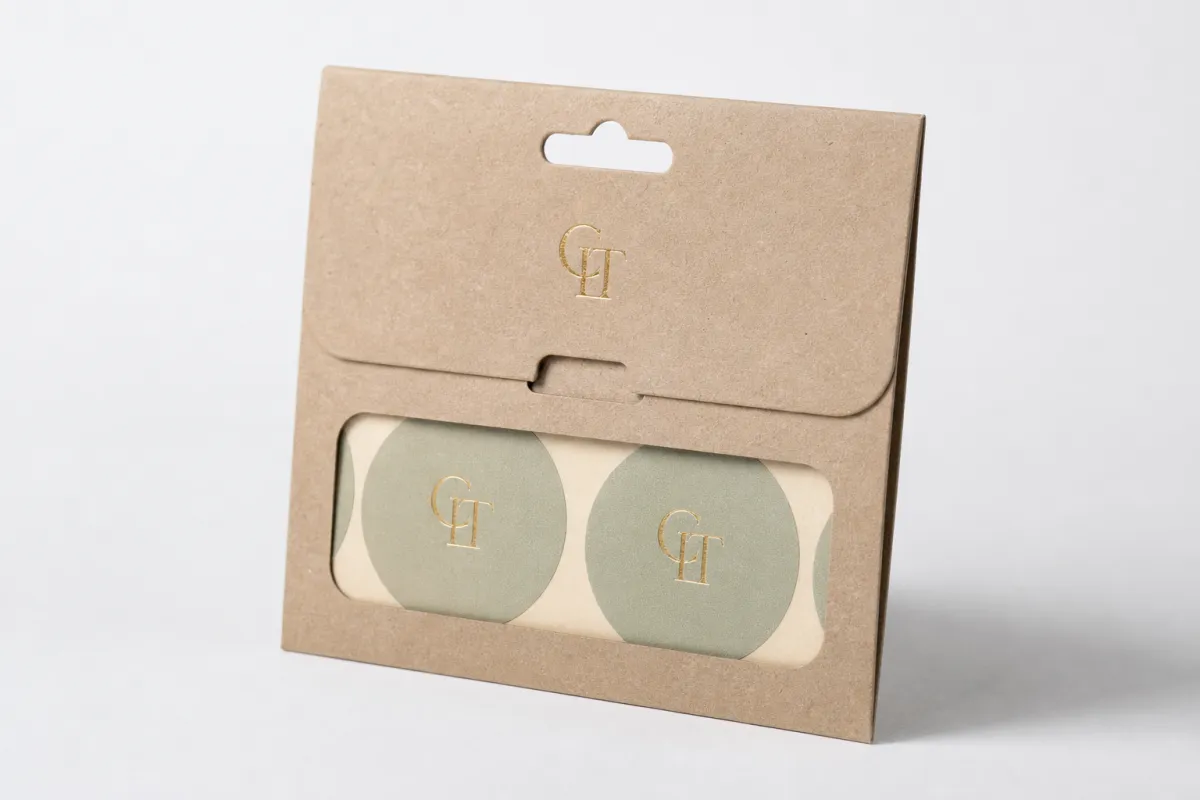
Most buyers are surprised by how much influence a sticker can have over the overall packaging budget. A label may cover only a few square inches, but it still affects labor at the applicator, defect rates in the warehouse, and how the product reads on shelf. If a sticker peels at the edge, the team usually spends more time fixing it than the few cents it would have taken to buy the better option in the first place. That is why a low biodegradable product stickers cost number is not automatically a win.
Presentation matters too. Packaging buyers know customers notice when a label wrinkles, scuffs, or looks out of place against the carton or jar. A clean sticker tells the customer the brand cared about the details; a poor one can make even a strong product feel unfinished. So when I review biodegradable product stickers cost, I look at print clarity, coating choice, and adhesion performance right alongside price, especially for products that sit in cold displays or ship through parcel networks.
Sustainability language can muddy the water if the construction is not checked carefully. Not every eco-looking label performs the same way, and not every lower-impact material fits every package. A buyer might assume a biodegradable stock will save money somewhere else in the process, but that is not always true. Sometimes a better adhesive, a cleaner liner, or a moisture-tolerant finish lowers the true spend because the label runs more predictably and fails less often. That is why a useful quote conversation starts with the use case, not a vague request for the lowest biodegradable product stickers cost.
A label that survives the trip is worth more than a label that only looks cheap on paper. In packaging, failure usually costs more than the savings look impressive.
From a packaging buyer's point of view, the smartest way to evaluate biodegradable product stickers cost is to ask four questions: Does it stick where it should? Can it run at the needed speed? Does the image stay sharp? Does the material match the disposal story the brand is making? If the answer is yes across the board, the unit price is easier to defend. If the answer is no on even one of those points, the quote is incomplete, plain and simple.
That is also why serious suppliers ask about the application before they talk price. A label for kraft pouches, a label for glass jars, and a label for chilled clamshells may all look similar in a mockup, but they behave very differently in production. When you compare biodegradable product stickers cost correctly, you are comparing performance under the same conditions, not just artwork drawn to the same dimensions.
For reference points on packaging performance and sourcing standards, the ISTA test family is useful for shipping-related stress, and FSC guidance matters if the sustainability story includes paper sourcing. Buyers who want a broader packaging baseline also use packaging.org to compare materials, formats, and industry terminology.
What Biodegradable Product Stickers Are Made Of
A sticker looks simple from the outside, yet it is built in layers: face stock, adhesive, and liner. Each layer changes both performance and biodegradable product stickers cost. The face stock is the visible material that carries the artwork. The adhesive is what bonds the label to the package. The liner protects the adhesive until application, and its release behavior affects whether the label dispenses cleanly or turns into waste on the line.
Paper-based stocks are common in lower-impact label programs, especially when the product does not need heavy moisture resistance. They can print sharply, take on a matte or uncoated look, and work well for dry-goods packaging, cartons, and some jars. Specialty papers may add strength or texture, while coated papers can improve scuff resistance. As a rule, the more processing needed for appearance or durability, the more likely biodegradable product stickers cost moves upward.
There are also compostable-looking specialty papers and film alternatives for brands with more specific sustainability goals. The useful question is not the marketing term by itself, but the whole construction. A face stock may be described as biodegradable, yet the adhesive or liner may not follow the same end-of-life route. Careful buyers ask for construction details, not just a green adjective attached to the quote. In many cases, biodegradable product stickers cost is really the price of building a label that matches both the disposal plan and the package environment.
Adhesive selection carries more hidden value than people expect. A label on glass may need one type of bond, while a label on recycled cardboard may need another. Plastic containers, chilled surfaces, and curved bottles bring their own challenges. If a label peels early, the brand pays for it through relabeling, complaints, and appearance issues. A slightly higher biodegradable product stickers cost can be the cheaper outcome if the adhesive holds properly from fill room to retail shelf. I have seen that happen more than once, and it is kinda the classic packaging lesson nobody wants to learn twice.
Finish changes the equation too. Matte finishes are popular for an understated, natural look and can make eco packaging feel more aligned with the brand story. Uncoated paper may feel more authentic, though it can show scuffing sooner. Protective coatings improve water and abrasion resistance, but they add process steps and sometimes material cost. A buyer chasing the lowest biodegradable product stickers cost should still ask whether the finish protects the label during shipment, cold storage, or hand packing.
The terms biodegradable, compostable, recyclable, and removable are not interchangeable. Biodegradable means a material can break down under certain conditions, but that does not automatically mean it is compostable or accepted in a municipal system. Compostable claims usually call for a defined standard, such as ASTM D6400 or related verification, while recyclable and removable describe different behaviors entirely. Good sourcing means matching the label claim to the actual disposal path and making sure the construction supports it. That clarity often improves biodegradable product stickers cost conversations too, because the buyer is no longer guessing about what the material is supposed to do.
If the project also needs related packaging formats, our Custom Labels & Tags category is a useful reference point for comparing sizes, finishes, and common label constructions side by side.
Specifications That Affect Shelf Performance and Use
Accurate pricing starts with clean specifications. Sticker size, shape, quantity, artwork coverage, and application method all affect the final number. A 2-inch round seal is not priced like a 4-by-6-inch product label, and a heavily inked design does not behave the same as a simple one-color mark. The more clearly the buyer defines the job, the more accurate the biodegradable product stickers cost estimate becomes.
Start with the physical details. Does the sticker go on a bottle, carton, pouch, jar, or clamshell? Is it hand-applied or dispensed automatically? Will it ship in cases, pallets, or parcel mailers? Does it need to survive refrigeration, humidity, or repeated friction from handling? These are not minor questions. They directly influence the material, adhesive, and liner selection, which then affects biodegradable product stickers cost.
Artwork complexity matters too. Fine type, QR codes, barcodes, and small legal copy can all change the way a label is printed and checked. If the design uses white ink, multiple color passes, or heavy coverage, production becomes more involved. Even if the outside dimensions stay the same, the unit cost may shift because the print method has to do more work. That is why two labels with the same size can carry very different biodegradable product stickers cost numbers.
For buyers comparing quotes across suppliers, a simple spec checklist removes most of the confusion:
- Sticker size and shape: exact finished dimensions, not approximate artwork dimensions.
- Quantity: total run size, plus any reorder expectations that affect bulk pricing.
- Material: paper stock, specialty eco paper, or another low-impact construction.
- Adhesive environment: dry, refrigerated, frozen, humid, or room temperature.
- Finish: matte, uncoated, protective coating, or another surface treatment.
- Print needs: number of colors, white ink, barcodes, variable data, or registration marks.
That list may seem basic, but it is the fastest route to a real comparison. Without those details, one quote may hide higher setup charges while another may look expensive simply because it includes a stronger adhesive or a more resilient finish. Buyers often say they want the lowest biodegradable product stickers cost, but what they really want is the best total value for the packaging condition they deal with every day.
Testing is worth the time if the label has to survive moisture, temperature swings, or fast-moving application. A sample run on the actual package is far better than guessing from a PDF proof. When a label fails in testing, the issue is usually not the artwork; it is the material behavior under load. That is exactly where a thoughtful biodegradable product stickers cost review saves money, because a small test prevents a large production mistake.
In practice, the best suppliers ask for details that many buyers forget to include: the container surface, the fill temperature, whether the product is oily or wet during labeling, and whether the package is stored cold before shipment. Those details change the adhesive story more than most people expect. If you have those answers ready, the biodegradable product stickers cost quote will usually come back cleaner, faster, and closer to the final production reality.
Biodegradable Product Stickers Cost, MOQ, and Quote Factors
Now for the part most buyers want first: the numbers. Biodegradable product stickers cost is driven by material selection, print method, size, shape, finish, and quantity. If the job needs a custom die, a specialty adhesive, or careful prepress work, the quote will reflect that. Small runs often carry a higher unit cost because fixed work gets divided across fewer stickers, while larger runs usually improve biodegradable product stickers cost through better material use and more efficient setup.
MOQ, or minimum order quantity, is a real factor in sustainable label buying. Digital production can support lower quantities more comfortably, but even digital work has setup time, spoilage allowance, and job handling. On the other side, larger production methods can offer better bulk pricing, but they may need more labels before the economics make sense. If you are buying for a launch, a pilot run, or a seasonal SKU, ask for pricing at more than one quantity. That is the fastest way to see how biodegradable product stickers cost changes as volume rises.
Serious quotes should spell out more than a final dollar amount. They should identify artwork review, proofing, quantity, lead time, shipping method, and any special handling related to the sustainable construction. If a quote omits tooling fees, setup charges, or rush handling, it can look better than it really is. Transparent pricing is the only fair way to compare biodegradable product stickers cost across suppliers.
| Option | Typical Use Case | Planning Range per Piece | Common MOQ | Notes |
|---|---|---|---|---|
| Simple paper-based label | Dry cartons, pouches, and shelf-ready packs | $0.04-$0.12 | 250-1,000 pieces | Often the lowest biodegradable product stickers cost for low-moisture packaging. |
| Specialty eco paper with coating | Retail jars, subscription packs, and handled products | $0.08-$0.18 | 500-2,000 pieces | Better scuff resistance; slightly higher biodegradable product stickers cost but stronger shelf presentation. |
| Moisture-tolerant eco construction | Chilled products, shipping exposure, and humid environments | $0.12-$0.28 | 1,000-5,000 pieces | Higher material and testing requirements; can reduce rework and relabeling. |
| Short-run custom shape with variable data | Promotional packs, date coding, and serialized labels | $0.10-$0.30 | 250-1,500 pieces | Die work, setup charges, and data handling can move the biodegradable product stickers cost quickly. |
Those ranges are planning numbers, not promises, but they are useful for early budgeting. A quote at the low end is not automatically a better deal if the construction fails in use. In fact, many buyers learn that the most economical biodegradable product stickers cost is the one that avoids relabeling, line stoppages, and customer complaints. Real savings show up in the work not repeated.
Tooling fees deserve special attention. If the label requires a new die shape, there may be one-time charges for cutting tools or related setup. For some print methods, plate charges can also apply. These costs are common, not suspicious, and they are usually spread across the life of the order. The smartest conversation is not whether tooling fees exist, but whether they have been disclosed before approval. That clarity helps the buyer understand the total biodegradable product stickers cost rather than just the per-piece number.
Freight deserves a close look too. Sustainable materials can sometimes be more sensitive to storage conditions, so shipping method and timing may matter more than on standard stock labels. If the supplier has to use special packing or split shipments to protect the product, that can affect the final price. A few extra dollars in shipping may be justified if it preserves the label’s performance and keeps the biodegradable product stickers cost from being eaten up by damage or rework.
Below is the kind of question a buyer should ask during quote review: Are we comparing the same size, same finish, same adhesive, same quantity, and same pack-out? If not, the quotes do not mean the same thing. I would rather see a slightly higher but complete estimate than a bargain number with hidden assumptions. That is the only fair way to read biodegradable product stickers cost before signing off.
Process and Timeline: From Artwork to Production Steps
A clean label order follows a predictable path: request specs, review files, confirm material choice, approve the proof, print, finish, inspect, and ship. Each step has its own place in the timeline, and each one can affect biodegradable product stickers cost if revisions are needed. A buyer with final artwork and clear dimensions usually gets a faster, cleaner quote than a buyer still adjusting artwork and package size.
Artwork readiness is one of the biggest timing variables. If the file is vector-based, correctly sized, and already separated cleanly for print, the prepress stage moves much faster. If the art needs cleanup, color correction, or barcode adjustment, that adds time. It can also increase biodegradable product stickers cost if the production team has to spend extra time on proofing or if changes force another round of setup.
Delays usually come from a few familiar places: unclear substrate requirements, last-minute design changes, sample approval, or special material sourcing. Sustainable constructions can need more planning if a specific paper or adhesive is not stocked in the exact format the job needs. A buyer who builds a little cushion into the schedule often ends up with a better result and a more controlled biodegradable product stickers cost.
For standard runs, many buyers plan around a production window of roughly 12-15 business days after proof approval, although the exact timing depends on complexity, quantity, and material availability. Rush work is possible in some cases, but it can increase the price because the job displaces planned production or requires expedited handling. If the launch date is fixed, it is better to schedule early than to hope a late order will hold the same biodegradable product stickers cost.
Testing should be folded into the schedule whenever the label touches moisture, cold storage, or high-friction handling. A small run or sample pack is usually cheaper than discovering a failure after full production. For brands shipping through parcel networks, the stress points can be significant, so it makes sense to review how the label behaves under vibration, abrasion, and repeated stacking. Standards such as ISTA are useful here because they create a shared language for package testing and shipping durability.
From a process standpoint, the strongest workflow is simple:
- Gather dimensions, application surface, and environment details.
- Send artwork in final or near-final form.
- Confirm the material, adhesive, and finish.
- Review a proof and any sample output.
- Approve production only after the package test is acceptable.
That sequence protects both the schedule and the budget. It also keeps biodegradable product stickers cost grounded in facts instead of guesswork. If there is one place buyers often save money without realizing it, it is by getting the artwork and spec right before production begins.
In a well-run order, the supplier should be able to explain exactly where time is spent and why. That kind of transparency matters. A fast quote is nice, but a quote that matches the actual production route is better. When the order is clear, biodegradable product stickers cost becomes much easier to predict and much easier to defend internally.
Why Choose Us for Sustainable Label Runs
At Custom Logo Things, the aim is to help buyers choose a label construction that fits the package instead of forcing a one-size-fits-all eco claim. That matters because a sustainable label only works if it survives the real conditions on your line and on your shelf. Our job is to help you balance appearance, adhesion, and production efficiency so biodegradable product stickers cost lands in a sensible place for the application.
We pay attention to the practical details that make or break a run: the surface the sticker is going on, the temperature of the package, the finish you want the customer to see, and whether the order is small, repeatable, or part of a larger rollout. Those details affect quote accuracy as much as the artwork itself. In other words, a better brief usually leads to better biodegradable product stickers cost results.
Our process is built around file checks, material guidance, proofing support, and application advice. If a design needs clearer small type, a stronger adhesive, or a simpler finish to improve durability, it is better to know that before production. A label that looks great but fails in use is not a good buy. A label that runs consistently, looks clean, and arrives on time is where biodegradable product stickers cost starts to make business sense.
For brands with recurring orders, repeatability matters just as much as first-run performance. If the first batch works but the next batch varies in color, release, or adhesion, the packaging team ends up chasing problems that should have been solved earlier. We focus on giving you a stable result across reorders so the label spec remains dependable and the biodegradable product stickers cost does not drift unexpectedly from one cycle to the next.
That stability also helps with internal planning. When procurement, operations, and marketing all know what the label is supposed to do, there is less back-and-forth and fewer last-minute changes. Clean communication matters more than many people expect. It shortens decision time, reduces the chance of error, and keeps the conversation centered on actual value rather than just the lowest headline number. That is how biodegradable product stickers cost should be handled in a real packaging program.
We also try to be direct about what a material can and cannot do. If a label is intended for dry storage, we will say that plainly. If the package lives in refrigeration or sees heavy handling, that is part of the quote conversation too. Honest limits are useful. They prevent disappointment and make the final biodegradable product stickers cost easier to trust.
Why buyers stick with a practical supplier:
- Fewer surprises in proofing and production.
- Better matching between label construction and package conditions.
- Cleaner reorders with less variation.
- More credible pricing because setup charges and material choices are explained up front.
That is the real value in a supplier relationship. The label is just one part of the package, but it is a visible part, and the wrong choice is easy for customers to notice. We aim for labels that hold up, print well, and fit the budget without cutting corners that cause trouble later. That is the practical route to controlling biodegradable product stickers cost.
Next Steps to Price and Order Biodegradable Product Stickers
If you are ready to price a run, start by gathering the facts that shape biodegradable product stickers cost: dimensions, shape, quantity, application surface, storage conditions, artwork files, and any sustainability or disposal requirements that matter to your brand. If the label needs to touch moisture, refrigeration, or handled retail packaging, include that up front. That single detail can change the adhesive and the material, which can change the whole price.
A sample or test run is smart when the label will meet cold-chain conditions or a rough distribution path. A small test costs much less than a full mistake. If you are between two constructions, ask for both: one optimized for lower unit cost and one optimized for performance. That comparison usually makes the tradeoff visible very quickly, and it gives you a real basis for judging biodegradable product stickers cost instead of relying on assumptions.
It also helps to document the final decision criteria before the purchase order goes out. I would recommend locking down four points: appearance, adhesion, lead time, and total spend. If the label clears those four, the order is usually solid. If one of them is still loose, there is still room for expensive surprises. That is true whether you are buying 500 pieces or 50,000, and it is especially true when biodegradable product stickers cost is being reviewed alongside sustainability claims.
Here is a simple checklist that makes quote requests faster and more accurate:
- Finished size and shape.
- Total quantity and expected reorder volume.
- Surface type: glass, cardboard, plastic, pouch, or carton.
- Environment: dry, refrigerated, humid, or shipped long distance.
- Artwork file type and number of colors.
- Preferred finish and any compliance or disposal expectations.
Once that brief is complete, you can compare quotes on a true like-for-like basis. That is where the conversation gets useful. You will see where one supplier is stronger on lead time, another on material choice, and another on bulk pricing. The best decision is usually the one that matches the real use case, not just the lowest line item. That is how smart buyers keep biodegradable product stickers cost aligned with performance.
If you are evaluating a label refresh across multiple products, keep an eye on repeatability and supply consistency as well. A construction that works beautifully once but cannot be repeated at the same spec is not much help to operations. The more your label needs to behave like part of the production system, the more important it becomes to view biodegradable product stickers cost as a total packaging decision rather than a simple purchase price.
And if the specification changes later, revisit the quote. Size, material, finish, and volume all move the number, sometimes more than buyers expect. A change in artwork or a jump in order quantity can move biodegradable product stickers cost enough to justify a fresh comparison. That is normal, and it is exactly why the cleanest pricing starts with clear input and ends with a label that does the job.
How much do biodegradable product stickers cost per thousand?
Pricing usually depends on size, material, print method, finish, and quantity, so a per-thousand figure only makes sense after the job is specified. For planning, smaller runs may land in a higher unit-cost band, while larger runs usually improve biodegradable product stickers cost because setup work is spread over more labels. The most accurate number comes from matching the exact application, not from using a generic sticker price.
Are biodegradable stickers the same as compostable stickers?
No, those terms are not interchangeable. The face stock, adhesive, and liner all need to be checked separately, and the end-of-life path should match the construction. A sticker may be biodegradable in part but still not be suitable for composting or curbside disposal. If the claim matters to the brand story, confirm the full build before you compare biodegradable product stickers cost.
What MOQ should I expect for biodegradable product stickers?
MOQ depends on print method, material availability, and sticker size. Digital production can support lower quantities, while larger runs usually improve unit pricing and bulk pricing. Ask for two or three quantities so you can see the break points clearly and understand how biodegradable product stickers cost changes as volume rises.
What affects the lead time for biodegradable sticker orders?
Artwork approval, proof changes, stock availability, and finishing requirements are the biggest timing variables. Custom shapes or unusual materials can add time if tooling or sourcing is needed. The fastest jobs are the ones with final artwork and final specs ready before quoting, which also makes biodegradable product stickers cost easier to forecast.
What information do you need to quote biodegradable product stickers cost accurately?
Provide sticker dimensions, shape, quantity, surface type, application conditions, finish preference, and artwork files. Include any moisture, refrigeration, or shipping concerns so the adhesive and material are quoted correctly. The more complete the brief, the more accurate the price and timeline will be, and the less likely biodegradable product stickers cost will change after proofing.
Choosing the Right sticker is a practical packaging decision, not a branding exercise alone. When you look at biodegradable product stickers cost through the lens of material behavior, quantity, setup charges, and real application conditions, the price starts to make sense. If the label sticks, prints cleanly, and arrives in time for production, it is doing its job. That is the standard I would use for any order, and it is the standard that keeps biodegradable product stickers cost under control.

