Buyer Fit Snapshot
| Best fit | Custom Tea Packaging Pouches projects where brand print, material claims, artwork control, MOQ, and repeat-order consistency need to be specified before quoting. |
|---|---|
| Quote inputs | Share finished size, material target, print colors, finish, packing count, annual reorder estimate, ship-to region, and any compliance wording. |
| Proofing check | Approve dieline scale, logo placement, barcode or warning zones, color tolerance, closure strength, and carton packing before bulk production. |
| Main risk | Vague material claims, crowded artwork, missing packing details, or unclear freight terms can make a low unit price expensive after revisions. |
Fast answer: Custom Tea Packaging Pouches: Choosing the Right Fit should be specified like a repeatable production item. The safest quote records material, print method, finish, artwork proof, packing count, and reorder notes in one written spec.
Production checks before approval
Compare the actual filled-product size with the drawing, then confirm tolerance on folds, seals, hang holes, label areas, and retail display edges. Reserve space for logos, QR codes, warning copy, and material claims before decorative graphics fill the panel.
Quote comparison points
Review material grade, print process, finish, sampling route, tooling charges, carton quantity, and freight assumptions side by side. A quote is only useful when the supplier can repeat the same color, closure quality, and packing count on the next order.
Custom tea packaging pouches do a lot more than hold loose leaf tea or sachets. They protect aroma, shape the first impression a customer has of the product, and quietly decide whether a bright blend still tastes vivid three weeks after shipping or arrives flat and tired. Many tea brands start with graphics, yet the pouch has to act like a freshness system before it acts like branded packaging.
That is why custom tea packaging pouches deserve a careful spec review. The right pouch can support retail packaging, subscription boxes, refill programs, and bulk formats for cafes or hospitality accounts while keeping filling, sealing, and shipping straightforward. For brands building a broader product packaging lineup, the pouch also needs to fit the rest of the package branding story, especially if it sits beside labels, sleeves, or Custom Packaging Products such as custom printed boxes for gift sets.
A tea tin that smells muted the moment it is opened tells the whole story: oxygen, moisture, light, and odor transfer can flatten tea long before the outer pack looks worn. The best custom tea packaging pouches slow that damage with the right film, seal, and closure, while still leaving a clean surface for design, nutrition copy, and barcode placement.
What Custom Tea Packaging Pouches Are and Why They Matter
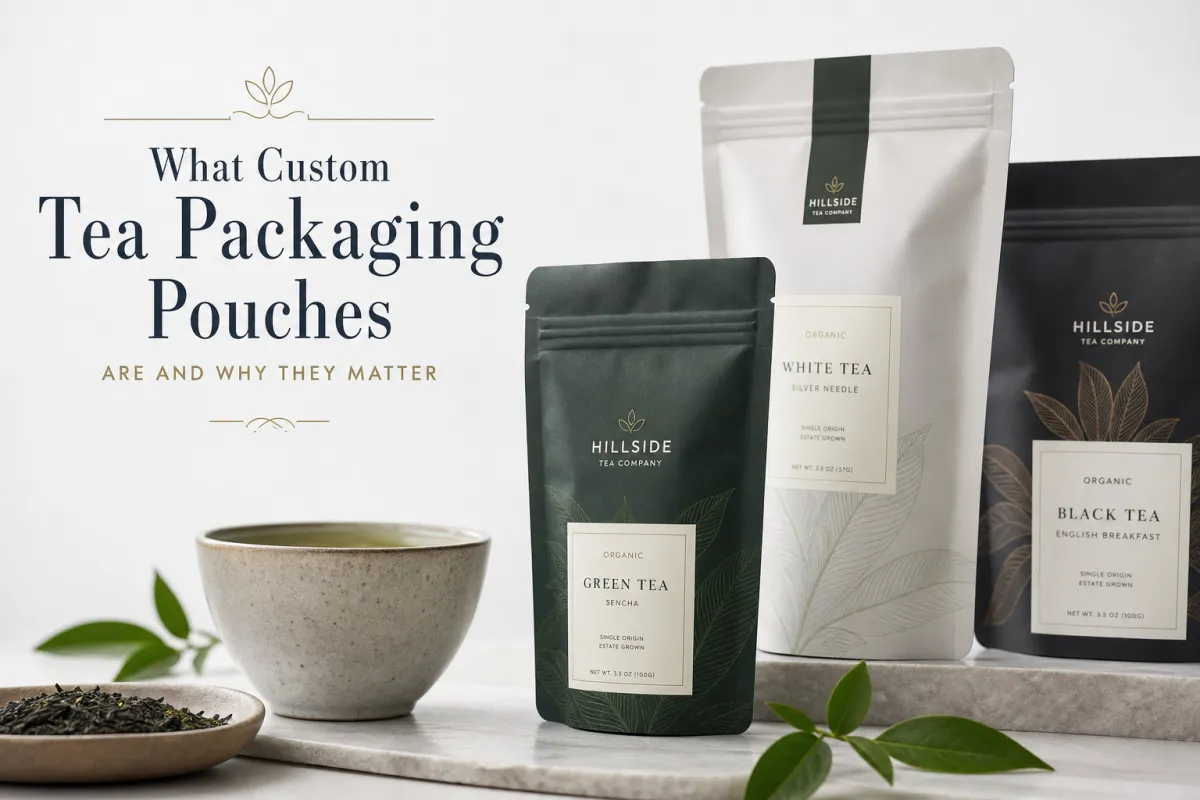
Custom tea packaging pouches are flexible, brand-specific barrier packs built for tea in loose leaf, sachet, or infusion form. They are usually printed to match the brand’s visual identity, then converted into a pouch shape that can stand up, lay flat, or include gussets depending on the fill weight and selling channel. From a packaging buyer’s point of view, the pouch is not just a container; it is a controlled environment that helps preserve volatile aroma compounds and reduce exposure to outside air.
Tea is more sensitive than many people expect. Green tea, white tea, jasmine blends, and delicate herbals can lose top notes quickly if the barrier is weak or the seal is inconsistent. Even a good-looking pouch can fail if the laminate allows too much oxygen transmission or if the closure does not reseal well after opening. That is why custom tea packaging pouches matter so much: the product can taste excellent at fill, but the pack has to keep that quality intact through warehousing, shelf time, and the customer’s daily use.
The format is popular for a few practical reasons. First, it uses less material than jars or tins, which can help with freight and storage efficiency. Second, it stacks well in cartons and ships with less wasted air. Third, it can be adjusted for different sales models without rebuilding the whole packaging system. A refill pouch for an online tea club might use a lighter construction than a specialty retail pouch, while a larger foodservice size may need stronger seals and a different gusset style. Custom tea packaging pouches make it easier to tune product packaging to the exact use case instead of forcing every tea into the same box.
Many brands underestimate how much package branding is tied to pack performance. If the pouch feels flimsy, dents easily, or leaks aroma, customers may read that as a sign the tea itself is lower grade. If the pouch opens cleanly, seals tightly, and looks crisp on shelf, the whole product feels more trustworthy. That is one reason tea brands often pair pouches with other branded packaging elements like labels, inserts, or custom printed boxes for seasonal assortments and gift sets.
A good pouch does not make weak tea taste stronger, but a weak pouch can flatten a great blend before the customer ever opens it.
There is also a logistics side that matters more than many people think. Custom tea packaging pouches usually ship and store more efficiently than rigid containers, especially at higher volumes. That means lower cube usage, easier pallet building, and less breakage risk in transit. For brands selling through e-commerce, that often translates into fewer shipping surprises and fewer complaints about crushed or scuffed packs.
In press checks, I have seen plenty of beautiful tea packs fall short simply because the spec looked right on paper but not in the hand. The reverse happens too: a pretty plain pouch can feel premium if the film, zipper, and seal are well matched. That kind of practical judgment is why packaging decisions should not be made from a screen alone.
How Custom Tea Packaging Pouches Work: Materials, Barriers, and Closures
At a basic level, custom tea packaging pouches are made from layered materials, and each layer has a job. The outer layer carries the print and gives the pouch its look and feel. The barrier layer helps block oxygen, moisture, light, and odor transfer. The inner sealant layer helps the pouch close cleanly under heat so the tea stays protected after filling. When those layers work together, the pack feels simple from the outside but behaves like a carefully tuned protective structure.
The material choice is where a lot of decisions get made. Laminated films are common because they offer good print quality and strong barrier performance. Foil structures usually provide the highest protection against light and oxygen, which is useful for premium teas or blends with fragile aroma. Mono-material recyclable options are getting more attention, especially for brands with sustainability goals, but they may require a closer look at barrier levels, seal behavior, and local recycling pathways. If a brand wants to make environmental claims, those claims need to match the actual construction, which is where organizations like the Forest Stewardship Council can be relevant for paper-based components and certified sourcing.
Closures matter just as much as film structure. Heat seals are the baseline because they lock the product in and help with tamper evidence. Zippers add convenience for recloseability, which tea buyers appreciate because many people use a pouch over several weeks. Tear notches improve opening, while hang holes and gussets support retail packaging display. The closure should match the tea use pattern. A premium loose leaf tea often benefits from a polished zipper and a strong, neat top seal, while a value-oriented refill pouch may prioritize straightforward sealing and lower unit cost.
Tea type changes the spec more than many first-time buyers expect. Delicate green teas and scented teas can be more vulnerable to oxidation and aroma loss, so they often justify stronger barrier protection. Herbal blends may need good moisture resistance if the ingredients are naturally hygroscopic. Highly aromatic teas can also transfer smell into surrounding materials, so a stronger seal and lower-odor laminate can help keep the product true to its intended profile. Custom tea packaging pouches should be selected by product behavior, not by visual preference alone.
Common construction choices
| Construction | Barrier Performance | Print and Finish | Typical Fit | Main Tradeoff |
|---|---|---|---|---|
| Laminated film | Good to very good | Strong graphics, matte or gloss | Most tea SKUs, retail and e-commerce | Not always the most recyclable option |
| Foil laminate | Very high | Premium feel, excellent light block | High-aroma teas, specialty blends | Can cost more and may feel less flexible |
| Mono-material recyclable film | Moderate to good, depending on structure | Clean branding, usually modern finish | Brands prioritizing recycling claims | Barrier and seal window need close review |
If you want the right performance from custom tea packaging pouches, you also want the right testing mindset. Shipment testing standards from groups like ISTA can be useful when you are checking how a pouch holds up under vibration, drop risk, and handling stress. That matters because a pack that looks great in a mockup can still fail in transit if the seal area is too narrow, the zipper is misaligned, or the fill weight puts stress in the wrong place.
Seal width is one detail that often gets missed. Many tea pouches perform well with a seal zone in the neighborhood of 8 to 10 mm, but the exact width depends on the film structure, the filling temperature, and the machinery used on the line. If the seal is too narrow, leak risk rises. If it is too wide, usable height shrinks and the graphics may feel cramped. Production-minded packaging design keeps the artwork, the fill, and the sealing geometry working together.
One more practical point: not every pouch needs the most expensive barrier stack available. I have seen brands pay for protection they did not need, only to create cost pressure elsewhere. The better move is to match the film to the tea’s actual sensitivity and the route it will travel, then adjust the finish and closure around that decision.
Custom Tea Packaging Pouches Process and Timeline
The production path for custom tea packaging pouches is usually more structured than new buyers expect, but that structure helps prevent errors. The process starts with a brief: what tea you are packing, how much goes in each pouch, where it will be sold, and what shelf life you want to protect. From there, the supplier helps choose size, film structure, finish, and closure type, then moves into artwork review and proofing before printing and converting begin.
For a first run, the timeline often depends on how complete the brand’s materials are when the quote starts. If the artwork is ready, the dimensions are clear, and the construction is standard, the process can move fairly quickly. If the order needs sampling, special finish approval, or unusual pouch dimensions, the schedule will stretch. In many production environments, a new custom run may take around 12 to 18 business days after proof approval, while a repeat order with locked specs can move faster because the setup has already been proven. Custom tea packaging pouches become much easier to reorder once the dimensions, finish, and seal spec are confirmed.
Here is the sequence most brands should expect:
- Confirm the tea type, fill weight, and target shelf life.
- Select pouch format, including stand-up, flat, or gusseted styles.
- Choose film structure, closure, and finish.
- Prepare artwork with barcode, legal copy, and seal-safe margins.
- Review digital proof or physical sample.
- Approve production and schedule printing.
- Complete converting, sealing, and quality checks.
- Ship finished pouches for filling or direct packing.
Net weight should be ready early, because loose leaf tea does not behave like tea bags. Volume can vary a lot based on leaf cut, curl, and density, so the same 50 g fill can look very different from one blend to another. Barcode placement matters too, especially for retail packaging that has to scan cleanly on standard equipment. Finish preference is another item that should be decided early, because matte, gloss, soft-touch, and metalized effects can all change both appearance and budget.
There is also a difference between a quick reorder and a first-time development job. Custom tea packaging pouches that have already been approved can often be reordered with much less back-and-forth, because the supplier already knows the seal behavior, the artwork layout, and the correct fill window. A new concept, on the other hand, usually needs more time for sample review, copy confirmation, and line testing. That is normal, and it is far better to spend a little longer getting the spec right than to rush a pack that ends up wrinkled, overfilled, or awkward on shelf.
If your tea brand is building out a larger packaging program, this is also the stage where broader product packaging choices should be reviewed together. A pouch may need to coordinate with labels, cartons, mailer boxes, or display trays, and that is where package branding becomes more than a logo placement exercise. The whole system should feel like one family, even if the materials are different.
Custom Tea Packaging Pouches Cost and Pricing Factors
The price of custom tea packaging pouches is shaped by a handful of variables that matter more than the rest: size, film construction, print complexity, finish, closure style, and quantity. The larger the order, the better the unit pricing usually becomes, because setup and material purchasing get spread across more pieces. Small runs can still be worthwhile, but the unit cost tends to stay higher until you move into better volume.
For a practical reference point, a simple 3.5-inch by 5-inch pouch with basic print coverage might land in a different price band than a larger stand-up pouch with a matte finish, zipper, and full-color graphics. As a working example only, many brands will see pricing somewhere around $0.18 to $0.28 per unit at 5,000 pieces for a fairly standard pouch, while premium finishes, specialty films, or more complex closures can push the cost higher. That said, the cheapest-looking quote is not always the best value if the pouch leaks aroma, ships badly, or hurts repeat sales.
Here are the main cost drivers to compare:
- Size: More material generally means higher unit cost.
- Print coverage: Full-coverage graphics usually cost more than simpler layouts.
- Finish: Matte, soft-touch, and specialty effects add cost.
- Closure: Zippers, tear notches, and hang holes affect tooling and labor.
- Quantity: Higher volumes usually improve pricing efficiency.
- Structure: Foil and high-barrier films often cost more than basic laminates.
Minimum order quantity is another part of the discussion. Some suppliers are comfortable with lower MOQs, but if a brand wants a custom dimension, a zipper, a matte finish, and a premium film stack, the setup economics will change. That is not a flaw in the model; it is simply how converting and print setup work. In many cases, a brand can reduce friction by standardizing pouch size across several tea SKUs, then changing artwork rather than structure. That is a practical way to keep branded packaging consistent while controlling inventory risk.
Tooling and setup also matter more for unusual formats. If you want a custom window, a special gusset, or a nonstandard tear feature, the quote should reflect that complexity. The same is true for highly specific register control, metallic inks, or multiple spot colors. From a buyer’s perspective, the useful question is not “What is the cheapest pouch?” It is “What is the best total package value for this tea, this margin, and this sales channel?” That way, custom tea packaging pouches are evaluated as a business tool rather than an isolated line item.
Logistics can hide real cost. A slightly higher unit price can still win if the pouch ships flatter, fills faster, wastes less product, or reduces damage on delivery. That is especially true for subscription and e-commerce tea brands, where returns and complaints carry hidden labor costs. If you compare quotes, compare the whole system, not just the printed film price.
Step-by-Step Guide to Choosing the Right Pouch
Choosing custom tea packaging pouches gets much easier if you start with the tea itself instead of the artwork. Ask a few plain questions first: Is it loose leaf or a tea bag blend? How sensitive is it to moisture and oxygen? How much volume does the net weight take up? How long must it stay fresh before it reaches the customer? Once those answers are clear, the rest of the packaging decision gets far more grounded.
Step 1: Match the pouch to the product. Fine-cut herbal blends may pour differently than large rolled oolongs, and that changes how the pack fills and sits. If the tea has high aroma value, choose a structure that protects that profile. If the tea is meant for daily use, make sure the closure is easy to reopen without tearing the seal area. Custom tea packaging pouches should support the product’s natural behavior, not fight against it.
Step 2: Match the format to the channel. Stand-up pouches often work well in specialty retail because they create shelf presence and keep the front panel readable. Flat pouches can be useful for samples, refill packs, or promotional items. Larger gusseted pouches may fit foodservice, bulk refill, or back-of-house use. If your tea brand sells across several channels, keep dimensions and panel layouts consistent enough that the package branding still feels unified, even when the size changes.
Step 3: Choose barrier and closure with real use in mind. A premium loose-leaf tea may deserve a foil laminate or high-barrier film with a zipper and clean tear notch. A refill pouch might prioritize a lightweight structure and straightforward heat seal so the customer gets efficiency without paying for features they do not need. This is also where sustainability choices should be practical, not performative. If a recyclable film does not meet your protection needs, it may not be the right answer for that SKU.
Step 4: Design for production, not just for the mockup. Keep text out of seal zones. Confirm barcode quiet space. Leave enough room around the top edge so the pouch can be sealed cleanly without swallowing artwork. If the graphics wrap around the sides, test how they look when the pouch naturally curves once filled. Good packaging design saves headaches later, and it often makes the finished pouch look more premium because the layout was built around the actual structure.
Step 5: Test a sample under real conditions. Fill it. Seal it. Handle it. Put it in a carton. Ship it if possible. Then open it again and look for wrinkles, scent loss, or zipper problems. It sounds basic, but this is where many custom tea packaging pouches improve dramatically before the full run is approved. If the sample feels good in the hand and holds the tea properly, the production version is much more likely to succeed.
If you want a practical shortcut, use a simple spec sheet. It should list tea type, fill weight, target shelf life, pouch size, closure preference, finish, barcode details, and whether the order is meant for retail packaging, e-commerce, or refill programs. That one page can save a surprising amount of back-and-forth, especially if multiple people are reviewing the order on the brand side.
- Loose leaf tea: usually needs more volume allowance than the weight suggests.
- Herbal infusion: often benefits from moisture resistance and strong sealing.
- Gift set: may call for premium finishes and coordinated custom printed boxes.
- Refill pack: often favors lightweight efficiency and simpler graphics.
I usually tell brands to start with the tea’s behavior, not the mood board. If the pack has to sit in a pantry for weeks, ride through shipping, and reopen cleanly ten or twelve times, that use pattern should shape the spec from the outset. Otherwise the pouch may look great in approval and act fussy in real life.
Common Mistakes When Ordering Tea Pouches
One of the most common mistakes with custom tea packaging pouches is choosing the look before the performance. Attractive graphics are valuable, but they cannot compensate for a pouch that leaks aroma or a closure that is hard to reseal. I have seen brands spend a lot of attention on color and foil effects while leaving too little room for the actual product behavior, and that usually creates problems later.
Another frequent issue is sizing. Tea volume is not always intuitive, especially with loose leaf. A pouch can look oversized if the fill weight is too small, or too tight if the leaf shape is bulky. Underfilled pouches often look weak on shelf, while overfilled pouches can stress the top seal and distort the artwork. That is why sample filling matters so much. With custom tea packaging pouches, a few millimeters of extra headspace can be the difference between a neat retail presentation and a pouch that looks stuffed.
Unclear specs are another avoidable problem. Missing barcode info, unfinished legal copy, undecided finish choice, and inconsistent artwork files can all delay proofing and production. If the customer expects a quick turnaround but the brand has not settled the details, the schedule will slip. This happens more often than people admit, especially when packaging design is being finalized at the same time as the blend itself.
Sustainability claims can also go off track. A pouch may be described as recyclable or eco-friendly, but that claim has to match the actual structure, available collection systems, and market rules. Paper content alone does not automatically make a pouch recyclable, and mono-material films still need to be checked against local acceptance rules. Brands should be honest about what the pouch can and cannot do, because trust is part of product packaging too.
Here is a short list of mistakes worth avoiding:
- Picking the pouch only for shelf appearance.
- Choosing a size without testing actual fill volume.
- Approving artwork before seal zones are confirmed.
- Making environmental claims without checking the structure.
- Skipping sample review because the mockup “looks fine.”
A final mistake is forgetting the customer’s hands. Tea buyers open these pouches at home, often with wet hands, cold fingers, or not much patience. If the tear notch is awkward, the zipper sticks, or the pack does not stand well on a pantry shelf, the brand experience weakens. Good custom tea packaging pouches should feel easy in use, not just nice in a rendering.
Expert Tips and Next Steps for Better Tea Packaging
If there is one practical habit that saves trouble, it is requesting samples or a prototype before the full run. That matters even more for premium tea, stronger aroma profiles, or retail environments where the pouch has to work hard on shelf. A sample lets you confirm seal quality, print clarity, zipper feel, and panel balance before committing to the whole order. For custom tea packaging pouches, that small checkpoint often protects both margin and brand reputation.
Another useful step is to build a simple comparison sheet before you approve the spec. Compare two or three material options side by side, even if one of them seems like the obvious favorite. Include barrier level, feel, appearance, recyclability claim, and budget impact. That exercise can reveal tradeoffs that are easy to miss when you are looking at a single mockup. If you are also ordering labels or custom printed boxes, compare those pieces together so the full branded packaging system stays aligned.
Real-world testing is worth doing whenever possible. Check how the pouch looks when full, half full, and nearly empty. Open it, reseal it, and see whether the customer experience stays clean after repeated use. Look at shelf presence under store lighting and in e-commerce photography. A pouch that looks rich in a studio can appear dull or crowded in a retail aisle, so it helps to test both environments before approving the final version of custom tea packaging pouches.
I also recommend paying attention to the workflow on the filling line. If the pouch is too narrow, filling can be slower and messier. If the seal zone is too small, operators lose tolerance. If the zipper sits too close to the product fill, the seal may not set correctly. These are small things on paper, but they matter a lot in production. Good product packaging respects the factory process as much as the shelf display.
One honest disclaimer: recyclable, compostable, and paper-forward structures all sound appealing, but they do not perform equally across every tea, every climate, or every market. If freshness is the top priority, the more sustainable-looking option is not always the better technical option. The right answer is the one that protects the tea and fits the actual disposal system your customers can use.
Before you place the order, confirm these five points:
- The tea type and target fill weight are final.
- The pouch size leaves enough space for sealing and branding.
- The closure choice fits how customers use the product.
- The artwork has been checked against the actual dieline.
- The sample or proof matches the look and function you want.
For many brands, the smartest next move is simple: compare two or three material constructions, confirm your MOQ, review a printed proof, and only then lock in production. That process is not flashy, but it keeps custom tea packaging pouches honest to the product, the margin, and the customer experience. When the pouch fits all three, the packaging does its job quietly and well.
FAQ
What should custom tea packaging pouches be made of for loose leaf tea?
For loose leaf tea, the best custom tea packaging pouches usually use a structure with solid moisture, oxygen, and light barrier protection. Laminated films are common for good all-around performance, while foil-based structures are often chosen for premium teas that need stronger aroma protection. Recyclable mono-material options can work too, but the barrier level and seal behavior need to be checked carefully. The right choice depends on the tea’s sensitivity, the shelf life target, and the market where it will be sold.
How long does it take to produce custom tea packaging pouches?
Timeline depends on artwork readiness, sample approval, material availability, and whether the order uses a standard pouch style or a more custom structure. New custom tea packaging pouches usually take longer than repeat orders because the first run needs proofing, setup, and approval time. In many cases, a fresh production job may take around 12 to 18 business days after proof approval, though the exact timing depends on the supplier and the details of the spec. Having final dimensions, copy, and barcode placement ready early can shorten delays.
What affects the cost of custom tea packaging pouches the most?
The biggest cost factors are pouch size, material type, print complexity, finish, closure style, and order quantity. Higher volumes usually improve unit price, while special shapes, windows, or premium finishes can raise the cost. A low quote can look attractive on paper, but it may not be the best value if the pouch does not protect freshness or fit your filling workflow. With custom tea packaging pouches, total package value matters more than price per piece alone.
Do custom tea packaging pouches need a zipper or valve?
A zipper is often useful for tea because it helps customers reclose the pouch after opening, which is important for aroma retention and ease of use. A valve is much more common in coffee than tea, unless there is a specific processing reason to include one. The best closure for custom tea packaging pouches depends on how the customer uses the product, how often it will be opened, and how premium the unboxing experience should feel.
How do I choose the right size for custom tea packaging pouches?
Start with the product’s net weight and actual fill volume, since loose leaf tea often occupies much more space than tea bags. Leave enough room for sealing and a clean shelf look, but avoid oversized pouches that make the pack appear half empty. If possible, test a sample fill before ordering the full run so the finished pack matches your retail plan. That simple step can prevent a lot of sizing mistakes with custom tea packaging pouches.
Good tea packaging is never just decoration. It is protection, usability, and brand presentation working together in one piece of product packaging. If you choose custom tea packaging pouches with the tea itself, the filling process, and the customer’s experience in mind, you end up with packaging that protects flavor, supports shelf appeal, and makes the brand feel dependable from the first glance to the last cup. The practical takeaway is simple: sample the pouch, test the seal, and confirm the fit before you commit the run, because that is where the real quality shows up.
Related packaging resources
Use these related guides to compare specs, costs, quality checks, and buyer decisions before making the final call.

