Buyer Fit Snapshot
| Best fit | Biodegradable Shipping Tubes Bulk projects where brand print, material claims, artwork control, MOQ, and repeat-order consistency need to be specified before quoting. |
|---|---|
| Quote inputs | Share finished size, material target, print colors, finish, packing count, annual reorder estimate, ship-to region, and any compliance wording. |
| Proofing check | Approve dieline scale, logo placement, barcode or warning zones, color tolerance, closure strength, and carton packing before bulk production. |
| Main risk | Vague material claims, crowded artwork, missing packing details, or unclear freight terms can make a low unit price expensive after revisions. |
Fast answer: Biodegradable Shipping Tubes Bulk: Pricing, Specs & MOQ should be specified like a repeatable production item. The safest quote records material, print method, finish, artwork proof, packing count, and reorder notes in one written spec.
Production checks before approval
Compare the actual filled-product size with the drawing, then confirm tolerance on folds, seals, hang holes, label areas, and retail display edges. Reserve space for logos, QR codes, warning copy, and material claims before decorative graphics fill the panel.
Quote comparison points
Review material grade, print process, finish, sampling route, tooling charges, carton quantity, and freight assumptions side by side. A quote is only useful when the supplier can repeat the same color, closure quality, and packing count on the next order.
Biodegradable Shipping Tubes Bulk orders can look inexpensive on paper and still become costly once the shipment enters real life. A tube that saves a few cents at purchase can fail in transit, increase dimensional weight, or force a replacement after damage is reported. Packaging has a habit of exposing the true price later, not sooner.
Brands shipping posters, prints, apparel inserts, certificates, and lightweight promotional goods usually need three things from a tube: protection, dependable replenishment, and a material story that can survive procurement questions. One weak mailer can trigger a refund, a second shipment, and a complaint before the day is over. That chain reaction is common in ecommerce fulfillment. A better bulk run also reduces warehouse friction because the team is not improvising with the nearly-right diameter or a closure that only fits if someone presses harder than they should.
A low unit price means very little if the tube arrives crushed, splits at the seam, or costs more to move than the product inside.
The real comparison is not just price versus price. Buyers are weighing protection, material claims, print quality, lead time, and the cost of keeping inventory on the shelf. Reorders for seasonal drops, recurring campaigns, and subscription-style fulfillment tend to reward consistency. A steady spec usually beats a clever one-off bargain.
Why Biodegradable Shipping Tubes Bulk Orders Make Sense
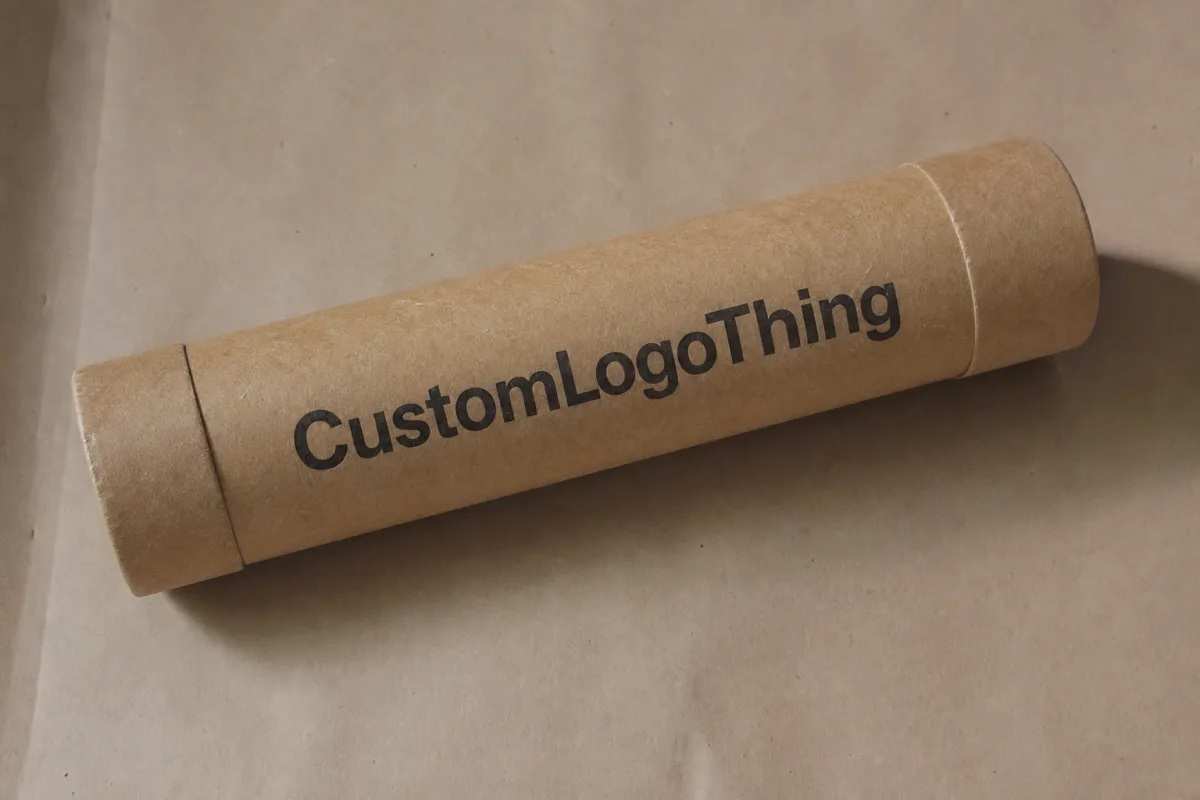
Bulk buying makes sense because packaging is a repeat problem disguised as a sourcing decision. Once product dimensions are settled and the shipping lane is known, changing the tube for every order wastes time and invites errors. A single, well-chosen spec cuts training friction, shortens packing time, and keeps the fulfillment floor calmer. High-volume transit packaging gets easier when people stop improvising.
The math is straightforward. Smaller orders usually carry higher per-unit pricing, more frequent freight charges, and extra setup fees that never seem dramatic until they are added together. Biodegradable Shipping Tubes Bulk programs spread those costs across a larger run. A meaningful price break often begins somewhere between 1,000 and 5,000 units, though diameter, wall thickness, print coverage, and custom tooling can shift that range in either direction.
Waste control matters too. Paper-based tubes with recycled content or verified biodegradable components reduce the clutter of mixed packaging inventory, and they make sustainability claims easier to defend. Retail buyers, procurement teams, and marketplace partners are asking sharper questions about materials now. The U.S. Environmental Protection Agency still offers a useful starting point for recycling and source-reduction guidance at EPA recycling guidance.
Fewer moving parts is the biggest operational win. One size can cover a family of products when the range is planned with care. That means fewer SKUs, cleaner reordering, and less chance that the warehouse runs out of the correct tube on a deadline day. Products that do not suit a cylinder should not be forced into one. Flatter goods and soft bundles often do better in Custom Poly Mailers, while boxed kits usually fit better in Custom Shipping Boxes.
Bulk purchasing also locks in the same print, the same stock, and the same closure style across every shipment. Branding stays tidy. The package feels chosen rather than assembled from leftovers, and customers notice that instinctively even if they never say it out loud.
Product Details: Materials, Construction, and Use Cases
Most biodegradable shipping tubes are made from paperboard, recycled paper layers, or a combination of both. The body is usually spiral-wound or tightly wrapped into a rigid cylinder, then finished with plugs, end caps, or other closures matched to the product. Better runs treat the whole stack as one system: board, adhesive, inks, and seal all support the same claim. Weaker runs keep the tube body on the sustainability pedestal while the closure material quietly travels in another direction. Buyers should ask for the full material stack, not a polished shorthand.
“Biodegradable” is not a blanket approval. It does not automatically mean compostable, and it does not mean every component breaks down under the same conditions or on the same timeline. Paperboard can be biodegradable while coatings, inks, liners, and adhesives complicate the story. Marketing teams sometimes want a stronger claim than the material data can support. That is where documentation matters. For shipping test methods and abuse-case terminology, ISTA is one of the references packaging teams use before approving a transit format.
Rigidity and weight are the real balancing act. Thicker walls resist crush better, but they also raise material cost and can increase dimensional weight. Carrier pricing does not care that the tube is mostly air; it prices the size as if the air matters, and it usually does. Shipping a long cylinder in ecommerce can push freight charges upward fast. A tube that fits the product closely avoids paying for space no one needs.
Common use cases are familiar:
- Posters and art prints that need a clean cylindrical mailer
- Calendars, certificates, and rolled marketing inserts
- Textiles or soft goods that can be rolled without creasing
- Small hardware or promotion kits that need rigid protection and a custom look
Some goods never belong in a tube. Moisture-sensitive items may need a barrier layer or a different format entirely. Fragile products that must remain flat and separated usually perform better in Cartons with Inserts. A tube is a tool, not a universal remedy, and no amount of wishful thinking changes that.
Construction also changes how the product feels in the customer’s hands. Spiral-wound tubes are often the economical choice and work well for practical shipping. Premium rigid tubes create a cleaner presentation, especially for direct-to-consumer shipments where the package itself becomes part of the brand impression. Natural kraft with minimal print suits some programs. Others want full-wrap branding. The right finish depends on the product, the channel, and how much visual noise the brand can tolerate.
Specifications for Bulk Orders: Sizes, Strength, and Finish
Buyer decisions improve the moment the question changes from “What is the cheapest tube?” to “What spec actually fits the product and the shipping lane?” For bulk purchasing, the important details are not negotiable: inner diameter, usable length, wall thickness, crush resistance, and closure style. Miss those, and the order becomes a collection of expensive compromises.
Inner diameter decides what fits without scuffing, binding, or curling. Common sizes start around 1.5 inches and extend to 6 inches, while custom builds can go wider. Lengths often begin near 8 inches and reach 36 inches, 48 inches, or more depending on the product. Wall thickness is where protection and price begin to pull in different directions. Standard tubes may sit around 1.5 mm to 3 mm, while heavier-duty builds can go thicker when the contents demand it.
Finish matters more than many buyers expect. Natural kraft gives a grounded, recycled look. Smooth white stock or lightly coated surfaces improve print clarity. Matte finishes tend to photograph better and feel less industrial. Logos should sit cleanly on the surface, not blur into it. Simple one-color branding usually keeps costs down. Full-wrap graphics cost more, though they can turn transit packaging into a stronger brand touchpoint.
Here is a practical spec checklist before you request quotes:
- Product dimensions, including rolled diameter if the item is flexible
- Desired inner diameter and length of the tube
- Approximate product weight and whether the contents need extra edge protection
- Closure style, including plugs, paper end caps, or custom seals
- Print plan: blank, single-color logo, or full-wrap artwork
- Shipping destination and expected freight method
- Any certification requirement, such as FSC-certified paper or compostability documentation
Stacking strength also needs attention. Tubes packed tightly in cartons or palletized for wholesale distribution need enough crush resistance to survive handling. A flimsy build collapses under load. An overbuilt tube increases cost for no good reason. The best suppliers discuss real-world load behavior rather than hiding behind vague language like “strong” or “durable.”
Automated packing lines add another wrinkle. A tube that feeds well by hand can still jam a machine or slow a line if the tolerance is sloppy. Anyone using semi-automatic or automated packing should say so early. A few millimeters of variation can create hours of downtime later.
| Option | Typical MOQ | Planning Price Range | Best For | Tradeoff |
|---|---|---|---|---|
| Stock unprinted tube | 250-500 units | $0.28-$0.65/unit | Fast reorders, simple shipments | Less brand impact, limited sizing |
| Printed standard-size tube | 500-1,000 units | $0.38-$0.95/unit | Logo shipping, recurring ecommerce shipping | Setup cost and print complexity |
| Custom size with print | 1,000-3,000 units | $0.52-$1.25/unit | Special products, branded launches | Higher MOQ, longer lead time |
| Heavy-duty premium run | 3,000-10,000 units | $0.65-$1.50/unit | High-value prints, tighter package protection | More material, more freight, more cost |
Those numbers are planning ranges, not a quote. Diameter, wall thickness, print coverage, finish, and total volume all move the final price. The pattern is still useful because it shows where the money goes. Paperboard is only part of it. Tooling, ink coverage, closures, and dimensional-weight freight often matter just as much.
Biodegradable Shipping Tubes Bulk Pricing and MOQ
Pricing for biodegradable shipping tubes bulk orders follows a few predictable levers. Diameter is one. Wall thickness is another. Print coverage, custom sizing, closure style, and quantity all move the number. Choose a larger tube than the product needs and the cost rises twice, once in material and once in freight. Oversized transit packaging drains margins quietly, which is usually the worst kind of drain.
The MOQ question usually comes down to whether the tube is standard or custom. Standard sizes can often support lower quantities because the supplier is not changing tooling or reconfiguring a special board spec. Custom dimensions, special coatings, or detailed print work usually raise the minimum. That is not a penalty; it is production reality. Machines, setup, and labor do not get cheaper because an order is small.
Price breaks often arrive in layers. A first run of 500 pieces may look acceptable, but the unit cost can fall sharply at 1,000 or 2,500 pieces. Then it drops again when the order matches monthly or quarterly usage instead of a single campaign. Smart buyers ask for tiered pricing at 500, 1,000, 5,000, and 10,000 units. The economics become visible quickly, and procurement can decide whether smaller frequent reorders or larger scheduled runs make more sense.
Hidden costs do the most damage. A low unit price can hide freight charges if the tube is long and the carton shape is inefficient. Rush production adds fees. Premium inks and coatings can do the same. Even a strong-looking quote can swell once samples, setup, packing, and multi-location shipping enter the picture. The only useful comparison is landed cost.
Here is a breakdown that makes quotes easier to compare:
- Base material: recycled paperboard, fiber tube body, or mixed-paper construction
- Print setup: one-color logo, two-color mark, or full-wrap graphic
- Closures: standard end caps, paper plugs, or custom-fit seals
- Production complexity: stock size, custom size, or special finish
- Freight exposure: carton size, pallet efficiency, and dimensional weight
One rule saves a lot of confusion: ask for quotes using the same size, the same print coverage, and the same destination. Comparing a 2-inch tube to a 3-inch tube is not comparison, it is bookkeeping theater.
Inventory holding cost deserves a seat at the table too. A lower MOQ can feel safer, yet repeated small orders can drive the real cost upward because freight and setup repeat. A larger run can lower unit cost and steady supply, but only if the warehouse has the space and the forecast is reliable. When usage is predictable, Wholesale Programs often make the cleanest sense.
Process and Lead Time: From Quote to Delivery
A clean order process saves more money than a rushed discount ever will. The usual sequence is simple: inquiry, spec confirmation, artwork review, proof approval, production, packing, and shipment. Trouble appears when one step gets blurred. Missing dimensions, vague shipping notes, and half-finished artwork are classic delay makers. They are avoidable, which is why they are so irritating.
Stock tubes usually move faster than custom runs because the setup is lighter. A standard unprinted order can often move in about 10 to 15 business days after approval, depending on inventory and the freight lane. Custom biodegradable shipping tubes bulk orders take longer, especially when the diameter is new, the print is intricate, or the closure needs special tooling. A realistic custom window often lands around 15 to 25 business days after proof approval, and larger or awkward shipments can stretch beyond that.
Sampling is not an indulgence. It is insurance against expensive embarrassment. A prototype or pre-production sample can reveal the issues a screen never shows: too tight, too loose, too glossy, too soft, too heavy, too slippery for the line. One sample costs less than one pallet of incorrect stock. That sounds obvious. Plenty of buyers still skip it because they want the order moving, then pay later in delays and remakes.
Approval timing shapes the whole schedule. Late artwork creates a late proof. A late proof delays production. Delayed production disrupts freight and creates inventory gaps. Then the team starts improvising. The fastest projects usually have three things ready on day one: dimensions, artwork, and a target delivery date that everyone accepts.
A practical timeline looks like this:
- Day 1-2: request quote, share dimensions, and confirm the material stack
- Day 3-5: review proof, color target, and closure style
- Day 6-10: approve sample or final proof
- Day 11-25: production, QC, and packing
- Final leg: freight transit, which can vary by route and carrier
Multi-warehouse delivery adds complexity, but it is easier to solve before production than after the goods are sealed and stacked. Tube packaging also should not be treated as the default answer for every product. Cartons can be better for mixed kits. Mailers can be better for flat, soft goods. Shape should decide the format, not habit.
Why Choose Us for Bulk Sustainable Packaging
Plenty of suppliers can sell a tube. Fewer can help you choose one without overselling it. That difference matters. At Custom Logo Things, the aim is practical packaging: correct dimensions, clean branding, honest lead times, and a material stack that matches the sustainability claim you plan to make.
The best supplier usually reduces risk instead of multiplying it. Fewer surprises in print quality, fewer packaging defects, fewer “we need another week” emails after approval. Good suppliers ask the questions that keep a bulk run from drifting off course. What is the product diameter? How much clearance is needed at the ends? Do you need FSC-certified paper? Is the order moving through wholesale distribution or direct-to-consumer ecommerce? Those questions are not bureaucracy. They are the difference between a predictable run and a mess.
Consistency matters just as much as design. A nice logo on a weak tube is still a weak tube. Bulk packaging needs to survive trucks, conveyors, warehouses, and front porches. When the tube is part of a repeat program, the same spec should come back the same way next time. That sounds basic because it is basic, and basic is exactly what many suppliers miss.
Honest comparison matters too. Sometimes a tube is the right answer. Sometimes Custom Shipping Boxes protect better and cost less once freight is included. Sometimes Custom Poly Mailers are enough because the product is soft, flat, and low-risk. Packaging buyers do not need a sales pitch. They need the correct format.
Teams that reorder on a schedule benefit from a structured replenishment path. That is where Wholesale Programs make life easier. Reorders are cleaner, inventory planning is simpler, and approvals move faster when the base spec is already locked. Small operational details save real time in the middle of a busy shipping week.
Material sourcing should match the claim. FSC-certified stock is a sensible option when chain-of-custody support matters. Print methods should fit the surface instead of forcing a fancy finish onto rough board. Package testing should be tied to the actual transit risk, not a vague promise. Suppliers who answer those questions directly are usually easier to work with over the long haul.
Next Steps: How to Order the Right Bulk Run
A clean quote begins with clean information. Send the essentials first and the back-and-forth drops fast. Product dimensions, target quantity, print requirements, shipping destination, and certification needs cover most of the ground. Carton size or pallet size helps too, because freight and dimensional weight are easier to calculate when the shipment shape is known.
The best decision path usually runs in this order: choose the product size first, request tiered pricing next, then ask for a sample if the order is custom. Too many buyers begin with print ideas and discover the tube is the wrong diameter. That sequence wastes time. Fit comes first. Branding follows.
Before production starts, confirm these points in writing:
- Tube inner diameter, length, and wall thickness
- Closure style and how the end caps are secured
- Print color count, logo placement, and finish
- MOQ, unit price at each volume tier, and freight estimate
- Target ship date and backup approval contact
Comparing suppliers should reach beyond unit price. A quote only matters if the lead time is real, the damage rate is low, and the supplier can repeat the order without changing the spec. Ask how sampling works, what kind of QC is used, and whether the same structure can be reordered with minimal variation. Procurement gets sharper when those answers are on the table. The cheapest quote is often just the loudest one.
If your brand wants a cleaner sustainability story, keep the claim accurate. Use biodegradable shipping tubes bulk wording only when the tube structure and its components support it. If the product is paper-based with biodegradable adhesives and verified closures, say that. If it is recycled-content paperboard, say that. Precision builds trust; vague claims erode it quickly.
Build the spec sheet, ask for tiered pricing, and approve the sample before the run starts. That sequence keeps a bulk purchase grounded in the product that will actually ship, not the packaging idea that looked good in a meeting.
Frequently Asked Questions
What is the minimum order for biodegradable shipping tubes bulk pricing?
MOQs depend on whether the tube is a stock size or a custom spec. Plain stock options can start at a few hundred units, while printed or custom-dimension tubes often begin around 500 to 1,000 units. Tiered quotes show where the first real price break appears, which is better than guessing.
Are biodegradable shipping tubes bulk orders actually compostable?
Not automatically. Biodegradable and compostable are not the same claim, and the tube body is only part of the picture. Inks, liners, adhesives, and end caps all matter. Marketing language should match documentation, not hope.
How long does a bulk order of biodegradable shipping tubes take?
Stock sizes move faster because they skip custom tooling and usually require less setup. Custom printing, special finishes, and new dimensions add production time. A sample or proof stage can extend the schedule, but it is far cheaper than correcting a bad run after shipment.
Can I print my logo on biodegradable shipping tubes bulk runs?
Yes. Most bulk programs support logo printing, labels, or full-wrap graphics. The print method depends on the tube surface, the quantity, and the number of colors. Simpler artwork usually costs less and prints cleaner, which is hardly a surprise.
How do I choose the right size for biodegradable shipping tubes bulk orders?
Measure the product first, then add the clearance needed for end caps and protection. Choose the smallest tube that safely fits the item so freight and storage costs stay under control. Shipping multiple SKUs becomes much easier when one or two tube sizes cover most of the range.
Practical takeaway: lock the dimensions, confirm the material stack, and compare quotes on landed cost rather than unit price alone. That is the simplest way to make biodegradable shipping tubes bulk orders repeatable, defensible, and easy to reorder without rework.


