Buyer Fit Snapshot
| Best fit | Custom Shipping Tubes Bulk Pricing projects where brand print, material claims, artwork control, MOQ, and repeat-order consistency need to be specified before quoting. |
|---|---|
| Quote inputs | Share finished size, material target, print colors, finish, packing count, annual reorder estimate, ship-to region, and any compliance wording. |
| Proofing check | Approve dieline scale, logo placement, barcode or warning zones, color tolerance, closure strength, and carton packing before bulk production. |
| Main risk | Vague material claims, crowded artwork, missing packing details, or unclear freight terms can make a low unit price expensive after revisions. |
Fast answer: Custom Shipping Tubes Bulk Pricing: Board, Finish, Dieline, and Unit Cost should be specified like a repeatable production item. The safest quote records material, print method, finish, artwork proof, packing count, and reorder notes in one written spec.
Production checks before approval
Compare the actual filled-product size with the drawing, then confirm tolerance on folds, seals, hang holes, label areas, and retail display edges. Reserve space for logos, QR codes, warning copy, and material claims before decorative graphics fill the panel.
Quote comparison points
Review material grade, print process, finish, sampling route, tooling charges, carton quantity, and freight assumptions side by side. A quote is only useful when the supplier can repeat the same color, closure quality, and packing count on the next order.
Custom Shipping Tubes Bulk Pricing: What Buyers Need to Know Before They Order
Custom Shipping Tubes Bulk pricing looks simple on paper, then freight, print, setup, and handling start tugging the number in different directions. The tube itself is rarely the whole story. Dimensional weight, end style, artwork coverage, board grade, and the route the order takes through the carrier network can matter more than a small change in wall thickness. I have watched buyers save a few cents on material and lose the savings three times over in shipping and replacements.
That is why Custom Shipping Tubes bulk pricing has to be read as a system, not a single line on a quote. A buyer ordering plain kraft tubes and a buyer ordering full-color branded packaging may start with the same diameter and length, then end up with very different totals once decoration, proofing, and production setup show up. For teams comparing Custom Packaging Products, the right question is not only, “What is the unit price?” It is, “What does the shipment cost after it leaves the dock?”
The impact goes beyond invoice math for ecommerce teams. Well-sized tubes can cut damage claims, speed pack-out, and keep carrier charges from quietly eating margin. Saving a few cents on material feels good. Cutting returns feels better. Reducing touch points on the pack line is better still. That is the real frame for custom shipping tubes bulk pricing.
Custom Shipping Tubes Bulk Pricing: What Changes the Number Fast
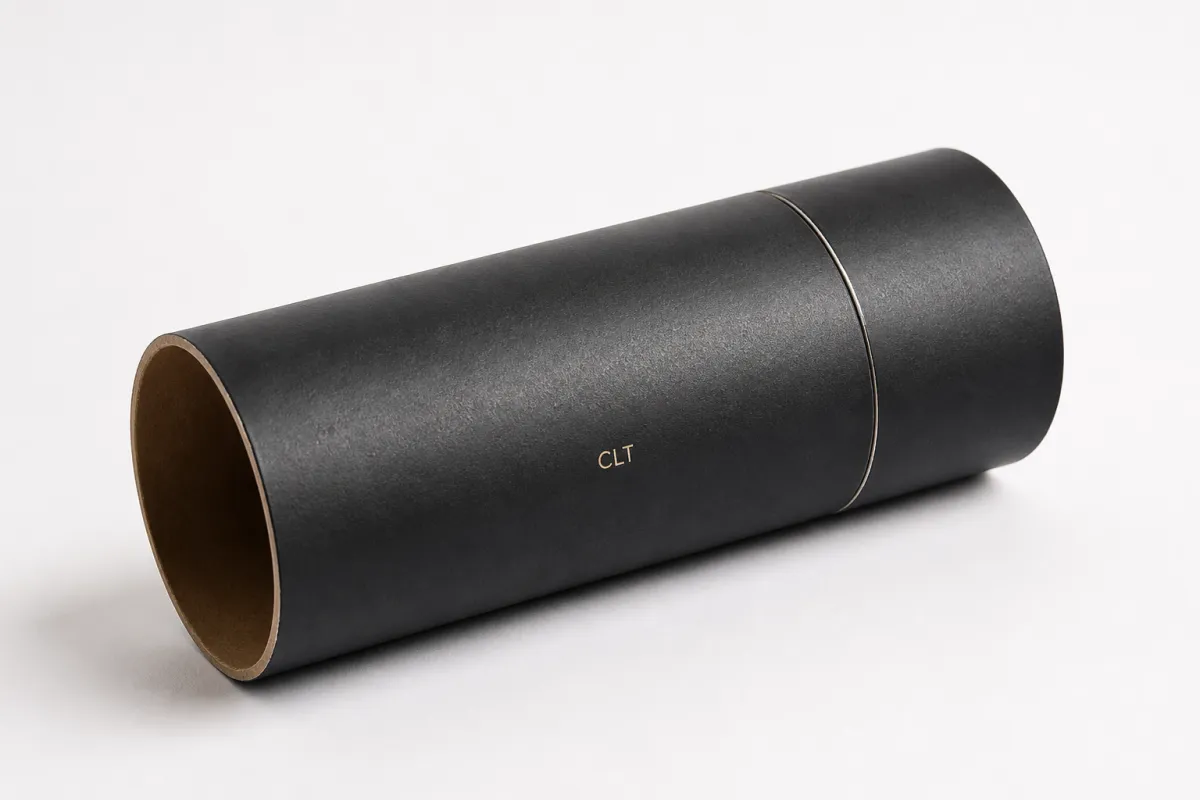
Custom shipping tubes bulk pricing shifts fastest once an order moves from plain utility into branded packaging. Wall grade matters, yet it is only one layer in the pricing stack. Closure type, ink coverage, tooling setup, print registration, and freight classification can move the number more than a modest change in paperboard grade. Buyers often focus on thickness because it is visible and easy to compare. The quote usually tells a different story, and it is less forgiving than the sample in hand.
Two buyers can ask for the same diameter and length and still receive wildly different numbers. One wants plain kraft for internal fulfillment. The other wants a full-color logo, custom labeling, and a retail-ready presentation. The second quote rises because setup and decoration carry more weight than raw materials. That is not a pricing gimmick. It is how custom shipping tubes bulk pricing behaves once production leaves a stock spec.
Bulk pricing works differently from retail pricing because fixed costs get spread across the run. Setup, artwork review, machine changeovers, and spoilage are part of the bill. Once a larger quantity absorbs those costs, unit price can fall quickly. The catch is consistency. If the spec keeps changing, those savings shrink because each revision can trigger another setup path. Bulk rewards stability.
Procurement should think less in terms of “cheap tube versus expensive tube” and more in terms of fit for the business. A higher tube cost can still be the better choice if it lowers breakage, simplifies storage, or prevents replacement shipments. With custom shipping tubes bulk pricing, that broader view usually beats a narrow material comparison.
“If the tube arrives intact but the freight bill destroys the margin, the quote was never really low.”
That line is blunt for a reason. It reflects how custom shipping tubes bulk pricing works in real procurement. A quote that ignores freight or understates dimensional weight is incomplete. A quote that ties material, print, and shipping together gives buyers something usable, especially for teams that also source Custom Shipping Boxes and need one landed-cost logic across formats.
Print coverage can also change pricing faster than many buyers expect. A single-color logo near the seam is one thing. Full-wrap graphics, special varnish, and high ink coverage along a long body add press time and setup. That is why custom shipping tubes bulk pricing often reflects decoration complexity as much as size.
For a quick market read, ask for the same tube in three versions: unprinted, one-color logo, and full-color branded. The gap between those numbers shows where the money is going. It also reveals how custom shipping tubes bulk pricing will behave if the packaging program grows from simple utility into branded presentation.
Custom Shipping Tubes Bulk Pricing: Spec Choices Buyers Miss
The costliest mistakes in custom shipping tubes bulk pricing usually start with small spec choices that seem harmless during the RFQ stage. Diameter, length, wall grade, caliper, end style, print coverage, and whether the tube is stock-sized or made to order all affect the final price. Buyers often see one variable at a time. Production sees all of them together.
Diameter changes both material use and product fit. A tube that is only a little wider than needed wastes board and can raise shipping cost if it pushes dimensional weight higher. A tube that is too tight creates friction during pack-out, especially for posters, textiles, or rolled inserts. Custom shipping tubes bulk pricing improves when the fit is close enough to protect the product without adding unnecessary void space.
Length has a larger freight effect than many teams expect. A longer tube may add only a modest amount of board cost, yet it can bump the shipment into a more expensive freight tier or reduce parcel handling efficiency. That is why custom shipping tubes bulk pricing should always be checked against the carrier method. A tube that looks efficient on paper can turn expensive once shipping is added.
Wall grade is another place where buyers overspend. Heavier board improves crush resistance, which helps in long-haul ecommerce shipping or rough warehouse handling. Over-specifying the wall for a light product adds cost without enough protection to justify it. The better question is not “What is the strongest tube?” It is “What level of protection does this product and route actually require?” That answer changes from retail packaging to industrial parts, and from one carrier profile to another.
What to include in a quote request
- Exact product dimensions, including rolled diameter and acceptable tolerance.
- Pack count per tube, so the supplier can estimate fit and labor accurately.
- Artwork files, print coverage, and whether the tube needs a logo, label area, or full wrap.
- Target ship method, such as parcel, LTL, or mixed freight.
- Any retailer, marketplace, or carrier requirements tied to product packaging.
- Need for inserts, closures, caps, or tamper-evident features.
That checklist looks basic, yet it cuts down on re-quoting. I have seen custom shipping tubes bulk pricing change because the buyer left out the closure style or called the product “approximately” sized. Approximate is not a production spec. Exact dimensions are.
Stock-sized and made-to-order production behave differently. Stock tubes can sometimes benefit from lower setup time, while custom diameters or lengths may require tooling and extra handling. That does not make custom the wrong choice. It means custom shipping tubes bulk pricing should be measured against the savings from a better fit, less filler, and a cleaner pack-out.
Teams balancing branded packaging with warehouse efficiency often do best by standardizing a short list of tube sizes. That keeps ordering cleaner and lets procurement compare custom shipping tubes bulk pricing across multiple SKUs without rebuilding the spec every time. The more stable the package design, the easier it is to forecast cost.
If your line includes adjacent formats such as Custom Poly Mailers or mixed product packaging, align tube specs with the rest of the pack program. One buyer should not be managing every format in isolation. Shared sizing logic makes custom shipping tubes bulk pricing easier to control across the catalog.
| Tube Spec | Typical Cost Pressure | Buyer Impact |
|---|---|---|
| Plain kraft, stock length | Lower setup, lower print cost | Best for internal use and trial runs |
| One-color branded tube | Moderate setup and press time | Useful for basic package branding |
| Full-color custom tube | Higher artwork and print complexity | Best for retail presentation and stronger shelf appeal |
| Heavy-wall, long-format tube | More material plus freight impact | Better protection, but watch dimensional weight |
That table is a useful shortcut, not the full picture. In custom shipping tubes bulk pricing, the cheapest spec is rarely the most economical spec. A tube that saves two cents but doubles damage risk is a poor buy. A slightly stronger tube that lowers claims can be the smarter procurement move.
Cost, MOQ, and Quote Structure for Bulk Orders
Custom shipping tubes bulk pricing is made up of several cost buckets, and suppliers do not always present them the same way. Raw board, cutting, forming, printing, inserts, packing, palletization, and freight may appear as separate lines or as one bundled landed-cost figure. The difference matters. A quote that looks low on unit price can look very different once the shipment reaches your facility.
MOQ exists because setup has to be recovered somehow. Machines need adjustment. Material must be staged. Waste happens on the first run, even in a well-run plant. As quantity rises, those fixed costs spread thinner, and unit cost falls. That is why custom shipping tubes bulk pricing usually improves at volume breakpoints. The key is keeping the spec stable long enough to capture the benefit.
Many buyers ask for one number and stop there. That creates risk. A single quote at 1,000 units does not tell you much if your annual need might be 250, 500, or 5,000. Ask for tiers. A practical spread might be 250, 500, 1,000, and 5,000 units. That gives procurement a real view of the price curve and shows whether the savings justify a larger buy.
Quote structure matters as much as the number itself. Three common formats show up:
- Per-unit pricing - useful for quick comparisons, but freight may be missing.
- Tiered volume pricing - helps show how custom shipping tubes bulk pricing drops as quantity rises.
- All-in landed pricing - best for procurement when freight, palletization, and delivery timing matter.
For most buyers, landed pricing is the safest comparison. The lowest unit price can become the highest total cost if freight is misclassified or the shipment needs special handling. That risk grows with long tubes used in ecommerce shipping, where dimensional weight can change the math quickly.
Compare only like-for-like specs. If one supplier quotes custom shipping tubes bulk pricing with caps, inserts, and delivered freight, while another quotes tube-only pricing, the comparison is invalid. The same issue shows up in Custom Printed Boxes and other branded packaging programs. The quote has to describe the full build.
Sometimes a larger order produces better economics even if the warehouse does not need every unit immediately. That depends on storage space, inventory turns, and how stable the artwork is. If a marketing refresh is likely next quarter, do not overbuy just to reach a lower price tier. Save the cash. Custom shipping tubes bulk pricing should support the business, not trap it in stale stock.
Wholesale Programs matter here too. A supplier that regularly supports Wholesale Programs may be more comfortable quoting multiple breakpoints, reserving production slots, and laying out lead times clearly. For procurement teams, that clarity is part of the value, not an extra.
Standards also matter. It is smart to ask how the tube was evaluated for transit conditions. Many teams benchmark performance against ISTA test methods for distribution and handling, especially for parcel-heavy programs. For reference, see the International Safe Transit Association at ista.org. If your board or sourcing policy requires responsible fiber sourcing, FSC certification is another useful signal; the Forest Stewardship Council details that framework at fsc.org. Those references do not set price by themselves, but they shape the spec choices behind custom shipping tubes bulk pricing.
Production Process and Timeline: From Spec Sheet to Shipment
Good custom shipping tubes bulk pricing starts with a clean workflow. The production path usually begins with specification review, then quote approval, then artwork or dieline confirmation, followed by proofing, material procurement, production, quality inspection, packing, and dispatch. Every missing detail slows the next step. Every late change adds cost.
Lead time depends heavily on the build. Simple unprinted tubes often move faster because there is less artwork review and fewer setup dependencies. Add custom print, special liners, or unusual sizes, and the schedule stretches. That is normal. Custom shipping tubes bulk pricing is not only a material quote; it is also a production slot.
Delays usually come from the same places. Dimensions are incomplete. The artwork file is wrong. The buyer changes the closure style after proof approval. A sample request arrives too late to affect the schedule. These are avoidable problems, and they often show up together. If the goal is efficient order fulfillment, the spec sheet needs to be finished before the quote is accepted.
Ask for timeline details in business days, not vague promises. A useful vendor should say what can be expedited, what cannot, and which approval points are mandatory before the order enters production. Custom shipping tubes bulk pricing is much easier to manage when the timeline is explicit. Procurement can then match delivery dates to launches, promotions, or replenishment windows.
What a realistic timeline often looks like
- Specification review and quote: 1 to 3 business days.
- Proof or artwork confirmation: 1 to 5 business days, depending on revisions.
- Material procurement: same-day to several days, based on stock and board grade.
- Production and quality checks: often 5 to 12 business days for custom runs.
- Packing and shipment booking: 1 to 2 business days after completion.
That is not a promise. It is a practical range. The real schedule depends on whether the order is routine or heavily customized. For custom shipping tubes bulk pricing, the costliest delay is often not the production slot. It is the time lost while everyone waits for a dimension, logo, or approval that should have been settled on day one.
If the order is part of a wider packaging redesign, coordinate tube approval with other formats. Teams that buy product packaging across multiple lines can save time by aligning the approval calendar. It is easier to review tubes, Custom Packaging Products, and a broader mix of retail packaging concepts in the same cycle than to chase revisions across separate projects.
There is also a materials angle to the timeline. If the board grade is common and in stock, production can start faster. If it is a special construction, lead time can stretch. That is why custom shipping tubes bulk pricing should never be judged apart from availability. A lower quote that misses the launch date is not lower in practical terms.
Choosing the Right Tube for Your Product and Carrier
Custom shipping tubes bulk pricing only makes sense if the tube fits the product and the carrier environment. Posters, blueprints, textiles, rolled graphics, and specialty parts do not behave the same way in transit. Some need tighter inner control. Some need stronger end protection. Some need more crush resistance than anything else. The right build depends on the object being shipped, not just the price sheet.
Carrier reality changes the package equation. A tube that looks efficient in the warehouse can become costly if it triggers oversize charges or poor stacking performance in parcel networks. The tube has to work inside the carrier system, not only in the design mockup. Custom shipping tubes bulk pricing improves when the spec avoids hidden shipping penalties.
A premium printed tube can lift package branding, and that matters for brands that care about presentation. Appearance is only one part of the decision. If the product is fragile, internal protection and crush resistance should come before aesthetics. That balance is easy to miss when the conversation stays focused on print samples. A disciplined buyer keeps both goals on the table.
Right-sizing is where real savings appear. Avoid empty space. Use the shortest viable length. Standardize lengths where possible so your team does not manage too many SKUs. Those three moves can reduce material waste, simplify storage, and keep custom shipping tubes bulk pricing under control. They also improve order fulfillment because packers deal with fewer exceptions.
For teams managing broader product packaging programs, the best tube is often the one that complements the rest of the ship set. If the business also orders Custom Shipping Boxes, the same sizing logic should apply across formats. The goal is consistent pack performance, not random savings on one item and added handling cost on another.
Ask a direct question during sourcing: what failure mode are we trying to prevent? Crush? Scuffing? Edge damage? Carrier surcharge? Once that is clear, custom shipping tubes bulk pricing can be optimized around the right spec, not around a guess. That approach is more disciplined, and it usually produces better repeat ordering.
It helps to compare tubes the way buyers compare custom printed boxes. A box spec that is too heavy raises cost without enough value. A tube spec that is too heavy does the same thing. Better material control, cleaner packaging design, and fewer unnecessary options usually lower total spend.
Why Choose Us for Bulk Tube Sourcing
For buyers evaluating custom shipping tubes bulk pricing, supplier value should be measurable. Consistent dimensions matter because they reduce rework and packing errors. Dependable print registration matters because it keeps branded packaging looking intentional rather than shifted or muddy. Predictable reorders matter because procurement needs continuity, not constant re-qualification.
Communication matters too. A strong sourcing partner should be clear about MOQ, lead time, freight assumptions, and which spec choices change cost the fastest. That clarity saves time for procurement and operations alike. It also makes custom shipping tubes bulk pricing easier to compare against other product packaging options, because the quote reads like a decision tool rather than a sales sheet.
Quality controls are not background noise. They are part of the economics. Incoming material checks catch board variation. In-process inspection catches print or forming issues before they become scrap. Dimensional verification keeps the final tube aligned with the spec. Final packing standards reduce damage in transit. Each step lowers replacement cost and customer complaints.
For buyers who manage mixed packaging lines, sourcing support should extend beyond tubes. The same team that quotes tubes should help compare Custom Packaging Products, Custom Poly Mailers, and other packaging formats without forcing you to rebuild the request every time. That kind of support matters in fast-moving ecommerce shipping programs, where one weak link can throw off the fulfillment flow.
Here is the honest view: a stronger manufacturing partner can save more money over time than a slightly cheaper vendor that is hard to reach, vague on specs, or inconsistent on output. Custom shipping tubes bulk pricing should be judged across the full buying cycle. A few cents on the invoice do not matter much if the order arrives late or needs rework.
Supply chain reliability also matters for teams with ongoing wholesale programs. Reorders should not feel like starting from zero. If the supplier can keep tube dimensions stable, communicate the production path clearly, and provide clean documentation for procurement, the business gets a steadier cost structure. That is worth real money.
We also look at sourcing signals that support long-term trust. FSC-linked fiber sourcing is useful for buyers with environmental requirements, while ISTA-style transit thinking helps ensure the design survives shipping conditions. For teams comparing custom shipping tubes bulk pricing across vendors, those details add context to the quote and reduce the risk of surprise failures later.
Next Steps for Custom Shipping Tubes Bulk Pricing
If you want a precise quote, gather the facts before you send the request. Exact tube dimensions, product weight, quantity, print needs, delivery address, and the target in-hand date all belong in the first message. The more complete the brief, the more useful the custom shipping tubes bulk pricing response will be.
Ask for at least two or three pricing scenarios. A low-MOQ trial order can show the minimum commitment. A mid-volume run can reveal the practical working price. A higher-volume quote can show where unit economics improve the most. That comparison is better than approving one number and hoping it holds.
Confirm the approval points in writing. Artwork proof. Sample status if needed. Production start date. Shipment method. If a supplier is quoting custom shipping tubes bulk pricing without those milestones, the order is not fully defined yet. Procurement should not guess at the missing pieces.
Ask which spec changes affect cost the most before you finalize the order. Sometimes the answer is print coverage. Sometimes it is length. Sometimes it is closure style or freight class. That answer helps protect quality while trimming waste. It also keeps the order aligned with the actual business need.
For brands building a broader packaging design system, tube sourcing should sit alongside other formats such as retail packaging, custom printed boxes, and shipping boxes. That creates cleaner brand consistency across the customer experience. It also helps sourcing teams compare cost structures across categories instead of treating each one as a separate universe.
If you are ready to request a quote, use the exact phrase custom shipping tubes bulk pricing so the request is routed correctly and the team can respond with bulk-order assumptions in mind. The wording matters because it signals volume, production planning, and freight sensitivity. In this category, those details separate a rough estimate from a quote you can actually use.
Frequently Asked Questions
How do I get the most accurate custom shipping tubes bulk pricing quote?
Send exact tube dimensions, product weight, quantity, print requirements, and delivery zip code. Include whether you need inserts, closures, or special board strength so the quote reflects the real build. Ask for landed pricing if freight will affect your buying decision. That is usually the fastest way to get reliable custom shipping tubes bulk pricing.
What minimum order quantity is typical for custom shipping tubes bulk pricing?
MOQ varies by size, print complexity, and material grade. Simple unprinted runs usually have lower minimums than full-color custom orders. Request tiered quotes so you can see where unit cost drops as volume increases. That makes custom shipping tubes bulk pricing easier to plan around.
Why do two custom shipping tubes bulk pricing quotes look so different?
Differences often come from board weight, print setup, insert requirements, and freight classification. One supplier may quote only the tube while another includes packing and delivery. Always compare the same spec sheet before judging price. Otherwise, custom shipping tubes bulk pricing comparisons can be misleading.
How long does bulk production usually take for custom shipping tubes?
Lead time depends on whether the tube is stock-sized or fully custom. Artwork approval and proofing can add time before production starts. Rush options may exist, but they usually increase cost and limit finish choices. That timing has a direct effect on custom shipping tubes bulk pricing.
Can I lower custom shipping tubes bulk pricing without reducing quality?
Yes, by standardizing lengths, simplifying print coverage, and ordering at a higher volume. Right-sizing the tube reduces material waste and dimensional weight. Ask the supplier which spec changes affect cost most before you approve the order. That is the cleanest route to better custom shipping tubes bulk pricing.

