Buyer Fit Snapshot
| Best fit | Biodegradable Stand Up Pouches Wholesale projects where brand print, material claims, artwork control, MOQ, and repeat-order consistency need to be specified before quoting. |
|---|---|
| Quote inputs | Share finished size, material target, print colors, finish, packing count, annual reorder estimate, ship-to region, and any compliance wording. |
| Proofing check | Approve dieline scale, logo placement, barcode or warning zones, color tolerance, closure strength, and carton packing before bulk production. |
| Main risk | Vague material claims, crowded artwork, missing packing details, or unclear freight terms can make a low unit price expensive after revisions. |
Fast answer: Biodegradable Stand Up Pouches Wholesale: What Matters should be specified like a repeatable production item. The safest quote records material, print method, finish, artwork proof, packing count, and reorder notes in one written spec.
Production checks before approval
Compare the actual filled-product size with the drawing, then confirm tolerance on folds, seals, hang holes, label areas, and retail display edges. Reserve space for logos, QR codes, warning copy, and material claims before decorative graphics fill the panel.
Quote comparison points
Review material grade, print process, finish, sampling route, tooling charges, carton quantity, and freight assumptions side by side. A quote is only useful when the supplier can repeat the same color, closure quality, and packing count on the next order.
Biodegradable Stand Up Pouches wholesale makes sense when you want shelf presence, lower freight cost, and less storage bulk without sacrificing print quality or seal performance. A pouch weighs far less than a jar or tin. That matters the moment the order leaves the factory and starts collecting cost in a truck, warehouse, or retail back room.
If your product is stable and the fill weight is locked, wholesale pouches can be a smart buy. If your spec is still drifting through email threads, the packaging will punish that chaos with delays, remake charges, and a stack of samples nobody trusts. Buyers who want a clean starting point can use our Wholesale Programs page.
There is a catch. "Biodegradable" sounds tidy, but packaging does not care about tidy language. A pouch can be biodegradable under specific conditions and still behave very differently on shelf, in transit, or in a hot warehouse. The real job is not buying a green claim. It is buying a structure that fits the product, the logistics, and the disposal story you can actually defend.
Cheap packaging stops looking cheap once freight, storage, damages, and a replacement run show up.
Why biodegradable stand up pouches wholesale beats rigid packs
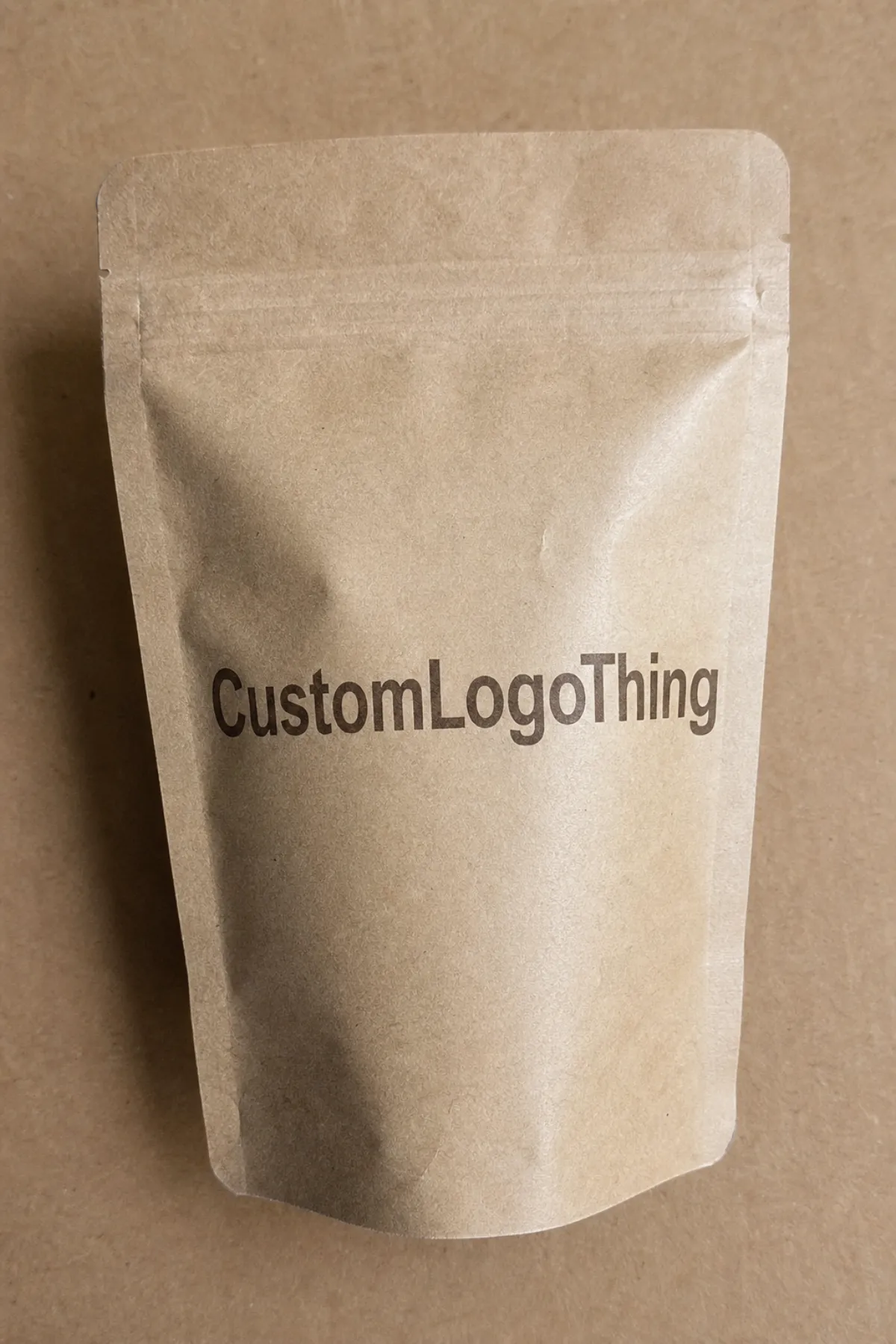
A stand-up pouch usually wins on the boring stuff that controls margin. It weighs less than a jar, takes up less cube space in transit, and stacks more efficiently in fulfillment. Fewer cartons per pallet. Lower warehouse cost per unit. Less money spent shipping packaging instead of product. That is not a trend story. That is simple math.
For a lot of brands, the fit is obvious. Dry snacks, coffee, tea, powder blends, supplements, pet treats, granola, dried fruit, and similar products do not need a hard container just to sit upright on a shelf. A pouch gives them enough structure for retail display and enough space for graphics, claims, and barcodes. Light and medium-density fills often look better in a pouch than in a rigid pack because the front panel prints cleanly without awkward shoulders or seams getting in the way.
The real pain point sits in the middle. Brands want sustainable packaging, but they still need a clean seal, a zipper that does not give up after two uses, moisture resistance, and print that does not look like a bargain-bin afterthought. That is where biodegradable stand up pouches wholesale can work well, if the structure is chosen with judgment instead of marketing fog. A pouch that looks eco-friendly but fails in distribution is not a win. It is a return ticket.
Wholesale only makes sense when the SKU is steady. If fill weight changes every month, artwork keeps getting rebuilt, or the format shifts on a whim, large-run packaging gets annoying fast and expensive even faster. The right time to buy wholesale is when the product has settled, the retail plan is clear, and the pouch spec can stay locked long enough to justify tooling, proofing, and production.
Sustainability also needs a careful read. Not every biodegradable pouch is compostable. Not every compostable pouch belongs in every disposal stream. Not every supplier uses the terms honestly. If a vendor cannot tell you whether the film is built for industrial composting, home composting, or another end-of-life path, treat the claim like sales copy until the paperwork shows up. The Environmental Protection Agency has plain-language guidance on waste and composting at EPA, which is worth checking before you build a brand message around the pack.
For brands comparing rigid containers against flexible packaging, the practical list usually looks like this:
- Lower shipping weight: less dead load moving through the supply chain.
- Better cube efficiency: more units per carton, case, and pallet.
- Stronger shelf presence: upright format with a large printable front panel.
- Less storage strain: pouches take up less room than jars, tins, and boxed formats.
- More design freedom: matte, gloss, paper-look, clear window, zipper, tear notch, and more.
That is the tradeoff, plain and simple. If your product needs a rigid feel for premium positioning, a pouch may miss the mark. If you want practical shelf impact without paying to move extra packaging, biodegradable stand up pouches wholesale usually wins.
Product details and material options buyers should verify
The word "biodegradable" covers a lot of ground. That is exactly why buyers need to slow down and ask better questions. The film structure matters more than the label. You are not just choosing a pouch shape. You are choosing a material stack, a closure system, a print process, and a disposal claim that should match the actual build.
The common options usually fall into a few groups. Some pouches use compostable films built for industrial composting environments. Others use paper-based outer layers with a functional liner inside. Some are bio-based laminations that cut fossil content but still need a serious discussion about end-of-life. If the supplier says "eco-friendly" and stops there, that is not enough. Ask what the outer layer is, what the barrier layer is, and what disposal conditions the pack was designed for.
For paper-based styles, ask whether the paper is FSC-certified where that matters to your brand story. For food packaging, verify food-contact status, migration concerns, and whether oils or moisture from the product could undermine the pack. Dry and stable products can work well with a paper-forward build. Oily, aromatic, or moisture-sensitive products may need a stronger barrier inside the pack.
Then there are the retail features. Buyers often assume the pouch is just the pouch, and that is where mistakes start. A good supplier should be able to add or remove features without guessing. Common options include:
- Resealable zipper: useful for snacks, coffee, tea, and supplements.
- Tear notch: gives the customer an easy first open.
- Degassing valve: often needed for coffee.
- Euro hole: helpful for hanging retail display.
- Clear window: lets the product show through.
- Rounded corners or hang tabs: useful for premium presentation or display systems.
None of those features is free in a wholesale build. Each one affects structure, lead time, and cost. A zipper adds material and usually a process step. A valve adds complexity. A window can reduce barrier performance if the wrong film is used. That is why the cheapest-looking quote is often the most expensive one later.
Print and branding deserve the same attention. Ask how many colors are included, whether the supplier can run full-color graphics, and whether inside print is possible if your brand wants a more premium unboxing effect. Matte and gloss finishes change the feel of the pouch and the way graphics read under store lighting. A soft-touch finish can look sharp, but it may cost more and can show scuffs differently than a standard finish.
Request documentation up front. Material claims should be backed by the right paperwork, not a sales deck. Ask for certification details if compostable claims are being made, ask for food-contact status where relevant, and ask for disposal instructions that match the actual film structure. If the disposal claim is broader than the testing supports, you are taking on brand risk for no reason.
For buyers who want a quick rule, here it is: pretty is useful, but functional comes first. A pouch that cannot handle moisture, oxygen, or oil migration will not save your brand just because the artwork looks clean on screen.
Specifications that affect performance, shelf life, and retail appeal
Size sounds simple until you start filling the pouch. Width, height, and gusset depth all affect how the pack sits, how much headspace it needs, and whether the final bag looks overstuffed or underfilled. A 250 g fill in a dense powder behaves differently from 250 g of puffed snacks. That is why a sample filled with sand or a random test product only gives you a rough check, not a final proof of fit.
Barrier specs matter more than most first-time buyers expect. Oxygen transmission rate, moisture resistance, light protection, grease resistance, and seal integrity all have real consequences for shelf life. If the product is coffee, a high-barrier structure is not optional. If the product is a dry seasoning mix, the barrier can be lighter, but it still has to survive the supply chain. If the fill contains oils, aromatics, or ingredients that move through weak film, the pouch can fail before the customer ever opens it.
Thickness and structure are not trivia. Thinner film is often cheaper, but it can flex too much, puncture too easily, or wrinkle badly under weight. Thicker material can improve durability and presentation, but it may increase cost and feel less environmentally aligned if the structure is overbuilt for the product. The right answer depends on fill weight, product geometry, and how the pack will be handled after it leaves the factory.
Closures should be chosen for the real use case, not the brochure. A zipper that barely reseals is not much help if the pouch gets opened and closed every day. Heat seal temperature matters because a seal that looks fine in a photo can fail under load or with dust contamination in the seal area. If you need tamper evidence, define it early. If the pack needs to survive shipping pressure, ask for a seal spec that is more than a guess.
Testing is where serious buyers separate themselves from expensive hobbyists. Request sample fills, check drop performance, do pack-out trials, and review shelf behavior under your actual product conditions. If the packaging has to handle parcel delivery, ask for transit testing aligned with ISTA methods. That is not overkill. That is basic risk control. A product that survives the plant but bursts in a customer’s mailbox is a packaging failure, not bad luck.
Here is a useful checklist before you approve a structure:
- Match pouch dimensions to the true fill weight and product density.
- Confirm barrier performance for oxygen, moisture, and grease.
- Verify closure type and seal strength under real use.
- Test artwork placement against the final pouch shape.
- Ask for sample fills before release to production.
- Check transit behavior if the pack ships through e-commerce or rough handling.
Retail appeal matters, but it should sit on top of performance, not replace it. A pouch that stands neatly, prints cleanly, and holds its seal is doing its job. A pouch that photographs well and fails in the warehouse is just an expensive prop.
Cost, pricing, and MOQ for wholesale orders
For biodegradable stand up pouches wholesale orders, price comes down to a handful of variables that show up over and over: pouch size, film structure, print method, finish, closure type, certification needs, and order volume. That is the short version. The longer version is that every extra feature adds complexity, and complexity always shows up in the quote.
MOQ is where expectations need a reality check. Custom biodegradable pouches often start in the low-thousands, commonly around 2,000 to 5,000 pieces depending on structure and print setup. More complex builds, special barrier requirements, valves, or custom windows can push the minimum higher. Stock-style pouches usually allow lower quantities, but the tradeoff is less control over dimensions, print, and finishing.
Here is a practical comparison of common wholesale paths:
| Build type | Typical MOQ | Indicative unit price | Best fit | Main tradeoff |
|---|---|---|---|---|
| Stock-style biodegradable pouch | 500-1,000 units | $0.18-$0.35 | Fast launch, simple branding, test runs | Limited size and print control |
| Custom printed compostable pouch | 2,000-5,000 units | $0.22-$0.42 | Most DTC and retail brands | Needs artwork lock and proof approval |
| High-barrier custom pouch with zipper or valve | 5,000-10,000 units | $0.30-$0.65 | Coffee, supplements, premium snacks, pet treats | Higher cost, longer lead time |
| Paper-based pouch with functional liner | 3,000-8,000 units | $0.21-$0.48 | Earthy retail look, dry goods, artisan brands | Barrier performance depends on the liner |
These ranges are not magic numbers. They are planning ranges. A small rush order can be more expensive than the table suggests. A large repeat order can land below the range if the spec is stable and the artwork is simple. The point is to budget like a buyer, not a daydreamer.
Your quote should spell out more than a unit price. Ask for setup charges, any plate or cylinder fees if applicable, sample cost, freight, taxes, and any premium for rush production. If the supplier quotes only the per-unit price and hides the rest, you do not have a quote. You have a teaser.
There are also cost traps that show up late:
- Freight on small runs: the packaging can be cheap while shipping is not.
- Artwork revisions after proofing: every change creates delay and sometimes extra cost.
- Late certification requests: documentation added after approval can slow the job.
- Spec drift on reorders: if the second run does not match the first, rework costs appear fast.
- Overbuilt specs: paying for barrier or structure you do not need is just margin leakage.
Buyers can trim cost without wrecking the pack. Fewer print colors usually helps. Standard sizes are cheaper than odd dimensions. A simpler closure can keep the cost down. A stock structure with custom print can be smarter than a fully bespoke format if the product does not need exotic performance. Some suppliers will not say that out loud because it is less profitable. Still true.
Practical range: for many custom runs, planning around a 2,000-5,000 piece MOQ and a unit cost somewhere in the low twenties to low forties cents is reasonable if the spec is moderate. Add premium barrier, complex decoration, or specialty closures, and the number moves up.
Process, timeline, and lead time from quote to delivery
The cleanest packaging jobs follow the same sequence almost every time: inquiry, spec review, quote, artwork prep, proof approval, sampling, production, quality control, packing, and shipping. Skip one of those steps and the schedule usually slips. Packaging people learn this the hard way, then act surprised when it happens again.
Sampling takes longer than most buyers expect. A decent sample cycle often runs 7 to 14 days, depending on the structure, artwork complexity, and how quickly the buyer responds to proofs. If the sample has to prove barrier performance, a zipper seal, or a special print finish, allow more time. Rushing the sample stage is how teams approve the wrong thing and then spend money fixing it in production.
Production lead time after final approval often runs 12 to 20 business days for standard runs, but that number can stretch if the material is unusual, the artwork is complex, or the factory calendar is packed. Shipping is separate. A lot of first-time buyers pretend transit time is part of the factory timeline. It is not. Freight is its own line item and its own delay.
Here is what speeds the process up:
- Complete artwork files with fonts and images packaged correctly.
- A final fill weight and product sample, not a rough estimate.
- Fast decisions on zipper, window, finish, and special features.
- Clear size targets and a realistic MOQ from the start.
- One decision maker who can approve the proof without three more rounds of email.
Here is what slows it down:
- Unclear artwork or low-resolution files.
- Repeated proof changes after the structure is already set.
- Special material requests introduced late in the process.
- Compliance documents that were never asked for early.
- Holiday shipping pressure and warehouse backlogs.
A practical approval rule helps a lot. Do not release production until the pouch structure, the print layout, and the disposal claim all match the product plan. That means the film must be right, the branding must be right, and the sustainability wording must be defensible. The supplier can help, but the brand still owns the claim.
For teams buying biodegradable stand up pouches wholesale for the first time, the best move is usually to approve a sample, confirm the finished dimensions, and lock the reorder plan before stock runs low. That avoids the common panic order where everyone suddenly wants a faster timeline than production can deliver.
If the spec sheet changes after approval, the clock starts over. Packaging does not care about optimism.
Why choose us for biodegradable stand up pouches wholesale
Custom Logo Things exists to make the buying process less slippery. That sounds basic, because it is. Buyers do not need vague green language and a glossy mockup. They need a pack that fits the product, a price that matches the order size, and a production path that does not fall apart when the first proof comes back.
If you are comparing biodegradable stand up pouches wholesale vendors, consistency should be near the top of the list. Repeat orders need to match the first approved run in size, seal quality, print clarity, and general appearance. Brand trust is built on sameness. A pouch that looks slightly off on reorder can make a product feel less reliable, even when the contents are identical.
We also focus on the practical side of material selection. Not every buyer needs the highest barrier build. Not every brand needs a fancy finish. Sometimes the best answer is a simpler structure with the right compostable or bio-based film and a clean print layout. Sometimes the better choice is a paper-forward look with a liner that actually protects the product. The right answer depends on the fill, the shelf life target, and how the customer will use the pack.
That is why a good supplier should help you narrow the options instead of throwing every upgrade on the table. Zipper, tear notch, window, valve, matte finish, gloss finish, inside print, and custom sizing all sound attractive until the quote lands. Then everyone remembers that budget exists. Good support means helping you choose what matters and leaving out what does not.
Low-risk sampling matters too. Before a wholesale order gets locked, you should be able to review the structure, confirm the print, and test fill behavior. A sensible supplier lets that happen before the warehouse is full. That is how you avoid expensive surprises. It is also how you protect the first reorder, which is where many packaging programs either stabilize or start drifting.
If you want a direct starting point, our custom packaging wholesale options are built around clear specs, transparent thresholds, and straightforward approval steps. No magic. No fluff. Just a practical buying process that respects your timeline and your product.
What to prepare before requesting a wholesale quote
Good quotes come from good inputs. Send half a product spec and a mood board, and you will get a quote shaped like uncertainty. That is how projects stall. The faster you define the product, the better the Pricing and Lead Time will be.
Start with the product itself. Send the fill weight, product type, moisture level, oil content, shelf life target, and whether the pouch will sit on retail shelves, ship direct to consumer, or do both. A snack pouch is not a coffee pouch. A powder with low moisture is not a sauce sachet. The more exact the product profile, the less guesswork in the structure.
Then decide what must be inside the pouch spec. Size, zipper type, tear notch, window, finish, print colors, and any certification or disposal wording should be discussed early. If the pack needs to say "industrial compostable," or if you want to reference a specific material claim, the claim must match the actual structure and supporting documentation. That is not optional if you care about risk.
Artwork should be sent early, even if it is rough. Not because the first file has to be final, but because it lets the supplier flag layout issues, print limits, and text that will be too small to read on the finished pack. Pouches have seams, gussets, curved edges, and closure zones. A design that looks neat on a flat screen can turn awkward once it is folded into a three-dimensional bag.
A useful quote request includes:
- Quantity: your expected first run and likely reorder volume.
- Dimensions: width, height, gusset, and fill target.
- Material needs: compostable, paper-based, bio-based, or high-barrier.
- Print details: color count, finish, and any special effects.
- Functional features: zipper, tear notch, window, valve, hang hole.
- Documentation: food-contact, compostability, or sourcing claims if needed.
Ask for a sample and a written comparison before you commit. A side-by-side quote with lead time, unit price, MOQ, and spec notes is far more useful than a single number in a message thread. It lets you compare apples to apples instead of pretending all pouches are built the same.
One last practical move: confirm the reorder plan before stock gets low. Packaging supply works best when the next run is already moving before the last cartons disappear. That simple habit keeps the buying cycle smoother and helps you avoid emergency production, where margins go to die.
If you already know your target volume, the quickest route is to confirm the spec, approve the proof, and place the first order through our Wholesale Programs page. That is how biodegradable stand up pouches wholesale should work: clear inputs, real numbers, and no guessing.
FAQ
What is the MOQ for biodegradable stand up pouches wholesale orders?
Most custom runs start in the low-thousands, often around 2,000 to 5,000 units, but the exact MOQ depends on pouch size, print complexity, and the material structure. Stock-style pouches usually allow lower minimums than fully custom printed runs. Ask for MOQ by version, because zipper, window, and special barrier upgrades can move the floor quickly.
Are biodegradable stand up pouches wholesale options actually compostable?
Not automatically. Biodegradable and compostable are not the same thing, and the supplier should state the exact claim clearly. Ask for certification or test data that matches the material and the disposal environment being claimed. If the answer is vague, treat the claim as marketing until you see documentation.
How long is the lead time for biodegradable stand up pouches wholesale production?
Sampling often takes about 7 to 14 days, depending on the structure and proofing speed. Production commonly runs 2 to 4 weeks after final approval, but special materials or busy periods can stretch that. Shipping time is separate, so budget for transit instead of assuming the factory timeline is the whole story.
Can I customize printing on biodegradable stand up pouches wholesale bags?
Yes, and custom printing is usually the point of buying wholesale instead of off-the-shelf stock. More print colors, special finishes, and inside-print details usually increase cost and may affect lead time. Send print-ready files if possible, because weak artwork burns time in proofing.
Which products work best in biodegradable stand up pouches wholesale packaging?
Dry goods usually perform best: snacks, tea, coffee, powders, supplements, and pet treats. High-moisture, oily, or oxygen-sensitive products need barrier testing before you commit to a structure. If shelf life is critical, test the pouch with the actual product, not a substitute.
Actionable takeaway: before you place a wholesale order, lock the fill weight, barrier requirement, closure type, and disposal claim in writing. That one step prevents most of the expensive mistakes people make with biodegradable stand up pouches wholesale, and it gives you a spec you can reorder without reinventing the whole package next quarter.