brand Five Panel Caps unit cost is usually driven less by the cap shape itself than by decoration, closure choice, material, and how many pieces you can spread setup across. A five-panel front can make some logos easier to place and cleaner to finish, but the real number only makes sense when you look at the blank cap, branding, freight, sample charges, and any setup fees together.
For a buyer comparing suppliers, the key is landed cost, not just the headline quote. A low blank price can be offset by digitizing, patch tooling, proof samples, or shipping, so the useful question is always what the finished cap costs delivered and approved, not what one line item says on its own.
Why Five-Panel Caps Often Beat Six-Panel Costs for Bulk Orders
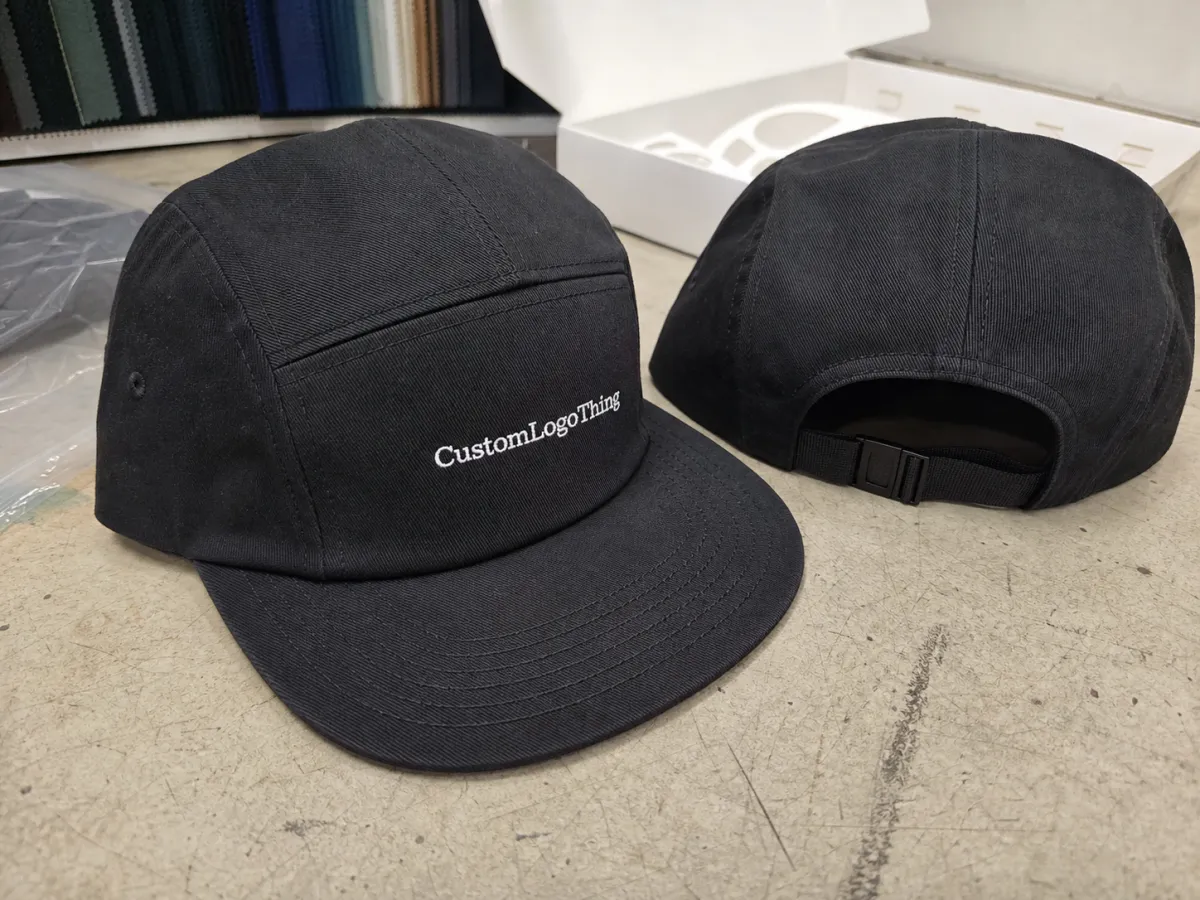
The practical reason five-panel caps can price well is simple: they offer one broad front panel, which gives logos a flatter canvas and reduces seam interruptions. That matters most for centered marks, wide icons, and block lettering that need to read clearly at a distance. When the artwork sits cleanly on the front, the decorator usually has less alignment work to do.
Six-panel caps still work well for classic athletic looks, but the front shape can create more decisions during production. If the logo crosses a seam, if the crown is heavily structured, or if the placement needs extra adjustment to stay balanced, labor time goes up. In many bulk orders, that handling time is where the cost difference shows up.
A useful quote should show whether the supplier is pricing the blank, the decoration, or the risk. If that is unclear, the final invoice can move around.
Compare caps on a true landed-cost basis. That means checking the blank cap, decoration, sample charges, freight, setup, and any packaging requirements that matter to the program. A small difference in blank cost means little if one supplier charges separately for digitizing and another bakes the prep into a clearer program price.
For brand programs, the cap also carries visible value. It is worn in public, photographed, and handed around, so a cheap-feeling cap can damage perception even if the quote looks attractive. If the fabric is thin, the crown collapses badly, or the shipment arrives wrinkled, the savings may disappear in the customer’s eye even before the first order is fully distributed.
Build Specs That Affect Fit, Feel, and Perceived Value
Five-panel caps are really a set of small decisions packaged together. Crown height, front structure, brim shape, and closure style all change how the cap fits and how premium it feels in hand. Lower-profile caps around 3.5 to 4.25 inches feel more modern and snug, while mid-profile options read a little roomier and more traditional.
Structured fronts use reinforcement to hold shape, which helps logos present cleanly and keeps the cap looking consistent across a large run. Unstructured fronts feel softer and more casual, but they also collapse more easily in storage and shipping, so the packing plan matters more if presentation is important.
Material choice changes both comfort and price. Cotton twill is common because it wears well and takes embroidery cleanly. Washed cotton gives a softer, more relaxed look, while polyester blends resist creasing and can hold color well. If the cap is part of a larger branded kit, the fabric should match the rest of the package rather than fight it.
Smaller details affect both fit and the final quote. Sweatbands influence comfort, eyelets support airflow, and seam taping changes the way the cap sits on the head. Stitch density on the brim and interior finish also matter because they affect how premium the cap feels without changing the silhouette. Ask whether the closure is a self-fabric strap, snapback, or metal buckle, since each one changes both comfort and cost.
For teams comparing product language across packaging and apparel, packaging.org is a useful industry resource. If the order needs stronger transit protection or repeat shipping validation, the guidance at ISTA can help shape carton and handling decisions.
Decoration Options That Change the Final Quote
Decoration is where brand Five Panel Caps unit cost tends to move most. Embroidery, woven patches, printed patches, and direct print each balance setup, labor, and visual finish differently. The right choice depends on the artwork, the cap material, and whether the goal is a polished retail feel or a more economical promotional run.
Embroidery is still the default for many logos because it looks durable and familiar. The catch is stitch count. A small 5,000-stitch mark is much easier to run than a dense 12,000-stitch design with multiple thread changes. More stitches mean more machine time, and that usually shows up in the quote. Fine text and thin lines may also need simplification so the result stays readable.
Woven patches are useful when the artwork needs sharper detail without building up too much thread on the cap itself. They often create a more finished badge effect and can work well for retail-style headwear. Printed patches can lower cost when the design uses multiple colors or gradients, while direct print is often best for flat graphics and simpler production paths.
| Decoration method | Typical setup burden | Approx. unit cost impact | Best use |
|---|---|---|---|
| Embroidery | Digitizing often $35-$85 | About $0.45-$1.50 per cap on many bulk runs | Simple logos, strong brand identity, durable finish |
| Woven patch | Patch tooling often $60-$180 | About $0.55-$1.40 per cap | Sharper detail, retail feel, repeat programs |
| Printed patch | Artwork prep often $30-$90 | About $0.25-$0.80 per cap | Color-heavy logos, faster quote paths |
| Direct print | Usually low to moderate setup, about $25-$60 | About $0.20-$0.70 per cap | Bold graphics, tighter budgets, simpler art |
Those numbers are only planning ranges because quantity and artwork complexity change the math quickly. A one-color logo is usually easier to price than a multi-color crest with tight registration, and the same order can cost more if the supplier needs to slow production to keep placement consistent across the batch.
Choose one primary decoration method and one fallback version before requesting quotes. That keeps pricing cleaner and avoids paying for multiple revisions that may never be needed. If the artwork is likely to be simplified, provide that version up front so the supplier does not have to build the estimate around several possibilities.
If the artwork is fighting the cap, the decorator has to solve it with labor. That is usually where the extra cost hides.
Brand Five Panel Caps Unit Cost: MOQ, Setup, and Volume Breaks
This is where the order usually becomes predictable or starts to drift upward. MOQ matters because setup costs need to be spread across the run, and small batches feel that math first. A $75 digitizing fee is manageable on 3,000 pieces, but it can push a small order into a less attractive range if the decoration is detailed.
Ask for pricing at several quantity breaks, not just one. Quotes at 100, 300, 500, 1,000, and 3,000 pieces often reveal where the real step-down begins. That makes it easier to see whether a slightly larger order meaningfully improves unit cost or simply ties up cash in inventory you do not need yet.
Volume discounts usually come from a few familiar sources:
- Setup dilution - digitizing, patch tooling, and mockup work spread across more units.
- Standard blanks - stock cap colors and common fabrics often cost less than custom-dyed options.
- Simpler closures - self-fabric straps or basic snaps often beat special hardware on price.
- Fewer decoration colors - every added thread color or print pass can nudge labor upward.
- Repeat specs - keeping the same bill of materials helps future reorders stay close to the first run.
There is also a tradeoff between MOQ and brand consistency. A supplier that stores the spec properly makes reorders easier, especially if the cap is part of a continuing promotion, retail line, or welcome kit. Some buyers intentionally order slightly above immediate need on the first run so they have replacement stock and a cleaner path to reorders.
For budget approval, ask for the blank cap price, decoration price, and setup charges as separate lines. That makes comparisons much clearer and helps expose whether a low headline quote turns into a higher brand Five Panel Caps Unit cost once the full order is assembled.
Production Steps and Lead Time From Approval to Shipment
A typical cap run follows a straightforward path: artwork review, mockup, sample approval if needed, blank sourcing, decoration, inspection, packing, and freight booking. If any one of those steps slips, the schedule changes quickly, so buyers should treat lead time as a chain rather than a single estimate.
Lead time depends heavily on decoration method and blank availability. Simple printed caps usually move faster than embroidered or patch-based orders because they require less pre-production work. If the supplier already has the blank cap in stock, the schedule is easier to control; if the blank needs to be sourced in a specific color or fabric, production may not start right away.
As a rough planning range, many straightforward runs ship about 12-15 business days after proof approval, while more detailed embroidery or patch orders often need 15-25 business days. Shipping sits on top of production. Air freight is faster but more expensive, while ocean freight lowers cost on large orders but adds calendar time that matters if the caps are tied to an event or launch date.
Do not skip the small scheduling details. Ask how long the proof is open for approval, whether holiday or peak-season bottlenecks are likely, and what happens if the artwork needs a revision after proofing. If the caps are going into cartons for storage or distribution, ask about case pack count and outer box strength too. Transit damage on caps is usually predictable: crushed brims, flattened crowns, and compression that could have been reduced with better packing.
Packaging standards can help here. Some teams use ASTM-style material checks or transit-test expectations to define carton strength, and others refer to ISTA guidance when they want more confidence in shipping performance. If the order includes insert cards, belly bands, or retail cartons made from paper stock, FSC-rated materials may also matter for sourcing and reporting.
What to Look for in a Supplier for Repeat Cap Programs
For repeat programs, consistency matters more than almost anything else. A good supplier should be able to match color reasonably well, keep stitch placement controlled, and store the spec in a way that makes reorders practical. If the first sample is approved and the next run looks noticeably different, the supplier is not protecting the brand.
Ask how they handle reorders. Do they keep artwork files, placement templates, and decoration notes on record? Can they quote the same spec again without rebuilding the job from scratch? A supplier that can answer yes to those questions is usually easier to work with over time, especially when you are trying to keep brand Five Panel Caps unit cost stable across multiple batches.
Be wary of suppliers who only quote fast and never discuss risk. A solid partner will tell you where the cost can change, whether that means thread color changes, patch backing, rush freight, or a switch in cap stock. That transparency lets you decide whether to simplify the artwork or accept a higher cost for the exact finish you want.
If you want a sense of how repeat work is usually structured, our Case Studies page shows the kind of details buyers often lock down before production begins. That level of planning is what keeps future orders close to the approved sample instead of drifting with each reorder.
How to Request a Quote That Turns Into a Clean Order
The fastest way to get a usable quote is to send one complete message with the logo file, target quantity, preferred cap color, decoration method, and closure choice. If you have a target budget, include it. If the caps need to support a retail launch or internal campaign, say that too, because the supplier may suggest a build that improves the finished look without changing the business case.
Ask for a side-by-side quote that separates blank cost, decoration cost, setup charges, and freight. That one habit makes supplier comparison much easier and prevents a low sticker price from hiding a higher total once all the pieces are added back in.
If your logo is complex, request a simplified version alongside the preferred one. Many buyers save money by approving a cleaner mark that still protects brand identity and remains readable from a distance. The goal is not to strip the design until it feels generic; it is to keep the cap useful, wearable, and easy to produce.
A practical way to close the loop is to set a target brand five panel Caps Unit Cost, compare two or three specs, and ask for the break at the quantity you can truly live with. That gives you a real decision instead of a guess and usually leads to a better order, a better fit, and a better finish on the shelf or in the hand.
What drives brand five panel caps unit cost the most?
Decoration method, quantity, and setup work usually move the price more than the cap shape itself. Complex logos, extra thread colors, patch tooling, and freight all add to the total, so a low blank price does not always mean a low landed cost.
Are five-panel caps cheaper than six-panel caps for custom orders?
Often they are, but only when the artwork and build spec suit the cap well. A flatter front panel can reduce decoration complexity, yet the final answer still depends on MOQ, materials, closure style, and how detailed the logo is.
What MOQ should I expect for custom five-panel caps?
MOQ varies by supplier and decoration method, but many quotes begin at modest bulk quantities rather than retail-style small runs. Patch or embroidered versions can carry higher minimums than simpler printed options, so it is smart to ask for several quantity tiers.
How long does production usually take after approval?
Lead time depends on blank stock, decoration method, inspection needs, and shipping method. Straightforward printed orders often move faster than patch or dense embroidery runs, and freight choice can add or shave several calendar days.
How can I lower five-panel cap unit cost without weakening the product?
Simplify the logo, reduce thread colors, and use a standard closure or blank color if those choices fit the brand. Ordering a higher quantity can also spread setup costs more effectively, which often improves brand five panel caps unit cost without hurting the finished cap.


