Fitness Woven Label Beanies lead time is usually longer than buyers expect, and the delay is rarely caused by knitting alone. Most of the calendar gets eaten by decisions: artwork cleanup, label approval, sampling, packing, freight booking. A clean order moves with surprising speed; a vague one can sit still for days while people trade questions that should have been answered before the quote went out.
That is why the most useful schedule is not a single production number. It should separate sample lead time, bulk lead time, and transit time. A factory might quote 12 business days for production, but if the woven label proof needs two revision rounds and the shipment takes another week, the real delivery window looks very different. Buyers who understand that split usually get fewer surprises and fewer arguments about whether the order was “late” or simply quoted too loosely.
For brands still deciding on label specs, start with the label itself. The fold, size, thread count, backing, and placement all affect the workflow. A fast order is easier to build when the woven label has already been fixed before production starts. If the artwork is still moving around, review Custom Labels & Tags early so the dimensions and attachment method are locked before the proof cycle begins.
What Fitness Woven Label Beanies Lead Time Really Means
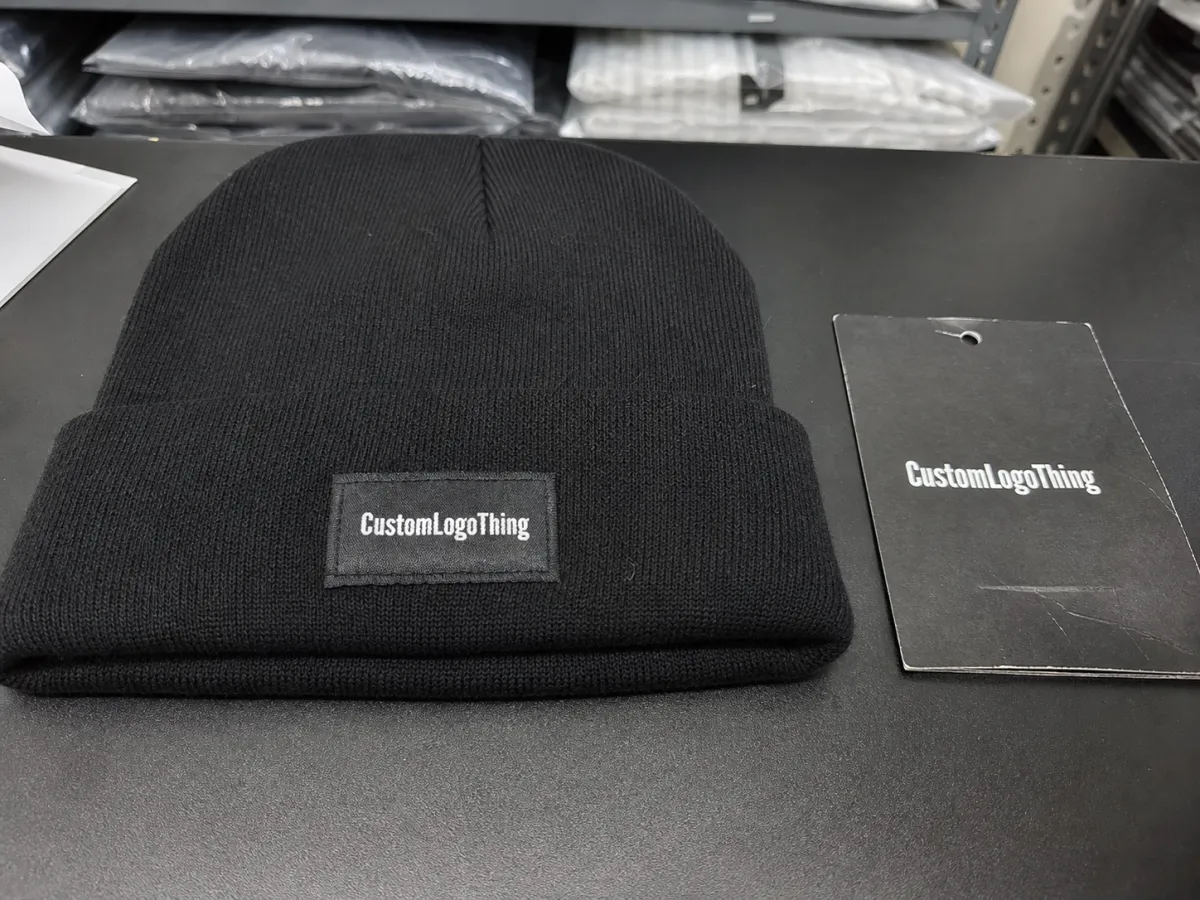
Lead time is not one number. It is the sum of several smaller clocks, and those clocks do not move at the same speed. A supplier may quote factory days only, while the buyer is really asking, “How long until the beanies are in my hands?” That distinction matters because fitness Woven Label Beanies lead time should cover the full path from proof to shipment, not just the time the yarn spends on the machine.
The practical split is simple:
- Sample lead time covers the prototype or pre-production sample, usually the first physical check on fit, color, label placement, and finish.
- Bulk production lead time covers the full run after approval, including knitting, label attachment, inspection, and carton packing.
- Transit time covers freight from the factory to the buyer, which may be short for domestic delivery or materially longer for international orders.
That split changes how the order is managed. A 300-piece run for a fitness studio launch can look easy on paper, especially if the beanie body is standard and the logo is simple. Yet one label correction can push the schedule by several days, and late freight booking can turn a factory on-time date into a missed marketing window. The product was not the problem. The timeline was.
Buyer reality: one small label correction can affect three different clocks at once. The knit may be ready, the label may not, and the shipment may already be waiting for a booking slot.
Scope matters just as much as timing. Does the quote include label weaving, attachment, folding, hand tagging, polybagging, carton labels, and export paperwork? Or is it only the beanie body? In a proper order file, every step is named, because each step creates its own risk of delay. That level of detail is what turns a vague estimate into a delivery plan someone can actually use.
How the Beanie and Label Production Workflow Unfolds
The workflow is usually straightforward, but the handoffs are where time disappears. A clean order moves through spec review, yarn selection, knit program setup, woven label production, label attachment, finishing, quality control, and carton packing. Miss one checkpoint, and the delay rolls downstream.
Good suppliers often work in parallel. While the beanie body color is being finalized, the woven label artwork can already be prepared. If the logo placement is fixed and the size is confirmed, the label loom setup does not need to wait for the first knit sample. That parallel path saves days without cutting corners. It matters even more for woven label options in our Custom Labels & Tags category, where a small artwork change can otherwise restart the proof cycle.
The buyer still controls several decisions that affect lead time. Spelling, Pantone references, label fold style, and exact placement on the cuff or seam are approval items. If those details are vague, the factory has to guess. Guessing is slow. A label that is supposed to sit 12 mm from the edge but is approved as “close enough” often comes back for another round, and each round costs time.
Queue length matters too. A simple beanie can still move slowly if the line is crowded, especially during winter merch season or pre-holiday retail planning. In a lighter production window, the same order may move faster because the team can fit it between larger runs. That is one reason two quotes for the same product can carry very different calendars.
One production manager’s rule is hard to argue with: the schedule is usually won or lost in the proof stage, not at the machine. That is why strong order files read like a production brief rather than a thread of casual messages.
The Variables That Stretch or Shorten Your Schedule
Order size is the first thing buyers notice, but it is not the only thing moving the calendar. More SKUs mean more setup. More colors mean more yarn coordination. More placement variations mean more chances for a proof to come back for revision. A single beanie style in one color with one woven label is one job; three body colors, two label versions, and a special fold are another.
Label design can quietly slow everything down. Fine text below 6 pt, dense gradients, and thin lines often need extra weave adjustments to stay legible. Thread choice matters as well. A satin finish may show detail differently from a matte option, which changes how quickly the proof can be approved. If the label must read clearly from arm’s length, the design should be simple enough to survive weaving, not just attractive on a screen.
Domestic and overseas fulfillment are almost different operating models. Domestic shipping may save transit days, but overseas manufacturing can offset that with lower unit cost and more capacity. Customs clearance, freight booking, and distance can dominate the calendar even when production itself is clean. Buyers who compare only factory days miss the bigger picture.
Artwork readiness is one of the few variables a buyer can control immediately. Clean vector files, exact dimensions, and a short brand guide reduce revision loops. If the supplier has to redraw a logo from a screenshot, the timeline becomes softer right away. If the buyer submits one focused file package, the job often moves through approval much faster.
Packaging standards can add another layer. Retail inserts, barcode stickers, individual polybags, or sustainability claims on cartons all take time to verify. If a buyer is making environmental claims on packaging, chain-of-custody rules matter. For shipping performance, especially if the beanies need to survive courier handling, FSC and ISTA are useful references to discuss with the supplier or freight partner.
Cost, MOQ, and Quote Drivers for Custom Beanie Orders
Buyers often ask for a price per beanie, but that number hides the structure of the order. Setup costs, label weaving, sampling, labor, and packing may all be priced separately from the hat itself. A quote that looks cheap on unit price can become expensive once the add-ons appear. The clearest comparison asks suppliers to show the parts, not just the total.
MOQ changes the math. A lower MOQ is attractive, but it usually raises the unit cost because fixed setup work is spread across fewer hats. A 100-piece order can make sense for a pilot drop or a limited staff issue, while 500 pieces usually gives a better price break. The right number depends on inventory risk, cash flow, and how quickly the design may change later.
| Order type | Typical MOQ | Setup intensity | Indicative unit cost impact | Lead-time effect |
|---|---|---|---|---|
| Standard woven label beanie | 250-500 pcs | Moderate | $3.20-$5.80 per unit at 500 pcs | Usually the easiest to schedule |
| Low-MOQ private label run | 50-150 pcs | High per unit | $5.80-$9.50 per unit | Can be quick if the line is open |
| Rush order with fixed artwork | 100-300 pcs | Moderate to high | Often +10% to +25% rush premium | Factory time may compress, freight may not |
The biggest pricing changes usually come from four places: label complexity, number of colors, attachment method, and packaging style. A simple folded label sewn into a cuff is one thing. A woven patch, heat-sealed bag, or individually tagged retail pack is another. If the order needs hand insertion or special bagging, labor begins to matter more than raw material cost.
Ask for tiered quotes at 100, 250, and 500 units. That small exercise shows where the real price break sits and whether the MOQ is a genuine production threshold or just a figure used to frame the offer. It also helps compare suppliers on equal footing, because one factory may quote a lower MOQ but higher setup, while another does the opposite.
The most useful quote is the one that separates unit price, setup, sample cost, MOQ, packing, and transit. That format makes tradeoffs visible. It also reveals whether a low headline number is supported by a realistic schedule or padded later with surprise charges.
Production Steps and Lead Time From Proof to Delivery
The full timeline should be mapped in order, not guessed. First comes brief intake. Then artwork proof. Then woven label approval. Then knit approval or blank-beanie signoff. After that, the bulk run begins, followed by inspection, packing, and freight booking. If any one of those checkpoints slips, the schedule changes downstream.
Two delay points show up over and over. The first is revision rounds. The second is late shipment decisions. Buyers often wait until production is complete before choosing a freight method, which sounds harmless but is expensive in practice. A clean factory schedule still misses the event if the shipping choice is made too late.
Rush production and rush delivery are not the same thing. A supplier may move a job to the front of the line, but that does not mean aircraft space, customs clearance, or last-mile handoff will move with it. That is why a strong quote should list milestone dates, not a single “fast turnaround” promise. Factory days, freight days, and release dates should each appear in writing.
A good quoting habit is to ask for a dated production map. It should answer three questions:
- When does approval lock?
- When does bulk production actually start?
- When does the order leave the factory?
If a supplier cannot answer those three points cleanly, the lead time is probably not controlled tightly. That does not always mean the supplier is weak. Sometimes the brief is simply too loose. But if the goal is a dependable delivery window, the schedule has to be built around real milestones.
Here is the part buyers learn the hard way: the quote can be accurate and still be useless. A number without context does not help a launch manager, merch buyer, or marketing team coordinating an event. The schedule has to be written in a way that operations, finance, and shipping can all read without translation.
Common Ordering Mistakes That Add Days and Hidden Costs
Weak artwork files remain the most common problem. Blurry logos, missing placement notes, and unclear label dimensions almost always trigger another proof round. That round may look minor in email, but it can cost days in practice. If the supplier has to ask three follow-up questions before building the label spec, the file was not ready.
Another mistake is assuming sample timing matches bulk timing. A prototype can move quickly because it is one piece and the factory can fit it between other jobs. Bulk work is different. It may wait for yarn availability, loom time, or line capacity. A sample that arrives in a week is useful, but it is not a reliable proxy for a 500-piece run.
Late content changes create avoidable churn. Revised care instructions, changed spelling, or a new hangtag line can reset both approval and production clocks. Small text edits are not small in the factory context. A brand manager sees a punctuation fix; the supplier sees a new proof.
Shipping is another place where buyers lose control. Freight should be chosen early, not after production ends. If the order is tied to a hard event date, the shipping method needs to support that date from the start. Otherwise the fastest factory run can still arrive late.
One more trap: buyers sometimes focus on the beanie body and forget the label package. That means no one has confirmed whether the woven label is sewn, stitched into the seam, folded over the cuff, or packed separately. The wrong attachment method can add labor, and labor can add time. If the supplier asks for that detail and the buyer answers, “Whatever is standard,” the order is already at risk of a slower path.
For cleaner runs, pair the order with an internal signoff process. One person should own the artwork file, another should own the delivery date, and nobody should change specs casually after proof approval. That may sound strict, but custom apparel rewards discipline and punishes drift.
Next Steps to Lock In a Faster, Cleaner Order
The simplest way to shorten fitness Woven Label Beanies lead time is to prepare the order like a production brief, not a brainstorming note. Start with one-page specs: logo files, target quantity, label size, color references, deadline, and delivery location. That single page gives the supplier enough structure to price and schedule the job properly.
Then ask one practical question: which steps can run in parallel, and which steps are strictly sequential? If the label can be woven while the beanie body is being finalized, say so. If artwork must be approved before machinery starts, make that clear. The critical path is where the schedule lives.
Give yourself buffer time for approval and transit, especially if the beanies support a launch, team event, or retail drop. The tighter the outside deadline, the less forgiving the schedule becomes. That remains true even for modest orders. A 200-piece run can still get trapped in a shipping queue that no one planned for.
Before placing the order, ask for the exact lead time in writing and keep it with the purchase record. Confirm the proof, inspect the weave, and only then release the bulk run. If the supplier offers multiple freight options, compare them by arrival date rather than shipping cost alone. The cheapest freight method is not always the least expensive once a missed deadline is included.
For a cleaner supplier comparison, Request a Quote that separates unit price, setup, sample cost, MOQ, packing, and transit. That structure is easier to read, and it makes the real differences obvious. It also reduces the chance that a low headline price hides a slow timeline or a surprise charge later.
Handled that way, custom beanies stop being guesswork. You know what the label takes, what the bulk run takes, and what shipping adds on top. That is the practical value of understanding fitness Woven Label Beanies lead time: it turns a vague promise into a schedule you can actually use.
How long do fitness woven label beanies usually take from artwork to delivery?
Small runs can move quickly if the artwork is final, but the total schedule still includes proofing, label weaving, production, and shipping. Bulk orders take longer when color approvals or sample revisions add extra rounds. Ask for both factory lead time and transit time so the delivery date is realistic.
What slows down fitness woven label beanies lead time the most?
Late artwork changes and unclear label instructions are the most common delays. Complex woven labels, multiple colors, and busy seasonal production windows can also stretch the schedule. Shipping delays matter too, especially when freight is booked after production is finished.
Does a lower MOQ make custom woven label beanies cheaper or faster?
A lower MOQ is usually easier to start, but the unit cost is often higher because setup costs are spread across fewer pieces. It may be faster if the factory has small-run capacity, but it is not automatically quicker. Ask for pricing at multiple quantities to see where the best value starts.
Can I rush an order without changing the label design?
Yes, if the design is already approved and production capacity is available. Rush orders work best when files are complete, label specs are fixed, and there are no revision rounds. Even then, freight and customs can still limit how fast the order reaches you.
What should be included in a quote for fitness woven label beanies?
The quote should list unit price, setup charges, sample cost, MOQ, and the production timeline by milestone. It should also separate factory days from shipping days so you can compare suppliers fairly. Ask whether packaging, label attachment, and revision limits are included or billed separately.