Buyer Fit Snapshot
| Best fit | Black Friday Ecommerce Shipping Bags projects where brand print, material claims, artwork control, MOQ, and repeat-order consistency need to be specified before quoting. |
|---|---|
| Quote inputs | Share finished size, material target, print colors, finish, packing count, annual reorder estimate, ship-to region, and any compliance wording. |
| Proofing check | Approve dieline scale, logo placement, barcode or warning zones, color tolerance, closure strength, and carton packing before bulk production. |
| Main risk | Vague material claims, crowded artwork, missing packing details, or unclear freight terms can make a low unit price expensive after revisions. |
Fast answer: Black Friday Ecommerce Shipping Bags: Film, Print, MOQ, and Carton Packing should be specified like a repeatable production item. The safest quote records material, print method, finish, artwork proof, packing count, and reorder notes in one written spec.
Production checks before approval
Compare the actual filled-product size with the drawing, then confirm tolerance on folds, seals, hang holes, label areas, and retail display edges. Reserve space for logos, QR codes, warning copy, and material claims before decorative graphics fill the panel.
Quote comparison points
Review material grade, print process, finish, sampling route, tooling charges, carton quantity, and freight assumptions side by side. A quote is only useful when the supplier can repeat the same color, closure quality, and packing count on the next order.
Black Friday Ecommerce shipping bags are one of those boring purchases people ignore until a warehouse supervisor is staring at a pallet of torn mailers and a stack of angry customer emails. I’ve seen it happen in Shenzhen and again in a New Jersey fulfillment room: one bad bag choice can turn a normal Friday into a very expensive mess. If your Black Friday Ecommerce Shipping bags are wrong, you pay for it in damage, labor, shipping cost, and returns. That is not theory. That is invoice math.
Most brands obsess over discounts, ads, and landing pages. Fine. The outer package is what actually moves through order fulfillment, gets scanned by carriers, and lands in a customer’s hands. The wrong Black Friday Ecommerce shipping bags can slow packing by 8 to 12 seconds per order, which sounds tiny until you multiply it across 3,000 units. Then you are paying overtime to save three cents. Brilliant plan. I’ve watched smart teams waste $1,800 in labor to avoid spending $240 on better shipping materials.
Why Black Friday shipping bags matter more than you think
The first time I walked a factory floor during peak season, a client had ordered cheap mailers that looked fine in the sample. On the line, though, the adhesive strip failed on humid days, and the team had to double-tape every order. That added about 14 seconds per pack. Their operators hated it. Their delivery promise slipped. And the customer complaints started the same afternoon. That is why Black Friday Ecommerce shipping bags are not just package protection. They are part of your labor plan, your shipping speed, and your brand story.
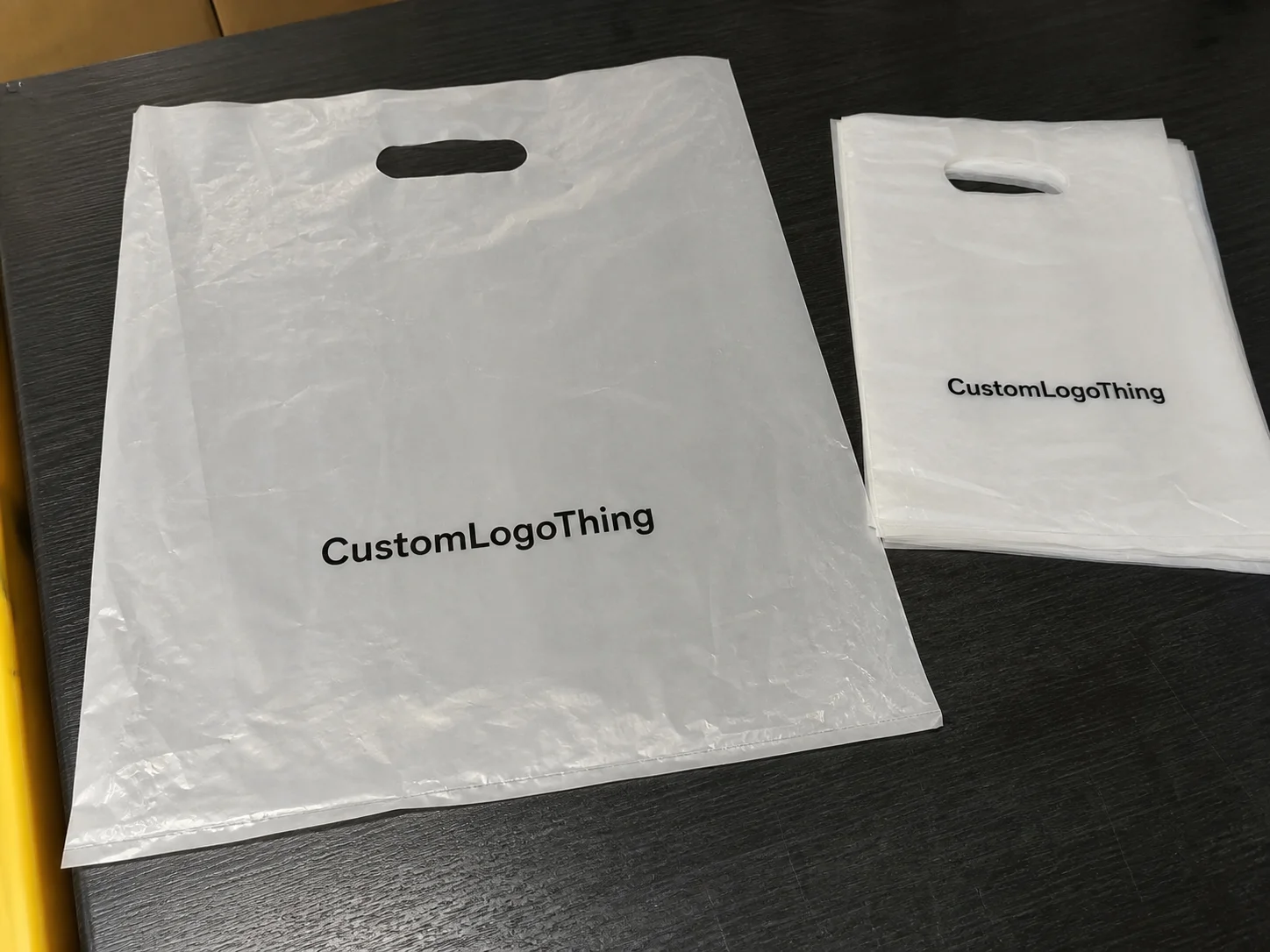
For apparel, accessories, socks, leggings, lightweight home goods, and other soft goods, black friday ecommerce shipping bags are usually poly mailers. They are light, inexpensive, and fast to use. A plain 10 x 13 inch mailer might cost $0.07 to $0.11/unit at volume, while a custom printed option often lands around $0.18 to $0.32/unit depending on size, thickness, and print coverage. That difference looks small until you place 20,000 units. Then it becomes a real line item.
I also like to remind brands that the bag does more than hold the item. It affects the customer’s first physical touchpoint, especially if you do not use a box. A clean, well-sized mailer reads as intentional. A bag that is overstuffed, cloudy, or wrinkled reads as rushed. Customers can spot the difference in two seconds. They just may not say it nicely.
“We saved $600 on bags and spent $4,200 fixing the fallout.” That was a real comment from a DTC founder after a holiday rush. I believed him, because I’ve seen the same thing happen more than once.
If you are comparing options, I’d start with Custom Poly Mailers and, if your catalog includes rigid or fragile items, keep Custom Packaging Products open in another tab. Sometimes the right answer is not one mailer. Sometimes it is a mixed packaging system.
How ecommerce shipping bags work during peak sales
A typical Black Friday packing flow is simple on paper: pick, pack, seal, label, ship. In real life, the little details decide whether your team gets through 500 orders before lunch or spends the afternoon swearing at adhesive. black friday ecommerce shipping bags need to fit that workflow. If the seal is awkward, the team hesitates. If the bag is too tight, folding takes longer. If the bag is too loose, the product slides around and looks sloppy after transit packaging gets tossed in a truck.
Self-seal strips save seconds. I know that sounds unglamorous, but seconds add up fast. At one apparel client, switching from a peel-and-fold closure to a wider pressure-seal strip saved about 9 seconds per order. Across 4,000 orders, that was roughly 10 labor hours back in the team’s pocket. Do the math at $22/hour and suddenly your “small packaging detail” is worth $220 in labor savings, not counting reduced mistakes.
Protection level matters too. For soft goods, basic poly mailers are usually enough. For small hard add-ons like jewelry, chargers, or skincare, I prefer padded mailers or a layered system with inner protection. For rough handling and higher tear risk, co-extruded film can help. A 2.0 mil mailer works for lighter garments. A 2.5 mil option is a solid middle ground. A 3.0 mil bag makes more sense when items have sharper edges or the route involves repeated sorting and scanning. That is not a rule from a textbook. That is what I’ve seen survive actual shipping lanes.
black friday ecommerce shipping bags also interact with dimensional weight. Carriers charge based on size and weight, not just weight. A flimsy oversized bag may still cost more than a compact mailer if it triggers a larger billable dimension. I have reviewed invoices from UPS and USPS where a product moved from a tight poly mailer to a box and the shipping cost jumped by $1.40 to $3.10 per shipment. Multiply that across seasonal volume and the math starts to bite.
For standards nerds, this is where testing matters. Packaging performance can be checked against common industry expectations like ISTA testing protocols for transit stress, and material claims often tie back to ASTM methods. If you care about sustainability labels or chain-of-custody claims, look at FSC information directly at fsc.org. For broader packaging and recycling guidance, the EPA recycling guidance is a sensible reference point, even if it does not magically solve your packaging spec problems.
The key factors that decide the right mailer
Size comes first. Every time. I once sat with a client in a warehouse office where they insisted one mailer size would fit every SKU. It did not. Their oversized hoodies looked fine. Their smaller tees floated around like sad little pancakes. We fixed it by creating two bag sizes: one 10 x 13 inch for folded tees and one 12 x 15.5 inch for thicker apparel. Packing time dropped by about 11%. The team stopped fighting the material, which helped morale more than the founder expected.
Measure the product after folding, not before. Add room for an insert card, thank-you note, barcode label, and a clean seal. If your mailer is too small, your team has to wrestle it shut. If it is too large, you waste shipping materials and make the parcel look cheap. For black friday ecommerce shipping bags, the right fit is one that closes without strain and leaves no giant empty belly that shifts in transit.
Thickness matters next. Common ranges are 2.0 mil, 2.5 mil, and 3.0 mil. A 2.0 mil bag is usually fine for light apparel and lower-risk routes. A 2.5 mil bag is the sweet spot for many ecommerce shipping programs because it balances cost and package protection. A 3.0 mil bag is better when products have corners, when handling is rough, or when you want a little more tear resistance. I’d rather pay $0.02 more per bag than replace one torn shipment and eat a reshipment cost of $8 to $14.
Branding is where some companies get weird. Plain white or black mailers are practical. Printed logos look more polished. Seasonal artwork can make black friday ecommerce shipping bags feel special without going overboard. Cluttered graphics, too many fonts, and holiday confetti all over the bag can slow down production and make the package look cheap in person. One of my favorite factory-floor quotes came from a press operator in Dongguan: “If the artwork needs a magnifying glass, the customer already lost interest.” He was not wrong.
Cost should include more than the quoted unit price. Ask for print setup fees, freight, minimum order quantities, carton pack counts, and how much the reorder will cost if you miss the deadline. I’ve seen mailers quoted at $0.16/unit before freight, then land at $0.23/unit once trucking and palletization were added. That is why I tell brands to compare landed cost, not just the sticker number. black friday ecommerce shipping bags are cheap only when the whole chain is cheap.
Supplier reliability matters more than most founders admit. A vendor who says yes to everything is not always helpful. Sometimes they are just optimistic in a dangerous way. Ask about production capacity, proof turnaround, whether they can handle rush orders, and what happens if a film roll has an issue mid-run. If you need options, Custom Shipping Boxes may be a better fit for certain products, especially if the bag is not enough on its own.
Step-by-step plan to source bags before the rush
Step 1: audit your SKUs and estimate holiday volume based on past orders, promotions, and email campaign plans. If your Black Friday email list is doubling traffic, your packaging needs will not stay flat. I like to add a 15% buffer to the forecast for brands that run aggressive ads, because surprises have a weird habit of showing up in warehouse aisles.
Step 2: match each product type to a mailer size and decide whether you need plain, printed, or reinforced options. A light tee does not need the same bag as a bundled gift set. That sounds obvious, but I’ve seen teams pack $18 accessories into giant mailers because nobody wanted to create a second SKU. That habit costs more in wasted space and postage than people realize. For black friday ecommerce shipping bags, one size for everything is usually a lazy solution disguised as simplicity.
Step 3: request samples from suppliers like Custom Packaging Products, Uline, and any regional vendor you already trust. Compare seal quality, opacity, print clarity, and the feel of the film. Uline is fine for quick bench-marking, and I have used their samples as a reality check when a client’s expectations were too fuzzy. But I still want your actual products in hand during testing. No sample, no opinion. That is my rule after too many wasted production runs.
Step 4: confirm artwork Specs, Lead Times, freight costs, and backup inventory before approving production. I once negotiated a print run where the factory quoted 12 to 15 business days from proof approval, but the freight lane was already congested and I pushed the buyer to pad an extra week. Good thing we did. The truck got delayed, and the buffer saved the launch. black friday ecommerce shipping bags are not just a print job. They are a timeline.
Step 5: place the order early enough to allow proofing, printing, transit, and a buffer for delays. If you need 10,000 Custom Printed Bags, and your supplier says 18 days plus ocean freight or 7 to 10 days by domestic trucking, choose the path that keeps you from gambling with stockouts. I’d rather have bags sitting in a corner for two weeks than have a team repackage orders in plain mailers because the customs paperwork got cute.
Common mistakes brands make with holiday shipping bags
The first mistake is ordering too late. Every year, someone assumes a factory can “just squeeze it in.” That is not how production works. Machines have schedules. Material has lead times. People go home. If your black friday ecommerce shipping bags are custom printed, late approvals can wreck the whole timeline.
The second mistake is buying the cheapest bag without testing it. A bag that tears during a drop test or splits at the seal is not a bargain. It is a future reshipment. I always want a simple stress check: one sealed sample with the actual product, one corner rub test, and one drop from table height. If the bag fails that, it does not matter that it saved $0.03.
The third mistake is ignoring multiple sizes. Soft goods, gift kits, and bulkier items need different packaging. Forcing every order into one mailer leads to wasted material, overstuffed seams, and a sloppy customer experience. The fourth mistake is forgetting return shipping. A good mailer should be easy enough for the customer to reuse or repack if needed. That matters for returns, and returns are part of ecommerce shipping, whether founders want to discuss them or not.
The last mistake is overbranding with too much visual noise. If the graphics are busy, the bag can look cheap despite a decent print job. I’ve watched brands spend $12,000 on custom artwork and then bury the logo under snowflakes, slogans, QR codes, and three different shades of red. The bag looked like a committee meeting with ink. Simple usually wins.
Expert tips for better cost control and smoother fulfillment
Use a two-tier system. One standard mailer should cover most orders. One premium or larger option should handle exceptions. That keeps inventory sane and order fulfillment faster. If everything is custom, your team needs more SKUs to manage. If nothing is custom, your brand loses a simple chance to look polished. Balance matters.
Negotiate on volume breaks and bundled freight, not just unit price. I’ve sat across from suppliers in conference rooms where they dropped the unit cost by $0.015 when we agreed to repeat orders and consolidated shipments. That seems small, but on 50,000 units it is $750. If you are serious about black friday ecommerce shipping bags, ask for the landed number and the reorder schedule in writing.
Keep safety stock for fast-moving SKUs. I recommend enough buffer to cover at least 10 to 14 days of peak demand if your supply chain has a history of running hot. That is not a moral statement. It is a practical one. I have seen a container delayed by weather and a domestic truck delayed by one broken pallet. Both caused the same problem: panic.
Run a packing test with your own staff. Time 50 orders. Watch where hands slow down. Check whether the bag opens easily, whether labels stick cleanly, and whether insert cards snag the seal. A 30-minute test often saves thousands in labor and waste. And yes, it feels annoying to do a “little” test before a big season. So does refunding customers for damaged shipments. Pick your annoyance.
Choose a supplier that communicates clearly about proofs, timelines, and substitutions. I have more trust in a vendor who says, “We can do 14 days if the art is final,” than one who says, “No problem,” to every question. Good packaging vendors understand that black friday ecommerce shipping bags are tied to deadlines, customer expectations, and your brand reputation. If they act like your timeline is a suggestion, keep looking.
What to do next before Black Friday hits
Create a packaging checklist for every SKU: size, bag type, quantity, artwork, seal style, and reorder trigger. Put it in a shared sheet, not in somebody’s head. I’ve walked into too many warehouses where the only inventory plan was “Melissa knows.” Melissa deserves better. So does your brand.
Get sample mailers in hand and test them with real products, labels, and inserts. If your logo print looks crisp on a sample but scuffs after one rub test, that matters. If the self-seal strip peels up after 20 minutes in a warm room, that matters too. For black friday ecommerce shipping bags, field testing beats assumptions every time.
Approve artwork and confirm production dates now, not when the order board is already on fire. If you need to reorder, build a backup plan with plain bags or a second supplier. That is not being paranoid. That is being prepared. And if your team needs a fallback catalog, keep Custom Packaging Products and Custom Poly Mailers bookmarked so you can move quickly without reinventing the wheel.
Assign one person to own packaging inventory. One person. Not three, not “the ops team,” not “whoever notices first.” Inventory needs a driver. If you do that, black friday ecommerce shipping bags become one less thing to guess about during peak season. That is the point. Less guessing. Fewer surprises. Better margins.
From my side of the table, the Best Black Friday packages are not the flashiest. They are the ones that ship on time, hold up in transit, and keep packing labor under control. If you treat black friday ecommerce shipping bags like a real operational decision instead of a last-minute purchase, you save money in three places at once: freight, labor, and replacements. And that is before you count the brand impression. Plainly put, the right black friday ecommerce shipping bags make peak season easier. The wrong ones make your team invent new swear words.
FAQs
What are the best black friday ecommerce shipping bags for clothing orders?
Poly mailers are usually the best choice for soft goods like tees, hoodies, and accessories because they are light, durable, and fast to pack. Pick a size that fits folded garments without excessive empty space. Choose thicker mailers if you want better puncture resistance during high-volume shipping. For many apparel brands, black friday ecommerce shipping bags in the 2.5 mil range are a practical middle ground.
How early should I order black friday ecommerce shipping bags?
Order as soon as you know your seasonal volume forecast and artwork needs. Build in time for proofs, production, freight, and a backup buffer for delays. If you need custom printing, earlier is always safer than hoping a factory will rush perfection. For larger runs, I’d personally add extra time for transit packaging and truck delays because holidays love chaos.
Are printed shipping bags worth the extra cost for Black Friday?
Yes, if branding matters and you want a stronger unboxing moment without adding much weight. Printed bags can help your store look more polished and memorable. If budget is tight, use plain bags for most orders and reserve printed mailers for top-selling or giftable products. That mix keeps black friday ecommerce shipping bags from eating your margin.
How do I calculate the right bag size for ecommerce shipping bags?
Measure your product after folding, then add space for inserts and sealing room. Test with real inventory instead of guessing from product photos or box dimensions. A proper fit should close cleanly without stretching the bag or wasting a lot of material. I always recommend testing with the actual label placement too, because a great-sized mailer can still fail if the seal zone gets crowded.
What is the cheapest way to buy black friday ecommerce shipping bags without sacrificing quality?
Buy in volume, compare freight-inclusive pricing, and avoid last-minute rush orders. Use a standard size for the majority of your orders to reduce inventory complexity. Request samples so you do not save $0.03 per bag and lose far more to damage or packing delays. That is the classic false economy, and it is painfully common with black friday ecommerce shipping bags.