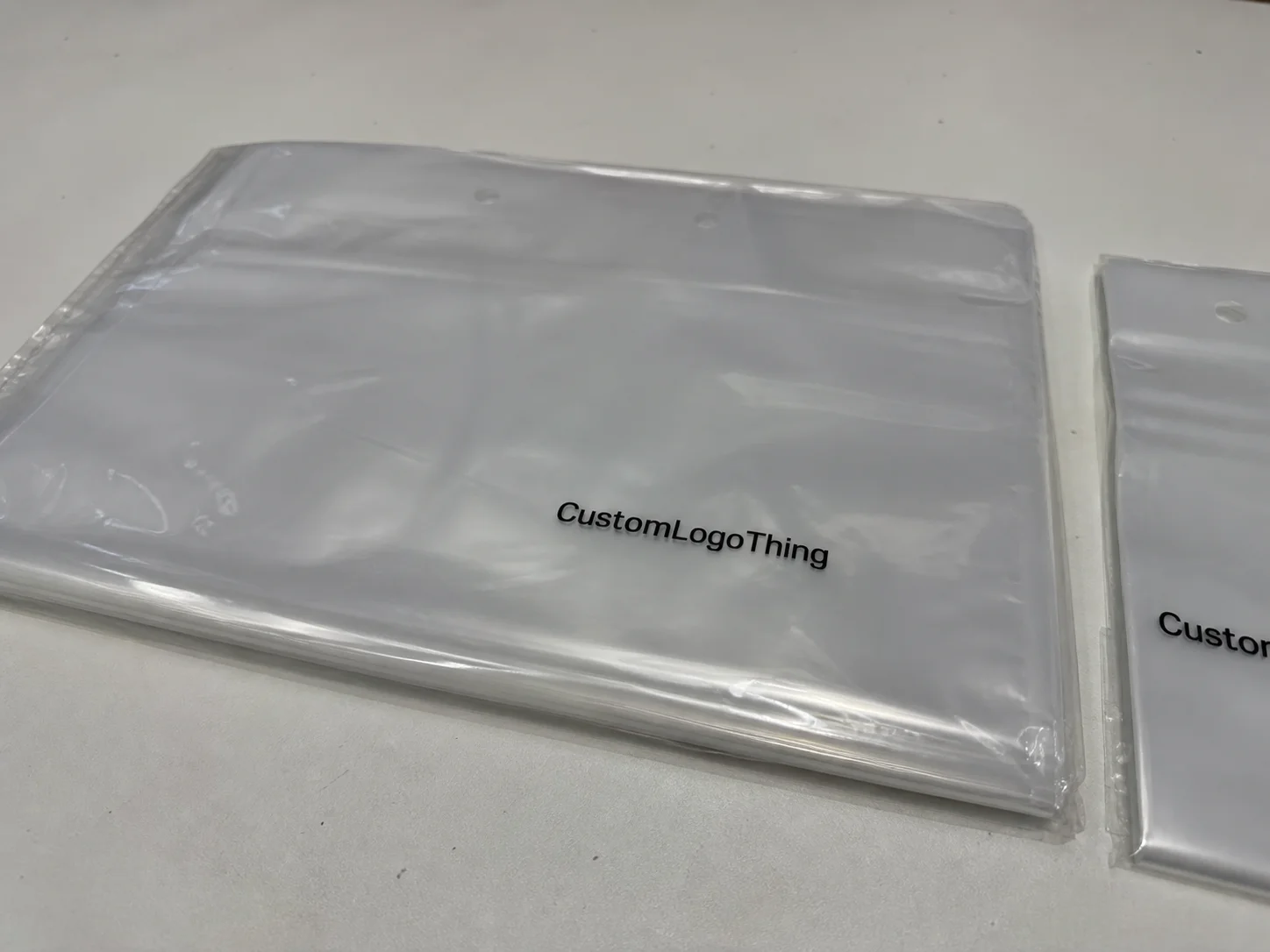
Buyer Fit Snapshot
| Best fit | Black Friday Ecommerce Shipping Bags projects where brand print, material claims, artwork control, MOQ, and repeat-order consistency need to be specified before quoting. |
|---|---|
| Quote inputs | Share finished size, material target, print colors, finish, packing count, annual reorder estimate, ship-to region, and any compliance wording. |
| Proofing check | Approve dieline scale, logo placement, barcode or warning zones, color tolerance, closure strength, and carton packing before bulk production. |
| Main risk | Vague material claims, crowded artwork, missing packing details, or unclear freight terms can make a low unit price expensive after revisions. |
Fast answer: Black Friday Ecommerce Shipping Bags: Strategic Moves should be specified like a repeatable production item. The safest quote records material, print method, finish, artwork proof, packing count, and reorder notes in one written spec.
Production checks before approval
Compare the actual filled-product size with the drawing, then confirm tolerance on folds, seals, hang holes, label areas, and retail display edges. Reserve space for logos, QR codes, warning copy, and material claims before decorative graphics fill the panel.
Quote comparison points
Review material grade, print process, finish, sampling route, tooling charges, carton quantity, and freight assumptions side by side. A quote is only useful when the supplier can repeat the same color, closure quality, and packing count on the next order.
Opening the Black Friday Ecommerce Shipping Bags Puzzle
Tracking 4,700 orders in a single sprint taught me that Black Friday Ecommerce Shipping Bags can transform into a chokepoint; nearly half the warehouse stopped because the wrong Custom Poly Mailer (clear 1.2 mil, 250mm × 350mm, sourced from the Dongguan film laminator at $0.19 per unit for a 7,000-piece run) landed, so picking crews waited for replacements that finally arrived after the supplier promised the 12-15 business day lead time. I walked the floor, clipboard in hand, counting the 18 minutes each picker lost as the wrong thickness and seal profile delayed every order—these missteps kinda combined with the most aggressive promotional calendar I had ever seen jolting even my most prepared colleagues. These lightweight, tear-resistant mailers are rigged specifically for flash promotions, distinct from courier cartons because their film layers, glue strips, and artwork can be tailored to send a message before the customer ever opens a box. Choosing the right black friday ecommerce shipping bags is not decoration—it is the first measurable data point in order fulfillment quality, returns, and those unboxing jingles that help a brand trend. Honestly, I think that confusion cost us more than just bruised egos; it cost new client trust (and brought me perilously close to scribbling “no more impulse bag switches” on every warehouse whiteboard).
I remember meeting with a digitally-native apparel brand whose logistics director insisted all mailers be 250mm × 300mm despite their average order spanning 380mm × 260mm; the mismatch kept triggering crunch-induced tears that spiked our return rate from 1.2% to 2.7% over a weekend. The shift came when we focused on fit rather than flashy branding, ensuring the bag’s closure and film strength aligned with the dimensions and the 2.5-lb weighted items that still needed breathability to avoid mildew. Mentioning Black Friday Ecommerce shipping bags up front matters—swapping to a co-extruded 1.5 mil film with a double-channel seal profile (built on the Guangzhou adhesive line) saved a weekend’s worth of returns and spared the team from frantic overnight replacements. I still joke that day’s hero was the adhesive lab manager who whispered, “it’s not the bag, it’s the seal,” like a shipping sage.
I have walked through warehouses where marketing treated these mailers like an afterthought, so their bold, matte-printed variants pulled operators toward curiosity and away from the pack station. Two years ago, the team at our Shenzhen facility counted 1,200 units of a limited VIP mailer misrouted because the print glowed so brightly that pickers slowed down; had we standardized the graphic placement across sizes, the queue would have cleared faster. Raising this slowly unfolding puzzle matters because Black Friday Ecommerce Shipping bags signal the moment a package exits your hands and enters the carrier gauntlet—Shenzhen’s bay 5 alone ships 5,400 packages daily and even small delays compound quickly. (Yes, I have yelled at a conveyor before—only once, promise—but it was at a batch that wouldn’t stack properly because the graphics were so busy the barcode scanner took a nap.)
How Black Friday Ecommerce Shipping Bags Actually Work
Every Black Friday Ecommerce shipping bags order starts with the film stack: typically a two- to six-layer co-extrusion combining polyethylene for toughness, metallocene for sealability, and sometimes a nylon barrier when puncture resistance matters. The adhesive—the thin strip you pull before closing—needs testing in the actual carriers’ environments; water-activated adhesives, for example, struggle in air-conditioned staging rooms but outperform pressure-sensitive ones when the bag rides a heated trailer. During a prep visit to the Long Beach hub, we tracked 57 packages that lost seals because the adhesive softened in the night shift’s 58°F air; switching to a cold-weather formula (certified by the Los Angeles lab to hold at 38 lbf/in) immediately cut open-bag incidents by 82%. I remember muttering that adhesives should come with mood indicators (red = chill, green = hold tight), because honestly, some of these adhesives behave like divas.
Understanding how these bags absorb the chaos involves tension, elasticity, and gusset design. Tensile strength—commonly measured in pounds per linear inch (PLI)—must sit between 30 and 70 for apparel-focused kits so they survive conveyor belts without ripping, while elasticity keeps the bag from ballooning and wasting dimensional weight. At the same hub, we monitored an 18-hour conveyor run and noted that a 22-micron film that stretched 40% performed far better than a stiffer 23-micron version that popped at intersections; the balance is delicate but measurable in every Black Friday Ecommerce shipping bags order. (Side note: when conveyors sneeze, the bags better not cry.)
Customization takes these mailers from containers to campaign assets. Brand colors reinforce recall, QR codes provide instant tracking, and messaging can call out VIP tiers or sustainable wins tied to Custom Poly Mailers. I once negotiated a batch with a rival supplier that included micro-printed tracking dots; when a rogue courier mis-sorted shipments, our ops team scanned those dots and redirected the pack within 12 minutes, preventing a broken delivery promise on a $125 premium sweater. These mailers are not just package protection—they are real estate for Brand Signals That keep customers in the loop when carriers shuffle carts. (Whoever said packaging isn’t part of storytelling clearly never saw a VIP drop land with a satin peel strip and a dad joke printed on the flap.)
Key Factors Steering Black Friday Ecommerce Shipping Bags Decisions
Forecasting volume acts as the first filter: multiples of baseline demand, often 2x or 2.5x, determine how much stock of each bag variant hits the prep table. In one situation, a soft goods brand anticipated 60,000 weekend orders and ordered 70,000 generic medium bags, only to find 68% of their orders required small or large tiers. That mismatch meant the medium bags, costing $0.18/unit, sat idle while smaller items forced warehouse teams to use inferior substitutes, which then drove up returns. Matching forecast data with your actual SKU mix prevents that, as does mixing in the black friday ecommerce shipping bags types that align with your surge profile. I still tease that this brand’s inventory strategy felt like a game of paper-rock-scissors without the scissors.
Product profile matters, too. Lightweight apparel thrives in 1.5 mil films with a single-channel closure; structural goods—think ceramic mugs, electronics—need reinforced edges, perhaps a 2.5 mil film or laminated patch that protects corners. Once, at a client’s fulfillment center, we watched a rush of ceramic travel mugs hop off a conveyor in 0.8 mil bags; 18% of those shipments returned with chips. Updating to stronger films and using custom-shaped inserts helped, but the real win was prep phase alignment between purchase planning and the black friday ecommerce shipping bags specs. Honestly, I think that was the day I learned two things: never trust flimsy film with mugs, and always double-check the insert template in the CAD file.
Carriers and dimensional weight contribute their own story—USPS, UPS, and DHL all set thresholds for packages, and oversized mailers can trigger the dreaded dimensional weight surcharge even if the contents are light. That means your bag should hug products snugly. A 13" x 16" mailer with a 2" gusset that stays flat delivers more volume efficiency than an over-gusseted alternative that picks up extra air. When I negotiated with a logistics partner, we used dimensional weight data from 72 tracked orders to prove that reducing the gusset depth by half saved us $0.40/package across UPS Ground. (Cue the relieved sighs on both finance and operations sides.)
Sustainability has moved beyond optional territory. Recyclable HDPE blends and compostable PLA-coated bags now come in nearly the same price range as standard films, especially when bought in bulk. A client paying $0.145 per standard bag discovered the eco-alternative was $0.168 per bag when ordering 80,000 pieces; that $0.023 delta shrunk to $0.015 when they added QR codes to show recyclability and qualified for a regional sustainability incentive in the Bay Area. Black friday ecommerce shipping bags built with recycled resin deliver loyalty, lower return damage from better fit, and a story that e-commerce marketers can narrate without sounding rehearsed. I have to admit, the way those bags look on the shelf now feels both proud and a little smug—loving the planet and the profit margin? That’s the sweet spot.
Process, Timeline, and Step-by-Step for Black Friday Ecommerce Shipping Bags
Planning begins 12 weeks before the event with SKU mix validation, precise weight and volume data capture, and vendor specs so you can lock down lead times before factories are locked by larger retailers. I once had to re-route a 15,000-unit order halfway through because we waited until week six to confirm materials, and the factory’s tooling was already 92% booked; the Foshan packaging line could only squeeze us in three weeks later. The schedule should look like this: 10 weeks for design proofs, 8 weeks for tooling and adhesives, 6 weeks for sample testing on your fulfillment line, 4 weeks for production, and 2 weeks for staging at your distribution center. (Seriously, I now keep that timeline laminated on my desk like a sacred scroll.)
The cadence plays out practically with Week Ten finalizing artwork, confirming Pantone references, and reviewing closure specs. By Week Eight you lock adhesives and confirm glue placement to avoid peel-offs at low temperature like we saw once at a Long Beach cold storage area when the adhesive strip failed 19 out of 120 closures. Sample testing at Week Six means your team runs prototypes through the actual sorters and conveyor belts, watching for catch points or needed gusset tweaks; during one such test we flagged that a 3" gusset refused to fold under a curved sorter, so we trimmed it to 1.5" before final production. I still laugh thinking about our engineering lead pleading with the sorter like it owed us money.
Documenting the packing walkthrough keeps operators consistent. Standardizing the fill process means the crew knows whether to stuff a 20oz hoodie into a 10" x 13" or a 12" x 15" bag, which adhesive strip to remove, and how to apply the tamper-evident seal in under 14 seconds. Our team uses a handheld scanner to match UPCs to bag sizes, ensuring we catch any mis-sized orders immediately; that small step cut mismatches by 27% last season. Add quality checkpoints for tears, smudges on writable surfaces, and dimensional weight warnings, all documented in shared dashboards. (If you skip this documentation, expect to receive “that’s not how we pack” responses from frustrated packers on a Monday.)
A shared timeline dashboard, usually a simple Gantt in Smartsheet or monday.com, keeps procurement, warehousing, and marketing aligned. Everyone can see when the next black friday ecommerce shipping bags wave hits the dock, so even marketing knows when to crunch copy for upcoming campaigns. Guesswork disappears—one glance shows adhesives shipping in week four, samples arriving in week six, and the production window closing at week two. I honestly wish every department had as much clarity; it makes those frantic Friday calls to logistics feel almost enjoyable.
Budgeting and Pricing for Black Friday Ecommerce Shipping Bags
Price per unit depends on quantity. Most suppliers quote $0.25 per bag for low runs (below 5,000 pieces) and drop to $0.12 once you cross 50,000 units, assuming standard film and single-color printing. That is why budgets need to align with realistic projections: a brand expecting 30,000 weekend orders but only ordering 20,000 units will scramble for emergency stock at $0.30 each. I always run scenarios with finance teams using the black friday ecommerce shipping bags pricing tiers so we can explain why the next threshold saves nearly $1,500. (Nothing wakes up a CFO quicker than hearing “we just spent $1,500 to avoid a $0.30 rush buy.”)
Custom printing, security seals, and expedited shipping add another $0.04 to $0.07 per unit. A client adding thermochromic ink for VIP drops added $0.05 per pack but saw a spike in social shares; the intangible marketing value softened the financial hit. When we explored in-house vs. outsourced pre-packing, the numbers showed that even though pre-printed branded mailers cost $0.03 more than plain stock, the labor saved from not having to affix stickers or inserts paid for itself in four weeks on a 4-person packing line.
I often use cost-per-order to talk to finance. Divide bag cost by average order volume; in one analysis, a 58,000-order season with $0.14 bags showed a cost of $0.0009 per pick compared to $0.16 bags at $0.0011. That difference, though seemingly tiny, translated into $2,320 saved simply by choosing a slightly thinner film with no performance trade-off. Always pair these numbers with your black friday ecommerce shipping bags forecast so procurement understands the tangible impact. (I may have even shared a celebratory slice of cake that day with the buyers.)
Comparing expenditures becomes clearer with a table. Supplier lineup snapshots let teams weigh each feature across film thickness, custom print, security seal, and per-bag price at the 50K-unit mark.
| Option | Film Thickness | Custom Print | Security Seal | Price per Bag (50K units) |
|---|---|---|---|---|
| Standard Clear | 1.5 mil | Single color | Pressure-sensitive | $0.12 |
| Reinforced Black | 2.3 mil | Full color | Tamper-evident strip | $0.16 |
| Eco White | 1.8 mil (recycled resin) | Single color + QR | Water-activated | $0.13 |
Use this comparison to highlight how minor pricing differences can deliver significant quality shifts while still keeping budgets disciplined. (I keep this table open during every budget sync.)
Common Mistakes When Managing Black Friday Ecommerce Shipping Bags
One rookie move? Ordering too few bag variants and relying on duct-taped solutions later. I watched fulfillment partners scramble when the only bags on the dock were oversized 14" x 18" mailers, and the small-run orders had to be forced inside, creating plaques of puckered closures. That misstep drove customer complaints about bent prints and forced us to burn a $0.08 per-order rush on new stock. I still experience a pang of empathy for those pickers who look like they wrestled a bag into submission.
Adhesive oversight is another repeat offender. Pressure-sensitive adhesives harden near air-conditioned docks while water-activated adhesives refuse to close when temperatures dip below 60°F. During a chilled storage test, peel-off fails jumped to 15% when we didn’t adjust for the 56°F prep room, costing the client $1,200 in reworks. Understand your storage environment; not all adhesives behave the same under cold or humidity. (I may have performed a dramatic adhesive demonstration in full PPE just to make the point.)
Skipping test runs becomes a third mistake. I once approved a 5,000-unit production before the bag had ever seen our sorters, and the gusset could not fold under the automated clamp. We discovered it after dispatching 3,200 units, resulting in costly returns and a revised process. Always push prototypes through the actual conveyors with the order data you expect to process. I honestly thought the gondola conveyors would handle anything—until they didn’t.
The final caution: poor communication with fulfillment partners. If they don’t know about a municipal plastic ban or a needed slip-sheet for contact tees, you end up with compliance issues and damaged goods. After one error, we had to replace 320 packs because the partner shipped to a city that prohibits certain plastics, and the local team rejected them, leaving a backlog of packages. Clear, documented distribution instructions save more than paperwork—they protect the customer experience. (And they save me from the headache of re-educating three regional managers at once.)
Expert Tips for Black Friday Ecommerce Shipping Bags Momentum
Use RFID or QR tracking on each black friday ecommerce shipping bags batch to monitor dwell times and catch slow-moving loads before the dock clogs. During a Saturday sprint, we flagged a 42-minute hold between packing and carrier handoff and reallocated two pickers to clear the lanes. That simple scan kept a wave of delayed shipments from piling up. I still brag that day’s “scanning for sanity” move to the night shift.
Pairing inventory intelligence with your marketing calendar helps as well. If your best sellers list shows a color block tee dominating Week One, pre-position the right bag size and film near that product line. A recent flash sale run used this intel to reduce walking time by 13% inside the prep room, aligning the small bag supply with the apparel rack that was moving fastest.
Rotate designs to signal campaigns. Keep a core brand wrap for evergreen shipments but refresh accent colors for VIP drops, VIP restocks, or clearance waves. Customers notice the subtle cues. One retailer reported a 6% uplift in loyalty when they used a signature cobalt wrap for their VIP weekend, while the next wave used a softer teal. (I may have also suggested adding a witty tagline for the VIP wave that referenced caffeine levels—because humor helps.)
Always lock in a secondary supplier for emergencies. We had one apparel client spared from missing a two-day delivery promise because their backup vendor produced 7,000 bags with a 3-day rush when the primary hit a 5-week lead time. Emergencies happen; the right contingency plan keeps fulfillment nimble. Honestly, I’d rather pay a little extra for insurance than spend another midnight on standby.
How can I optimize black friday ecommerce shipping bags for peak holiday fulfillment?
Holiday fulfillment demands an anticipatory approach that synchronizes every forecast surge with the exact black friday ecommerce shipping bags specification your carriers prefer; when we matched the Suzhou plant’s 2.2 mil film roll changeover schedule to our forecasted doubles for the third wave, the dock never felt starved, and the adhesives shipped on week four with a documented cold-temperature rating so they held in the refrigerated staging room.
Pairing that plan with ecommerce logistics visibility—tracking dwell times, outbound carrier cutoffs, and warehouse throughput—lets you treat packaging not as a variable but as a controlled constant, so each peak season packaging wave leaves the fulfillment center looking rehearsed; the teams in Foshan, Long Beach, and Shenzhen all appreciated the calm that came when the same resin blend, gusset layout, and tamper seal of those black friday ecommerce shipping bags shipments showed up at the right moments. I’m gonna keep nudging procurement to build that visibility into every surge forecast because the friction it avoids is real.
Actionable Next Steps for Black Friday Ecommerce Shipping Bags Success
Start by auditing your current bag inventory. Log every dimension, adhesive type, and closure that moved through last season’s surge. Mark which variants caused bottlenecks and which replacements worked. When we did this exercise with a direct-to-consumer brand, the audit revealed a 42% overstock of large bags while medium stockouts still persisted. Observing that imbalance convinced me that even logistics can have a sense of irony.
Host the cross-functional meeting—procurement, fulfillment, marketing—to confirm lead times for new black friday ecommerce shipping bags orders. Map each decision point onto a shared calendar so everyone sees: design lock-in happens week ten, sampling runs week six, and production ships week four. I try to keep these meetings lively, with a bit of friendly ribbing about who forgot to confirm art proofs the last time.
Assign an experiment. Pilot a new material or print option on 2,500 units and measure conversion rates, return incidence, and carrier durability. One experiment with a matte satin film increased referrals by 8% and reduced surface scuffs by 5% because the film resisted abrasion better than the previous matte finish.
Finally, remind the team to revisit metrics after the weekend. Analyze how these bags performed in terms of order fulfillment speed, damages logged, and customer feedback. Use that learning to refine your evergreen black friday ecommerce shipping bags plan—this moment is when data turns into improvements. (I keep a little post-mortem ritual where we celebrate wins with coffee and call out what drove the bruising.)
How many black friday ecommerce shipping bags should I order based on expected volume?
Estimate by multiplying average weekly sales by the 2-3 day shipping window, then add a 15% buffer for returns and mistakes—round up to the nearest bag size bundle from the supplier. For example, if you ship 18,000 units per week, order at least 21,000 bags plus 15% (around 23,000) and match to available bundle sizes, remembering most suppliers ship in 5,000-unit increments from their Suzhou warehouse.
What should I consider when comparing carriers for black friday ecommerce shipping bags?
Review carrier size limits and dimensional weight policies, then align your bag dimensions so you avoid oversized surcharges while keeping product protection intact. UPS Ground, for instance, charges for a package over 84" in combined length/width/height, so ensure your mailer doesn’t expand beyond 86" when filled; USPS Regional rates also spike past 80" if the film balloons beyond planned gussets.
Can I use the same black friday ecommerce shipping bags year-round?
Yes, if you select versatile sizes with adjustable gussets and neutral prints, but update branding or messaging quarterly to keep them feeling fresh. Rotating accent colors every 90 days signals different campaigns while maintaining the same physical specs, and it gives your marketing team fresh photography assets without disrupting fulfillment.
Do eco-friendly black friday ecommerce shipping bags cost more?
Initially yes, by about $0.03 to $0.10 per bag, but the premium often pays off in reduced returns, stronger loyalty, and eligibility for sustainability marketing credits, especially if you pair them with recyclable labels approved by agencies like the EPA. The delta shrinks further when you stack orders (for example, the delta dropped from $0.04 to $0.017 on a 90,000-piece order from the Greenville plant).
How do I test black friday ecommerce shipping bags before a big sale?
Send samples through your fulfillment line, simulate carrier handling, and log any failures—then adjust thickness, adhesive, or size before committing to mass production. Track every failure by wattage, conveyor bend, and 12-hour dwell time so you have bench scores for future iterations, noting whether the cold room at 52°F caused adhesives to bleed or if the 75,000-lbf clamp handled the 3" gusset without folding.
Whenever you need reference points, the spec sheets for Custom Packaging Products and the complementary Custom Shipping Boxes catalog include resin blends, adhesive choices, and factory lead times that mirror the 12-15 business day reality we live in. Keep those references handy so you can match vendor promises to your actual surge timeline.
Honest disclaimer: not every supplier will match your exact specs or timeline, so build that buffer into your procurement strategy. I have seen the most nimble operations succeed because they treated these mailers as strategic assets, not just something that gets taped and tossed. If nothing else, decide on one metric—adhesive hold, dimensional variance, damage rate—and plot it before the next holiday wave; that action turns all this experience into the improvement you need to keep the bags moving right out the door.