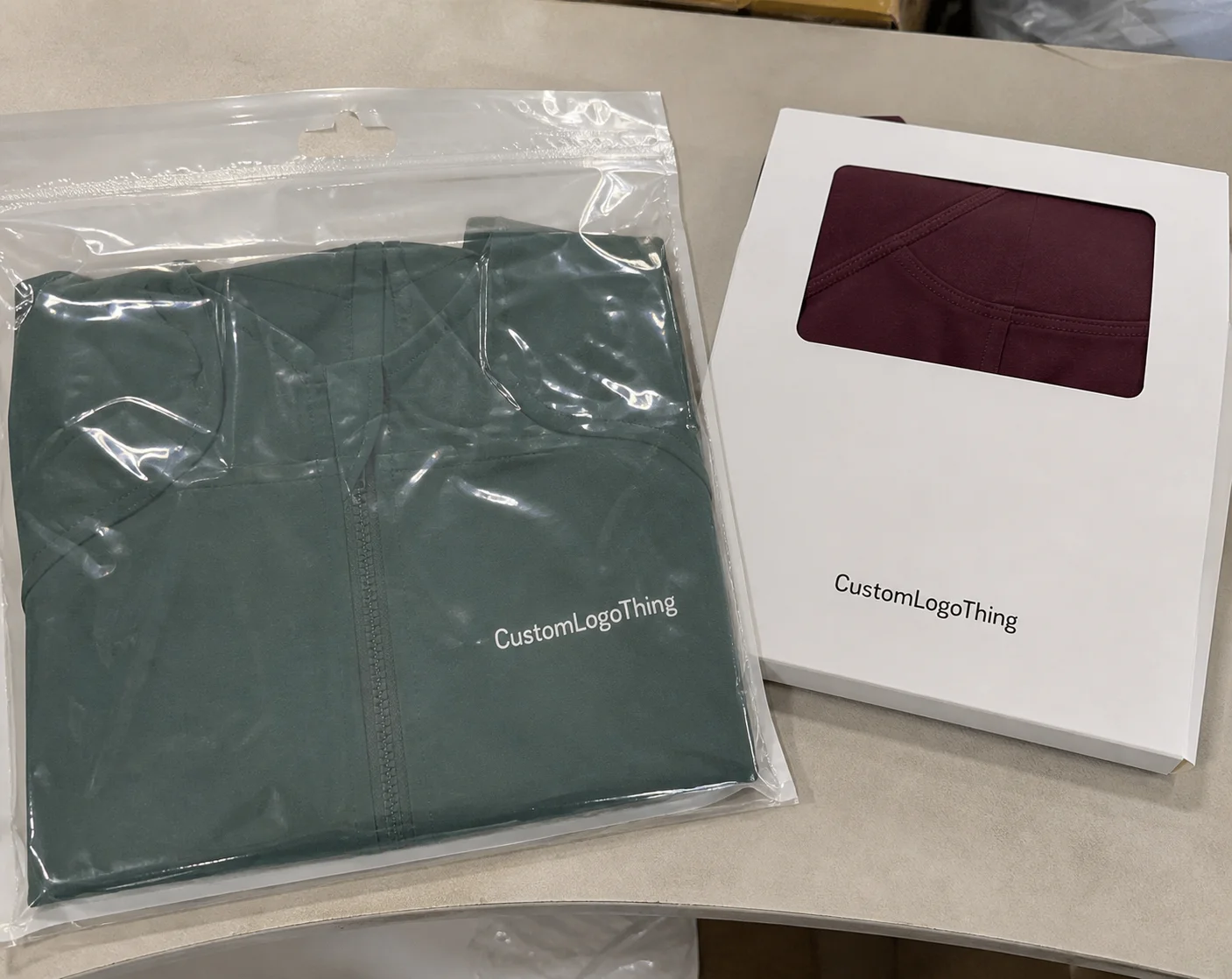
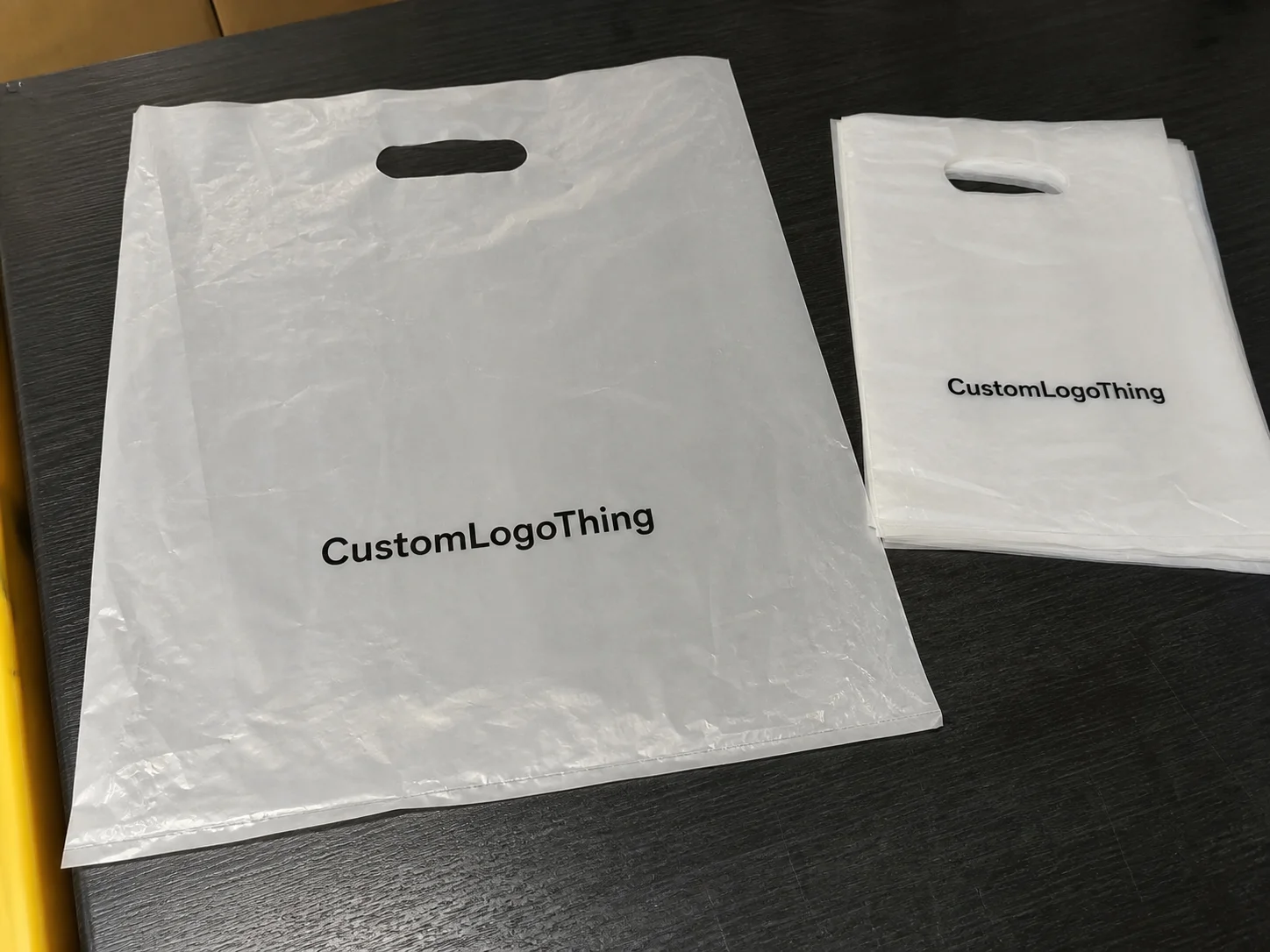
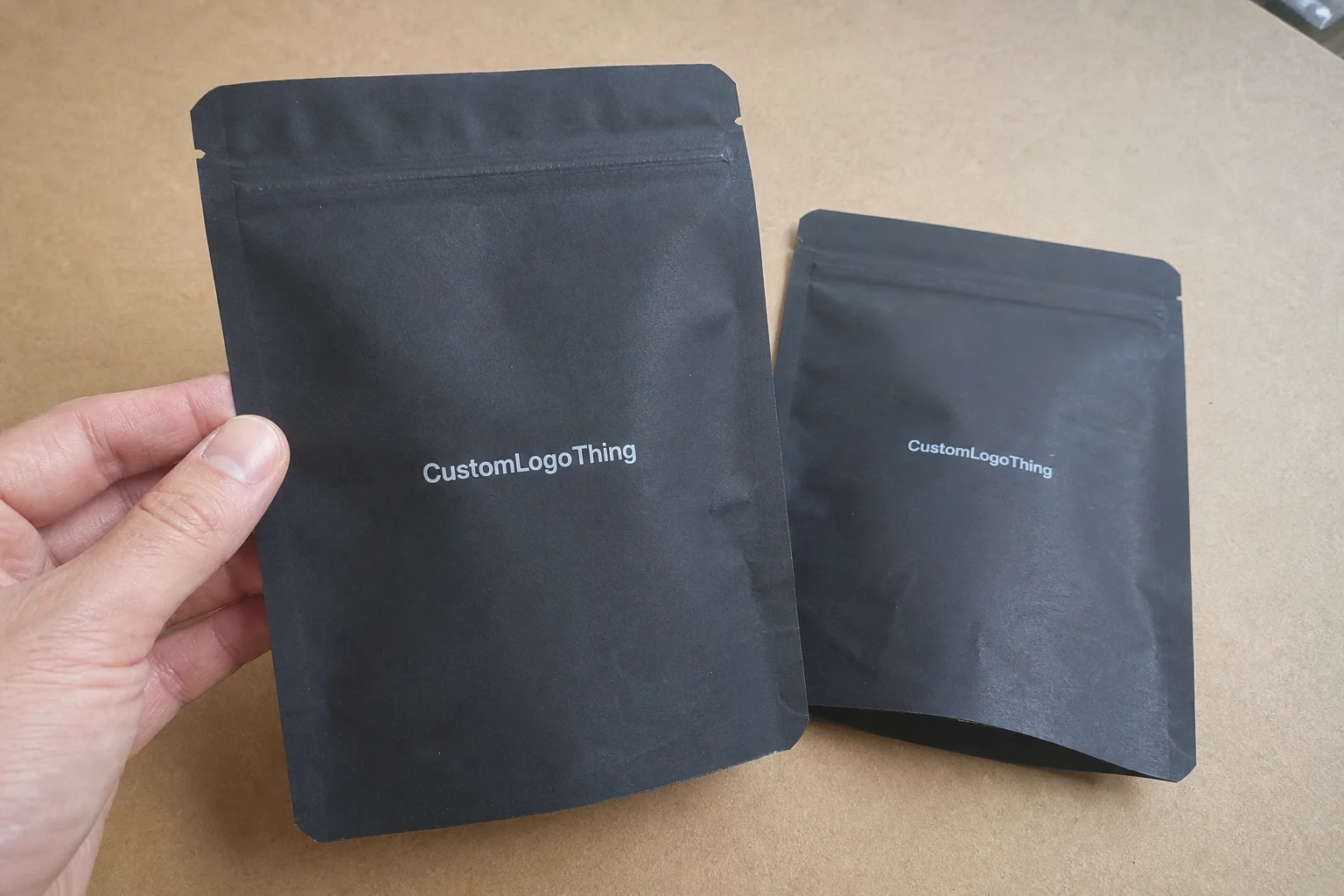
Buyer Fit Snapshot
| Best fit | Black Friday Promotional Packaging That Boost Sales projects where brand print, material claims, artwork control, MOQ, and repeat-order consistency need to be specified before quoting. |
|---|---|
| Quote inputs | Share finished size, material target, print colors, finish, packing count, annual reorder estimate, ship-to region, and any compliance wording. |
| Proofing check | Approve dieline scale, logo placement, barcode or warning zones, color tolerance, closure strength, and carton packing before bulk production. |
| Main risk | Vague material claims, crowded artwork, missing packing details, or unclear freight terms can make a low unit price expensive after revisions. |
Fast answer: Black Friday Promotional Packaging That Boost Sales: Material, Print, Proofing, and Reorder Risk should be specified like a repeatable production item. The safest quote records material, print method, finish, artwork proof, packing count, and reorder notes in one written spec.
Production checks before approval
Compare the actual filled-product size with the drawing, then confirm tolerance on folds, seals, hang holes, label areas, and retail display edges. Reserve space for logos, QR codes, warning copy, and material claims before decorative graphics fill the panel.
Quote comparison points
Review material grade, print process, finish, sampling route, tooling charges, carton quantity, and freight assumptions side by side. A quote is only useful when the supplier can repeat the same color, closure quality, and packing count on the next order.
Black Friday Promotional Packaging Tips That Boost Sales
Black Friday Promotional Packaging tips matter more than most teams admit, because the first 3 to 5 seconds can decide whether a shopper reads your offer as premium, rushed, or forgettable. I remember standing in a fulfillment room in Dongguan with a brand manager who was convinced the discount was the hero, then we swapped a plain mailer for a printed sleeve on 5,000 units and the whole thing changed right away, like the offer had finally put on a clean shirt. That is the odd little power of branded packaging: the box, sleeve, insert, or closure often does more persuasion than the promotion itself, especially when the unit cost sits around $0.22 to $0.48 per piece and the customer is deciding in a checkout window that lasts under 30 seconds.
Honestly, I think the strongest Black Friday Promotional Packaging tips are rarely about piling on more print or chasing louder graphics. They are about making the offer easier to understand, easier to ship, and easier to remember with one clean read on a carton sized at 220 x 180 x 60 mm or a rigid box wrapped in 157gsm art paper. A clean piece of package branding can turn a basic bundle into something people want to photograph, gift, or keep on the counter, while a sloppy one can make a 40 percent off campaign look like somebody found extra cartons in the back room and panicked. I have seen that difference on factory floors in Shenzhen, in design reviews in Chicago, and in last-mile warehouses outside Los Angeles where every extra fold adds real labor, not just abstract cost.
The practical side matters just as much. During Black Friday, discount pressure is high, inventory moves fast, and attention is scarce, especially across the Friday-to-Cyber Monday window that often compresses into 4 packed days of shipping and support tickets. Good packaging design has to do at least 3 jobs at once: frame the offer, protect the product, and keep the unit economics from drifting out of range. The best black friday promotional packaging tips start there, not with foil or special effects. They begin with a specific job, a specific SKU, and a specific timeline, such as 12 to 15 business days from proof approval for print production or 6 to 8 weeks for a fully custom set built in Guangdong. That may sound boring, but boring is usually what keeps a campaign from turning into a fire drill at 9:15 p.m. on a Wednesday.
One more thing before we get into the details: these ranges and process notes are based on real production work, not a sales deck. They are directional, not universal. A carton that sails through a cosmetic bundle in Southern California can struggle once it meets a heavier glass jar, humid freight, or a warehouse crew that has never seen the pack before. That is why black friday promotional packaging tips have to account for both the pretty part and the messy part. If the idea only works on a mockup, it is not ready yet.
Black Friday Promotional Packaging Tips: Start With the Surprise
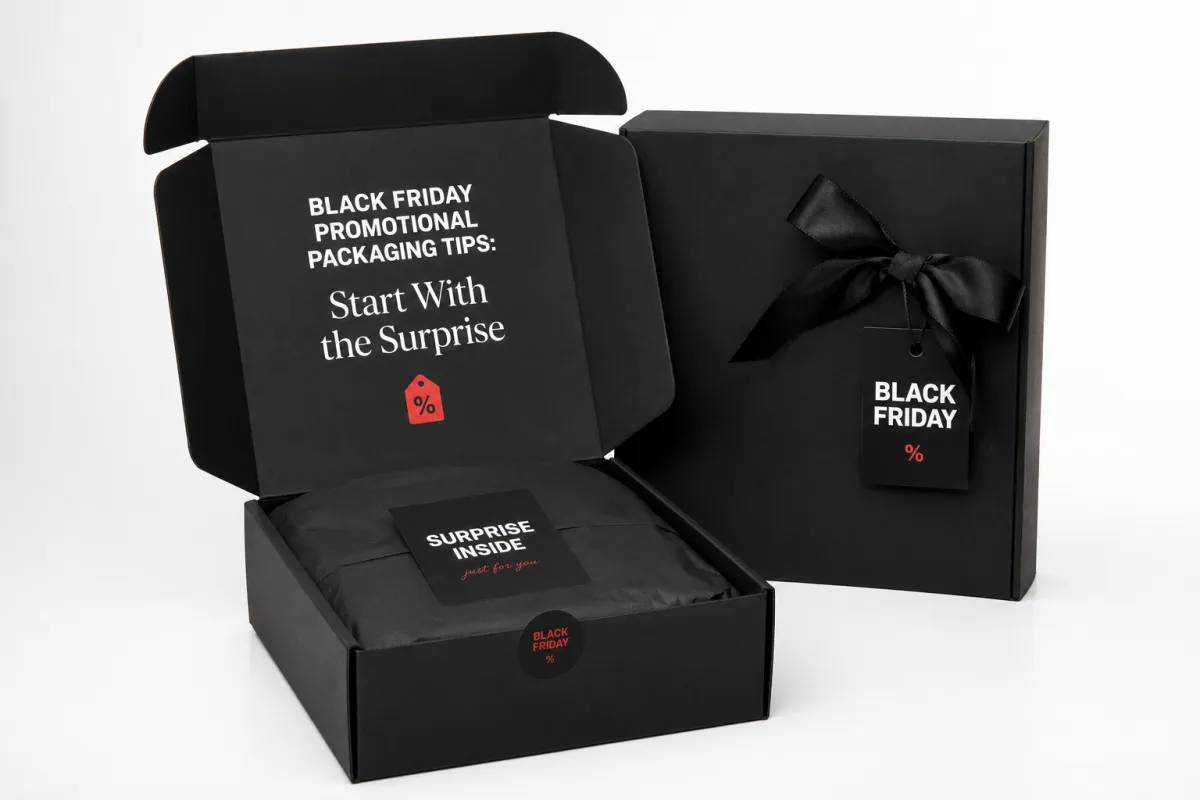
The surprise that matters most is usually not the outer shipper. It is the insert, sleeve, or closure that makes the promotion feel urgent the moment someone opens the pack, especially if the first reveal happens on a 350gsm C1S artboard insert with a matte aqueous coat. I once worked with a skin care brand that spent nearly $18,000 on a rigid outer carton in Suzhou, then got a bigger lift from a $0.22 printed insert because it named the bundle, the bonus item, and the cutoff date in one glance. That is one of the black friday promotional packaging tips I repeat often: sell the promise before you sell the material.
Promotional packaging is any package element created to support a campaign, not just to contain a product. That can be a printed sleeve over a stock box, a limited-edition carton, a bundle belly band, a mailer with a custom insert, or a closure label that calls out a gift-with-purchase. Ordinary shipping packaging, by contrast, is there to protect the item in transit, often with 32 ECT corrugated board or double-wall B flute if the route includes regional sorting in Texas or Ontario. Both matter, but they earn their place differently. For Black Friday, the smartest black friday promotional packaging tips make sure the promotional layer does not fight the shipping layer, because a $0.15 sleeve that looks great but tears in transit is not really a bargain.
Here is the difference I see on the ground: shipping packaging answers, "Will it arrive intact?" Promotional packaging answers, "Why should I care right now?" That second question gets harder during Black Friday because consumers compare 7 tabs, 4 discounts, and 2 delivery windows in the same sitting while one hand is on a coffee cup and the other is hovering over the cart button. If your packaging can reinforce value in the first 3 seconds, it can reduce hesitation, especially for retail packaging and DTC bundles where the box is part of the product story and the shopper may only see a thumbnail image at 640 pixels wide.
Most teams underestimate how much packaging can influence perceived deal quality. A plain brown mailer with a generic sticker says "discount." A well-sized carton with a crisp sleeve says "curated offer." The product inside might be identical, but the mental math changes, particularly when the structure uses 1-color black ink on natural kraft or a deep navy PMS 2767 printed on 400gsm board. That is why the best black friday promotional packaging tips focus on perceived value, not decoration for decoration's sake. I have had buyers tell me, with a straight face, that a 20-cent change in the outer pack made the whole promotion feel two notches more expensive, which is the kind of sentence that saves a lot of pointless debate in a Monday review.
"If the sleeve does not explain the offer in 3 seconds, we are paying for confusion." That line came from a buyer in a 40-minute packaging review in Brooklyn, and I still think about it whenever a team wants to cram 5 promotions onto one panel or add a second language block that nobody has space for.
One more point from the factory floor: every extra package component adds friction. A tuck flap that saves $0.03 can cost $0.08 in assembly time if the line has to pause and re-stack, especially on a 6,000-unit run with 8 operators and a hand-pack station in the middle. I learned that while watching a production in Shenzhen where a design that looked elegant on the screen created a 2-step hand insert during packing. The operators were polite about it, but you could feel the collective annoyance in the room, the kind that only gets louder when the pallet count rises past 18 and the press speed drops below 1,200 sheets per hour. Good black friday promotional packaging tips are never just about the art file. They are about labor, speed, and what the line can repeat 300 times before lunch.
And yes, if you've ever heard a plant supervisor say, "this should be quick," that is usually the moment you should start timing everything twice, because a 15-minute delay on the floor can become a 2-hour slip once QC, packing, and freight staging all get involved.
What Are the Best Black Friday Promotional Packaging Tips?
The best black friday promotional packaging tips are the ones that make the offer easier to understand, easier to ship, and easier to remember. Start with a single job for the pack, keep the message hierarchy clear, and choose a structure that fits the product, the channel, and the timeline. If the packaging cannot explain the promotion in 3 seconds, survive fulfillment without drama, and stay inside the margin plan, it needs to be simplified before production begins.
In practice, that usually means a strong outer impression, one clear value claim, and one physical structure that does not slow the line. A sleeve, insert, or closure seal can often do more work than a full custom build, especially when the Black Friday deadline is tight and the team needs a repeatable format across several SKUs. A design does not have to be ornate to feel considered. Often it just has to be disciplined, and a little bit of discipline goes a long way when the warehouse is already moving at holiday speed.
I also tell brands to think about the package as a sales rep that never gets to talk. The rep has one job: say the right thing in the right order, then get out of the way. If the pack feels crowded, the customer has to do extra work, and that is where the conversion starts leaking. A clean package with one sharp offer can feel stronger than a busier one with more money spent on it. That sounds almost too simple, but in the plant and in the aisle, simple usually wins.
How Black Friday Promotional Packaging Works
On a practical level, black friday promotional packaging tips work because packaging creates structure around a messy offer. It frames the hero product, gives the shopper a visual system to recognize, and tells the customer what is included before they have to read a long landing page or scan a 14-line product description. That matters for bundles, gift-with-purchase programs, and limited editions, where the pack has to explain 2 or 3 value drivers at once and still fit inside a shipping carton that measures 14 x 10 x 4 inches.
Think about the mechanics. A well-designed bundle package usually has 4 layers of communication: the outer graphic, the primary product name, the value claim, and the action cue. If the value claim is buried under too much copy, the pack loses its job. If the action cue is too aggressive, the offer can feel cheap. The strongest black friday promotional packaging tips keep that hierarchy simple enough to scan from 6 feet away on a shelf or 2 seconds on a doorstep photo, which is why I like to test a layout the same way I test a sign on a trade show floor in Chicago: step back, squint a little, and ask whether the important thing still survives.
Promotional packaging also has to move through multiple channels. A box that looks good on a retail display may fail in fulfillment because it is 12 mm too wide for the shipper, or because the corrugated insert pushes the total height past the retailer's 3-inch shelf limit. A direct-to-consumer mailer might photograph beautifully, but if the insert curls at 70 percent humidity in Miami, the unboxing moment drops sharply. Packaging design is not only creative work. It is logistics, print production, and customer experience stitched together with a deadline. I have spent enough time around a folding-carton line in Vietnam to know that the art director's beautiful idea still has to get along with a pallet jack and a case packer that wants the cartons fed squarely every time.
The full journey usually looks like this: concept, dieline, artwork, proof, sample, production, packing, and freight. Delays can happen at every step, but the most common failure points are simple. Someone approves artwork without checking the fold lines. Someone confirms a 4-color print when the budget only allows 2. Someone orders a custom structure with a 9-week lead time, then asks for a revision 5 days before press. Strong black friday promotional packaging tips help teams spot those traps before they turn expensive, especially when the target launch window is the first week of November and the truck booking is already locked.
I have also seen packaging carry different Black Friday goals with very different results. A luxury candle brand in Portland used a limited-edition belly band to make 3 core SKUs feel like a seasonal drop. A protein snack brand in Indianapolis used a corrugated shipper with an interior divider to support a 6-pack bundle and cut breakage complaints by 18 percent. A beauty subscription box in Toronto used a printed insert to explain a gift code and lifted add-on attachment without changing the outer mailer. Same season, same pressure, different packaging roles. That is the part people miss when they ask for a single "best" solution.
If your team needs a starting point, the simplest rule is this: make the pack do one job first, then add only the elements that support that job. That is one of the black friday promotional packaging tips I share with newer brands because it stops the "add everything" instinct. A sleeve, insert, or closure seal can often do more than a full re-engineered box, especially when margin is tight and everyone is trying to protect the ad budget from the packaging budget, which is a real conversation once the media plan crosses $50,000 and the packaging line item still needs approval.
Black Friday Promotional Packaging Tips for Cost and Pricing
Cost is where the conversation usually gets real. The main drivers are material choice, print coverage, special finishes, structural complexity, order quantity, and rush fees, and the fastest way to see the effect is to compare a 5,000-piece run against a 25,000-piece run with the same dieline. In one supplier negotiation I handled, a move from full-coverage soft-touch lamination to a spot-soft-touch lid with a matte base trimmed the run by 11 percent at 10,000 units. That is a better return than almost any decorative add-on I have ever seen. It is also why the best black friday promotional packaging tips focus on tradeoffs, not wish lists.
For planning, I like to compare packaging options by unit cost and labor impact, because the cheapest structure is not always the cheapest total solution. A $0.28 Custom Printed Box that packs in 8 seconds may beat a $0.21 pack that takes 15 seconds and needs a second hand insert, especially if the warehouse is paying $19 per labor hour in Ohio or California. If the promotion is moving 25,000 units, those seconds become labor dollars fast. That is the kind of math black friday promotional packaging tips should make visible. I have had operations leads thank me for translating "extra hand-feel on the flap" into an overtime estimate, which is less poetic but much more useful.
| Packaging Option | Typical Unit Cost at 5,000 | Best Use | Lead Time |
|---|---|---|---|
| Stock mailer + printed sleeve | $0.18 to $0.32 | Simple bundles, low-risk seasonal promos | 2 to 4 weeks |
| Custom folding carton | $0.28 to $0.55 | Retail packaging, compact hero SKUs, gift sets | 4 to 8 weeks |
| Corrugated shipper with insert | $0.65 to $1.20 | DTC bundles, higher protection, subscription kits | 4 to 7 weeks |
| Rigid gift box | $1.40 to $2.80 | Premium limited editions, high perceived value | 6 to 10 weeks |
Those numbers are directional, not universal. A 250 gsm SBS carton with one-color print can land near the low end, while a 2-piece rigid set with foil and embossing pushes higher quickly. Freight, inserts, and assembly can add another 8 to 20 cents per unit, and that matters if your margin is already compressed by a 35 percent discount. One of the smartest black friday promotional packaging tips is to budget on a landed basis, not only a print quote. I have watched teams celebrate a low quote and then quietly lose the savings to extra freight, thicker board, and one very determined insert spec.
If you are building multiple product lines, tier your spend. Put the highest visual investment into the top-selling SKU, the bundle that appears in ads, or the box that will appear in post-purchase photos. Keep lower-visibility support SKUs on simpler structures, maybe a 1-color shipper made from 32 ECT corrugated in a regional plant near Atlanta or Dallas. A brand does not need every item to look like a premium gift. It needs the system to feel coherent. That is the difference between product packaging that looks intentional and packaging that looks improvised, like someone assembled it with three emails and a sigh.
For teams sourcing materials, I often suggest comparing 2 or 3 paths before approving tooling. A stock base with custom print can save setup time, while a custom structure may cut freight because it nests better or ships flatter. If you need a fast starting point, browse Custom Packaging Products to compare sleeves, cartons, inserts, and other formats before you lock in the structure. Those black friday promotional packaging tips are especially useful when a buyer needs to protect margin and still look current, whether the supplier is in Dongguan, Ningbo, or Monterrey.
Watch the hidden costs, too. Color matching on dark substrates, gloss UV on full bleeds, and multiple SKUs in one carton can all push up expense. In one project, removing a second Pantone color saved $0.06 per unit on a 20,000-piece run and reduced proof iterations from 3 to 1. Not glamorous. Very effective. That is often how the best black friday promotional packaging tips pay for themselves. I have a soft spot for boring savings because boring savings usually arrive on time and do not need a rescue meeting.
There is also the question of what happens after the promotion ends. If a pack can be reused for a seasonal reset, a clearance bundle, or a small in-store display, the effective cost drops further. I have seen brands get stuck with beautiful but highly specific holiday packaging that had zero second life. That kind of overcommitment makes finance people suspicious, and honestly, they have a point. A good package should pull its weight more than once if the structure is capable of it.
Black Friday Promotional Packaging Tips for Process and Timeline
Timing is where good plans get tested. For fully custom packaging, I usually plan backward from the launch date and build in 8 to 12 weeks for sampling, approvals, production, and freight. If the campaign includes special finishes, complex inserts, or multiple product configurations, 12 to 15 business days from proof approval is not unusual for print production alone, and that is before transit. black friday promotional packaging tips only work if the schedule is real. Pretending a 10-week job can become a 10-day job is how people end up drinking cold coffee over a deck of redlined proofs at 6:40 a.m.
Here is the sequence I recommend: brief approval, dieline setup, artwork, proof review, sampling, production, and shipping. Leave at least 1 revision loop for artwork and 1 extra day for color correction. If a retailer needs master carton labels or a DTC team needs warehouse-ready cartons, add another checkpoint. I have seen a launch slip by 6 days because one barcode was approved at the wrong size, and the fix had to be reprinted in Cleveland while the pallets were already staged in New Jersey. It sounds trivial until it blocks intake at the DC, and then suddenly everyone wants to talk about the "human element" like the barcode did it on purpose.
Stock-based solutions move faster, but they are not magic. A stock mailer with a printed sleeve might land in 4 to 6 weeks if inventory is available and the art is final on day one. Fully custom packaging often needs 2 rounds of sampling and a plant slot that gets booked early in the season, especially in September when factories in Guangdong and Zhejiang start filling their Q4 schedules. The practical black friday promotional packaging tips here are simple: final art first, samples second, production third. Reversing that order costs time and almost always costs more money.
One factory-floor anecdote stands out. At a corrugated plant outside Shenzhen, I watched a team halt a run because the magnetic closure on a seasonal gift box sat 1.5 mm off center. The box still closed, but the reveal felt wrong. Fixing it at that point cost 2 hours and a re-stack. If that issue had been caught in sample review, it would have cost about 20 minutes and one corrected jig. That is why black friday promotional packaging tips often sound cautious. The caution is cheaper than the rework. Nobody loves hearing that in the meeting, but the press line loves it.
Contingency time matters too. Freight can be delayed by weather, port congestion, or a simple booking mistake, and a truck from Los Angeles to Phoenix can still lose a day if the paperwork misses one line item. Color shifts can force reproofs. A substitute board grade might be needed if a mill allocation changes. I always leave 10 to 15 percent of the schedule as buffer, especially when the promotion depends on a specific launch window. Teams that skip buffer time usually spend it later in overtime and air freight, which has a way of making everyone act surprised even though the calendar has been yelling the whole time.
If you need a standards-based way to protect quality, reference ISTA transport testing standards for pack-out and distribution testing, and check FSC-certified paper sourcing if your brand wants verified fiber claims. Those two anchors do not solve everything, but they give procurement, sustainability, and operations a shared language. Good black friday promotional packaging tips are more useful when the whole team is speaking the same spec sheet, not 3 different versions of the same spreadsheet printed out in different offices.
I also like to insist on a simple sign-off chain. One person owns the artwork, one person owns the pack-out spec, and one person owns the launch calendar. When all three roles live in one inbox, things get fuzzy fast. Separating them sounds small, but it prevents the kind of confusion that turns a 20-minute approval into three Slack threads and a call nobody wanted to schedule. Kind of boring, yes, but boring keeps the campaign on track.
Step-by-Step Guide to Building Promotional Packaging
Start with one question: what is the packaging supposed to make easier? Sell-through, giftability, bundle clarity, or brand lift? Pick one primary job first. I have sat in planning meetings where a team wanted the pack to do all 4 jobs, plus sustainability messaging, plus a QR campaign, plus a coupon reveal, all while keeping the unit cost under $0.40. That is how you end up with clutter. The best black friday promotional packaging tips begin with a single, measurable job. If the goal is not clear enough to write on the whiteboard, the box will probably end up doing too much and none of it well.
1. Audit the physical product first
Measure the product, the shipping constraints, and the retail display requirements before anyone opens design software. A box that is 3 mm too narrow can crush a paperboard insert, while a box that is 12 mm too wide wastes corrugated volume and increases freight. If the product weighs 1.8 kg, you should also think about board grade, stacking strength, and whether the pack needs to survive a 3-foot drop or a 1-meter transit test. That is not overthinking. That is basic product packaging discipline. I have seen a gorgeous mockup fail because the jar lid hit the inner wall on the second shake, and the sample room was only 20 minutes into the day.
2. Build the visual hierarchy
The shopper should read the offer in this order: promotion, product name, value claim, then detail copy. If the copy blocks the offer, the packaging loses speed. I like to test that hierarchy by stepping back 6 feet and giving it 2 seconds. If I cannot tell what is being sold, the design is too crowded. Strong black friday promotional packaging tips keep the front panel clean enough for one fast scan, whether the pack is sitting on a shelf in Minneapolis or landing in a doorstep photo taken at night. That may mean leaving negative space alone instead of stuffing it with every badge the marketing team found on page 14 of the campaign deck.
3. Prototype with real product inside
Mockups without product weight are misleading. A sleeve that looks aligned on a blank dummy may bow once the bottle, jar, or accessory set is inserted. I have seen a 4-ounce jar shift 7 mm inside a carton because the internal fit was never tested under load, and a 3-piece accessory bundle can move even more if the insert stock is only 18 pt instead of 24 pt. Use the real contents, not a lookalike block. This is where custom printed boxes and inserts either earn their keep or expose a sizing mistake. Frankly, I prefer to learn that in a sample room in Suzhou instead of in a warehouse, where everyone has already decided it should have been "obvious."
4. Preflight the artwork and specs
Check bleed, safe zones, barcode size, board thickness, finish placement, and dieline notes. A 1/8-inch bleed might be acceptable on a simple sleeve, but a tight wrap with full coverage needs much more care, especially if the image crosses a fold on the front panel. Confirm whether the printer wants CMYK, spot colors, or a combined workflow, and ask whether the press is running on coated stock or uncoated stock before you approve the final proof. I have watched more campaigns stall on a missing panel note than on any creative issue. The right black friday promotional packaging tips make preflight boring, and boring is good. Boring is a gift to your future self.
5. Align operations before launch
Fulfillment needs to know pack order, pallet counts, and assembly steps. Customer service needs the promo details in a 1-page script. Finance needs the landed cost, not just the print quote. If the packaging includes a tear strip, a tuck tab, or a gift seal, warehouse staff should see a 30-second training clip or a photo sheet before the first pallet lands. The smoother the handoff, the better the campaign runs. That is one of the black friday promotional packaging tips I wish more brands used earlier. It saves a lot of awkward "I thought someone else told the warehouse" emails.
Two more practical notes help a lot. First, modular systems save time. A base carton that works for 3 SKUs with only a changed sleeve can cut development work by 40 percent across a season. Second, file naming matters more than people admit. "Final_final2" is not a production asset. Use SKU codes, carton sizes, and revision numbers so everyone can trace the approved version in 1 minute instead of 20. Small systems changes like that make black friday promotional packaging tips easier to execute at scale. They also make your prepress partner less likely to mutter under their breath, which is a nice side benefit on a 14-hour day.
When a brand gets this process right, the packaging no longer feels like a last-minute accessory. It becomes part of the campaign plan. That is the real win. Not just a prettier box, but a package branding system that can be repeated, measured, and improved with the next promotion. I have found that the best packaging programs usually look calm on paper because someone did the hard work before the deadline started waving its hands.
Common Mistakes in Black Friday Promotional Packaging
The first mistake is overloading the pack with too many messages. If the front panel shouts "free gift," "limited stock," "exclusive code," "members only," and "last chance" all at once, the shopper may tune out. I have seen teams add 5 claims to fix weak urgency, and the result was the opposite: a noisy panel that felt less credible. Good black friday promotional packaging tips strip the message down to 1 primary callout and 1 support line. Anything more starts to look like a flyer taped to a box, and nobody wants that.
The second mistake is ignoring assembly time. A beautiful structure that adds 18 seconds per unit can destroy a fulfillment plan. At 8,000 units, that is more than 40 labor hours, which is not a small oversight, especially if the line rate is 650 units per hour and the overtime rate jumps on weekends. I once watched a brand lose its margin advantage because an extra insert had to be rotated and glued by hand in a plant near Nashville. The packaging looked premium. The line hated it. Practical black friday promotional packaging tips always count labor. In production, "it only takes a second" is usually the opening line of a very expensive sentence.
The third mistake is weak contrast. Dark-on-dark print, ultra-thin type, or a metallic finish with low ambient light can make the key message hard to read. Retail lighting is brutal. So are phone cameras. If the pack needs a flashlight to explain the offer, it is underperforming. This is where experienced packaging design beats trendy effects. Readability is a feature. In fact, I would call it the feature that protects all the others, especially on a shelf where the shopper has maybe 4 inches between your pack and the competitor's.
The fourth mistake is late ordering. A team that orders sample units 2 weeks before launch is really asking for speed, not certainty. If a supplier needs 7 days for tooling and another 5 for color proofing, the window closes fast. Skip the sample and the risk rises again. black friday promotional packaging tips are only useful if they respect lead time, and lead time is rarely negotiable. I know people love optimistic calendars; the factory does not care about optimism, only booked press slots and available board.
The fifth mistake is no backup plan. If the freight booking slips, if the print finish shifts, or if the board grade is substituted, you need a fallback structure that still supports the campaign. One client kept a simpler stock mailer on standby and saved a launch when the custom box shipment was delayed by 4 days from a port issue in Long Beach. That decision probably protected $75,000 in ad spend. Not every backup gets used, but every serious campaign should have one. I would rather have one drawer of backup materials than a very expensive apology call.
One quiet mistake I see a lot is forgetting the post-launch photo. The box may work beautifully in the warehouse, then disappear visually once the customer posts it under warm kitchen light. If the campaign depends on social sharing, test the pack in real light, not just in a studio shot. That little step can save you from discovering too late that the finish turned muddy on camera. It happens more than people want to admit.
Expert Tips to Make Black Friday Packaging Pull Its Weight
The smartest black friday promotional packaging tips are usually the least flashy. Use tactile cues only where they change the perception of the offer. A soft-touch coating on the lid, a blind emboss on the brand mark, or a structured reveal on the first opening can create a premium feel without adding 3 separate finishes. I have seen a $0.14 emboss do more than a $0.60 foil stack because it felt intentional, not busy. That kind of restraint usually reads better to the customer anyway, especially if the box is being opened at a kitchen table at 7:30 p.m. after a long commute.
Build modular systems whenever possible. A sleeve that swaps seasonal messaging, or an insert that changes by SKU, can carry 3 campaigns instead of 1. That keeps packaging design costs lower across the year and reduces the chance of rushed reengineering. It also helps the procurement team negotiate better pricing because the volumes are more predictable. If I had to choose one of the black friday promotional packaging tips that saves the most money over time, it would be modularity. One good base structure beats 3 one-off headaches, and one tooling file in Chengdu can often support a whole quarter of offers.
Use QR codes carefully. They are useful when they extend the offer, such as a recipe, setup video, or loyalty signup. They are not useful when they act like clutter. I usually keep the code at least 0.75 inch wide on small cartons and give it a clean text label so the shopper knows why to scan. If the code has no clear purpose, it belongs somewhere else. That restraint keeps package branding cleaner and keeps the design from looking like it was assembled during a meeting that should have been an email.
Plan inventory with a buffer. I prefer a 5 to 8 percent safety stock for campaign packs that matter, especially when supplier lead times stretch beyond 30 days or the fulfillment center is handling multiple seasonal SKUs at once. Then think about the post-promo path. Can the box be reused for a bundle refresh, a gift set, or an outlet run? Good black friday promotional packaging tips do not stop at launch. They look at what happens to the remaining 12 percent of inventory after the offer ends. No one wants a pallet of beautiful boxes aging out in the corner like forgotten produce.
"The best pack is the one we can repeat." That came from a procurement lead in New Jersey who had lived through one too many one-off campaigns, and I think it captures the truth better than any design slogan.
One last factory note. When I visited a converting line in Guangdong, the operator showed me 2 versions of the same carton. The prettier one needed a second pass because a flap had to be hand-aligned. The simpler one ran 22 percent faster and shipped cleaner. I do not say that to argue against creativity. I say it because black friday promotional packaging tips should always respect the line, the warehouse, and the customer in the same breath. A gorgeous box that makes the crew curse under fluorescent lights is not the victory people think it is.
So if you are refining a Black Friday plan right now, ask 3 questions before you approve the art: does it explain the offer in 3 seconds, does it cost less than the margin it protects, and can the team ship it without a fire drill? If the answer is yes, you are close. If the answer is no, the fastest win is often to simplify the structure, trim the finish, or move the message into a sleeve or insert. That is how black friday promotional packaging tips turn from theory into better sales.
For brands that want the cleaner route, I usually recommend starting with one strong structural choice, one clear value message, and one repeatable production plan. That combination has saved clients more money than any novelty coating ever did, whether the run was 2,500 units in Mexico or 25,000 units in South China. It also gives your next campaign a head start, because the system is already built. And if that sounds less dramatic than a giant launch reveal, well, production has never cared much about drama.
The part I keep coming back to is this: a Black Friday pack should make the offer faster to understand, easier to fulfill, and more credible in the customer’s hands. If it only looks good on the render, it is not ready. If it looks good, ships cleanly, and makes the buyer feel like they spotted the smart version of the deal, then you have something real. That is the standard worth holding, and it is usually enough to separate a forgettable promo from one that actually moves units.
FAQ
What are the best black friday promotional packaging tips for small brands?
Use one versatile structure across multiple SKUs instead of creating a different pack for every product. A stock carton with a printed sleeve or insert can usually cover 2 to 4 campaign variants without new tooling, and it often keeps the per-unit cost around $0.24 to $0.52 at 1,000 to 2,500 pieces. That keeps setup time lower, and it makes reorders easier when a small brand only needs 500 to 2,000 units at a time. Small teams usually win by staying focused, not by trying to invent a whole new box for every offer.
How far in advance should I order Black Friday promotional packaging?
Plan for 8 to 12 weeks for fully custom packaging when sampling, approvals, and freight are all part of the job. For simpler stock-based solutions with printed elements, 4 to 6 weeks can work if artwork is final and inventory is available. The safest black friday promotional packaging tips always include extra time for revisions, because proof changes are one of the most common reasons schedules slip. If you are already in the "we just need it fast" phase, I would start simplifying the structure right away.
How can I reduce black friday promotional packaging costs without looking cheap?
Keep the structure simple and put the budget into one strong visual moment instead of 4 small embellishments. Limit print coverage, use standard sizes, and avoid extra finishes that do not support the offer. A clean custom printed box with a well-placed sleeve can look more premium than a crowded rigid set that spent the money in the wrong place. Honestly, restraint tends to look more expensive than clutter, which is a nice little contradiction the packaging world never gets tired of proving.
Which materials work best for black friday promotional packaging?
Corrugated board works well for ship-ready packs that need strength and stacking performance, especially 32 ECT or double-wall constructions for heavier bundles. Folding carton or paperboard is often better for shelf presentation, inserts, and lighter promotional kits, and a 350gsm C1S artboard insert can hold up well for premium gift sets. The right choice depends on product weight, shipping distance, and whether the pack must survive retail handling or direct-to-consumer transit. I usually start with the journey first, then choose the board that can survive it without drama.
Can black friday promotional packaging improve conversion rates?
Yes, when it clarifies the offer quickly and makes the value proposition easier to scan under time pressure. It can also improve perceived value, which helps a discount feel more credible and less generic. Track conversion rate, average order value, and sell-through after launch so you can tell whether the packaging change actually moved the numbers. That is the only way black friday promotional packaging tips earn their keep, and the only way to know whether the pretty box did anything besides look nice in a deck.
If you keep the structure simple, the message clear, and the timeline realistic, black friday promotional packaging tips can do more than dress up a discount. They can support margin, speed up fulfillment, and make the customer feel like the offer was designed, not improvised, whether the job is produced in Dongguan, shipped through Savannah, or packed in a Chicago warehouse. The clearest takeaway is simple: before you approve artwork, write down the pack’s one job, confirm the landed cost, and test the structure with real product in hand. That small checklist is usually where the biggest gains start.