Buyer Fit Snapshot
| Best fit | Sustainable Packaging for Food Brands projects where brand print, material claims, artwork control, MOQ, and repeat-order consistency need to be specified before quoting. |
|---|---|
| Quote inputs | Share finished size, material target, print colors, finish, packing count, annual reorder estimate, ship-to region, and any compliance wording. |
| Proofing check | Approve dieline scale, logo placement, barcode or warning zones, color tolerance, closure strength, and carton packing before bulk production. |
| Main risk | Vague material claims, crowded artwork, missing packing details, or unclear freight terms can make a low unit price expensive after revisions. |
Fast answer: Sustainable Packaging for Food Brands: Retail Fit, Compliance Space, Print, and Cost should be specified like a repeatable production item. The safest quote records material, print method, finish, artwork proof, packing count, and reorder notes in one written spec.
Production checks before approval
Compare the actual filled-product size with the drawing, then confirm tolerance on folds, seals, hang holes, label areas, and retail display edges. Reserve space for logos, QR codes, warning copy, and material claims before decorative graphics fill the panel.
Quote comparison points
Review material grade, print process, finish, sampling route, tooling charges, carton quantity, and freight assumptions side by side. A quote is only useful when the supplier can repeat the same color, closure quality, and packing count on the next order.
I still remember the first time I watched a compostable pouch look flawless on a sample table and then fail in a real production run because the oxygen barrier was too light for a nut mix, and that one afternoon in a co-packing plant outside Milwaukee, Wisconsin explained sustainable Packaging for Food brands more clearly than a 40-slide deck ever could. The pouch had sharp graphics, a Soft Matte Finish, and a very convincing sustainability story, but once it met a 22-pound batch of almonds, cranberries, and pumpkin seeds, the oxygen readings told the truth by week 8, not week 24, and the product staled long before the marketing team expected it to. Packaging has a way of reminding everyone that pretty and durable are not the same thing, and that lesson sits at the heart of sustainable packaging for food brands.
That is why sustainable packaging for food brands is never only a material decision; it is a working system that has to protect food, keep the filling line moving at 80 to 120 packs per minute, and still make sense for disposal, retail packaging, and package branding in stores from Austin to Toronto. I have seen brands earn real shelf credibility with a simple mono-material structure, and I have also watched an expensive compostable program collapse in QA because the seal window was 15 degrees too narrow for an older VFFS machine running in a plant near Grand Rapids. That kind of failure costs money twice, once in scrap and once in lost confidence, which is why sustainable packaging for food brands has to be designed around real production limits instead of optimistic assumptions.
There is also a practical truth that gets missed in a lot of boardroom conversations: packaging is not doing anyone any favors if it saves a few grams of material but creates a mess on the line or shortens shelf life by two weeks. I have stood beside operators in plants where a beautiful new structure kept bridging at the jaws, and the mood in the room changed fast, kinda all at once. The brand team had meant well, of course, but intention does not get a pallet out the door.
What sustainable packaging for food brands actually means
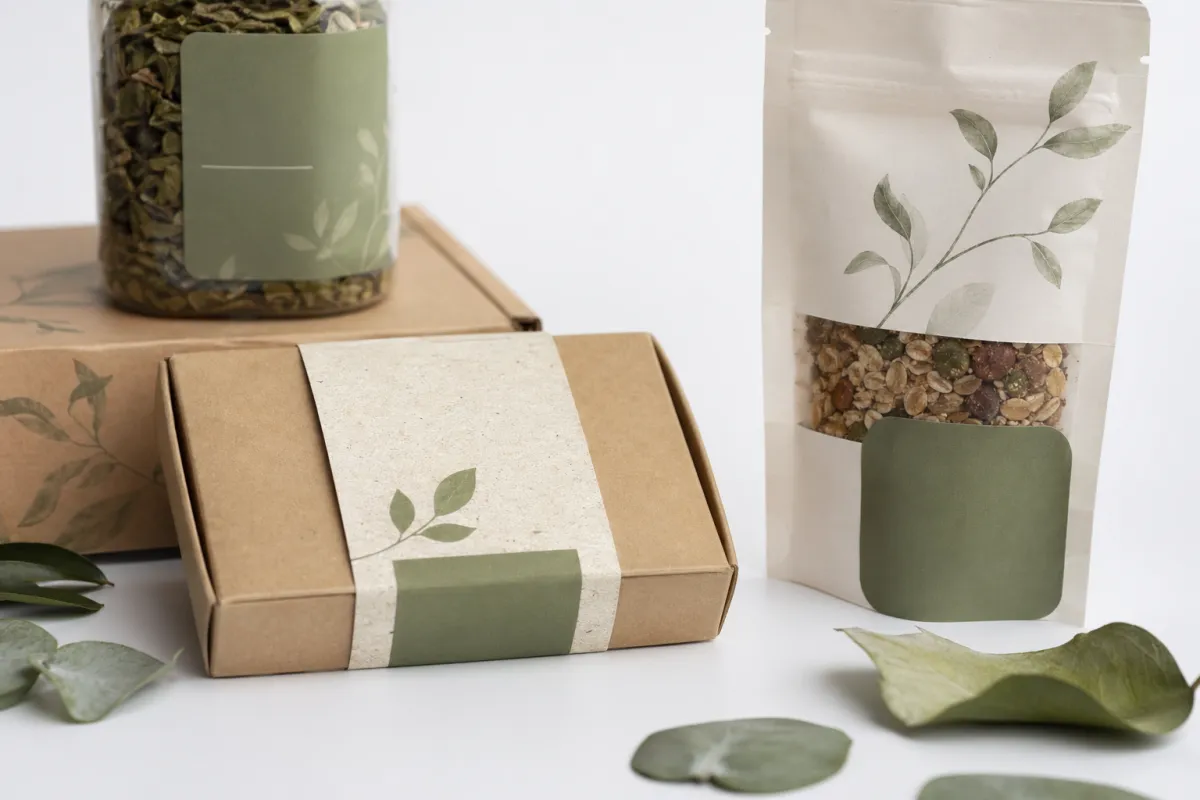
Sustainable packaging for food brands begins with source reduction, not with the flashiest material on a sample board, and that usually means looking at ounces, grams, and film caliper before anyone talks about a foil-free story. The best pack may use 18 percent less resin, one fewer adhesive layer, and a lighter label face stock, because less material often means less waste, lower freight weight, and fewer chances for failure on a line running in Querétaro or Charlotte. I know that sounds almost too simple, but simple is often what survives the pressure of production, and it is often the most honest definition of sustainable packaging for food brands.
I have seen a snack brand in the Midwest spend three months arguing over paper versus plastic, only to find that the better answer was a thinner-gauge mono-PE pouch with a stronger sealant layer and a smaller headspace requirement. They cut grams per pack by 11 percent, improved case count by 8 percent, and kept the crunchy texture where it belonged for a 180-day shelf-life target. That kind of result makes sustainable packaging for food brands practical instead of decorative, which is exactly the point, because the package has to support both product quality and the economics of the line.
It also helps to define the end-of-life path with care, because recyclable, compostable, reusable, and refillable are not interchangeable terms, even if marketing decks sometimes treat them as if they all came from the same factory in a suburban office park. A recycled-content tray with an FSC paperboard sleeve can support strong branded packaging and still be easier to recover than a mixed-material pouch with metallized film, heavy inks, and a slick coating that no sorting line in Minneapolis wants to see. Clear naming matters, and so do the actual recovery bins in the market where the pack will land, especially when a brand is building a credible story around sustainable packaging for food brands.
Food brands care because the stakes go far beyond a cleaner logo on a shelf tag. A 50,000-unit run can shift packaging cost by several thousand dollars, but it can also affect retailer scorecards, compliance conversations, and the way a buyer in Chicago reads a claim about recyclability or recycled content. The brands that treat sustainable packaging for food brands as a performance strategy usually come out ahead of the ones chasing a single green-sounding feature and hoping it covers the rest, because the market notices when a package is only sustainable on paper.
There is also a hard lesson many teams learn late: claims do not keep product safe. Shelf life does. Seal integrity does. Grease resistance, moisture barrier, aroma retention, and print durability all matter, especially for sauces, coffee, frozen meals, and salty snacks packaged in 250-gram pouches or 12-ounce cartons. If a pouch scuffs during a 1,200-mile freight run or a carton loses ink adhesion after cold storage at 34 degrees Fahrenheit, the package is no longer doing its job, no matter how polished the sustainability statement sounds. I have had to tell more than one team that a beautiful label does not stop oxygen, and nobody enjoys hearing that after six rounds of design review, but that is the reality behind sustainable packaging for food brands.
If you want a clean starting point, I would compare the structure against recognized guidance from the Sustainable Packaging Coalition at packaging.org and then review the EPA's material reduction guidance at epa.gov. Those resources will not choose the pack for you, but they will keep the conversation grounded in real recovery pathways, source reduction, and material management instead of wishful thinking, which matters whether the pack is being made in Ontario, California, or Dongguan, Guangdong. For teams evaluating sustainable packaging for food brands, that grounding is often the difference between a useful program and a costly lesson.
The real question is not, "Which material looks greenest?" It is, "Which option keeps the product safe, the line efficient, and the brand credible in a 12- to 18-month launch window?" That is the practical center of sustainable packaging for food brands, and it is where good packaging design earns its place with measurable results instead of vague promises. It is also where life cycle assessment, post-consumer recycled content, and design for recyclability stop being buzzwords and start becoming useful decision tools.
One more honest caveat: no package is impact-free. Sometimes the most sustainable move is not a dramatic switch to a new format; sometimes it is simply removing a layer, tightening a tolerance, or shrinking the headspace by a few millimeters. Those choices do not sound exciting in a pitch meeting, but they are often the ones that hold up after launch.
How sustainable packaging for food brands works in practice
To understand sustainable packaging for food brands, you have to look at the full stack: substrate, coatings, closures, inks, labels, and adhesives, because a package is rarely just one material on a supplier quote. Even a simple pouch may include a print web, a sealant layer, a zipper, and a varnish, and every one of those components can affect recyclability or compostability under the rules used in California, Ontario, or the EU. I wish it were simpler, frankly, but packaging rarely agrees to be simple for very long.
I once sat with a converter in Wisconsin who could not understand why a "paper" pouch was getting rejected by a buyer in Portland, Oregon. The reason was plain enough to see with a knife and a torch: the paper was only the top layer, while the real structure underneath was a complex laminate that included plastic, barrier coating, and a non-recyclable metalized film. The outer look said paper; the structure said something else. That gap is where a lot of sustainable packaging for food brands falls apart, and it tends to fail in a way that looks expensive from every angle.
Barrier properties are the next piece of the puzzle, and the numbers matter. Oxygen barrier protects nuts, coffee, and dehydrated snacks from staleness and oxidation; moisture barrier matters for crackers, powders, and seasonings that cake when humidity creeps above 60 percent; aroma barrier matters for coffee and tea because smell loss is product loss; light barrier protects oils, spices, and frozen items with sensitive pigments. If the package misses one of those four barriers, the sustainability story may survive while the food quality does not, which is why sustainable packaging for food brands must be tested against real food behavior.
Different foods push different structures. A dry granola can often run in a lighter mono-material pouch with a sensible sealant and a 75- to 90-micron total gauge. A sauce with 3 percent oil and a hot-fill step may need a different film or tray structure to keep viscosity, seal integrity, and shelf life intact across a 180-day distribution cycle. A frozen dumpling needs cold-chain resilience, a strong seal through condensation, and a package that does not crack at 0 degrees Fahrenheit. That is why sustainable packaging for food brands is really a matching exercise, not a one-size-fits-all rule, and the sales pitch that ignores product chemistry usually falls apart in pilot testing.
Factory equipment shapes the decision just as much as the material spec sheet does. If your filler is running 120 packs per minute on a horizontal form-fill-seal line in a plant near Monterrey, the heat seal window and film stiffness matter immediately. If your co-packer uses a shrink sleeve in New Jersey, then neck finish, label thickness, and tunnel temperatures become part of the sustainability discussion. If case packing is manual, a molded fiber insert may be fine; if it is automated at high speed, the tolerance stack gets much tighter, often within 1.5 millimeters. I have seen a brand fall in love with a gorgeous format and then lose three days because the gusset would not feed cleanly, which is the sort of thing that makes everyone stare at the floor for a while. For sustainable packaging for food brands, equipment compatibility is as important as material selection.
That is why sustainable packaging for food brands needs to be judged from plant to pallet to shelf. The distributor route, the retailer's warehousing rules, the pallet wrap pattern, and even the store's shelf depth can change the answer. A structure that works beautifully in a lab in San Diego may fail if it needs extra secondary packaging to survive the route to a regional grocery chain in Phoenix or Minneapolis. In packaging design, the whole path matters, not just the first impression, and that is especially true when the package must also support recycled content claims or a compostability certification.
- Mono-material plastic can support strong seal performance and better recyclability in many markets when the structure is simplified to one resin family such as PE or PP.
- Paper-based formats can help with shelf presentation, but only if the barrier, coating weight, and recovery story are honest and documented.
- Molded fiber works well for trays, inserts, and certain produce or bakery applications where rigidity matters more than moisture barrier.
- Compostable laminates may fit specific products, but they need the right disposal infrastructure and enough barrier to protect the food across the stated shelf life.
- Reusable transport packaging can cut corrugate use in closed-loop systems, especially between a plant and a regional DC, where pallets turn 8 to 12 times per month.
The best teams I have worked with test all of this against the actual product, not a lab surrogate. They check OTR and WVTR data, they review seal strength in pounds per inch, and they look at how the package behaves after vibration, compression, and a few drop cycles that simulate a 36-inch fall. A spec sheet can get you to the door; real production decides whether sustainable packaging for food brands actually delivers. And yes, the test table always looks calmer than the line does, especially at 5:30 a.m. when the first pallet is waiting.
There is a reason experienced converters get a little cautious when someone says, "It passed on the bench." Bench data is useful, but the line has a way of introducing humidity swings, operator adjustments, and tiny speed changes that bench conditions never show. That is not a flaw in the process; it is the process.
Cost, pricing, and the key factors that shape value
Pricing for sustainable packaging for food brands depends on a handful of levers that buyers sometimes underestimate, and the quote sheet usually hides the most expensive parts until the second page. Substrate choice, print method, barrier level, custom tooling, testing, and freight all shape the final number. A stock pouch with a lighter gauge might land at a very different price from a custom printed carton with specialty coatings, even if both are trying to solve the same brand problem. I have sat through enough pricing calls to know that the number on page one is rarely the whole story, especially when sustainable packaging for food brands has to hold up to real freight and real spoilage risk.
In a supplier meeting I remember in North Carolina, a food company was focused on unit cost alone and missing the bigger picture. Their old pack was cheap per thousand, but it created 2.5 percent damage in transit, plus extra labor to rework cases at the DC in Greensboro. Once we added freight, repacking, and spoilage, the "cheaper" option looked more expensive by a wide margin. That is a common mistake in sustainable packaging for food brands: staring at the sticker price instead of the landed cost.
Higher-performance sustainable formats can cost more upfront, and I would not pretend otherwise. Compostable structures can need specialty films or certified coatings from suppliers in Italy, Vietnam, or Wisconsin. Recycled-content paperboard may carry tighter supply constraints. FSC-certified board, water-based inks, and low-migration adhesives can all add steps and add days to the schedule. Still, the total picture sometimes improves because the pack is lighter, pallets hold more cases, and the filler wastes fewer units during changeover. I know that sounds like the finance team talking, but it is really just packaging doing its job well, and it is exactly the kind of tradeoff sustainable packaging for food brands should make visible.
Product type changes everything. A dry cereal with a 9-month shelf life can often tolerate a simpler structure than a refrigerated dip with high moisture and fat content. Greasy foods demand better grease resistance. Oxygen-sensitive foods need lower transmission rates. Frozen foods need materials that stay tough below freezing and do not crack during handling on a route through Chicago in January. That is why sustainable packaging for food brands should be priced against product risk, not just material weight, because the risk shows up later as returns, write-offs, or lost shelf space.
Here is the value framework I use when a buyer asks me how to judge options. Compare unit price, shelf-life protection, production speed, and end-of-life story together, ideally in one spreadsheet with the same SKU across three suppliers. If an option saves $0.012 per unit but cuts shelf life by two weeks, that is not a savings; it is a hidden liability. If another option costs more but lets the line run 14 percent faster and lowers freight by a full pallet per truckload from a plant in Ohio to a DC in Atlanta, the economics may be better than they look. I have watched plenty of "cheap" decisions become very expensive once the warehouse gets involved, and that is why sustainable packaging for food brands should always be reviewed on landed cost, not just quote cost.
| Option | Typical Unit Cost at 10,000 Units | Shelf-Life Fit | Production Impact | Best Use Case |
|---|---|---|---|---|
| Mono-material PE pouch | $0.18 to $0.32 | Strong for dry snacks, coffee, and some frozen items | Usually runs well on standard sealers | Brands wanting recyclability and clean graphics |
| Paper-based pouch with barrier coating | $0.24 to $0.40 | Moderate for dry goods; limited for high-moisture foods | May need tighter humidity control | Retail packaging with a natural look |
| Molded fiber tray | $0.30 to $0.55 | Good for bakery, produce, and meal components | Works best with simple nesting and careful handling | Rigid retail packaging and inserts |
| Compostable laminate | $0.28 to $0.48 | Depends heavily on product and barrier need | Can require tighter seal control and more testing | Short-run programs with a clear composting pathway |
Those numbers are not universal, and any honest supplier will say so. Minimum order quantities, plate charges, cylinder costs, recycled-content premiums, and certification fees can move the price by 10 to 30 percent very quickly. If your brand is planning sustainable packaging for food brands across several SKUs, ask for tiered pricing at 5,000, 10,000, and 25,000 units so you can see where the curve starts to flatten. I usually tell teams to ask the annoying pricing questions early, because better a slightly awkward meeting now than a very awkward budget review later.
The other pricing detail that gets missed is freight. A lighter structure may not always be cheaper to ship if it requires more protective corrugate or if it nests poorly on pallets. On the other hand, a well-designed package can improve pallet efficiency by 5 to 12 percent, which matters when trailer space is tight and inbound freight keeps rising from ports like Savannah and Los Angeles. That is why good packaging engineering often pays for itself in the warehouse, and why sustainable packaging for food brands has to be measured across the full supply chain.
One last cost point, because teams ask about it all the time: a cheaper pack can be the more expensive choice if it damages brand trust. If shoppers see condensation, crushed corners, or messy seals, they do not separate the sustainability message from the failure. They just remember the failure. That memory is expensive.
Step-by-step process and timeline from concept to launch
The best sustainable packaging for food brands projects start with a plain-language audit of the current pack, usually in a kickoff meeting that lasts 45 to 60 minutes. We look at what the package does today, where it fails, how much material it uses, what the waste rate is, and which sustainability outcome matters most: reduction, recyclability, compostability, or reuse. If the team cannot name the target, the project drifts. I have seen very smart people spend six weeks discussing "better packaging" with no actual target, which is a special kind of professional purgatory.
From there, I like to map the technical requirements in direct terms. What is the fill weight? What is the target shelf life? Does the product contain oil, acid, moisture, or volatile aroma compounds? Is the package going through hot-fill, cold-fill, retort, or ambient packing in a plant in Nashville or Calgary? A 16-ounce salsa and a 6-ounce roasted nut mix do not share the same packaging logic, even if both sit in the same aisle. That is why sustainable packaging for food brands has to begin with product science and move from there into structure, barrier, and line compatibility.
The sample stage should be more than a quick look at a printed mockup. It should include fit checks, seal testing, compression checks, and line trials with the actual food product, ideally on the same filler that will be used for production. I have seen more than one project get saved by a 20-minute seal test that showed the jaws were 18 degrees too hot for the new film. If you catch that in pilot, you avoid a pallet of rejects in production, and nobody has to pretend the failure was "a learning opportunity" with a straight face. This is one of the most practical parts of sustainable packaging for food brands, because it reveals what the line will really do.
For projects with shelf-life risk, I always recommend some form of validation: accelerated aging if needed, real-time storage where possible, and drop testing that reflects the real route. The International Safe Transit Association has useful testing references at ista.org, and that matters because transport damage can ruin a "sustainable" pack faster than a recycling claim can rescue it. If the package cannot survive 24 inches of abuse on a pallet corner, the market will notice, and it will not be gentle about it.
Artwork and compliance are the next pressure point. Label claims need review, especially if the package says recyclable, compostable, or made with recycled content. Food-contact requirements must be checked by region, whether the product is being sold in the U.S., Canada, or the UK. Disposal instructions should match the actual material stream and not just a hopeful marketing line. For paper-based structures, chain-of-custody documentation may be needed, and FSC references should be accurate. In sustainable packaging for food brands, the copy on pack has to match the material on the line, or the whole thing starts to feel shaky.
- Discovery and audit - 1 to 2 weeks for current-pack review, waste data, and sustainability goals.
- Concept and structure selection - 1 to 3 weeks for material shortlisting, barrier targets, and supplier quotes.
- Sampling and bench testing - 2 to 4 weeks for hand samples, seal checks, and fit verification.
- Line trials - 1 to 3 days of machine time, plus follow-up if seal settings need tuning.
- Compliance and artwork - 2 to 4 weeks depending on label claims, translations, and legal review.
- Production ramp - 2 to 6 weeks from approval to full-scale output, depending on tooling and inventory.
Simple stock-based changes can move fast, sometimes in under a month, if the current filler and the new format already speak the same language. Custom structures, new tooling, or stronger barrier requirements will take longer, often 8 to 14 weeks before the first stable shipment. That is normal, not a failure. Good sustainable packaging for food brands takes the time it needs to avoid expensive surprises, and in my experience, the rushed projects are the ones that come back around wearing a disguise.
"Give me one clean line trial and I can tell you more than three mockups ever will." A co-packer plant manager told me that in Illinois after a failed run cost him four hours and 600 units, and he was right.
That quote stuck with me because it captures the real workflow. Packaging engineers, procurement, QA, co-packers, and marketing all have to sign off on the same technical truth, whether the project is running through a facility in Columbus or a sleeve line in Mexico City. When they do, the launch usually holds together. When they do not, the project slips into a cycle of revisions, complaints, and emergency relabeling that nobody enjoys, and sustainable packaging for food brands becomes harder to defend internally.
I have also found that the smoother launches usually come from teams that keep the decision trail tight. When everyone knows why a material was chosen, what the test results showed, and which tradeoffs were accepted, the launch has less drama. That does not eliminate risk, but it does make the risk legible, which is a lot better than guessing.
Common mistakes food brands make with sustainable packaging
The first mistake I see in sustainable packaging for food brands is picking the greenest-looking material before confirming food safety, seal strength, or shelf life. A compostable pouch with a weak barrier can make a brand look committed right up until the first spoilage complaint lands in customer service in week 5. That is not sustainability; that is avoidable waste, and it usually arrives with a very unhappy email thread attached. Good sustainable packaging for food brands starts with performance, not with appearance.
The second mistake is building a package out of mixed materials, heavy coatings, and decorative extras that make recovery harder than it should be. A paperboard carton with a plastic window, metallic ink, and a laminated sleeve might look premium, but it also becomes harder to sort at MRFs in Denver or Seattle. I have watched brands spend $0.07 extra per unit on embellishment and then lose the very recyclability story they wanted to tell. That is a rough trade for sustainable packaging for food brands, especially when the same effect could have been achieved with cleaner print and a simpler structure.
The third mistake is vague language. Words like eco-friendly or planet-safe are not helpful on a technical review. Buyers, retailers, and regulators want specifics: recycled content percentage, FSC certification, compostability under ASTM D6400, mono-material construction, or a clear recycling pathway in the region where the pack will be sold. If you cannot explain the material in one clean sentence, the package probably needs more work. I say that with love, but still with conviction, because clarity is essential in sustainable packaging for food brands.
The fourth mistake is forgetting the filling line. A new pouch may be theoretically perfect and still fail because the jaws stick, the film tracks poorly, or the zipper adds drag at 100 packs per minute. That is where production teams get frustrated, and rightly so. A sustainable redesign that slows throughput by 10 percent can erase both the financial and environmental gains, particularly on a line that runs 18 hours a day in a plant with a narrow production window. Sustainable packaging for food brands has to be operationally friendly as well as technically sound.
The fifth mistake is underestimating logistics. A lightweight format is not automatically better if it crushes in transit, needs oversized corrugate, or forces extra void fill. I once saw a client switch to a thin paper-based tray and then spend nearly the same amount on protective overwrap because the retail packaging could not survive the distribution path from Atlanta to Dallas. The package looked lighter on paper and heavier in the warehouse, which is the kind of irony nobody wants in a rollout meeting, and it is why sustainable packaging for food brands should always be checked against the real route.
Here is the blunt version: sustainable packaging for food brands fails most often when teams optimize for one metric and ignore the rest. A good pack has to work at the sealer, on the pallet, in the store, and in the consumer's hands, often in a 72-hour cycle from production to shelf. If any one of those four steps breaks, the whole system feels it.
- Do not assume compostable means lower risk, especially if the product needs a 9-month barrier performance target.
- Do not approve art before testing the substrate on the actual filler and sealer.
- Do not ignore the shelf-life impact of seal quality, even if the film looks strong in a sample room.
- Do not add premium finishes unless they support the brand story and the material spec.
- Do run the actual product, on the actual line, under real conditions with a 1,000-unit pilot if possible.
There is one more failure mode I see a lot, and it is less obvious: teams sometimes confuse packaging innovation with packaging improvement. A novel structure can be interesting and still be the wrong answer for a food brand that needs dependable throughput and a clear disposal story. Novelty is nice; repeatable performance is what pays the bills.
Expert tips for choosing sustainable packaging for food brands
The smartest teams I have worked with start by matching the package to the food, not the trend, and they usually do it with a one-page spec sheet instead of a mood board. A dry snack, a frozen entree, and a refrigerated sauce need very different barrier strategies, and the same is true for coffee, granola, and powdered drink mixes sold in 8-ounce, 12-ounce, or 16-ounce formats. That is why sustainable packaging for food brands works best when the product requirements lead the discussion, because the wrong film choice can undo the best environmental intentions.
Ask suppliers for technical data, not just sales language. I want to see OTR, WVTR, seal strength, basis weight, food-contact compliance, and disposal guidance. If a vendor can only talk about "eco benefits" and cannot show test results from a lab in Singapore, Chicago, or Stuttgart, that is a red flag. Good packaging partners understand that sustainable packaging for food brands depends on proof, not slogans, and that proof should include real barrier data and clear documentation.
Use a pilot run whenever possible. Compare two or three options on the actual filler, with the actual product, over a realistic run length of at least 500 to 2,000 units. Measure seal quality, line speed, rejects, customer handling, and damage rates. A package that looks fine for 200 units may behave very differently at 8,000. That is a lesson I learned the hard way on a salsa project where condensation turned a promising lid into a slipping problem within the first hour. I still remember the look on the operator's face, which said, in polite factory language, "Well, that is not ideal." For sustainable packaging for food brands, the pilot is where theory meets the factory floor.
Keep the structure simple. Fewer layers, fewer inks, and fewer extra components usually make the package easier to recover, easier to explain, and easier to buy. Simplicity can also help with package branding because the message becomes clearer: less clutter, less confusion, more honest performance. If your retail packaging can say the right thing with one label, a clean print field, and a strong structure, that is a better outcome than piling on features from five different ideas, especially when sustainable packaging for food brands is under close review from buyers and consumers alike.
I also tell brands to review the whole portfolio, not just one hero SKU. If you are using Custom Printed Boxes for gift sets, paper cartons for shelf items, and flexible pouches for refill formats, the sustainability story should be consistent across all three. That makes operations cleaner and keeps the marketing team from sending mixed signals. It also helps buyers compare options inside Custom Packaging Products without losing sight of the technical differences or the unit economics. For sustainable packaging for food brands, portfolio consistency can be as important as the individual pack design.
One of the best confidence builders is a small comparison grid. We use it to rank the material, the cost, the line behavior, the end-of-life story, and the shelf-life risk, often across three suppliers from different regions such as Ohio, Guangdong, and Ontario. That is usually enough to show whether the preferred option is actually the right option or just the one that looks best in a presentation deck. I am biased, but I think a plain comparison table is often more useful than a glossy concept board with a lot of adjectives doing the heavy lifting, particularly for sustainable packaging for food brands where the decision has to stand up in QA.
- Technical data - Request barrier numbers, seal ranges, and food-contact documentation before any artwork review.
- Production fit - Confirm the format will run on your current sealer, filler, or case packer at the target speed.
- Consumer clarity - Make disposal instructions simple enough for a shopper to read in 5 seconds on a 12-inch shelf tag.
- Supply chain proof - Ask for references from similar food applications and similar line speeds.
- Brand alignment - Make sure the sustainability story matches the actual product packaging and the claim on the front panel.
For a deeper look at how brands solve this in practice, I also like reviewing before-and-after examples in our Case Studies. Real line results usually answer the hard questions faster than theory does, especially when the package needs to work in a 40-degree warehouse in Newark and still look sharp on a supermarket shelf in San Francisco. That kind of proof is often what gives sustainable packaging for food brands staying power.
If you are weighing options right now, the shortest path is usually the cleanest: pick the product that matters most, gather the technical data, and then let the line tell you the truth. The brand story can follow once the package has earned it.
Next steps for sustainable packaging for food brands
The cleanest way forward with sustainable packaging for food brands is to pick one hero SKU and define the performance target before touching artwork. Decide what matters most: less material, better recyclability, compostability, or reuse. If you try to optimize everything at once, the project gets cloudy and the supply chain starts giving you conflicting answers. I have seen more than one launch stall because everyone wanted the "best" answer, which is usually code for "we have not agreed on the real goal yet."
From there, request matched samples and run seal, drop, and shelf-life checks. Test the package on the actual filling line. If the closure needs 35 psi instead of 28 psi, or the film wrinkles at 120 bags per minute, you will want to know that before purchase orders go out. A good sample should behave like production, not like a showroom piece, and a structure that only works under flattering conditions is not really ready for launch. That discipline is central to sustainable packaging for food brands because it prevents avoidable redesigns later.
Then build a pricing comparison that includes unit cost, tooling, freight, waste, and speed to market. A pack at $0.21 may beat a pack at $0.17 if it reduces rework and protects shelf life across a 6-month cycle. In my experience, the best sustainable packaging for food brands decisions are the ones that survive a full-cost review, not just a single-line quote from a supplier in one region. That is where value becomes visible in both operations and finance.
Run a 30-60-90 day rollout plan with QA, procurement, operations, and marketing. In the first 30 days, lock down the technical spec and the supplier shortlist. In the next 30, finish samples and line trials. In the last 30, finalize artwork, approve inventory, and train the plant. That cadence gives each team a calendar and keeps launch risk visible, which helps when one facility is in Memphis and the other is in Brampton. It also gives sustainable packaging for food brands a practical roadmap instead of a vague promise.
One final practical note: document everything. Keep the material specification, the food-contact paperwork, the disposal message, the test results, and the approval trail in one folder, ideally with dated PDFs and a version log. If a retailer asks why the package is recyclable or why the sleeve uses FSC-certified board, you will have the answers ready. That kind of discipline is what keeps sustainable packaging for food brands credible after launch, not just during the pitch.
My honest advice is simple: choose the package that protects the food first, runs cleanly second, and tells the sustainability story third. If you do that, sustainable packaging for food brands becomes a practical business decision instead of a branding exercise, and that is where the real value shows up in margins, shelf life, and fewer production headaches. It is also the most durable way to build trust with buyers, retailers, and consumers.
FAQ
What is the most practical sustainable packaging for food brands with tight margins?
Usually the best starting point is a lighter-weight mono-material format or a stock structure with reduced material use, because it can keep tooling simple and avoid long lead times from converters in Wisconsin, Ohio, or northern Mexico. I would compare the full landed cost, including freight, waste, and line efficiency, not just the unit price, because a package that saves $0.01 but slows the line by 6 percent is rarely the better deal. For many teams, that makes sustainable packaging for food brands a matter of smart simplification rather than a full custom rebuild.
How do sustainable packaging options affect food shelf life?
Shelf life depends on oxygen, moisture, grease, and light barrier performance, not the sustainability label alone. A package that is too thin, too porous, or too weak at the seal can shorten shelf life and increase spoilage, especially for nuts, coffee, sauces, and snacks with oils. I always tell brands to validate the new structure with the actual product and real storage conditions, because sustainable packaging for food brands only works when the food still tastes right on the last day of shelf life, whether that is day 30 or day 240.
What should food brands ask a packaging supplier before ordering?
Ask for material composition, barrier data, food-contact compliance, disposal guidance, and minimum order quantities, and ask for examples from similar food applications. I would also confirm whether the material runs on your current filling and sealing equipment, because a film that looks perfect on paper can still choke a line set up for a different seal window. Those questions keep sustainable packaging for food brands rooted in actual production conditions instead of sales talk.
How long does it take to launch sustainable packaging for food brands?
Simple stock-based changes can move quickly if the format already fits the product and equipment, sometimes in 3 to 5 weeks. Custom structures, testing, artwork review, and tooling add time and coordination, and a more complex program can take 8 to 14 weeks or longer before the first stable shipment. The safest path for sustainable packaging for food brands is to plan for samples, line trials, and approval rounds before committing to a full rollout.
Are compostable materials always the best choice for food brands?
No, because compostable packaging only makes sense when the product, the disposal infrastructure, and the performance needs all line up. Some foods need stronger barrier protection than compostable formats can provide economically, and in those cases recyclable or reduced-material solutions can be the better fit. I have seen brands make stronger progress by Choosing the Right format for the product instead of forcing compostability into every SKU, which is why sustainable packaging for food brands should always be judged by real-world fit.
How can a food brand tell if a sustainability claim is honest?
Ask for the specification, the certification, and the test method behind the claim. If the supplier cannot explain what was tested, where it was tested, and what the package is actually made of, the claim is probably doing more marketing work than technical work. Honest sustainable packaging for food brands claims are specific enough that a QA manager, retailer, or auditor can check them without reading between the lines.


