Soap Embroidered Beanies Material Sample Guide for Buyers
If you are ordering custom headwear, the soap Embroidered Beanies Material sample guide is where expensive mistakes get caught early. Not in the mockup. Not in the polished render. In the physical sample, where scratchy yarn, weak recovery, crooked placement, and shallow stitch detail stop hiding behind a screen.
A beanie can look clean in a digital proof and still feel wrong in hand. That gap matters more than most buyers expect. Knit structure changes how embroidery sits, how the cuff behaves, and how much distortion shows up once the piece is stretched, folded, or packed. A sample shows whether the item works as a product, not just as an image.
Four questions do most of the heavy lifting: Does it feel good? Does it hold shape? Does the logo stay readable at a glance? Can the factory repeat it without improvising? If the answer to any of those is shaky, the order is not ready for bulk production.
A mockup sells the idea. The sample tests the reality. If the sample feels off, that problem usually grows in production instead of disappearing.
Packaging can distort the read on quality too. A sample shipped in a weak mailer may arrive flattened, which makes the buyer blame the beanie when the issue is transport. Clean sample packing in corrugated cardboard with kraft paper protection gives a better view of the actual shape and finish. If your team is tracking packaging standards, ISTA testing guidance and FSC certification information are useful references for transit and materials decisions.
If the order carries sustainability claims, ask whether the shipper uses recycled materials, post-consumer waste content, or FSC certified cartons. Those details do not change the knit itself, but they affect how procurement, marketing, and retail teams evaluate the sample.
Why a Material Sample Saves Bad Beanie Orders
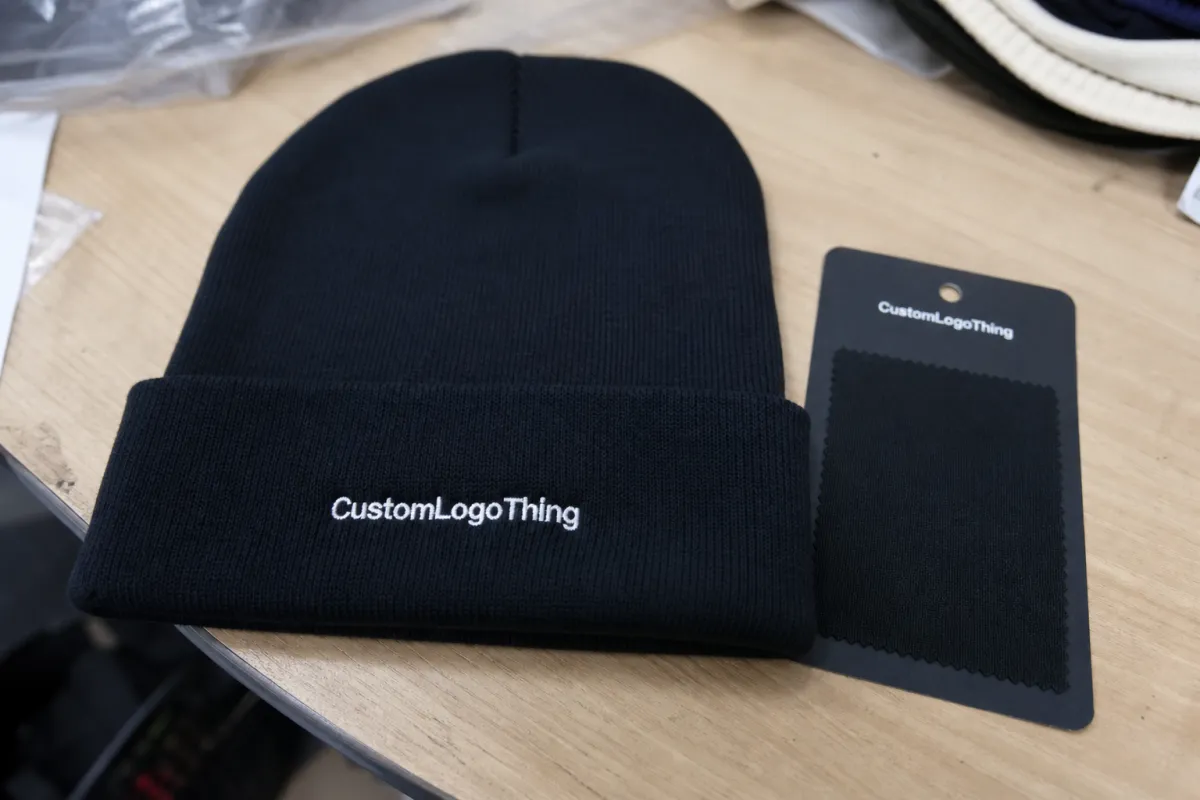
The first job of the soap Embroidered Beanies Material Sample guide is straightforward: catch failures that artwork files cannot show. A logo can be centered perfectly on screen and still pucker on a rib-knit cuff because the fabric is resisting the thread tension. That is not a cosmetic issue. That is a reorder.
Buyers often start with color and end up surprised by the problems that actually affect sell-through: yarn that feels rougher than expected, a crown that twists after wear, or embroidery that looks fine for a moment and then warps once the beanie is stretched over a head. In practice, softness, recovery, and stitch behavior matter more than a slightly warmer navy or a slightly brighter red.
Think of the sample as a buyer-facing stress test. Put it on. Stretch it. Fold it. Pack it. Pull it out again. See whether the logo still reads clearly from a few feet away. If the beanie loses shape after a short time on a desk, it is probably going to look worse after shipping compression and retail handling.
That matters because beanies are judged quickly. They are handled with gloves in winter, stuffed into bags, and worn with hair, headphones, and hoods fighting for space. A weak sample usually means the finished piece will need too much explaining.
There is also a hidden cost in getting the decoration wrong. If the knit is too loose for the stitch count, the logo can sink into the fabric and look blurred. If the fabric is too tight, the embroidery may pull the surface and create a stiff patch that changes the drape. Both problems are common. Both are preventable. Both are cheaper to catch in sampling than in rework.
What the Sample Actually Proves Before Production
A real sample proves whether the chosen yarn, gauge, and construction can support embroidery without distorting the body of the beanie. That sounds simple. It rarely is. Many buyers approve a knit for softness alone, then discover the logo sits like a lump because the fabric is too loose, too thin, or too springy for the stitch count.
The sample also shows whether the decoration method fits the surface. A small embroidered mark, a woven badge, and a knit-in logo behave differently on a curved crown or folded cuff. A woven label can stay crisp on a flatter area and still disappear visually on a dense rib knit. Embroidery may read better, but only if the knit density and underlay are balanced.
This is where the soap embroidered Beanies Material Sample guide earns its place. It is not just about approving one nicer prototype. It is about proving the match between decoration and fabric. If the sample looks forced, production will not improve it by accident. Machines reproduce problems efficiently.
Good samples also reveal construction limits that are easy to miss in a spec sheet. A tight 1x1 rib can resist embroidery more than a looser 2x2 rib. Acrylic often feels softer than buyers expect. Wool blends can feel warmer and more premium, but the texture may make fine stitching less forgiving. Recycled yarns can be excellent, yet their finish and stitch definition may vary more from supplier to supplier.
Ask for the sample to prove a few basic things before anyone signs off:
- Yarn composition: acrylic, polyester, wool blend, recycled blend, or mixed fiber
- Gauge: finer gauges usually give cleaner logo results, while thicker knits feel warmer but can distort more
- Decoration method: direct embroidery, woven patch, knit-in logo, or appliqued detail
- Fit target: snug, standard, or slouchy
One more practical point: if the sample looks acceptable flat but the crown seam starts twisting after a few wears, you are dealing with a fit and tension problem, not a color problem. Different diagnosis. Different fix. Different cost.
For larger programs, keep the sample review broad enough to include labels, folding, and presentation. A beanie can pass the decoration test and still fail the shelf test if the trim is messy or the cuff lands unevenly after packing. Product quality is rarely a single feature. It is a chain, and the weak link usually shows up first.
Check the Knit, Yarn, and Embroidery Before You Sign Off
Start with fiber content. Acrylic is common because it is affordable, warm enough for many use cases, and easy to color-match. Polyester can deliver a smoother finish and better abrasion resistance in some constructions. Wool blends usually feel more premium and warmer, but they can be itchier and cost more. Recycled yarns are a strong option for brands with lower-impact targets, though they still need careful approval because texture and stitch definition vary by supplier and spinning method.
Then test stretch and recovery. Pull the beanie open, let it go, and watch what happens. Does it spring back cleanly, or does it stay stretched and flat? Recovery matters because embroidery adds local stiffness. If the knit is too loose, the logo can pull the fabric off balance over time. If it is too tight, the stitched area can look puckered from the start.
Check the thread itself. Glossy polyester thread reflects more light and usually reads sharper in photos and under retail lighting. Matte thread can look more restrained and premium in the right design. The wrong sheen can make a serious logo look cheap. The wrong density can make the beanie feel heavy in one zone and thin in another.
Look closely at edge finish and backing trim. Clean tie-offs, trimmed floats, no stray thread tails. That sounds basic because it is basic. Yet basic things are often where production gets careless. Inspect the reverse side too. If the back looks like a nest, the front may still pass casual viewing, but long-term comfort and wear usually suffer.
Thread coverage deserves a separate check. A dense fill can hide knit texture and make the logo unreadable at close range. A sparse fill can look broken from a distance. Good embroidery on headwear usually needs a middle ground: enough density to hold shape, not so much that the fabric turns into armor.
For buyers comparing sample options, the tradeoffs become clearer in a simple framework:
| Sample Type | What It Proves | Typical Sample Cost | Best For |
|---|---|---|---|
| Basic knit sample | Fit, feel, shape retention | $25-$60 | Testing yarn hand feel and size |
| Embroidered approval sample | Logo scale, stitch density, placement | $40-$90 | Brand logo checks before bulk order |
| Fully finished pre-production sample | Final look, label, trim, and packaging | $60-$150 | Launch approvals and stakeholder review |
That range is a working range, not a fixed tariff. Cost depends on digitizing, yarn sourcing, color count, stitch complexity, and whether the factory must knit a fresh blank before decoration. If a supplier quotes a low sample price but will not explain what is included, something is missing. Usually the missing part shows up later.
Packaging matters in this review too. If the beanie will be sold online or shipped to stores, ask for a clean fold, a size sticker, and a mailer that protects the crown. A product can be technically correct and still land poorly if it arrives crushed. kraft paper sleeves or biodegradable packaging can fit a lower-waste brand story, but only if they still protect shape and presentation.
Pricing, MOQ, and Sample Fees: What Buyers Really Pay
Sample pricing usually reflects setup time more than raw material cost. Artwork cleanup, digitizing, yarn matching, machine setup, and first-run testing all sit inside that number. On a small order, the first piece always costs more. That is normal. Comparing sample price to bulk unit price as if they should match is a common mistake, and it skews vendor comparisons badly.
For a straightforward embroidered beanie, a sample may land around $35-$75 if the construction is simple and the logo is small. If the project needs special yarn matching, several color changes, or a more complex patch or woven badge, the price can move into the $80-$150 range. That is not waste. That is the cost of solving issues before they become cartons of regret.
MOQ matters just as much. A low minimum order quantity sounds friendly, but it only helps if the factory can repeat the sample at scale. If the yarn tone shifts, the gauge drifts, or the logo size changes after approval, the small MOQ is not rescuing the order. I would rather see a slightly higher MOQ with stable output than a tiny order that turns into a quality lottery.
Ask whether the sample fee is credited back on production. Some suppliers apply it as a credit when the bulk order lands. Others do not. That single detail can change the real project cost enough to matter, especially if you are comparing several vendors. Also ask whether freight is included. A sample shipped in a corrugated cardboard mailer with protective recycled materials may cost more to send, but that is still better than receiving a flattened piece and guessing at the finish.
For brands with sustainability requirements, packaging can be part of the quote conversation. A supplier who can offer FSC certified cartons, post-consumer waste content, and less plastic in the sample pack is usually paying closer attention to the full buyer experience. That does not make the beanie itself better, but it reduces friction during internal approvals and procurement review.
Here is the practical sequence most buyers should follow:
- Confirm what the sample fee covers.
- Ask whether digitizing is separate.
- Check if the fee is creditable on bulk.
- Verify shipping cost and packaging method.
- Compare the sample result against your target unit price, not only the quote.
MOQ, sample fee, and lead time are connected. A supplier with a very low MOQ may still need time to source yarn or reprogram machines. A factory that quotes fast may be giving you a sample built from what was already on hand, which can distort the final result. The cheapest number is not always the most truthful one.
Process and Timeline: From Artwork to Approved Sample
The normal path starts with artwork review. Send vector files if you have them. PDF, AI, or EPS is better than a screenshot that someone pulled from a mood board at midnight. Include Pantone references if you need exact color alignment, plus size placement, target dimensions, and any notes about yarn texture or finish. Cleaner input usually means fewer revisions.
After that comes yarn and color confirmation, then digitizing or knitting prep, then the sample build itself. If the design is embroidered, the factory needs to map the thread path so the logo lands cleanly on the knit surface. If the design uses a patch or woven detail, the supplier should confirm the scale and edge treatment before cutting anything final.
Timeline depends on complexity. A simple sample can move in roughly 7-12 business days before shipping, assuming the artwork is clean and the yarn is in stock. If the design needs custom yarn sourcing, multiple corrections, or a new stitch path, 12-20 business days is more realistic. That is the honest range. Faster exists, but speed usually trades against revision control somewhere.
Shipping adds its own clock. A sample packed in a protective mailer or a branded carton can still arrive a few days later depending on route and customs. If the shipment feeds a launch meeting, build review time into your schedule. Screen approval is not physical approval. They look similar from a distance and diverge quickly in practice.
One useful habit is to keep the approval trail organized from the start. Save the spec sheet, the exact artwork version, the thread reference, and the packing notes in one folder. Reorders move faster when nobody has to reconstruct the decision from a dozen emails and a half-remembered call.
Another habit: make the sample prove the final user experience, not just the factory output. If the beanie will live in a gift set, a retail carton, or a larger apparel bundle, ask whether the full packout survives vibration and compression. A good beanie in bad packaging still loses points. The sample should show the item the customer will actually receive.
Common Mistakes That Create Rework, Delays, and Ugly Stitching
The first mistake is vague artwork. A tiny logo exported from a social media graphic is not a production file. It is a problem wearing sunglasses. If the design contains too many fine details for the size of the beanie, the embroidery will either collapse those details or become overly dense. Neither result looks premium.
The second mistake is ignoring size and placement. A logo that looks balanced on a flat sheet can sit too high or too low once the beanie is folded and worn. On a small crown surface, one centimeter changes the read more than people expect. Headwear leaves very little room for correction once stitching begins.
The third mistake is approving color from a screen. Screens lie, and they do it consistently. Use a physical thread card, yarn swatch, or printed color reference under decent light. If your team wants a specific shade, define it before production and confirm it against the actual materials, not a monitor with a different brightness setting on every desk.
The fourth mistake is skipping wear testing. Stretch the sample on a head form or a real person. Wear it for ten minutes. Then check whether the logo warps, lifts, or sits awkwardly against the knit. A beanie is not a flat poster. It moves, flexes, and gets compressed in storage.
Packaging is another easy miss. If the product is sold online, the sample should arrive in packaging that hints at the final customer experience. That may mean a clean kraft paper sleeve, a recyclable poly bag, or a simple biodegradable packaging option if the brand wants lower-waste presentation. If the sample lands loose in a weak mailer, the review gets noisy. Bad packaging can hide a good product and exaggerate a bad one.
Quick red flags:
- Artwork with too many tiny details for embroidery scale
- No clear target for Pantone or thread color
- Sample approved off a monitor only
- Unclear shipping protection for the finished piece
- No record of the final sample version
There is one more failure pattern worth calling out: approving the first sample because the deadline is tight. That can work for low-risk promotional orders, but not for brand launches or retail programs. If the sample is slightly off and the team waves it through, the problem does not stay small. It compounds across every unit in the order.
Actionable Next Steps After the Sample Arrives
Once the sample lands, compare it against the spec sheet line by line. Do not rely on gut feel alone, and do not let one strong feature hide three weak ones. Mark only three decisions: approve, revise, or reject. Anything fuzzier turns into a long thread and a slower order.
Share the sample with at least one person who has not stared at the design for weeks. Fresh eyes catch problems quickly. They notice when the logo is harder to read than expected, when the fold sits awkwardly, or when the color feels too warm or too dull under natural light. That outside read is cheap insurance.
If revisions are needed, give exact instructions. “Make it better” is not instruction. It is a shrug. Instead, say: move the logo down 8 mm, reduce stitch density by 10 percent, switch to a matte thread, or tighten the cuff by one gauge if the shape is collapsing. Concrete notes get better results.
After approval, archive everything. Keep the approved sample, thread codes, yarn spec, measurements, shipping photos, and the final artwork file. The next reorder should not require detective work. A good archive reduces delay and cuts down on arguments, which is a very practical benefit in manufacturing.
The real value of a soap embroidered beanies material sample guide is that it turns guesswork into a controlled decision. If the sample feels right, reads cleanly, ships well, and matches the commercial target, you have something worth scaling. If not, the sample just saved you from a costly lesson.
FAQ
What does a soap embroidered beanies material sample guide help me verify?
It helps you verify fabric feel, stitch quality, logo visibility, and whether the beanie keeps its shape after embroidery. It also shows whether the sample matches your intended price point and production method before you place a larger order.
How many sample rounds are normal for embroidered beanies?
One round is ideal, but two is common when the artwork, yarn color, or embroidery placement needs tuning. More than two rounds usually means the spec was unclear or the factory needs tighter approval notes.
What should I expect to pay for a material sample?
Expect a higher per-piece cost than production because setup, digitizing, and test stitching are spread across one unit. Ask whether the fee is credited back on bulk orders, since that changes the true sample cost.
How long does the sample and approval process take?
Simple samples can move quickly, but artwork revisions, thread matching, and shipping usually add days. If you need multiple corrections, the timeline stretches fast, so plan for review time before your launch date.
What files or info should I send before requesting a sample?
Send vector artwork, target colors, size placement, and any notes about yarn texture or finish. Include your target MOQ, budget range, and deadline so the factory can quote the right construction from the start.


