Home Fragrance Ribbon Handle Paper Bags Bulk Order Planning
A fragrance bag gets judged before the product is even touched. That is the awkward truth behind home fragrance ribbon Handle Paper Bags bulk order planning. The ribbon, the fold, the board, and the way the bag stands on its own all send a message long before a customer smells the candle or opens the diffuser box.
For buyers, the bag is not just a carrier. It is part of the shelf signal, part of the gift moment, and part of the price justification. That matters in home fragrance more than in many other categories because the pack often carries a lot of emotional weight. A candle set that feels polished in the hand can support a higher retail price. A bag that sags, wrinkles, or tears does the opposite. Pretty simple. Brutally unforgiving, too.
Planning a bulk order well means treating the bag as a product spec, not as a decorative extra. The material, handle construction, finishing, and size all have to work together. If one piece is off, the whole thing feels cheap.
What buyers miss first
The first mistake is starting with artwork instead of the packed product. The bag should fit the finished candle carton, diffuser set, or gift bundle, not the other way around. A lot of reorder problems begin because the bag was sized around the empty box and nobody checked what happened once inserts, tissue, or glass were added.
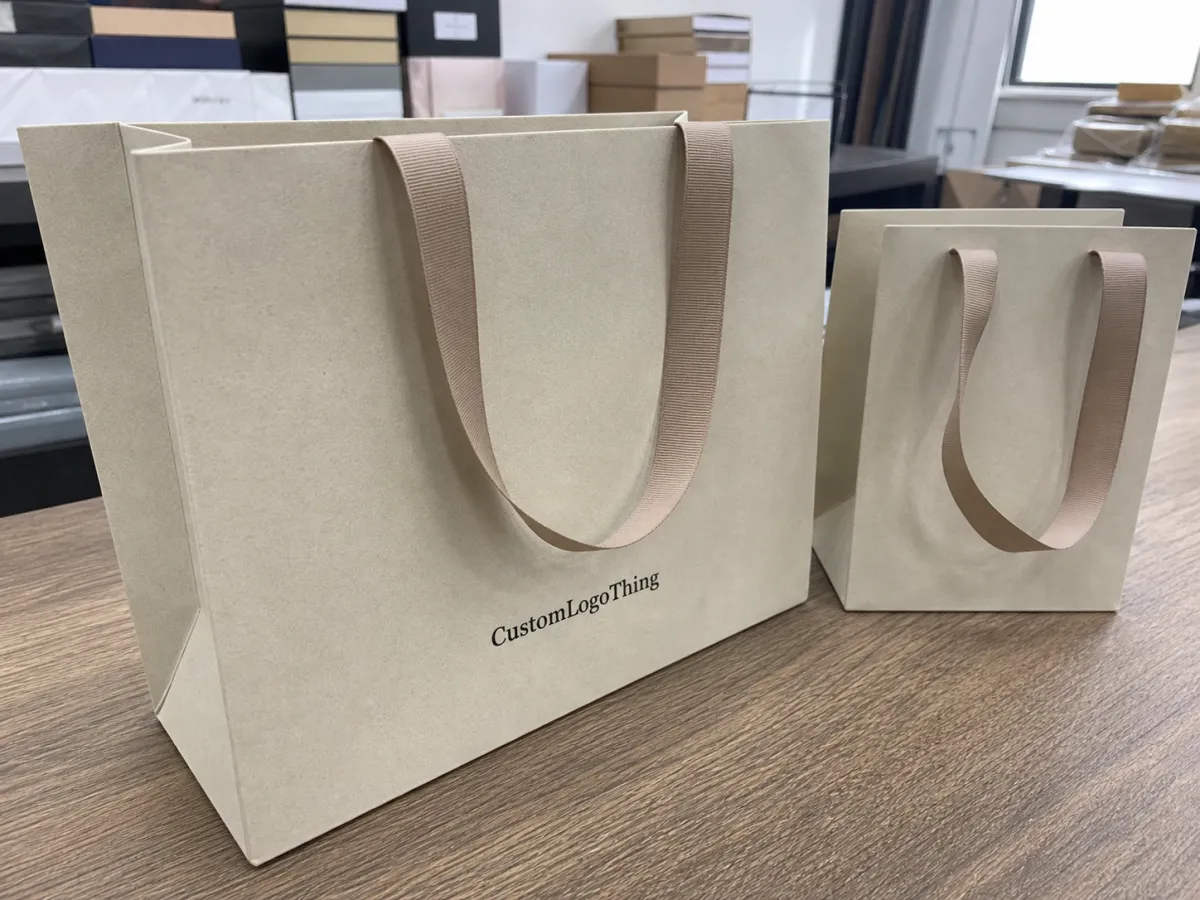
The second mistake is treating ribbon handles as a style choice only. They are a structure choice. A satin ribbon can look elegant, but if the attachment points are weak or the board is too light, the bag feels fragile the moment someone lifts it. That is the kind of detail shoppers may not name out loud, but they notice it immediately. Premium cues disappear fast when the handle twists or the gusset opens unevenly.
There is also a category issue. A single candle is a simple load. A diffuser set is lighter but often taller and more awkward in the top section. A gift set with multiple glass components has shifting weight and more corner pressure. So the bag has to handle weight, shape, and presentation at the same time. That is where many bulk orders go wrong.
A bag that only looks good in a sample hand-off is not a win. It is a prop.
Good planning starts with the actual use case. Retail carry, gifting, shipping, storage, or all four? A bag meant for display only can be lighter. A bag meant to move through distribution needs more structure. That sounds obvious until a buyer approves a pretty sample that collapses after the first warehouse test.
For teams setting up a launch or refresh, the useful question is not, “How do we make it look nice?” It is, “What load, size, and finish will hold up across the full chain?” That answer should drive every other decision.
Ribbon handles, board stock, and finish choices
Ribbon handle construction has a bigger effect on perceived quality than most buyers expect. Satin ribbon feels giftable and refined. Woven ribbon is usually better for grip and durability. If the pack is heavier, a reinforced attachment path matters more than the ribbon material alone. In other words, don’t pick the handle by touch alone. Pick it by load and use pattern.
| Handle option | Best use | Typical unit cost at 5,000 pcs | What to check |
|---|---|---|---|
| Satin ribbon | Single candles, gift bags, lighter sets | $0.22-$0.38 | Knot security, reinforcement at the board, color consistency |
| Woven ribbon | Heavier gift sets, retail carry bags | $0.30-$0.50 | Pull strength, edge fray, attachment repeatability |
| Reinforced paper-twist | Utility-led premium bags, broader distribution | $0.18-$0.30 | Comfort in hand, fold accuracy, board stiffness |
Board stock is just as important. A coated paper or SBS/C1S board gives cleaner print and stronger color blocks. Heavier board gives the bag shape, which is what keeps the walls from bowing once the pack is filled. For many candle formats, 350gsm can be enough. Taller gift bags or sets with glass often need 400gsm or a reinforced base to stay upright and feel stable in hand.
Finish changes the read of the whole bag. Matte is usually the safest choice for broad retail use. Soft-touch lamination feels upscale, but it can show handling marks if the bag gets moved around a lot. Spot UV can sharpen a logo without making the whole surface glossy. Foil works well for a stronger shelf signal, though it raises setup time and cost. None of that is mysterious. It is just the usual trade-off between look, durability, and budget.
There is one detail buyers often overlook: edge behavior. A clean fold line, proper board scoring, and consistent edge alignment make a bag look precise. A sloppy edge makes even a good design look cheap. The same goes for handle placement. If the ribbon sits off-center by a few millimeters, the bag feels wrong every time it is lifted.
For quality checks, ask for handle pull tests, crease resistance checks, and a finish abrasion review. For lighter bags, a pull test in the 5-8 kg range can be a sensible starting point, but the right target depends on the final size and the actual filled weight. For heavier sets, the number should be higher. The goal is not to hit a trendy spec sheet number. The goal is to keep the bag intact in real use.
If you want a neutral reference point for fiber-based packaging and material direction, packaging.org is useful for sanity-checking assumptions without wandering into brand fluff. For sustainability claims, you should also ask for documentation instead of adjectives. If a bag is sold as FSC-certified, the paperwork needs to support that claim. The standards at FSC are a sensible baseline.
Size, inserts, and print specs for candles, diffusers, and gift sets
Size mistakes are expensive because they show up everywhere at once. The bag looks cramped. The handle angle looks off. The product shifts in transit. A spec that is technically close but practically wrong can still fail the shelf test. Measure the filled product first, not the empty carton. Then add clearance for top movement, handle drop, and any insert needed to stop glass from rubbing against the board.
For single candles, the key is simple clearance. The bag needs enough width to clear the outer carton and enough height so the top edge does not crush the closure area. Diffuser sets are trickier because bottle neck height and cap shape can change the effective pack height more than the base size does. Gift sets are usually the hardest because the contents can slide. Once products move inside the bag, corners get scuffed and walls start to bow outward.
That is where inserts and dividers earn their keep. A basic base board can stabilize a single candle. A divider can stop two glass components from colliding. A full insert is not always necessary, but if the pack contains fragile parts, it is cheaper than dealing with damage claims later. Cheap packaging is only cheap until the first replacement order.
A workable spec sheet should include five items at minimum:
- Finished size in width, gusset, and height.
- Board thickness or gsm target.
- Handle type and handle drop length.
- Print method, coverage, and any special finish.
- Load profile for the actual filled product.
Color control deserves a place on that sheet too. A logo that looks correct on one sample can drift in a full run if the artwork file, proof, and approval notes are loose. If the logo has to sit above a carton edge or remain visible in shelf display, measure that placement against the filled pack, not the dieline alone. A nice diagram is not enough. The final assembly decides whether the design works.
Print restraint usually helps fragrance packaging. A clean logo, clear spacing, and controlled color use often feel more premium than a crowded layout. The product already carries the scent story. The bag does not need to shout over it.
For teams shipping glass-heavy packs, ask for tests that reflect actual movement through the supply chain. ISTA testing logic is useful because it looks at the filled package as part of a system, not as a pretty sample on a table. That matters when the bags will move through warehouses, trucks, and retail back rooms before they ever meet a shopper.
Pricing, MOQ, and quote drivers
Pricing becomes easier to read once the drivers are visible. Material grade affects cost. Bag size affects cost. Handle type affects cost. Print coverage affects cost. Finish complexity affects cost. Packing method affects cost. None of this is subtle, yet people still compare quotes as if every supplier is pricing the same thing.
For bulk orders, unit price usually moves in steps. A straightforward printed bag with a standard ribbon handle might sit around $0.18-$0.28 per unit at 5,000 pieces, depending on board weight and print coverage. Add soft-touch lamination, foil, or a more complex handle attachment, and the range can move into roughly $0.35-$0.70 or higher. That is not inflated for sport. It is the cost of setup, materials, and labor.
MOQ works the same way. Simpler builds often have lower minimums. Fully custom bags with specialty finishes or heavier boards usually require a larger run to make the job practical. A factory may quote 1,000-3,000 units for a basic design, while a more detailed ribbon-handle build can need more. The smart question is not, “What is the lowest MOQ?” It is, “What MOQ gives us stable pricing without overbuying launch stock?”
Compare quotes on the same basis. Ask whether tooling is included. Ask whether samples are included. Ask how the bags are packed for shipment. Ask whether freight is local delivery, port-to-door, or FOB only. Ask what happens if there is a shortage, a color issue, or a handle failure. A cheap quote with missing assumptions is not cheap. It is a future problem wearing a discount tag.
One practical habit saves a lot of grief: quote the launch quantity and the first reorder quantity separately. That helps you see whether the supplier can support continuity or only a one-off run. Packaging programs break when the first order looks fine but the reorder gets expensive because the actual volume falls below the efficient pricing tier.
Price should also be read against risk. If the bag will carry fragile glass, travel through multiple nodes, or be used for gifting, a small increase in board strength or handle security is usually worth it. A few cents saved on the quote can disappear fast if the pack fails on shelf or in transit. That is not theoretical. It is how damage allowances get eaten up.
Production process and lead time checkpoints
The production path is usually familiar: inquiry, spec confirmation, artwork review, proof or sample approval, production, inspection, and freight booking. The risk is not the number of steps. The risk is the handoff between them. A missing dieline note can slow the proof. A late color change can push the run. A missed ship date can turn the bag order into the launch bottleneck.
Lead time depends on complexity. Simple printed bags often need about 12-15 business days after proof approval. Laminated, foil-stamped, or heavily customized versions can need 18-28 business days, sometimes longer if the handle detail or board stock is unusual. Freight adds its own clock. Buyers who only count factory time usually underestimate the full calendar by a wide margin.
The most common schedule mistakes are boring, which is probably why they keep happening. Artwork arrives in the wrong format. The dieline is not aligned correctly. Too many people comment on the sample at once. Brand wants one thing. Operations wants another. Sales wants the bags sooner. Nobody signs off because nobody owns the final spec.
The approval path should stay tight:
- Confirm the filled product dimensions.
- Lock the board, handle, and finish.
- Approve the artwork on the final dieline.
- Review a proof or sample.
- Release production only after sign-off.
Planning around fill dates matters just as much. If the fragrance stock is ready before the bags arrive, the packaging becomes the bottleneck. That creates storage pressure, labor scheduling issues, and a lot of unnecessary impatience. If the bag is part of a retail launch, align approval timing with carton packing, product fill, and store rollout. Otherwise one small delay ripples through the whole release.
Inspection should not be treated as a box to tick. Check handle placement, fold accuracy, print registration, adhesive consistency, and bag squareness. For a premium fragrance line, small defects are visible. A warped gusset or a crooked handle line is enough to break the premium feel. Packaging buyers know this instinctively; the trick is to enforce it before the order ships.
How to compare suppliers on repeat quality
A sample can be excellent for all the wrong reasons. It may be hand-finished. It may be run slowly. It may be reviewed more carefully than the bulk order ever will be. That is why repeat quality matters more than sample quality. The real question is whether the second run looks and feels like the first.
Ask suppliers how they control color across production, not just on the approval sample. Ask how they inspect handle attachment during the run. Ask what records they keep for defects. Ask how they separate marginal units from acceptable ones. If the answers stay vague, that is already useful information.
Communication matters too. Fast replies are nice. Specific replies are better. A supplier that warns you early about a die-line issue, a color drift risk, or a handle-load concern is more useful than one that says everything is fine and waits for the problem to appear at packing time. Reliable packaging partners behave like adults. Rare, but refreshing.
Here is the short supplier checklist I would use:
- Material documentation for board, ink, and finish.
- Sample process with clear approval stages.
- Inspection method for handle, fold, and print quality.
- Reorder stability for color and structure.
- Defect handling with a written replacement or credit path.
Reorder stability matters more than many teams expect, especially for best-selling candles and diffuser sets that stay in market for months. If a bag shifts too much from one run to the next, the shelf story changes. Packaging recognition is part of brand equity. Keeping it consistent is worth more than shaving a small amount off the quote.
Documentation for sustainability claims should also be in order. If the bag is described as recycled, FSC-certified, or fiber-based, the proof should be easy to produce. Buyers do not need marketing language. They need evidence. That is how you avoid awkward conversations later.
Final checks before ordering
The final pass should be practical, not ceremonial. Put every variable into a line-item quote: bag size, artwork files, board choice, handle style, finish, quantity split, target delivery date, and shipping destination. If a line item is missing, assume the total can move later. That is how budgets mysteriously grow.
Before placing the order, confirm whether the handle style has been tested with the actual load. Confirm whether the finish is scuff-prone. Confirm whether the structure holds the product upright. If the bag is new, ask for a proof path that matches the real assembly, not a rough approximation. Small errors are manageable. Structural surprises are not.
Home fragrance ribbon handle paper bags Bulk Order Planning works best when launch quantity and reorder quantity are treated separately. That keeps the first buy realistic and preserves room to replenish without redesigning the bag every time inventory moves. It also stops the common mistake of buying too much of a new format before the market has actually proven it.
If the line includes multiple products, keep the bag spec consistent across the range whenever possible. It simplifies replenishment and makes the brand easier to recognize. Variation is useful when the products truly need different sizes. Otherwise, consistency usually wins.
FAQs
How many home fragrance ribbon handle paper bags should I order for a launch?
Start with forecasted sell-through, then add a buffer for samples, damages, and early reorder demand. If the same bag will serve candles, diffusers, and gift sets, base the launch quantity on the largest channel need so the presentation stays consistent. For seasonal launches, keep the initial order and replenishment order separate so the second buy does not get trapped by a too-small MOQ.
What affects the price of bulk ribbon handle paper bags the most?
Material grade, bag size, handle type, and finish options usually move pricing more than artwork changes. Foil, embossing, soft-touch lamination, and inserts raise labor and setup time. Freight and packing format matter too. Always check whether samples, plates, and shipping are included before comparing quotes.
What size bag works best for candle and diffuser gift sets?
Measure the packed product first, not the empty carton. Then add room for height, gusset depth, handle movement, and any insert needed to stop glass from rubbing. If the set contains fragile components, ask for load and transport checks before approval. A bag that is technically the right size but practically tight is still a problem.
How long does production usually take after approval?
Simple printed bags often move in about 12-15 business days after proof approval. Laminated, foil-finished, or highly customized bags usually need more time, often 18-28 business days or longer. Freight is a separate timeline, so build the full calendar, not just the factory schedule.
Can I reorder the same home fragrance ribbon handle paper bags later?
Yes, if the specs are documented clearly. Keep the approved artwork, dieline, color targets, and sample reference on file so the reorder matches the first run. That is the difference between a packaging program and a series of guesses.