Ecommerce Ribbon Handle Paper Bags Bulk Order Planning
Buying packaging is easy until the sample arrives and the quote changes shape. That is the normal reality of ecommerce ribbon handle paper Bags Bulk Order Planning. The bag itself may look simple, but handle construction, paper weight, gusset depth, carton count, and freight all affect the final number.
Ribbon-Handle Paper Bags sit in a useful middle ground. They feel more polished than a plain kraft bag, but they avoid the cost and shipping penalty of a rigid box. For gifting, cosmetics, boutique apparel, and premium inserts, that balance can matter more than a flashy finish. The customer gets a better first impression without the brand overbuilding the package.
The mistake is treating these bags like a commodity. A few millimeters in size or a small change in handle anchoring can change nesting efficiency and raise unit cost. Loose specs create loose quotes. Frozen specs create cleaner pricing, simpler approvals, and fewer reorder problems.
A ribbon handle is not where you save three cents. It is where weak specs turn into broken bags, messy reorders, and avoidable freight waste.
Why ecommerce ribbon handle paper bags bulk order planning changes the unboxing math
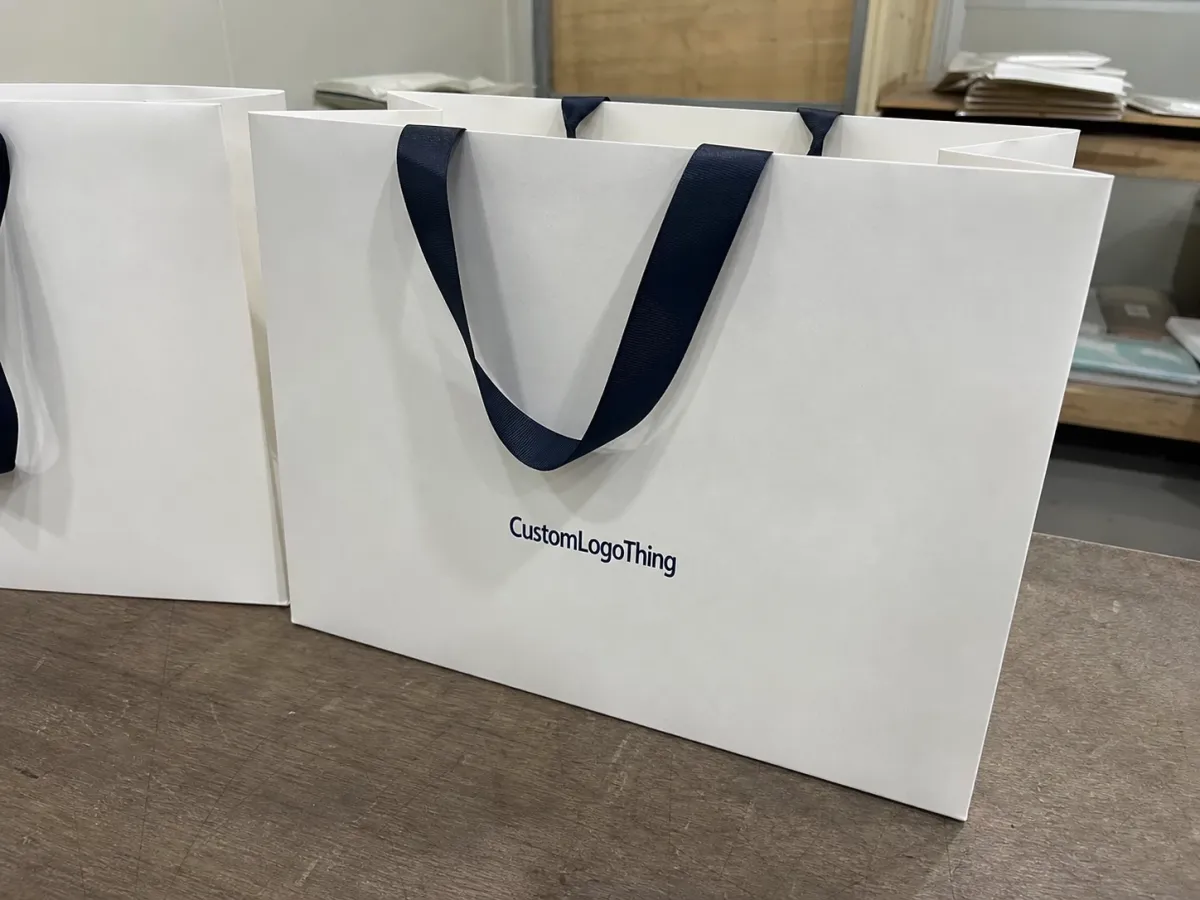
Appearance matters, but packaging has to earn its keep in shipping, storage, and repeat orders. Ribbon-Handle Paper Bags often win because they deliver presentation value without forcing oversized cartons or extra assembly work. That makes them a practical option for premium ecommerce programs where the package is part of the product experience.
This is especially true for influencer kits, gift sets, holiday orders, cosmetic bundles, and premium apparel. A customer sees the bag before they reach the product. In that moment, the brand either feels intentional or rushed. A clean ribbon handle does more than decorate the package; it shapes the perceived value of the order.
Standard kraft bags are fine when utility is the only goal. Plastic mailers are cheap and light, but they can feel cheap in the wrong context. Rigid boxes look premium, yet they carry higher board, labor, and freight costs. Ribbon-Handle Paper Bags usually land in the middle, where presentation and cost are easier to balance.
That balance depends on structure. Wider gussets increase carton volume. Heavier paper changes fold memory and shipping weight. Ribbon length affects how well bags nest. Reinforcement patches add a little cost, but they can prevent damage when many hands touch the package before the customer sees it.
If sustainability claims matter, ask for FSC-certified paper and a chain-of-custody reference instead of a vague “eco” label. The FSC standard is a clean way to support sourcing claims. For transit durability, think in shipping terms, not marketing terms. Packaging that looks premium on a desk can still fail in a warehouse. The ISTA framework is useful even if you are not running a full lab program every time.
Choose the right bag style, handle, and print build
Not every ribbon-handle bag performs the same way. The base format sets the job. A flat-bottom paper bag works for lightweight inserts and small gifts. A gusseted shopping bag gives more usable volume and a better retail profile. Reinforced gift bags with board inserts or thicker walls hold shape better and survive more handling. Heavy carry bags make sense when the package needs to feel substantial, not delicate.
Handle choice affects both appearance and function. Satin ribbon reads soft and giftable. Grosgrain feels a little more textured and usually more secure in hand. Polyester ribbon is common because it is stable and easier to source consistently at scale. Cotton-blend ribbon can look premium, but it is not always the best fit if the budget is tight or color matching has to stay consistent across a large run. For heavier loads, wider ribbon, usually around 10 to 15 mm, is more practical than a narrow decorative strip.
Attachment method matters as much as ribbon type. Eyelet styles can look neat and traditional, but they need reinforcement behind the wall. Taped or glued anchors are faster to produce and often more repeatable in bulk. Internal patches, top reinforcements, and bottom boards add cost, but they also lower failure risk. That trade is usually worth making if the bag moves through fulfillment instead of sitting still on a shelf.
Print build is where buyers often spend without getting much back. A one-color logo on quality paper is enough for many ecommerce programs. Full-panel art, foil, embossing, matte lamination, and spot UV all add steps and more chances for something to drift. Those effects can be right for the brand, but they are not automatic upgrades. Clean artwork and stable structure often do more than a stack of finishes.
| Bag build | Best use | Typical MOQ | Directional unit cost | Buyer watch-out |
|---|---|---|---|---|
| Simple kraft ribbon-handle bag | Gift inserts, lightweight apparel, promo packs | 500-1,000 pcs | $0.48-$0.85 | Check handle anchoring and carton pack-out |
| Printed premium gift bag with lamination | Cosmetics, boutique retail, influencer kits | 1,000-3,000 pcs | $0.62-$1.10 | Finishes can add setup and extend lead time |
| Heavy retail carry bag with reinforced handle | Heavier merchandise, elevated retail handoff | 2,000-5,000 pcs | $0.70-$1.40 | Ask for carton weight and load test notes |
The right build depends on what the bag has to do. Subscription inserts need compact nesting and efficient shipping. Influencer kits need color control and visual polish. Premium retail handoff needs shape retention and handle strength. A bag that only moves from shelf to hand can prioritize appearance. A bag that moves through a warehouse needs to survive friction, stacking, and careless handling.
Lock the specs that control fit, strength, and artwork
This is where the order either gets clean or turns into revision work. The supplier cannot quote accurately until the finished width, gusset, and height are clear. Those dimensions decide whether the product fits naturally or sits awkwardly in the bag. After that, paper GSM, ribbon width, reinforcement, and bottom board options control the structure.
Most buyers should lock these items before asking for a formal quote:
- Finished size: width, gusset, and height in millimeters or inches.
- Paper weight: 170-230 gsm is common for many premium builds; heavier board-wrapped constructions may be better for large or weighted items.
- Handle spec: ribbon width, length, color, and attachment method.
- Reinforcement: top patch, eyelet, tape anchor, or internal board.
- Bottom structure: flat, reinforced, or board-inserted.
- Artwork limits: print area, bleed, and no-print zones near folds.
Carton size deserves more attention than it usually gets. A bag that nests efficiently can save freight and warehouse space. A bag that looks only slightly larger in the mockup may pack very differently once folded and bundled. Buyers often approve a dimension that seems harmless and then discover the cartons change pallet efficiency in a meaningful way.
Artwork should be treated like production work, not a casual design review. Send vector files. Confirm PMS or CMYK targets. Mark placement clearly. If the job includes foil, embossing, matte lamination, or spot UV, say so early. Those details affect proof timing and can force extra setup. A good package usually comes from one strong visual idea and a structure that stays simple enough to repeat.
Before signing off, ask for a sample that matches the final spec, not just a generic reference piece. Then check three things: handle pull, bottom glue, and how the bag sits when filled with the actual product. Those checks catch more trouble than a long email thread ever will.
Pricing, MOQ, and unit-cost breakpoints that matter
The main cost drivers are straightforward: bag size, paper grade, handle construction, print complexity, finish, and packing method. What catches buyers off guard is how each added choice can increase setup, proofing, or labor. Two quotes can look similar and still land very differently once freight, samples, and carton configuration are included.
For custom ribbon-handle bag runs, MOQ often starts around 500 to 1,000 pieces per size or artwork version. Better pricing usually appears at 2,000, 5,000, and 10,000-plus pieces if the spec repeats. Small runs are useful for launch tests, seasonal gifting, or limited campaigns. Bigger runs make sense when the design is locked and sell-through is predictable.
Do not chase the lowest unit price without checking the rest of the job. A low quote can hide weak reinforcement, dull color, odd handle anchoring, or freight that jumps once cartons are packed. Ask for landed cost, not only factory price. If a supplier will not itemize setup, sample cost, packing assumptions, and shipping terms, you are not comparing the same order.
There are usually three useful price tiers:
- Entry tier: lighter paper, simple logo, fewer finishes, lower MOQ.
- Middle tier: better paper weight, stronger handles, one or two print upgrades.
- Premium tier: specialty finishes, reinforced build, tighter color control, stricter carton packing discipline.
Most ecommerce brands should aim at the middle tier unless the packaging is doing heavy brand work at the point of sale. That tier often gives the best balance of look, strength, and repeatability. It is also where bulk buying starts to feel useful instead of decorative.
Price is not only about the bag itself. It is about how the bag is packed. If nesting is inefficient, freight grows. If inner packs are too loose, handling damage increases. If carton counts vary, receiving gets messy. The supplier who understands packing efficiency is usually more helpful than the one who only quotes a nice-looking unit rate.
Production steps, lead time, and approval checkpoints
The order flow should be boring. That is a compliment. A clean job moves from inquiry to dieline, then sample, proof approval, mass production, packing, and shipment. Every extra loop creates room for a spec change to slip in after production has already started. Once that happens, timelines and costs both get harder to control.
Typical lead times depend on the build. Standard runs after proof approval are often in the 12 to 15 business day range. More complex orders, special finishes, or larger quantities can stretch to 18 to 30 business days, sometimes longer if artwork is still changing. If a supplier promises a fast turnaround before they have seen the spec, they are guessing.
The common delay points are usually unclear artwork, late sample comments, color changes after approval, and missing shipping information. One complete approval set is faster than five half-finished replies. If the proof is right, freeze it. If it is wrong, fix it before production starts. Half-approved jobs are where schedules go to die.
Ask how the supplier handles each checkpoint. Do they issue a dieline first? Is there a physical sample or only a digital proof? Who signs off on final art? How is the carton label built? If the bag has to repeat well in bulk, ask how carton count and outer packing are verified before shipment. Buyers who already use transit testing know the logic; otherwise, it helps to think about the job as a distribution problem, not just a print job.
Sending one complete spec package saves time. Final size. Final handle choice. Final artwork. Final delivery address. If those are still changing, the schedule is still changing. A clean handoff protects lead time and keeps the supplier from building the wrong version and charging you to fix it.
Production checkpoints worth confirming before release:
- Pre-production sample: approved against the final size and handle spec.
- Color reference: PMS swatch, signed proof, or an agreed printed sample.
- Handle pull check: especially for heavier loads or large-run ecommerce orders.
- Carton count: verify how many bags go into each outer carton.
- Final packing photo: useful when freight efficiency and receiving accuracy matter.
That list is not flashy. Good. Flashy is not the goal here. Repeatable is.
How to compare suppliers without getting burned on reorders
Headline pricing tells you very little. Supplier quality shows up in proof clarity, paper consistency, handle anchoring, color match, and carton packing discipline. Those details decide whether the second order looks like the first one. Reorder drift is where brands lose time and confidence. One batch has cleaner color. Another batch has looser handles. A third arrives with odd carton counts.
Repeatability should be the first test. Can the supplier run the same spec again without changing the shade, size, or feel? Can they explain how they inspect finished goods before shipment? Do they keep approved samples tied to the live production record? If the answer is basically “trust us,” keep moving. The right partner should reduce follow-up work on every reorder.
Ask direct operational questions:
- Who checks artwork before the proof is released?
- What happens if the sample and mass production differ?
- How are handle pull tests or visual checks handled?
- What carton count is guaranteed, and how is it labeled?
- How are claims handled if a batch misses the approved spec?
The best suppliers are rarely the flashiest. They are the ones that keep production information clean, answer with actual numbers, and do not hide behind vague language. If they can show how they manage reorders, you are in better shape. If they only talk about “premium service” and never mention spec control, that is a warning sign dressed up as a sales pitch.
When comparing suppliers, ask for a cost sheet that includes the sample charge, setup fee, unit price, and a freight estimate. That exposes the real breakpoints. It also makes it easier to compare jobs that look similar but behave very differently once packed. A slightly cheaper bag can become more expensive if it needs extra handling or inefficient cartons.
The cleanest reorder setup is simple: keep the approved dieline, the final artwork, the paper spec, the handle spec, and the carton count together. Brands that stay organized get better repeat pricing because they do not force the supplier to re-derive the job every time. That is the quiet advantage of this kind of planning: frozen spec, clean repeatability, fewer surprises, fewer arguments with receiving.
What should I confirm first for bulk orders?
Lock the finished bag size, handle type, paper weight, and print coverage before asking for a quote. Share your target quantity and delivery date early so the supplier can match MOQ and lead time to the job.
What MOQ is normal for custom ribbon handle paper bags?
Simple designs often start around 500 to 1,000 pieces per size or artwork version. Lower MOQ usually means a higher unit cost, while 2,000 plus usually gives more useful pricing.
How do I estimate cost before requesting a formal quote?
Start with the bag dimensions, paper grade, handle construction, and print method, because those drive most of the price. Ask for landed cost, not just factory price, so freight, packing, and setup fees are visible.
How long does production usually take after artwork approval?
Standard runs are often faster once the proof is approved and the spec is frozen. Expect more time if the bag uses special finishes, complex print coverage, or a large order that needs extra packing.
What files do you need to start a ribbon-handle bag order?
Send vector artwork, logo files, PMS or CMYK targets, and any brand notes about finish or placement. Include one reference image or sample pack if you want the final bag to match an existing look. That keeps the order predictable instead of turning it into a revision pile.

