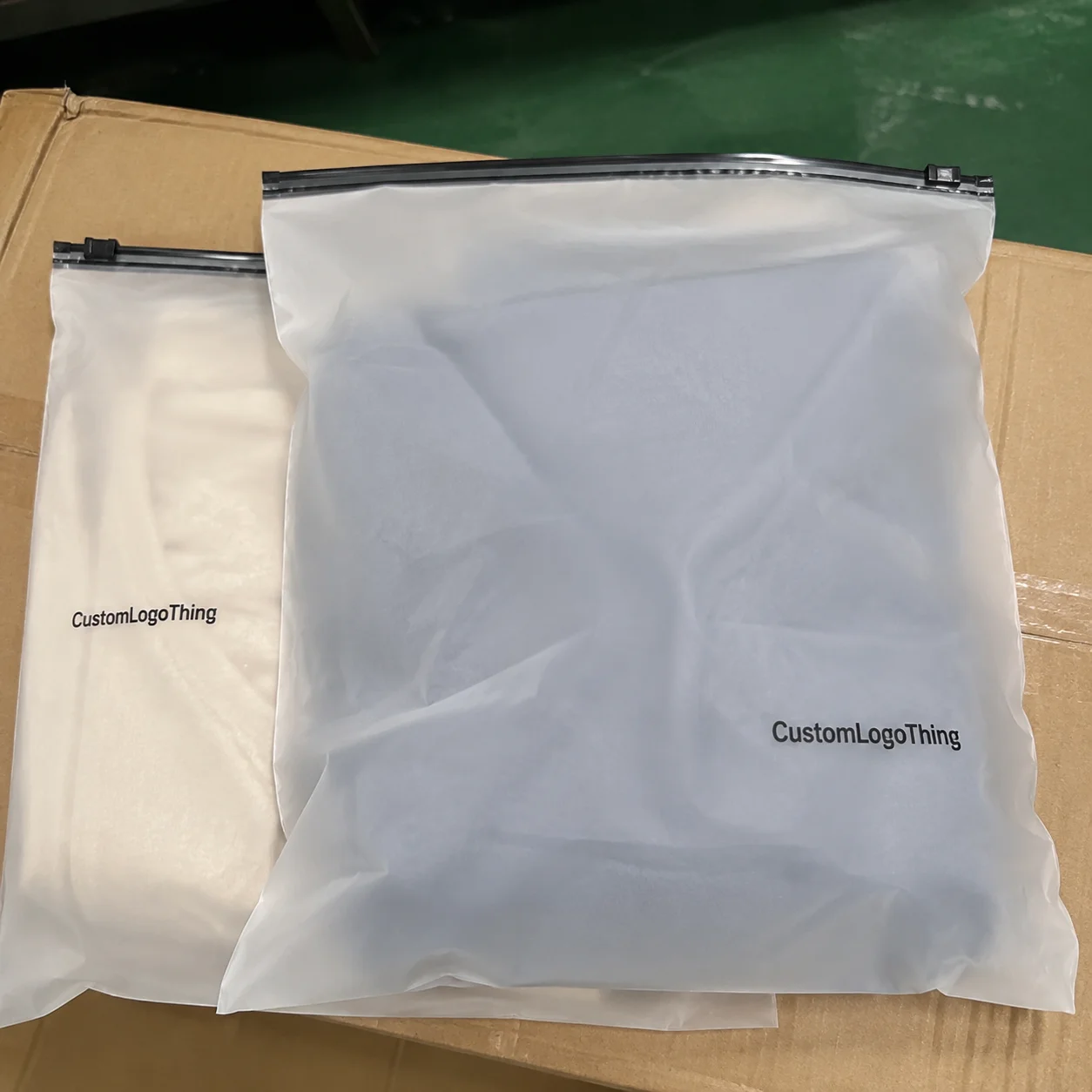
When a 1-cent bag affects food speed, waste, and margin
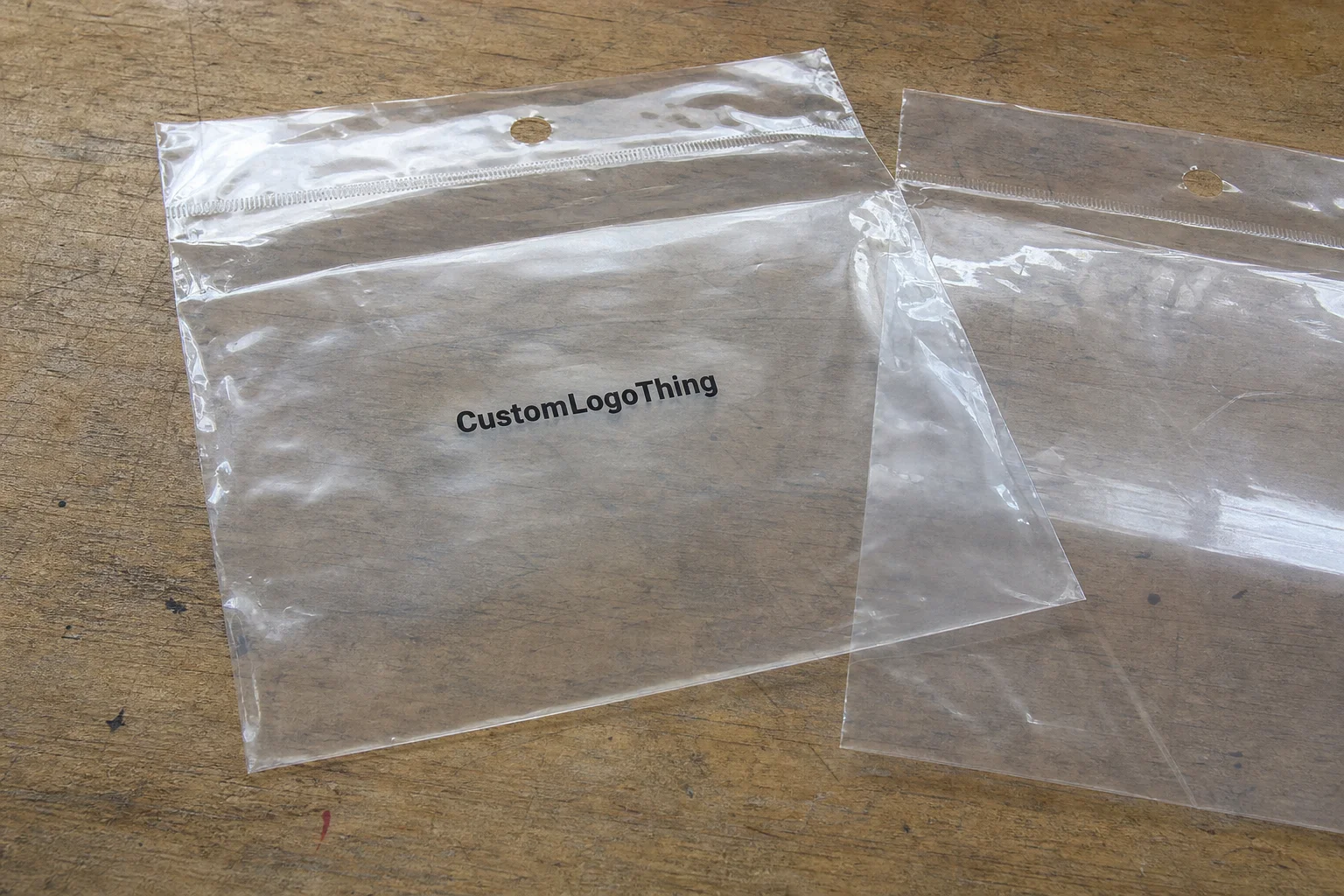
The noon rush exposes bad packaging fast. One employee is slicing turkey, another is bagging cookies, and someone else is fighting a clear bag that clings shut or splits at the corner. Each delay is small, but repeated hundreds of times a day it becomes labor cost, waste, and slower service.
Buyers looking for a deli Clear Poly Bags MOQ guide are usually weighing the same variables: Minimum Order Quantity, line speed, product visibility, food-contact use, and storage space. A bag that looks cheap on paper gets expensive if it tears, fogs badly, needs double-bagging, or slows loading.
That is why the useful buying variables are simple: dimensions, gauge, resin, seal style, print options, MOQ, Lead Time, case pack, and quote accuracy. Those are the details that decide whether the bag works on the counter and whether the order makes financial sense.
What deli clear poly bags actually need to do on the counter
Not every clear food bag works well in a deli. A bag used for sliced cheese, cookies, sandwich halves, rolls, or bakery packs may look similar in a catalog, but loading behavior can be very different.
Clarity matters because staff and customers need to see the product quickly. If the film dulls the product or clouds badly, merchandising suffers.
Handling matters just as much. A good deli bag opens easily, accepts the product cleanly, and resists routine friction from crusts, labels, folded paper sheets, and sharper corners. Static, inconsistent seals, or poor opening behavior create repeatable counter drag.
Buyers should also separate stock utility bags from Custom Printed Bags. Stock bags are usually the fastest path when standard sizing works and branding is optional. Custom printing makes more sense when presentation must be consistent across locations or the bag needs a branded look. If that is the direction, reviewing Custom Packaging Products alongside the bag specs helps narrow what level of branding is worth the added cost and MOQ.
Food-contact use should be settled early. Some applications involve direct contact, others do not. Intended use, resin choice, additives, and supplier documentation should be confirmed before approving artwork or issuing a purchase order.
Fit is where many first orders fail. Width and length are only part of the story. Product thickness, gusset expansion, label placement, closure method, and whether the bag must fit a tray or deli sheet all change real performance. A bag can be nominally the right size and still be slow or frustrating to use.
Bag specifications that change performance: size, gauge, seal, and resin
Most quote mistakes start with vague sizing. “Medium clear bags” is not a usable spec. Bag performance comes from a short list of details, and each one affects loading speed, durability, appearance, and cost.
Dimensions: width, length, and gusset
Width controls entry. Length controls coverage and usable headspace. Gussets add expansion for thicker products, stacked cookies, trays, rolls, or folded wraps.
A flat 6" x 9" bag does not behave like a 6" x 9" x 2" gusseted bag. Buyers should measure the packed item, not the item before loading. A stack of deli slices with interleaving paper can add noticeable thickness quickly, and bakery items vary even more.
Gauge: often the most underestimated spec
Gauge is a common place to try to save money, but thin film often shifts cost elsewhere. Lighter film can reduce unit cost and carton cube. Thicker film usually improves puncture resistance and overall confidence in handling. Typical clear food-service bag gauges often fall around 0.75 mil to 2.0 mil, depending on application.
Light dry bakery items may work on the lower end. Heavier deli portions, crusty bread, stacked pastries, or products with sharper edges usually need more film. If staff start double-bagging, the gauge is too light or the structure is wrong.
Resin type: LDPE versus HDPE
LDPE is usually softer, more flexible, and easier to load by hand. HDPE is commonly crisper, lighter, and often more economical for utility applications, but it can feel noisier and less forgiving.
The better question is not only which resin costs less, but how the bag behaves during a rush. Some buyers switch resin for a lower quote and then find the team dislikes opening the bag or the product does not sit well inside it.
Seal style and construction details
Bottom seal, side weld, lip options, wicket holes, stack method, and dispenser compatibility all affect usability. On a fast counter, presentation to the employee can matter almost as much as the material itself.
If the bag will be taped, tied, heat sealed, or left open, include that in the RFQ. Closure method affects usable length and may change the recommended structure.
Printing on clear film
Custom printing adds setup, approval, and visibility issues. One-color flexographic printing is common and usually the simplest place to start. Multi-color work raises setup cost and may add plate or cylinder charges.
Placement matters more on transparent film than many first-time buyers expect. Print that sits too low disappears behind the product. Print that sits too high can interfere with labels or closures. Small type may look fine in a digital proof and weaken once product sits behind the film.
Practical rule: do not buy by dimensions alone. Test the loaded product, opening behavior, and seal strength at normal packing speed.
Some buyers compare these film decisions against other flexible packaging formats to understand how gauge, print setup, and run length affect quoting. For broader context, Custom Poly Mailers can be a useful reference point even though the end use is different.
Deli clear poly bags MOQ guide: how pricing, case packs, and unit cost really work
MOQ is tied to film run efficiency, setup time, print configuration, packing labor, and case count. Stock bags usually have the lowest entry point because the supplier already runs those sizes and keeps them in inventory. Custom work changes the equation. Add a nonstandard dimension, heavier gauge, or printed branding and setup cost must be spread across enough units to justify the run.
Pricing typically depends on:
- Resin cost and market conditions
- Film thickness
- Bag dimensions, including gusset depth
- Print colors and ink coverage
- Run length and production efficiency
- Case packing method and count
- Freight and delivery point
- Proofing, plates, or setup charges for custom work
The tradeoff is straightforward: lower MOQ usually means higher cost per piece. Larger quantities can lower quoted bag price, but they also increase warehouse demand, tie up cash, and raise the risk of obsolete inventory if usage changes or branding is updated.
Case pack matters more than many buyers expect. A quote can look attractive until the cases are too large for under-counter storage or the pallet quantity overwhelms the back room. Ask how many bags come per case, how many cases fit a pallet, and how many service days one case supports at actual usage rates.
| Option Type | Typical MOQ Pattern | Unit Cost Trend | Best Fit | Main Watchout |
|---|---|---|---|---|
| Stock flat clear bag | Lower entry quantity | Moderate; limited setup burden | Standard items, fast restocks, size testing | Limited dimensions and no custom branding |
| Stock gusseted clear bag | Low to moderate | Moderate | Trays, thicker products, bakery packs | Oversizing wastes film and storage space |
| Custom unprinted bag | Moderate | Better at higher volumes | Nonstandard sizing without artwork | Inventory burden if usage was overestimated |
| Custom printed deli bag | Moderate to high | Improves after setup costs are spread out | Branded multi-location programs | Artwork approvals, setup cost, longer lead time |
Ask for three pricing levels: an entry quantity, a mid-volume break, and a stronger volume break. That shows whether the lowest MOQ is practical or just expensive convenience. In many programs, the smartest order is the one that fits usage without creating dead inventory.
As a rough market pattern, stock clear deli bags may be available by the case, while custom programs often start in the low-thousands to tens-of-thousands depending on size and print. Freight can move landed cost more than expected because these items are low-value and high-cube.
Production steps, lead time, and turnaround from quote to delivery
Lead time is rarely just press time. Delays often happen before production starts.
- Inquiry and spec review
- Artwork review for printed orders
- Quote issuance
- Sample or proof approval
- Production scheduling
- Packing and palletization
- Shipment and transit
Stock clear bags usually move fastest because there are fewer variables. Custom jobs take longer, and printed runs add the most friction. A common planning range for custom printed flexible packaging is roughly 12 to 20 business days after proof approval, though volume, print complexity, plant loading, and transit can shift that.
The most common causes of delay are avoidable: incomplete dimensions, unclear food-contact requirements, slow artwork revisions, delayed proof signoff, and late communication of the required arrival date.
Proofing on clear film deserves caution. A digital proof can confirm copy, layout, and approximate position, but it cannot perfectly show how transparent film will interact with the packed product. Contrast may drop and fine text may wash out. If print legibility matters, ask what can be confirmed digitally and what really needs a sample or production-standard expectation.
Repeat orders get easier once the spec is locked, but seasonal spikes, promotions, and changing product mix can still disrupt forecasts. For teams that also need transport-testing references, ISTA can be relevant for shipment testing, and FSC may matter when corrugated outers or related packaging components are part of the program.
Common ordering mistakes that raise waste, delays, or overbuying
The first mistake is sizing by face dimensions only. Buyers measure width and length, ignore product thickness, and end up with a bag that technically fits but slows packing. Gusset needs are missed constantly, especially when labels, folded sheets, or trays are involved.
Second is choosing too light a gauge. A thinner bag may win the quote comparison, but if corners puncture, seals split, or staff compensate by double-bagging, the real cost rises.
Third is assuming all clear films feel the same. They do not. LDPE and HDPE handle differently, and converting quality affects how consistently the bags open and how cleanly the seals perform.
Ordering too little creates rush freight, fewer scheduling options, and substitution pressure. Ordering too much ties up cash, consumes storage, and becomes painful if printed design changes or usage was overestimated.
Artwork mistakes are also common: low-contrast print on transparent film, logos placed where labels later cover them, or copy approved by marketing but not operations or compliance.
Material mismatch causes avoidable trouble too. A bag that works for dry cookies may not suit heavier deli items or grease-prone products. Warm-loaded items can create condensation quickly, which may be acceptable but still changes appearance and handling.
Skipping physical testing is still the costliest shortcut. Load the actual product. Check seal integrity. Watch how easily the bag opens. Confirm that the case fits shelf space, under-counter storage, or receiving constraints. If you need a structured list of pre-order questions, the site’s FAQ is a useful cross-check.
A short approval list should cover:
- Finished bag width, length, and gusset
- Packed product thickness
- Gauge and resin type
- Seal style and closure method
- Print color, placement, and approval status
- Case quantity, carton dimensions, and pallet count
- Delivery constraints at the receiving location
Request the right quote: exact specs, sample checks, and reorder planning
If you want an accurate quote the first time, send a complete RFQ. Many delays happen because buyers ask for pricing before defining the actual bag.
Start with the core specs:
- Bag width and length
- Gusset depth if needed
- Gauge or target film thickness
- Estimated monthly or annual volume
- Print colors and artwork status
- Direct or indirect food-contact requirements
- Ship-to ZIP code and target delivery window
Then add the product details that influence the recommendation: sliced meat, bakery, cookies, sandwiches, or a dry grab-and-go item; puncture risk; warm loading; and whether the team uses labels, tape, twist ties, or heat sealing.
Ask for three quantity tiers. That is the practical value of a deli clear poly bags MOQ guide: it shows whether the minimum quantity is workable, whether a mid-range break gives better economics, and whether a larger break is worth the storage commitment.
If the size is new, request samples or at least the nearest stock equivalent. For larger programs, ask whether split shipments or release schedules are available. Also confirm shipping configuration: bags per case, case dimensions, pallet footprint, pallet height, and any receiving restrictions.
Use this checklist before requesting pricing:
- Measure the packed product, not the unpacked item.
- Decide whether flat or gusseted construction loads faster.
- Choose a realistic gauge based on puncture risk and handling.
- State food-contact requirements clearly.
- Provide artwork files if printing is required.
- Request three quote tiers for MOQ and unit-cost comparison.
- Ask for samples if the structure or size is new.
- Verify case pack, carton dimensions, and pallet count.
- Share a must-arrive date, not just the date you want to place the order.
That is the point of this guide: tighter specs, cleaner quote comparisons, and fewer avoidable ordering mistakes.
FAQ
What is the typical MOQ for deli clear poly bags?
It depends on whether the bags are stock or custom. Stock clear bags are often available by the case or in relatively low entry quantities because they are already made in standard sizes. Custom printed bags usually require higher minimums so setup cost, press time, and packing labor can be spread across the run. Ask for multiple quantity tiers instead of one minimum number.
How do I choose the right size in a deli clear poly bags MOQ guide?
Measure the packed product, including thickness, folded paper, labels, trays, and the headspace needed for loading. If the item has sharp corners, variable portions, or an awkward shape, sample testing is safer than relying on dimensions alone. The right size is the one that loads cleanly at normal counter speed.
Does a lower MOQ always mean a better deal on clear deli bags?
No. Lower MOQ often means higher unit cost because setup and production cost are spread across fewer bags. A larger order can lower the cost per thousand, but it may also increase freight cube, storage demand, and obsolete inventory risk. Compare landed cost and usage rate, not just the bag price.
What affects lead time for custom deli clear poly bags?
Artwork approval, material availability, order size, print complexity, production scheduling, and transit all affect lead time. Stock unprinted bags usually move faster than custom printed runs. Many delays start with incomplete specs or slow proof approval, not with manufacturing itself.
What information should I send to get an accurate quote for deli clear poly bags?
Send width, length, gusset, gauge, quantity, print colors, food-contact requirements, ship-to ZIP code, and target delivery window. Include the product type, packed dimensions, and any puncture, fogging, or handling concerns. If the bag is custom printed, attach artwork files and say whether you need a proof, samples, or both.