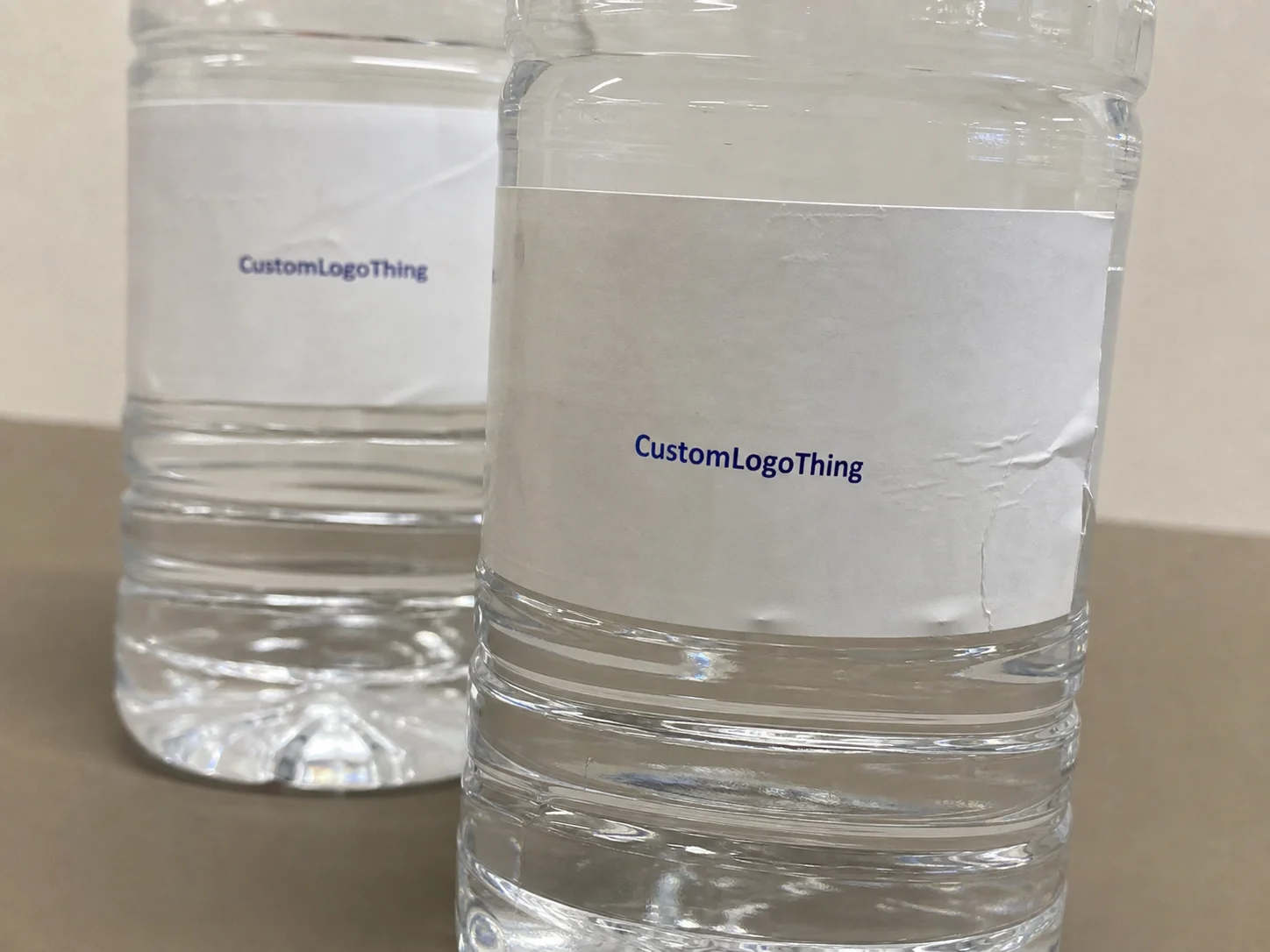
Bottles of water with personalized labels look straightforward until the first sample comes back with wrinkled corners, weak contrast, or a label that crawls off-center in the cooler. The bottle usually is not the problem. Condensation, curved surfaces, and rushed artwork approvals are.
Used well, bottles of water with personalized labels do a clean job. They move fast at conferences, weddings, hospitality events, retail launches, sponsor activations, and anywhere the package needs to carry the brand without extra structure around it. People hold them, photograph them, and actually finish them. That is a better return than most giveaway items get.
The real decision is not whether to label a bottle. It is whether a label, a shrink sleeve, or direct print fits the budget, the deadline, and the look you need. Each one changes Cost, Lead Time, and how polished the final pack feels once it is sitting under lights or packed in ice.
When bottles of water with personalized labels actually make sense
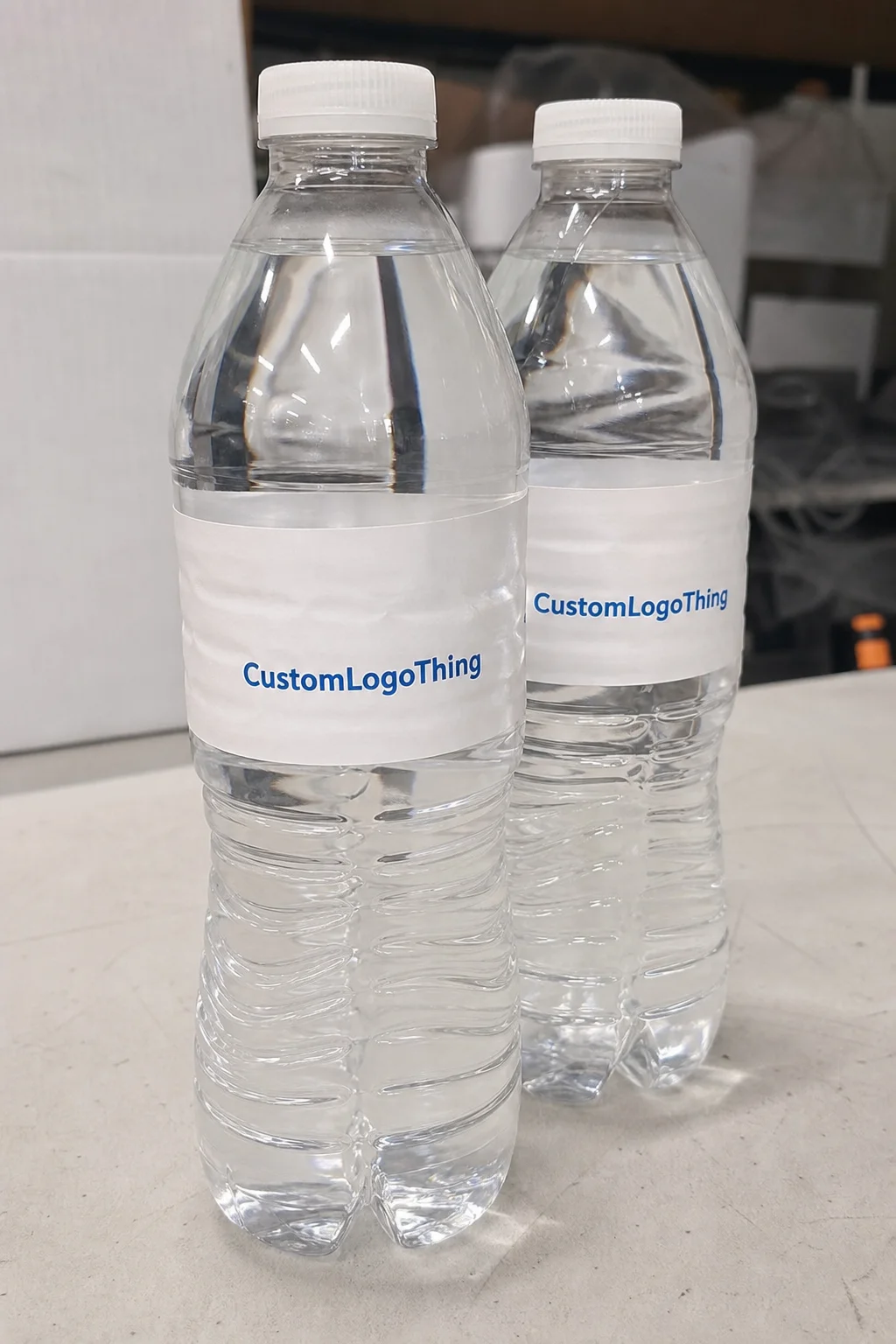
The best use case is simple: you need a branded item people will grab, carry, and consume without thinking twice. Water is practical. That matters. It gives the print real estate without asking the audience to do anything extra.
Bottles of water with personalized labels make the most sense for short- to mid-run jobs where custom-molded packaging would be overkill. If you are ordering a few hundred to a few thousand units, a stock bottle with a printed label is usually the efficient route. There is no tooling bill, no mold wait, and fewer moving parts between proof and delivery.
The package has to earn attention in seconds. If the logo reads from a few feet away and the bottle still looks clean after chilling, it works. If the label shifts, curls, or disappears against a clear bottle, the whole thing reads as rushed. There is no clever workaround for that.
If the label cannot survive cold storage and condensation, the design approval is not the real approval. The material spec is.
For a lot of buyers, the comparison should start with the surface treatment, not the bottle. A pressure-sensitive label gives flexibility and a lower entry cost. A shrink sleeve covers more of the bottle and hides more of the substrate, but it adds process steps and usually pushes the MOQ higher. Direct print can look sharper, but it only makes sense when the run size justifies the setup.
If the order is part of a larger branded package, it helps to align the bottle label with the rest of the event kit instead of treating it as a one-off. That is where matching finishes and color standards matter. A bottle that feels detached from the other printed pieces always looks a little off, even if the logo itself is perfect.
For projects that need the label system first and the bottle decision second, start with Custom Labels & Tags. It is the easier place to lock the visual language before adding fulfillment and product sourcing.
How the production steps turn a plain bottle into a branded one
The production path is predictable if the buyer sends actual specs instead of a logo and hope. First comes the bottle dimensions: volume, diameter, shoulder shape, label panel width, and cap style. That geometry decides how much of the label is usable. A design that looks fine on a flat proof can break on a bottle with a sharp taper or a narrow body.
Next comes the dieline. The artwork gets fitted to the printable area, then checked for bleed, safe zone, line thickness, and text that might get eaten by the curve. Small type is the usual casualty. A legal line or a delicate script can look crisp on screen and become mud once it wraps.
The process usually runs in a pretty standard order:
- Brief intake and bottle dimensions
- Dieline setup and artwork placement
- Digital proofing and revisions
- Print and finish
- Cutting and application
- Packing and shipment
Application is where consistency lives or dies. Small runs may be hand-applied. Larger runs usually need machine assistance or a controlled jig so the labels land in the same place every time. If the label is rotated a few degrees on one bottle, nobody notices. If the entire case is off, the order starts looking cheap before it is even unloaded.
Handling conditions matter too. If the bottles will be chilled, packed in ice, or stored in a humid environment, the adhesive and face stock need to be rated for moisture. That is not a nice-to-have detail. It is the difference between a label holding steady and a label blistering on the first tray.
General packaging references from Packaging School and packaging resources and transport methods from ISTA are useful guardrails here. You do not need a lab report for every event order, but you do need to ask whether the pack has been designed for the actual handling it will see.
Buyers often approve the artwork and stop there. That is the wrong finish line. The proof should answer two questions: does the label look right, and does the label stay right once it gets cold, wet, and handled by more than one person?
What drives cost, pricing, and MOQ
Pricing comes from four variables: label stock, print method, quantity, and whether application is included. If the supplier is also sourcing the bottles, filling them, packing them, and shipping them, the quote may look tidy while hiding the real cost split. Ask for line items. Otherwise, you are comparing bundles, not numbers.
The ugly truth is that small runs cost more per bottle. Setup gets spread across fewer units. That is not supplier drama. It is production math. A 250-bottle order will almost always have a much higher unit cost than a 5,000-bottle order, even if the graphics are identical.
For planning, these ranges are common for stock Water Bottles With Custom Labels, assuming standard sizes and normal label coverage:
| Option | Typical Use | Approx. Unit Cost at 500-1,000 | Notes |
|---|---|---|---|
| Paper label | Short indoor events | $0.10-$0.18 | Lowest entry cost, weak against condensation |
| BOPP film label | Cold bottles, cooler use, events | $0.14-$0.28 | Better moisture resistance, cleaner finish |
| Clear film label | Premium branded look | $0.16-$0.32 | Needs strong contrast and disciplined design |
| Shrink sleeve | Higher coverage, premium presentation | $0.22-$0.45 | More process steps, usually higher MOQ |
Those figures move with print coverage, bottle sourcing, and whether the supplier is applying the labels in-house. A quote for bottles of water with personalized labels should also separate freight from production. A low print price can vanish fast once rushed shipping enters the picture.
If you want a cleaner apples-to-apples comparison, start with Custom Labels & Tags and isolate the print cost before you add the bottle, filling, and fulfillment layers. That makes it much easier to spot where the budget is actually going.
For buyers comparing vendors, the metric that matters is total landed cost. A cheap label that peels in a cooler is not cheap. It is just poorly specified.
Materials and bottle specs that change the final result
Material choice is where a lot of orders quietly succeed or fail. Matte, gloss, and clear films all behave differently. Matte reads softer and less reflective. Gloss pops more under lights. Clear stock can look premium, but only if the artwork has enough contrast to survive against the bottle and the water behind it.
For chilled product, waterproof or moisture-resistant film is usually the safer choice. Standard paper can wrinkle, cloud, or lift when condensation builds up. That is acceptable for a dry indoor handout. It is a bad fit for ice buckets, refrigerators, or outdoor events where bottles sit around before anyone picks them up.
Material comparison buyers actually need
| Material | Finish | Best For | Risk |
|---|---|---|---|
| Paper | Matte or gloss | Short-lived indoor use | Wrinkles and edge lift from moisture |
| BOPP film | Matte, gloss, or clear | Cold storage and events | Slightly higher material cost |
| Polyester film | Gloss or clear | Durability and handling | Can feel overbuilt for simple events |
Bottle shape matters just as much as stock choice. A wide body gives the label more room to sit cleanly. A narrow taper or aggressive shoulder can make the design disappear where the bottle curves. That is why mockups mislead people. Flat art is easy. Round surfaces are not.
Clear bottles need tighter art direction. If the layout is busy, the logo loses definition once the background changes or the bottle gets wet. Thin lines, pale type, and low-contrast palettes are all risky on transparent containers. If the brand system depends on those things, the label needs extra testing, not optimism.
For brands that care about sourcing, paper label options can be specified with FSC-certified stock. If procurement needs that documentation, ask early. It is simple to include when the material plan is set up at the start. It is a nuisance when someone tries to add it after proof approval.
There is also a consistency issue across the rest of the package. If these bottles sit beside stickers, inserts, or printed cards, keep the finish logic aligned. A matte label next to high-gloss collateral can look accidental even if both pieces are technically correct.
Process, timeline, and turnaround from proof to delivery
A realistic schedule starts with intake, then dieline setup, proofing, revisions, production, application, packing, and shipping. The actual print run is often not the slow part. Approval is. Inventory is. The wrong bottle stock is. A missing barcode or legal line can also push the job out while everyone keeps assuming it is already done.
For a normal event order, a clean timeline often looks like this:
- 1-2 business days for artwork setup
- 1-3 business days for proofing and revisions
- 3-7 business days for print and application
- 1-5 business days for freight, depending on distance
That is the optimistic version. It stretches when the bottle has to be sourced, when the label stock is specialty, or when machine application requires a specific line. It stretches again when the first proof comes back with copy changes. Buyers who lock the language early usually get the cleanest schedules.
One reason people prefer a single supplier is control. If the same team prints the label and applies it, there are fewer handoffs and fewer chances for an order to drift. There is also less blame-shifting, which is a useful side effect. If one vendor prints the labels and another applies them, expect more coordination and more waiting.
For transit and storage, ask whether the bottles are packed for upright shipping, cold storage, or mixed handling. If you need a validation reference, look for ISTA-style drop and vibration methods instead of assuming a cardboard case is enough. Good packaging is invisible right up until it fails.
Weather changes the job too. A summer outdoor event is a different production problem from a hotel welcome setup. Humidity, heat, and handling all affect adhesive choice and finish selection. The event does not care that the design file looked beautiful on a monitor.
That is the part buyers underestimate most. The deadline is not just a date. It is also a chain of approvals, stock checks, and physical handling that all need to line up. Miss one link, and the bottle order becomes a schedule problem instead of a branding one.
Common mistakes that make labeled bottles look cheap
The first mistake is guessing the label size. Buyers often send a logo and ask the printer to make it fit. That sounds efficient until the seam cuts through the mark or the design is too tall for the usable area. Measure the flat panel and the curvature before anyone builds the artwork.
Low-contrast design is another easy way to make the whole thing disappear. If the bottle is clear, the water is clear, and the label is pale blue, the branding gets lost as soon as light hits it. It may look elegant in the file. On the bottle, it looks like a misprint.
Paper labels for cold environments are asking for trouble. Ice buckets, coolers, and outdoor summer service need moisture-resistant stock as the default, not as an upgrade. If a supplier still recommends paper for wet use, that is a signal to ask harder questions.
Skipping a sample is expensive. A font that looks readable on a laptop can become too thin once it wraps around a cylinder. A color that feels rich in a PDF can shift under fluorescent light. A sample bottle, or at least a proof on the correct substrate, saves money later.
A neat bottle does not need a complicated design. It needs the right size, the right stock, and a clean application line.
That application line matters more than most buyers expect. Crooked placement, bubbles, and uneven wrap points show up immediately, especially when the bottles are lined up in rows. If the application is hand-done, the team needs a consistent jig or process. If the run is large, machine support is usually worth it because rejects get expensive fast.
One more issue: do not bury legal copy, ingredient details, or QR codes in the dead center of a curved panel unless readability has been tested. A good package is readable at arm’s length and under time pressure. That is the actual test. Not the render.
And yes, labels can look cheap even when the print quality is fine. The problem is often design discipline: too many fonts, too much copy, weak contrast, or a finish that fights the bottle instead of supporting it.
Next steps before you request quotes
Before asking for pricing, write down the bottle size, label dimensions, quantity, event date, and whether the bottles arrive prefilled or empty. Those are not admin notes. They decide which supplier can quote accurately and which one is guessing.
Then lock the finish, stock, and application method before you compare vendors. If you compare quotes without those three choices, the numbers will not mean the same thing. One quote may be paper. Another may be BOPP. A third may include application while the first two do not. That is how budgets get tangled for no reason.
If the project matters, protect the approval window. Build the timeline backward from the real deadline, not the date you wish shipping could happen. A one-day delay on proof approval can turn into a missed delivery window with almost no warning.
For teams managing broader packaging buys, keep the same color standards and finish logic across the set. If you are already ordering inserts, stickers, or labels, the bottle should fit the same system instead of becoming a separate design decision every time. That is where Custom Labels & Tags fits naturally into the workflow.
The practical route for bottles of water with personalized labels is boring, and that is a good thing: send a complete spec sheet, approve the proof on time, and choose materials that survive the actual use environment. That is how the finished order looks intentional instead of rushed.
If the order is for an event, the useful question is not whether the bottle looks good in a deck. It is whether it still looks good after 30 minutes in a cooler, a few passes through a crowd, and one too many hands. That is the standard.
How much do bottles of water with personalized labels usually cost?
Cost depends on quantity, label stock, print method, and whether application is included. Small runs usually carry a higher unit price because setup is spread across fewer bottles. Ask for line-item pricing so you can separate label, filling, application, and freight instead of guessing where the money went.
What label material is best for personalized water bottles?
Waterproof or moisture-resistant film is the safest choice for chilled bottles. Paper can work for short indoor use, but it does not handle condensation well. Adhesive matters too, so ask for a stock and glue system rated for cold or wet surfaces.
How long does it take to produce personalized bottle labels?
Digital jobs can move quickly, but proofing, revisions, and shipping still add time. Specialty stocks or machine application can extend turnaround. The fastest projects are the ones with final artwork, final quantities, and a locked deadline from the start.
Can bottles of water with personalized labels be used outdoors?
Yes, but outdoor use needs stronger moisture resistance and better adhesive performance. Avoid tiny text and low-contrast colors, because sunlight and wet handling make them harder to read. If the bottles will sit in ice or heat, test the label before ordering the full run.
What artwork do I need to order personalized water bottle labels?
You need final logo files, bottle dimensions, label size, and any required copy or barcodes. Vector art is best, and color mode should match the printer's workflow. Always approve the proof before print so the layout, spelling, and placement are confirmed.