Want a fast way to make a table, cooler, or welcome kit look intentional? Order water bottles with custom labels. The bottle is still standard water, but the presentation changes immediately. One plain bottle fades into the background. A labeled bottle reads as planned.
That matters at trade shows, conferences, hotel check-ins, launch events, gyms, offices, and client meetings where people judge the setup in seconds. A good label does more than decorate. It tells people the details were considered.
If you need Custom Labels & Tags that fit a branded package, bottled water is usually one of the simplest places to start. The main decisions are bottle size, label stock, finish, proofing, and delivery timing. If a quote does not answer those points, it is not a useful quote.
For buyers managing larger programs, Custom Packaging Products is where water bottles fit into the broader system. Labels, cartons, inserts, and transport materials should all work together. The bottle is small. The presentation should not be.
Why You Should Order Water Bottles With Custom Labels Instead of Plain Handouts
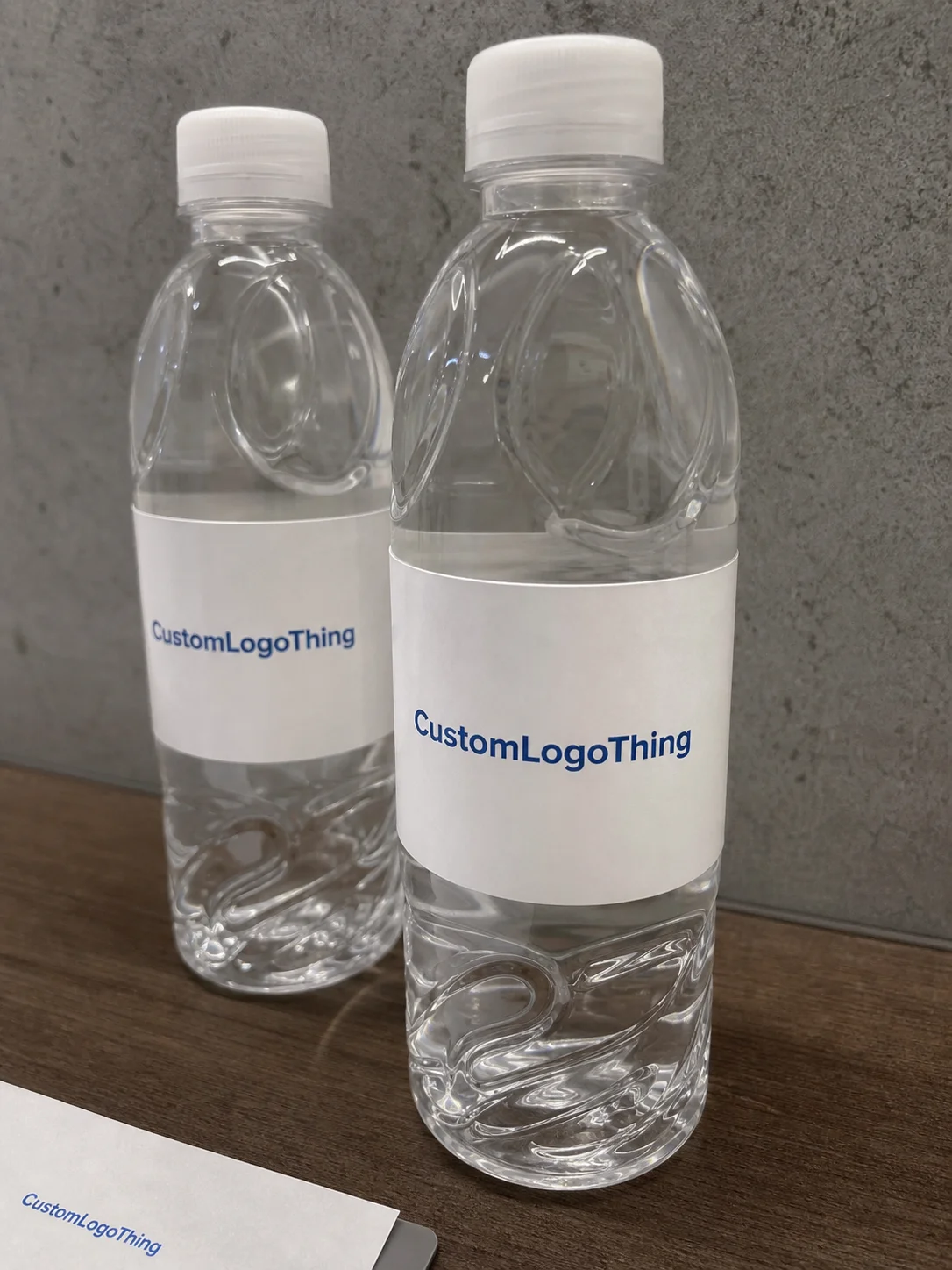
Plain bottled water solves hydration. Labeled bottled water solves presentation. A blank bottle looks incidental; a branded one looks planned. That difference is useful anywhere the item is sitting on display or being handed out quickly.
Custom labels work well at registration desks, break stations, hospitality suites, and cooler displays because the bottle only has a second or two to do its job. The label makes the brand visible before anyone opens the cap.
It is also a practical alternative to a full custom packaging program. You get a branded result without redesigning the carton system or committing to a larger packaging project. For many buyers, that is the right level of effort.
Consistency matters too. If the rest of the event includes inserts, cartons, or handouts, the bottle should not feel like it came from another job. A mismatch is what makes a setup feel cheap. The label may be small, but it carries a lot of visual weight.
These bottles also photograph well, which is now part of the job. A label that reads clearly in event photos keeps working after the event ends and helps with recaps, social posts, and internal reporting.
There are limits. If the artwork is not ready or the event is tomorrow, this category will not save the schedule. But with clean files and a realistic lead time, it is one of the most efficient branded packaging buys available.
Bottle Formats, Label Stocks, and Print Finish Options
Most buyers start with bottle size, then discover that label material matters just as much. A strong design on the wrong stock can still fail once it meets condensation, ice buckets, or heavy handling.
Common formats include standard still water, compact event bottles, and more premium shapes with a cleaner silhouette. Smaller bottles usually make more sense for conferences and giveaways because they chill quickly and move fast. Larger bottles fit hotel rooms, executive welcome kits, and client shipments where the bottle itself is part of the presentation.
Label stock changes the result immediately. White film is the safest default because it prints cleanly and handles moisture better than paper-based options. Clear film can look sharp on a premium bottle, but it needs tighter control over artwork, bottle color, and water level. Matte paper can work for dry, short-duration indoor use, but it is not a good choice for ice or humidity. Waterproof synthetic stocks cost more, yet they hold up better when the bottles are chilled for hours or handled by a crowd.
Finish is a separate decision. Matte is restrained and modern. Gloss reflects more light and tends to read louder in photos. Soft-touch gives a more tactile feel, but it makes the most sense when the bottle will be handled carefully and seen up close.
| Option | Best Use | Typical Strength | Watch Out For |
|---|---|---|---|
| White film | General events, office use, welcome kits | Strong all-around readability | Can look plain if the design is too minimal |
| Clear film | Premium presentation, modern branding | Clean, minimal appearance | Needs careful artwork and bottle color control |
| Waterproof synthetic | Ice buckets, outdoor events, humid environments | Best moisture resistance | Slightly higher material cost |
| Matte paper | Dry, short-duration handouts | Lower cost for simple runs | Not a good fit for condensation |
Other useful options include full-wrap labels for more brand space, front-and-back labels for a cleaner split between branding and legal copy, tamper-evident seals for hospitality, and variable data Printing for Event names or dates.
Material sourcing can matter if the order sits inside a larger procurement policy. If the outer cartons need FSC-certified paper, that is separate from the bottle label, but it still affects the final package. For certification basics, fsc.org is the reference point. For distribution and transit expectations, ista.org is useful when the order needs to survive more than one handoff.
Sizing, Artwork, and Compliance Specs You Need Up Front
Before you ask for pricing, gather the specs. The basic inputs are bottle volume, label dimensions, bleed, safe area, file format, and color mode. If you do not know the exact label size, provide the bottle style and the look you want so the printer is not guessing.
Artwork problems are the most common source of delay. Typical issues are low-resolution logos, stretched graphics, missing font outlines, and text that is too small once the design wraps around a cylinder. A file that looks fine on screen can fail quickly in production.
Vector artwork is the safest starting point. High-resolution raster files can work for some elements, but print-ready files should not depend on a blurry logo or screenshot. If the logo has fine detail, ask how it will reproduce at the final size.
Placement matters more than people expect. A design can look balanced in a flat mockup and still read poorly once wrapped around a bottle. Keep critical text away from the edge, leave room for QR codes or barcodes, and avoid overfilling a small panel.
Use this checklist before approval:
- Bottle size and shape
- Label width and height
- Bleed and safe area
- High-resolution logo or vector file
- Final copy for event names, dates, or disclaimers
- Preferred finish: matte, gloss, or soft-touch
- Color reference, ideally CMYK or Pantone target
Compliance is easy to ignore until it causes a reprint. Some bottled products need ingredient panels, distributor information, recycling details, or region-specific text depending on where they are sold or shipped. Confirm those requirements before proof approval. The cost of checking upfront is lower than printing the wrong thing twice.
Packaging standards also matter if the bottles are moving through a warehouse, venue, or multi-stop route. A label that looks good on screen still has to sit correctly on the bottle, stay readable after chilling, and arrive without edge lift or scuffing.
Pricing, MOQ, and Unit Cost Breakdown
Pricing should be itemized. A useful quote should break out the bottle, label, printing, application, packing, and freight. If the number comes back as one lump sum, you cannot tell which part is expensive or where a lower-cost option might exist.
Cost moves with quantity, label coverage, stock choice, bottle size, and print method. A small run with waterproof labels will cost more per bottle than a larger run on standard white film. Rush charges add up quickly, and unusual packing instructions add more.
For a realistic range, small promotional runs often land around $0.90-$1.60 per bottle before freight if you are using custom labels on a simple stock bottle. Mid-size event orders often fall into the $0.55-$1.10 per bottle range depending on quantity and finish. Premium bottles, specialty label stocks, and full-wrap designs can move higher.
MOQ exists because setup, materials, and labor are spread across the run. A 250-bottle pilot will nearly always cost more per unit than a 2,500-bottle order. That does not make the smaller run a bad idea; it just means you are paying for speed, control, and lower inventory risk.
| Run Size | Best For | Typical Unit Cost | Tradeoff |
|---|---|---|---|
| 250-500 bottles | Pilots, VIP kits, internal events | $0.90-$1.60 | Higher unit cost, faster decision-making |
| 1,000-2,500 bottles | Conferences, launches, hospitality | $0.55-$1.10 | Balanced pricing and flexibility |
| 5,000+ bottles | Large events, venue drops, recurring programs | Quote-dependent, often lower per unit | More planning required |
Ask for line-item pricing so you can compare like for like. If the budget is tight, request two quotes: one on your preferred spec and one on a lower-cost alternative, such as standard white film instead of waterproof stock or a simpler front label instead of a full wrap.
For repeat buyers, the second order gets easier because the spec is already locked. Once the label size, bottle type, and finish are approved, the next run becomes replenishment instead of a new project.
Production Steps, Lead Time, and Delivery Windows
The production flow is simple if the inputs are clean. It starts with a quote, then a proof, then approval, followed by print, application, packing, and shipping. Delays usually come from missing files, late revisions, or changing delivery details after the job is scheduled.
For standard runs, a realistic timeline is often 12-15 business days from proof approval, plus freight time. Rush orders can move faster if the artwork is already in good shape and the bottle stock is on hand. If the job needs label revisions, special cartons, or unusual packing notes, add time.
These are the things that usually speed up a project:
- Print-ready artwork
- Confirmed bottle size and label spec
- Fast proof approval
- Final shipping address before production starts
- Clear packing notes for cartons, pallets, or venue delivery
These are the things that usually slow it down:
- Missing logo files
- Late copy changes
- Unclear label dimensions
- Multiple decision makers requesting different revisions
- Shipping details that are still being negotiated after proof approval
Quality control matters here. The label has to sit flat, the adhesive has to hold, and the print needs to stay legible after chilling. If barcode readability is part of the job, it should be checked before shipment.
Packaging durability matters too, especially if the order is moving through a warehouse, a venue load-in, or a multi-stop route. A simple shipment that arrives clean is better than a decorative one that gets scuffed before it is used.
Why Buyers Reorder Without Reworking Files
Good buyers do not rebuild the label every time they reorder. They lock the spec, keep the artwork clean, and reuse the approved file until something actually changes. That reduces mistakes and keeps the second run looking like the first.
Repeatability is the real value. Buyers want responsive proofing, consistent print quality, and communication that does not require multiple follow-up emails. They also want the order to arrive in the same condition it looked like in the mockup.
The most useful quality checks are practical: does the label stay put after chilling, are the edges lifting, is the color close to the approved proof, and does any barcode or QR code scan properly? Those details matter more than marketing copy.
That is why many buyers keep one supplier for water, another for retail packaging, and another for larger presentation pieces like labels, sleeves, or Custom Printed Boxes. The goal is to work with suppliers that can actually handle each category well.
For operations, marketing, and event teams, the benefit is simple: less babysitting. Once the label spec is approved, the next order should feel routine.
Next Steps to Place Your Order and Avoid Delays
If you are ready to move, gather the basics first: bottle size, target quantity, label dimensions, artwork files, and any special delivery notes. That gives the supplier enough information to quote accurately instead of filling in gaps.
Then approve a digital proof before anything goes to print. That is where you catch the mistakes that matter: text size, barcode placement, bleed, label position, and color balance. If the proof is wrong, fix it there.
If budget is a concern, ask for two versions. One should match your preferred spec. The other should reduce cost through a simpler stock, a smaller label, or less coverage. Sometimes the lower-cost version still works for the event.
If the bottles are part of a broader branded kit, ask how the label fits into the rest of the package branding. When the water bottle, insert, carton, and transport materials all feel aligned, the result looks intentional instead of assembled from leftovers.
Confirm the quantity and artwork now if you want to order water bottles with custom labels without scrambling later. The earlier the proof gets approved, the fewer surprises show up at the end.
Can I order water bottles with custom labels in a small quantity?
Yes, but the unit cost is usually higher on small runs because setup and label costs are spread across fewer bottles. Small orders make the most sense for pilots, VIP kits, and internal events where exact branding matters more than the lowest per-bottle price.
What artwork do I need for custom label water bottles?
Send a vector logo or high-resolution file, plus any required text, colors, and legal copy. If the files are not print-ready, expect a proofing step to clean up sizing, bleed, and layout before production starts.
How long does it take to produce custom labeled water bottles?
Timing depends on proof approval, quantity, and whether the labels are standard or fully custom. Fast approvals shorten the schedule; corrections, special finishes, and shipping distance add time.
Are waterproof labels worth it for bottled water orders?
Yes, if the bottles will be chilled, iced, or handled in humid conditions. Waterproof stock helps the label stay readable and presentable instead of wrinkling, slipping, or lifting at the edges.
What is the best way to lower unit cost on custom label water bottles?
Increase quantity, simplify the label spec, and avoid rush production when possible. Ask for a line-item quote so you can see whether the biggest savings come from stock, print method, or shipping.