Custom Boutique Paper Bags Bulk Order for Retail Buyers
For retail buyers, a custom boutique paper Bags Bulk Order is not just another line on a procurement sheet. It shapes how a customer sees the product, how the store looks at the counter, and how long the brand impression lasts after the sale. A bag often leaves the store before the item does, so paper weight, handle strength, print quality, and finish all end up carrying part of the brand story.
That is why the bag spec matters so much. A thin stock, a crooked logo, or a handle that twists under load can pull the entire presentation down, even if the merchandise itself is strong. Buyers who work on repeat retail programs usually learn quickly that the bag is judged alongside the purchase, not after it.
Why a Custom Boutique Paper Bags Bulk Order Changes the Perceived Value of Every Purchase
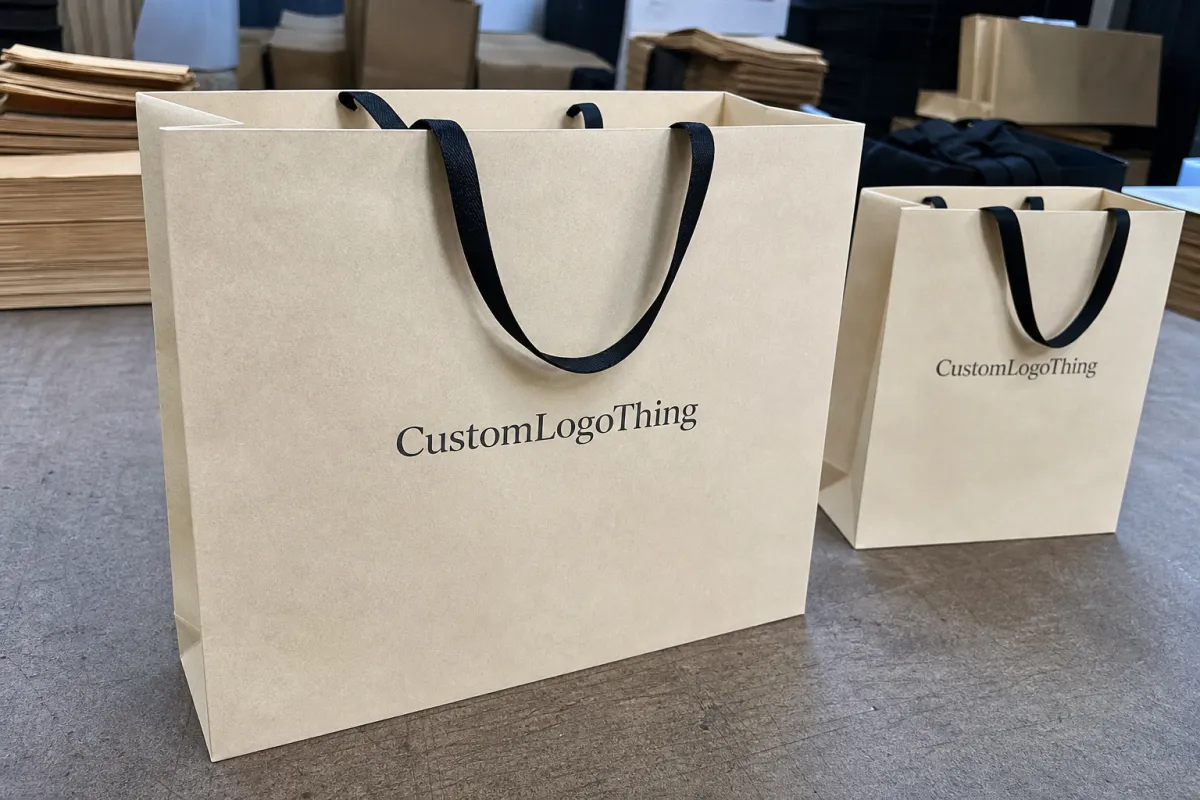
A boutique bag does more than carry a purchase to the door. It signals whether the brand pays attention to details that customers can see and feel immediately. A custom boutique paper Bags Bulk Order can make a small item feel considered and giftable, which is why the bag is often as visible as the product itself in salons, jewelry counters, cosmetics stores, and high-footfall retail.
Weak paper tells a story. So do wrinkled gussets, uneven folds, or handles that sit off-center. Customers usually do not separate the bag from the rest of the experience. They remember the whole package as one impression, and that is often what supports a premium price without changing the merchandise.
Bulk planning helps keep that impression stable. If the same size, stock, color, and print treatment appear across stores, pop-ups, and seasonal launches, the brand looks organised. That consistency protects presentation and keeps a giftable bag from looking like a leftover supply choice.
The lowest unit price is rarely the lowest program cost once reprints, freight, damaged cartons, and presentation problems are included.
From a buyer’s point of view, the real question is simple: does the bag support the price tag, or quietly work against it? If it matches the value of the merchandise, it is doing its job.
Custom Bag Styles, Handles, and Print Features Buyers Can Choose
The right format depends on what the bag needs to carry and how it should feel in the customer’s hand. A custom boutique paper Bags Bulk Order can be built around flat bags, gusseted shoppers, euro-totes, or gift carriers, and each one solves a different retail problem. Flat bags suit light apparel, cards, or small accessories. Gusseted styles hold more volume and stand better at checkout. Euro-totes usually signal a more premium position, especially in beauty, jewelry, and gift packaging.
Handle choice changes both performance and tone. Twisted paper handles are practical and price-conscious. Rope handles usually feel more premium and carry heavier loads with less distortion. Ribbon handles are decorative and fit gift-oriented packaging design. Die-cut handles create a clean look, though they are less forgiving if the bag is overloaded. Reinforced handles matter whenever the bag will carry bottles, boxed sets, or dense merchandise.
Print strategy deserves the same discipline. A single logo panel can look restrained and elegant. Full-bleed art makes a stronger statement, but it also exposes print registration and color consistency more clearly. Metallic accents can lift the bag visually, though they add complexity and usually raise cost. The best choice is not always the most decorated one. It is the one that matches the store format and the merchandise value.
Good buyers also think about utility. Fold-over tops, internal cardboard bases, coordinated tissue, and insert cards can support gift programs, but only if they improve how the bag is used at the counter or after the sale. Extra features that do not solve a packaging problem usually inflate the spec without improving the customer experience.
For a broader buying plan, it helps to review the rest of your Custom Packaging Products alongside the bag spec. If your brand also uses Custom Printed Boxes, the color logic should feel connected instead of competing across formats.
Paper Weight, Finish, and Reinforcement Specs That Hold Up in Transit
Paper weight is one of the fastest ways to separate a promotional bag from a retail bag. Lightweight stock may look fine on a mockup, then fail the first time a customer loads shoes, candles, or boxed merchandise. For smaller boutique bags, 170-200 gsm can work for light gifts. For stronger retail programs, 210-350 gsm or an equivalent board construction is more common, especially when the bag needs to stand upright and hold its shape after repeated handling.
Reinforcement is not optional if the bag has to travel. Bottom pads, top-edge reinforcements, and handle patches add structure where the bag takes stress. If the bags will be packed into cartons and moved through distribution, ask for transit or compression references. The ISTA test library is a useful benchmark for shipping conditions, while FSC certification can help document sourcing for procurement teams that need traceable paper inputs.
Finish changes the first touch. Matte lamination feels refined and hides fingerprints better than gloss. Soft-touch coating adds a velvety feel but can show rub marks if the bag moves against other cartons. Gloss makes color pop, though it can also highlight minor print variation. Uncoated natural stock fits earthy brand positioning and works well for stores that want a less polished, more artisan look.
Specify tolerances early. Size drift, handle-drop inconsistency, and print registration variation can all erode confidence in repeat orders. A good supplier should be able to hold dimensional consistency across reorders, provided the artwork and construction stay the same. That continuity is one of the main reasons buyers prefer planned retail packaging programs over one-off emergency buys.
For sustainability-minded procurement, recycled content, FSC-certified paper, and reduced-plastic construction can be requested without turning the bag into a compromise. The useful question is not whether the material sounds eco-friendly, but whether the claim is documented and the bag still performs under load.
Material and Construction Details Buyers Should Ask About
Two bags can look similar in a sample photo and behave very differently in production. The difference usually comes down to construction details that are easy to overlook until the order is already moving. Adhesive choice, turn-in depth, base reinforcement, and handle attachment all affect how the bag performs after it is filled, stacked, and carried.
Ask how the side seams are glued and whether the bottom is reinforced with board or a folded paper insert. A bag that looks elegant in an empty state can fail if the base is too shallow or the adhesive line is too narrow. This matters most on orders that carry glass bottles, boxed sets, or layered tissue with a heavier product inside.
Handle attachment deserves close attention. Paper rope, cotton rope, and ribbon handles all need enough anchoring to survive the pull of a full bag. If the attachment area is small, the handle can tear through the top panel even when the paper stock itself is strong. For that reason, buyers should ask where the reinforcement patch sits, how wide it is, and whether the handle drop stays consistent from one batch to the next.
Surface treatment also affects usability. Heavy ink coverage can make a bag look rich, but it may also show scuffing faster on dark colors. Foil can elevate the print, though it can crack if the fold lines are too tight or if the artwork sits too close to the creases. Soft-touch finishes feel premium in hand, yet they are less forgiving in rough carton handling. None of these are deal-breakers, but they should be matched to the way the bags will actually be used.
There is also a practical tradeoff between appearance and recyclability. Lamination can improve durability and print impact, but it may complicate disposal compared with an uncoated paper bag. Buyers working with sustainability requirements should ask what part of the build is recyclable, what is bonded together, and how the supplier documents the material mix. That is more useful than a broad claim on a spec sheet.
Pricing, MOQ, and Unit Cost Drivers for a Custom Boutique Paper Bags Bulk Order
Price is shaped by more than quantity. Size, stock grade, handle type, number of print colors, finishing steps, and packaging method all affect the final quote. A custom boutique Paper Bags Bulk order with one-color printing and twisted handles can cost far less than a laminated euro-tote with rope handles and foil. That sounds obvious, but many buyers still compare quotes as if unit price alone tells the story.
It does not. Setup, plates, sampling, freight, and rush charges can move the landed cost substantially. If a supplier quotes a low unit price but hides carton charges or a production surcharge, the apparent savings disappear quickly. A clear quote with separate line items is more useful than a polished number that only works in the abstract.
| Bag build | Typical use | Common MOQ | Indicative unit cost at 1,000 pcs | Cost driver |
|---|---|---|---|---|
| 1-color paper bag, twisted handle | Light retail, gifts, promotions | 500-1,000 | $0.42-$0.68 | Simple print and lower finishing complexity |
| Matte laminated shopper, rope handle | Boutique apparel, beauty, accessories | 1,000-3,000 | $0.78-$1.25 | Lamination, reinforcement, higher perceived value |
| Foil accent, ribbon handle, premium board | Gift sets, luxury retail, seasonal launches | 2,000-5,000 | $1.20-$2.10 | Premium finishing and higher setup complexity |
Those ranges are indicative, not universal. A simple reorder can land below them, while a custom shape, imported hardware, or unusual paper grade can push higher. Still, the table shows the right way to think about a custom Boutique Paper Bags bulk order: compare build levels, not just headline price.
Ask for pricing at practical breakpoints such as 500, 1,000, 3,000, and 5,000 units. That reveals where unit economics actually improve. If you buy through recurring programs, it is also worth comparing the quote with a supplier’s Wholesale Programs approach, because repeat orders often justify better re-setup terms and smoother replenishment.
For buyers managing multiple packaging lines, it helps to calculate total landed cost against the rest of the branded packaging budget. A bag that saves a few cents but creates a mismatch with the rest of the display program is not really saving money.
Production Steps, Proofing, and Lead Time Expectations
Clean production starts with clean data. Send final dimensions, artwork files, handle preference, paper target, and delivery location before the quote is locked. When the spec is vague, the proof becomes a guess, and the schedule becomes unstable. That is one reason a custom boutique paper bags bulk order should never begin with approximate sizes or artwork that is still being adjusted.
The usual sequence is straightforward: quote, mockup, proof approval, production, packing, and shipping. Each stage has its own delay risk. Artwork revisions slow the proof. Special finishes can extend production. Carton packing and freight booking can add more time than buyers expect, especially before store openings or seasonal resets.
In practical terms, simple runs often move in about 12-15 business days after proof approval. More complex orders, such as laminated bags with premium handles or foil work, often need 15-25 business days. Shipping time sits on top of that. If the bags are going by sea or through consolidated freight, treat transit as a separate scheduling block rather than part of production.
Ask whether digital proofs are standard and whether a pre-production sample is available. Proof approval is where many orders slip, because teams wait for internal signoff after the factory has already reserved the slot. A sample takes longer, but it can be worth it for programs tied to store openings, influencer kits, or high-value gift packaging.
If the delivery date is fixed, build buffer time for customs checks, port delays, or internal receiving. That matters even more for multi-store programs where a late carton can disrupt a full launch. Buyers who manage both bags and custom printed boxes usually prefer suppliers who can coordinate schedules across product lines rather than treating each order as a standalone job.
It also helps to know where the risk sits inside the schedule. Revisions usually cost less early than late. A changed handle drop after proof approval can trigger a new dieline, a revised carton count, and a longer run. A small change on paper can become a larger change on the floor.
Why Bulk Boutique Bags Fit Multi-Store Retail and Gift Programs
Bulk buying works because it standardises the customer experience. A well-specified paper bag looks the same in a flagship store, a pop-up, and a concession counter, which is exactly what retail buyers want when brand control matters. If the bag is part of gift packaging, the same repeatable spec also helps staff work faster and reduces variation at the point of sale.
That consistency has a second benefit: it cuts emergency reprints. Emergency runs almost always cost more because they compress artwork, production, and freight into a smaller window. One planned custom boutique paper bags bulk order usually beats three rushed reorders from a total cost perspective, even if the upfront invoice is higher.
There is also a merchandising angle. In-store presentation becomes easier when the bag, tissue, inserts, and box style all support the same brand logic. That is where package branding becomes more than a design term. It becomes an operating system. The bag should echo the same tone as the shelf display and the product packaging, not compete with them.
For buyers building recurring assortment programs, a reliable supplier should support color matching, reorder continuity, and simple re-setup. Otherwise every restock behaves like a first order. That wastes time and increases the risk of subtle shifts in shade, handle size, or print placement.
Some brands treat the bag as an afterthought. That is usually a mistake. If packaging is part of how the product is sold, the bag belongs in the same planning cycle as the merchandise itself.
Ordering Mistakes That Increase Cost or Delay Delivery
The most expensive mistakes are usually basic. The wrong dimensions can make a bag bow at the sides, collapse at the base, or look undersized next to the product. Buyers sometimes measure the item itself and forget to account for the usable interior space, fold allowances, and handle clearance. That is how a bag that looked fine in a sample becomes awkward on the sales floor.
Artwork is another friction point. Vector files such as AI, EPS, or print-ready PDF are far better than flattened images. They keep edges clean and make color control easier. If the logo must sit under a handle arch, across a fold, or at a precise height from the base, say so early. That avoids revisions and protects the approval schedule.
Paper weight and handle style also need to match the actual load. A premium-looking bag with weak handles is a return risk disguised as branding. Likewise, a beautiful finish that scuffs after two days of use damages the impression the bag was supposed to create.
Freight planning gets overlooked because the bags are light. They are still bulky. Carton volume can surprise first-time buyers, especially if the run includes multiple sizes. Ask whether the quote includes overages, split shipments, storage, or carton consolidation. Those details change landed cost more than many teams expect.
- Check size against real product load rather than catalogue dimensions alone.
- Use print-ready vector files to reduce proof rounds.
- Match reinforcement to weight so handles and bottoms do not fail early.
- Confirm freight assumptions before signing off on the order.
Buyers who manage both bag programs and retail packaging systems usually catch these errors earlier because they compare the bag against the rest of the branded packaging stack. That habit saves money.
What to Send Next for an Accurate Quote and Production Schedule
If you want a quote that is actually useful, send the quantity first, then the size, print colors, handle preference, and delivery city. That information lets the supplier build a realistic spec rather than a placeholder. For a custom boutique paper bags bulk order, precision at the start usually means fewer revisions and a tighter schedule later.
Include the product weight and the way the bag will be used. Will it carry folded apparel, glass bottles, boxed gifts, or layered tissue? Those details affect paper strength, bottom reinforcement, and handle selection. They also influence whether the bag should feel light and decorative or stronger and more retail-focused.
Ask for one mockup and one clear production schedule before approval. The mockup should show logo placement, dimensions, and any finish notes. The schedule should separate proof time from manufacturing time and freight time. If those stages are blended together, delays become harder to trace and harder to explain to store teams.
If you are planning repeat replenishment, set the spec now and keep it stable. Reorders go faster when the dieline, paper stock, and print file stay fixed. That is the simplest way to keep landed cost predictable and avoid drifting away from the original branding standard.
For packaging teams that want one place to manage support documents and common questions, our FAQ is a useful starting point. The faster the spec is locked, the sooner the order becomes a controlled program instead of a series of exceptions.
A strong custom boutique paper bags bulk order depends on discipline more than decoration. Get the stock right, match the handle to the load, insist on clear proofing, and compare landed cost rather than chasing the lowest quote. That is how retail buyers protect margin and keep presentation consistent.
Frequently Asked Questions
What is the usual MOQ for custom boutique paper bags in bulk?
MOQ depends on bag size, print colors, and finishing. Simple one-color bags can start at 500 to 1,000 pieces, while premium builds with foil, lamination, custom handles, or inserts often begin higher because setup is more complex. If you reorder often, ask for the exact quantities you plan to buy so the MOQ matches your buying pattern.
How do I estimate unit cost for a custom boutique paper bags bulk order?
Start with paper stock, size, and total quantity. Then add setup, plates, finishing, packaging, and freight to see the real landed cost. The best comparison is across at least three tiers, such as 500, 1,000, and 5,000 pieces, because the savings curve is not always linear.
What artwork files work best for boutique paper bag printing?
Vector files such as AI, EPS, or print-ready PDF are best because they keep logo edges sharp and scale cleanly. Include Pantone or CMYK values, note any foil or metallic requirements, and specify where the artwork should sit if it needs to align with handles, folds, or a centered front panel.
How long does production usually take?
Lead time depends on proof approval, paper availability, and finishing complexity. Simple runs often finish faster than laminated or multi-color jobs with custom handles. Shipping time should always be added separately from factory production time so the delivery date stays realistic.
Can I combine different sizes or finishes in one order?
Yes, but each size or finish usually needs its own setup and pricing line. Mixing sizes can raise MOQ or slow production if paper grades, handles, or artwork placement differ. Consolidation makes sense when freight savings clearly outweigh the extra setup complexity.
