Boutique Printed Poly Mailers MOQ Guide for Buyers
Boutique Printed Poly Mailers MOQ guide searches usually start with a practical problem: buyers want packaging that looks polished in transit, but they do not want to sit on a large stack of unused stock. A small run can protect cash, test artwork, and still make a collection feel deliberate before the box is even opened.
For brands comparing formats, the broader Custom Packaging Products range and the dedicated Custom Poly Mailers page are useful reference points before requesting a quote. The goal is not only a nice-looking bag. It is a mailer that ships cleanly, fits the product, and does not create avoidable waste.
That sounds simple. It rarely is. The visible part of the package sits on top of a chain of decisions: film thickness, seal strength, print method, artwork coverage, and the number of bags a brand can realistically use before the next seasonal change.
Why Small Brands Choose Custom Mailers at Low Volume
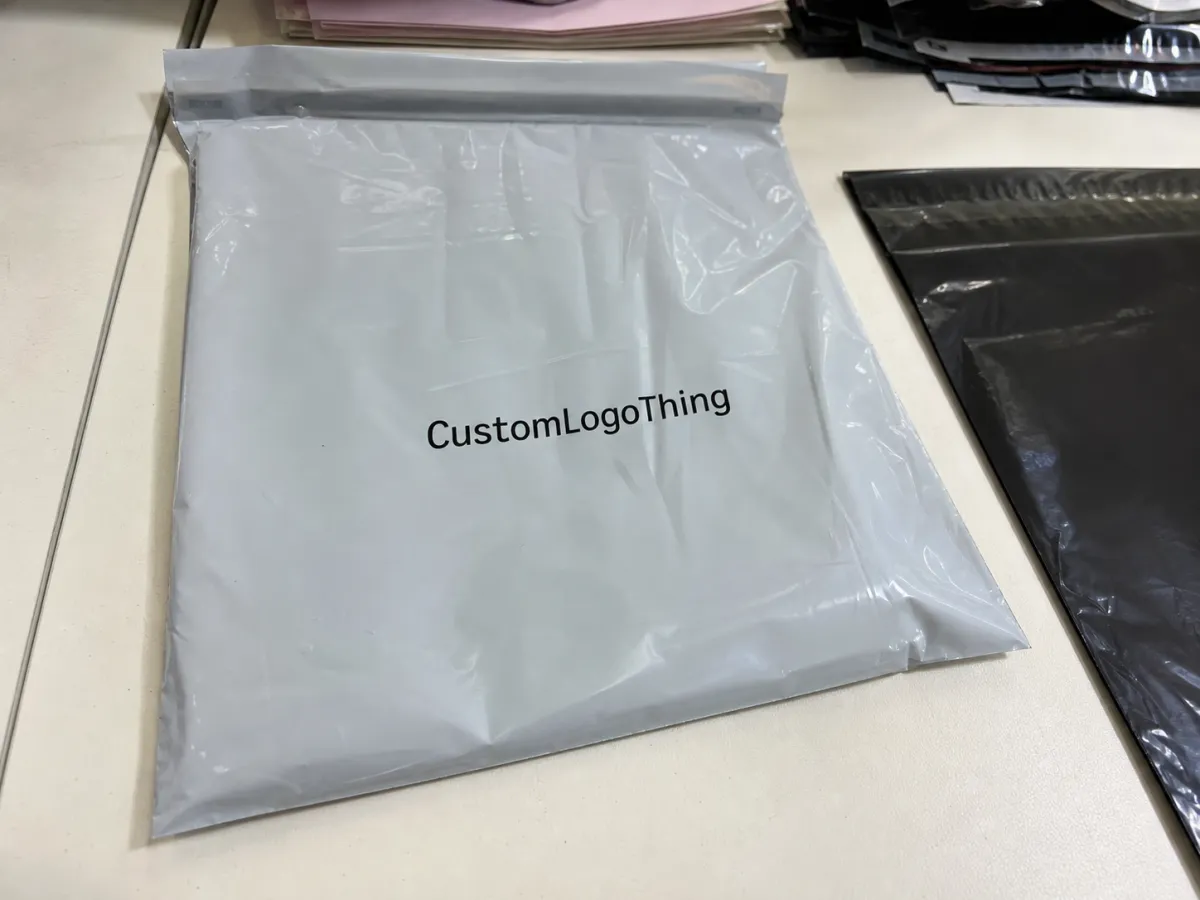
For a small apparel label, boutique subscription brand, or beauty company, the mailer often carries more brand weight than the carton inside it. Customers see the outer pack first, and it may reappear in return shipping, social content, or an unboxing reel. That makes the mailer part of the product experience, not a side detail.
Large retailers can absorb overbuying. Smaller brands usually cannot. Lower MOQs help preserve cash flow, especially when a brand is testing a new drop, a seasonal colorway, or an unproven product line. They also reduce the risk of sitting on packaging that no longer matches the collection two months later.
There is also a trust effect. A clean logo, accurate color, and reliable adhesive strip suggest a brand that handles details carefully. Buyers do notice that, even if only quietly. The package either supports the brand or weakens it.
“The outside does not need to shout. It needs to look deliberate.”
That is why the conversation around this guide keeps resurfacing for growing brands. The useful question is not just how low the minimum order can go. It is whether the first order can support margin, launch timing, and a sane reorder plan.
Material, Seal, and Print Options That Shape the Final Bag
The film construction affects more than price. It changes the feel of the package, the way it resists punctures, and how well it holds up under handling. A common range for light apparel is around 2.5 to 3 mil polyethylene film. Heavier items, sharp-edged accessories, or rougher handling usually justify something closer to 3 to 4 mil. Thin film saves cost and weight. Thicker film buys protection and a more substantial hand feel.
Finish matters too. Gloss usually gives brighter color and stronger contrast. Matte reads softer and more premium in some categories, especially fashion and lifestyle. Soft-touch can be attractive, but only if the artwork and print control are strong enough to keep the surface from looking dull.
The seal deserves equal attention. A self-seal adhesive strip should close with enough pressure to stay shut through normal parcel movement, conveyor friction, and stacking. If the adhesive is too weak, the mailer can open before arrival. If it is overly aggressive, packing slows down because the operator has to fight the closure on every unit.
Printing method changes both appearance and economics. Digital printing is often practical for shorter runs because it avoids plate costs and keeps setup simpler. Flexographic or gravure-style production can make sense at higher quantities, where tooling is spread across more units. The more coverage, colors, and special effects you ask for, the more the quote moves.
- Thin film: lower cost, lower weight, less margin for sharp product edges.
- Thicker film: better puncture resistance and a heavier, more finished feel.
- Matte surface: quieter visual impact, often preferred for premium fashion.
- High-coverage print: stronger shelf and social presence, but higher unit cost.
Technical buyers often sanity-check supplier claims against common references such as ISTA parcel testing protocols and material guidance from Packaging.org. That does not replace a proof or sample test, but it helps separate real production limits from glossy language.
Size, Thickness, and Spec Choices That Prevent Returns
Size should follow the shipped product, not the catalog description. That becomes obvious when a buyer tries to fit a folded garment, polybag, insert card, and thank-you note into a mailer sized for the item alone. A mailer that is too tight slows packing and raises the chance of seam stress or returns. A mailer that is too large wastes material and can increase dimensional shipping cost.
Thickness is the next tradeoff. Too little film and the corners scuff, crease, or puncture during transit. Too much and the order becomes heavier and more expensive than it needs to be. For many boutique programs, the best answer is a short sampling process: compare two or three thicknesses, check how they behave with real product load, and then lock the spec.
Several details are easy to miss in the first quote. Internal dimensions matter more than the label size. Seal width changes how much usable opening the packer has. Gussets can help with awkward shapes. A logo positioned on a flat, high-contrast panel reads better after handling than one placed where the film folds.
Good sizing also reduces damage claims. A pack that overfills the seam tends to fail at the worst possible moment. A pack with too much empty space can shift inside the mailer and arrive scuffed. Neither outcome is flattering to the brand.
- Carrier handling: mailers need enough strength to survive sorting, stacking, and drop impact.
- Fulfillment speed: a clear fit speeds pack-out and reduces operator hesitation.
- Damage control: a properly sized bag lowers the chance of corner splits and seam failure.
- Inventory fit: one standard spec is easier to reorder than a constantly changing size mix.
Some suppliers can reference film behavior against common tensile or seal expectations such as ASTM D882-type film testing. That is useful, but sample performance in actual packing conditions still matters more than a line in a spec sheet. A mailer that looks excellent in a proof can still prove awkward once the product, insert, and adhesive all meet in the same bag.
Pricing, MOQ, and Unit Cost Benchmarks
Pricing usually comes down to quantity, print complexity, and material choice. The cleaner answer is that MOQ changes the entire economics of the order. Setup charges, proofs, and any tooling costs get divided across fewer units at low volume. At higher volume, those same charges are diluted, which is why unit cost tends to fall as the order grows.
For boutique buyers, that ladder matters more than a single price. A quote for 500 bags may seem acceptable until the 2,000-piece tier drops the per-unit cost enough to change the decision. The useful comparison is a price table with multiple breakpoints, not a single starting number.
| Option | Typical MOQ | Illustrative Unit Cost | Best Fit |
|---|---|---|---|
| Stock size, one-color logo | 500-1,000 | $0.18-$0.38 | Launches, testing, simple branding |
| Custom size, one to two colors | 1,000-2,000 | $0.24-$0.52 | Regular boutique fulfillment, moderate coverage |
| Full-bleed printed design | 2,000-5,000 | $0.35-$0.75 | Fashion drops, strong visual branding, photo-first packaging |
These numbers are only a market frame. They are not a quote and should not be treated as one. A digital process can reduce setup costs. A plate-based job can add them back quickly. Special inks, metallic effects, and precise color matching all push pricing upward. The cheapest route is usually the simplest design that still looks intentional on arrival.
For a buyer managing margin, the right question is not “What is the lowest possible quote?” It is “What changes if I move from 1,000 to 3,000 bags?” That version gets closer to the economics that matter.
Production Steps and Turnaround Expectations
Production usually follows the same sequence: artwork intake, file review, proofing, prepress, printing, finishing, packing, and freight. Most delays happen before the press starts. Files with missing fonts, unclear colors, or no proper dieline create questions. Slow proof approval does the same. Those two bottlenecks cause far more schedule drift than the actual print run.
Clean files save days. Vector logos print more predictably than raster images. Linked fonts and clear color references reduce back-and-forth. If the layout is already built on the supplier’s dieline, the proof cycle usually moves faster.
Typical timelines often land around 1 to 3 business days for proofing, followed by roughly 10 to 15 business days after approval for standard production. Freight is separate. Custom sizing, complex artwork, special finishes, or a crowded factory schedule can extend that window. Buyers planning a launch should always build in buffer time.
Packaging buyers sometimes focus only on print speed and ignore the rest of the chain. That misses the point. Production time is only one part of the schedule. Approval time, shipping lane, and whether the final art is clean enough to print all shape the real lead time.
Mixed-material programs add another layer. If a brand is using inserts, paper sleeves, or recycled content claims, it may need documentation tied to paper components or chain-of-custody references such as FSC certification guidance. Poly film is a different material conversation, but the paperwork still matters when packaging includes more than one substrate.
How to Order Without Overbuying Inventory
The safest first order is based on actual sales pace, a realistic growth assumption, and the product mix that will ship soon, not the one projected for an ideal quarter six months out. A brand shipping 300 orders a month does not need to buy like one shipping 3,000. Overordering creates dead stock, and dead stock usually shows up right after the design language changes.
A better rule is to carry enough bags for one normal cycle plus a modest reserve for spikes, replacements, or a short campaign overrun. For many small teams, that means two to six weeks of stock on hand. If the launch performs well, reorder before the last carton is opened. That keeps fulfillment moving and avoids rush freight or emergency substitutions.
First runs are most valuable when they test something specific: new artwork, a new category, or a new size combination. If the outcome is uncertain, keep the MOQ tight and learn from the shipment. The packaging can scale later. The first batch is there to reveal what actually happens in the warehouse, not what looked elegant in the mockup.
“A smaller first order is not hesitation. It is controlled risk.”
Repeatability matters once a spec works. Save the final approved artwork, thickness, finish, and dimensions in one place. That prevents the next reorder from turning into a new sourcing exercise.
Next Steps to Lock Specs and Request a Quote
Before requesting pricing, confirm five things: bag size, thickness, quantity, print count, and finish. Those choices drive the quote more than almost anything else. If one of them is vague, the supplier has to assume. Assumptions create revisions, and revisions slow the order.
Send the logo file, target quantity, shipping zip code, and any must-have branding notes in the first message. If there is a launch date, include that too. Ask for a proof, a tiered price table, and a production timeline in the same request. That keeps the decision set in one place instead of scattering it across several emails.
If the order needs to stay lean, keep the brief narrow. A standard size, a restrained color count, and a clear finish spec are easier to quote and easier to reproduce. The more complex the request, the more important it is to decide what actually adds value. Not every brand needs three ink colors and a full bleed pattern.
The best use of this guide is not to stretch the order. It is to remove guesswork before the quote lands.
Why Repeat Buyers Stay with the Same Supplier
Repeat buyers usually stay for the least glamorous reasons: consistency, predictability, and fewer surprises. The same size fits the same product. The same print standard keeps the brand image stable across drops. The same finish avoids awkward shifts from one reorder to the next. That kind of reliability is worth more than a dramatic headline price.
Communication matters as much as production quality. Small teams cannot afford a blurry proof, a last-minute substitution, or a shipment that misses a launch by four days. A good supplier confirms specs early, catches file issues before production, and keeps order history clean enough that the next reorder does not need to start from scratch.
There is also a cost reason. A supplier who spots artwork problems, clarifies dimensions, and keeps the spec sheet aligned can save more money than a slightly lower quote from a less careful source. Fewer defects. Fewer pack-out issues. Fewer hours spent fixing avoidable mistakes.
For boutique brands, the best supplier is rarely the cheapest one on paper. It is the one that keeps the mailer on-brand, the packing table moving, and the reorder process simple. That is the practical value of a focused guide like this: buy with enough discipline to protect margin, and enough attention to detail to make the package feel like part of the product.
What is the MOQ for boutique printed poly mailers?
MOQ depends on size, print coverage, and material, so ask for tiered quantities instead of assuming one universal number. Lower-MOQ runs usually cost more per unit, but they reduce inventory risk for launch orders and seasonal drops. A useful quote should show the breakpoint where unit cost changes, since that is the figure buyers need most.
How does the boutique printed poly mailers MOQ affect unit price?
As quantity rises, setup charges are spread across more bags, so the unit price usually falls. More colors, larger print areas, and special finishes can raise cost even if the MOQ stays the same. Ask for a price ladder so you can compare your target run against the next savings tier.
What artwork files do I need for custom poly mailers?
Vector artwork is best for logos and type because it stays sharp at print size. Provide exact color references and note whether you want Pantone matching or a CMYK build. If the supplier uses a dieline, place your art on it before sending files to reduce proofing delays.
How long does production usually take after proof approval?
Turnaround depends on order size, print complexity, and factory scheduling, but proof approval speed has a major impact. Clean files and a fast sign-off can keep the order moving without avoidable pauses. Add shipping time separately so your launch calendar reflects both production and transit.
Can I reorder the same boutique mailer design later?
Yes, if the size, material, and print specs stay the same, reorders are usually simpler than first-time runs. Keep the final approved artwork and spec sheet so the next order matches color and layout. Place reorders early if the bag is tied to a seasonal drop or a campaign with a fixed ship date.


