For subscription brands, subscription Printed Poly Mailers unit cost is not a side detail; it is part of the monthly margin story, and it can move faster than many buyers expect. A small change in film gauge, print coverage, or packout method may look minor on paper, but across thousands of recurring shipments it changes the real spend that flows out every cycle.
That is why the best packaging decisions are made with the fulfillment line in mind. A printed poly mailer can replace a separate label, reduce the need for a paper wrap, and still create a branded unboxing moment if the spec is planned properly. If you are comparing formats, it helps to look at both the wider packaging system and the mailer itself; our Custom Packaging Products page and Custom Poly Mailers page are a good starting point for that kind of comparison.
For a subscription program, the target is not just a pretty mailer. The target is a lightweight, right-sized pack that protects the product, moves quickly through the packing table, and keeps the shipping weight from creeping higher than necessary.
Why recurring shipments make packaging math matter
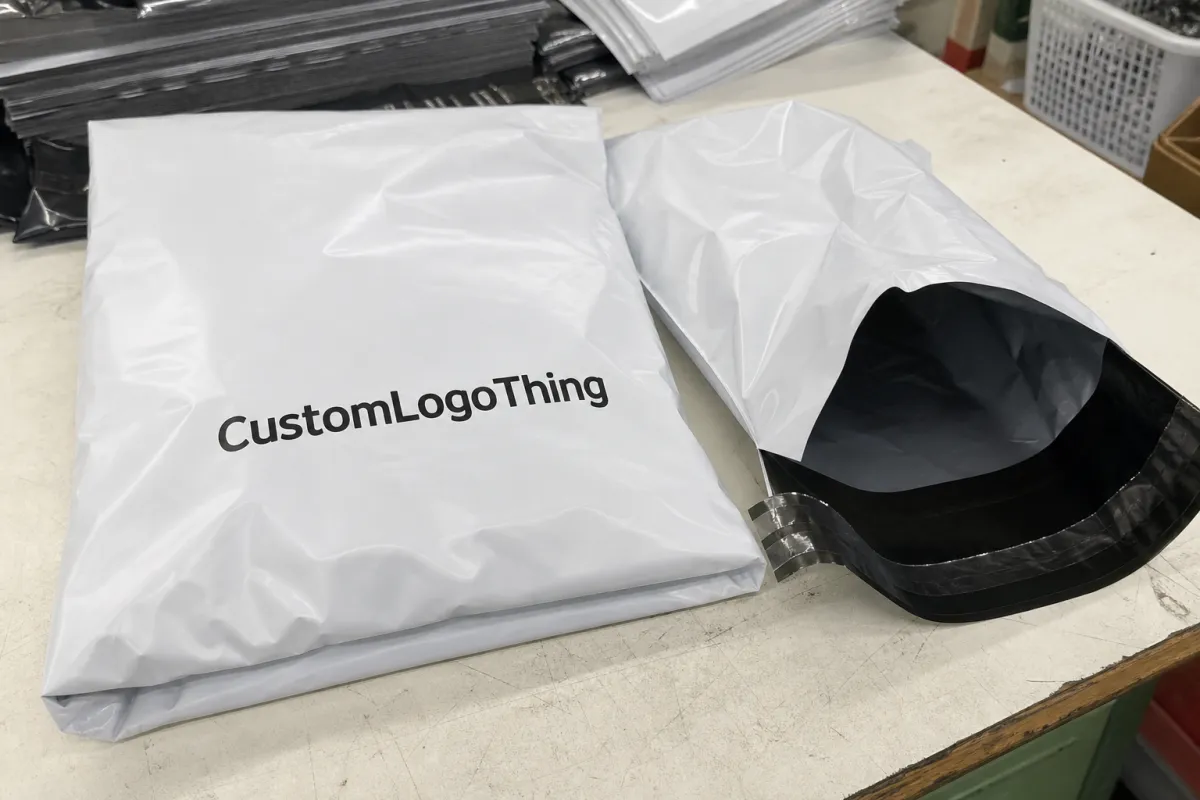
Recurring shipments turn packaging into a repeat expense, which means every design choice is multiplied by frequency. If a subscription sends 15,000 orders a month, a difference of even $0.02 per bag becomes $300 in monthly spend, or $3,600 across a year. That is why buyers who focus only on the first quote often miss the larger cost picture.
Printed Poly Mailers can also remove other line items from the packout process. A clear shipping label still has to go on, but a well-planned printed mailer can reduce the need for a separate branded insert or secondary wrap. In practice, that saves time at the table and lowers material touchpoints, which matters just as much as the piece price when labor is tight.
Common buyer mistake: treating the mailer as decoration instead of a functional part of the fulfillment system. The best-performing subscription mailers are sized, printed, and sealed for the warehouse first, then branded for the customer second.
There is also a practical freight angle. A lighter mailer helps keep dimensional weight under control, especially for soft goods, small accessories, books, samples, and bundled starter kits. That is where a good subscription printed poly Mailers Unit Cost discussion should always include shipping behavior, not only the bag quote itself. For standards on package transit testing, ISTA is a useful reference point, especially if the mailer needs to survive a rough last-mile route.
What a subscription-ready printed poly mailer should include
The core construction usually starts with low-density polyethylene or linear low-density polyethylene film. In plain terms, that gives you a flexible bag with enough stretch and puncture resistance to handle typical subscription shipments without feeling overly stiff. Most programs land somewhere around 2.5 mil to 4 mil, depending on what is being shipped and how sharp the edges are inside the pack.
Strong side seals matter more than many first-time buyers realize. If the seal line is weak or inconsistent, the mailer may split under conveyor friction, sorter pressure, or overstuffing at the packing table. Clean tear resistance also matters, because a customer should be able to open the package without needing a knife, while the bag still stays intact during transit.
Branding should be readable at speed. A mailer design that looks fine on a screen can disappear on a moving conveyor if the contrast is poor or the logo sits too close to the fold. Good recurring programs leave enough writable or scannable space for shipping labels, barcodes, and address blocks so the printer artwork does not fight the logistics label.
Buyers should also ask about opaque film for privacy, recycled content options where available, and print finishes that hold up to scuffing. If a mailer is going to slide across bins, chutes, and dock carts, a finish that resists abrasion will keep the graphics sharper for longer. If you need paper components in the program, such as inserts or carton labels, FSC-certified options can help document the sourcing side of the pack; the FSC site is a good place to review certification basics.
Film, dimensions, and print specs to compare
Thicker is not automatically better. A 4 mil bag can be the right choice for a subscription box with corners, hardware, or heavier bundled items, but a 2.5 mil or 3 mil mailer may be enough for apparel, soft goods, or flat accessories. If the bag is too thick, you pay more in material and often gain little in real-world performance.
Size deserves the same discipline. Flat width, usable length, and any gusset allowance all affect the fit. If the mailer is too large, product shifts around and the package feels sloppy. If it is too tight, seals can distort and the risk of puncture rises. The smartest spec is the one that fits the product plus any inserts, samples, or thank-you cards without forcing overfill.
Print specification decisions also move the needle. One-color artwork is usually the most efficient route, but two-color or full-color printing may be worth it if the brand relies on a stronger shelf or social presence. Matte and gloss finishes send different signals too: matte often looks softer and more premium, while gloss tends to punch up color and visibility. For repeat orders, it helps to lock color standards early so later runs do not drift.
- Film gauge: choose the lightest gauge that still protects the contents.
- Dimensions: match the bag to the packed product, not just the product itself.
- Print coverage: keep the graphic area intentional so labels and barcodes remain easy to place.
- Finish: decide whether matte, gloss, or a softer surface fits the brand and handling conditions.
- Repeatability: save exact artwork and material notes for the next reorder.
For buyers comparing sources, these details matter more than a vague “custom printed bag” description. Clear dimensions and print notes make a quote comparable, and that is the only way to judge cost per piece fairly across suppliers.
| Option | Typical cost per piece | Best fit | Main tradeoff |
|---|---|---|---|
| 2.5-3 mil, one-color print | $0.14-$0.24 | Light apparel, soft goods, lower-risk recurring shipments | Lowest branding and puncture margin |
| 3-4 mil, one- or two-color print | $0.18-$0.32 | Mixed product subscriptions, small bundles, moderate handling | Higher material spend, but better protection |
| 4 mil+, full coverage print | $0.28-$0.48 | Heavier packs, sharper contents, premium presentation | Strong look and feel, but higher unit cost |
Subscription printed poly mailers unit cost and MOQ
The main drivers behind Subscription Printed Poly Mailers unit cost are usually quantity, bag size, film gauge, and print complexity. Add more colors, go larger on the bag, or move up in thickness, and the cost per piece rises in a way that is easy to predict once you have the spec in front of you. That is why one quote can look much better than another until you compare the same dimensions and the same print setup.
MOQ matters because the setup cost has to be spread across the run. For a first order, many programs start at a smaller quantity if they are testing packaging response or validating a new subscription tier. Once demand is steady, bulk pricing usually improves enough that a larger buy becomes the smarter move. In real terms, a supplier may quote a first run at 2,000 or 5,000 pieces, then show a much better cost per piece at 10,000 or 25,000 because the tooling fees and setup charges get diluted.
Here is the part buyers often miss: the headline piece price is not the full picture. Plate charges, artwork revisions, proofing, freight, and rush timing all affect the landed cost. A quote that looks cheaper by a few cents can easily lose that advantage once freight or setup charges are added back in.
For a cleaner comparison, ask each supplier to quote the same bag size, the same gauge, the same print coverage, and the same delivery terms. That makes the Subscription Printed Poly Mailers unit cost easier to judge without guesswork.
Examples below are broad planning ranges, not promises, but they help frame expectations.
Typical pricing view by run size
- Small test run: 2,000-5,000 pieces often sits at the higher end of the range because setup is spread over fewer bags.
- Mid-volume reorder: 5,000-10,000 pieces usually improves the cost per piece enough to support a stable subscription launch.
- Larger recurring buy: 10,000+ pieces often produces better bulk pricing, especially if artwork stays the same between cycles.
If you are comparing suppliers on price alone, ask whether the quote includes tooling fees, plate costs, or a digital proof. Those line items are easy to overlook, and they often explain why one line looks cheap at first but lands higher after the paperwork is complete.
Production steps, proofing, and lead time
The usual flow starts with a spec review, then a quote, then artwork checking, then proof approval, then production, inspection, and freight booking. None of that is unusual, but delays tend to cluster in two places: artwork that is not print-ready and orders that change after proof approval. Both are avoidable, and both add days when a launch date is already tight.
A clean file speeds everything up. Vector artwork, clear color callouts, and exact dimensions reduce the back-and-forth that can turn a straightforward order into a longer one. If the artwork needs a new layout, the production team may have to rebuild the print file, which affects timing more than many buyers expect. In practice, a well-prepared file can trim days off approval.
For lead time, a practical expectation is often 12-15 business days from final proof approval for standard runs, though larger quantities, specialty printing, or freight constraints can extend that window. That is why subscription brands should place the order before inventory gets tight, not after the warehouse is already waiting on packaging.
A useful planning habit is to work backward from the receiving date. If the first shipment needs to land before a launch, build in time for proofing, production, and freight variability. That is especially true if the packaging has to arrive in a specific warehouse receiving window or before a monthly packout date.
How we keep repeat orders consistent across every run
Recurring programs live or die on consistency. A subscription customer should not see a different shade of red, a shifted logo, or a bag that suddenly feels thinner on the next cycle. The way to avoid that is simple enough: save exact specs, retain artwork files, and document the print settings that were approved on the first run.
Lot tracking and material consistency matter too. If the resin blend changes, the bag may handle a little differently under heat or sealing pressure. That does not always create a visible defect, but it can change how the packaging behaves on the line. A supplier that keeps approval records and references the same film, same seal width, and same artwork version reduces that risk.
From a packaging buyer’s point of view, the value of a reliable supplier is not just one good quote. It is a repeatable process that keeps the subscription shipment looking and performing the same across every reorder. That protects brand presentation and keeps the fulfillment team from having to relearn the pack.
There is also a real business benefit to documenting repeat-order expectations. If a brand knows the unit cost, MOQ, and reorder timing in advance, it can plan inventory with less pressure and fewer emergency purchases. That kind of planning is where subscription packaging gets easier to manage.
For broader packaging guidance, the EPA recycling resources are a useful reference if you are also sorting out recycled-content claims and disposal guidance for the rest of the pack.
Buying mistakes that raise the unit cost
Over-specifying the bag is one of the fastest ways to spend too much. A thicker film, oversized dimensions, and heavy print coverage can all be justified in the right situation, but buyers often stack those choices together without checking whether the product truly needs them. That is how the unit cost creeps up without improving performance in any meaningful way.
Another common error is ordering before the artwork is final. If the file still needs revisions, the order may stall in proofing, and the timeline can slip right into rush territory. Rush charges are expensive because they compress the production window, and they rarely make a bad plan better.
Freight and storage deserve attention as well. A lower bag price does not help much if the shipment cost is high or the cartons take up more warehouse space than expected. Subscription brands should think in landed cost terms, not just quote terms, because the real budget includes the bag, the freight, the receiving process, and the time spent handling the material.
- Do not: choose a heavier gauge unless the contents need it.
- Do not: approve artwork without confirming label space and barcode placement.
- Do not: compare quotes that use different dimensions or print coverage.
- Do not: let rush timing replace a normal production schedule.
Honestly, the best way to protect margin is to keep the spec tight and the decision tree short. Every extra variable adds cost somewhere, even if the quote sheet only shows one line item changing.
What to send for a fast quote and next steps
If you want a fast, accurate quote, send exact bag dimensions, film target, print colors, artwork files, quantity range, and ship-to location. The more precise the input, the more realistic the pricing will be. If you already know the target cost per piece, say so early; that helps the supplier build a quote around the budget instead of guessing at it.
Ask for tiered pricing as well. A good quote should show where the cost drops at higher volumes, what MOQ applies to the first run, and how repeat-order pricing compares after the setup is already complete. That makes it much easier to compare subscription printed poly mailers unit cost across several quantities without mixing different spec levels together.
A solid next step is straightforward: confirm the spec, request a proof, review the timeline, and place the order early enough to cover launch inventory and the first reorder cycle. That is the cleanest way to keep recurring shipments on schedule and on budget.
From a buyer’s perspective, the best programs are not the cheapest-looking ones on day one. They are the ones where the bag, the print, the MOQ, and the lead time all fit the subscription model, and where the subscription printed poly mailers unit cost stays predictable enough to support growth instead of fighting it.
What affects subscription printed poly mailers unit cost the most?
Quantity, bag size, film gauge, and print complexity usually move the unit cost the most. Setup, freight, and rush timing can change the landed cost even when the piece price looks steady.
What MOQ should I expect for custom subscription poly mailers?
MOQ depends on size, print count, and whether the order is a new setup or a repeat run. If you are testing a new subscription offer, ask for the smallest run that still keeps the unit cost workable.
How do I compare printed poly mailer pricing fairly?
Compare the same dimensions, gauge, print coverage, and quantity tier across quotes. Include freight, proofing, and any setup charges so you are comparing real landed cost, not just headline price.
How long does production usually take after approval?
Timing depends on artwork readiness, order size, and current production load. A clean proof approval process shortens lead time, while revisions or file fixes usually add days.
What should I send to get an accurate mailer quote?
Send dimensions, material preferences, print colors, quantity range, artwork, and ship-to location. If you have a target unit cost, share it early so the quote can be built around your budget.


