Embroidered Baseball Caps wholesale supplier for boutique retail buyers is a search phrase with a real job behind it. It points to margin, fit, shelf appeal, and whether the supplier can repeat the same cap six weeks from now without improvising. That last part matters more than most buyers want to admit.
A cap can look clean on a product page and still turn into a headache after delivery. The crown collapses in transit. The thread pulls the logo out of shape. The navy body changes shade on reorder. One small failure in a boutique program shows up fast because the assortment is small and every unit has a place on the floor.
Boutique retail buyers are not just buying hats. They are buying sell-through. They need a product that photographs well, fits a broad range of heads, and stays consistent across reorders. That takes more than a good logo file and a cheap blank.
Embroidered caps work for lifestyle shops, resort stores, campus boutiques, salons, coffee shops, and local apparel lines because they are compact, visible, and easy to merchandise near checkout. The product looks simple. The production decisions behind it are not.
Why an Embroidered Baseball Caps Wholesale Supplier for Boutique Retail Buyers Protects Margin
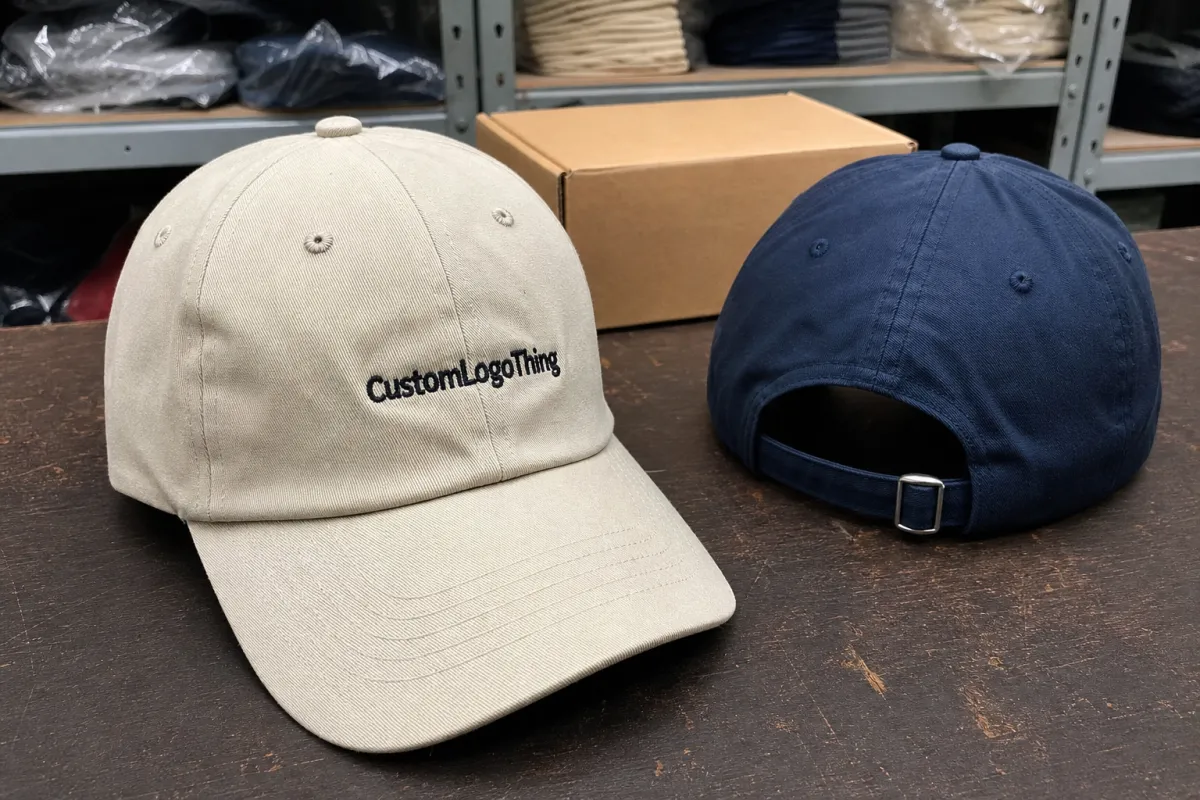
A good Embroidered Baseball Caps wholesale supplier for boutique retail buyers protects margin by preventing the usual money leaks: bad embroidery, poor packing, weak MOQ planning, and vague quotes that leave out the costs that actually land on the invoice. The blank cap price is only one piece of the picture.
Stitch count, placement count, thread changes, closure type, labels, hang tags, packaging, freight, and inspection all affect unit cost. A simple front logo on a stock cotton twill cap sits in a very different cost band than a corduroy cap with puff embroidery, a woven side label, and custom retail tagging. Same category. Very different economics.
Here is the trap: buyers treat every cap like a blank panel with a brim. It is not. A low-profile unstructured dad cap behaves differently under the needle than a structured six-panel cap. A mesh-back trucker gives you height and airflow, but small script can disappear on that front panel if the logo size is not planned correctly. The fabric decides more than people think.
Buyer note: Ask for the cap body, crown profile, embroidery method, packaging plan, and reorder availability in writing. If the quote does not tell you what the finished cap will look and feel like, the quote is incomplete.
Custom Logo Things supports wholesale Buyers Who Need practical coordination instead of inflated promises. For boutique programs, that usually means a controlled assortment, a workable MOQ, a sample path that does not drag on forever, and packing that makes receiving less painful. If you are building a broader branded merchandise buy, the Wholesale Programs page is a useful starting point because it puts caps in the context of other custom logo products.
Cap Styles, Crown Shapes, and Embroidery Options That Sell at Retail
Cap selection should start with the customer, not the decoration. A washed cotton dad cap feels relaxed and broken in, so it fits lifestyle boutiques, beach shops, coffee shops, and casual gift assortments. A structured six-panel baseball cap holds its shape better, which helps a logo stay crisp on display and in product photography. Five-panel caps give a flatter front face, which works well for patches and simple lettering.
Trucker caps still sell because they are easy to understand at a glance. They fit outdoor stores, tourism programs, breweries, lake shops, and workwear-inspired displays. The mesh back cuts weight and improves airflow. The structured front gives the embroidery a strong stage. That matters more than trend pieces that look clever but confuse the customer.
Performance polyester caps make sense for run clubs, golf shops, fitness boutiques, and resort programs. The fabric is lighter and usually dries faster than cotton. Corduroy and wool-blend caps skew more seasonal, but they can raise perceived value fast if the design stays restrained and the color palette does not get noisy. Boutique buyers usually do better with a tighter edit than with a wall of options.
Crown profile changes the whole read of the cap. Low-profile caps sit close to the head and feel casual and giftable. Mid-profile structured caps give embroidery more stability and usually photograph better. High-profile caps and tall trucker fronts create more visual space, but the logo size has to earn its place. A tiny mark can look timid. A giant mark can look like a billboard nobody asked for.
Embroidery choice should match the cap body and the retail price. Flat embroidery is the safest path for clean marks and small icons. 3D puff embroidery works best on bold letters and simple shapes, because the foam underlay needs room. Tonal embroidery gives a softer, more fashion-forward look on washed cotton or corduroy. Side embroidery and back-strap embroidery add detail, but they should support the main brand story instead of cluttering it.
Thread also changes the mood. Standard polyester thread is durable and colorfast. Matte thread softens the finish for brands that want less shine. Metallic thread can work as an accent, but it is less forgiving under production and should stay away from fine details. Tone-on-tone combinations are useful when the cap should feel elevated rather than loud.
- Washed cotton: strong for relaxed lifestyle boutiques and gift shops.
- Structured cotton twill: dependable for campus stores, brand merch, and repeat programs.
- Mesh-back trucker: practical for outdoor, tourism, brewery, and resort retail.
- Performance polyester: useful for fitness, golf, travel, and warm-weather assortments.
- Corduroy or wool blend: better for seasonal capsule drops and higher perceived value.
A focused embroidered baseball caps wholesale supplier for boutique retail buyers should explain these differences before sampling starts. If the supplier waits until bulk production to mention them, the buyer is already behind.
Wholesale Cap Specifications Buyers Should Confirm Before Ordering
Every wholesale cap order should have a spec trail. It does not need to be a monster tech pack, but it should be clear enough that production, inspection, and reorder teams are all chasing the same target. Key details include fabric composition, panel count, crown height, structured or unstructured build, visor curve, sweatband material, closure type, size range, embroidery area, thread colors, label requirements, and carton packing method.
Cotton twill is reliable because it has enough body for daily wear and accepts embroidery well when the crown is stable. Washed cotton feels softer, but that softer hand can move more during stitching, so digitizing and backing matter. Polyester is lighter and works well for performance looks, though a shiny finish will not suit every boutique. Corduroy adds texture and looks excellent with tonal embroidery, but stitch density has to stay controlled so the logo does not fight the ribs.
Closures change both fit and price perception. A metal buckle with a self-fabric strap usually feels more refined than a basic hook-and-loop closure. Snapbacks are casual and common on structured caps and truckers. Elastic stretch fit gives a cleaner back view but needs tighter size planning. Fitted caps are less forgiving for boutiques because size breaks create inventory risk. Most small retailers do not want that headache. Fair enough.
Artwork prep saves money before anyone touches a machine. Vector artwork is the standard because the digitizer can clean and scale it correctly. Thin lines often need to be thickened. Tiny lettering can fill in during stitching, especially under roughly 0.20 inches in letter height depending on font, fabric, and thread. Gradients, shadows, and tiny illustration details usually need simplification because embroidery uses stitch direction and density, not ink coverage.
Embroidery files should account for stitch type, stitch direction, density, underlay, pull compensation, and fabric movement. On a curved cap panel, thread tension can pull a circle into an oval or make small text close up if the file is not built for the fabric. That is normal production physics. It is not a mystery. It is the part where cheap shortcuts stop working.
Packaging specs matter after the machines stop running. Individual poly bags protect caps from dust and handling. Hang tags support retail display. Barcode labels and carton labels by SKU help the receiving team move faster. Inner packs, such as 12 pieces per color, make counting easier. Crown support during transit helps structured caps keep shape, especially when cartons move through parcel handling or mixed freight. Buyers who care about transport performance can look at general compression and handling concepts from ISTA as a useful reference point.
For buyers who need the caps to arrive ready for retail, packaging is not an afterthought. It is part of the product.
Pricing, MOQ, and Unit Cost Factors for Boutique Cap Orders
Wholesale cap pricing is shaped by the blank cap style, fabric, structure, quantity, embroidery complexity, stitch count, number of placements, thread changes, finishing requirements, packaging, labeling, and shipping method. The lowest quote is rarely the lowest landed cost if the goods arrive distorted, mislabeled, or impossible to sort quickly.
MOQ depends on the build. Basic embroidery on stock cap bodies is usually more flexible than custom-dyed fabrics, specialty closures, private-label trims, woven interior labels, custom taping, or multiple logo placements. A buyer ordering 72 stock caps with one front logo sits in a different lane from a buyer ordering 600 caps across four colors with puff embroidery, side marks, hang tags, and retailer barcodes. Same product family. Different production reality.
Unit cost drops as quantity rises because digitizing, setup, thread prep, trim sourcing, quality control, and packing labor are spread across more units. That part is predictable. What is less predictable is how many colors a boutique buyer really needs. Too many colors spread inventory thin. Too much size or style variation does the same thing. Dead stock is expensive. So is markdown math.
| Order Type | Typical Use | Common Cost Drivers | Buyer Watchout |
|---|---|---|---|
| Stock cotton cap with front flat embroidery | Local retail, boutique merch, coffee shops | Stitch count, quantity, thread colors, packing | Confirm crown profile and reorder color availability |
| Structured trucker with puff embroidery | Outdoor, tourism, resort, brewery displays | Puff foam, larger logo size, structured front, setup time | Keep letters bold and avoid fine interior gaps |
| Corduroy or specialty fabric cap | Seasonal capsules and fashion boutiques | Fabric sourcing, smaller color runs, texture handling | Approve a stitched sample before bulk production |
| Private-label cap program | Retail brands with repeat collections | Labels, trims, custom packaging, higher MOQ | Document specs carefully for future reorders |
For a fast quote, prepare the cap style reference, preferred material, desired colors, quantity by color, logo artwork, embroidery placement, target delivery date, packaging needs, retail labeling needs, and shipping destination. The quote gets better when the supplier has real inputs instead of a loose idea and a deadline.
Cost tradeoffs should be clear. A simple front embroidery on a stock cotton cap is usually the most efficient route. Puff embroidery, specialty fabrics, multiple placements, woven labels, hang tags, custom cartons, and barcode programs add cost, but they can support a higher retail price if the cap feels intentional. The product has to justify itself. Cute does not pay freight.
If the buyer is comparing caps with other custom apparel or accessory programs, it helps to organize the request before pricing starts. The Custom Logo Things Wholesale Programs page gives a broader view of how cap orders can fit into a larger branded assortment.
Production Process and Timeline from Artwork to Delivery
The clean sequence is simple enough: inquiry review, cap style recommendation, artwork check, quotation, proof or sample, embroidery digitizing, pre-production approval, bulk production, trimming and inspection, packing, and shipment. Skipping steps may feel faster. Usually it just moves the risk downstream.
Embroidery digitizing is not file conversion. The digitizer decides stitch type, direction, density, pull compensation, and underlay so the design sits properly on a curved cap panel. A good file helps prevent puckering, thread breaks, uneven edges, and letters that close up. Cap fronts are not flat. Seams and crown curvature affect how the needle moves, which is why a logo that behaves on paper can fail on fabric.
Proofing options depend on risk. A digital mockup is good for checking placement, rough scale, and color direction. A stitched sample gives more confidence because it shows thread on the actual fabric. A pre-production sample is the safer route when the order uses new materials, private-label trims, puff embroidery, specialty thread, complex artwork, or a hard launch date.
Timelines change with stock cap availability, artwork readiness, sample approval speed, machine capacity, number of SKUs, packaging requirements, inspection time, and freight method. Many simple stock-cap embroidery orders can move in a few production weeks after approval. Custom material programs take longer because fabrics, trims, and labels need to be sourced before bulk production starts. That is not delay for the sake of delay. That is how sewn goods work.
Boutique buyers should leave time for approval rounds and receiving checks, especially for a seasonal drop, trade event, store opening, resort delivery window, or apparel launch that has to land on a fixed date. Share the required delivery date during quoting, not after sampling. Freight choice also changes the math. Air can save time and push up landed cost. Ocean or consolidated freight can lower transit cost but needs more calendar room and tighter carton planning.
An experienced embroidered baseball caps wholesale supplier for boutique retail buyers should keep the production path visible. The buyer should know what is approved, what is pending, and what detail could still affect timing. Silence during production is not a process. It is a warning sign.
Quality Checks That Keep Embroidered Caps Retail-Ready
Retail-ready caps need more than a logo in roughly the right area. Inspection should cover embroidery alignment, thread tension, skipped stitches, loose threads, puckering, logo consistency, cap symmetry, visor curve, closure function, fabric stains, color accuracy, and carton condition. Those checks sound basic. They are also exactly where boutique inventory can lose value.
Caps behave differently from flat apparel decoration. The front panel is curved. Seams may run through or near the embroidery field. Structured fronts resist the needle differently than soft unstructured crowns. Fabric moves. Thread tension pushes back. That is why a logo that prints cleanly on a T-shirt may need adjustment before it stitches well on a cap.
Small tolerances are part of sewn goods. Slight placement variation between panels can happen, especially on soft caps. Fabric shade may vary slightly between dye lots. Very small lettering may need to be simplified for clean stitch definition. A supplier that hides those limits is not helping the buyer. A better supplier explains them before production and shows where the risks sit.
If exact color matching matters, provide Pantone references, approved product samples, or photos under neutral light, then review thread cards or a stitched sample. Guessing at color is a great way to create a return pile nobody wants.
Finishing matters too. Thread trimming should be clean, with no tails wandering across the logo face. Steam shaping can help some structured caps recover after handling. Folding or crown-support packing protects the front shape. Individual bagging keeps dust off. SKU sorting, barcode application, and carton labels help the receiving team count fast instead of opening every carton and building a spreadsheet by hand.
For sustainability-minded retailers, packaging choices can include recycled-content cartons, right-sized cartons, reduced excess poly, and paper-based hang tags where appropriate. Claims should be specific and supportable. The Forest Stewardship Council is a recognized reference point for responsible paper sourcing when buyers specify tags, sleeves, or cartons.
Quality control is not just about rejecting bad units. It keeps the whole retail flow cleaner: fewer backroom issues, fewer unsellable caps, better presentation, and easier reorders against the approved sample. Clean caps are easier to sell. That part is not complicated.
Next Steps to Place a Wholesale Cap Order with Confidence
Start with the retail plan. Choose two or three cap body options, confirm the target retail price, define the fit you want, prepare logo artwork, estimate color and quantity splits, and decide whether the caps need hang tags, barcodes, or private-label packaging. If the cap is supposed to retail at $28, the build should look different than a cap meant to sit at $42.
I usually prefer a tight assortment for first orders: one hero logo, two to four cap colors, and a decoration style that can be reordered without special sourcing. That structure lets the buyer test demand without scattering budget across too many SKUs. If the first run moves, the next order can add a seasonal color, a side mark, or a specialty fabric with less guesswork.
Send the right information early. A vector logo file, cap style preference, approximate quantity, color list, embroidery placement, sample deadline, delivery address, and retailer compliance details will make the quote more accurate. If barcodes, carton labels, hang tags, or inner packs are required, include those before pricing is finalized.
Approve a physical sample when embroidery detail, thread color, fabric texture, or crown shape is critical to the presentation. Digital proofs help, but they cannot show thread sheen, fabric movement, puff height, or the way a low-profile cap sits on the head. Physical review matters most for tonal logos, corduroy, metallic accents, and fine lettering.
Custom Logo Things can help buyers organize the moving parts through practical wholesale planning, clear decoration choices, and retail-aware packing. For a broader view of how cap programs fit with other branded products, review the Wholesale Programs page and line up the order details before requesting pricing.
Working with an embroidered baseball caps wholesale supplier for boutique retail buyers should give you clear specs, realistic pricing, dependable production steps, and caps that are ready to sell when they reach the store. That is the point. Fewer surprises. Better product. Less money wasted on avoidable mistakes.
FAQ
What should boutique buyers ask an embroidered cap wholesale supplier before ordering?
Ask for cap body options, fabric details, crown structure, embroidery method, MOQ, stitch-count assumptions, sample options, production timeline, packaging choices, and reorder availability. Provide logo artwork, target quantity, delivery date, and retail labeling needs so the supplier can quote accurately instead of tossing out a vague starting price.
What is a practical MOQ for wholesale embroidered baseball caps for boutiques?
MOQ depends on whether the order uses stock cap bodies or fully custom materials. Basic embroidered stock-cap orders are usually more flexible than custom-dyed or private-label programs. Higher quantities generally lower unit cost because setup, digitizing, embroidery prep, and packing labor are spread across more caps.
Can an embroidered baseball caps wholesale supplier match boutique brand colors?
Thread colors can often be matched closely using standard embroidery thread charts, while exact fabric color matching may require custom material sourcing and higher minimums. For better results, provide Pantone references, existing brand samples, or approved product photos, and review a stitched sample before bulk production.
How long does production take for boutique wholesale embroidered caps?
Timeline depends on artwork readiness, cap availability, sample approval, embroidery complexity, order size, packaging needs, and freight method. Buyers should allow extra time for physical samples when the order includes fine lettering, puff embroidery, specialty fabric, private-label trims, or a firm launch date.
What artwork works best for embroidered baseball caps sold in boutiques?
Clean vector artwork with strong shapes, readable lettering, and limited tiny detail works best because embroidery uses thread, not ink. Very thin lines, gradients, small text, and complex illustrations may need simplification during digitizing to stitch cleanly on a curved cap panel.