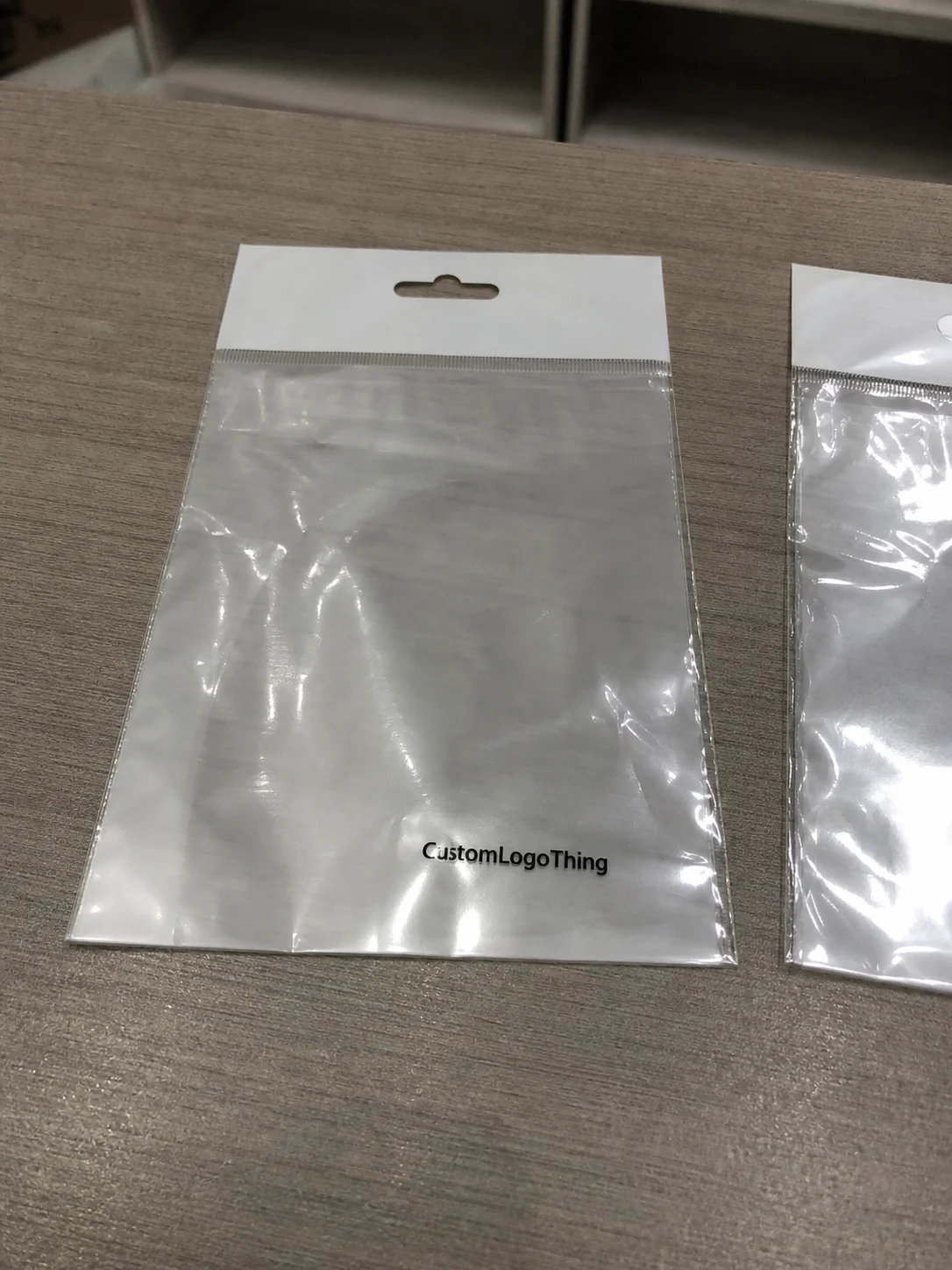
Brand Hang Tags Bulk low MOQ sounds like procurement jargon with too many nouns in a row, but the logic is simple: you want your product to look established without overcommitting to inventory that may be outdated after the next colorway, price change, or packaging refresh. That pressure shows up most in apparel, accessories, cosmetics, and gift items, where the hang tag is often the first physical branding element a customer touches.
A good tag does more than carry a SKU or price. It shapes perceived value the moment someone picks up the item. Retail buyers notice it. Warehouse teams notice it. Customers may not explain why one product feels more polished than another, but they can tell the difference. A flimsy tag, muddy print, or awkward layout quietly drags the product down.
Low MOQ changes the buying equation. Instead of committing to thousands of units just to reach a better price, brands can order enough to improve unit cost without locking themselves into oversized inventory. That is useful for test launches, seasonal releases, pilot stores, limited collections, and brands that revise artwork often.
Why low MOQ bulk hang tags make sense for small and growing brands
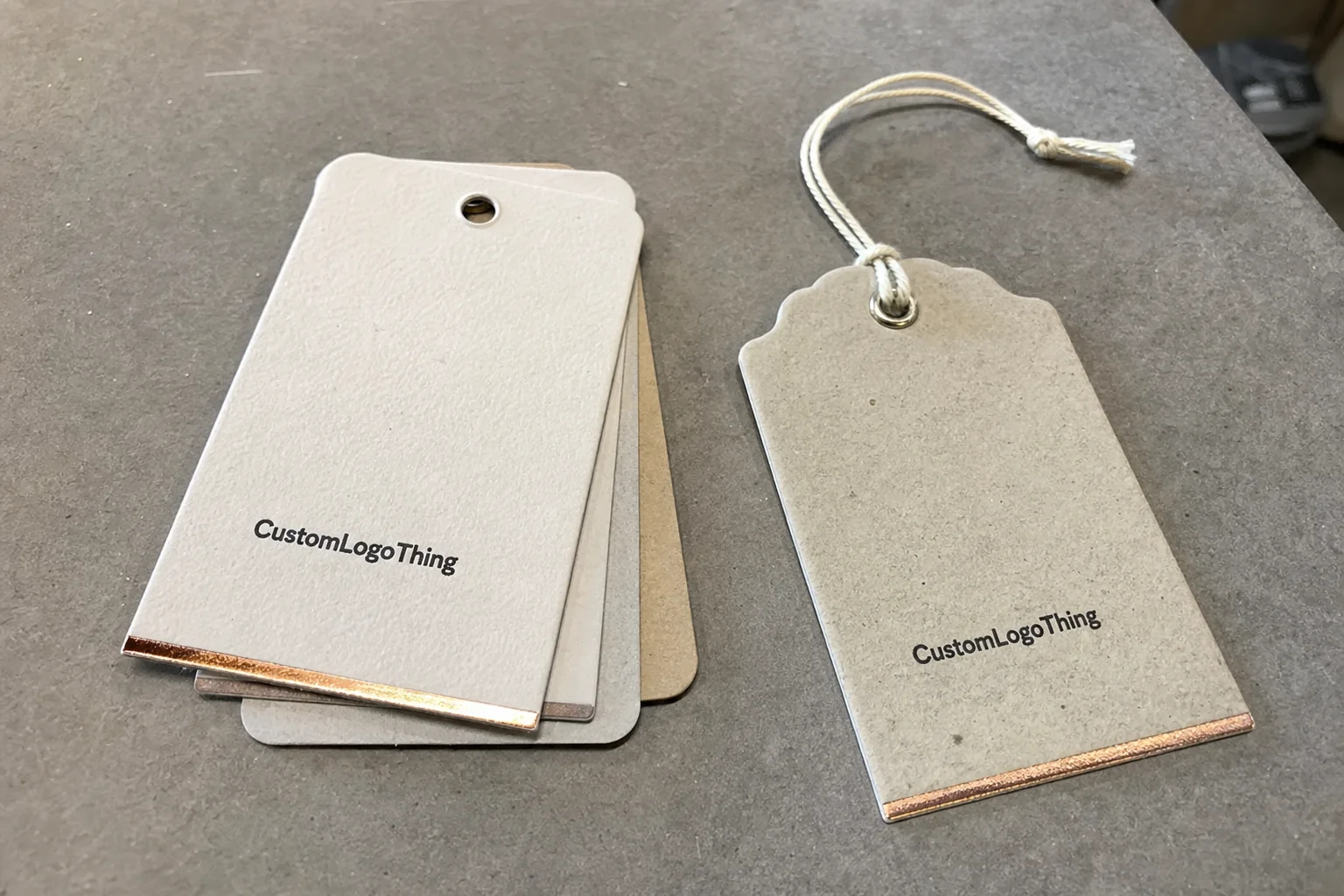
Small brands usually face the same tension: they need to look credible now, but they cannot afford waste. Ordering too many hang tags is a classic dead-stock problem. The savings per unit look attractive on paper, then the design changes and the old batch sits in storage while everyone pretends it was “for backup.”
Brand Hang Tags Bulk low MOQ ordering gives teams more control. You can scale enough to reduce the unit cost compared with a micro run, but you do not need the inventory commitment that comes with traditional bulk buying. For businesses with fast-moving product calendars, that middle ground is often the practical choice. It also leaves room for adjustments to color, copy, paper, and finish after the first run.
The value is not only financial. Low MOQ helps with learning. A brand can compare matte versus soft-touch, coated versus uncoated stock, or a simple square format versus a die-cut shape before committing to a larger program. A few hundred tags can reveal more than a long internal debate ever will.
“The best tag order is the one that still feels right after the launch rush is over.”
That flexibility matters because branding decisions tend to get made under deadline. Product photography, packing, and retail intake all create pressure to move quickly. Low MOQ protects the schedule while keeping the packaging system adjustable.
Custom hang tag options that still look premium at smaller quantities
Low MOQ does not mean low impact. It just means the design has to work harder. The strongest hang tags usually rely on a clear structure, smart material choice, and one or two premium details rather than several competing effects trying to earn attention at once.
The most common formats are flat single-sheet tags, folded tags, die-cut shapes, and multi-panel layouts. Flat tags are the simplest and cheapest to produce. Folded versions create room for brand copy, care instructions, or a barcode without crowding the front. Die-cut shapes can create a stronger shelf identity, though they usually introduce tooling or setup costs. Multi-panel tags are useful when a brand needs more information but still wants a clean front face.
Paper stock changes the feel more than many buyers expect. A 350gsm artboard usually gives a crisp print result and enough rigidity for retail handling. Uncoated paper has a softer, more tactile look and works well for minimalist or natural brands. Kraft board signals an earthy, handmade feel, but it can soften color accuracy and make very fine text harder to read. Textured papers can look premium, although they are not always ideal for barcodes, tiny legal text, or ultra-sharp graphics.
Premium details should be chosen with the order size in mind. On smaller runs, the most useful finishes are the ones that add clear visual value without creating unnecessary complexity.
Finishes that work well on smaller runs
- Matte lamination for a clean look and better scuff resistance.
- Soft-touch lamination for a richer feel on apparel, beauty, and gift products.
- Spot UV to highlight a logo, icon, or pattern against a matte background.
- Foil stamping for metallic emphasis on premium collections.
- Embossing for a more tactile, dimensional finish.
- Rounded corners to reduce wear and soften the overall presentation.
Attachment choice deserves the same attention as print finish. Cotton cord feels natural and premium. Waxed string gives a neat, classic look. Elastic loops are efficient when speed matters. Plastic fasteners are cheap and practical, though not every brand likes the appearance. If tags are being hand-tied, keep hole size, cord length, and knot method consistent. If they will be attached by machine or in a fulfillment setting, confirm that the spec works with the equipment before production starts.
Start with the real needs: Does the tag need to carry pricing? A barcode? Care instructions? A QR code? Promotional copy? Once that is clear, the layout becomes easier to solve and the order is less likely to get revised halfway through prepress.
Size, paper, and print specifications buyers should lock in first
If the quote needs to be accurate, the specs need to be real. Not “roughly this size.” Not “something premium but not too expensive.” Those descriptions are common, but they are not enough for production. Finished dimensions, paper thickness, print sides, color count, finish, and quantity all influence pricing.
For apparel, hang tags often fall somewhere between 2 x 3.5 inches and 3 x 5 inches. Smaller formats are fine for simple branding and basic pricing. Larger tags make room for product storytelling, care details, or a more spacious visual layout. Folded tags run larger still, especially if the back panel is carrying instructions, multiple SKUs, or compliance copy.
Paper weight affects both durability and feel. Lighter stock can reduce cost and works fine for short-term or budget-sensitive runs. Heavier board, including 400gsm and above, feels more substantial and stands up better during retail handling. That said, thicker is not automatically better. A heavy board with weak design, poor contrast, or overcrowded text still looks messy.
Print coverage changes cost too. A simple one-color or two-color design on a light background is easier to produce and usually more forgiving in proofing. Full-bleed art, dense black fields, metallic inks, and large ink coverage raise both production complexity and drying sensitivity. If the design includes foil, embossing, or spot UV, expect additional setup and more careful approval before the run starts.
Before requesting brand Hang Tags Bulk low MOQ pricing, most buyers should have the following spec list ready:
- Finished size and shape.
- Paper type and thickness.
- Single-sided or double-sided print.
- Color count, including Pantone matching if required.
- Hole size and hole placement.
- Attachment type and length.
- Barcode, SKU, or price field requirements.
- Coating or special finish.
Legibility deserves more attention than it often gets. A barcode that looks fine on a screen but fails in production turns into a warehouse problem very quickly. Tiny fonts on textured paper can also become unreadable once ink spread and print gain are factored in. If there is care text, legal copy, or a QR code, the type size needs to be checked at final size rather than guessed from a design mockup.
Responsible sourcing may also matter. If a brand needs recycled, FSC-certified, or otherwise documented paper, that should be confirmed at the quotation stage rather than after approval. Third-party guidance can help here; ISTA packaging and transit testing guidelines are useful when tags are part of a larger packaging and shipping system, while FSC-certified paper options support sourcing claims that need documentation.
Brand hang tags bulk low MOQ: cost, pricing, and MOQ factors
Pricing depends on a few predictable variables: quantity, paper, size, finishing, and assembly. The more custom the order, the higher the cost. A die-cut, soft-touch, foil-stamped tag with cotton string will not price the same way as a plain matte tag with one-color print and no finishing.
Low MOQ almost always means a higher unit cost than a large production run. The setup time for artwork review, proofing, cutting, finishing, and packing still exists whether the order is 300 pieces or 30,000. Smaller brands pay more per unit, but they also reduce inventory risk and avoid tying up cash in packaging they may not need next quarter.
Typical pricing should be thought of in ranges rather than absolutes. A simple low-MOQ hang tag may fall into a modest per-unit bracket at a few hundred pieces. Premium finishes raise the price. At 1,000 pieces, unit cost usually improves. At 5,000 pieces, the savings become more noticeable again. If a quote sounds unusually low, check whether it includes stringing, assembly, proofing, and packing. Missing extras are one of the oldest ways to make a quote look attractive before the real total appears.
| Order tier | Typical unit cost trend | Best for | Tradeoff |
|---|---|---|---|
| 300-500 pieces | Highest | Testing, samples, small drops, launch runs | Limited unit savings, but low inventory risk |
| 1,000 pieces | Moderate | Small brands with steady sales | Better pricing, still manageable storage |
| 5,000 pieces | Lowest per unit | Established lines and repeat SKUs | More cash tied up, higher exposure to design changes |
Price instability usually comes from avoidable issues. Last-minute artwork changes, unclear specifications, requests for multiple finishes on a small order, and vague “just estimate it” briefs all create friction. The quote process moves faster when the buyer knows what they need and what they are willing to compromise on.
Comparing quotes also requires care. Some suppliers include the tag only. Others include stringing, individual packing, or bundling in sets. That makes a big difference to landed cost. Two quotes can look similar until one includes labor, while the other quietly assumes the buyer will handle assembly. Compare totals, not headline numbers.
Production process and lead time from artwork to delivery
The production sequence is usually straightforward: quote, artwork review, proof approval, production, finishing, packing, and shipment. Delays usually come from missing details, incorrect files, or changes after proof approval. In print production, “almost ready” generally means the file still needs work.
Vector artwork is the safest starting point. AI, PDF, or EPS files are preferred because they hold shape and type cleanly at production scale. Fonts should be outlined. Bleed should be built in. If the tag has a custom dieline or multiple panels, the template has to be correct before the file goes to prepress.
Lead time depends on complexity. A simple low-MOQ order can move fairly quickly once proof approval is complete. Custom shapes, foil, embossing, or several finishing steps add time. Shipping adds more, especially for cross-border orders or tight launch schedules. For simpler jobs, a planning window of around 12-15 business days from proof approval is a realistic baseline, with extra time needed for premium finishes or larger quantities.
Most delays can be traced to a short list of problems:
- Missing bleed or low-resolution artwork.
- Incorrect dieline placement.
- Barcode problems or tiny unreadable text.
- Changing quantity or finish after approval.
- Late shipping address updates.
It helps to schedule tags earlier than most teams expect. They should be planned before product photography and well before warehouse intake. If the tags arrive after the products are packed or photographed, the whole calendar starts to wobble.
What to send next to get an accurate quote and start production
A clean brief saves time on both sides. If the goal is an accurate quote for Brand Hang Tags bulk low MOQ, the request should include quantity, dimensions, paper, finish, attachment, artwork, and deadline. Missing any of those usually adds at least one round of clarification, and sometimes more if the files need correction.
At minimum, send these items:
- Quantity needed.
- Finished dimensions and whether the tag is folded or flat.
- Paper stock preference, if there is one.
- Print sides and color requirements.
- Finishing such as matte, soft-touch, foil, embossing, or spot UV.
- Attachment type such as cotton cord, string, elastic loop, or fastener.
- Artwork files in vector format when possible.
- Barcodes, care text, or variable data if they need to appear on the tag.
- Launch date or shipping deadline.
If samples are needed, say so early. Material samples are especially helpful for apparel, beauty, and lifestyle products, where the tactile feel of the tag changes how polished the item looks in person. A sample can prevent a wrong paper choice before the order is locked in.
It also helps to state the priority plainly. If the lowest unit cost matters most, say that. If the objective is a premium presentation, say that instead. Those are different production paths. Pretending they are identical leads to revisions, and revisions cost time.
For brands that need a practical balance of presentation, volume, and inventory control, Brand Hang Tags bulk low MOQ is often the right place to land. The order is large enough to look professional and small enough to stay flexible.
What is the minimum order for brand hang tags bulk low MOQ?
Minimums vary by paper, size, and finishing. Low MOQ usually means you can place a smaller test or launch run instead of committing to a large inventory buy. The actual MOQ depends on whether the tag uses a standard shape or a custom die, and whether special finishes are included.
How much do custom brand hang tags cost at low MOQ?
Cost depends on stock, dimensions, print coverage, finishing, and quantity. Smaller runs usually have a higher per-unit price than larger orders, but they reduce upfront spend and lower the risk of obsolete inventory.
Can I get brand hang tags bulk low MOQ with foil or embossing?
Yes. Foil stamping, embossing, and spot UV are common on premium tags, though they increase cost and can add setup time. On smaller runs, the design should stay focused so the finish remains visible rather than crowded out by too many effects.
What file do I need to order custom hang tags?
Print-ready vector files are best, usually AI, PDF, or EPS, with fonts outlined and bleed included. If barcodes, care text, or variable information are needed, include them in a clean layout so prepress does not have to rebuild the file.
How long does production take for low MOQ hang tags?
Lead time depends on proof approval speed, complexity, and finishing requirements. Simple orders can move fairly quickly, while custom shapes and premium finishes take longer. Planning ahead before a launch is the safest approach.