custom recycled Hang Tags Bulk orders are usually chosen for one reason that gets underestimated: the tag has to carry brand meaning at very low cost per unit. A recycled stock with the right weight, print quality, and cut accuracy can feel more deliberate than a coated tag because it matches the product instead of competing with it. That matters in apparel, gifts, coffee, wellness, handmade retail, and any line where packaging has to look considered rather than loud.
The paper itself does not carry the whole job. Buyers get better results when the stock, ink, attachment method, and finishing are specified together. A recycled tag can look premium, but only if the design is restrained and the production details are controlled. If you are comparing formats, our Custom Labels & Tags and Custom Packaging Products pages are useful for checking how tag formats fit into broader packaging systems.
Why recycled hang tags scale better than you expect
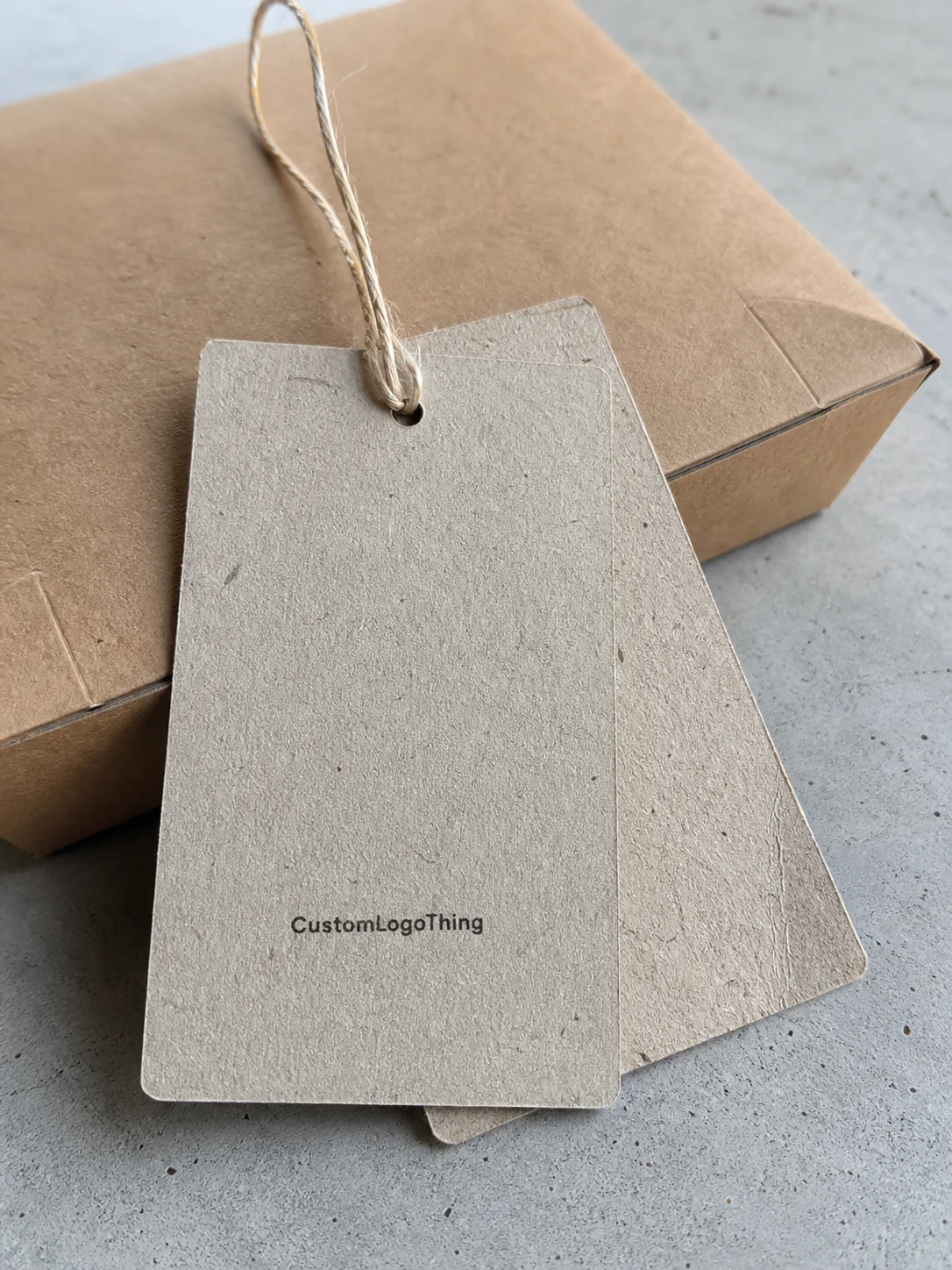
Many buyers first approach recycled tags as a sustainability checkbox and then realize the tag is doing more visual work than expected. A well-made recycled hang tag on a shirt, candle, or wellness kit can carry the same authority as a premium coated tag if the typography is clean and the paper choice is honest. Texture helps. On uncoated stock, simple type and clear spacing often read as more confident than busy artwork on a glossy substrate.
That is one reason recycled tags scale well across product lines. The material already signals restraint, so the design does not need to overperform. A brand can keep the same visual language across a small accessory line and a larger apparel line without the tag feeling out of place. In practice, that consistency is valuable because it reduces rework, keeps reorders predictable, and makes the packaging system easier to manage across seasons.
Bulk buying matters because the economics are straightforward. Once the artwork, size, stock, and attachment style are locked, the setup cost spreads across more pieces and the unit price usually falls quickly. The reverse is also true: if the order keeps changing after the first proof, the savings disappear. That is why repeat packaging programs usually perform better than one-off tag runs. The more stable the spec, the better the cost control.
There is also a handling advantage. Recycled board is often chosen because it sits naturally against apparel, paper goods, and gift packaging. It does not need a reflective coating to feel finished. As long as the board has enough stiffness to hang straight and enough surface quality to keep small type sharp, it can do the job cleanly.
“A recycled tag works best when the paper choice and the print choice agree with the product. If the stock feels natural and the ink stays sharp, the tag looks premium without trying to force the point.”
That is the real reason custom recycled Hang Tags Bulk is not just a sourcing decision. It affects perceived value at the shelf, at the register, and in unboxing moments where packaging is doing quiet persuasion. The strongest versions usually keep the structure simple: one clear logo, one or two font weights, and enough negative space for the tag to breathe.
Custom Recycled Hang Tags Bulk: Specs to lock before quoting
Before pricing means anything, the base specifications need to be fixed. Size, shape, paper weight, print sides, hole placement, attachment method, and variable data all change the cost and the production path. A 2 x 2 inch square tag is a different job from a tall die-cut tag with a corner punch and serialized fields. If those details are missing, the quote may look competitive but fail to reflect the actual work.
Two-sided printing is one of the first choices to settle. A front-only tag with a logo, size, and website is simpler than a two-sided tag that includes care instructions, barcode placement, or compliance copy. If the artwork carries edge-to-edge color, fine lines, or multiple versions for separate SKUs, the setup gets more involved. That does not make the project difficult, but it changes how the job should be priced and reviewed.
Supplying a dieline early saves time and avoids awkward fixes. If you already have a template, the supplier can check bleed, punch clearance, fold logic, and type safety before anyone starts moving artwork around. If you do not have one, ask for it and confirm that the hole, cut line, and live area fit the product. A tag can look fine on screen and still fail in the real world if the hole lands too close to the edge or the text sits inside the trim area.
For buyers managing multiple product lines, a clean spec sheet is worth keeping. It makes reorders easier, keeps naming conventions consistent, and reduces confusion when several tag versions are in circulation at once. That is especially useful if the tags need to align with Wholesale Programs and repeatable fulfillment schedules.
| Spec choice | Best use | Typical cost effect | Production note |
|---|---|---|---|
| Standard rectangle, one color | Apparel basics, simple retail packaging | Lowest setup burden | Fastest to quote and repeat |
| Custom die cut, full color | Gift goods, premium branded packaging | Moderate to higher cost | Needs die review and tighter proofing |
| Variable data with barcode | Inventory control, SKU-level runs | Higher labor and file setup | Requires clean data files and approval |
| Stringed or looped tags | Apparel, bags, hang-ready displays | Additional assembly cost | Attachment choice affects packing time |
Paper stocks, print methods, and finishes that stay legible
Recycled boards vary more than buyers expect. Some are softly textured and absorb ink cleanly; others are rough enough to make fine type look unstable. For most tag programs, an uncoated or lightly textured recycled stock gives the best balance of appearance and readability. Heavier boards work better when the tag needs to stay flat on garments or survive repeated handling during packing and retail display. A common working range is roughly 14pt to 18pt equivalent thickness, but the right choice depends on how the product is merchandised and how much abuse the tag will take before sale.
Print method matters just as much as the paper. One-color branding is often the cleanest route on recycled stock because it keeps the look calm, reduces setup complexity, and avoids muddy color shifts on textured surfaces. Full-color process printing is useful for illustration, photography, or more detailed branding, but it demands better file prep and tighter color control. Small type, thin lines, and reversed text need extra caution because recycled fibers and print gain can make them lighter or less legible than they appear on a screen.
Finishing should support the stock, not hide a weak choice. A matte or uncoated recycled tag already has tactile character, so heavy coatings often add cost without improving the result. Spot UV, soft-touch, and laminated effects can work on some premium programs, but they can also flatten the natural quality that makes recycled packaging appealing. Most buyers get a better result by focusing on strong ink coverage, precise trimming, and a layout that leaves enough room around the logo and product details.
Small print is where many tag jobs fail. QR codes, barcodes, legal copy, and care instructions need enough contrast and clear spacing to survive production tolerances. A barcode that scans on a PDF proof can still fail if the tag is too small or the print is too light. For sustainability claims, the paper story should also be checked against a credible standard rather than assumed. When recycled content or forest certification is part of the message, verifying the source through organizations such as the FSC helps keep the claim defensible.
For brands that want a cleaner packaging system, recycled tags sit naturally beside custom printed boxes and paper-based inserts. The visual language stays consistent, and the line looks intentional rather than assembled from unrelated materials.
Die cuts, hole placement, strings, and variable data options
Shape changes both the look and the function of the tag. A centered top hole gives a straightforward presentation. A corner punch feels softer and slightly more boutique. Dual holes can help larger tags hang straight and reduce twisting on garments or gift handles. Those details sound minor, but on a shelf they decide whether the tag sits neatly or swings awkwardly against the product.
Attachment choice should follow the real packing workflow, not just the mood board. Cotton string works well for apparel and handmade goods because it feels natural and does not compete with the product. Elastic loops are faster for some assembly lines. Safety pins can work in select categories, though they are not the default for most retail packaging. Some brands skip attachment entirely and insert tags in-house, which lowers unit assembly cost but adds work on the buyer side. That needs to be stated clearly in the quote request so the labor math is accurate.
Variable data needs to be planned early. SKU numbers, barcode fields, batch numbers, price fields, and sequential numbering all depend on the file structure and the workflow used to print and pack the tags. More versions mean more proofing. A clean master layout makes the order easier to repeat later, especially if the same tag family supports multiple product categories or seasonal releases.
Die-cut shapes deserve early review because unusual corners, cutouts, or multiple punch points can change waste and tooling time. A custom outline is not a problem, but it should be priced honestly. Buyers often save more by locking the shape before artwork production than by revising it after the first proof. Once the cutter and layout are aligned, the rest of the job tends to move more predictably.
For broader packaging programs, some teams check the handling and transit expectations against test discipline such as ISTA. Tags themselves are not usually ISTA-tested, but the larger packaging stack benefits from the same mindset: fewer weak points, fewer surprises, and less damage during fulfillment.
Cost, pricing, and MOQ factors that change the unit cost
Price in custom recycled Hang Tags Bulk orders comes down to a few variables: quantity, board weight, number of print sides, ink coverage, finishing, custom cutting, and whether the tag is standard or fully custom. Quantity is the biggest driver. Once setup is spread across more units, the unit cost falls quickly. That is why a test lot can look expensive, while a proper bulk order feels much more efficient.
As a practical buying range, a simple recycled tag with one-color printing may sit near the low end of bulk pricing, while a custom-cut, full-color tag with stringing or variable data can move into a noticeably higher range. Exact numbers depend on the file, the paper, the press schedule, and the plant’s current workload. A useful supplier will still show the cost steps by quantity break instead of hiding them in a single figure. Buyers should ask for that breakdown. It reveals where the savings actually start.
MOQ should be stated plainly. Some jobs justify a lower minimum because they use standard tooling and simple assembly. Others need a higher floor because custom dies, data handling, or hand assembly do not shrink much at small volumes. A small test order can make sense while the brand is still refining the tag, but if the artwork is final and the product line will reorder, bulk pricing usually becomes the better value.
File readiness is another real cost driver. Clean vector artwork, correct bleed, a settled dieline, and clearly labeled variable fields reduce proof rounds. Each correction before production adds time, and every avoidable mistake adds risk. The cheapest quote is not the one with the lowest starting number. It is the one that gets approved once and prints correctly.
Buyers usually think in three buckets:
- Simple tag: standard size, one side, no special finish, good for straightforward retail packaging runs.
- Mid-range tag: custom size, two-sided print, and more brand information, useful for product lines that need clarity and polish.
- Premium tag: custom die cut, multiple SKUs, stringing, numbering, or special assembly, common in higher-touch product packaging.
If you are comparing suppliers, ask what is included in the quote. Cutting, punching, assembly, and file handling should be named, not implied. That matters because a low quote can turn expensive once the missing pieces are added back in.
Production steps, proofing, and lead time expectations
The production path is usually simple, but only if each step is handled cleanly. A normal order moves from quote to artwork check, then to digital proof, then buyer approval, followed by production, finishing, packing, and shipment. Delays tend to happen between artwork and proof approval. If the spec changes late, the schedule slips even when the production slot is ready.
Proof review should focus on the details that fail in real use: size, bleed, color density, hole position, type size, barcode placement, and any variable-data fields. The proof is not just about whether the logo looks right. It is also about whether the barcode scans, whether the copy remains readable after cutting, and whether there is enough material above the hole to prevent tearing. A one-millimeter mistake on screen can become a production issue on press.
Lead time varies with complexity and volume. Simple repeat tags usually move faster than custom-cut or multi-version orders. A straightforward run may complete in roughly 12 to 15 business days after proof approval, while more involved jobs can take longer because of tooling, finishing, assembly, or current factory load. That timeline is typical enough to plan around, but it is not fixed. Material availability and approval speed can change it.
For brands running several product lines, repeatability matters as much as speed. A stable format keeps color and structure consistent across custom packaging products, and it reduces the chance that a reorder looks different from the first batch. The process stays easier if the buyer keeps the file structure clean and responds quickly during proofing.
What to expect from a supplier before you place the order
A capable supplier does more than give a number. They should catch spec problems early, explain print limitations without burying the issue, and confirm whether the layout is production-ready. On recurring bulk programs, that kind of discipline matters because even small inconsistencies can affect how the tag sits beside the product. The strongest vendor is not the one that says yes to everything. It is the one that prevents mistakes before they cost time and money.
Status communication matters too. Buyers Should Know when the proof is under review, when production has started, and when the job is packing. If the supplier is vague, the buyer is left guessing, and that slows down launch timing. For wholesale buyers, uncertainty becomes a real expense because it affects receiving, merchandising, and seasonal rollouts.
There is also value in using one packaging partner across several tag versions. That keeps color handling more consistent, especially if the same logo, board style, or typography appears across multiple products. It also makes it easier to build a packaging system that feels coherent from tags to cartons to inserts. That coherence is subtle, but it is often what separates a brand that looks assembled from one that looks planned.
If you need a broader supply relationship, the right partner should be able to support Wholesale Programs and help you move from a first run to a repeatable reorder system. That is especially useful for seasonal brands or product lines that add SKUs frequently.
“Choose the supplier that makes the order easier to approve, not the one that simply posts the lowest number. A clean proof, a clear spec sheet, and steady communication save more money than a small discount ever will.”
That is the practical shape of a strong custom recycled hang tags bulk program. The supplier should reduce risk, not shift it back to the buyer.
Next steps to place the order and keep production on schedule
Before requesting pricing, gather the essentials: quantity, finished size, paper preference, attachment method, and artwork files. If barcode or variable-data fields are needed, include those in the same handoff. A complete first request gives the supplier enough information to quote accurately and reduces the chance of spec changes after the proof arrives.
If you already have a dieline, send it. If not, ask for one and confirm how the hole, bleed, and cut path should be built. That matters most for tags tied to apparel or bundled with gift packaging, where the physical fit matters as much as the design. For most buyers, the fastest route is a clean spec sheet followed by a quick, careful proof review.
Approve the proof as soon as the layout checks out. That simple step preserves the production slot and protects the ship date. If the tag performs well, keep the approved spec on file so the reorder stays consistent. That is how a one-time purchase becomes a repeatable supply line rather than a fresh project every season.
For teams building a broader packaging system, the best next move is usually to treat the tag as part of the same design and procurement logic as the box, insert, and label. That keeps the look aligned and the ordering process easier to maintain.
That approach keeps custom recycled hang tags bulk efficient, predictable, and ready for future product packaging runs without constant rework.
Frequently asked questions
What is the minimum order for custom recycled hang tags in bulk?
MOQ depends on size, paper, print coverage, and whether the tag uses custom cutting or standard dimensions. Larger quantities usually improve the unit price because setup is spread across more finished tags. If you only need a small test run, ask for the lowest viable production quantity before comparing pricing.
Which recycled paper works best for bulk hang tags on apparel?
An uncoated or lightly textured recycled stock usually performs best because it prints cleanly and feels natural in hand. Heavier board is better when the tag needs to hold up on garments, gift items, or products that ship in transit. Choose the stock based on legibility, durability, and the visual style of the brand rather than texture alone.
How do you keep custom recycled hang tags bulk orders looking premium?
Use strong contrast, controlled type sizes, and a layout that leaves enough breathing room around the logo and product details. Keep finishes simple when the paper already has a good tactile feel, since overprinting can fight the recycled look. Review the proof closely for hole placement, color density, and any fine text that may need adjustment.
What affects pricing on recycled hang tags ordered in bulk?
Quantity, paper weight, print sides, color coverage, finishing, and custom cutting all influence the final unit cost. Variable data, stringing, and special punch work can add labor and setup time. File readiness matters too, because a clean proof process helps avoid delays and rework.
How long does production usually take after proof approval?
Simple bulk tag runs move faster than orders with custom shapes, multiple SKUs, or variable-data requirements. Lead time also depends on current plant load, finishing steps, and how quickly the proof is approved. The best way to protect the schedule is to approve the proof promptly and confirm all specs before production starts.


