Buyer Fit Snapshot
| Best fit | Brand Packaging for Small Business projects where brand print, material claims, artwork control, MOQ, and repeat-order consistency need to be specified before quoting. |
|---|---|
| Quote inputs | Share finished size, material target, print colors, finish, packing count, annual reorder estimate, ship-to region, and any compliance wording. |
| Proofing check | Approve dieline scale, logo placement, barcode or warning zones, color tolerance, closure strength, and carton packing before bulk production. |
| Main risk | Vague material claims, crowded artwork, missing packing details, or unclear freight terms can make a low unit price expensive after revisions. |
Fast answer: Brand Packaging for Small Business: Strategy, Cost, Steps should be specified like a repeatable production item. The safest quote records material, print method, finish, artwork proof, packing count, and reorder notes in one written spec.
Production checks before approval
Compare the actual filled-product size with the drawing, then confirm tolerance on folds, seals, hang holes, label areas, and retail display edges. Reserve space for logos, QR codes, warning copy, and material claims before decorative graphics fill the panel.
Quote comparison points
Review material grade, print process, finish, sampling route, tooling charges, carton quantity, and freight assumptions side by side. A quote is only useful when the supplier can repeat the same color, closure quality, and packing count on the next order.
I still remember a cosmetics founder sliding a plain white mailer across a conference table in Austin and asking why her $14 serum felt cheaper than a competitor’s $18 serum, even though the formula had outperformed it in a 2023 panel of 60 buyers. The answer was sitting right there in the handfeel of the box: brand Packaging for Small business was making a judgment before the customer ever touched the product. One glance at the outer mailer, one tug on the tape, one look at the insert, and the buyer had already decided what the brand stood for. That sounds harsh, but it is also measurable, because people form a packaging opinion in under 3 seconds.
That is why brand packaging for small business matters so much. It is not decoration. It is the system around the product: boxes, mailers, labels, inserts, tape, tissue, finishing, structure, and the visual rules that connect everything. I have seen a $12 candle in a 350gsm C1S artboard carton feel like a $28 gift because the packaging was coherent and well built, and I have seen a premium supplement lose trust because the shipper looked improvised. The formula did not change. The packaging story did, and the customer felt it immediately, usually in less than 10 seconds.
Protective packaging and branding packaging do different jobs. One keeps a bottle from cracking in transit from Dongguan to Chicago. The other helps the customer remember your name on the third reorder. Strong brand packaging for small business protects margin in a way ad spend cannot always match, because it shapes perceived value, reduces damage, and turns unboxing into a repeatable brand moment. That matters more for a 4-person business shipping 300 orders a month than it does for a giant retailer with 40 warehouses and a national media budget.
I think most owners underestimate how much work packaging can do. They treat it like a line item instead of a sales tool. In small brands, every touchpoint carries more weight, especially when the average order value sits between $22 and $68. A clear, well planned packaging system can make a lean operation look sharp, calm, and established. That is the real job of brand packaging for small business: not to shout, but to make the product feel like it belongs in the customer’s life.
At Custom Packaging Products, I have watched founders move from random supplies to a structured packaging system and cut complaint rates from 7.8% to 2.1% in the first quarter. That kind of change is not magic. It is just good package branding, built with intent, the right board thickness, and the right ship test. And honestly, once you see it work, it is hard to go back to the chaos of “whatever box is cheapest this week,” especially when freight from Ontario, California arrives damaged because the original mailer was one ECT grade too light.
“The box can’t apologize for a rough week in fulfillment,” a founder told me during a client meeting in Portland, “but it can stop the customer from noticing the rough week at all.” That line stuck with me because it captures the practical side of brand packaging for small business better than a dozen design decks, and it came after 1,200 units of hand-packed skincare kits failed a corner-drop test from 30 inches.
How Does Brand Packaging for Small Business Work in Practice?
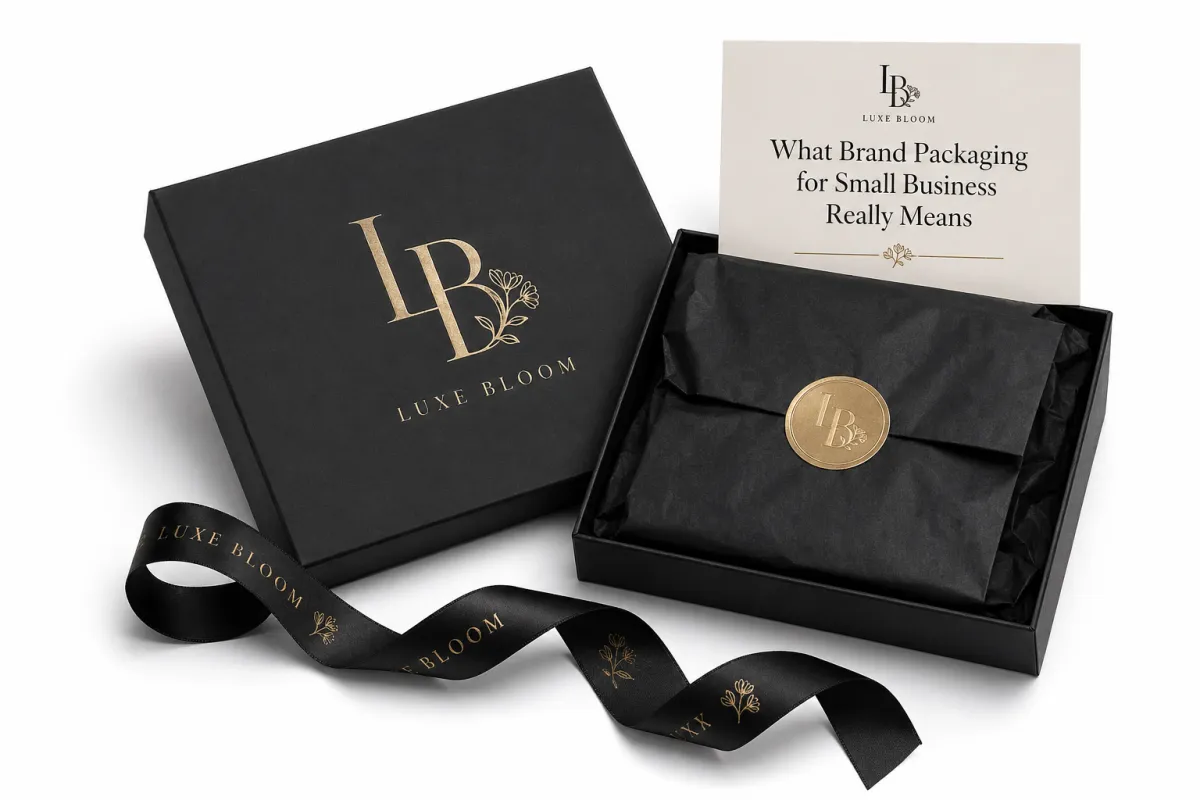
brand packaging for small business works because it shapes the customer journey in stages. The first impression often arrives through a shipping label, mailer, or shelf-facing carton. The unboxing moment follows, and that is where the customer decides whether the brand feels thoughtful or improvised. Reuse, storage, and reorder memory come next. If your packaging is doing its job, the customer recognizes your color palette, font style, logo placement, and tactile cues without needing to think about it. Recognition is sneaky like that. It is fast, and it quietly changes how people feel, usually within the first 15 seconds after the tape is cut.
I once visited a fulfillment operation in Allentown, Pennsylvania where a tea brand used three packaging layers: a corrugated outer shipper, a printed inner carton, and a small insert that explained the flavor profile in exactly 42 words. Nothing was extravagant. The difference was repetition. Their green tone, serif type, and logo placement appeared in exactly the same positions on every component. That is how brand packaging for small business builds memory. Repetition is not boring when the customer sees your box only once every 21 days; it is recognition.
The system usually has four layers. Outer packaging protects the shipment. Inner packaging presents the product. Product labels communicate identity and compliance. Small brand moments, like thank-you cards or tissue, add texture without turning into clutter. A well built brand packaging for small business setup can do all four jobs at once: protect, identify, reduce returns, and create something shareable enough that customers post it without being prompted. I have seen a plain kraft box with a 1-color black stamp get more social traction than a glossy luxury sleeve simply because the structure felt honest and the details felt considered.
Channel changes the calculation. Ecommerce needs drop-tested protection and efficient assembly. Retail packaging needs shelf presence and legibility from a distance of 3 to 6 feet. Wholesale often calls for master cartons that move quickly through distribution without losing brand consistency. Local pickup can use lighter structure because the shipment does not need to survive the same abuse as parcel freight. I have seen brands try to use the exact same package for all four channels and end up paying twice: once in damage, and once in wasted labor, especially when the retail carton had to be rebuilt by hand for 800 units.
That is why I treat brand packaging for small business as a business system, not a design exercise. The best systems are simple enough for a 10-person team to execute and flexible enough to scale when orders jump from 200 a month to 2,000. If you want examples of how that looks in the wild, our Case Studies page shows how small brands tie product packaging to shipping reality, not just mood boards, with runs as low as 500 units and as high as 15,000.
Key Factors That Shape Brand Packaging for Small Business
Product type comes first. Fragile glass, food, cosmetics, jewelry, subscription kits, handmade goods, and giftable products all push the structure in different directions. A candle in a rigid box has a very different shipping profile than a lip balm in a tuck-end carton. brand packaging for small business starts with the product’s weaknesses, not its aesthetics. If the product sweats, chips, leaks, dents, or gets crushed, the structure has to solve that before the design team starts choosing finishes. Design can be lovely. It cannot be asked to do physics, not even on a $9 sample run.
Sales channel changes the calculation in a big way. Ecommerce packaging needs to survive drops, vibration, humidity changes, and warehouse stacking. Retail packaging needs clear barcode placement, front panel hierarchy, and a structure that looks good next to competitors on a shelf. I have seen a startup spend $4,800 on a beautiful retail carton that failed parcel shipping because the corners collapsed under a standard 24-inch drop from a conveyor simulation. That was an expensive lesson, and it came from skipping the channel conversation. Good brand packaging for small business does not ignore where the package lives, whether that is a Shopify order in Texas or a wholesale pallet in New Jersey.
Brand position matters differently. Premium brands often invest in texture, rigid construction, embossing, or foil. Value-driven brands usually win with sharp structure, low waste, and a clean print system that feels reliable rather than flashy. There is no moral victory in choosing the most expensive finish. The right choice is the one that matches your brand identity and your price point. A $22 skincare serum and a $6 soap bar should not present themselves the same way, even if the formulas are excellent, and a premium label from Los Angeles does not need 4 specialty effects to prove it.
Operational constraints matter just as much. Storage space, assembly time, minimum order quantities, fulfillment speed, and cash flow can make a promising idea impossible. I once sat in on a supplier negotiation where a founder loved a two-piece rigid box but could not fit 1,500 units in her micro-warehouse without blocking pallet access. We simplified to a folding carton with a premium paper wrap and saved nearly 40% of the storage footprint. That is the kind of tradeoff brand packaging for small business demands. It is not glamorous, but it keeps the business breathing, especially when warehouse rent in Brooklyn is $28 per square foot.
Then there are sensory details. Color has a role, but tactility often leaves the stronger memory. Soft-touch lamination, uncoated kraft, debossing, matte varnish, and foil accents all change how the hand reads the package. Opening mechanics matter too. A friction lock that opens with a clean pull feels different from a taped flap that tears and wrinkles. Those details seem small in a spec sheet. In the customer’s hand, they are the whole experience, especially on a 6-ounce skincare jar that is opened and re-opened 8 or 9 times before the bottle is empty.
For the packaging side of a brand, I usually recommend thinking in terms of brand packaging for small business layers rather than one hero object. The package is a system, and each part should earn its place, from the 32 ECT mailer to the 350gsm product insert to the 1-color logo on the tape.
Brand Packaging for Small Business Costs and Pricing
Cost is where many owners get stuck, and for good reason. brand packaging for small business can range from almost invisible to surprisingly expensive depending on size, print method, paper stock, finishing, and quantity. The biggest drivers are easy to name: material choice, box dimensions, custom tooling, specialty finishes, print colors, and order volume. Smaller runs almost always raise the price per unit. That is the tradeoff nobody likes, but it is real, and it shows up fast when a 500-piece order costs nearly as much to produce as a 5,000-piece run.
Setup cost and unit cost are different animals. A Custom Printed Box might need artwork setup, a dieline, press calibration, and a proof. That upfront work can run from $150 to $1,200 before a single finished unit leaves the line. After that, the per-unit price might fall to $0.15 at 5,000 pieces or climb to $0.95 at 500 pieces. I have watched founders focus only on the per-unit number and then get surprised by proofing, freight, and finishing charges. brand packaging for small business rewards people who price the whole system, not just the box, especially when the carton ships from Shenzhen to Savannah.
| Packaging option | Best fit | Typical setup cost | Typical unit cost | Notes |
|---|---|---|---|---|
| Lean starter system | Early ecommerce, local pickup, test launches | $120-$300 | $0.15-$0.38 at 5,000 units | Stock mailer, one-color logo, label, tissue, usually 32 ECT corrugate |
| Mid-range branded system | Growing direct-to-consumer brands | $450-$1,200 | $0.38-$0.90 at 3,000 units | Custom printed boxes, inserts, branded tape, better paper stock, often 350gsm C1S or 24pt SBS |
| Premium presentation system | Luxury, gifting, subscription, boutique retail | $1,500-$4,000 | $1.75-$4.25 at 1,000 units | Rigid box, specialty finish, foil, emboss, custom insert, often produced in Dongguan or Guangzhou |
Hidden costs deserve attention because they quietly eat margin. Freight can add 8% to 18% depending on size and destination, and the bill from California to Florida is often very different from a pallet move inside Ohio. Design revisions can cost time even when they do not show up on the invoice. Storage adds pressure if you buy 10,000 units before demand is proven. Assembly labor matters too. A beautiful package that takes 45 seconds to build may cost more in payroll than a simpler structure that closes in 12 seconds. I have seen one contract packer save nearly 6 hours a week by moving from a three-piece kit to a folding carton with an integrated insert.
Here is the practical pricing logic I use with clients building brand packaging for small business plans. If cash is tight, spend on structure first and keep finishing modest. If the product is premium, use one strong accent, not five small ones. If the brand needs shelf impact, invest in print clarity and front-panel hierarchy before chasing special effects. The smart savings are structural, not cosmetic. Use a standard size, reduce the number of inks, choose one premium detail, and simplify the assembly process so your team can move faster, especially if the line is staffed by only 2 packers on a Friday afternoon.
A simple benchmark helps. A lean starter packaging setup might land around $0.15 to $0.38 per unit plus freight. A mid-range system may sit around $0.38 to $0.90 per unit with better materials and inserts. A premium presentation package can climb to $1.75 or more per unit, especially with rigid construction and specialty finishing. None of those numbers are wrong. They just fit different business models. The key is matching the spend to order volume, margin, and customer expectation so brand packaging for small business supports growth rather than strangling it, whether your production line is in North Carolina or a contract factory outside Ho Chi Minh City.
Step-by-Step Brand Packaging for Small Business Process
The cleanest way to build brand packaging for small business is to start with an audit. List every SKU, every shipping method, every breakage issue, and every customer complaint tied to the package. Then look at what is already working. Maybe your thank-you card gets praised. Maybe the label color gets noticed in photos. Maybe your current mailer tears too easily. I like to begin there because a package should solve a real business problem, not just fill a mood board. Mood boards are fun. Refunds are not, especially when they cost $8.20 in outbound freight and restocking labor.
Next comes the brief. Keep it short, but specific. Define your audience, budget, launch date, channel mix, target unboxing experience, and the exact emotional result you want. Should the package feel calm, playful, technical, natural, or luxurious? Those adjectives become practical decisions later. A premium tea brand and a budget-friendly snack brand may both want “clean” packaging, but the paper weight, finish, and typography will be very different. That brief is the compass for brand packaging for small business, and it works best when it includes hard numbers like 3 launch colors, 1 primary logo, and a target landed cost under $1.10 per order.
After that, choose the structure and materials. This is where a die line, sample folds, and material references matter more than trend talk. For example, a 350gsm C1S artboard with aqueous coating gives a very different feel from a 24pt SBS board with soft-touch lamination. A 32 ECT corrugated mailer may be fine for light products, while a 44 ECT build makes more sense for heavier items or long transit routes. If you are thinking about sustainability, ask for FSC-certified paper where appropriate and check how the material behaves in real use. The packaging industry does not reward wishful thinking. It rewards testing, especially in plants near Shenzhen, Suzhou, or Grand Rapids.
I learned that the hard way standing beside a packaging line in Shenzhen, where a 0.3 mm change in a tuck flap added just enough friction to slow a shift. It was only 11 seconds per pack, but across 6,000 units, that became nearly 18 minutes of lost output. That sounds kinda tiny until you are the one waiting for the truck. Samples matter because the mockup tells you more than the render does. brand packaging for small business has to be judged in the hand, under pressure, and on the actual line, not in a PDF exported from a desktop mockup.
Testing should include shipping, stacking, opening, and reuse. I ask suppliers for proof samples, then I run a few ugly tests on purpose: a short drop test, a corner crush test, a humidity check, and a quick assemble-reseal cycle. For shipment validation, standards like ISTA procedures and ASTM-style testing help bring discipline to the process, even if you are not running a full certification program. The point is simple: if the package fails at the warehouse table, it will fail at scale. I would rather look paranoid in a conference room than get emails about broken product on a Monday morning, especially after shipping 1,800 units to Atlanta.
Here is a timeline I use for planning brand packaging for small business launches:
- Brief and planning: 2-3 business days for a focused team.
- Concept and structure selection: 4-6 business days.
- Sampling and prototype review: 5-7 business days.
- Artwork revisions and proof approval: 3-5 business days, longer if legal copy changes.
- Production: 12-15 business days after proof approval for standard custom printed boxes.
- Freight and delivery: 3-7 business days domestically, longer for ocean freight or consolidated shipments.
That timeline can stretch fast if someone changes the logo, the barcode, or the insert text midstream. I have seen a one-line copy change push a launch back by 9 days because the print queue had already been locked. That is why the process matters. Strong brand packaging for small business is not about rushing; it is about reducing the number of surprises. Surprises belong in the product reveal, not in the freight tracker.
Common Brand Packaging for Small Business Mistakes
The first mistake is designing for aesthetics alone. I understand the temptation. A beautiful box is fun to approve. But if it crushes in transit, slows fulfillment, or requires too much hand assembly, the beauty becomes expensive very quickly. I once saw a boutique food brand fall in love with a rigid box lined with magnetic closure hardware. It looked incredible on the sample table. In production, the closure added cost, delayed packing, and created alignment issues across 900 units. The customer did not care about the magnets. They cared that the product arrived safely and on time. That is the real test for brand packaging for small business.
Many brands treat each component as a separate project. The box says one thing, the label says another, the insert uses a different tone, and the tape has a completely different color temperature. The result feels accidental. Strong package branding depends on a coordinated system: the same voice, the same visual rules, the same level of finish. Even a budget system can look polished if the parts behave like a family. A mismatched package, by contrast, feels like a brand that got dressed in the dark, and that mistake is obvious on a shelf in 5 seconds.
Small businesses also skip shipping tests because the sample “looks fine.” That phrase has caused a lot of pain in my experience. A package can look fine and still fail when stacked under 40 pounds of freight, when exposed to humidity, or when dropped from a conveyor height. Testing does not need to be elaborate. Five drops, one corner crush, one tape-seal test, and one assembly trial can reveal enough to save a full production run. For brand packaging for small business, that small testing budget is cheap insurance, especially if a replacement shipment would cost $620 in freight and labor.
Owners overbuy before demand is proven. I get why. Quantity discounts are seductive. But 10,000 boxes sitting in a warehouse can turn into a storage problem, a cash flow problem, and a design problem if your branding changes. I have watched a founder pay for an extra pallet bay for 4 months because she ordered too far ahead of actual sell-through. A smaller run may cost more per unit, but it can preserve flexibility. Not every brand needs a year of packaging on day one, and not every factory in Vietnam should be asked for a 25,000-unit commitment on the first order.
Unclear messaging weakens the unboxing experience. If the package does not explain why the product matters, or why the price is what it is, the customer fills in the blanks on their own. That can be a dangerous gap. A strong insert, a concise outer panel, or a clean brand story can prevent that. The best brand packaging for small business makes the buyer feel oriented before the product even appears. It should answer the silent question people always ask: “Did I make a smart choice?” and do it in 1 sentence, not 4 paragraphs.
Expert Tips to Improve Brand Packaging for Small Business
If you want one practical rule, use a hero moment instead of trying to make every surface expensive. A single premium detail often feels more thoughtful than five weak ones. That could be a deep black foil logo on a kraft carton, a softly textured label on a matte mailer, or a custom insert that cradles the product with perfect fit. I have seen modest brand packaging for small business projects look far more premium than expensive ones because they committed to one sharp choice and left the rest clean, even on a $0.22 carton.
Match finish to story. Matte feels calm and restrained. Kraft feels practical, grounded, and a little more handmade. Soft-touch lamination reads as premium without shouting. Gloss can be useful for visibility, but it can also make a package feel busier than the brand wants. The finish should reflect the promise, not just the trend. A skincare founder once told me her best-selling line felt “quietly expensive,” and the packaging decision that supported that feeling was a low-glare finish with a single foil mark, not a full metallic treatment from a plant in Guangzhou.
Ask suppliers for the right information early. I want dielines, sample proofs, turnaround estimates, and minimum order quantities in the first conversation. I also want to know if a supplier can hold a 12-15 business day production window after proof approval, because launch dates often depend on that answer. The same applies to freight. If the quote does not separate production, freight, and assembly, you are only seeing part of the picture. Good brand packaging for small business is built on honest numbers, not hopeful estimates and crossed fingers, especially when a 1,000-unit run leaves Ningbo on a 21-day ocean schedule.
Test with real customers. Not all feedback is equal. A designer may notice the typography. A customer notices the opening experience, the weight, the smell of the paper, and whether the package feels worth keeping. I ask brands to compare damage rates, reorder signals, social shares, and customer comments after a small pilot run. That mix of data tells a better story than subjective opinions alone. A package that gets photographed twice as often and generates fewer support tickets is doing real work, and the numbers usually show it after 200 to 300 orders.
Use standards as a reality check. I often point clients to the EPA for sustainable material guidance and to FSC for responsibly sourced paper options, then I remind them that sustainability only matters if the package still protects the product and ships efficiently. The same caution applies to branded packaging with recycled content. The most admirable material choice still has to perform in transit. For that reason, EPA sustainable packaging guidance is useful reading before you lock a material spec, especially if the item is going into a 24pt recycled board sourced through a mill in British Columbia.
If you are just starting, order samples, request two or three quotes, and compare them on the same criteria: protection, cost, speed, and brand fit. Then refine the design, not the guesswork. That process turns brand packaging for small business from an idea into a pilot run. It also keeps you from overcommitting before the product market has proven itself, which matters when the first order is only 250 units and the second order may be 1,200.
One last point from the factory floor: the best packages are often simpler than the first concept board suggested. Simplicity is not a lack of ambition. It is usually the result of better judgment. I wish more teams trusted that sooner. It would save everyone a few headaches and probably one unnecessary debate about foil, especially when the difference between two concepts is really just a $0.06 unit cost and a 2-day delay.
What I would do next: compare samples, run one shipping test, and choose the version that balances protection with presentation. Then lock the dieline, confirm the landed cost, and build the packing checklist around the actual assembly time, not the optimistic one. That is the fastest path from theory to a real, working brand packaging for small business system, and it keeps the business honest when the first wave of orders lands.
FAQs
How much does brand packaging for a small business cost?
Costs usually depend on material, size, print method, order volume, and whether you need custom tooling or specialty finishes. Short runs often cost more per unit, while larger orders bring the unit price down but demand more upfront cash and storage space. A smart budget separates setup costs, production costs, freight, and assembly labor so the real total is easier to see. I always tell founders to ask for a landed cost, not just a box price, because the box price can be a very convincing liar, especially when freight adds 12% and assembly adds another 3 to 5 cents per unit.
What should small business brand packaging include?
At minimum, include a protective outer layer, a clear product identifier, and one or two branded elements that make the experience feel intentional. Common additions are inserts, thank-you cards, tissue, labels, and tape, but every piece should earn its place. The strongest package includes only what supports protection, clarity, and brand memory. If an element does not help one of those jobs, I usually question whether it belongs in the kit, especially if it adds 14 seconds to the pack-out time.
How long does brand packaging for small business take to produce?
Simple packaging can move quickly if the structure is standard and the artwork is ready. Custom projects usually take longer because sampling, revisions, and production scheduling all add time. The safest approach is to plan backward from launch and leave room for at least one round of proofing. In practice, that buffer is what keeps a small brand from turning a launch date into a moving target, and standard Custom Printed Boxes often need 12-15 business days after proof approval.
Is eco-friendly packaging worth it for a small business?
It can be worth it when your audience values sustainability and the materials still protect the product well. The key is to balance environmental claims with durability, cost, and customer expectations. A recycled or recyclable material often works best when paired with a simple structure and minimal waste. I like it most when the sustainability story is real and not just a nice line on the website, especially if the board is FSC-certified and the unit cost stays under $0.90.
How do I choose the right packaging for my small business brand?
Start with your product, then match packaging to the way it is stored, shipped, opened, and reused. Use your budget and order volume to narrow material and structure options before making design decisions. Test two or three options against the same criteria: protection, cost, speed, and how well each one tells the brand story. That is usually the cleanest way to choose brand packaging for small business without guessing, and it works best when you compare real samples from at least 2 suppliers.


