Brand promotional beanies moq can look deceptively simple on a quote sheet. In practice, the number depends on knit construction, decoration method, color changes, and how much setup the order needs before the first piece is produced. Buyers often expect a beanie to behave like a basic blank cap. It does not. A beanie is a soft good with moving fabric, stretch, and finishing variables that affect both appearance and cost.
That is also why beanies are worth more than a quick seasonal handout. People keep them, wear them in public, and reuse them through more than one cold season if the fabric and decoration hold up. For employee kits, winter events, school stores, and retail bundles, a well-built beanie can give a brand steady visibility without feeling forced. The item works because it solves a real problem: warmth.
The best orders start with that reality. A beanie for outdoor staff has different requirements than a retail-ready gift box or a Trade Show Giveaway. One might prioritize warmth and durability, another a premium handfeel, another a low unit cost that still looks polished. The minimum order should support the job, not define it.
Why Beanies Get Worn Long After the Event Ends
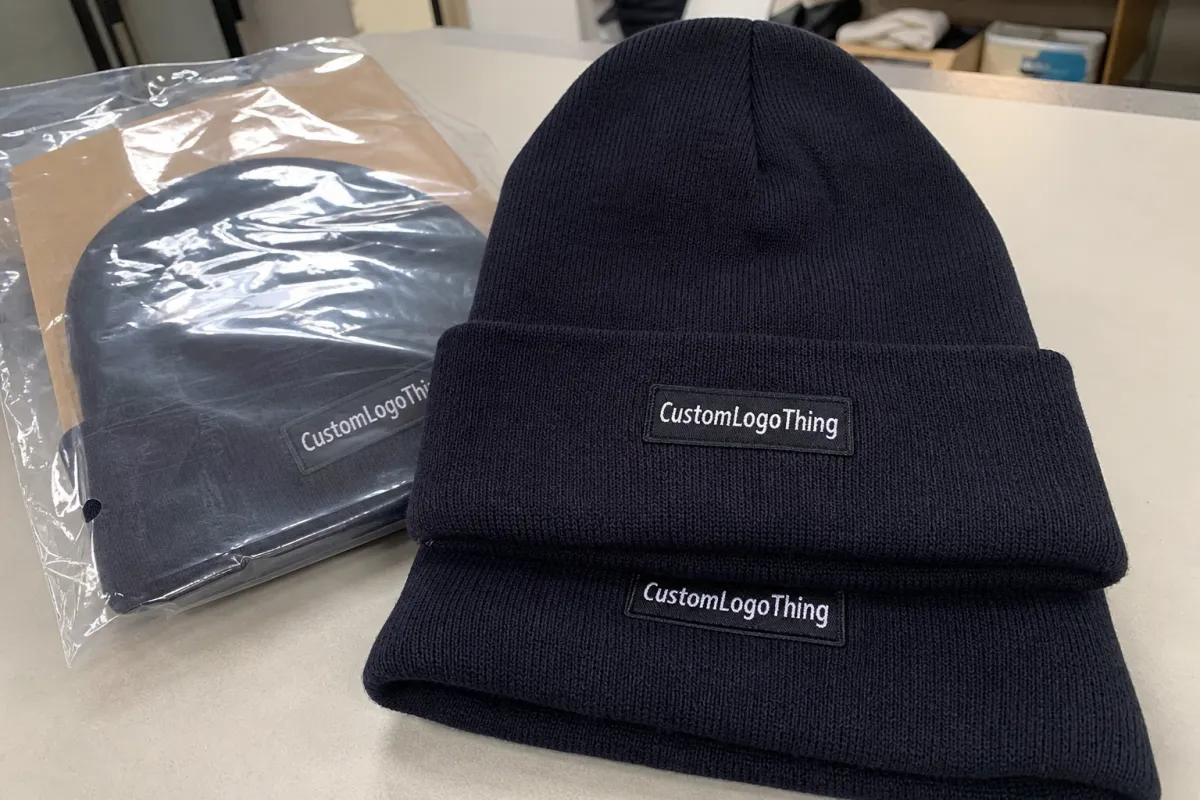
A beanie earns repeated use because it is useful in a way most promo items are not. It fits under a hood, works in transit, packs flat, and does not take much storage space. That combination gives it a long life in the real world. A tote bag may be useful too, but a cold-weather knit item gets worn at the exact moment the customer needs it, which makes the branding more visible and more natural.
There is also a practical visibility advantage. A cuffed beanie puts the logo close to eye level, especially in commute photos, outdoor gatherings, and casual staff wear. That means the branding gets seen without needing a huge graphic or aggressive placement. Small, clean marks often perform better than large designs because the fabric itself does some of the work.
For event planners and packaging buyers, that matters. The item is not just a giveaway. It is something that continues to circulate after the event ends. If the decoration is readable and the color selection is disciplined, the beanie looks intentional rather than promotional. That distinction changes how people receive it.
A simple comparison helps. A one-day handout may create one impression. A knit beanie worn twenty times creates twenty. The exact number is less important than the pattern: the item keeps working after the budget has been spent.
“The strongest promo soft goods are the ones recipients reach for without thinking. Cold-weather knitwear does that better than most categories because the use case is immediate.”
This is why the order should begin with use, not decoration. An outdoor crew may need a heavier rib knit and a darker yarn that hides wear. A campus store may want something softer and lighter that folds cleanly into retail packaging. A seasonal bundle may need a premium finish and a clean presentation card. The production path changes with each of those choices.
Materials and Decoration That Hold Up in Real Use
Material selection affects comfort, warmth, washability, and how the logo behaves over time. Acrylic remains the most common base because it is consistent, warm, and easy to produce at scale. It also gives buyers predictable color results across repeat orders. Recycled acrylic can support sustainability claims without changing the fabric behavior very much. Polyester blends may dry faster and feel a little more technical. Wool blends usually bring a more premium hand but also raise cost and care sensitivity.
For most buyers, the question is not which material is “best” in the abstract. It is which one fits the program. A midweight acrylic beanie can be the right answer for a 500-piece campus promotion. A wool blend might make sense for a retail add-on or executive gift where handfeel matters more than price control. If a sustainability message is part of the brief, request documentation early rather than assuming the yarn, label, or carton insert automatically qualifies. Packaging components often need separate verification. If paper inserts or hang tags must be FSC-certified, check directly with the certification body at FSC.
Decoration choice is just as important. Embroidery is usually the most efficient option for simple logos and short text. It is durable and familiar, but it has limits: tiny details can disappear on rib knit fabric. Woven patches provide sharper edges and better control over small lettering. Woven labels work well when the branding should stay subtle. Jacquard knitting integrates the design into the beanie itself and can look excellent, though it typically requires more setup and a higher MOQ. Faux leather patches and sewn badges add texture and help a product feel more retail-ready.
The weak point is almost always legibility. Knit fabric stretches, compresses, and shifts under tension. A logo that looks crisp in a flat proof may lose clarity if it is too detailed or too small. That is why the strongest designs for promotional beanies are often the simplest ones: a clear mark, limited colors, and a size that respects the fabric rather than fighting it.
Quality also lives in the finish. Look at stitch density, patch edge trimming, seam alignment, cuff consistency, and pilling risk. A sample should be judged under natural light and indoor light, because yarn can change character depending on the room. If the piece will be packed and shipped in volume, ask how it will be folded and protected. A beanie that arrives crushed or linted may still be usable, but it no longer looks premium.
For orders that need a retail presentation, packaging should be part of the product plan. A folded beanie with a recycled paper belly band, a labeled polybag, or a simple insert card can improve the first impression without adding much cost. For larger shipments, buyers sometimes ask for carton handling aligned with ISTA guidance so the goods arrive tidy instead of flattened or scuffed in transit.
Specifications Buyers Should Lock Before Requesting Quotes
Clean quoting starts with clean specifications. If the buyer can define the beanie style, cuff depth, crown shape, yarn gauge, logo position, decoration size, packaging style, and delivery date, the supplier can price the job without guessing. That reduces follow-up emails and makes the quote more trustworthy.
Style changes the production path. A cuffed beanie gives the strongest imprint area and usually the most reliable brand visibility. A slouch beanie reads more casual, but the decoration area can be less structured. Pom styles are popular for winter promotions, though the pom can compete visually with the logo if the artwork is too busy. Heavier gauge knits feel warmer and more substantial, while lighter gauge knits pack smaller and can lower freight costs.
Gauge matters more than many buyers expect. A 7-gauge knit feels thicker and more substantial than a finer 12-gauge knit, but it also uses more yarn and can move the price upward. Rib structure matters too. A tighter cuff gives embroidery a more stable surface, while a looser knit can distort the logo and create uneven tension around the patch or stitch field.
Color control needs attention early. Pantone references are useful, but yarn is not print. Fiber dye lots, knit tension, and fabric stretch all influence the final appearance. The goal is controlled consistency, not laboratory sameness. A good supplier will say that plainly instead of pretending textiles behave like coated paper or screen-printed cotton.
Before approving a sample, check the same issues the customer will notice: fit, stretch recovery, logo clarity, cuff behavior, and how the garment sits after being folded. A mark that looks fine in a flat proof can shift once the knit relaxes on a head. That is a small problem until it becomes the first thing a recipient sees.
| Build Option | Typical MOQ | Typical Unit Cost at 500 Pieces | Best Fit |
|---|---|---|---|
| Standard acrylic cuffed beanie with embroidery | 50-100 pcs | $3.20-$5.80 | Events, crew wear, onboarding kits |
| Recycled acrylic slouch beanie with woven patch | 100-150 pcs | $4.10-$6.90 | Brand programs with a softer retail feel |
| Jacquard knit logo beanie | 150-300 pcs | $5.00-$8.50 | Integrated branding, strong visual identity |
| Wool blend beanie with faux leather patch | 100-200 pcs | $6.50-$10.50 | Premium retail bundles, executive gifting |
Use the table as a guide, not a promise. Seasonality, patch size, color count, label choices, and freight can move the final number. Still, it gives buyers a realistic picture of how build decisions affect unit cost before the quote is approved.
Brand Promotional Beanies MOQ, Pricing, and Quote Drivers
Brand promotional beanies moq is driven more by construction than by the item name itself. A standard embroidered cuff style often starts at a lower minimum because the base blank is common and the decoration step is straightforward. A fully custom knit design usually requires a higher minimum because the yarn program, knitting setup, and time spent preparing the fabric all have to be spread across the run.
Pricing usually has four parts. First is the base beanie cost, which changes with material, gauge, and season. Second is decoration setup, including digitizing, patch production, or knitting file prep. Third is packaging or labeling if the order needs hang tags, insert cards, polybags, or retail folding. Fourth is freight, which becomes more visible when the delivery window is tight or the destination is far from the production point. Buyers often focus on the piece price and miss the setup charges that shape the true landed cost.
For a simple embroidered beanie, the unit cost can remain workable once the order reaches several hundred pieces. Custom knit programs cost more, but they can deliver a stronger branded result because the logo is built into the fabric instead of added afterward. That tradeoff is not always worth it. If the artwork is small and the deadline is short, embroidery or a woven patch may be the smarter choice. If the program needs a retail-grade finish or the design will repeat over multiple seasons, a more involved build can justify the higher spend.
Tiered pricing is one of the best tools a buyer has. Asking for quotes at 100, 300, and 1,000 units often shows exactly where the unit cost begins to drop. Sometimes the lowest MOQ is not the best value. The better number is the point where setup cost stops dominating the quote. That is the number procurement teams should care about.
A clear brief makes the quote faster and more accurate. Include artwork format, exact logo placement, color count, delivery ZIP code, packaging requirements, and the in-hands date. If the beanies will be packed into a larger campaign kit, say so up front. If the order needs to match a retail presentation, add that too. The more complete the brief, the less chance of rework later.
Process, Timeline, and Lead Time From Artwork to Delivery
The production path is usually predictable: brief confirmation, art cleanup, digital mockup, sample or proof approval, production, quality check, packing, and shipment. The order may look simple on paper, but each step catches a different kind of error. Artwork review catches logo issues. The proof catches sizing and placement mistakes. The sample catches construction problems. Skipping one step does not save much time if it creates a replacement run later.
Lead time should start after final artwork approval and deposit confirmation, not when the first email is sent. That matters because buyers planning for a winter event or a retail launch often underestimate how long production can actually take. A quote can move quickly. A factory schedule cannot. Missing vector files, vague color references, and last-minute changes to logo dimensions are common causes of delay. They look minor in a spreadsheet and major on the production floor.
For many standard orders, production may take about 12-15 business days after approval, though busy seasons can stretch that further. Custom knit programs usually take longer because setup is more involved and the line must be programmed for the exact structure of the piece. Tight deadline? Simplify the build. Standard yarn colors, a clean embroidery file, and a standard fold can save time without making the result feel cheap.
“The slowest part of a beanie order is often not the knit run itself. It is the artwork file that still needs cleanup when everyone else is ready to approve.”
Shipping should be planned with the same care as decoration. If the beanies are part of a larger kit, carton count and pack size should be known before the shipment moves. That helps receiving teams, warehouse staff, and finance reconcile the order correctly. It also reduces the chance of surprises when goods arrive in multiple cartons or partial pallets.
A realistic timeline builds trust because it removes false certainty. A supplier who promises everything without checking the production path usually creates problems later. A supplier who explains what can be done at the target quantity, what needs a longer lead time, and what should be simplified is usually the safer choice.
Why Buyers Reorder From a Supplier That Quotes Clearly
Repeat orders usually depend on clarity. A supplier that documents the spec in plain language, confirms the artwork early, and explains the limits of the process saves time on every future run. That matters for employee apparel, school stores, recurring events, and merchandise programs that need the same look to return without confusion.
Clear quoting also protects consistency. The same logo should return at the same placement and size, with the same patch dimensions or embroidery scale, and the same yarn colors when the order is repeated. That kind of repeatability does not happen by accident. It happens when the original order is built with enough detail to reproduce it later without starting over.
Most friction in promotional apparel comes from vague first quotes and shifting second quotes. Buyers remember that. They also remember when a supplier says a fully custom knit is not realistic for the MOQ and offers a cleaner alternative instead. That kind of honesty saves money and usually improves the final piece.
Good paperwork helps too. A clean order history, organized artwork names, and a written proof record make approvals faster the next time around. For teams that answer the same questions repeatedly, a concise FAQ or spec sheet reduces back-and-forth and keeps the process moving.
There is a simple reason buyers reorder from a supplier that quotes clearly: the beanies arrive as promised. On spec, on time, and ready to distribute without correction. That is the standard that matters.
Next Steps for a Clean Beanie Quote and Approval
Send the core details together: vector artwork, beanie style, target colors, decoration method, quantity breaks, shipping destination, and the required in-hands date. If the order needs to coordinate with other branded items or retail packaging, include that context too. A complete brief cuts down on revision rounds and makes the quote usable sooner.
Ask for a mockup or spec sheet before approving production. It should show logo size, placement, yarn color, and packaging notes. That one step prevents a lot of avoidable corrections later, especially when the order has to match a campaign kit or a retail presentation.
Request at least two pricing tiers. That gives a better view of where the unit cost settles and whether a standard knit, embroidered cuff, or custom build is the right fit for the program. If the budget is fixed, the tiers usually show which feature should be simplified first without damaging the look of the final product.
Most of all, confirm the minimum, setup charges, and lead time in the same conversation. Those three numbers belong together. If you are comparing brand promotional beanies moq options for a launch, winter giveaway, or retail add-on, that is the clearest way to Choose the Right path without guessing.
Frequently Asked Questions
What is a typical MOQ for brand promotional beanies?
The minimum depends on the construction and decoration method. Simple embroidered cuff styles often start lower than fully custom knit beanies because the base item is standard and the setup is lighter. Tiered pricing is the best way to see whether a slightly higher quantity produces a better landed cost.
Can I mix colors in one beanie order?
Sometimes. It usually works best when the base style stays the same and only the yarn color changes. Mixed logos, mixed patch styles, or different constructions often create separate setup charges. If color flexibility matters, ask whether the change applies to the knit body, cuff, or branding element.
Which decoration method is best for custom promotional beanies?
Embroidery is usually the most efficient choice for small logos and simple text. Woven patches are a strong option when the artwork needs sharper detail or more contrast. Jacquard knit branding gives the most integrated look, but it usually requires a higher MOQ and more planning.
How long does production take after approval?
Lead time depends on the season, decoration method, and whether sampling is needed. Many standard runs take about 12-15 business days after approval, while more complex knit programs can take longer. If the delivery date is fixed, ask for the full schedule in writing before approval.
What should I send for an accurate beanie quote?
Send the logo file, quantity, beanie style, color preferences, decoration method, packaging requirements, shipping destination, and target delivery date. If you already have a target MOQ in mind, include that as well so the quote is built around the right quantity tier from the start.

