How to Choose the Right Hotel Embroidered Beanies Supplier
Choosing a hotel Embroidered Beanies Supplier looks straightforward until the samples arrive. Then every detail starts to matter: stitch density, yarn handfeel, cuff height, logo scale, color drift, and whether the hat still looks intentional once it has been stretched, worn, and folded into a pocket. A beanie is a small item, but it has an unusually hard job. It has to keep staff warm, signal the brand cleanly, and survive the kind of use that exposes weak knitting fast.
That is why the real sourcing question is not whether a vendor owns embroidery machines. It is whether the supplier understands knitwear, hospitality use patterns, and the limits of decoration on a curved, elastic surface. A logo that reads well at arm’s length and still holds its shape on a moving head is already doing more work than most branded extras ever manage.
Why embroidered beanies punch above their weight for hotels
Hotels spend a lot on touchpoints that are seen once and forgotten. A beanie is different. Guests wear it outside, in transit, on ski runs, on city walks, and in photos they post without being asked. That means one item can generate repeated brand impressions in places the hotel would never buy media. For a winter campaign, that is a useful return on a low-ticket product.
There is a practical side too, and buyers sometimes miss it. A beanie can solve a comfort problem before it solves a branding problem. Front-desk teams outside in cold weather, valet staff waiting at the curb, concierge teams greeting arrivals, and housekeeping teams moving between buildings all benefit from a warmer piece that still looks deliberate. The best hotel beanies do not feel like merch. They feel like part of the uniform.
There is also a retail angle. Boutique properties may sell beanies at the front desk, while ski lodges use them as seasonal extras and urban hotels fold them into VIP kits. The format flexes easily, which is why a Hotel Embroidered Beanies supplier should ask about the intended use before talking price. A staff beanie, a guest gift, and a resale item do not need the same finish, package, or quality target.
Compared with a tote or T-shirt, knitwear gives you less flat space and less room for visual noise. That is a blessing in disguise. Simple marks usually outperform dense crests, tiny taglines, and overworked emblems because embroidery on stretch fabric rewards clarity. If the design survives a quick glance in winter light, it is probably right.
What a hotel embroidered beanies supplier handles
A strong hotel embroidered beanies supplier does more than quote a blank hat and add a logo. The better vendors help choose the knit, clean up the art, convert the file for embroidery, and flag where the logo should be simplified. That guidance matters because what looks sharp on screen can unravel on ribbed fabric.
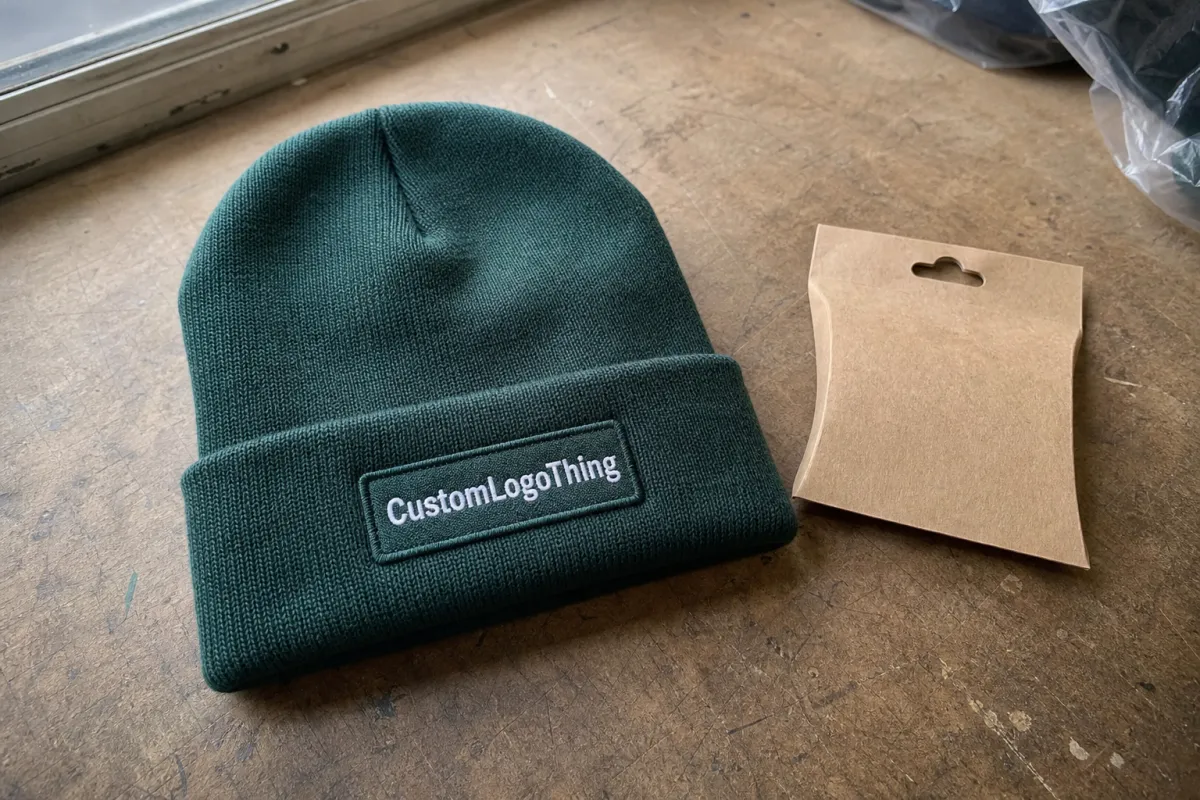
Decoration method is the first decision worth testing. Direct embroidery is the usual choice for simple wordmarks and small icons. It is durable and looks finished, but fine details can close up on knit. Woven patches are better for crests, fine linework, or logos with tiny type, because the details are built in the patch rather than forced through the knit structure. Leather or faux-leather labels work for a more lifestyle-driven look, especially on cuff beanies, though they change the tone of the piece and can pull the branding away from a traditional hotel feel.
Color matching deserves more than a passing comment. Pantone values do not translate perfectly into thread because embroidery thread has sheen and the knit base changes how the color reads under light. On dark charcoal, a muted logo can disappear. On a bright white beanie, a pale thread may look clean on a swatch and weak in real use. A supplier worth trusting will show thread references, suggest near matches, and explain where contrast matters more than exact color matching.
Packaging is part of the supplier’s job too. Some programs need bulk cartons for staff distribution; others need folded presentation, polybags, branded inserts, or swing tags for retail shelves. If the beanies are going into welcome kits or resale displays, ask for carton pack counts and labeling details before production begins. It is much easier to specify packaging early than to fix it after the run is stitched.
There is also a supply-chain layer that should not be ignored. If your program uses paper components or gift packaging, ask about recyclable options and whether paper items can be sourced through FSC-certified materials. For shipping-heavy programs, it helps to know whether packaging was designed with transit abuse in mind rather than just shelf appeal. A box that arrives crushed wipes out the extra spend on presentation very quickly.
Decoration methods compared
| Method | Best for | Typical cost impact | Buyer notes |
|---|---|---|---|
| Direct embroidery | Simple logos, wordmarks, staff uniforms | Lowest to moderate | Clean and durable, but very fine detail can blur on knit fabric |
| Woven patch | Detailed crests, small text, intricate linework | Moderate | Preserves detail better than direct stitching and often looks more polished |
| Leather or faux-leather label | Premium retail programs, minimal branding | Moderate to higher | Strong for a lifestyle look, less suitable if the logo needs exact color fidelity |
| Jacquard knit logo | Large orders, brand-led retail drops | Higher upfront setup | Logo is built into the knit, but sampling, minimums, and color changes are stricter |
Specs that change fit, comfort, and durability
The yarn is usually the first spec that shifts cost and performance. Acrylic is common because it is affordable, color-stable, and holds shape well. Wool blends feel more premium and tend to warm better in cold conditions, but they raise price and may need more careful care instructions. For many hotel programs, 100% acrylic or a 70/30 acrylic-wool blend is the most practical starting point.
Knit gauge changes both appearance and comfort. A 7-gauge knit feels thicker and heavier, which works well for outdoor staff or colder climates. A 12-gauge or finer knit gives a tighter surface and usually supports cleaner embroidery because the stitches sit on a more stable base. Neither is automatically better. The right choice depends on whether the hat needs to feel cozy, look refined, or do both.
Cuff height matters more than many buyers expect. A taller cuff gives the decorator more room for the logo and makes the beanie feel more substantial. A shorter cuff looks sleeker, but it leaves less space for stitching and can make a logo appear crowded. If the artwork is small, cuff height becomes a design constraint rather than a style choice.
Fit should be checked on more than one head size. Knitwear stretches, and a sample that feels fine on a display form may ride up, pinch at the cuff, or lose shape during actual wear. Try it on, take it off, wear it for a few minutes, and see whether it still sits properly. A tiny annoyance becomes a complaint once a team member wears the same hat on repeat shifts.
Before approving production, a supplier should be able to show how the logo behaves under tension. That means looking at stitch pull, edge clarity, and whether the design distorts when the beanie is stretched. On knitwear, a logo can look crisp flat and then widen uncomfortably in use. This is why sample approval is not a formality.
- Stretch recovery: the beanie should spring back instead of staying baggy after a test pull.
- Surface feel: check for itchiness, rough seams, or a scratchy label inside the cuff.
- Logo clarity: small text, thin lines, and tight corners are the first things to fail.
- Color behavior: compare the thread under indoor light and daylight, because knitwear shifts visually.
- Wash tolerance: if staff will launder them often, ask what happens after several cycles.
A beanie that photographs well but feels awkward after twenty minutes usually ends up in a drawer. A beanie that feels right keeps getting worn.
Pricing, MOQ, and quote drivers for hotel beanies
Price moves with a small set of variables most of the time: blank quality, embroidery complexity, stitch count, number of thread colors, packaging, and freight. Simple one-color logos on stock acrylic hats sit at the low end. Larger motifs, premium yarns, woven patches, and retail-ready presentation push the number up quickly. Two quotes can look close on paper and still mean very different landed costs.
For hospitality orders, a basic stock beanie with one-color embroidery might land around $3.25 to $6.50 per unit at modest quantities. Larger runs can sometimes go lower depending on the blank and decoration method. Premium yarns, patch work, and branded packaging can move the same style into the $7 to $12 range. Those are directional figures, not promises, but they are useful as a sanity check when one quote seems too good to be true.
MOQ deserves a careful look. Stock blanks may start at 100 to 250 pieces. More custom decoration, specialty yarn, or jacquard knitting can raise the minimum to 300, 500, or more. If you need multiple colorways, confirm whether the MOQ applies per color or across the full order. That one detail can change the budget more than buyers expect.
Sampling and digitizing may also carry fees. Some suppliers waive them on larger orders; others charge a modest setup or proof fee. A realistic sample charge may be anywhere from a small courtesy fee to a more formal charge depending on the complexity of the artwork and whether a physical prototype is required. The point is not the exact number. It is knowing whether that cost is one-time, refundable, or built into the final unit price.
Ask for a line-item quote. The cleanest comparison shows blank cost, decoration setup, packaging, freight, and any rush fee separately. A quote that bundles everything hides the true structure of the deal. It becomes harder to compare suppliers fairly and harder to know what repeats on the next reorder.
Freight can matter more than decoration on small orders. A $4.10 beanie with $1.40 in shipping is not the same as a $4.10 delivered piece. For hotels ordering for one property, not a chain-wide rollout, the shipping line can swing the decision as much as the hat itself. That is one reason landed cost is the number that matters, not the factory quote alone.
Quote drivers worth comparing
- Blank quality: acrylic, acrylic-wool blend, or higher wool content.
- Decoration type: direct embroidery, woven patch, label application, or jacquard knit.
- Stitch count: a small icon may use 3,000 to 5,000 stitches; a denser logo can reach 7,000 to 12,000 or more.
- Packaging: bulk packed, polybagged, tagged, or folded for retail presentation.
- Freight: domestic truck, air shipment, or international delivery with customs handling.
- Lead-time pressure: rush orders often cost more than buyers first assume.
If the beanies are for retail resale or higher-touch gifting, a tighter spec is often worth the extra spend. The cheapest option may save money today and fail the brand test after one season. Buyers often learn that a small price difference matters less than whether the product still looks good after repeated wear.
Process and lead time: from artwork to delivery
The smoothest orders start with clean inputs. Send a vector logo file, the preferred beanie style, approximate quantity, target colors, packaging needs, and the date the goods need to arrive. If the supplier has to guess at any of those points, the quote becomes less reliable and the schedule gets shakier.
After that, the first technical step is usually digitizing. That is the process of translating artwork into an embroidery file the machine can read. A simple logo may digitize quickly, while tight lettering or narrow curves often need more tuning. Good digitizing controls stitch direction, density, and how the logo behaves on a fabric that stretches every time it is worn.
Sampling is the gate that protects the full run. A physical sample or a detailed photo proof should confirm logo size, thread color, cuff placement, and overall balance. If anything looks off, stop and correct it. Fixing a sample is inexpensive. Fixing 1,000 stitched hats is not.
Lead time depends on quantity, decoration method, and calendar pressure. A straightforward order can sometimes move from approval to delivery in roughly 12 to 20 business days. That assumes stock blanks, normal embroidery, and no packaging surprises. Custom knitting, specialty trims, or retail presentation usually extend the schedule. Add more buffer if the order has to land during holiday congestion or before a ski-season opening.
For some programs, the calendar is as important as the product. A winter launch that arrives late loses half its value. Ask how the supplier handles final inspection, packing, and freight booking so the hats do not sit waiting after production is finished. A good machine run is only part of the job; the handoff matters just as much.
Ask for one proof, one approval point, and one delivery commitment. More handoffs usually mean more chances for the schedule to slip.
Common mistakes that weaken the final result
The fastest way to weaken a beanie program is to ask the logo to do too much. Dense crests, tiny copy, gradients, and thin lines rarely survive knitwear cleanly. Embroidery has limits, and beanies shrink those limits further because the surface stretches. A simpler mark often looks more expensive than a crowded one.
Contrast is another quiet problem. A logo can be perfectly digitized and still disappear if the yarn and thread sit too close in tone. Dark gray on black, navy on charcoal, or cream on pale beige may look refined on a swatch and vanish on the finished hat. Strong contrast is not always the right style choice, but it is usually the safer commercial one.
Skipping samples to save time is false economy. One off-color thread or a cuff that feels too tight can become expensive once the full run is stitched, packed, and shipped. The same goes for poor file preparation. If the supplier has to clean up a low-resolution image or redraw the logo, the shape may shift in ways the brand team did not expect.
Another mistake is ignoring reorder continuity. Many buyers assume they can repeat the same beanie months later with no friction. Sometimes that is true. Sometimes the blank is discontinued, the dye lot changes, or the exact thread shade is out of stock. If continuity matters, get the blank, thread palette, and packaging spec confirmed in writing for the next run as well.
There is also a usability error that shows up often in hospitality: designing for the shelf instead of the shift. A beanie that looks polished on a table may not work for a team member who wears it for eight hours in wind, rain, or freezing air. The best programs start with how the hat will actually be worn, then build the visual language around that reality.
Care instructions deserve a mention too. If staff will wear the hats daily, ask whether the material can tolerate regular washing and drying. Wool-rich beanies may feel better but can be less forgiving. For some hotel operations, the slightly lower prestige of acrylic is offset by better maintenance behavior and fewer replacement headaches.
Next steps before you request samples
Before you contact a hotel embroidered beanies supplier, build a one-page brief. Include the logo file, target quantity, intended use, preferred colors, packaging requirements, and the date the goods must arrive. That one page cuts back-and-forth and makes comparison shopping much cleaner.
Request at least three quotes and compare them on the same basis: same blank, same decoration method, same thread count, same packaging, same freight assumption. If one quote excludes setup or shipping, treat it as incomplete rather than cheaper. Buyers who compare landed cost usually make better decisions than buyers who compare the first number they see.
Ask for a sample or at least a high-resolution proof before production starts. Then inspect the small things: logo width, stitch density, cuff placement, fabric feel, and whether the branding is still readable from a few feet away. If the hotel plans to use the beanies both internally and for guests, make sure the sample works in both settings. A piece that performs in the lobby and on the street has a better life cycle.
Confirm reorder terms now, not later. If the same blank, thread colors, and packaging can be repeated without a fresh setup charge, that is worth knowing. If not, budget for it. Supplier relationships are easier to manage once the expectations are written down before the first shipment leaves the dock.
For hotels, the right beanie is not just winter merch. It is a small branded object that has to wear well, read well, and repeat well. Choose the hotel embroidered beanies supplier that asks for the right files, shows real samples, and quotes a program you can actually compare. That is how a seasonal purchase turns into something you can reorder without guesswork.
How much do embroidered hotel beanies usually cost per unit?
Basic stock beanies with simple one-color embroidery are usually the lowest-cost option. Pricing rises with premium yarn, larger logos, more stitch colors, custom packaging, and smaller order quantities. Ask for a full landed quote so freight and setup fees do not hide the real cost.
What logo style works best on a hotel embroidered beanie?
Simple logos with bold shapes and limited detail usually embroider cleanest on knit fabric. A compact wordmark or icon often reads better than a complex crest or tiny tagline. If the brand is intricate, ask whether a woven patch will reproduce it more clearly.
What lead time should I expect from a beanie supplier?
Sampling, digitizing, and production can each add time, so do not assume a fast turnaround by default. Straightforward orders move faster than detailed embroidery or specialty packaging requests. Add extra buffer for holiday peaks, opening dates, or ski-season deadlines.
What MOQ is typical for custom hotel beanies?
MOQ varies by cap type, decoration method, and how much blank inventory the supplier keeps on hand. Simple stock beanies usually have lower minimums than fully custom knit builds. If you need multiple colorways, ask whether the MOQ applies per color or across the full order.
Can hotel beanies include custom packaging or swing tags?
Yes, many suppliers can add polybags, branded inserts, swing tags, or folded retail packaging. Packaging should match the use case, whether the beanies are gifts, staff gear, or resale items. Confirm packaging before quoting, because it can change both cost and lead time.