Buyer Fit Snapshot
| Best fit | branded bakery boxes with window design for packaging buyers comparing material specs, print proof, MOQ, unit cost, freight, and repeat-order risk where brand print, material, artwork control, and repeat-order consistency matter. |
|---|---|
| Quote inputs | Share finished size, material target, print colors, finish, packing count, annual reorder estimate, and delivery region. |
| Proofing check | Approve dieline scale, logo placement, barcode or warning zones, color tolerance, and any recyclable or compostable wording before bulk production. |
| Main risk | Vague material claims, crowded artwork, or missing packing details can create delays even when the unit price looks attractive. |
Fast answer: Branded Bakery Boxes with Window Design: Dieline, Finish, Proof, and Buyer Review should be specified like a repeatable production item. The safest quote includes material, print method, finish, artwork proof, carton packing, and reorder notes in one written spec.
What to confirm before approving the packaging proof
Check the product dimensions against the actual filled item, not only the sales mockup. Ask for tolerance on folds, seals, hang holes, label areas, and retail display edges. If the package carries a logo, QR code, warning copy, or legal claim, reserve that space before decorative graphics fill the panel.
How to compare quotes without losing quality
Compare board or film grade, print process, finish, sampling route, tooling charges, carton quantity, and freight assumptions side by side. A lower quote is only useful if the supplier can repeat the same color, closure quality, and packing count on the next order.
Branded Bakery Boxes with Window: Design That Sells Branded bakery boxes with window do something rare in packaging: they help a product sell before a sales associate says a word. A shopper sees the sheen on a glaze, the height of a cupcake swirl, the crumb on a loaf, or the neat edge of a pastry slice, and the purchase decision starts forming immediately. The logo still matters, but the clear opening turns the bakery item itself into the proof.
That matters because bakery buying is fast, visual, and surprisingly unforgiving. A box can make a product feel premium, or it can flatten it into something forgettable. In busy cases, customers usually compare freshness, portion size, and finish quality in a few seconds. A window gives them the evidence they want while the printed carton supplies brand identity, flavor information, and the small design cues that help a price feel justified.
Retail shelves, self-serve counters, gift assortments, and seasonal bakery lines all rely on that mix of visibility and structure. The product does the talking, but the carton still protects the pastry, helps staff pack faster, and keeps the display looking orderly. For bakeries moving between morning rush, afternoon restock, and end-of-day discounting, that balance is not decorative. It is operational.
Why branded bakery boxes with window change the buying moment
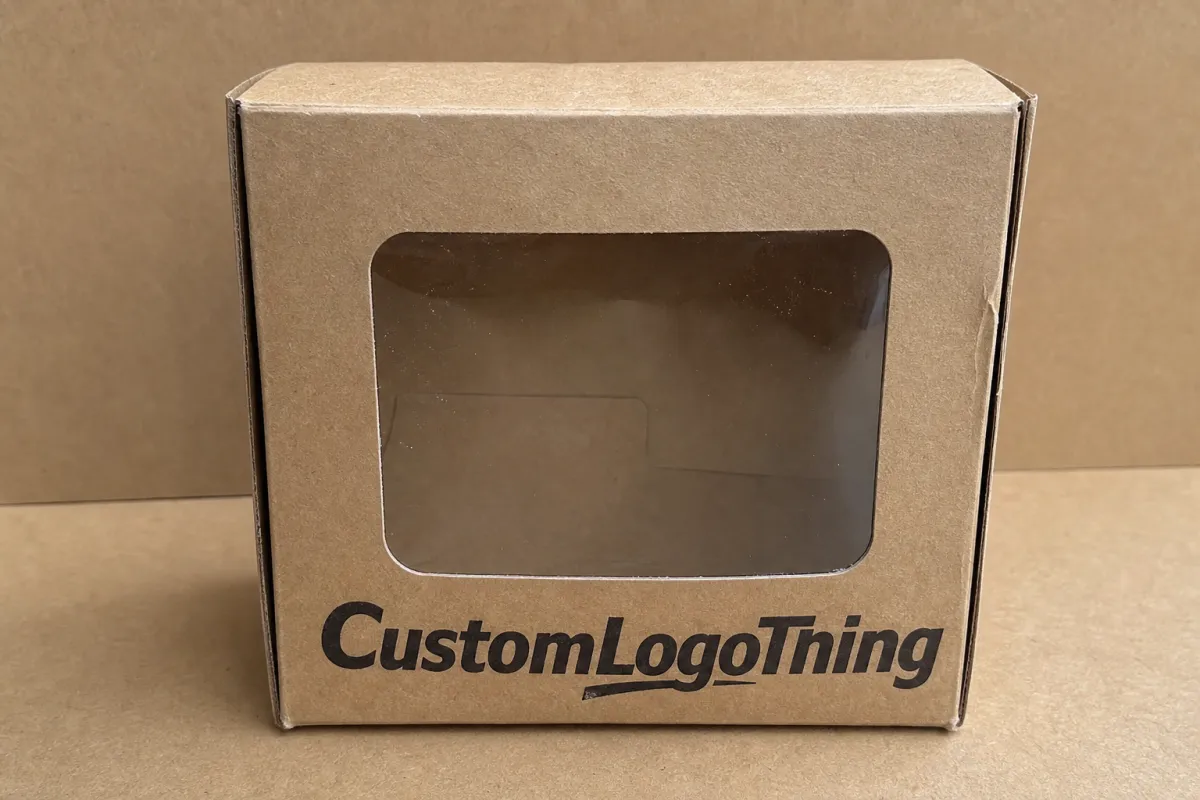
In a bakery case, the first sale usually happens with the eyes. A shopper notices the glaze on a donut, the spiral of icing on a cinnamon roll, the clean cut of a brownie square, or the airy crumb of a slice of coffee cake. If the packaging hides that evidence, the buyer has to trust the brand more than the product. If the package shows it, the buying decision gets easier.
That is the practical advantage of branded bakery boxes with window: they reduce uncertainty. A customer can inspect the actual pastry, in the actual portion size, under the actual lighting of the display case. That is much more persuasive than a photo on a sign, especially when the product is handmade and no two pieces look exactly alike. The box does not need to prove everything. It just needs to reveal the right things.
A window also changes perceived value. A pastry that looks generous, tidy, and well finished through a clear opening often feels worth more than the same item hidden in a closed carton. Buyers notice texture, filling level, garnish placement, and whether the item arrived intact. Those details matter more than many brands expect. If the product looks fresh and carefully handled, the packaging has already done half its job.
Branding still matters, and the printed area around the opening is not empty space. It acts like a frame. The right frame guides the eye toward the dessert while reinforcing the bakery name, flavor, and occasion. A restrained logo, a clean callout, and a readable layout can make the package feel intentional. Too much copy, too many accents, or a busy background can make even a good pastry look overworked.
This format works across several selling environments. Retail cases need visibility. Grab-and-go counters need speed. Gift assortments need presentation. Seasonal programs need a package that can carry holiday graphics without burying the item. One caveat: direct shipping is a different challenge. A window box can be used inside a protective shipper, but it is rarely the right outer mailer on its own because impact, scuffing, and condensation risks rise quickly in transit.
A window box works best when the frame earns its place: it directs attention, protects the pastry, and leaves the product as the hero.
For teams comparing packaging approaches across product lines, the Case Studies page is useful because it shows how structure and graphics affect shelf performance in real programs. The pattern is consistent. When the product is visually strong, the package should reveal it quickly and cleanly.
How the box structure, film, and printing work together
A bakery window box is really three systems working together. The board stock provides stiffness and a print surface. The die-cut opening creates visibility. The film closes the opening so the box stays clean, food-safe, and presentable. If any one of those parts is under-specified, the carton can feel flimsy or look rushed even if the artwork is attractive.
Most Custom Bakery Cartons are built from paperboard such as SBS (solid bleached sulfate), coated paperboard, or kraft board. SBS is common when a brand needs bright whites, sharp type, and strong color reproduction. Kraft works well for an artisanal or ingredient-led look, especially if the bakery wants the packaging to feel warm, rustic, or hand-finished. Coated paperboard can improve print definition and help resist light grease, which matters for buttery pastries, frosted items, and products that may sit in a display case for hours.
The board thickness should match the product weight and the amount of handling the box will see. A light cookie box can use a thinner stock, while a pastry carton for layered cakes, sticky buns, or filled danishes often needs more stiffness to keep the lid from bowing. In practical terms, many window bakery boxes fall somewhere around 16pt to 24pt, but caliper should always be tied to carton size, product weight, pack-out method, and stack pressure.
The film matters as much as the board. Clear food-safe film is the default choice because visibility is the point, but buyers should ask about clarity, anti-fog behavior, and how the film performs in chilled or humid conditions. A refrigerated dessert may cloud a window if condensation is not controlled. A warm item may trap moisture if it is boxed too soon. That is why sample testing should reflect real bakery conditions rather than a clean sample sheet in a conference room.
Recyclability deserves a practical conversation, not a slogan. Paperboard can often be recycled where local programs accept it, but the window film and grease barrier coating can affect how the carton is handled. If sustainability claims matter to your brand, ask whether the film can be minimized, whether the window can be designed for easy separation, and whether the board can carry an FSC claim when the supply chain supports it. The details matter more than broad environmental language.
Printing should be planned around the opening from the beginning. The window should reveal the most persuasive part of the pastry: the swirl of icing, the crumb topping, the layered filling, or the clean profile of the item. Important copy should stay readable even if the carton is stacked, tilted, or partially filled. The best layout usually supports the product rather than competing with it. That is especially true in bakery cases where customers decide quickly and rarely stop to read a long block of text.
For teams comparing broader package types, the Custom Packaging Products page is a simple reference point for folding cartons, sleeves, inserts, and other formats. That comparison becomes valuable fast, because the right structure depends on how the bakery packs, displays, transports, and merchandises the item.
Industry testing can also reduce surprises. Many packaging teams borrow from ISTA distribution test methods to understand how a carton behaves in transit, and resources from packaging.org are helpful for terminology, material basics, and general packaging education. A bakery box is not a shipping crate, but it still has to survive handling, vibration, temperature shifts, and repeated movement from prep area to display case.
Process and timeline: from dieline to finished delivery
Good bakery packaging projects tend to move in a predictable sequence. The fastest way to lose time is to treat the carton as if it were “just a small box.” Small or not, it still has to fit the product, hold the window correctly, fold cleanly, and survive storage without scuffing the print. A disciplined process keeps those variables under control.
- Confirm product dimensions. Measure height, width, and depth, including frosting, domes, garnishes, and any part of the product that rises above the base shape.
- Choose the structure. Decide whether the box should be a tuck-end carton, lock-bottom carton, sleeve and tray, or a display-ready bakery style that opens quickly at the counter.
- Approve the dieline. The flat template must match the finished size, window placement, glue tabs, and fold lines before artwork moves into production.
- Place the artwork. Build the hierarchy around the window so the logo, flavor name, and handling notes stay readable at a glance.
- Review prepress and proofing. Check bleed, safe zones, image resolution, ink build, and whether the opening lines up with the most attractive part of the product.
- Run a sample or prototype. Test the carton with the real product before full production, especially if the item has a fragile topping, a glossy glaze, or a tall shape.
- Move to production and inspection. Confirm folding, die-cut registration, film placement, glue integrity, and pack-out counts before freight leaves the facility.
The timeline depends on how much is already decided. If the size is standard, the art is ready, and the board and film are available, some printed bakery box runs can move through approval and production in roughly 10 to 15 business days after final proof approval. If the project needs a new window shape, specialty coating, custom tooling, multiple SKUs, or a fully new structural layout, the schedule can stretch into 3 to 5 weeks or more. Sampling adds time too, especially when a buyer wants to see the product in a real case instead of relying on a digital render.
Several checkpoints protect quality but can slow the job if they are rushed. Prepress review catches artwork errors. Ink matching protects brand consistency across flavor runs and seasonal packaging. Die-cut registration keeps the window in the right place. Film placement ensures the opening is sealed neatly. Final carton inspection catches weak folds, crushed corners, or adhesive issues before the run turns into expensive waste.
Seasonal bakery programs deserve extra planning. Holiday assortments, gift sets, graduation boxes, and promotional pastry collections often compete for the same press time, the same film inventory, and the same carton lines. If artwork or quantities are confirmed late, even a straightforward package can become a scheduling headache. A smarter approach is to lock the structure early, hold one or two core sizes, and use print changes or sleeves for campaign-level variation.
Practical timing note: if the product is tied to a retail launch date, ask for a proof schedule before you ask for a freight schedule. The proof date usually decides whether the carton arrives on time with enough room for corrections.
Cost, pricing, MOQ, and quote factors to plan around
Pricing for branded bakery boxes with window is shaped by more variables than many buyers expect. Size matters because larger cartons need more board and often a larger window cut. Print coverage matters because more colors and more ink build usually mean more press time. Finishing matters because a soft-touch coat, matte varnish, anti-fog film, or grease barrier can add cost. Die complexity matters because a unique window shape or a multi-piece structure takes more setup than a straightforward carton.
Minimum order quantity, or MOQ, has a direct effect on unit cost. Press setup, die cutting, film handling, and plate preparation are spread across the run, so a smaller order almost always carries a higher per-box price. In bakery packaging, many standard custom runs fall somewhere around 1,000 to 5,000 units, while offset or larger-volume jobs can sit higher depending on the converter, the structure, and the amount of customization. A digital short-run project may be possible at lower quantities, but not every supplier runs the same equipment or pricing model.
Here is a practical way to compare common window bakery box options. These figures are illustrative ranges for planning only; actual quotes shift with market conditions, board supply, film type, freight, and finishing choices.
| Option | Best fit | Typical strengths | Main tradeoffs | Indicative unit cost at 5,000 pieces |
|---|---|---|---|---|
| 18pt SBS, 4-color print, aqueous coat, standard clear window | Retail pastry boxes, cupcakes, cookies, seasonal bakery runs | Sharp graphics, clean white surface, easy brand presentation | Can show grease if the coating spec is too light | $0.22-$0.38 |
| 20pt kraft board, 1-2 color print, standard window film | Artisanal loaves, rustic pastries, ingredient-led branding | Natural look, good shelf presence, strong handmade feel | Less bright print reproduction than SBS | $0.18-$0.32 |
| Premium SBS with soft-touch coating and anti-fog window film | Gift boxes, chilled desserts, upscale bakery assortments | Higher perceived value, excellent display clarity | More expensive and more sensitive to scuffing during handling | $0.34-$0.58 |
| Rigid-style bakery carton with specialty window treatment | Limited editions, gift sets, premium holiday packaging | Strong structure, gift-ready presentation, good protection | Higher material and labor cost, larger storage footprint | $0.65-$1.20 |
The best quote is not always the lowest headline number. A cheaper carton can cost more in the long run if it fails in display, scuffs too easily, or slows packing on the line. When comparing suppliers, ask them to quote the same spec sheet so you are evaluating the same board caliper, the same print method, the same film type, the same coating, and the same freight assumptions. Otherwise, one quote may look better simply because it excludes a detail the other quote includes.
A good quote should spell out at least these items:
- Finished size and structure so the box can actually hold the product without crushing decoration.
- Board specification including grade, thickness, and whether the face is SBS, kraft, or coated paperboard.
- Print method and color count so the buyer can compare reproduction quality fairly.
- Coating or finishing such as aqueous, matte, soft-touch, or grease-resistant treatment.
- Window film type including clarity, anti-fog performance, and food-contact suitability.
- Packing format and freight terms because nested cartons, flat-packed cartons, and shipped cartons do not cost the same to move.
- Sampling fees if prototype approval is part of the project.
Grease resistance, heat, and moisture can change the budget too. A buttery croissant, a glazed donut, and a chilled mousse slice do not behave the same in packaging. A carton that works for dry cookies may show oil marks if it is asked to hold rich pastry. A chilled item may need a different film. A warm item may need a cooling step. Those details affect the quote because they change the materials, the run conditions, and the risk of damage.
If you want a simple rule for budgeting, compare carton programs by specification, not by price alone. That usually leads to better decisions and fewer surprises during production or at the retail shelf.
Step-by-step guide to designing the right window box
Designing the right window box starts with the product, not the artwork. If the pastry is beautiful but the box is wrong, the package can hide the best part. If the box is right, the display feels cleaner, the brand feels more deliberate, and the product often sells with less explanation from staff.
- Measure the product first. Record height, width, and depth, plus the tallest topping or garnish. Leave a little clearance so the lid does not press into frosting, glaze, or crumb decoration.
- Decide what the shopper should see. Pick the most persuasive feature: swirl, filling, texture, icing, shape, or color. Then place the window where that feature will land naturally in the display.
- Select the carton style. Use a tuck-end carton for straightforward shelf packaging, a lock-bottom style for added support, or a sleeve-and-tray format when the product needs a more gift-like reveal.
- Build the brand hierarchy. Put the logo where it supports the window, not where it competes with it. Keep the product name clear, because flavor choice often happens fast at the counter.
- Specify the interior behavior. Ask how the box will handle stack pressure, grease, humidity, and hand carry. If the item shifts, add an insert, a base panel, or a tighter cavity.
- Request a sample. Put the real pastry in the prototype and check for smudging, fogging, movement, and lid interference after a full handling cycle.
There is a subtle but important design rule here: the window should reveal enough to build trust, but not so much that it exposes every uneven edge. A well-placed opening shows freshness and craftsmanship while still preserving the neat borders of the product. If the opening cuts through the wrong part of the item, the box can make the pastry look smaller or messier than it actually is.
Typography matters more than many teams think. Bakery packaging often needs to be read in motion, at arm’s length, under warm display lights. Use a clear hierarchy. Keep the flavor line bold enough to read quickly. Put ingredient highlights and storage notes on the side or back panel. If your brand has a hand-drawn or serif identity, keep it legible. Style should support the sale, not slow it down.
Matching the box to the product is also a structural decision. Airy sponge cakes need different support than glazed donuts. Macarons need less headroom but more protection against crushing. Rustic loaves often want a broader viewing panel and a steadier base. Sticky buns and frosted items often benefit from a taller cavity or an insert that keeps the top intact.
For a product line with multiple SKUs, start with one hero item and build from there. A successful first sample tells you more than a digital mockup ever will. That is why many packaging teams compare their sample against other real-world programs in the Case Studies archive before signing off on volume production.
Common mistakes that weaken shelf appeal and function
Window bakery packaging fails in predictable ways, and most of them are avoidable. The problems usually appear at the intersection of display, handling, and production speed. A carton can look polished in a mockup and still disappoint once it reaches a real counter, a humid case, or a rushed packing line.
- Making the window too large. More visibility is not always better. A window that runs too close to the folds can weaken the carton, expose messy product edges, or make the box feel flimsy in the hand.
- Letting artwork compete with the pastry. Dense graphics can pull attention away from the product. In this format, the box should frame the pastry, not shout over it.
- Ignoring grease and moisture. Butter, glaze, frosting, and cold display conditions can all affect the print surface and the film. If the board is not chosen for those conditions, the package can spot, warp, or cloud.
- Skipping workflow testing. A carton that looks elegant but folds slowly, sticks during assembly, or tears in the pack room will create waste and slow down service.
- Forgetting stack and transport realities. Bakery staff often need cartons that nest neatly, stack cleanly, and survive back-stock handling before the customer ever sees them.
- Approving without a real product test. A design that works on screen can fail when a glazed pastry sweats inside the box or a frosted item touches the lid.
The strongest bakery box is not the fanciest one. It is the one that keeps the pastry looking like the thing people want to buy after packing, storage, display, and carry-out.
One common mistake is overdesigning for the brand and underdesigning for the product. A bakery may want a large logo, a full-color background, metallic accents, and a decorative window, but if the pastry becomes harder to see or the carton loses rigidity, the package is no longer helping sales. The product should remain the star. Good branding should make it easier to choose, not harder.
Another issue is assuming all baked goods behave alike. A dry cookie box and a chilled éclair box are not interchangeable. One may need more print surface and less ventilation. The other may need anti-fog film and tighter temperature control. The best packaging teams test at the item level instead of relying on a generic carton spec.
For buyers who want to compare structure options before committing, the Custom Packaging Products page can help narrow the field quickly. Once the structure is clearer, the artwork and finishing choices become easier to judge against the actual bakery workflow.
Expert tips and next steps for a smarter packaging launch
The window is more than a design feature. It is a trust signal. If the pastry looks fresh, generous, and carefully arranged, the customer feels more comfortable with the price and more confident carrying the product to the register. Experienced packaging buyers often start with box behavior first and art second for exactly that reason.
Here are a few practical ways to make the next launch work harder:
- Standardize a few core sizes. Reusing a base structure across multiple flavors can reduce tooling changes and make replenishment easier.
- Use seasonal graphics or sleeves. A stable carton with a refreshed wrap or sticker system can save time while still keeping the line fresh.
- Keep the product visible. Window placement should reveal the most attractive portion of the pastry, not the side that happens to fit the dieline best.
- Review one hero SKU first. Test the best-selling item before scaling the format across the full line.
- Check the entire customer journey. A good box has to look right in the case, feel right in the hand, and close well for carry-out.
Match the structure to product behavior. Soft sponge cakes can compress if the lid sits too low. Delicate macarons need a box that prevents sliding. Glazed donuts may need a surface that resists sticking or smudging. Rustic loaves may need more width and less ornamentation. There is no single answer that fits every bakery, and that is exactly why the sample stage matters.
A practical review checklist usually saves more time than a long approval meeting. Before production, confirm the product dimensions, board grade, coating, film type, window size, artwork hierarchy, MOQ, freight method, and target delivery date. If any of those items is still moving, resolve it before the press run starts. Packaging tends to get more expensive when the final correction happens after tooling.
If your team is still deciding between several carton styles, start with the one that best supports the product on shelf and in hand. Then compare quotes on the same spec sheet, not on broad marketing language. That approach gives you a cleaner buying decision and a better chance of getting a box that looks as good in the bakery case as it did in the proof.
Final thought: if you want one packaging format that can improve display appeal, protect freshness, and give shoppers a clear reason to choose, branded bakery boxes with window deserve serious consideration. The winning version is rarely the most ornate one; it is the one whose size, film, board, and artwork all match the pastry and the way your team actually packs it.
Frequently Asked Questions
Are branded bakery boxes with window better for frosted pastries?
Yes, provided the window is positioned high enough to show the frosting without touching it. A little extra headroom keeps the lid from pressing into decoration, and that matters for cupcakes, layered slices, and tall buns. For chilled or humid display conditions, ask for a moisture-tolerant board and a film that stays clear instead of fogging up.
What material is best for window bakery boxes with branding?
Paperboard is the most common choice because it prints cleanly and folds efficiently on standard packaging equipment. Kraft gives a natural, artisanal look, while coated SBS usually delivers sharper graphics and brighter color. The right pick depends on grease resistance, print quality, and the brand image you want customers to feel before they open the box.
How do I estimate MOQ for custom bakery boxes with a window?
MOQ depends on the supplier's press setup, die-cut tooling, and the complexity of the carton. Simple standard styles usually come with lower minimums than fully custom structures or specialty window shapes. The fastest way to estimate it is to send the box size, print colors, film type, and annual volume target together so the supplier can quote the same spec.
Can branded bakery boxes with window protect greasy or warm items?
Yes, but the board and coating need to be specified for grease resistance and the temperature the product will actually see. Warm items may need a cooling period before packing to reduce condensation, and buttery pastries may need sample testing before full production. For the best result, test the exact product, not a placeholder sample.
What should I print on a window bakery box besides the logo?
Include the product name, flavor, and one key selling point that helps the shopper choose quickly. Side panels are a good place for ingredient highlights, storage notes, or serving suggestions, while the front panel should stay simple so the window and the product remain the visual focus. In most bakery programs, branded bakery boxes with window work best when the logo supports the view instead of overpowering it.


