Buyer Fit Snapshot
| Best fit | Branded Box Sleeves Price projects where brand print, material claims, artwork control, MOQ, and repeat-order consistency need to be specified before quoting. |
|---|---|
| Quote inputs | Share finished size, material target, print colors, finish, packing count, annual reorder estimate, ship-to region, and any compliance wording. |
| Proofing check | Approve dieline scale, logo placement, barcode or warning zones, color tolerance, closure strength, and carton packing before bulk production. |
| Main risk | Vague material claims, crowded artwork, missing packing details, or unclear freight terms can make a low unit price expensive after revisions. |
Fast answer: Branded Box Sleeves Price: What Affects Your Quote should be specified like a repeatable production item. The safest quote records material, print method, finish, artwork proof, packing count, and reorder notes in one written spec.
Production checks before approval
Compare the actual filled-product size with the drawing, then confirm tolerance on folds, seals, hang holes, label areas, and retail display edges. Reserve space for logos, QR codes, warning copy, and material claims before decorative graphics fill the panel.
Quote comparison points
Review material grade, print process, finish, sampling route, tooling charges, carton quantity, and freight assumptions side by side. A quote is only useful when the supplier can repeat the same color, closure quality, and packing count on the next order.
Branded box sleeves price is usually the first number buyers ask for, and that makes sense. A sleeve can lift a plain carton, turn a basic mailer into something retail-ready, and do it without rebuilding the whole package from scratch. For launches, seasonal packs, and gift sets, that kind of flexibility is usually the whole point.
The honest answer is that the quote almost never comes down to the sleeve idea alone. Branded box sleeves price is shaped by dimensions, board stock, print coverage, die shape, finishing, and quantity. Miss one of those details and the estimate starts drifting away from reality. A price that looks tidy on paper can turn into a second proof, a re-cut, or a rush charge nobody budgeted for.
In day-to-day packaging work, sleeves give brands some breathing room. The base carton can stay in stock while the outer branding changes for a launch, holiday run, or limited edition. That is especially useful for subscription kits, promotional bundles, cosmetics, candles, apparel sets, and food gifts where the structure stays fixed but the presentation needs to shift.
The lowest quote still is not always the best result. A sleeve that feels flimsy, prints poorly, or lands late costs more than the number on the invoice suggests. Packaging either supports the product or works against it, and on shelf there is not much middle ground. I've seen plenty of projects where the "cheaper" sleeve ended up costing more once the rework, delays, and missed sales window were added back in.
Branded box sleeves price: the hidden value behind a simple sleeve
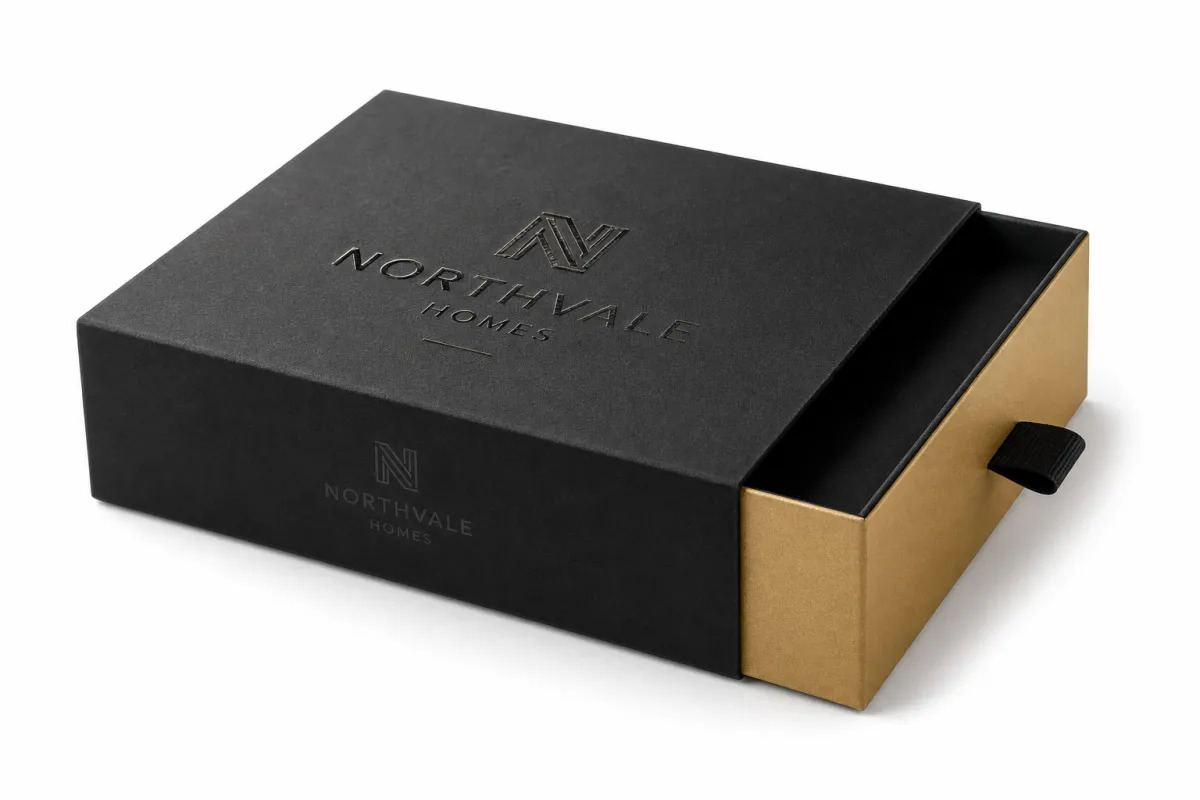
A box sleeve wraps an existing package instead of replacing it. That is the first reason branded box sleeves price often comes in below the cost of a full custom carton. The box, tray, or mailer already handles the structural job. The sleeve brings branding to the outside without changing the packaging architecture underneath.
That sounds simple, though production has a habit of making simple things behave differently. Cost shifts with size, artwork coverage, and the geometry of the sleeve itself. A short sleeve on a square carton is one kind of job. A sleeve with tight tolerances, window cutouts, or a locking feature asks for more setup time and more exact die cutting, and that shows up in branded box sleeves price.
One mistake shows up again and again: quoting before the finished box is measured correctly. Buyers sometimes send a nominal carton size, then the sleeve arrives loose, short, or sitting in the wrong position. Once that happens, a second round of samples or a rework is usually the next move. A job that looked straightforward can get expensive fast when the fit is off. Nobody wants to find that out after the run is already in motion.
For brands that move quickly, sleeves are useful because they let the packaging system stay calm while the graphics do the heavy lifting. You can keep the base carton generic and change the outer presentation as the product line evolves. That lowers inventory risk, especially when a brand is testing colorways, bundle configurations, or regional artwork variations.
Sleeves also earn their place on shelf. They provide a clean front face, room for a logo, space for product details, and a premium finish without overbuilding the whole pack. A plain kraft box with a well-made sleeve can look more deliberate than a fully printed carton with weak ink or poor registration. Buyers should keep in mind that branded box sleeves price is only one part of the decision. Shelf impression is where the value becomes real.
The cheapest quote is not automatically the smartest one. Thicker board, extra coatings, or multiple proof rounds can erase savings faster than people expect. The real question is whether the quoted spec fits the product, the timeline, and the margin. If it does, the sleeve is doing its job. If it does not, the packaging is just making noise.
- Best value: launch kits, seasonal packaging, bundled products, and retail-ready mailers.
- Best speed: projects where the base box already exists and only the outer branding changes.
- Best control: brands that want lower inventory risk and easier reorder planning.
That is why experienced buyers compare branded box sleeves price against the whole packaging system rather than against a printed wrap in isolation. A sleeve is a tool, and a good tool saves money because it fits the task.
What branded box sleeves are and where they work best
Branded sleeves are printed wraps that slide over an existing package. They do not replace the carton. They sit on top of it, which is the whole point. If the base pack already handles the structure, the sleeve carries the branding without the cost of a full redesign, and that is why branded box sleeves price often looks friendlier than a Custom Rigid Box or a heavily printed folding carton.
The format works especially well for cosmetics, candles, apparel, food gifts, ecommerce sets, and sample packs. It also fits limited editions and product bundles where the front panel needs to do more visual work. For a candle line, a sleeve can move the look from plain to retail-ready with one die line and one print run. For a gift set, it can tie multiple items together without changing the inner packaging.
Compared with labels, sleeves give more surface area and a stronger unboxing feel. Compared with a full custom carton, they cut tooling and usually trim lead time. That is the real tradeoff. A sleeve is not the answer to every packaging problem, but it is often the cleanest answer when the structure is already solved and the branding needs more room.
| Format | Typical use | Common price behavior | Main tradeoff |
|---|---|---|---|
| Label | Small branding or compliance mark on an existing box | Lowest upfront cost, but limited coverage | Looks simple and can feel less premium |
| Box sleeve | Retail-ready branding over a plain carton or tray | Branded box sleeves price is usually mid-range and scales well with quantity | Requires accurate sizing and solid print alignment |
| Full printed carton | Primary package with graphics on the structure itself | Higher setup cost and usually higher MOQ | Less flexible if graphics change often |
That table is where many teams pause and then move on too quickly. Later, they wonder why the sleeve quote seems high until they compare it with the labor, setup, and inventory burden of a fully printed carton. A sleeve often wins because it keeps the packaging system simpler. Simpler systems are easier to store, easier to reorder, and easier to correct when a SKU changes.
There is a shelf advantage too. A sleeve can give one strong branding panel, a back panel for product details, and enough room for QR codes, ingredient notes, or launch messaging. That means less crowding and better readability than a tiny label trying to carry the whole story.
If you want to see how different outer-pack formats behave in real production, our Case Studies page shows the kinds of packaging decisions buyers make once they stop guessing and start comparing the actual structure. It is a practical reference, not a sales pitch.
For brands that already have a functional inner pack, sleeves are often the most practical move. They protect the budget, keep the schedule manageable, and still give the product a real branded face. That is why branded box sleeves price keeps getting attention from procurement teams and brand managers alike.
Specifications that change branded box sleeves price
Before anyone quotes branded box sleeves price, the specification has to be real. Not approximate. Real. Wrong dimensions make the price wrong. Incomplete artwork details make the price wrong again. Packaging buyers who want accurate quotes should lock the following points first:
- Finished box size: length, width, and height of the assembled carton or tray.
- Sleeve style: open-ended wrap, glued sleeve, band, or wrap with tuck or lock feature.
- Board stock: SBS, kraft, CCNB, or heavier paperboard.
- Print coverage: one side, two sides, full wrap, or full bleed.
- Finishes: lamination, foil, embossing, spot UV, window cut, or special ink.
- Artwork setup: dieline, bleed, color standards, and file quality.
Stock choice changes the feel more than many people expect. SBS is popular for crisp, bright print and a smoother retail look. Kraft brings a more natural tone and supports an eco-minded brand story. CCNB often gives a practical balance for everyday folding carton work. Heavier paperboard improves stiffness and shelf presence, but it also affects branded box sleeves price because more material is being used and the cutting needs to be more careful.
Finish choices tend to move the number faster than the base stock. Matte or gloss lamination adds protection and helps the print hold up in handling. Soft-touch coating creates a richer feel, but it is not free. Foil stamping, embossing, and spot UV all add setup and finishing steps. Window cuts add tool complexity. When more than one special finish appears in the design, the quote can rise quickly. That is normal, and it is usually the part people underestimate first.
Artwork quality matters too. Clean vector files, correct bleed, and accurate dieline placement reduce proof cycles. Poor files create hidden labor. Someone has to fix them, check them, and sometimes rebuild them. That time lands inside branded box sleeves price even when it is not itemized in front of you. A supplier can be transparent about the output, but they still have to spend time cleaning up inputs if the file is rough.
Sustainability choices are worth discussing early. Recycled content, FSC-certified paper, and minimal coatings can support the brand story. They can also make the pack easier to recycle, depending on the finish stack. Green choices do not automatically mean lower cost. Sometimes they cost a little more. Sometimes a lot more. It depends on stock availability, finish requirements, and order size. If FSC matters to your brand, confirm the chain-of-custody path and paper source with the supplier and check the standards at fsc.org.
For teams that want more technical background, the Packaging School and packaging.org resources are useful for basic industry language and packaging terminology. No mystery, no fluff. Just the pieces that help a buyer ask better questions.
Good file setup prevents unnecessary delays. That may sound blunt, but it saves money. A clean dieline, a proper proof, and a clear spec sheet do more for branded box sleeves price than any negotiation trick ever will.
Branded box sleeves price, MOQ, and unit cost
MOQ is where buyers either get strategic or get frustrated. Minimum order quantity is not just a supplier rule. It is the point where setup, cutting, printing, and finishing can be spread across enough units to make the job efficient. Below MOQ, branded box sleeves price rises quickly because all the fixed work lands on too few pieces.
The pattern usually looks like this:
- Small trial run: higher unit cost, useful for a new launch or proof of concept.
- Mid-volume reorder: better unit cost, often the sweet spot for many brands.
- Large production lot: lowest unit cost, but more cash tied up in inventory.
That tradeoff rarely gets enough attention. Larger orders lower the per-piece number, but they also increase storage pressure and reduce your ability to change artwork if the market shifts. A sensible run beats a bargain hunt that leaves a brand with stacks of stale sleeves six months later. I have seen that happen more than once, and it is never fun trying to justify the dead stock after the fact.
For common production, these ballpark ranges are useful starting points. They are directional, not a promise, because every plant, press, and finish stack behaves a little differently.
| Order size | Typical spec | Approximate unit range | What drives the number |
|---|---|---|---|
| 500-1,000 pcs | Simple print, standard stock, light finishing | $0.28-$0.65 each | Setup cost is spread across fewer sleeves, so branded box sleeves price stays high |
| 2,000-5,000 pcs | CMYK print, matte or gloss finish | $0.14-$0.38 each | Better spread on tooling and printing setup |
| 10,000+ pcs | Full wrap, premium stock, selective finishes | $0.09-$0.28 each | Volume helps, but premium finish choices still matter |
Those numbers shift with size. A larger sleeve uses more board and often needs more careful handling. A smaller sleeve may fit tighter on the run, but it still carries the same quoting, proofing, and cutting logic. A tiny sleeve is not automatically cheap just because it is small. The setup is still there, and the setup is what often makes the first thousand units feel expensive.
Another mistake is asking for one quantity only. That gives you one number and very little buying power. Ask for three points instead: a low test run, a mid-volume reorder, and a larger lot. You will see where the price drops, where the breakpoints sit, and whether the supplier is really competitive on branded box sleeves price or just quoting one convenient figure.
Total landed cost matters more than the sticker price. Freight, customs, local delivery, warehousing, and reprint risk all belong in the math. A quote that looks lower by eight cents per unit can become more expensive once shipping is added if the supplier is far away or the cartons are bulky. Cheap numbers are easy to print on a screen. Real numbers need a calculator.
One more useful move is to ask for the same job in different configurations. Compare SBS with matte lamination against kraft with no coating, or compare 2,000 pieces versus 5,000 pieces. The difference shows where the premium sits, whether it is in the material, the finish, or the volume. That is the clearest way to understand branded box sleeves price without guessing.
If the sleeves need to survive shipping, ask whether the job should be measured against common transit methods and testing expectations. The ISTA standards are a sensible reference when packaging has to handle distribution, drops, and vibration. Sleeves are not usually the weak structural point, but they still need to arrive flat, clean, and intact.
Production steps, process, and lead time for custom sleeves
Good production is boring, and that is a compliment. A clean order moves through a predictable chain: request, spec check, dieline review, proof approval, production, finishing, packing, and dispatch. Every step affects branded box sleeves price because every step carries labor, setup, or timing.
The normal flow looks like this:
- Inquiry: the buyer sends size, quantity, finish preference, ship-to location, and artwork.
- Spec check: the supplier confirms dimensions, stock options, and any tooling needs.
- Artwork and dieline review: files are checked for bleed, alignment, color, and panel placement.
- Proof approval: the buyer signs off on a digital or physical proof.
- Production: printing, die cutting, scoring, and finish application happen in sequence.
- Packing and dispatch: sleeves are bundled flat and shipped to the delivery point.
Lead time depends on the spec. A straightforward sleeve on standard stock can move from approved proof to finished goods in about 10-15 business days in many production schedules. If the job includes foil, embossing, window cutting, special coating, or a complex die, plan closer to 15-20 business days. Rush work exists, but it is not magic. It compresses the schedule and usually raises branded box sleeves price. The job still has to pass through the same machines and checks.
The biggest delays are easy to predict. Missing dimensions are one. Late artwork approval is another. Color changes after proofing create their own headache. Special finishes can require extra setup or repeat checks. Every one of those delays costs time, and time has a habit of turning into money in packaging.
For buyers who want more control, the better habit is to think in stages rather than one vague total lead time. Ask for the proof timeline, the production timeline, and the shipping timeline separately. That gives you a real schedule instead of a hopeful estimate. It also makes it easier to see where a delay is coming from if something slips.
If there is a launch date, plan backward from that date. Not from the day the inquiry is sent. That is the mistake people keep making. A sleeve can be quick, but only if the input is ready. Clean files, confirmed dimensions, and fast approvals often save more time than any rush fee can buy.
For distribution-heavy products, think about how the sleeve behaves in transit. A sleeve should stay flat, resist scuffing, and arrive with the fold lines intact. If the package has to perform beyond the shelf, it makes sense to align sleeve specs with shipping expectations and testing practices rather than treating the job as a pure visual exercise.
Repeat orders get easier. Once the dieline, finish stack, and approved color are locked, the next run is faster to quote and easier to approve. That stability often improves branded box sleeves price over time because you are not paying again for the same learning curve. The first order carries the setup; the next one usually moves with less friction.
Why choose us for branded box sleeves
Most buyers do not need poetry. They need a supplier who tells the truth about spec, Cost, and Lead Time. That is the position Custom Logo Things should own. Clear quoting. No fake line items. Real numbers tied to real materials. That is how branded box sleeves price should be handled.
We keep the process practical. If the dieline needs help, we help. If the file is not print-ready, we flag it before production starts. If the stock choice is wrong for the job, we say so. That sounds basic because it is basic. A surprising number of print problems start with someone nodding at a bad file and hoping it will work out later. It usually does not. More often, it just gets more expensive.
Consistency matters on repeat orders. The buyer wants the sleeve to fit the same way every time, sit the same way on the box, and print the same way on the shelf. When a brand runs multiple SKUs, that repeatability becomes part of the cost equation. Stable production lowers risk, and lower risk matters just as much as a fair branded box sleeves price.
We also support different order sizes. Some brands need a small launch run for market testing. Others need a larger reorder with a cleaner unit cost. Both are normal. The right answer changes with the product stage, not with a sales script. Quoting should stay flexible without turning vague.
If you want a sense of how different packaging decisions play out in real work, our Case Studies page shows the kinds of jobs where sleeves outperform labels, where finish choices change the shelf look, and where a modest spec change moves the cost more than expected. It is a useful benchmark for comparing options before you commit to a build.
Buying packaging should feel controlled, not mysterious. Fewer surprises. Faster answers. Less back-and-forth. That is the service standard most procurement teams actually want, even if they phrase it in a dozen different ways. It is also the only standard that matters once the order is in motion.
- Clear specs: you know what you are ordering before production starts.
- Practical support: dieline help, file checks, and material guidance.
- Realistic pricing: quotes that reflect the actual sleeve build, not a fantasy number.
- Repeat order consistency: the second run should not become a new project.
That is the simple case for working with a supplier that treats branded box sleeves price as part of a production system, not a sales gimmick.
What to send to get an accurate quote fast
If you want a real quote, send the full package of information up front. Not a logo. Not “roughly this size.” The full package. That is the fastest way to get a useful branded box sleeves price without three rounds of clarification emails.
Send these items together:
- Finished box dimensions: length, width, and height of the assembled box or tray.
- Quantity: one target number plus at least one lower and one higher option.
- Stock preference: SBS, kraft, CCNB, or heavier board if you already know it.
- Finish preference: matte, gloss, soft-touch, foil, embossing, spot UV, or none.
- Artwork files: dieline, logo, brand colors, and any regulatory copy.
- Delivery location: city, state, country, or warehouse address for freight planning.
- Deadline: the actual need-by date, not a hopeful one.
If color matters, say so early. If the sleeve needs to match an existing line of packaging, mention that. If the product is retail-facing and must carry a premium look, say that too. It helps the supplier recommend the right stock and avoid giving you a number for the wrong spec. That is a very common reason branded box sleeves price drifts after the first quote.
Ask for sample photos or a pre-production proof if the job includes special finish work or tight color targets. A physical proof is slower than a digital one, but it removes a lot of doubt. For products that sit close to the shelf edge or go into gift channels, that extra check is often worth it.
There is a simple rule here: the better the brief, the better the quote. A vague brief gets a vague price. A complete brief gets a number you can actually use. That is how serious packaging buyers work, and it saves everyone time. It also keeps the conversation focused on the right thing instead of circling the same missing details over and over.
Use this checklist before you hit send:
- Confirm the finished box size.
- Choose the sleeve style.
- Set the quantity target and backup quantity.
- Decide on stock and finish.
- Prepare artwork or at least a strong draft.
- Share the delivery address and deadline.
Do that, and the conversation moves faster. More importantly, the quote will reflect the actual job. That is the whole point of asking for branded box sleeves price in the first place.
FAQ
What affects branded box sleeves price the most?
Size is usually the first driver because larger sleeves use more board and often need more complex die cutting. Quantity matters a lot too; small runs carry more setup cost per piece, while larger runs spread the setup across more units. Finish choices like foil, embossing, lamination, and spot UV can raise branded box sleeves price faster than the base paper stock.
How does MOQ change branded box sleeves pricing?
Below MOQ, the unit cost jumps because setup, cutting, and proofing are spread across fewer sleeves. At higher volumes, the per-piece price drops, but storage and cash flow start to matter. The clean way to handle branded box sleeves price is to ask for several quantity breaks so you can see the point where the savings actually justify the bigger order.
Are custom box sleeves cheaper than full printed boxes?
Usually yes, because you are only printing and finishing the wrap, not manufacturing a full custom carton. The savings shrink if the sleeve needs heavy finishing or a very thick stock, so compare specs rather than assuming the format is cheaper by default. A sleeve is strongest when the inner box is already functional and you only need branding on the outside, which is why branded box sleeves price often works better for launches and seasonal packs.
What details do you need for an accurate quote on box sleeves?
Send the finished box size, sleeve style, quantity, stock preference, and any finishing requirements. Include artwork files or at least a logo and brand colors so the supplier can check print complexity early. Share your deadline and ship-to location, since freight and turnaround can change the final branded box sleeves price more than buyers expect.
How long does production usually take for branded box sleeves?
Simple jobs can move quickly once artwork is approved, while custom finishes and larger runs take longer. Proof approval is often the biggest timing variable, so delays there usually slow the whole order. If timing matters, ask for the lead time by stage instead of one vague total number, because that is the only way to manage branded box sleeves price and schedule without guessing.
Practical takeaway: if you want a clean, reliable sleeve quote, send the finished dimensions, quantity breaks, stock, finish, artwork, ship-to location, and deadline in one shot. That single habit does more to stabilize branded box sleeves price than any back-and-forth negotiation ever will.