Buyer Fit Snapshot
| Best fit | Branded Carton Boxes with Lamination projects where brand print, material claims, artwork control, MOQ, and repeat-order consistency need to be specified before quoting. |
|---|---|
| Quote inputs | Share finished size, material target, print colors, finish, packing count, annual reorder estimate, ship-to region, and any compliance wording. |
| Proofing check | Approve dieline scale, logo placement, barcode or warning zones, color tolerance, closure strength, and carton packing before bulk production. |
| Main risk | Vague material claims, crowded artwork, missing packing details, or unclear freight terms can make a low unit price expensive after revisions. |
Fast answer: Branded Carton Boxes with Lamination: Structure, Print Proof, Packing, and Reorder Risk should be specified like a repeatable production item. The safest quote records material, print method, finish, artwork proof, packing count, and reorder notes in one written spec.
Production checks before approval
Compare the actual filled-product size with the drawing, then confirm tolerance on folds, seals, hang holes, label areas, and retail display edges. Reserve space for logos, QR codes, warning copy, and material claims before decorative graphics fill the panel.
Quote comparison points
Review material grade, print process, finish, sampling route, tooling charges, carton quantity, and freight assumptions side by side. A quote is only useful when the supplier can repeat the same color, closure quality, and packing count on the next order.
Branded Carton Boxes with Lamination: Smart Buying Guide
Branded carton boxes with lamination can change a customer's first impression before the box is even opened. A carton may look polished on a render, then pick up scuffs, fingerprints, or dull corners after a few rounds of shipping and retail handling. I have seen that happen more times than I can count. That is exactly why branded carton boxes with lamination show up so often in cosmetics, supplements, gift packaging, retail cartons, and e-commerce inserts that need to arrive looking as composed as they did on screen.
At its simplest, lamination means a thin film is applied over printed carton board. That film changes the look, adds a layer of protection, and helps the print hold up through stacking, movement, and ordinary wear. It will not rescue a weak dieline or a cluttered layout, and it will not turn a poor print file into a premium package. What it does offer is a cleaner surface and a more controlled finish, which is often enough to lift the whole pack when the structure and artwork are already sound.
If you want a quick reference while comparing specifications, browse our Custom Packaging Products and Case Studies pages. They make it easier to see how board choice, finish, and structure change the final carton in practice.
Branded Carton Boxes with Lamination: Why They Pop
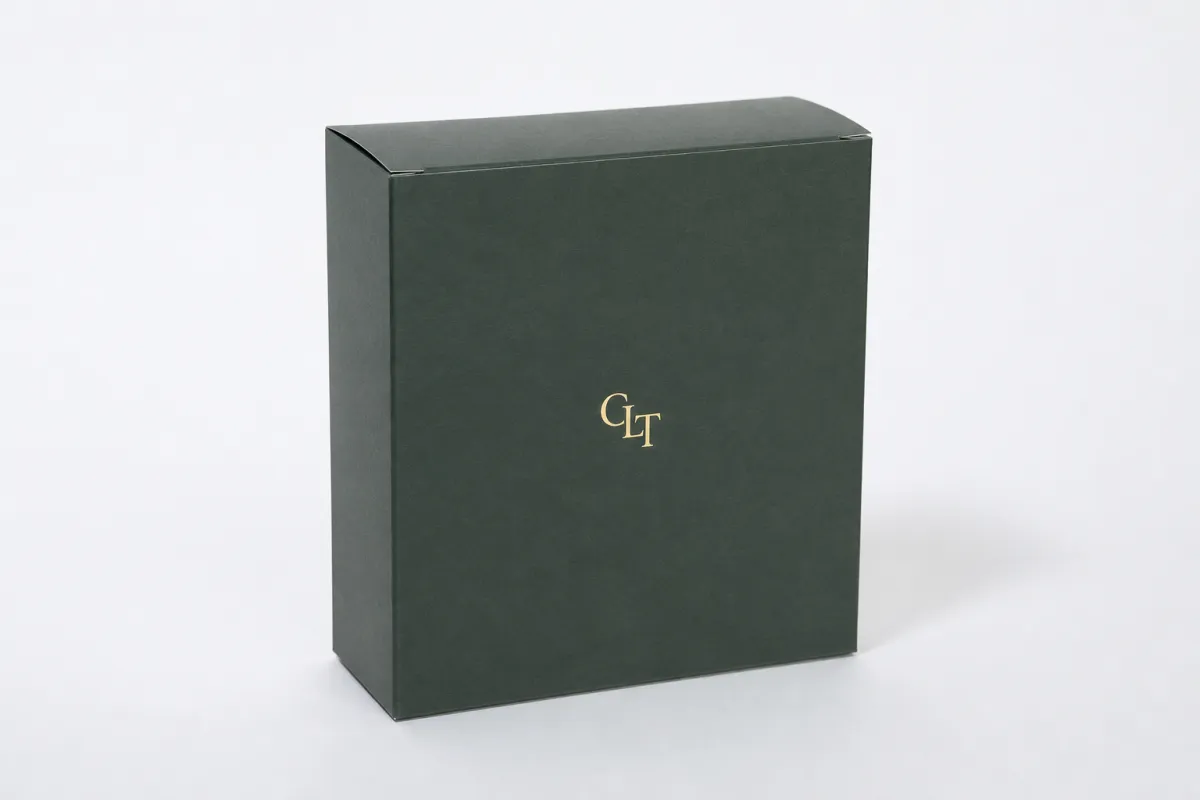
The appeal of branded carton boxes with lamination comes down to how the surface behaves once it leaves the proof stage. An uncoated carton may look sharp on a screen and then start showing wear as soon as it is packed, moved, or slid across a counter. Lamination slows that process. It also gives the print a more finished presence, which matters when the box is part of the selling experience and not just a shipping shell.
Brands choose branded carton boxes with lamination for practical reasons as much as visual ones. The finish can sharpen shelf presence, deepen color, and cut down on complaints about packaging that arrives looking tired before the product has even been opened. Matte film creates a quieter, more controlled look. Gloss pushes brightness and contrast. Soft-touch brings a velvety hand feel that people notice immediately, even when they cannot quite explain why the box feels more premium. Those small reactions shape how customers read the brand.
Unlaminated cartons still have a place. Kraft board and plain paper stocks can feel honest, raw, and more visibly natural, which is useful for brands leaning into simplicity or an eco-forward story. That choice does come with tradeoffs. The box usually gives up some abrasion resistance and visual depth, and the difference can become obvious once the pack is handled outside a studio setting. A finish that looks minimal on a screen can look dusty, scuffed, or uneven in the hand. For branded carton boxes with lamination, the surface is part of the brand language whether the brand intends it or not.
There is one point worth saying plainly: branded carton boxes with lamination do not fix a weak structure, sloppy artwork, or bad die lines. If the corners collapse, the bleed is off, or the design is crowded, the laminate makes the flaw harder to ignore. Attractive finishes tend to expose bad decisions rather than conceal them. Experienced packaging buyers usually treat finish and structure as one decision, because that is how the carton behaves once production starts.
A premium box is not the one with the most effects. It is the one that still looks intentional after shipping, shelving, and a few dozen handoffs.
For brands that need retail presence and a tougher surface without moving into a heavy luxury build, branded carton boxes with lamination are often the first upgrade worth specifying. That step can make the packaging feel more polished while keeping the project within a sensible production range.
How Branded Carton Boxes with Lamination Are Made
Well-made branded carton boxes with lamination move through a sequence of stages, and each one can improve the outcome or introduce problems that show up later. The work usually begins with artwork, dielines, and print setup. A tight safe zone, a barcode pushed too close to a fold, or a missing bleed may not look dramatic in the file, yet those are the kinds of details that create real trouble once the box is on press. Lamination preserves the mistake just as faithfully as it preserves the print.
Prepress checks should cover bleed, trim, fold positions, glue zones, and barcode placement. Window panels, inserts, special closures, and structural features need to be reviewed before anything is printed. Finish decisions belong in that same conversation. A carton that feels balanced under matte film can read too heavy under gloss, while a darker design with metallic accents may need different treatment than a bright retail box. Branded carton boxes with lamination benefit from that level of planning because the finish and the artwork interact from the start, not after the fact.
The print stage typically uses offset printing for larger orders and digital printing for shorter runs or samples. Once the sheets are printed, the laminate is applied. Gloss, matte, and soft-touch are the common options, though the adhesive behind the film matters nearly as much as the film itself. Weak adhesion tends to show up first at corners and folds, which are already under stress during use. Dust, rough stock, or rushed application can leave bubbling, silvering, or edge lift. Those defects are small on a flat sheet and obvious on a finished carton.
After lamination, the sheets are trimmed, die cut, folded, and glued. Die cutting defines the carton shape, and the quality of that cut matters more than many buyers expect. Clean cuts help the box fold correctly and reduce stress on the laminated surface. Rough edges and poor scores can crack the film or create friction points during packing. Tuck flaps, locking tabs, embossed details, foil stamping, and spot UV all need to be planned together so the finish layers work with the structure instead of competing with it.
Some flaws are easy to see right away. Others appear only after the cartons are packed, stacked, and shipped. Common issues include:
- Bubbles from uneven adhesive, trapped dust, or inconsistent pressure during application
- Silvering at folds when the film does not settle cleanly into the crease
- Peeling around corners where the carton flexes more than the film can tolerate
- Dull color shifts when the artwork was not adjusted for the chosen finish
- Surface scratches from careless packing, tight bundling, or rough handling in transit
A standard production flow for branded carton boxes with lamination usually moves from prepress approval to print proofing, board printing, drying or curing, film application, die cutting, folding, gluing, inspection, packing, and freight. Nothing about that sequence is exotic. The real difference comes from how tightly each stage is controlled so the carton still looks clean after it leaves the pressroom.
Key Factors That Change the Finish and Durability
Not every set of branded carton boxes with lamination performs the same way. Board stock, film, print coverage, and structural shape all affect the final look and wear pattern. A buyer can approve one sample and still be disappointed by the production run if even one of those variables shifts. Most of the variation comes from a few controllable details, which is useful because those are the same details that can be specified clearly from the start.
Board choice sits at the foundation. SBS, C1S, C2S, kraft, and recycled stocks each behave differently once a film goes over them. SBS usually delivers crisp detail and a clean print surface. C1S can work well when one side carries the artwork and the other side stays plain. C2S supports printing on both sides, though it can raise cost. Kraft gives a more natural look, but the base color changes how the printed image reads beneath the laminate. Recycled stocks can fit sustainability goals, yet they often benefit from extra testing because surface consistency can vary from batch to batch.
Finish type changes both appearance and handling. Gloss is reflective and tends to make colors feel stronger. Matte cuts glare and gives the carton a calmer, more restrained quality under store lighting. Soft-touch adds a velvety, almost suede-like feel that many buyers associate with premium packaging because it is so distinct in the hand. The same soft-touch surface can also reveal fingerprints and fine scuffs more clearly than people expect, especially on dark artwork that gets handled constantly. The right finish depends on the product, the sales setting, and how the box will be used, not just on visual preference.
Thickness and adhesion matter quietly but decisively. A thinner film may feel sleeker, yet weak adhesive can cause lifting at folds after regular use. Stronger adhesive is often the better choice for cartons that will be opened repeatedly, stacked for fulfillment, or handled often during retail prep. For branded carton boxes with lamination, that balance becomes even more important when the carton has tight folds, heavy ink coverage, or a structure that gets flexed many times in use.
Print coverage also affects the result. Full-bleed artwork with dark blocks, gradients, or metallic accents behaves differently from a light, minimal layout. Matte can calm a busy design and keep it from feeling overbearing. Gloss can sharpen contrast and make the graphics more energetic, which works well for some beauty and electronics cartons and not nearly as well for brands aiming for a softer, quieter feel. Spot UV and foil stamping should be reviewed alongside the chosen film so the surface effects stay in harmony rather than crowding each other.
Sustainability tradeoffs deserve a straight answer. Some laminated cartons can still be recycled in certain systems, but films and local rules do not always align. If recyclability is part of the brand promise, ask whether the laminate is a standard film, a reduced-material option, or a construction designed with easier recovery in mind. The EPA has useful general guidance on packaging waste and recycling behavior at epa.gov/recycle. If FSC-certified board matters to your sourcing plan, check fsc.org for certification information and chain-of-custody basics.
For buyers comparing branded carton boxes with lamination, the practical takeaway is simple. Finish matters, but it never acts alone. Weak board, poor structure, or overloaded artwork will not improve just because the surface is laminated. Those mistakes tend to become more visible, not less, once the box has a polished finish.
| Finish | Look and Feel | Handling Resistance | Typical Add-On Cost at 5,000 pcs | Best Use Case |
|---|---|---|---|---|
| Gloss lamination | Bright, reflective, high contrast | Strong against light scuffing | $0.04-$0.08 per unit | Retail cartons that need strong shelf pop |
| Matte lamination | Low glare, clean, quieter premium look | Good, but shows marks differently on dark solids | $0.05-$0.10 per unit | Beauty, wellness, and controlled luxury branding |
| Soft-touch lamination | Velvety, tactile, more premium in hand | Good, though fingerprints can be visible | $0.08-$0.15 per unit | Higher-end products where touch matters as much as print |
If you are comparing gloss, matte, and soft-touch for branded carton boxes with lamination, ask for a swatch set and view it under the lighting your customers actually encounter. Store LEDs, office lights, and warehouse lamps each change the way a finish reads. Paper samples on a desk never tell the whole story.
Process and Timeline for Branded Carton Boxes with Lamination
Timeline problems account for a surprising number of packaging headaches. A carton that looks simple on paper can still take longer than expected once approvals, proofs, and finish decisions start moving around. Branded carton boxes with lamination often sit in review longer than people plan for because the copy changes, the barcode gets pushed too close to a fold, or the team never fully settled on the finish before the mockup was built. That is not a machine issue. It is a decision issue.
A realistic workflow begins with design approval and prepress checks. Clean reorders may only need a couple of days for that stage, while a new carton with a fresh dieline can take a week or more, especially if the buyer wants a structural sample, a finish sample, or a color-corrected proof. That time is not wasted. One poor proof can burn through a full production run, and a careful supplier knows that speed without control is not speed at all.
Once artwork is approved, the production sequence is usually predictable: board printing, drying or curing, lamination, die cutting, folding, gluing, inspection, packing, and shipping. Extra steps like embossing, foil stamping, spot UV, or window patching extend the schedule because they add setup and inspection work. For branded carton boxes with lamination, the finish is only one stage in a larger chain, so the schedule should be built with that entire chain in mind.
Typical timing ranges usually look something like this:
- Simple reorders: often 7-12 business days after final approval when tooling already exists and the film is in stock
- New cartons with standard lamination: often 12-18 business days from proof approval to packed goods
- New structures or special finishes: often 15-25 business days, especially when extra sampling is needed
- Rush jobs: possible in some cases, though they usually cost more and narrow the finish options
Delays usually appear in the same few places: film availability, tooling setup, holiday congestion, and late approvals. Freight can slow the schedule too, particularly when cartons move overseas or need to land inside a tight distribution window. Lead time sounds like a single number until the process starts to move; in reality, it is a chain, and the slowest link sets the pace.
Transit testing belongs in this conversation as well. If the cartons will ship with product inside, or if they need to survive stacking and movement, ask whether the supplier can test to an ISTA protocol or a similar drop and vibration standard. That does not guarantee a perfect result, though it does give a more honest picture of how branded carton boxes with lamination will behave before the full run is approved.
A good supplier will separate the schedule into proof window, production window, and shipping window. That may sound ordinary. It is also the difference between a controlled launch and a frantic call asking why the cartons are still in the shop while the product is already waiting.
Cost, Pricing, MOQ, and Quote Drivers
Pricing for branded carton boxes with lamination is not mysterious, although it becomes easy to misread if you only look at the final per-unit number. Real cost depends on board grade, print coverage, finish type, carton size, order quantity, structure complexity, and any hand work that needs to happen after printing. A box with one-color print and matte lamination is not competing on the same terms as a fully printed carton with foil stamping, spot UV, and a custom insert.
MOQ changes the math quickly. Smaller runs carry higher unit prices because setup costs are spread across fewer boxes. Larger runs lower the unit price because plates, finishing work, and machine setup are distributed over more pieces. That does not mean the biggest order is always the right one. It means the breakpoint matters. A move from 1,000 to 3,000 units might be sensible in one project and wasteful in another. The numbers should make the case, not habit.
For branded carton boxes with lamination, a useful quote should show more than a single rate. Ask for these line items:
- Unit price at each quantity tier
- Tooling and plates if they apply to the job
- Sampling or prototype charges
- Finishing cost separated by gloss, matte, or soft-touch
- Packing and master carton details
- Freight or shipping method
- Revision or remake terms if artwork changes after approval
Hidden costs tend to show up after the estimate looks attractive. Revision fees, remake charges, color matching requests, rush charges, split shipments, and freight surprises can turn a reasonable quote into a problem. Buyers who have been through a few projects usually ask the same question several ways: what is included, and what can move the final number?
Broad planning ranges can help you frame the order, even though they are not promises. For branded carton boxes with lamination, common run sizes often behave like this:
- 1,000 units: usually the highest unit cost because setup dominates the order
- 3,000 units: often the most balanced point for small and mid-size brands
- 5,000-10,000 units: often where finish upgrades become more cost-efficient
- Above 10,000 units: unit cost keeps falling, though storage and cash flow begin to matter more
If you are comparing finishes, request at least two laminate options and two quantity tiers. That makes the breakpoints visible. A buyer often learns that soft-touch costs only a little more than matte at a certain volume, or that moving to a better board grade has more impact on perceived quality than changing the film. Details like That Save Money without making the carton feel cheap.
The best quote is not the lowest one. It is the one that tells you exactly what you are getting. Branded carton boxes with lamination deserve that level of clarity because packaging mistakes are expensive to fix after printing, not before.
Common Mistakes When Specifying Lamination
The quickest way to waste money on branded carton boxes with lamination is to treat the finish as a decorative extra rather than part of the structure. That is how teams end up with boxes that looked elegant in a mockup and awkward in the hand. The materials may be fine. The problem is usually the specification. A few bad choices can make a carton feel more expensive on paper and less convincing in real life.
Choosing the wrong finish for the brand is a common error. Gloss can feel too loud if the product line is meant to look calm or clinical. Matte can mute the color if the design depends on brightness and contrast. Soft-touch can feel luxurious, yet it can also show fingerprints and smudges more readily, especially on dark artwork. No finish wins every case. The right one depends on the product, the channel, and how much handling the carton will see.
Ignoring fold lines and glue zones causes another round of avoidable trouble. Lamination may look perfect on flat panels and then crack or lift where the carton bends because the score is too tight or the film is too stiff for the fold. That is a structural issue, not a cosmetic one. Boxes that open and close repeatedly, or cartons that get squeezed during fulfillment, need fold behavior that is just as considered as the shelf presentation.
Skipping a physical sample is probably the most expensive mistake of all. Digital mockups hide texture, glare, and color shift, which are exactly the details that trigger complaints later. A screen cannot tell you how a matte film softens the artwork or how soft-touch feels under warehouse lighting. For branded carton boxes with lamination, a real sample tells the truth faster than a long thread of comments ever will.
Overdesigning the surface is a quieter but very common problem. Too many gradients, metallic effects, tiny text blocks, and competing visual layers can fight the laminate instead of working with it. You can add spot UV, foil stamping, and embossing, yet every added effect increases the chance that the package starts to feel busy instead of premium. Strong packaging usually edits itself. Weak packaging keeps adding more because the team is trying to force excitement into the design.
Another mistake is assuming that lamination solves every durability problem. It does help with scuffs, light moisture, and handling wear, yet it does not make a carton waterproof or crush-proof. If the shipping route is rough, the board grade and internal structure still matter. If the product is fragile, an insert or partition may matter more than the film on the outside. Branded carton boxes with lamination work best as part of a complete pack design, not as a cosmetic patch over weak fundamentals.
One reliable rule helps here: if the packaging has to survive shipping, sit well on a shelf, and reflect a brand position that is not casual or disposable, test the structure and the finish together. That is the only clean way to see whether branded carton boxes with lamination are supporting the product or just adding shine.
Expert Tips and Next Steps
If you want better results from branded carton boxes with lamination, start by asking for the right samples. Three pieces usually tell the story better than a single mockup: a finish swatch, a structural sample, and one production-like proof. The swatch shows sheen and texture. The structural sample shows how the carton folds and closes. The proof shows how the print and finish behave together on the actual board.
Test the box in real conditions. Shipping, stacking, lighting, humidity, and repeated handling reveal problems that a sample on a desk can hide. A carton that looks polished in the office may behave differently after a few days in a warehouse or on a retail back shelf. Ask someone who will actually touch the carton to handle it with bare hands, with gloves, and under bright light. That sounds simple because it is, and it catches a surprising number of issues early.
Side-by-side comparison helps more than most teams expect. Place two or three laminated options next to each other and view them under the lighting your buyers will actually see. Matte may hide minor print imperfections better. Gloss may make the graphics feel louder than the brand intended. Soft-touch may feel expensive and still show fingerprints sooner than expected. Real cartons settle those debates faster than comments on a PDF.
When you talk to a supplier, be direct. Confirm the board type, laminate finish, quantity, target lead time, packing method, and delivery destination in writing. If you need a custom shape or a family of cartons in multiple sizes, say that at the start. If the carton needs to coordinate with other packaging in the line, ask how the finish will match across the set. Good packaging programs are built as systems, not one-off orders.
Finish hierarchy matters too. Not every product needs the most expensive surface. A clean matte carton with well-chosen board and precise print can outperform a fancier box that feels crowded and overworked. A gloss finish can be exactly right for a retail product that needs energy and contrast. Soft-touch can be justified for a premium line where tactile impression carries real weight. The right choice follows the product and the market, not the fear of looking ordinary.
For buyers who want a stronger first impression, better handling resistance, and a more controlled print result, branded carton boxes with lamination are still one of the most practical packaging upgrades to specify. If the box is part of the shelf story rather than only the shipping logic, the finish deserves real attention. If you are still comparing options, revisit Custom Packaging Products and compare the finishes against the structure you plan to use.
One last practical note: ask for the finish that suits the job, not the one that sounds fanciest in a sales call. That habit saves more packaging budgets than any buzzword ever has. For the right product, branded carton boxes with lamination are the difference between a nice box and the box you wish you had ordered from the start.
What is the best lamination for branded carton boxes with lamination?
Gloss works best when the goal is high contrast, brighter color, and a reflective retail look. Matte fits better when the brand needs a calmer premium feel and less glare under strong store lighting. Soft-touch is the most tactile choice, and it usually suits higher-end products where the hand feel matters as much as the visual finish.
Do branded carton boxes with lamination protect products better?
Yes, lamination helps resist scuffs, light moisture, and everyday handling wear, which is why it is common in retail packaging and shelf-ready cartons. No, it does not make the box waterproof or crush-proof, so board strength and structure still matter a great deal. If the cartons will travel through rough transit, the film should be matched with the right board grade and an internal insert if needed.
How much do branded carton boxes with lamination usually cost?
Price depends on board type, finish, carton size, print coverage, and order quantity, so two cartons that look similar can still land at very different costs. Small orders usually carry the highest unit cost because setup and finishing costs are spread over fewer pieces. Ask for a quote that separates tooling, samples, finishing, freight, and unit price so you can compare offers clearly.
What is the typical turnaround for laminated carton boxes?
Turnaround depends on whether the design is already approved, whether tooling is needed, and whether the order is a reorder or a new build. Repeat jobs usually move faster, while new structures, special finishes, and busy seasons can add extra days or weeks. If timing matters, ask the supplier to confirm the proof window, production window, and shipping window separately.
Are branded carton boxes with lamination recyclable?
It depends on the board, the film type, and local recycling rules, so there is no single answer that fits every carton. Ask whether the laminate is a standard film, a recyclable-friendly option, or part of a reduced-material construction if sustainability is a priority. If recyclability matters, weigh it against the need for protection and shelf impact instead of assuming every option can do everything at once.
If you want a carton that looks sharp, survives handling, and supports the product instead of fighting it, branded carton boxes with lamination remain one of the most practical packaging upgrades you can specify. Get the board right, choose the finish for the actual use case, check a physical sample under real lighting, and make the approval process do its job before production starts. That sequence is simple, but it is the part that keeps the final carton looking like it was planned that way from the beginning.


