Buyer Fit Snapshot
| Best fit | Branded Coffee Pouches Bulk projects where brand print, material claims, artwork control, MOQ, and repeat-order consistency need to be specified before quoting. |
|---|---|
| Quote inputs | Share finished size, material target, print colors, finish, packing count, annual reorder estimate, ship-to region, and any compliance wording. |
| Proofing check | Approve dieline scale, logo placement, barcode or warning zones, color tolerance, closure strength, and carton packing before bulk production. |
| Main risk | Vague material claims, crowded artwork, missing packing details, or unclear freight terms can make a low unit price expensive after revisions. |
Fast answer: Branded Coffee Pouches Bulk: Pricing, Specs, and Next Steps should be specified like a repeatable production item. The safest quote records material, print method, finish, artwork proof, packing count, and reorder notes in one written spec.
Production checks before approval
Compare the actual filled-product size with the drawing, then confirm tolerance on folds, seals, hang holes, label areas, and retail display edges. Reserve space for logos, QR codes, warning copy, and material claims before decorative graphics fill the panel.
Quote comparison points
Review material grade, print process, finish, sampling route, tooling charges, carton quantity, and freight assumptions side by side. A quote is only useful when the supplier can repeat the same color, closure quality, and packing count on the next order.
Branded coffee pouches bulk can be the difference between a smooth launch and a messy scramble for replacement bags six weeks later. Branded Coffee Pouches Bulk: Pricing, Specs, and Next Steps is as much a packaging decision as it is a branding one, because the pouch is usually the first freshness signal a shopper sees, and that signal can shape conversion long before the first sip ever happens.
For coffee brands, the smartest packaging choices tend to look plain on a spreadsheet and powerful in the numbers. Ordering in bulk lowers per-unit packaging cost, reduces repeated setup, and keeps the shelf look consistent across retail, subscription, and e-commerce channels. It also strips out hidden expenses that smaller test runs often create: artwork revisions, rush replenishment, and the kind of last-minute substitutions that make a brand look less established than it really is.
From a packaging buyer's point of view, branded coffee pouches bulk should do four jobs at once: protect aroma, present well on shelf, survive shipping, and reorder without friction. If a pouch misses any one of those jobs, the lowest quoted price stops looking low very quickly.
"A pouch that looks premium but lets aroma escape is expensive, no matter how attractive the front panel is."
Why branded coffee pouches bulk can cut launch waste
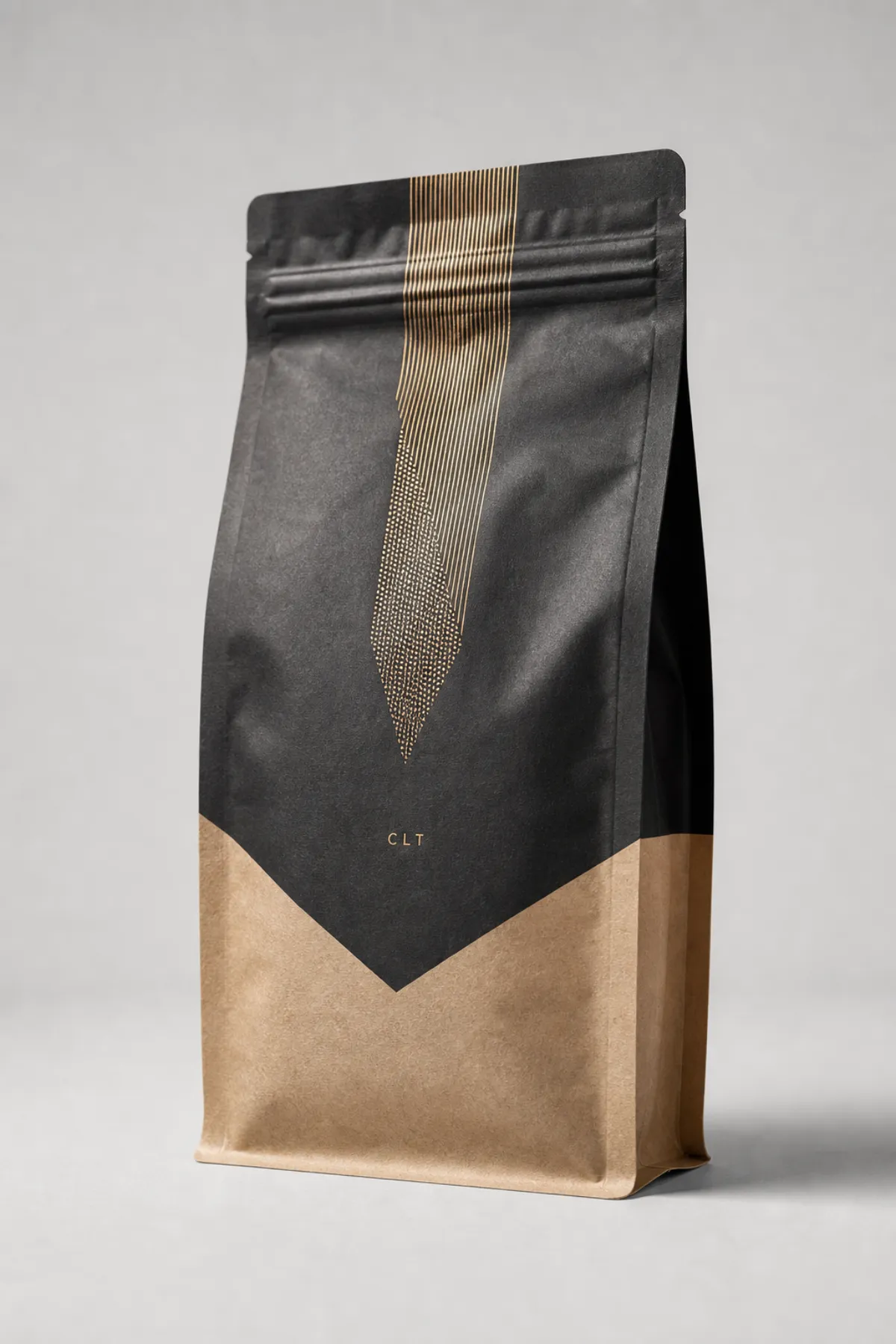
The most common mistake I see is treating packaging like a one-time graphic project instead of a repeatable supply item. That usually shows up after the launch: inventory gets split across multiple pouch styles, colors drift between reorders, and the brand ends up paying more to fix inconsistency than it would have spent on a tighter first purchase. Branded coffee pouches bulk avoids that trap by locking one spec set early enough to spread setup costs across enough units to matter.
Coffee is unforgiving in a retail setting. Shoppers judge freshness by the bag before they judge flavor by the cup. If the structure looks flimsy, the zipper feels cheap, or the print looks muddy, the product starts at a disadvantage. Branded coffee pouches bulk helps remove that first-impression risk because the build can be chosen for appearance, barrier performance, and handleability as one package instead of three separate decisions.
There is a simple arithmetic reason bulk makes sense. A small custom run may look attractive until setup, proofing, freight, and future replenishment are added back in. A 1,000-piece test can carry a surprisingly high hidden cost per bag, especially if you need a second round to correct dimensions, artwork, or finish. By contrast, branded coffee pouches bulk often improves the real landed cost because each step gets spread across a larger quantity.
That matters most for brands with stable roast menus and predictable velocity. If a SKU sells every week, the packaging should support that rhythm instead of interrupting it. A bulk purchase can also reduce launch waste in a practical sense: fewer packaging substitutions, fewer partially used cartons, and fewer emergency orders that arrive with a different surface finish or zipper style. For a retailer or wholesaler, that consistency is not cosmetic; it is operational control.
In projects I have reviewed, the brands that keep packaging simple early usually waste less later. They are not trying to guess every future need in the first order, which is kinda the whole point. They choose a solid structure, print it cleanly, and leave room to scale without starting over.
From a commercial standpoint, branded coffee pouches bulk usually comes down to three outcomes:
- Faster launch because the pouch spec is locked before sales start.
- Cleaner shelf presence because every unit looks aligned.
- Lower friction because reorders follow the same approved build.
That is why smart buyers do not ask only, "What is the price?" They ask, "What is the total cost of repeating this purchase three times?" That second question is where branded coffee pouches bulk starts to earn its place.
Branded coffee pouches bulk: formats, materials, and finishes
The format comes first. Before anyone debates ink coverage or finish, the pouch structure has to match the product and the channel. Stand-up pouches are the most common choice for branded coffee pouches bulk because they occupy shelf space efficiently and work well for both whole bean and ground coffee. Flat-bottom pouches are often selected for a more premium retail look and better stability in display. Side-gusset bags can be a strong option for larger fills or warehouse efficiency, especially when a brand wants a classic coffee-house profile. Specialty formats exist too, but most buyers can solve the problem with one of those three structures plus the right feature set.
Material choice drives both protection and perception. A barrier laminate with low oxygen and moisture transmission is the practical baseline, because coffee aroma is easy to lose and hard to win back. Common builds include PET/PE, BOPP-based laminates, kraft-look laminated films, and higher-barrier structures with foil or metalized layers. Recyclable mono-material options are improving, but they are not always the right answer for every roast profile or storage condition. If the coffee will sit in humid storage, travel through multiple distribution points, or remain on shelf for an extended cycle, barrier performance usually matters more than a sustainability slogan printed on the front panel.
Finishes shape how the pouch reads from two feet away. Matte looks restrained and modern. Gloss boosts contrast and can make color blocks feel louder. Soft-touch creates a tactile premium feel, though it may scuff if the bags are handled roughly in transit. Metalized surfaces signal intensity and can support darker, bolder designs. The right answer depends on brand position, but also on display context. A boutique roast wall, a grocery shelf, and a subscription fulfillment box do not reward the same visual treatment.
Practical accessories deserve the same attention as the printed surface. A one-way degassing valve is usually worth the cost for freshly roasted coffee because it helps release carbon dioxide without letting oxygen rush back in. A resealable zipper supports retail use and can reduce stale product complaints after opening. Tear notches improve first-open convenience, while hang holes help peg display. None of these features should be added just because they are available. Each one should earn its place in the build.
If you want a quick buyer's comparison, the tradeoffs usually look like this:
| Option | Typical Use | Approx. Unit Cost Range | Main Advantage | Main Tradeoff |
|---|---|---|---|---|
| Stand-up pouch with zipper and valve | Retail and subscription coffee | $0.18-$0.32 at 5,000 units | Balanced shelf appeal and function | More features mean more setup decisions |
| Flat-bottom pouch with premium finish | Specialty and gift sets | $0.24-$0.40 at 5,000 units | Strong shelf presence and stability | Higher price and stricter spec control |
| Side-gusset bag | Larger fills and warehouse programs | $0.12-$0.24 at 10,000 units | Lower material cost and efficient packing | Less premium front-facing presentation |
Those ranges are directional, not universal. Artwork coverage, laminate grade, valve style, freight, and the route the product takes all move the final number. Still, they show the basic reality: branded coffee pouches bulk should be selected with the end channel in mind, not just with the artwork mockup.
For buyers who care about sustainability claims, documentation matters as much as the material itself. If a kraft-look option is labeled as FSC-related, confirm the actual chain-of-custody paperwork rather than relying on a visual impression alone. The same applies to shipment testing. If the bags need to travel through a rough distribution network, ask whether the pack has been evaluated against relevant transit testing methods. The ISTA standard library is a useful reference point for package performance expectations, while the FSC site explains the certification framework behind responsibly sourced paper claims.
Specs that matter for branded coffee pouches bulk orders
Good quotes start with clean specifications. If a buyer sends only a brand name and a rough size estimate, the response will usually be vague, slow, or both. For branded coffee pouches bulk, the core spec sheet should include pouch style, fill weight, dimensions, film structure, barrier level, zipper type, valve type, finish, print coverage, and shipping destination. That is the minimum viable brief.
Size and fill weight deserve special attention because coffee does not behave like a uniform commodity bag. A light roast can be bulkier than a dark roast at the same net weight. Whole bean behaves differently from ground coffee. A 12 oz or 1 lb pouch may be ideal for one SKU and awkward for another. If the bag is too large, the product looks underfilled and can move around during transit. If it is too tight, sealing becomes harder and shelf presentation suffers. Branded coffee pouches bulk works best when the size is matched to actual fill conditions, not just to a guess on a spreadsheet.
Artwork requirements are another common source of delay. Bleed, dielines, and color expectations should be checked before production begins. CMYK conversion can shift brand colors if the artwork was built only for screen display. Spot colors may be worth using for critical elements such as logos or roast-level cues. If the brand relies on a particular black, gold, or deep green, say so early. The more precise the print target, the fewer surprises later. For branded coffee pouches bulk, prepress discipline often saves more time than any rush option.
Compliance details also belong in the spec pack. At a minimum, the pouch should accommodate product identity, net weight, origin statements, and barcode placement if the product will pass through retail systems. If the pouch goes into wholesale channels, the label space must be positioned so it remains readable after packing and handling. Some buyers also need lot code placement, roast date visibility, or a panel reserved for regional compliance text. Those decisions should be locked before proof approval, not after cartons are already in motion.
Here is the checklist I recommend before requesting branded coffee pouches bulk pricing:
- Pouch style and target fill weight.
- Exact dimensions or a current package sample.
- Barrier expectations and whether a valve is required.
- Zipper, tear notch, hang hole, or other accessory needs.
- Artwork files, dieline, and print-color targets.
- Retail, subscription, or wholesale destination.
- Barcode, lot code, or label placement requirements.
There is also a technical side that buyers can use to ask better questions. Ask whether the laminate has documented oxygen transmission and moisture transmission data. Ask whether seal strength has been checked using standard methods. Ask which test conditions were used, because testing at one humidity or temperature does not tell the whole story. A supplier that can discuss ASTM references such as oxygen transmission testing, water vapor transmission testing, or seal integrity in plain language is usually a safer partner than one that hides behind generic claims.
For recycling claims, I would stay careful and specific. Flexible pouches can be difficult to dispose of in curbside systems, and local rules differ. The EPA recycling guidance is a better source than assumptions made by a sales brochure. That does not mean a mono-material or paper-forward build is automatically better. It means the actual claim should match the end-of-life reality.
Once the spec sheet is locked, branded coffee pouches bulk becomes much easier to buy again. Repeat ordering is faster, proofs are cleaner, and the brand is less exposed to "we thought it was the same" mistakes. That is a real operational advantage, not a marketing line.
Branded coffee pouches bulk pricing and MOQ
Pricing is a stack of variables, not a single number. The quote for branded coffee pouches bulk usually reflects unit count, print method, pouch structure, film grade, finish, accessories, freight, and any tooling or setup charges. Buyers who focus only on per-piece cost can miss the true comparison. Two quotes can look close on paper and still land very differently once shipping and setup are included.
MOQ, or minimum order quantity, is where most packaging conversations get real. Lower quantities usually carry a higher per-unit cost because the setup is spread over fewer bags. Larger runs improve efficiency because the setup is spread across more units. In practical terms, branded coffee pouches bulk often becomes materially more attractive once a SKU has enough velocity to justify a run that covers several weeks or months of demand. The exact break-even point depends on how often the coffee sells and how many designs share the same base structure.
Short-run flexibility can be useful for a new roast, a seasonal blend, or a market test. The tradeoff is obvious: every small rerun tends to be more expensive, and every change adds the risk of drift. If a brand is selling into multiple channels, the cost of inconsistency can be higher than the cost of ordering a little more than you think you need. Branded coffee pouches bulk is usually the stronger move once the design is proven and sales are stable.
The cleanest quote request includes the following pieces:
- Pouch style: stand-up, flat-bottom, side-gusset, or a specialty format.
- Dimensions: width, height, gusset, and target fill volume.
- Print: number of colors, coverage, and finish.
- Features: valve, zipper, hang hole, tear notch, and any clear windows.
- Quantity: the exact count and whether the order will repeat.
- Destination: the shipping ZIP or port so freight can be included.
That quote structure makes it easier to compare scenarios side by side. For example, a buyer can ask for a standard matte pouch, a premium soft-touch version, and a lower-cost gloss option at the same quantity. That comparison often reveals a more useful truth than the cheapest quote alone. Sometimes the premium option is only a few cents more per bag and delivers a much stronger shelf impression. Sometimes a feature like a valve adds less cost than expected and is worth keeping. Other times, a fancy finish adds price without improving sell-through.
Here is a practical pricing frame I use for branded coffee pouches bulk:
| Scenario | Typical MOQ | Likely Cost Pattern | Best For |
|---|---|---|---|
| Test run | 1,000-3,000 units | Higher unit price, lower commitment | New roast or design validation |
| Standard bulk order | 5,000-10,000 units | Better per-unit cost, balanced risk | Stable SKUs with predictable sell-through |
| High-volume replenishment | 10,000+ units | Lowest unit cost if specs are fixed | Retail lines and repeat wholesale programs |
In many cases, the best quote is not the cheapest upfront number. It is the quote that matches sales velocity, inventory carrying cost, and the number of months the design will stay active. That is the difference between buying packaging and buying a packaging headache.
For buyers managing multiple product lines, branded coffee pouches bulk can also simplify internal planning. A single base structure with two or three artwork versions is easier to forecast than a mixed assortment of pouch types. That is why wholesale-oriented buyers often pair their packaging plan with a broader replenishment model through Wholesale Programs. It keeps the packaging conversation tied to sales reality.
Process and timeline for branded coffee pouches bulk
The production path is straightforward when the brief is complete. It usually starts with inquiry, then quote, then artwork review, then proof approval, followed by production, inspection, and shipment. The time savings come from removing uncertainty early. Branded coffee pouches bulk moves fastest when the buyer has already locked the structure, size, and accessory list before the first conversation.
Most delays happen in two places: artwork approval and spec changes after proofing has started. If a logo needs to be resized, a barcode needs to be moved, or a material finish changes midstream, the schedule can stretch quickly. A good packaging partner will flag those risks early, but the buyer still has to make final calls in time. That is where a disciplined spec sheet pays for itself.
Lead time depends on volume and complexity. Standard branded coffee pouches bulk orders with finalized artwork and fixed specifications often move within a practical production window once proof approval is complete. More complex builds, custom finishes, or large quantities naturally take longer. If someone promises an unrealistically fast turnaround without asking for details, that is usually a warning sign rather than a benefit.
Rush orders deserve careful thought. They are sometimes necessary, especially for a launch that has already moved downstream or for an unexpected reorder. But rush work often increases cost and raises the odds of compromise. A planned replenishment, even if it feels less dramatic, is usually the smarter financial move. If the brand can forecast a second order before stock gets tight, branded coffee pouches bulk becomes a supply plan instead of an emergency response.
Before production starts, I would want these confirmations in writing:
- Dieline approved and dimensions checked.
- Artwork version locked with print colors confirmed.
- Valve, zipper, and finish selections final.
- Quantity and overrun tolerance agreed.
- Shipping address, delivery window, and receiving contact verified.
That checklist sounds basic, but basic is usually where packaging projects get protected. A buyer who confirms those details before the press runs will spend less time handling exceptions later.
Shipping performance should not be an afterthought either. Coffee pouches are lightweight, but they still need to survive pallet handling, carton compression, and the kind of movement that happens in normal distribution. If the bags will be dropped into cartons, moved through warehouses, or used in subscription fulfillment, ask whether the design has been considered against transit methods such as ISTA guidance. A pack that looks fine on screen is not automatically ready for real freight.
Branded coffee pouches bulk works best when the production timeline is treated as a chain, not a scramble. Every step influences the next one. The smoother the front end, the less expensive the back end tends to be.
Why choose us for branded coffee pouches bulk packaging
What buyers really want is not just a supplier. They want fewer surprises. For branded coffee pouches bulk, the value of a packaging partner shows up in print consistency, barrier performance, order accuracy, and the ability to repeat the same result a second and third time without new drama. That is where process matters more than sales language.
A reliable partner will verify the spec before quoting, not after the order is placed. That matters because the lowest quote on paper can become the most expensive decision if it is built on an assumption about size, finish, or accessory count. Strong account support should help the buyer Choose the Right pouch structure without pushing features that do not support the actual channel. If a zipper is useful, keep it. If a clear window weakens shelf impact or complicates barrier needs, leave it out. The point is control, not decoration.
Repeat-run discipline matters too. A coffee brand that reorders the same bag every eight or twelve weeks should see the same visual and physical result each time. Color consistency, seal quality, and carton count accuracy all influence whether the next run feels easy or painful. Branded coffee pouches bulk should reduce the amount of time a team spends chasing packaging issues after launch.
Sample support is another practical advantage. A pre-production sample or proof can expose problems that look small on screen but become expensive on press. The zipper may sit too high. The barcode may crowd the bottom seal. The finish may darken the art more than expected. Catching those issues before a full run is not a luxury. It is a cost control tool.
For buyers comparing packaging vendors, I would look for evidence in three places:
- Clear specifications: the supplier asks the right questions before pricing.
- Proofing discipline: there is a documented approval step before production.
- Repeatability: past orders can be duplicated without recreating the entire setup.
If you want proof that process matters, review real project outcomes rather than generic claims. Our Case Studies show how packaging decisions affect sell-through, reorder speed, and channel fit. That is often more useful than a feature list because it connects the pouch to a business result.
Branded coffee pouches bulk also benefits from buyers who think beyond the first order. A supplier that can keep the spec stable over time saves a brand from silent drift: a slightly different zipper, a slightly different matte level, a slightly different color balance. Those changes are subtle until a customer notices them side by side. Then they are no longer subtle.
For a packaging partner, the commercial promise should stay simple: help the buyer get a pouch that protects the coffee, presents the brand well, and comes back the same way on the next reorder. That is what good packaging support looks like in practice.
Next steps for branded coffee pouches bulk orders
If you are ready to move, the next step is not to ask for every possible option. It is to narrow the decision set enough to get useful quotes. For branded coffee pouches bulk, start with the pouch style, estimate monthly volume, gather artwork, and decide which features are non-negotiable. That four-part brief is enough to get meaningful pricing back without wasting time on guesswork.
I also recommend requesting two or three quote scenarios. Compare a lower-cost build, a mid-range build, and a premium build side by side. The goal is to see how much value each feature actually adds. Sometimes a zipper upgrade is worth it. Sometimes soft-touch looks great but does not justify the extra spend. Sometimes the better choice is a simpler structure with more predictable lead time. Branded coffee pouches bulk should be judged by fit, not by the glamour of the spec sheet.
If the brand is new, or if the coffee will sit directly beside stronger competitors, order samples or a proof before production. A proof can reveal size issues, label placement problems, and color drift that digital files never show clearly. That step is cheap compared with discovering the mistake after cartons are packed.
You should also prepare a reorder forecast. It does not need to be perfect. It only needs to be honest. If the first bulk purchase is meant to support launch and the second purchase is likely to happen within a few months, say so. That helps the packaging plan line up with sales pace and reduces the chance of overbuying a spec that no longer fits the business.
- Choose the pouch style that matches your channel.
- Estimate the fill weight and expected monthly demand.
- Gather artwork files and any label requirements.
- Decide on valve, zipper, and finish before quoting.
- Request two or three pricing scenarios for comparison.
- Approve the proof only after the dimensions and colors are checked.
- Build a reorder plan before the first shipment lands.
If you are buying for retail and wholesale at the same time, that process becomes even more useful. A standardized pouch structure makes forecasting easier and reduces the chances of one channel forcing a redesign in the other. That is one reason branded coffee pouches bulk is a stronger strategy than piecemeal packaging buying for growing coffee labels.
Here is the short version: lock the spec, compare the real landed cost, and buy enough to support a clean replenishment cycle. That is the path to fewer surprises, cleaner shelf presentation, and less waste. If you are ready to request a quote, ask for a sample, or review the spec sheet, branded coffee pouches bulk is the right place to start.
FAQs
What is the typical MOQ for branded coffee pouches bulk orders?
MOQ usually depends on pouch style, print method, and whether custom tooling is needed. Simpler builds often support lower minimums, while higher-spec packaging with special finishes, valves, or unusual dimensions usually needs a larger run because setup costs have to be spread across more units. A good quote should show how MOQ changes if you adjust size, finish, or accessory features. That makes branded coffee pouches bulk easier to compare without guessing.
How much do branded coffee pouches bulk usually cost per unit?
Unit cost is driven by quantity, material grade, print complexity, and added features like valves or zippers. Bulk pricing usually drops as order size rises because setup is shared across more bags. For example, a small test order may sit in a much higher range per pouch than a 5,000-piece or 10,000-piece run. Always compare total landed cost, not just the per-piece number, because freight and setup can shift the real outcome for branded coffee pouches bulk.
How long does production take for branded coffee pouches bulk?
Timeline depends on artwork readiness, proof approval speed, and whether the order uses standard or custom specs. Finalized specs move faster than orders that still need dimension or finish decisions. In practical terms, the fastest jobs are the ones where the buyer already knows the pouch style, the fill weight, and the artwork version. Plan early so branded coffee pouches bulk arrives before roast dates, launches, or retail resets.
What information should I send to get a quote for branded coffee pouches bulk?
Send pouch style, size, fill weight, quantity, print colors, finish, and any must-have features. Include artwork files or a dieline if you have them, plus the shipping destination. If the pouch needs a barcode, lot code area, or specific label space, include that too. The more complete the brief, the fewer revisions and the faster the quote for branded coffee pouches bulk.
Are branded coffee pouches bulk suitable for both retail and subscription coffee?
Yes, if the pouch balances shelf appeal, barrier performance, and shipping durability. Retail often needs stronger visual contrast and barcode clarity, while subscription packaging may prioritize weight and freight efficiency. The key is to choose the build around the channel mix, not around appearance alone. A single well-planned spec can support both uses if the structure is chosen carefully for branded coffee pouches bulk.