Coffee roaster Pom Pom Beanies material sample guide sounds narrow until you are the one approving merch that has to sell on sight and survive real wear. A beanie can look clean in a render and still miss the mark once you hold it. Too shiny. Too thin. Too rigid around the cuff. Or the pom is bulky in a way that makes the whole piece feel less polished than the mockup promised.
That is why the sample matters. It tells you whether the yarn feels right, whether the knit has enough structure, and whether the branding looks intentional instead of pasted on. Coffee roasters and cafes usually do not have room for a lot of dead stock. Seasonal merch moves fast, and if the first production run is wrong, the discount rack becomes the fallback plan.
This is also one of the few categories where presentation and utility have to cooperate. The beanie needs to be warm, wearable, and visually strong enough to earn a place in a retail display or online listing. If the sample fails one of those jobs, the whole product loses momentum.
Why a coffee roaster pom pom beanies material sample guide pays for itself
Most losses in apparel merch are not dramatic. They come from small misses that stack up. A knit that feels slightly scratchy. A label that sits one inch too low. A pom that looks full in photos but collapses after handling. Each issue looks manageable in isolation. Together, they make the product feel cheap.
A sample guide helps catch those problems before bulk production starts. That saves more than material cost. It protects the sales story, the margin, and the launch schedule. If the sample tells you the beanie needs a denser rib or a softer blend, you can still fix it. Once the order is cut, the same mistake becomes expensive to live with.
For coffee roasters, the brand image matters here more than people admit. Customers usually do not separate the beanie from the rest of the experience. If your cafes, packaging, and product photos lean premium, the hat has to match that level. If it feels generic, the merch line feels like an afterthought.
The sample is also the place where expectations get grounded. A lot of first-time buyers assume a low sample fee means a low total cost. That is not always true. Some factories credit sample fees against the bulk order. Some do not. Some will include one revision round. Others charge for every change. The guide is there to keep those assumptions in check.
"A sample that looks good in photos but fails in hand is not a win. It is just a delayed mistake."
There is also a packaging angle that gets ignored too often. If the final product ships in a printed box, a polybag, a paper insert, or a retail-ready sleeve, the sample should be reviewed with the same packaging logic in mind. A beanie presented in corrugated cardboard with kraft paper filler will read differently than the same beanie dropped into a plain bag. That difference shows up in the perceived value immediately.
How yarn cards, swatches, and prototypes translate into a real beanie
The useful sample process usually starts before anyone knits a full hat. First comes the yarn card. That tells you the fiber family, color direction, and surface finish. Then comes the stitch swatch, which shows gauge, density, and stretch behavior. After that, trim details and logo placement can be mocked up. Only then does a full prototype start to make sense.
Each stage answers a different question. A color card can tell you whether the tone is close, but it cannot show how the yarn behaves in a rib knit. A swatch can reveal whether the fabric is too loose or too stiff, but it will not tell you how the full crown sits when the cuff is folded. A trim mock can confirm label size or pom attachment, but the real test is how all the parts work together on one finished sample.
The key is to use a spec sheet, not memory. Record yarn content, gauge, cuff height, crown depth, pom style, logo location, and packaging details. If you are reviewing three samples in a week, memory will blur the differences. A clear spec does not.
For coffee roaster beanies, the most common mistake is treating the prototype like a display piece instead of a production reference. That is backwards. The sample should be the standard the bulk run is judged against. If the sample and final order do not match closely, the approval process was not specific enough.
| Sample stage | What it proves | Typical use | Risk if skipped |
|---|---|---|---|
| Yarn card | Color direction, fiber feel, sheen | Early concept approval | Wrong shade or fiber family |
| Stitch swatch | Gauge, stretch, density, texture | Knit validation | Beanie feels too loose or too stiff |
| Trim mock | Pom shape, label size, attachment method | Branding review | Loose trim or awkward silhouette |
| Fit sample | Full handfeel and wear performance | Final approval before bulk | Production mismatch |
Fiber, knit, pom, and branding details that change the final feel
Fiber is where cost and comfort start negotiating. Acrylic is still the workhorse for many merch programs because it is consistent, available in a lot of colors, and usually the least expensive option. It can also hold shape well if the knit is done properly. A wool blend tends to feel more natural and warmer, but it can be itchier if the blend ratio is not balanced. Recycled fibers can support a sustainability story, though they still need to pass the same wear and appearance checks as any other yarn.
Knit structure changes the result just as much as the fiber does. A tighter gauge generally gives the beanie more warmth and cleaner shape retention, but it can reduce stretch comfort. A looser knit feels softer at first touch, though it may lose structure sooner if the yarn is light. Rib width, cuff height, and crown shaping all affect how the hat sits on different head sizes. One sample may look balanced flat on a table and still fit awkwardly once worn.
The pom is not a minor detail. A faux fur pom reads more plush and giftable, but it needs good construction or it will shed, flatten, or look uneven after handling. A yarn pom is usually easier to match to the body color and often wears better over time, though it may not have the same visual impact in product photos. Attachment matters either way. A weak pom mount makes the whole hat feel unfinished.
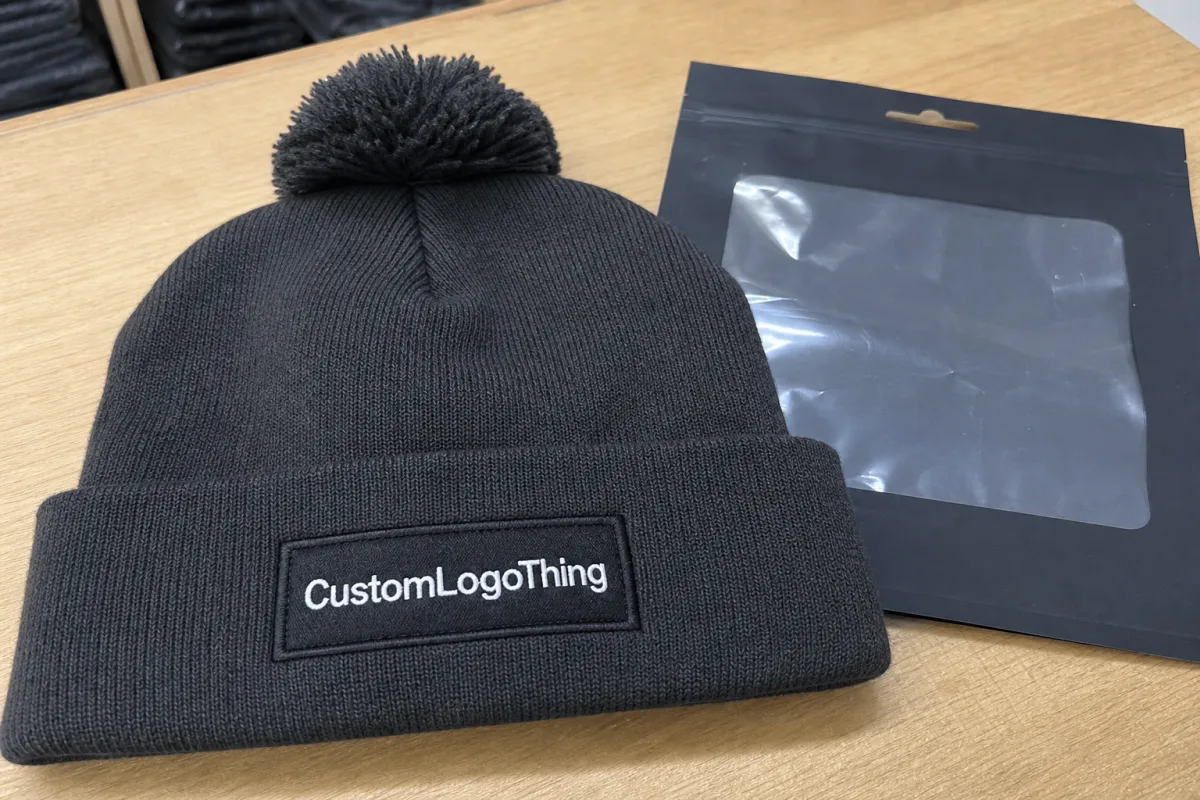
Branding pieces deserve the same scrutiny. A woven label is tidy and durable. Embroidery adds texture but can be scratchy if placed where the forehead touches. A patch creates strong visual contrast but adds stiffness. Even the care label can become a problem if it rubs the neck or sits in the wrong seam. These are small decisions until customers start wearing the hat for hours instead of looking at it for ten seconds.
Ask the supplier what they can verify with real tests. Colorfastness, stretch recovery, and abrasion resistance should not be left to guesswork if the order is large enough to matter. If they are quoting recycled packaging, FSC-certified paper cards, or kraft inserts, make sure those claims are clear in writing. A clean merch package does not excuse a weak garment, but it can support the same premium story when the product is already solid.
One practical rule: if a detail changes how the beanie feels in hand or reads at retail, it belongs in the sample review. That includes pom density, knit firmness, label finish, packaging material, and even the way the item is folded for shipment.
How to review samples without wasting a week on vague feedback
Good sample reviews are specific, not polite. Start with the basics: color, handfeel, stretch, shape, and presentation. Then move to the details that are easiest to overlook. Check seam bulk. Check whether the cuff returns to shape after being stretched. Check if the pom sits centered or pulls the beanie backward. A sample can look clean in isolation and still fail under simple handling.
Review the beanie under daylight and indoor light. That sounds basic because it is. It also catches the most common surprises. Charcoal may read black indoors and blue-gray outside. Cream can shift warmer under LEDs. Even black yarn can vary if the finish is slightly matte or slightly shiny. If your merch photos are shot in a studio but the product is sold in a cafe, both conditions matter.
Wear testing should be short and honest. Pull the hat on and off a few times. Stretch the cuff. Wear it for a few minutes. If the inside seam feels bulky right away, it will not get better later. If the fit starts to loosen after repeated pulls, that is a production risk, not a minor preference.
Put the feedback into one list and make it measurable. "Feels better" is not useful. "Cuff needs 0.25 inch more height" is. "Pom is too flat" becomes useful when you say "increase pom fullness by about 15 percent." Factories can work with numbers. They have a harder time working with mood.
That level of clarity usually shortens approval cycles. Fewer open questions means fewer revision rounds. It also makes it easier to separate actual defects from personal taste. Not every opinion deserves a change to the spec.
Timeline from request to bulk sign-off
The basic flow is simple: inquiry, quote, material confirmation, sample build, review, revision if needed, final approval, then production release. The pace depends on how complete the brief is and whether the factory already has the right yarn or trim in stock.
A straightforward sample can move in about 7 to 14 business days once materials are ready. If the yarn needs to be sourced, the pom spec is custom, or the color match is fussy, the first sample may take 2 to 3 weeks. Shipping adds more time, especially if the sample is crossing borders by standard courier instead of a faster service.
The real delay is often internal. A team with one decision maker can approve quickly. A team that needs three departments to weigh in usually cannot. That is not a process problem so much as a decision problem. If the launch date is fixed, keep the change list tight. "Make it more premium" is not a usable note. "Use a denser rib, raise the label, and increase pom volume" is.
Rush sampling is possible, but it has tradeoffs. Air shipping costs more. Revision windows shrink. Material options narrow. If the beanie is tied to a holiday or seasonal launch, the smartest move is usually to lock the core design early and protect the timeline instead of trying to perfect every last detail under pressure.
Ask whether the approved sample is retained as a production master. That matters more than people think. It gives everyone a physical reference if the bulk run drifts, and it avoids the usual argument about whether the factory should follow the original approval or a later email thread.
Cost, MOQ, and quote variables worth comparing line by line
Sample pricing is driven by setup complexity more than by the hat itself. A basic sample can land around $25-$45. A more involved sample with custom trim, special yarn, or multiple logo placements can move into the $40-$70 range. A recycled-fiber build, faux fur pom, and custom packaging can push the sample cost into the $60-$110 zone. Some suppliers credit the sample fee back on bulk orders. Some do not. Ask before you assume.
The main cost drivers are predictable: fiber content, knit complexity, pom style, branding method, packaging, and quantity. Acrylic is usually the cheapest base. Wool blends cost more. A woven label is simpler than a patch. A yarn pom is often easier to control than a faux fur pom, especially if consistency across the production run matters. Low MOQ means more setup cost per piece, which pushes the unit price up fast.
Comparing quotes gets easier if you separate the components instead of staring at one total number.
| Option | Typical sample cost | Production impact | Best if you need |
|---|---|---|---|
| Basic acrylic, yarn pom | $25-$45 | Lowest unit cost, wide color availability | Budget-friendly retail merch |
| Acrylic/wool blend, woven label | $40-$70 | Better handfeel, moderate price increase | More premium shelf appeal |
| Recycled fiber, faux fur pom, custom packaging | $60-$110 | Higher setup and finish cost | Sustainability story and gift-ready presentation |
Make the quote itemized. Ask whether freight is included. Ask whether packaging is included. Ask whether one revision is covered or billed separately. If you want FSC-certified paper cards, kraft sleeves, corrugated inserts, or biodegradable packaging, say that up front. Otherwise, the quote may look low because it is missing the parts that make the product presentable.
One thing buyers learn quickly: the cheapest quote is rarely the cheapest final order. Hidden costs usually appear in trim upgrades, extra samples, shipping, and packaging changes that were never priced into the first conversation.
Mistakes that skew sample decisions
The first mistake is testing the sample in the wrong environment. A beanie checked under warm office lights will not look the same in daylight. A fabric that feels soft in a showroom can feel flatter outdoors. If the product is going into cafes, gift displays, or online shoots, test it in those conditions instead of relying on a desk lamp and a quick impression.
The second mistake is treating softness as the same thing as quality. Soft is nice. Soft is not enough. A sample can feel pleasant and still be too loose, too thin, or too delicate for repeated use. Sometimes the slightly firmer option actually holds shape better and wears better over time. A strong merch piece should feel balanced, not airy for the sake of being soft.
The third mistake is assuming one sample covers every future run. It does not. Dye lots shift. Trim suppliers change. Yarn batches vary. That is normal production reality. Keep the approved sample and the final spec sheet together so there is no confusion later. If the order includes a logo patch, hang tag, or printed insert, those items need approval too.
The fourth mistake is forgetting the package. A folded beanie in a plain bag and the same beanie in a branded box with recycled paper filler are not the same product experience. If presentation matters to the buyer, it belongs in the sample review. Otherwise, the clothing can look premium while the packaging feels like a leftover shipping method.
And yes, sustainability claims need evidence. If the line says recycled or responsible, the paper components, carton choice, and plastic use should support that claim. Loose language is easy to write. Material choices are harder to fake.
Final quality checks before production
Before you release the order, score the sample like a real product review. Rate handfeel, fit, color accuracy, pom quality, branding, and packaging on a simple 1 to 5 scale. The point is not to make it academic. The point is to prevent a weak "looks fine" approval from slipping through when one or two details are clearly off.
If possible, request one alternate trim or color variant. A side-by-side comparison often makes the final choice easier than a long email thread ever will. The safer option is not always the better brand fit. Sometimes the slightly richer yarn color or fuller pom does more for the shelf presence without moving cost much.
Once the decision is made, lock it. Confirm the final spec sheet. Confirm the lead time. Confirm the pack method. Confirm the carton count and shipping method. If the beanie is going into custom packaging, ask for a packed-out reference so the factory knows how the product should sit in the box. Small changes in fold or insert depth can change the presentation more than expected.
That is the point of a coffee roaster pom pom Beanies Material Sample guide: to turn a vague merch idea into something you can approve with confidence. Not because samples are exciting. Because they are cheaper than mistakes.
What should I check first in coffee roaster pom pom beanies material samples?
Start with handfeel, stretch, stitch density, and pom firmness. Those are the details that usually get missed in photos and are hardest to fix after bulk production starts. Then check color under both daylight and indoor lighting.
How many sample rounds are normal before bulk approval?
One round can be enough if the spec is clear and the first sample is close. Two rounds are common when color matching, pom shape, or label placement needs refinement. More than that usually means the brief needs tightening.
What affects the quote most for pom pom beanie samples?
Fiber choice, knit complexity, trim style, packaging, and MOQ usually matter most. Freight and revision rounds can also change the total quickly, especially if the sample is traveling internationally.
How long does the sample process usually take?
A simple prototype can often move in 7 to 14 business days once materials are ready. If yarn sourcing, custom trim, or shipping slows things down, 2 to 3 weeks is a more realistic expectation for the first sample.
What if the sample looks different indoors and outdoors?
Treat that as a real issue, not a minor lighting quirk. Outdoor light usually reflects how customers will see the product in the wild, so ask for a color adjustment if the difference is too strong.