Buyer Fit Snapshot
| Best fit | Branded Courier Bags With Logo projects where brand print, material claims, artwork control, MOQ, and repeat-order consistency need to be specified before quoting. |
|---|---|
| Quote inputs | Share finished size, material target, print colors, finish, packing count, annual reorder estimate, ship-to region, and any compliance wording. |
| Proofing check | Approve dieline scale, logo placement, barcode or warning zones, color tolerance, closure strength, and carton packing before bulk production. |
| Main risk | Vague material claims, crowded artwork, missing packing details, or unclear freight terms can make a low unit price expensive after revisions. |
Fast answer: Branded Courier Bags With Logo: Materials, Costs, Timeline should be specified like a repeatable production item. The safest quote records material, print method, finish, artwork proof, packing count, and reorder notes in one written spec.
Production checks before approval
Compare the actual filled-product size with the drawing, then confirm tolerance on folds, seals, hang holes, label areas, and retail display edges. Reserve space for logos, QR codes, warning copy, and material claims before decorative graphics fill the panel.
Quote comparison points
Review material grade, print process, finish, sampling route, tooling charges, carton quantity, and freight assumptions side by side. A quote is only useful when the supplier can repeat the same color, closure quality, and packing count on the next order.
Branded Courier Bags with Logo: Materials, Costs, Timeline
Branded Courier Bags with logo do a lot more than carry a parcel from the packing bench to the doorstep. They shape the first physical impression, keep the brand visible while the shipment moves through sorting, van routes, and porch drop-offs, and still have to hold up when the package gets tossed, stacked, or squeezed in transit. A good courier bag needs to protect the contents, close reliably, stay presentable, and fit the packing flow without making the warehouse staff fight with it.
That is why branded courier bags with logo are not just a decorative extra. For ecommerce orders, subscription kits, replacement parts, sample packs, and document mailers, they can replace plain packaging with something that feels finished, make outbound shipments easier to identify, and create a cleaner opening experience without adding much handling time. The right spec can also reduce damage claims, because a bag that fits properly and seals well is less likely to split, snag, or arrive half-open.
If you are comparing poly mailers, paper mailers, or reusable pouches, or trying to decide whether the first order should be a test run or a larger rollout, the real question is how the bag works with the product, the route, and the brand story. Artwork matters, but it is only one part of the decision. The best results come from branded courier bags with logo that fit the shipment, move cleanly through the packing process, and still look like they belong to the brand once they reach the customer.
What branded courier bags with logo actually solve
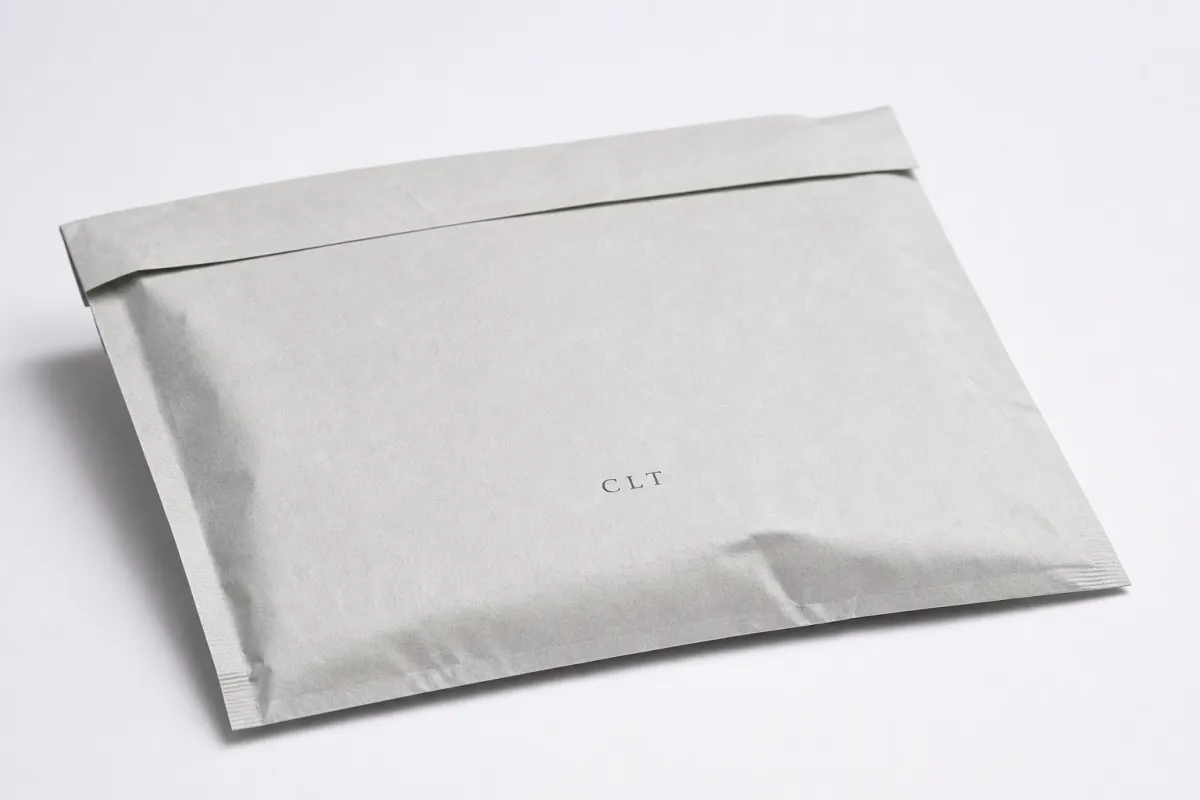
A customer reaches for a parcel on the porch and the outer bag is the first thing they see, often before the tape, the label, or the insert inside. If the bag feels thin, tears at the seam, or looks like it came from a generic bulk supply bin, the order immediately feels less considered. A well-made courier bag changes that impression fast. Crisp print, a firm seal, and a material that feels purposeful all make the shipment look more intentional. That is the practical job of branded courier bags with logo: they carry the package and frame the experience.
These bags solve several operational problems at once. They protect folded garments, flat documents, soft goods, and boxed items from dust and light moisture. They make packing rooms easier to manage because branded colors or print patterns help staff spot the right order at a glance. They also keep the brand visible across the shipping process, especially for ecommerce teams that want the outer mailer to feel like part of the identity rather than a leftover afterthought.
The use cases are familiar, yet the details still matter. Apparel brands often choose branded courier bags with logo because folded clothing does not always need rigid corrugated protection. Subscription businesses use them because a consistent bag format can work across a range of kit sizes. Spare parts teams rely on them for low-bulk items that need a clear label panel and a closure that stays shut. Document services, samples, and promotional packs also fit well, particularly when a slim format lowers postage or handling cost.
There is a commercial side to the decision as well. Many buyers focus first on the print, then discover that the bag can improve packing flow if the dimensions are sensible and the seal is quick to use. A warehouse line moves faster with packaging that loads easily and is easy to identify. Customer service teams benefit too, since fewer size exceptions usually mean fewer packing errors. I have seen projects stall because the outer bag looked great in a mockup but was awkward on the line, and that mismatch is expensive in ways that do not show up on the first quote. One reason experienced teams review Case Studies before locking a spec is that real handling tends to tell the truth faster than renderings do.
A courier bag is not just a wrapper. Sized correctly, printed clearly, and sealed properly, it becomes part of the shipping system instead of a separate branding exercise.
There is another reason branded courier bags with logo deserve attention even when cartons are already in use. Some orders are a much better fit for a flexible mailer: lower cube volume, less dead space, lighter freight, and less need for internal packing material. In the right setting, the bag can cut cost while strengthening the brand presence at the same time. The hard part is knowing where that line sits for your product mix.
How branded courier bags with logo are made
The construction looks simple from the outside, yet a lot happens between the raw substrate and the finished mailer. Most branded courier bags with logo begin with a film or paper-based material, then move through printing, slitting, bag forming, seal application, and final packing. The exterior carries the logo and any shipping or regulatory marks, while the interior has to withstand abrasion, folding, and repeated handling by hands, tape, belts, and bins.
Polyethylene remains a common choice for plastic mailers because it is light, flexible, and naturally resistant to moisture. Recycled-content blends have become more common as brands look to reduce virgin plastic use without giving up familiar handling performance. Kraft-style mailers bring a paper-forward look that suits apparel and lifestyle shipments well, though they still need a careful check on tear strength and water exposure. Compostable structures exist too, but they are not right for every route, every product, or every disposal system, so they should be chosen carefully rather than treated as the default.
The print method changes the outcome more than many buyers expect. Flexographic printing often suits larger volumes because it handles repeat runs efficiently and gives strong color consistency once the plates are set. Digital printing can fit shorter runs or more frequent design changes, especially when the artwork includes several colors or variable details. Fine lines, small type, and tight registration need accurate setup from the start, or the result can look soft and uneven. That matters even more for branded courier bags with logo, because the artwork sits on a flexible surface that can shift slightly during forming and sealing.
Quality checks separate a solid bag from one that causes problems later. Print alignment needs to stay true across the run. Adhesive closure should hold firmly without becoming frustrating to open at the receiving end. Seal strength needs to handle the normal stress of transit. Barcode or QR areas, when included, need enough contrast and a flat enough print zone to scan reliably. If the bag is meant for heavier items, load testing and handling checks matter even more. For shipment abuse expectations, the test methods referenced by ISTA are a useful reference point, since they help teams think beyond the bench sample and toward the actual journey a parcel will take.
| Material option | Best for | Strengths | Tradeoffs | Typical price feel |
|---|---|---|---|---|
| Standard polyethylene film | Apparel, soft goods, general ecommerce | Lightweight, moisture resistant, cost effective | Less premium hand feel than paper-based options | Lower to mid range |
| Recycled-content film | Brands balancing performance and sustainability | Familiar handling, reduced virgin content | Color consistency can vary more than virgin film | Mid range |
| Kraft-style mailer | Lifestyle products, documents, premium presentation | Natural look, good shelf appeal, paper-forward brand fit | Needs careful moisture and tear review | Mid to higher range |
| Specialty compostable structure | Programs with a defined disposal pathway | Can support circular messaging | Not suitable for every product or transit condition | Higher range |
Paper-based formats deserve a close look if the goal is to reduce plastic content, though the decision should stay practical rather than emotional. Some paper structures handle light goods very well. Others wrinkle, scuff, or lose strength faster than buyers expect. If the shipment may face rain, condensation, or rough sorting, the surface finish and fiber structure matter just as much as the logo. That is one reason I ask what the bag needs to survive before I ask what it needs to look like.
For organizations that care about fiber sourcing, FSC certification is worth checking where paper or board elements are involved. It does not solve every packaging question, yet it helps ground the sourcing conversation in something more concrete. The construction of branded courier bags with logo starts with material selection, moves through the print method, and only earns approval once it has been validated by real handling, not just by a polished render.
Key factors that affect performance and fit
Size is the first thing to get right, and it is usually the place where people under-specify. Measure the packed product, not only the product itself. Add the inner wrap, tissue, carton, or insert if one is used. Leave enough room for a clean seal and a smooth loading motion. A bag that is too tight is gonna slow the pack line and can stress the seam. A bag that is too large wastes material and leaves the shipment loose enough to shift around in transit. Good branded courier bags with logo sit in the middle: snug, but not strained.
Material thickness changes both the feel and the failure mode. On polyethylene mailers, buyers may hear gauge or microns; on paper-based items, they may see gsm. A lighter structure can work perfectly well for soft, low-risk contents, yet it should still be checked for puncture resistance and stretch recovery. Sharp corners, zippers, metal edges, and multiple folds make thicker film or a reinforced seam much more attractive. For heavier goods, a small increase in material weight often pays for itself by reducing damage and rework.
Closure style is another practical decision. Self-seal adhesive is fast and common. Tamper-evident strips make it easier to show whether the package has been opened. Double-seal options can be useful for returns, samples, or repack workflows where the bag may be reused once. None of these choices is universally best. A fast-fashion apparel order may benefit from a quick adhesive strip, while high-value replacement parts may justify extra security. The right answer depends on the shipment profile, not on what happens to be popular this quarter.
Sustainability claims need discipline as well. Recycled content helps only if the structure still performs. A recyclable bag is useful only when the material and the local disposal route actually match. Print coverage matters too, since heavy ink coverage can affect recyclability or processing in some systems. If the bag must perform in wet dock environments, low-temperature storage, or rough last-mile handling, the packaging choice should reflect that reality first. A bag that looks greener on a spec sheet but fails in transit does not help anyone.
From a packaging buyer’s point of view, the smartest specs for branded courier bags with logo usually simplify operations without creating a trail of exceptions. A compact size range, a clear print system, and a closure that operators trust can reduce packing errors more effectively than a fancy design. That is also why I compare finished bags against real packed items instead of only against a flat dieline. The physical test gives the answer faster than a mockup.
Here is a simple filter that helps narrow the choice:
- Use the smallest bag that still seals comfortably.
- Choose thickness based on corner risk and transit handling.
- Match print coverage to the brand job and the budget.
- Check disposal guidance if recycled or fiber-based claims matter.
- Test a real packed unit before approving volume production.
That last step is easy to skip, and it is usually where many projects avoid expensive mistakes. A mockup can show color and layout, but only a filled bag shows whether the seal lands where it should, whether the artwork wraps cleanly, and whether the closure stays comfortable for warehouse staff. For branded courier bags with logo, fit and handling are part of the design, not an extra.
Process and timeline for branded courier bags with logo
The smoothest projects usually follow the same sequence: brief, specification, artwork setup, proofing, sampling if needed, production, finishing, packing, and freight booking. That sounds straightforward, though each step can introduce delay if the inputs are incomplete. For branded courier bags with logo, the quickest path usually starts with a clear spec sheet, final artwork, a target quantity, and a firm ship-to date before production begins.
Artwork preparation is one of the most common bottlenecks. If the logo file is low resolution, the printer has to rebuild it. If the colors are not defined, the team may need several proof rounds. If the print area is unclear, someone needs to stop and measure. Those pauses do not sound dramatic, yet they add up quickly. A tight project can lose days before the first sheet is printed simply because the artwork package was incomplete.
Lead time also depends on the production method. Digital work often moves faster on shorter runs because it avoids plate-making and handles smaller quantities with less setup. Flexographic work can take longer to launch, then becomes efficient once the press is running. If the bag needs a custom size, new tooling or forming adjustments may be necessary. Material sourcing matters too, especially when the chosen substrate is in high demand or tied to a narrow supply window. That is why I prefer to discuss lead time as a chain of smaller steps rather than one vague promise.
A realistic timeline for many branded courier bags with logo projects looks something like this:
- Brief and spec confirmation: 1-3 business days.
- Artwork setup and proofing: 2-5 business days, depending on revisions.
- Sampling or pre-production approval: 3-7 business days if a sample is needed.
- Production: often 7-15 business days for standard runs, longer for special materials or high print complexity.
- Packing and freight booking: 1-3 business days after production completion.
Rush orders can work in some cases, though they work best when the request stays simple. A standard size, one or two colors, final artwork, and a clear delivery destination are the ingredients that keep a rush order realistic. If the bag is custom-sized, color-heavy, and tied to a new sustainability claim, the timeline stretches. That is not the printer being difficult; it is simply the time required to get a flexible packaging product right.
There is also a difference between approval time and production time. Buyers sometimes assume the clock starts as soon as the order is placed, yet the schedule often begins after proof approval. If three departments need to sign off, the project waits. If legal needs to check a claim or the warehouse wants a sample first, the project waits again. The fastest branded courier bags with logo jobs are usually the ones where the decision makers are aligned before the order is released.
One practical habit helps a lot: keep a standing spec record that includes dimensions, material, print colors, closure style, and the approved artwork version. That small file saves a huge amount of back-and-forth on reorders, especially for teams that ship in waves throughout the year. If you have already compared a few approaches in our Case Studies, you know how often the simplest spec is the one that repeats best.
Cost and pricing for branded courier bags with logo
Pricing starts with material, because the substrate sets the base cost and often the usable performance range. After that come size, print colors, closure style, quantity, and whether the bag uses stock dimensions or a custom format. For branded courier bags with logo, the unit price can move a lot between a short digital run and a large flexo run, even when the artwork looks almost identical.
Minimum order quantities matter too. Smaller runs usually cost more per bag because setup, print prep, and waste are spread over fewer pieces. Once quantity rises, the unit price usually falls, sometimes sharply. A bigger run is not always cheaper in the full sense if it leaves you with months of excess inventory, storage pressure, or an old design that has to be phased out later. The best order size is the one that balances price, usage rate, and reorder confidence.
Here is a practical pricing framework buyers often see for branded courier bags with logo:
| Order type | Typical quantity | Approximate unit cost | What drives the price |
|---|---|---|---|
| Stock poly mailer with simple print | 5,000-10,000+ | $0.08-$0.16 | Low setup, standard size, limited colors |
| Custom-size recycled-content mailer | 5,000+ | $0.16-$0.32 | Custom dimensions, recycled film, moderate print coverage |
| Premium paper-style courier bag | 3,000-10,000 | $0.20-$0.40 | Fiber-based structure, finish, and handling performance |
| Tamper-evident or specialty format | 3,000+ | $0.22-$0.45 | Added security, custom closure, more complex production |
Those numbers are not promises, because freight, market conditions, and spec details can shift them. Even so, they give a useful reference point. If a supplier quotes far outside those ranges, ask what is included. Sometimes the base price is low but freight, setup, or plate fees are extra. Sometimes the quote includes better print coverage or a stronger closure. Comparing apples to apples is the only way to know whether the price is fair.
Hidden costs deserve attention early. Sample production may carry a charge. Plates can add cost on flexographic runs. Special testing, such as performance validation or barcode verification, can add more. Freight can matter a great deal if the bags are bulky but light, since cubic shipping can push the delivered price higher than the factory quote suggests. If the project involves a paper-forward or recycled structure, ask whether any compliance paperwork or sourcing documentation is needed. These details are small on their own, yet together they change the real budget for branded courier bags with logo.
Another thing buyers sometimes miss is waste. A cheaper bag that fails during packing or arrives with poor print registration can cost more than a slightly pricier bag that runs cleanly. If operators need to slow down because the seal is awkward, labor cost rises. If customer complaints increase because the package tears or looks off-brand, the supposed savings disappear quickly. That is why I always push for a cost view that includes performance, not just purchase price.
One useful way to frame the decision is simple: if the bag is a high-volume consumable, prioritize repeatability and operating ease; if it is part of a premium brand moment, prioritize print quality and finish consistency; if it ships delicate items, prioritize protection first. Branded courier bags with logo can support all three, but rarely with exactly the same spec.
Common mistakes when ordering courier bags
The most common mistake is sizing the bag from the product alone. A shirt folded to one size is not the same thing as a shirt folded with tissue, insert card, and return paperwork inside. A replacement part may look small until you add a box corner or bubble-wrap sleeve. If the bag is chosen too tightly, seal performance suffers and packers begin improvising. That is a bad place to be with branded courier bags with logo, because the packaging should help the operation, not complicate it.
Artwork problems come next. Thin type can disappear on flexible packaging. Low-contrast logos can blur into the background. Overcomplicated graphics can look busy and print poorly if the surface shifts during production. A stronger approach is usually a clean logo, a restrained color palette, and enough breathing room around the marks. Flexible packaging rewards clarity. It rarely rewards visual clutter.
Another mistake is ignoring the actual shipping environment. A mailer that behaves perfectly in a dry staging area may act differently in a humid depot, under pressure in a cage, or against sharp carton corners. If the route includes rough handling, abrasion resistance and seal strength move to the top of the list. If the shipment can get wet, the outer surface and closure need another look. The point is simple: branded courier bags with logo should be judged in the environment they will actually face.
Process mistakes can be just as costly. Some teams approve a proof without checking copy or dieline dimensions line by line. Others skip the sample stage because the mockup looks fine on screen. A third group orders too much too early, then discovers the bag is slightly awkward in the pack flow. None of those mistakes is unusual, and all of them are avoidable. A sample run is often the cheapest insurance in the project.
Here is the short version of what to watch for:
- Do not size from the product alone.
- Do not approve artwork without a careful proof review.
- Do not skip real-product testing if the shipment is new.
- Do not assume a greener material will automatically perform better.
- Do not treat freight and setup as minor add-ons.
The worst failures usually come from a gap between the spec sheet and the way the parcel is packed in real life. A bag can look perfect in a sales sample and still fail on the line because the operator has to force the closure or because the contents create a hard edge at the wrong point. That is why the practical use of branded courier bags with logo matters more than the mockup alone.
Expert tips for choosing branded courier bags with logo
Start with real goods, not theory. Place the actual packed item in the bag, seal it, carry it, stack it, and open it again. If the order has multiple SKUs, test the largest and the smallest that will use the same format. That quick round of hands-on checking reveals whether the closure is comfortable, whether the fit is generous enough, and whether the artwork still sits in the right place after the bag is loaded. It is the most reliable way to select branded courier bags with logo without guessing.
Standardizing a small set of sizes is another smart move. Too many bag types slow down the packing area and make reorders harder to manage. A tighter range usually keeps inventory cleaner, training simpler, and procurement easier. If your business ships apparel, accessories, and flat documents, you may be better off with two or three well-chosen formats than with one oversized bag that tries to do everything. The same logic applies to print formats: a repeatable layout often gives you better consistency than a highly customized design that changes every quarter.
Think through the full journey, not just the shipment moment. The warehouse needs a bag that loads quickly. The courier needs a package that survives sorting. The customer needs a clean opening experience. The disposal path matters too, especially if your organization is making claims about recycled content, fiber sourcing, or recyclability. That is where the responsible use of branded courier bags with logo connects to broader packaging choices across the business.
Good suppliers should be able to talk through more than artwork. They should discuss print method, material thickness, closure design, transit tolerance, and likely lead time. They should also be willing to explain where a spec is strong and where caution may be needed. If they cannot answer those questions clearly, that is a warning sign. Packaging buyers do not need sales theater; they need a bag that prints well, ships well, and reorders without drama. If you are still comparing options, browsing Case Studies can help you see how different specs performed in actual use.
Here is a practical buying sequence that works well for most teams:
- Gather the packed dimensions of each shipment type.
- Choose the material based on weight, route, and brand feel.
- Decide on closure style and any tamper evidence needs.
- Request a proof or sample and test it with real products.
- Confirm quantity, lead time, freight, and total landed cost.
- Lock the spec so reorders stay consistent.
Once that process is in place, branded courier bags with logo become much easier to manage. The bag is no longer a one-off purchase; it becomes a repeatable part of the shipping system, which is exactly where it should be. Get the fit right, Choose the Right material, confirm the closure, and keep one approved spec on file so every reorder matches the version that already proved itself on the packing line.
Frequently Asked Questions
What are branded courier bags with logo usually made from?
Most are made from polyethylene film, recycled-content film, kraft-style paper, or a specialty sustainable substrate. The right choice depends on product weight, shipping conditions, print coverage, and whether the bag needs moisture resistance. For many shipments, branded courier bags with logo use a simple film structure because it handles transit abuse well and keeps unit cost in a workable range.
How long does it take to produce branded courier bags with logo?
Timeline usually depends on artwork approval, material availability, print method, and order quantity. Clean artwork and a finalized spec sheet usually shorten the process, while custom sizes and color-heavy designs take longer. In many projects, branded courier bags with logo move from approval to production in a matter of business days, but special materials or sampling can add time.
How much do branded courier bags with logo cost per unit?
Unit cost is driven by size, material, print colors, quantity, and whether the order needs custom tooling or setup. Higher volumes usually reduce per-piece pricing, while small runs can be more expensive because setup costs are shared across fewer bags. For many buyers, branded courier bags with logo land somewhere between entry-level film mailers and more premium fiber-based options, depending on the spec.
Can branded courier bags with logo be recyclable?
Some can be recyclable if they use a compatible mono-material or paper-based structure and are free of problematic laminations. Always match the bag structure to your local disposal guidance and your actual shipping performance needs. If sustainability is a major requirement, ask for documentation so branded courier bags with logo align with both the packaging system and the disposal pathway.
What size should I choose for branded courier bags with logo?
Measure the packed product, not the product alone, and leave enough room for a clean seal and easy insertion. If you ship multiple SKUs, it often helps to standardize on a few sizes rather than forcing one bag to fit everything. That simple approach keeps branded courier bags with logo easier to pack, easier to reorder, and easier to keep consistent across the operation.


