Buyer Fit Snapshot
| Best fit | Custom Poly Bags with Logo projects where brand print, material claims, artwork control, MOQ, and repeat-order consistency need to be specified before quoting. |
|---|---|
| Quote inputs | Share finished size, material target, print colors, finish, packing count, annual reorder estimate, ship-to region, and any compliance wording. |
| Proofing check | Approve dieline scale, logo placement, barcode or warning zones, color tolerance, closure strength, and carton packing before bulk production. |
| Main risk | Vague material claims, crowded artwork, missing packing details, or unclear freight terms can make a low unit price expensive after revisions. |
Fast answer: Custom Poly Bags with Logo: Artwork Proof, Packing Count, and Landed Cost should be specified like a repeatable production item. The safest quote records material, print method, finish, artwork proof, packing count, and reorder notes in one written spec.
Production checks before approval
Compare the actual filled-product size with the drawing, then confirm tolerance on folds, seals, hang holes, label areas, and retail display edges. Reserve space for logos, QR codes, warning copy, and material claims before decorative graphics fill the panel.
Quote comparison points
Review material grade, print process, finish, sampling route, tooling charges, carton quantity, and freight assumptions side by side. A quote is only useful when the supplier can repeat the same color, closure quality, and packing count on the next order.
Custom Poly Bags with Logo: What to Know Before Ordering
Custom poly bags with logo do more than cover a product or keep dust off a shipment. A plain poly bag protects the item, but a printed one turns every package into a branded moment the customer notices before the contents ever come out. That small shift carries real weight, because people make quick judgments from packaging, and those first impressions often color how they feel about the product itself.
From a buyer's perspective, the question is rarely whether custom poly bags with logo look better than a plain mailer. The real issue is fit, durability, print quality, and price working together in one package. The best bags handle the trip, hold up in the warehouse, and still present the brand with enough clarity to feel intentional. In other words, the bag has to act like packaging and shipping supply at the same time, and that is where the spec matters.
Cost surprises a lot of teams. Poly film can be a relatively low-cost substrate, yet it carries repeated brand impressions every time the bag is handled, sorted, or opened. Used well, custom poly bags with logo can support package branding, reduce the need for extra inserts or wraps, and sharpen the unboxing experience without forcing a move to custom printed boxes. Used poorly, they turn into wasted material with a logo on the front. The gap usually comes down to the material spec, the print method, and how well the bag matches the product. I’ve seen teams save far more by getting the fit right than by shaving a few cents off a quote.
Custom Poly Bags with Logo: What They Are and Why They Stand Out
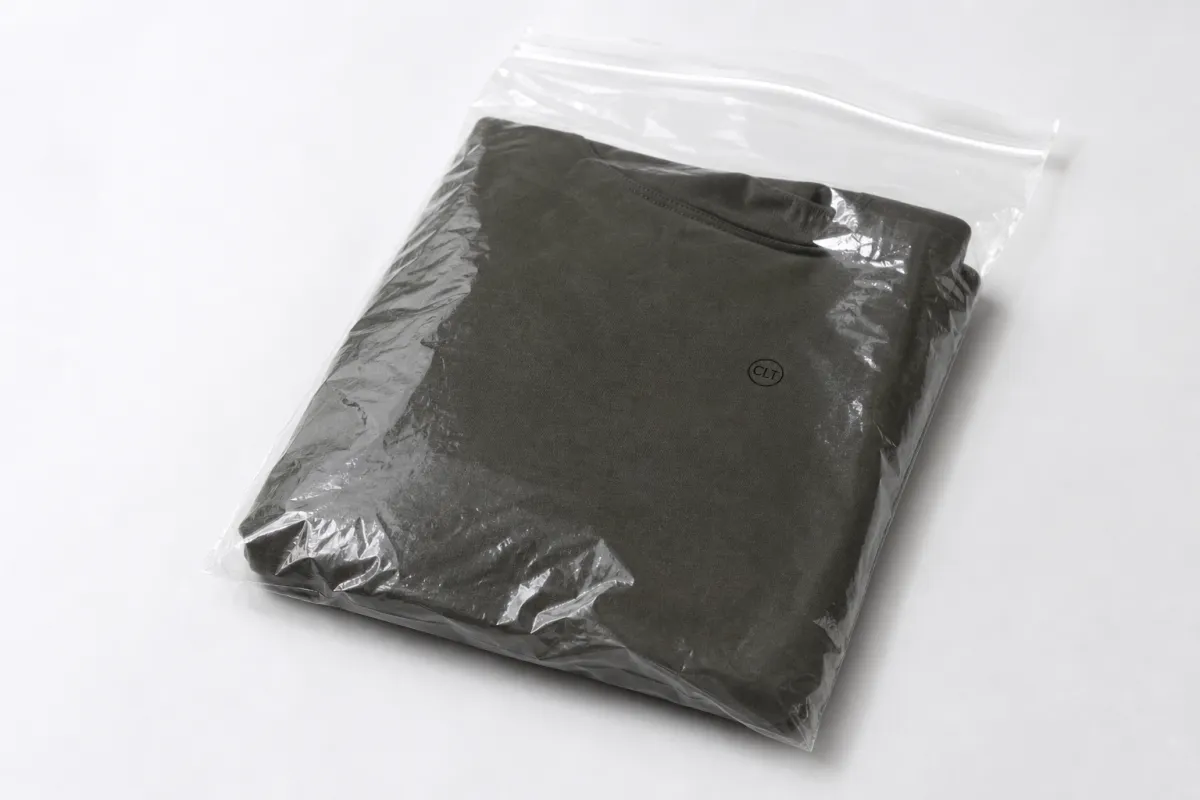
Custom poly bags with logo are flexible plastic bags printed with a brand mark, design, or message, usually made from polyethylene film. They may be open-top bags, resealable sleeves, zipper styles, or mailer-style formats depending on the product and shipping method. The logic is simple: protect the item, then use the outer surface as a clean, low-friction branding space. For apparel, accessories, lightweight hardware, subscription kits, and many fulfillment-driven products, custom poly bags with logo do both jobs in one step.
The difference between custom poly bags with logo and generic poly mailers goes beyond the artwork itself. A plain bag still serves a function, but a printed bag adds recognition and a sense of order. It can make warehouse picking more organized, make retail packaging feel more deliberate, and help the customer identify the brand before the product is fully removed. That is one reason many teams treat custom poly bags with logo as part of the packaging system, not as an afterthought in the shipping closet. Once a packing line gets used to a labeled, consistent bag, the whole workflow tends to calm down a bit.
There is a practical business case behind that thinking as well. If the bag passes through a parcel network, sits on a receiving dock, or gets stacked with other cartons, the logo keeps doing its job. A single printed surface can carry brand visibility for days or weeks, depending on the shipping route and the number of hands it passes through. That is easy to underestimate when the focus stays on unit cost alone. One bag may be seen by the picker, the shipper, the carrier, the receiving team, and the final customer. That is a lot of eyeballs for one piece of packaging.
Compared with retail packaging options like paper bags or custom printed boxes, custom poly bags with logo often win on weight and moisture resistance. Compared with plain sacks, they offer far more brand control. Compared with rigid packaging, they usually ship more efficiently. That does not make them the right answer for every product. Premium cosmetics may still call for a box, and certain technical items may need anti-static or specialty protection. Even so, for a wide range of consumer goods and light industrial products, custom poly bags with logo sit in a useful middle ground.
The best part is that branding and operations do not need to compete with each other. If a bag helps reduce handling damage, keeps components together, or makes warehouse sorting easier, it has a measurable operational benefit in addition to the marketing value. A strong mockup helps sell the idea internally, but a bag that performs during packing, shipping, and receiving is the real win.
A cheap bag is not cheap if it tears, slows the line, or forces a reprint. Packaging buyers usually learn that lesson once, then never forget it.
How Custom Poly Bags with Logo Are Made and Printed
The production process for custom poly bags with logo usually starts with film selection. Most bags are made from LDPE, LLDPE, or a blend chosen for flexibility, seal strength, and puncture resistance. Thickness is commonly measured in mils, and for many retail and shipping applications you will see ranges around 1.5 to 4 mil. A lightweight apparel bag may only need 1.5 to 2 mil, while heavier parts, folded garments, or multi-item kits often perform better at 2.5 to 4 mil. When buyers are unsure, I usually tell them to think about the bag after it has been filled, not before.
Printing comes next. Flexographic printing is common for custom poly bags with logo when order volume is higher and artwork stays consistent across a run. It relies on plates, so setup takes time, but once production begins, the unit economics are strong. Digital printing can work well for smaller quantities, versioned artwork, or jobs that need faster setup. The tradeoff usually lands on cost per unit, print speed, and sometimes the level of color coverage available. A buyer comparing custom poly bags with logo should ask which process fits the actual quantity, not just the artwork concept.
Artwork placement matters more than many teams expect. The logo needs a safe zone so it does not drift into a seal area, a gusset, or a trim edge. Bleed becomes important when the design runs close to the edge. File quality matters too. If the artwork arrives as a soft JPEG or a stretched image from a slide deck, the final print on custom poly bags with logo can look fuzzy even if the screen proof seemed acceptable. A clean vector file is usually the safest starting point, and a print-ready PDF with linked fonts or outlined type is even better.
Surface finish changes the final impression in a meaningful way. Gloss can make the bag feel brighter and more retail-ready. Matte can look calmer and more controlled. White film improves contrast for logos with bold color blocks, while clear film keeps the product visible. Closure style also affects how the bag performs: open-top bags are simple and economical, resealable closures add convenience, and zipper options work well for repeat access or kitting workflows. Custom poly bags with logo are never just artwork on plastic; they are a packaged format with specific functional choices built in.
For companies comparing formats, it helps to view the bag as one piece of a broader packaging system. If the product also ships inside cartons, you may pair the bags with Custom Packaging Products for inserts, labels, or outer packaging. If the main need is apparel fulfillment, Custom Poly Mailers may be the more direct starting point because the format is already built for parcel shipping.
Quality control matters at this stage. A good supplier checks seal integrity, film gauge, print registration, and color consistency before the order leaves the facility. That matters because custom poly bags with logo can look fine in a digital proof and still disappoint if the film is too thin or the ink coverage is uneven. With flexible packaging, the appearance on the screen is only part of the story. The real test is how the bag behaves when someone fills, seals, stacks, and ships it.
Cost, Pricing, and MOQ: What Really Drives the Quote
Pricing for custom poly bags with logo depends on a small set of variables that tend to move the quote in predictable ways. Bag size comes first. Larger dimensions use more film, which raises material cost. Thickness follows close behind. A 3 mil bag consumes more material than a 2 mil bag and usually offers stronger puncture resistance. Print colors matter too, since each color can add setup time or plate expense. Extras such as zippers, adhesive strips, gussets, hang holes, white ink, specialty finishes, and double-sided printing can move the number again.
Minimum order quantity, or MOQ, is often where first-time buyers get caught off guard. Small runs carry a higher unit price because setup costs are spread across fewer bags. Larger orders usually bring the unit price down because those same costs are divided across more pieces. For custom poly bags with logo, a 1,000-piece run can feel expensive on a per-bag basis, while a 5,000- or 10,000-piece order may look much more workable once the setup is absorbed. Bigger is not automatically smarter. The right order size should reflect actual annual usage, not hope.
Here is a practical comparison of common pricing patterns. These are broad planning ranges, not guarantees, but they help show the direction the numbers usually take.
| Order Scenario | Typical MOQ | Approx. Unit Price | Best Fit |
|---|---|---|---|
| Single-color logo, standard white film, 2 mil | 1,000-3,000 | $0.22-$0.45 | Apparel, light accessories, low-complexity launches |
| Two-color artwork, 2.5 mil film, resealable closure | 3,000-5,000 | $0.18-$0.35 | Retail packaging, subscription kits, branded fulfillment |
| High-coverage print, 3 mil film, larger format | 5,000-10,000+ | $0.14-$0.28 | Higher-volume shipping, stronger shelf presence |
| Specialty features, custom sizing, multiple print passes | Varies | $0.25-$0.60+ | Sensitive products, premium branding, unusual dimensions |
Those ranges matter because they show a basic truth about packaging buys: the lowest-looking quote is not always the best value. A slightly higher unit cost for custom poly bags with logo can still be the better decision if the bag lowers damage claims, cuts repacking time, or removes the need for another wrap or insert. Buyers often miss the total landed cost. Freight, setup fees, plate charges, proofs, and replacement runs can matter just as much as the line item on the quote. I’ve watched a team save pennies on paper and then spend dollars cleaning up avoidable damage.
Ask what is included. A clean quote for custom poly bags with logo should state the material specification, thickness, print method, number of colors, dimensions, MOQ, lead time, sample policy, and whether freight is included. If any of those pieces are missing, compare carefully. A quote that looks cheap because it leaves out freight or proofing is not actually a cheap quote.
For teams budgeting branded packaging across several SKUs, it helps to think in tiers. A simple logo bag for internal fulfillment may belong in one pricing band. A retail-ready version with richer print coverage and thicker film may belong in another. Custom poly bags with logo sit in the same family as other branded packaging tools, but not every use case deserves the same spec. That is where disciplined buying makes a measurable difference.
The smartest packaging purchase is not the lowest unit price. It is the one that reduces damage, delays, and rework while still protecting the brand.
Production Steps and Timeline: From Artwork to Delivery
The path from artwork to finished custom poly bags with logo tends to take longer than buyers expect, though the sequence is usually straightforward. It begins with a brief that covers size, use case, film thickness, print colors, quantity, closure style, and shipping target. After that comes artwork review. A careful supplier checks resolution, dielines, bleed, safe zones, and whether the design will print cleanly on the chosen film. The proof follows. Production should begin only after that proof is approved.
For a standard order, a realistic timeline might include one to three business days for artwork review, one to three days for proofing and revisions, 7 to 15 business days for production after approval, and then shipping time based on destination. More complex custom poly bags with logo can take longer, especially when the order includes multiple colors, specialty features, or a new size that needs extra verification. A promise of unusually fast turnaround without asking for artwork or spec details should raise questions instead of excitement.
Delays tend to show up in the same handful of places. Final dimensions change after the quote. Artwork is delivered as a low-resolution raster file rather than vector art. The buyer realizes too late that the closure style needs to be different. Or the team approves a proof without checking how the product actually sits inside the bag. That last issue is common. A bag can be correct on paper and still fail in real use.
When the bags support a launch, a retail rollout, or a seasonal shipment, extra sample time is worth the effort. A pre-production sample or short run can uncover fit issues, opacity problems, and print contrast concerns that never show up in a digital proof. If the shipment will face rough handling, it makes sense to think about distribution testing as well. The standards published by the ISTA organization are useful background because they remind buyers that packaging must survive the route, not just sit neatly in a warehouse.
There is a sustainability angle to timing and planning too. The EPA has long emphasized source reduction and waste prevention as practical ways to cut material use before disposal becomes the issue. That idea fits here because the right size and thickness for custom poly bags with logo can reduce excess film, repacking, and avoidable reprints. A bag that fits correctly is often the more efficient bag, plain and simple. For a broader view on waste reduction thinking, the EPA is a solid reference point.
One simple rule helps keep the project calm: if the order matters to a launch date, build in buffer time. A week of cushion can spare a lot of stress when proofs need revision or a carrier delay shows up. Custom poly bags with logo are not difficult to produce, but they still depend on multiple decisions. The earlier the dimensions and artwork are locked, the smoother the rest of the process becomes.
Key Factors That Change Performance, Fit, and Shelf Appeal
Size is the first variable that affects performance, and it is the one buyers most often underestimate. A bag that runs too small puts stress on seams, makes sealing awkward, and can distort the printed logo. A bag that runs too large wastes film and lets the product move around, which looks untidy and can increase scuffing. With custom poly bags with logo, the right size usually leaves enough room for the product, any insert or fold, and a clean seal without too much empty space.
Thickness and puncture resistance matter just as much. A 2 mil bag can be perfectly adequate for a folded T-shirt or a light accessory. A 3 mil bag may be the better choice for heavier kits, sharper edges, or products that will be stacked in transit. If the contents can press into the film, test the bag under real handling conditions. That is true for custom poly bags with logo and true for most packaging decisions. Spec sheets help, but handling tells the full story.
Opacity changes both function and appearance. A clear bag can show the product and reduce confusion at receiving. A white or opaque bag gives stronger graphic contrast and often feels more premium. Gloss can make colors appear stronger, while matte can reduce glare and give the package a more controlled look. Color consistency matters too. If your logo depends on a specific red, blue, or black to stay recognizable, ask how the supplier handles repeat orders and whether they can keep the tone stable across future runs of custom poly bags with logo.
Brand teams care about package branding for good reason. A branded package is more than a carrier for the product. It signals category, price point, and attention to detail. A cleanly printed bag can support retail packaging expectations without adding the cost and weight of a box. That does not make custom poly bags with logo a replacement for every format, but it does make them a smart fit for many fulfillment-heavy businesses.
Operational fit matters too. A warehouse team packing 800 orders a day needs a bag that opens easily, seals consistently, and stacks neatly. A buyer who ignores that reality may end up with a bag that looks great but slows the line. That is one reason custom poly bags with logo should be judged as both branding assets and working tools. The best ones reduce friction instead of creating it.
For products that ship with inserts, tags, or care cards, it can make sense to compare the bag against other branded packaging tools. Sometimes a box is still the right answer. Sometimes a bag plus insert card is enough. Sometimes custom poly bags with logo do the job more efficiently than any other option. The right choice depends on the product, the route, and the customer expectation rather than on trend or habit.
Common Mistakes Buyers Make with Custom Poly Bags with Logo
The first mistake is designing for the mockup instead of the shipping environment. A mockup can hide abrasion, stacking pressure, and rough handling. Real bags get tossed into totes, compressed inside cartons, and dragged across conveyors. If the film is too thin or the print sits in a vulnerable location, custom poly bags with logo may look great in approval and fail in use. A buyer should ask not only how the bag looks, but how it behaves when packed, stacked, and moved.
The second mistake is artwork sloppiness. Low-resolution logos, missing bleed, text too close to trim lines, and ignored dieline checks are routine problems. They are also preventable. If the logo file is not print-ready, the final bag will not improve on its own. The same issue shows up with custom poly bags with logo that use small type or fine lines. What looks elegant on a monitor can blur, fill in, or distort once it reaches film.
The third mistake is over-focusing on unit price. I understand why it happens. Buyers are under pressure, and one supplier's quote may be 10% lower than another's. But unit price is only part of the true cost. Freight, setup, sample fees, reprints, and customer complaints can erase the savings quickly. For custom poly bags with logo, a slightly higher quote may still be the safer choice if it includes better color control, more consistent sealing, or a lower defect rate.
The fourth mistake is ordering before finalizing dimensions and closures. That sounds basic, yet it happens constantly. A buyer approves the artwork before confirming the garment fold, the part dimensions, or whether the closure needs to be resealable. The shipment arrives, and the bag feels awkward in the packout process. That is not a production failure. It is a specification failure. Custom poly bags with logo only work the way they should when the specification matches the real product.
Another error is confusing short-run convenience with long-term stability. A supplier may be able to rush custom poly bags with logo once. That does not mean the same setup will support repeat orders without variation. If the brand expects reorders, ask about plate storage, repeat color control, and the process for matching an existing run. That conversation alone can prevent a long list of headaches later.
Storage gets overlooked as well. Poly film should be kept clean, dry, and away from excessive heat or direct sunlight. Adhesive closures also benefit from sensible storage conditions. That advice may not sound exciting, but it matters. Packaging failures often begin in the warehouse long before the parcel leaves the building.
Expert Tips and Next Steps for Custom Poly Bags with Logo
If you want a cleaner buying process, start with measurements. Measure the product in its packed state rather than only as a bare item. A folded shirt, a boxed accessory, or a kit with inserts can take up much more room than the item itself. Then request a spec sheet. The spec sheet should list material, thickness, dimensions, print method, color count, closure, MOQ, and estimated lead time. That single document makes custom poly bags with logo much easier to compare across suppliers.
Next, ask for a proof and, if possible, a sample. Do not inspect the sample under only office lighting. Put it next to the product, seal it the way a packer would, and check it under the lighting conditions where it will actually be used. If the bag is for retail packaging, compare it against the shelf environment around it. If it is for shipping, test it alongside cartons, labels, and any other packaging design element it will live with. Custom poly bags with logo should fit the real workflow, not an ideal version of it.
- Confirm the packed product dimensions before requesting a quote.
- Send vector artwork, not a low-resolution screenshot.
- Ask how the quote handles setup, freight, and sample charges.
- Check the print method, especially if color matching matters.
- Review a physical sample under real handling conditions.
When comparing suppliers, look beyond price alone. Ask who handles quality control, whether the supplier can explain film thickness in plain language, and how they manage repeat orders. Response time matters too. A supplier that answers clearly on the first round is usually easier to work with when the order needs a revision. For custom poly bags with logo, communication speed can be as valuable as a slightly lower quote.
If your packaging program covers more than one SKU, map the full range. Maybe you need custom poly bags with Logo for Shipping, custom printed boxes for premium presentation, and labels or inserts for repeat brand cues. Maybe you only need one format, but the bag should still coordinate with the rest of the product packaging system. Either way, the decision gets easier once the full flow is visible.
Here is a short pre-order checklist that keeps most projects on track:
- Final product dimensions and packed form.
- Target bag size and thickness.
- Artwork files, color references, and print placement.
- Quantity, reorder expectations, and storage plan.
- Delivery date and approval deadline.
If you are still weighing options, start with one simple question: what job must the package do first? If it must ship cleanly, choose the format that protects best. If it must sell on sight, choose the one that carries the strongest visual identity. If it must do both, custom poly bags with logo are often a strong candidate because they combine efficiency, branding, and operational simplicity in one format. That is a big reason custom poly bags with logo keep showing up in serious packaging programs.
For buyers ready to move from research to action, the path is direct. Gather specs, request a quote, review a sample, and place the order for custom poly bags with logo once the fit, print, and timeline all line up. Do that, and the bag stops being a guess. It becomes a measured part of the brand and a piece of the workflow you can actually count on.
What are custom poly bags with logo used for in shipping and retail?
They protect products while turning the package into a branded touchpoint that customers see before the box is opened. Custom poly bags with logo are common for apparel, accessories, light industrial parts, subscription shipments, and retail carry-out packaging where low weight and moisture resistance matter.
How do I choose the right size for custom poly bags with logo?
Measure the product in its packed form, not just the item alone, so you account for folds, inserts, closures, and clearance. Leave enough room to seal cleanly without excess slack, because oversized bags waste material and undersized bags can damage the product or distort the print on custom poly bags with logo.
What affects the price of custom poly bags with logo the most?
Quantity, bag size, film thickness, print colors, and the printing method usually have the biggest impact on unit cost. Artwork complexity and features such as gussets, resealable closures, or custom finishes can also move pricing higher for custom poly bags with logo.
How long does it usually take to produce custom poly bags with logo?
Lead time depends on artwork approval, order size, and print complexity, so a simple order moves faster than a highly customized one. The fastest way to avoid delays is to send print-ready files, confirm dimensions early, and approve proofs quickly when ordering custom poly bags with logo.
What should I ask before placing an order for custom poly bags with logo?
Ask about MOQ, sample availability, turnaround, printing limits, quality checks, and whether the quote includes freight and setup fees. Also confirm which file formats are preferred and whether the supplier can match your brand colors consistently across repeat orders for custom poly bags with logo.
Custom poly bags with logo work best when the buyer treats them as a packaging decision, not just a print job. Get the size right, Choose the Right film, understand the pricing structure, and give the artwork enough room to print well. Do that, and custom poly bags with logo can protect the product, support branded packaging, and make the whole order process far easier to manage.

