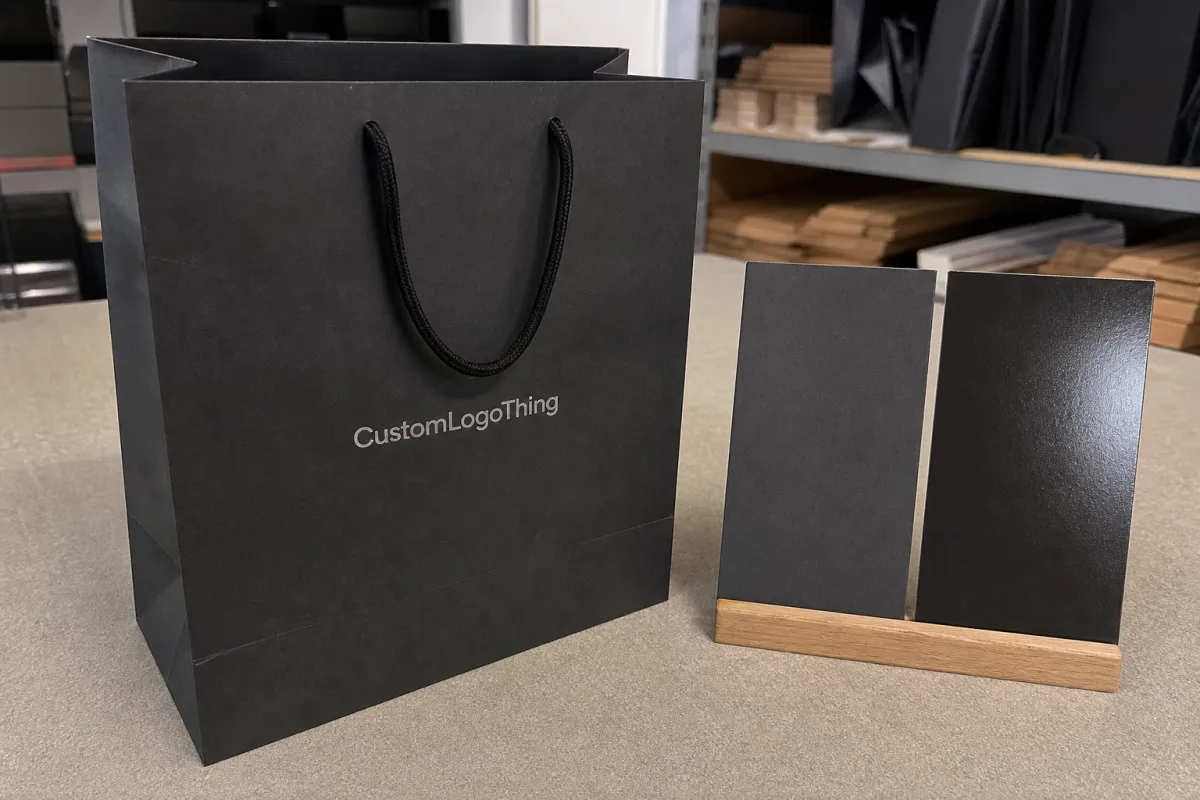
Buyer Fit Snapshot
| Best fit | Branded Gift Boxes Manufacturer projects where brand print, material claims, artwork control, MOQ, and repeat-order consistency need to be specified before quoting. |
|---|---|
| Quote inputs | Share finished size, material target, print colors, finish, packing count, annual reorder estimate, ship-to region, and any compliance wording. |
| Proofing check | Approve dieline scale, logo placement, barcode or warning zones, color tolerance, closure strength, and carton packing before bulk production. |
| Main risk | Vague material claims, crowded artwork, missing packing details, or unclear freight terms can make a low unit price expensive after revisions. |
Fast answer: Branded Gift Boxes Manufacturer: Board, Finish, Dieline, and Unit Cost should be specified like a repeatable production item. The safest quote records material, print method, finish, artwork proof, packing count, and reorder notes in one written spec.
Production checks before approval
Compare the actual filled-product size with the drawing, then confirm tolerance on folds, seals, hang holes, label areas, and retail display edges. Reserve space for logos, QR codes, warning copy, and material claims before decorative graphics fill the panel.
Quote comparison points
Review material grade, print process, finish, sampling route, tooling charges, carton quantity, and freight assumptions side by side. A quote is only useful when the supplier can repeat the same color, closure quality, and packing count on the next order.
Branded Gift Boxes Manufacturer: A Smart Brand Guide
A branded gift boxes manufacturer can shape how a product is judged before it is even lifted from the table. That sounds dramatic, but in packaging work it is plain fact: the box is often the first physical brand cue, and for gifting categories it can raise perceived value, set expectations, and decide whether the item feels like a thoughtful present or just another shipment. If you are comparing packaging partners, our Custom Packaging Products page is a useful place to see structure options, and About Custom Logo Things explains how we approach custom work.
Branded gift boxes manufacturer: why the box changes the sale
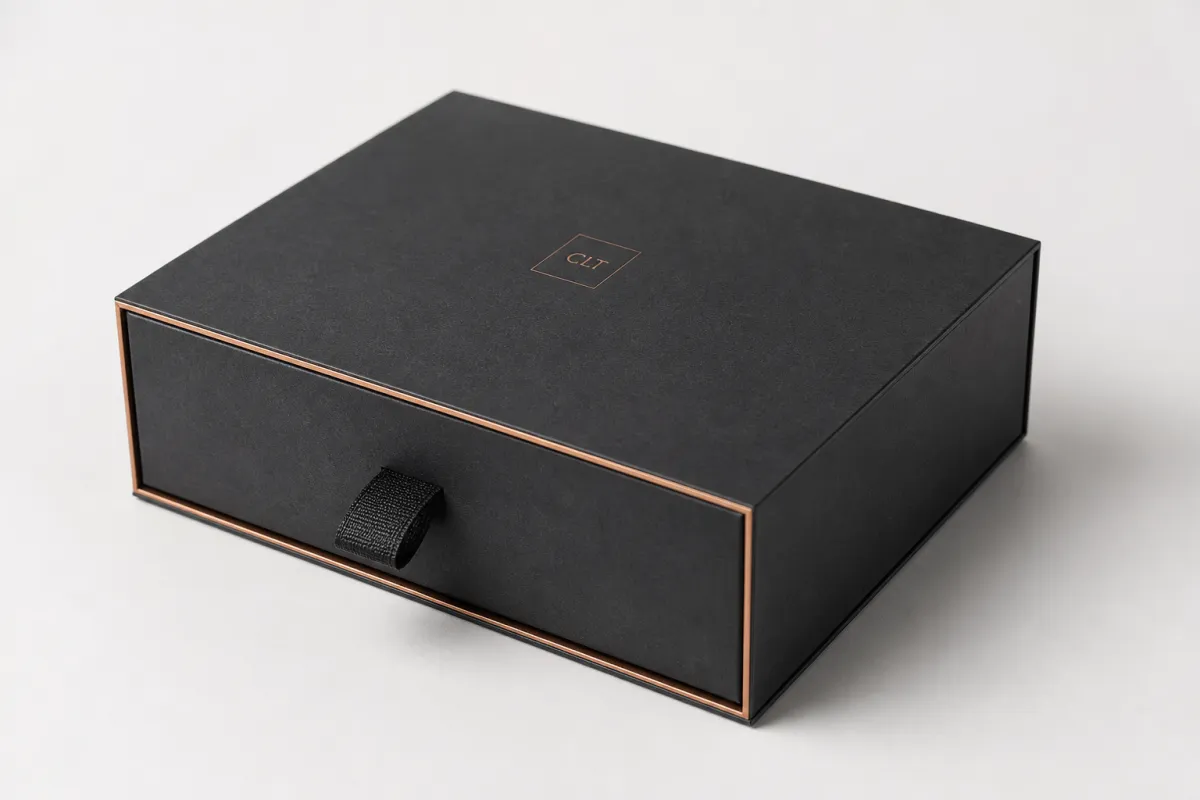
Here is the part many teams miss: a branded gift boxes manufacturer is not simply printing a logo on cardboard. The box is a sales surface, a protection layer, and a brand signal all at once. In gifting categories, those three jobs happen before the recipient has seen the product. A rigid lid that closes with a precise fit, a printed sleeve with accurate color, or a magnetic flap that clicks shut all tell the buyer something about the brand’s attention to detail. That message is often louder than the copy on the outside.
Generic off-the-shelf cartons can move inventory, but they rarely carry a premium story. A plain kraft mailer says utility. A custom box can say ceremony. The difference sits in structure, not just artwork. A branded gift boxes manufacturer can turn the same product into a more expensive-feeling gift by adjusting board thickness, closure style, lining paper, and finishing. A cosmetics set in a simple fold-and-tuck carton feels practical; the same set in a rigid two-piece box with soft-touch lamination and foil stamping feels curated. That perception matters in retail, corporate gifting, apparel, food presentation, and e-commerce alike.
From a packaging buyer’s point of view, the value is easy to see. Custom packaging reduces brand dilution, especially where the unboxing moment becomes part of the product experience. Think about a corporate gift that needs to impress a client, or a skincare set that will be photographed before it is used. A branded gift boxes manufacturer helps a brand control that moment. The goal is not decoration for its own sake; the goal is to make the package support the price point and the promise behind it.
There is also a practical side. A well-made box can reduce damage, keep inserts aligned, and make warehouse handling easier. The wrong box can look good on a screen and fail in real life. I have seen teams approve artwork first and discover later that the structure could not carry the product weight, the lid warped in transit, or the insert allowed movement that scuffed the finish. That is why the best branded gift boxes manufacturer relationships start with measurements and use case, not just a logo file.
Before you compare suppliers, it helps to think in terms of outcome. Do you need premium reveal? Shipping protection? Shelf presence? Seasonal gifting? The answer changes the box style, the material spec, and the finishing budget. A good branded gift boxes manufacturer will ask those questions early, because the right box for an influencer kit is not the same as the right box for a subscription launch or a holiday hamper. That is the real reason the box changes the sale: it changes the entire frame through which the product is judged.
How a branded gift boxes manufacturer turns concepts into boxes
The path from idea to finished packaging is more methodical than many brands expect. A strong branded gift boxes manufacturer usually starts with a brief, then moves into structure planning, artwork placement, proofing, sampling, finishing, assembly, and final quality review. Each step matters because packaging is where design meets production limits. A beautiful concept board means very little if the board grade is too light, the insert is undersized, or the print file does not match the dieline.
In practice, the manufacturer is translating a loose concept into a production-ready spec. A mood board with navy, gold, and satin textures might become a 2 mm rigid setup box wrapped in 157 gsm art paper, laminated in soft-touch film, with a gold foil logo and a die-cut EVA insert. Another brand may want a bright, playful unboxing moment with a lighter folding carton, spot UV accents, and a paperboard insert that folds flat for shipping efficiency. A branded gift boxes manufacturer has to connect the brand story to the correct construction, or the final box will feel off.
Sampling is where weak decisions show up early. A prototype can reveal weak magnets, lids that bow, inserts that do not grip the product, artwork that creeps too close to a seam, or a closure that is elegant on paper but frustrating in hand. This is not a failure of the sample; it is the sample doing its job. A branded gift boxes manufacturer that pushes samples through quickly without real testing is saving time in the wrong place.
For teams that want a clearer picture of what a supplier can deliver, it helps to review structure examples alongside finished work. That is one reason our Case Studies page can be helpful for brand and operations teams alike. It shows how different projects settle on different box styles, board grades, and finishes depending on the product and the route to market.
What the manufacturer needs from you
Good collaboration starts with useful inputs. A branded gift boxes manufacturer can work from a logo, but better results come from a fuller package of information: exact product dimensions, weight, finish expectations, target quantity, brand colors, and the intended opening experience. If the box is part of a launch campaign, include the date the product must reach the warehouse or event site. If it is for retail, say whether the box must stack, hang, or survive repeated handling.
The strongest outcomes usually come from clear feedback loops between marketing, operations, and the packaging team. Marketing knows the brand story. Operations knows the shelf space, packing flow, and shipping limits. The packaging team knows how those ideas behave in paperboard, adhesive, lamination, and finishing. A branded gift boxes manufacturer sits in the middle and turns that information into something printable, buildable, and repeatable. That is a technical process, but it also protects the brand from expensive guesswork.
- Send: dieline dimensions, product sample if available, target quantity, and preferred finish.
- Ask for: board thickness, closure style, insert options, and revision limits before approval.
- Check: how the sample handles product weight, how the lid closes, and whether the print aligns with seams.
Pricing, MOQ, and quote basics
Pricing can look confusing until you break it into the pieces that actually drive cost. A branded gift boxes manufacturer is pricing structure, decoration, labor, setup, and freight risk, not just paper. Box style matters first. A rigid setup box takes more material and more hand work than a folding carton. Finishing matters next. Foil stamping, embossing, debossing, spot UV, and specialty laminations each add setup and production steps. Inserts also change the price because they introduce custom cutting, extra assembly, or both.
Quantity has a large effect. Setup costs do not disappear at small volumes, so a 300-piece run can cost dramatically more per unit than a 5,000-piece order. That is why many buyers see a quote that seems high at first glance and then drops sharply as the run gets larger. A branded gift boxes manufacturer spreads tooling, setup, and proofing over more units at scale. Small runs can still make sense, but the price per box needs to be judged against launch risk, not compared directly to a large-volume job.
MOQ is another point where expectations often drift away from production reality. Minimum order quantity depends on the material, the box style, and the finish. A folding carton may start around 1,000 units or more, while a rigid box with a custom insert may sit closer to 300 to 500 units, depending on the factory and the complexity. Special finishes can nudge MOQ upward because they need separate tooling or more setup time. A reputable branded gift boxes manufacturer will explain where that threshold comes from instead of hiding it behind vague language.
| Box type | Typical MOQ | Common unit range | Best use | Watch-out |
|---|---|---|---|---|
| Rigid setup box | 300-1,000 | $1.60-$4.75 | Premium gifting, luxury sets, corporate gifts | Higher hand assembly and shipping volume |
| Magnetic closure box | 300-1,000 | $2.10-$5.25 | Gift sets that need a strong reveal moment | Magnets can warp lids if the structure is underbuilt |
| Folding carton | 1,000-5,000 | $0.18-$0.65 | Retail packs, lighter gifting, display-friendly SKUs | Less structural presence than rigid packaging |
| Mailer box | 500-3,000 | $0.70-$2.10 | E-commerce gifting and parcel delivery | Needs careful sizing to avoid product shift |
| Drawer box with ribbon | 500-2,000 | $1.20-$3.50 | Cosmetics, jewelry, specialty sets | Extra parts raise assembly time and cost |
If you want a quote that is genuinely useful, send more than a logo and a size guess. A branded gift boxes manufacturer will usually need the box dimensions, product weight, print colors, finish preferences, quantity, and delivery destination. Add whether you want sample costs, tooling charges, and freight separated. That lets you compare suppliers fairly and avoids a trap where a low unit price is hiding expensive setup or shipping.
There is a simple rule I use here: the cheapest box is not always the least expensive packaging decision. A box that looks right but crushes, scratches, or misrepresents the brand can cost more through returns, replacements, and lost trust. A thoughtful branded gift boxes manufacturer protects margin by getting the fit and finish right the first time. I have watched a team save a few cents per unit and spend far more on replacement inventory because the insert was loose. That kind of math is kinda unforgiving.
A box should earn its keep in three ways: it should protect the product, support the price, and make the brand easier to remember.
For teams watching budget closely, the most helpful comparison is not “cheap versus expensive.” It is “what does each format buy me in presentation, transit safety, and repeatability?” That is the real pricing conversation with a branded gift boxes manufacturer.
Production process and timeline
Timeline planning is where packaging projects either stay calm or become stressful. A branded gift boxes manufacturer typically follows a sequence: brief, specification review, dieline creation, artwork proofing, sample approval, mass production, quality control, packing, and shipment. Each stage can move quickly if the inputs are clean, but one correction can push everything downstream. The biggest mistake is assuming that one part of the process reflects the whole. A one-week sample does not mean the production run will ship in a week.
As a practical range, sample lead time often sits around 5 to 10 business days once artwork and dimensions are approved, while full production may take 12 to 25 business days for many custom jobs. Rigid Boxes With Inserts, specialty finishes, or complicated assembly can take longer. International freight then adds its own clock. Air freight is faster and more expensive; ocean freight is slower but often better for larger orders. A branded gift boxes manufacturer should spell out those timelines clearly, including what happens before the factory starts and after the cartons are packed.
Delays usually come from a short list of causes. Artwork changes after proof approval. Size changes after the sample has already been built. Material shortages. Late answers on color references. Or a team that approves a sample before testing the actual product inside. If the project is tied to a launch or event, plan backward from the hard date and leave room for at least one revision cycle. That is not pessimism; it is basic schedule math.
For shipping-related projects, testing matters. If the box will move through parcel networks, ask whether the supplier understands ISTA distribution testing and can align the pack-out with real handling conditions. A parcel box that survives a warehouse move is not necessarily ready for a multi-drop delivery route. A thoughtful branded gift boxes manufacturer should be able to discuss drop testing, vibration, and compression in plain language, even if the test itself is handled by a separate lab or quality team.
Lead time should also be read in context. A simple folding carton may move faster than a rigid gift box with a lid, ribbon pull, and custom insert. An order of 2,000 units with one-color print and no special finish will behave differently from a 1,000-unit run with foil, embossing, and matte lamination. A good branded gift boxes manufacturer will not promise the same schedule for both, because doing so would ignore the real production load.
If you have a launch date, event date, or retail rollout, start the packaging clock early. The safest habit is to work backward from the ship date, then add room for proofing, sample review, and freight variation. That is especially true for seasonal gifting, where many brands place pressure on the same factory windows. A branded gift boxes manufacturer can be a strategic partner here, but only if the brief arrives before the calendar becomes tight.
Key factors that separate good packaging from forgettable packaging
Material selection sets the foundation. For premium gifting, rigid board in the 1.5 mm to 3 mm range gives the box weight and presence. For lighter products or shipping-forward e-commerce, corrugated structures such as E-flute or B-flute add strength without making the box feel oversized. Folding cartons in the 18 pt to 24 pt range work well for retail display and lower-weight items. A skilled branded gift boxes manufacturer will not push the same substrate across every category, because the product and the route to the customer dictate the build.
Finish changes perception more than many brand teams expect. Matte lamination feels calmer and more restrained. Gloss is brighter and more promotional. Soft-touch film creates a velvety hand feel that often suits beauty and luxury packaging. Foil stamping draws the eye to the logo or mark. Spot UV creates contrast by lifting select areas without changing the whole surface. Embossing and debossing add physical texture that can be felt before the box is opened. A branded gift boxes manufacturer should be able to explain not only how each finish looks, but how it behaves in handling and storage.
Sustainability decisions should stay practical. Recycled content, FSC sourcing, recyclability, and right-sizing are different choices, and they do not all solve the same problem. Right-sizing reduces wasted air and can lower freight cost. FSC-certified board supports chain-of-custody expectations for brands that need documented sourcing; more on that at FSC.org. Recyclability depends on local collection systems and the materials used together, which means a box with foil, plastic film, and foam may not behave the same way as a paper-only build. A responsible branded gift boxes manufacturer should explain those trade-offs honestly instead of hiding behind a green label.
Inserts and internal presentation matter just as much as the outer shell. If the product shifts in transit, the box may arrive intact but still feel low quality because the item is rattling inside. Paperboard inserts work well for lighter items and better recyclability. EVA foam offers a tighter fit for fragile items, though it may not suit every sustainability goal. Pulp trays can be a useful middle ground for certain items. A branded gift boxes manufacturer should match insert material to product shape, weight, and unboxing experience.
There are also real-world constraints that no design deck can ignore. Food-safe contact rules matter for edible gifts. Warehouse handling matters if the box will stack on pallets. Weight limits matter for mailer formats. Shelf footprint matters if the packaging must display upright. And if the product has a liquid, glass, or sharp edge, the internal support has to be engineered rather than improvised. A good branded gift boxes manufacturer will ask about all of that before artwork approval, not after a damaged shipment makes the issue obvious.
Honestly, packaging earns its reputation in the handling, not on the mockup. The box is either aligned with the brand story, or it is not. There is rarely a middle ground. A branded gift boxes manufacturer that understands structure, finish, and handling can make the difference between packaging that gets noticed and packaging that gets forgotten.
Common mistakes when choosing a branded gift boxes manufacturer
The first mistake is designing before measuring. A beautiful box concept cannot rescue a bad fit. If the product is too tight, the insert bends or the lid scuffs the top. If the box is too loose, the product shifts and the reveal feels cheap. A branded gift boxes manufacturer should receive dimensions, weight, and product photos before the design is locked. Otherwise, the project starts on the wrong foot.
The second mistake is approving a sample too quickly. A sample should be tested with the real product, not just admired on a desk. Open and close the lid several times. Shake the box lightly. Check how it behaves after a drop from a short height if the design will ship by parcel. Confirm that artwork lines up across seams and corners. A branded gift boxes manufacturer that welcomes this level of review is saving you from expensive surprises later.
The third mistake is comparing only unit price. That habit hides more than it reveals. A supplier with a lower quote may have slower communication, less consistent finishing, or a higher rework rate. Late delivery can erase any savings. So can a batch that arrives with color drift or a weak closure. A better comparison looks at total project cost, not just the number printed beside the unit price. A branded gift boxes manufacturer with clear pricing, reliable revision handling, and stable quality often creates better value even if the first quote is not the lowest.
The fourth mistake is asking for “premium” without defining it. Premium can mean rigid board, but it can also mean a cleaner print surface, tighter tolerances, richer color, or a better opening sequence. If the brief stays vague, the quote will be vague too. A branded gift boxes manufacturer can only hit a target that exists. Give examples, finishes, brand references, and a clear ceiling on budget if you have one.
The fifth mistake is forgetting production constraints until the order is already in motion. MOQ, color variation, assembly time, and lead time are not side notes. They are the project. If the box requires hand assembly, if the paper is a special order, or if the finish needs tooling, the schedule and cost should reflect that from the start. A branded gift boxes manufacturer should be candid here. If they are not, that is a warning sign.
If the box cannot survive a drop, a stack, and a busy warehouse shift, the finish does not matter much.
I usually tell teams to test three things before sign-off: fit, closure, and handling. Fit confirms the product stays in place. Closure confirms the user experience feels intentional. Handling confirms the package can move through the real supply chain. A branded gift boxes manufacturer that supports those checks is doing more than making packaging; it is reducing brand risk.
Next steps: choose the right branded gift boxes manufacturer
Once the shape of the project is clear, the next step is to compare suppliers on the right criteria. Start with a simple checklist: exact box size, product weight, quantity, budget range, target finish, and required delivery date. That information lets a branded gift boxes manufacturer quote on the same basis, which is the only fair way to compare proposals.
Then ask for samples or prototypes from two or three suppliers. You are not just buying a box; you are evaluating board feel, print quality, closure strength, and the way the packaging presents your product. A rigid box can look impressive in photos and still feel underwhelming in hand if the wall thickness is too light or the wrap is poorly applied. A branded gift boxes manufacturer should be able to show consistency across more than one sample, not just one polished example.
Ask each vendor to explain materials, timeline, pricing, and revision limits in plain language. If the answer sounds slippery, keep digging. What happens if artwork changes after proof approval? What is included in the sample fee? Are tooling and freight separated? How are defects handled? A reliable branded gift boxes manufacturer should answer those questions without turning them into a sales performance.
It also helps to use a scorecard. Rate communication speed, customization depth, lead time clarity, cost transparency, and quality consistency on the same scale. That approach forces the comparison to reflect more than the lowest quote. The best partner may be the one that can explain the spec more clearly and spot production risks earlier. A branded gift boxes manufacturer with that habit usually saves time later, even if the quote does not look like the cheapest line in the spreadsheet.
For brands that want to see how that thinking plays out in finished work, our Case Studies page offers a useful view of different packaging decisions across categories. It is often easier to judge fit, finish, and structure by looking at completed jobs than by reading a spec sheet alone. That is especially true for teams new to custom packaging.
The clearest takeaway is simple: choose the branded gift boxes manufacturer that can prove fit, finish, and reliability, not just the one with the lowest quote. The right partner will ask good questions, give concrete answers, and treat the box as part of the brand, not a disposable container. If you start with dimensions, product weight, quantity, finish goals, and a real launch date, you will get a far better package and a far cleaner production run.
What should I send to a branded gift boxes manufacturer for an accurate quote?
Send exact box dimensions, product weight, order quantity, preferred box style, print colors, and any special finishes such as foil or embossing. A branded gift boxes manufacturer can only price the job accurately if the structural and visual details are clear. It also helps to share a reference photo or mood board, plus your target launch date and shipping destination, because those two factors can change both timing and cost.
How much do branded gift boxes usually cost per unit?
Unit cost depends on structure, board thickness, decoration, insert complexity, and order volume. A rigid box with a custom insert will usually cost more than a folding carton, especially at lower quantities. A branded gift boxes manufacturer should separate setup fees, sample charges, tooling, and freight so you can compare suppliers on the same basis. That way you are looking at total project cost, not only the headline unit price.
How long does it take to produce custom branded gift boxes?
Timeline depends on sample approval, artwork readiness, material availability, and production capacity. Simple runs can move faster than Custom Rigid Boxes with magnets, inserts, or specialty finishes. A branded gift boxes manufacturer should give you both sample lead time and full production lead time before you commit to a launch date, because those two clocks are not the same.
What is the best box style for premium gifting?
Rigid boxes are often the strongest choice for premium gifting because they feel substantial and protect the product well. Mailer boxes work better for e-commerce when shipping durability matters as much as presentation. A branded gift boxes manufacturer will usually recommend the style based on product weight, brand position, and whether the box opens in a store or at home. There is no single right answer, only the best fit for the use case.
How do I compare two branded gift boxes manufacturers?
Compare sample quality, communication speed, revision clarity, pricing transparency, and on-time delivery history. Ask each supplier what happens if artwork changes after proof approval, and ask how they handle rework if a batch misses spec. A branded gift boxes manufacturer that can show consistency, not just one impressive sample, is usually the safer choice for repeat orders.