Buyer Fit Snapshot
| Best fit | Branded Hang Tags for Parcels projects where brand print, material claims, artwork control, MOQ, and repeat-order consistency need to be specified before quoting. |
|---|---|
| Quote inputs | Share finished size, material target, print colors, finish, packing count, annual reorder estimate, ship-to region, and any compliance wording. |
| Proofing check | Approve dieline scale, logo placement, barcode or warning zones, color tolerance, closure strength, and carton packing before bulk production. |
| Main risk | Vague material claims, crowded artwork, missing packing details, or unclear freight terms can make a low unit price expensive after revisions. |
Fast answer: Branded Hang Tags for Parcels: What They Do and Why should be specified like a repeatable production item. The safest quote records material, print method, finish, artwork proof, packing count, and reorder notes in one written spec.
Production checks before approval
Compare the actual filled-product size with the drawing, then confirm tolerance on folds, seals, hang holes, label areas, and retail display edges. Reserve space for logos, QR codes, warning copy, and material claims before decorative graphics fill the panel.
Quote comparison points
Review material grade, print process, finish, sampling route, tooling charges, carton quantity, and freight assumptions side by side. A quote is only useful when the supplier can repeat the same color, closure quality, and packing count on the next order.
Branded Hang Tags for parcels can look like a minor finishing touch until a plain mailer lands on a desk and the shipment feels oddly unfinished. A well-made tag changes that impression quickly. It adds structure, signals care, and makes the parcel feel planned rather than patched together at the end of the packout.
That is the real value of Branded Hang Tags for parcels. They are not just decoration with a logo on top; they are a packaging component that can carry brand identity, product data, return guidance, or a short message without forcing a redesign of the box or mailer itself. Ecommerce teams, retail gift programs, seasonal drops, and subscription boxes all use them for the same reason: they add a visible point of control at low packaging complexity. The format sits between a label and an insert, which is exactly why it earns a place in so many packaging systems.
If labels, inserts, or belly bands already sit in your packout, a parcel hang tag can work alongside them instead of replacing them. For a broader view of how printed elements fit into a packaging system, the Custom Labels & Tags page offers a useful comparison point, while a few Case Studies show how small printed pieces can make shipping feel cleaner and more deliberate.
Branded Hang Tags for Parcels: The Small Detail Customers Notice
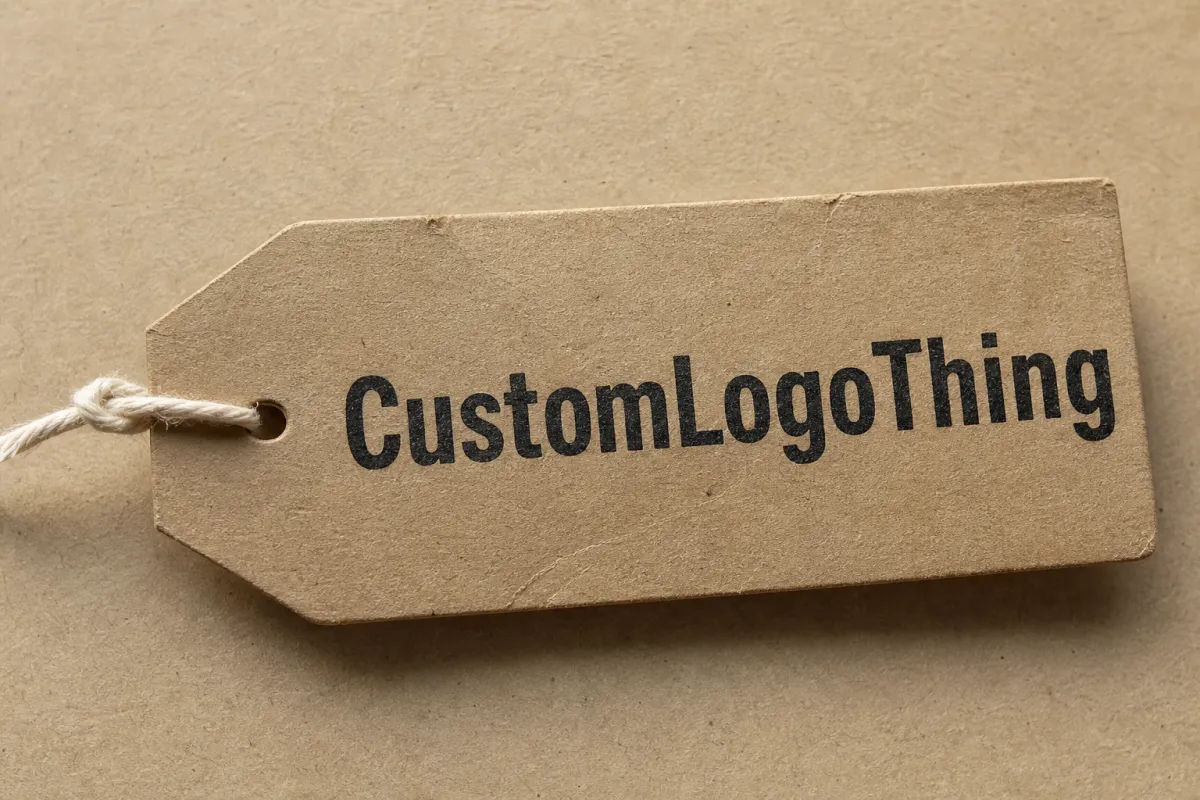
A hang tag is a printed piece attached to a parcel with string, ribbon, twine, a plastic fastener, or another small tie. It can stay visible from the outside or hang in a position that survives packing and transit. That makes it different from a sticker, which sits flat on a surface, and different from an insert, which disappears inside the box. A tag is proof that the package was considered before it left the warehouse.
From a packaging buyer's point of view, that matters because customers rarely judge the shipment in parts. They do not separate the carton, the label, the tissue, and the insert into tidy categories. They simply notice whether the parcel feels ordered or rushed. A branded tag helps the package feel finished. It can turn a basic kraft mailer into something that reads more premium, or make a generic carton easier to identify at a glance.
There is a practical side too. A tag can carry product names, SKU references, short care instructions, return reminders, or a QR code without crowding the box face. It can support warehouse handling, customer service, and post-purchase engagement at the same time. That is a logistics decision as much as a design decision.
A parcel tag should answer one question quickly: did this shipment get a proper finishing touch, or did someone just close the carton and hope for the best?
That sounds blunt because it is. Buyers see the difference every week. A tag is a small thing, yet it can raise perceived value fast if the print, stock, and attachment method match the parcel it travels with.
In practice, the strongest tags do not try to be a miniature brochure. They stay readable from arm's length, survive handling, and do one or two jobs well. A warehouse team does not need a piece that looks good only under studio lights. It needs a component that still looks deliberate after it has been sorted, stacked, and moved more than once.
How Branded Hang Tags for Parcels Work in the Packing Process
The setup is usually straightforward. The tag is printed on board or heavy paper stock, then cut to size and finished with a hole, slot, or punched corner. The attachment method depends on the parcel format. Thin mailers often use short string or thread because it stays flat. Cartons can handle a slightly more visible tie. Some teams prefer paper cords for a natural look. Others choose coated tags with a small plastic fastener because it keeps application quick and repeatable.
Placement matters more than many teams expect. The tag should not cover the shipping label, barcode, or any address window. That sounds obvious, yet it gets missed when the design team is looking at a render and the fulfillment team is looking at a scanner. A good tag layout leaves the carrier label fully visible, avoids dangling over seams, and stays clear of automated sort surfaces. If the tag can snag, bend, or peel during handling, it will. Packaging does not care about the mood board.
Most operations add the tag after the item is packed and before final seal or carrier handoff. That keeps the line moving. In a manual pack station, the extra step usually adds only a few seconds once the team learns the routine. In a higher-volume environment, the tag may be pre-tied or pre-assembled so it can be applied in one motion. The goal is not to make the packout look artisanal. The goal is to keep the process efficient while still delivering a branded finish.
One useful trait is versatility. A single tag can carry several jobs if the layout is planned with real packing conditions in mind:
- Brand presence with logo, color, and a short message.
- Product identification with SKU, variant, or order reference.
- Customer support with return instructions or contact details.
- Digital bridge with a QR code that leads to care info, upsells, or registration.
- Internal routing with batch codes or packing notes for multi-item orders.
For shipping and logistics teams, the hard limits are practical rather than glamorous: scannability, abrasion resistance, moisture exposure, bend resistance, and how the tag behaves under pressure inside a carton or mailer. Rough sorting can scuff lighter board faster than expected. Fragile or moisture-sensitive contents may call for a protective coating or heavier stock. Automated equipment adds another constraint, since the tag cannot interfere with sealers, conveyors, or print-and-apply systems.
That is why a sample run should never be treated as a formality. A tag that looks excellent on screen can fail once it meets real parcel handling. A good printer will want to know the package size, carrier type, closure method, and where the tag sits in the workflow before recommending a spec.
Teams that have done this before often treat the tag as one piece in a larger parcel system. That is the right instinct. A tag should support the rest of the package, not compete with it. If the carton already carries a strong brand print, the hang tag can stay simple. If the box is plain and the unboxing experience depends on a finishing cue, the tag may need to do more visual work.
Cost, MOQ, and Unit Pricing for Branded Hang Tags
Pricing for branded hang tags for parcels comes down to a few predictable variables: quantity, stock thickness, print colors, die-cut complexity, coating, and attachment method. Simple tags on standard cardstock are the cheapest starting point. Custom shapes, foil, embossing, soft-touch coating, or pre-attached cords add cost. No mystery there. Fancy finishes always find a way to charge rent.
MOQ changes the math in a big way. Short runs usually carry a higher unit cost because setup gets spread across fewer pieces. As volume rises, that setup cost gets diluted and the per-tag price drops. A 500-piece test run can make sense for a new launch or seasonal campaign. A 5,000- or 10,000-piece order usually fits better when the design is locked and repeat use is likely. The price gap often matters more than the tiny layout change people debate in email threads.
Buyers usually budget from a range like this. The figures are directional, not promises, but they help anchor a quote request before production starts.
| Run Type | Typical Quantity | Common Use | Approx. Unit Cost Range | Notes |
|---|---|---|---|---|
| Digital short run | 250-1,000 | Launches, tests, seasonal drops | $0.35-$1.10 | Fast setup, useful for proofing artwork and placement |
| Mid-volume digital or hybrid | 1,000-5,000 | Reorders, regional programs | $0.18-$0.45 | Balances speed, consistency, and lower per-piece pricing |
| Offset production | 5,000+ | National rollouts, steady demand | $0.06-$0.22 | Best once artwork is locked and usage is predictable |
Those ranges shift with stock, finish, and attachment complexity. A plain rectangular tag with one-color print costs less than a die-cut shape with foil and custom twine. Variable data, serialization, or special packing raises the price again.
Hidden costs trip people up too. Proofs are one. Freight is another, especially if you are ordering heavy stock in bulk. Reprints happen when artwork is not press-ready or when a logo gets approved in one version and then quietly changed by someone who never joined the original review call. Overspecifying the job can waste money as well. A parcel tag does not need soft-touch coating if it is going to spend its life in transit under a barcode sticker.
For sustainability-led programs, recycled stock or FSC-certified paper can change the price as well. Ask early if that matters to your brand promise. The Forest Stewardship Council publishes useful background on certification at FSC, and it is far easier to confirm paper chain of custody before production than explain it afterward.
There is one more budget variable that gets overlooked: assembly labor. If the tag arrives pre-tied, bundled into kits, or collated in order sequence, that convenience can reduce handling time in the warehouse. If it arrives loose and has to be sorted or assembled at packout, the printer's unit price may look lower while the total system cost rises. Procurement teams notice that difference quickly once orders scale.
Production Steps, Timeline, and Lead Time Planning
The production flow is simple on paper, and each stage still has its own way to go wrong. It usually starts with a brief or spec sheet, then moves into dieline setup, artwork prep, proofing, print, cutting, finishing, assembly, and final pack-out. If the tag needs a hole punch, stringing, or collation into kits, that gets added near the end. Every extra move adds time. Not much. Just enough to matter when a launch date is already stubborn.
Simple digital runs can often move quickly after proof approval, sometimes in the range of 5-10 business days depending on supplier capacity and shipping location. More complex offset jobs, especially those using specialty stocks or finishes, often take 12-18 business days or longer once the proof is approved. Add foil, embossing, or custom fasteners and the schedule stretches again. The delay usually lives in finishing and in the back-and-forth before production starts, not in the printing itself.
Most delays happen in three places:
- Artwork revisions that arrive after the proof is already moving.
- Unclear dimensions that force the printer to redraw the dieline.
- Approval bottlenecks between marketing, operations, and procurement.
That last one shows up constantly. Marketing wants the tag to feel on-brand. Operations wants it to survive the line. Procurement wants the price to behave. All three are reasonable, which is why the best projects begin with a shared spec sheet instead of three separate opinions and a surprise deadline.
Launch windows deserve real planning. If your parcel program peaks during holidays, sales events, or product drops, order tags early enough that you are not trying to fix a missing box component during the busiest week of the quarter. Build in time for proofs, shipping, and a backup buffer. If you are not sure whether the tag fits the current packout, request a pre-production sample and test it against live parcels. The International Safe Transit Association publishes test methods that help move the conversation beyond the desk and into transit conditions.
One clean habit helps a lot: write the spec once, then use it every time. Include stock, size, print side, finish, attachment method, quantity, and due date. If there are barcode rules, QR destinations, or placement restrictions, add them too. This is not paperwork for its own sake. It keeps everyone from guessing.
A disciplined lead-time plan also protects the launch itself. A tag may be a small component, but if it is missing, the rest of the packaging often looks incomplete. That is why experienced buyers build a margin into reorder timing, especially for seasonal campaigns and limited-edition bundles. The cheapest print quote is not the best outcome if the tags arrive after the goods have already shipped.
Key Factors That Make Parcel Hang Tags Worth Keeping
Size and shape are the first decisions, and they affect more than appearance. A tag that is too small can feel flimsy and be hard to read. A tag that is too large can crowd the parcel or snag in transit. For slim mailers, a compact tag in the range of 2 x 3 inches to 2.5 x 4 inches often works well. For larger cartons or gift parcels, 3 x 5 inches or a custom shape may carry more presence. The point is to match the tag to the packaging format, not to print a billboard and hope it behaves.
Material choice shapes the whole experience. Kraft stock sends a natural, handmade signal. Coated board gives sharper color and stronger contrast. Recycled uncoated stock fits brands that want a lower-gloss, more responsible feel. Heavier board resists bending better, which matters when parcels are stacked or shipped long distances. If the tag has to survive rough handling, lighter paper is a bad bet. It may look fine in a sample packet and tired by the time it reaches the customer.
Buyers can compare stock options with a simple lens:
| Material | Look and Feel | Durability | Best For | Typical Cost Impact |
|---|---|---|---|---|
| Kraft paperboard | Natural, earthy, understated | Moderate | Eco-led brands, handmade products | Low to moderate |
| Coated SBS or artboard | Clean, sharp, color-accurate | Moderate to high | Premium retail, strong branding | Moderate |
| Recycled uncoated stock | Soft, tactile, plainspoken | Moderate | Sustainability messaging, minimalist brands | Low to moderate |
| Heavy board with coating | Structured, durable, polished | High | Long transit, high-value parcels | Moderate to high |
Finishes should support the brand, not fight it. Matte tends to feel quieter and more premium without shouting. Gloss can make color pop, but it may read louder than the rest of the package. Soft-touch feels upscale, though it is not always the best choice for parcels that get handled a lot because scuffing can show. Foil works best when used sparingly. A little can feel deliberate. Too much can tip into costume jewelry for cardboard.
Content hierarchy matters just as much as the stock. The strongest tags usually follow a simple pattern:
- Logo or brand mark first, so the parcel is identifiable at a glance.
- One key message second, such as thank-you copy, a launch note, or a return reminder.
- Helpful details third, like a QR code, care note, or customer service link.
That order keeps the tag readable. It also stops the design from turning into a tiny brochure nobody asked for. If the tag has one job, do that job well. If it has three jobs, keep the hierarchy sharp enough that the customer can find the useful part in two seconds.
Teams that care about documentation and process can compare the tag against the rest of the package system in the packaging spec. The board weight, print finish, and attachment method should match the mailer or carton instead of fighting it. A parcel tag should feel like it belongs to the box, not like it was borrowed from another project.
Practical experience matters here more than theory. A tag that feels elegant in a mockup may be awkward on a real line if the twine tangles, the hole tears, or the finished piece bends in the mailer. That is why the best specs are written with the parcel route in mind, not just the art direction.
Common Mistakes That Make Hang Tags Feel Cheap
The fastest way to ruin a tag is to cram too much onto it. Too many logos, too much copy, too many icons, too many calls to action. At that point it stops being a tag and starts looking like a panic attack with a hole punch. A parcel tag works best when it gives the eye one clear path: identify, understand, move on.
Weak material choice is another common failure. A thin stock may save a few cents, but if it curls, bends, or tears before the package arrives, those savings vanish instantly. Customers do not think, "nice cost control." They think the brand cut corners. There is a difference, and it is not flattering.
Operational mistakes can be worse. A tag that covers a barcode, blocks a scanner, or dangles into a sealing area can create real friction in fulfillment. If the team has to stop and rework parcels because the tag was designed without a packing test, the whole benefit disappears. Packaging should reduce chaos, not decorate it.
Another classic error is treating the tag as a late-stage add-on. If the layout, stock, and attachment method get chosen after the package system is already set, the result is often awkward. The tag may be the wrong size for the mailer, the wrong tone for the product, or the wrong durability for the route. That is how a good idea turns into a pile of reprints.
Brands also overdo finishing when the parcel environment does not justify it. Heavy foil, thick embossing, or delicate decorative ties can look impressive on a sample table and impractical on a busy line. The smarter move is to ask what the customer will actually see after transit, then spec the tag for that reality.
If your team is comparing formats, the question is not whether a tag is prettier than a sticker or insert. The real question is which component supports the parcel without slowing the packout or inflating the budget. That answer usually depends on the route, the product, and how much handling the package sees before it reaches the customer.
Another mistake is forgetting the evidence chain. If a tag is meant to carry a QR code, care note, or order-specific information, it should be checked on press proof, production sample, and final packed parcel. A code that scans on a bright screen but fails once printed at the wrong size helps nobody. Trust comes from testing, not assumptions.
Expert Tips and Next Steps for a Smarter Rollout
Start small. Pick one parcel type, one tag format, and one use case. Test it on real orders before you roll it across the rest of the line. A short-run pilot will tell you more than a polished mockup ever will. You will learn whether the tag holds up, whether the team likes applying it, and whether the customer actually notices the difference.
Ask for samples before you lock the order. That includes paper swatches, printed proofs, and, if possible, a production sample with the actual attachment method. Color can shift between screen and press. Thick board can feel more premium than expected, or more rigid than needed. A QR code that looks fine at 100 percent on a proof can be useless if it is too small on a finished tag. Better to catch that before 10,000 pieces are sitting in a warehouse.
A simple spec sheet keeps everyone honest. Put these details in writing:
- Tag size and shape
- Stock type and thickness
- Print method and color count
- Finish or coating
- Attachment method
- Quantity and reorder target
- Required delivery window
- Any barcode, QR, or placement rules
That one page can save several rounds of confusion. It also makes it easier to compare quotes from different suppliers on equal terms. If one quote is cheaper but leaves out finishing or assembly, the numbers are not actually comparable. A clean spec sheet exposes that quickly.
For sustainability-minded buyers, ask for recycled content, FSC-certified paper, or lower-waste production where it makes sense. Do not assume the tag is the right place for every environmental claim. The stock, the finish, and the transport method all affect the final footprint. If that part matters to your brand, ask the supplier to explain the paper source and the practical tradeoffs in plain language. Vague claims are cheap. Documentation is more useful.
There is a useful test question for internal teams: does the tag help the package do its job, or does it simply make the parcel look busier? If the answer is not obvious, the tag probably needs a simpler layout or a different use case. Strong parcel packaging is not about collecting elements. It is about making each element earn its place.
If you are building a rollout plan, the order is usually straightforward: audit current parcels, choose one use case, request pricing from a few vendors, compare turnaround and finish options, and confirm how the tag will fit into the shipping workflow. From there, run a pilot, get feedback from fulfillment and customer service, and refine the spec before scaling. That sequence is boring in the best way. Boring usually ships on time.
Branded hang tags for parcels work best when they are treated like functional packaging hardware with a branding job, not a decorative afterthought. Get the stock right, keep the layout disciplined, test the attachment, and allow enough lead time to avoid a production mess. That is how branded hang tags for parcels improve the shipment instead of just hanging there looking expensive.
The most useful next step is not a bigger design brief. It is a tighter one: define the parcel type, choose the tag's job, and test the piece against a live packing workflow before committing to a full run.
FAQ
What are branded hang tags for parcels used for?
They add brand presence to shipped orders without changing the box or mailer itself. They can also carry product info, QR codes, return details, promos, or internal handling notes, which makes them more useful than a purely decorative accessory.
How much do branded hang tags for parcels usually cost?
Pricing depends on size, stock, print method, finish, and order volume, so unit cost drops as quantity rises. Short runs are best for testing, while larger runs usually make sense once the design is locked and reorder demand is easier to predict.
What is the best material for branded parcel hang tags?
Coated board works well for sharp graphics, while kraft and recycled stocks fit a more natural or sustainability-led look. If parcels travel rough or long distances, heavier stock or a finish that resists scuffing and bending is usually the safer choice.
How long does production take for parcel hang tags?
Simple digital runs can be quick after proof approval, while specialty finishes and larger offset jobs take longer. Build extra time for artwork revisions, proofing, shipping, and any final approval from marketing or operations, because that is usually where the clock slips.
What should I send to a printer for branded hang tags for parcels?
Send finished artwork, exact dimensions, stock preference, quantity, finish, attachment method, and any special placement rules. Include the desired timeline and use case so the printer can recommend the right production method and avoid rework.