Buyer Fit Snapshot
| Best fit | Branded Hang Tags for Boxes projects where brand print, material claims, artwork control, MOQ, and repeat-order consistency need to be specified before quoting. |
|---|---|
| Quote inputs | Share finished size, material target, print colors, finish, packing count, annual reorder estimate, ship-to region, and any compliance wording. |
| Proofing check | Approve dieline scale, logo placement, barcode or warning zones, color tolerance, closure strength, and carton packing before bulk production. |
| Main risk | Vague material claims, crowded artwork, missing packing details, or unclear freight terms can make a low unit price expensive after revisions. |
Fast answer: Branded Hang Tags for Boxes: Design, Cost, and Timing should be specified like a repeatable production item. The safest quote records material, print method, finish, artwork proof, packing count, and reorder notes in one written spec.
Production checks before approval
Compare the actual filled-product size with the drawing, then confirm tolerance on folds, seals, hang holes, label areas, and retail display edges. Reserve space for logos, QR codes, warning copy, and material claims before decorative graphics fill the panel.
Quote comparison points
Review material grade, print process, finish, sampling route, tooling charges, carton quantity, and freight assumptions side by side. A quote is only useful when the supplier can repeat the same color, closure quality, and packing count on the next order.
Branded Hang Tags for Boxes: Design, Cost, and Timing
A plain shipping box can do its job and still feel anonymous. Add Branded Hang Tags for boxes, and the carton starts saying something before anyone lifts the lid. That first impression is not decorative fluff. Packaging research keeps pointing to the same thing: people make quality judgments within seconds, and in a crowded shipping stream, seconds are all you get.
For a packaging buyer, branded hang tags for boxes are not there just to look pretty. They support brand recognition, SKU identification, handling notes, and perceived value in one compact piece. In a run with five SKUs or fifty, a well-made tag can reduce confusion for both the packer and the customer. That is a rare sort of efficiency: visible, practical, and inexpensive enough to justify.
Compared with labels, sleeves, or printed cartons, branded hang tags for boxes solve a different problem. A tag adds a message without changing the structure of the carton. That matters if boxes are already in inventory, the packaging line is locked, or multiple fulfillment partners touch the order. If you already own the box, a tag is often the quickest way to make it feel intentional instead of generic.
Branded Hang Tags for Boxes: What They Actually Do
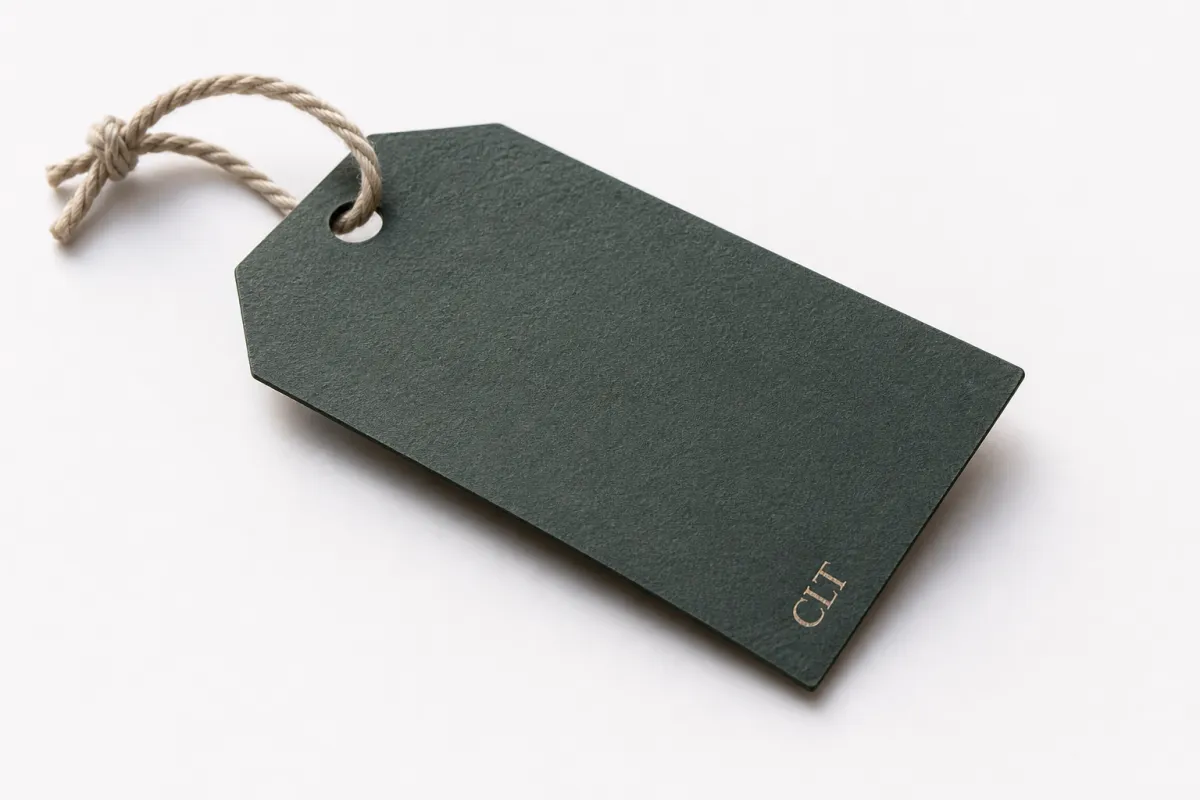
Branded hang tags for boxes make a shipment feel deliberate. A bare carton says shipped. A tagged carton says someone checked the details. That difference shows up in customer expectations, giftability, and the price people think the contents deserve. The psychology is plain enough. A package that looks considered usually gets treated that way.
People often assume the largest printed surface carries the strongest message. Sometimes it does. Often it doesn't. Branded hang tags for boxes sit where the hand and eye tend to land first, usually near the lid edge, flap, or handle. That placement gives them a strong visual role even when the box itself stays simple. A small element in the right place can outweigh a larger graphic in the wrong one.
The parts are straightforward: tag stock, print finish, hole punch, string or fastener, and attachment method. Those five choices drive most of the cost and most of the user experience. A thick, clean-cut tag with a tidy tie feels intentional. A thin card with a ragged punch feels rushed, even if the logo is perfect. And people do notice. They may not mention it, but they notice.
Branded hang tags for boxes also support order accuracy. A tag can carry SKU, size, color, care instructions, promo copy, or a scan code for internal sorting. That matters in multi-item shipments, gift sets, sample packs, and subscription deliveries where the outer carton alone does not tell the full story.
Most hang tag failures start with a familiar mistake: the design looks polished on a screen, then nobody checks how it behaves on a real packing line.
Used well, branded hang tags for boxes do quiet work. They support fulfillment, reinforce the brand, and give the customer one more reason to believe the box was made for a specific purpose. That is a lot of value for a piece of card stock that weighs almost nothing.
How Branded Hang Tags for Boxes Work in Shipping
Branded hang tags for boxes usually enter the process after the carton size and print plan have already been set. That timing is fine as long as the tag is designed around the box rather than forcing the box to adapt. A small carton should not carry a tag that hangs off it like a luggage claim stub. A larger carton can hold more information and still look balanced.
In a standard workflow, the tags are printed first, then attached during box assembly or fulfillment. Some brands bundle the tag into the carton run. Others receive tags flat and add them at the warehouse. Branded hang tags for boxes can work in both setups, but the attachment method changes the labor cost. A quick, repeatable tie saves money. A fussy knot burns time. That part is kinda unforgiving.
These tags are especially useful for subscription boxes, retail-ready cartons, gift packaging, and warehouse sorting. They can carry a product name, product family, material note, or a simple handling instruction like “do not fold” or “keep upright.” None of that requires redesigning the carton. That is the point.
Attachment choices reveal the tradeoffs fast. Cotton string looks natural and photographs well. Plastic loop fasteners are fast and inexpensive. Metal fasteners feel more permanent but can scratch. Adhesive ties work when the box needs to stay closed. Pre-threaded placement saves time on a controlled assembly line. Branded hang tags for boxes do not care which one you choose. Your labor budget does.
Speed and style often collide here. A better-looking tag may take longer to attach if the fastener is delicate or the punch is small. Packing teams can handle elegant materials, but they need consistency. If one carton takes 12 seconds to finish and another takes 4, the line will show you which design is winning. Usually by delaying everything else.
If you want to see how package elements behave together, our Case Studies page shows how print and assembly choices affect the final result. For buyers comparing tags against other package elements, our Custom Labels & Tags page is a useful reference point alongside branded hang tags for boxes.
Cost, Pricing, MOQ, and Unit Cost Factors
Pricing for branded hang tags for boxes comes from several small decisions layered together. Size, paper stock, printing method, finish, die cutting, hole punching, and attachment hardware all show up in the quote. Change one variable and the price moves. Change three and the difference can feel surprisingly large.
Buyers often miss one crucial fact: setup work gets spread across the whole run. That is why branded hang tags for boxes can look expensive at 250 pieces and far more reasonable at 5,000. Artwork, cutting, proofing, and press setup do not scale in neat little steps. They sit there, waiting to be divided by volume.
For small digital runs, you may see ranges like $0.45-$1.20 per tag depending on size and finish. At 1,000 to 5,000 pieces, simple branded hang tags for boxes can land closer to $0.08-$0.30 per unit if the design stays straightforward. Add foil, soft-touch lamination, complex die cuts, or custom ties, and the number climbs quickly. Not mysteriously. Just the usual cost of anything that looks simple after the fact.
MOQ matters. Digital jobs can sometimes start at 250 or 500 pieces, especially for test runs or seasonal promotions. Offset or specialty jobs often want 1,000 to 5,000 pieces, sometimes more if there is a custom attachment or finish. Branded hang tags for boxes stay flexible, but the more custom the spec, the less forgiving the minimum order becomes.
Assembly changes the economics too. Flat tags are cheap to ship and easy to store. Pre-strung tags, bundled sets, or box-inserted tags add labor and packing time. If a warehouse team has to thread each tag by hand, the real cost is not only the printed piece. It is the minutes lost at the packing station. That is the bill many buyers overlook until it shows up in labor reports.
| Tag Option | Best Use | Typical Unit Cost at 5,000 | Strengths | Tradeoffs |
|---|---|---|---|---|
| 14pt C1S, digital print | Test runs, short promotions, low-complexity packaging | $0.10-$0.22 | Fast setup, decent print quality, lower barrier to entry | Less rigid, fewer premium finish options |
| 16pt kraft, uncoated | Natural brands, writable tags, simple handling notes | $0.12-$0.26 | Tactile feel, easy to stamp or write on, strong earthy look | Less color pop, ink can absorb more quickly |
| 18pt SBS with matte or gloss | Retail cartons, gift packaging, standard branded programs | $0.14-$0.30 | Cleaner print, sturdier feel, broad compatibility | Setup costs matter more on short runs |
| 18pt SBS with soft-touch and foil | Premium launches, high-value presentation boxes | $0.28-$0.60 | Luxury look, stronger shelf presence, sharp perceived value | Higher MOQ, longer lead time, more spoilage risk |
That table is a starting point, not a rulebook. Real quotes depend on dimensions, color count, coverage, finish, and whether branded hang tags for boxes are shipped flat or pre-assembled. The cleanest way to compare vendors is to ask for the same spec from each one: size, stock weight, print side, finish, hole size, attachment method, and quantity. Vague requests produce vague numbers, then everybody acts surprised by the spread.
If you are building out a broader package line, our Custom Packaging Products page can help you compare tags, inserts, cartons, and supporting components without treating each item like it lives on an island. Branded hang tags for boxes are easier to budget when they are part of a system instead of a last-minute add-on.
Process and Timeline for Branded Hang Tags for Boxes
Production starts with a brief. Not a mood board. A brief. Branded hang tags for boxes need a box size, target quantity, print method, attachment plan, and message hierarchy before anyone can give a real timeline. That sounds unglamorous because it is. Unglamorous is often what keeps the schedule intact.
- Brief: define the tag's job, box dimensions, and quantity.
- Dieline or template: confirm the cut size, hole position, and safe area.
- Artwork: place logo, copy, SKU data, and any regulatory or care notes.
- Proofing: review colors, bleed, and text legibility.
- Sample approval: check the actual feel, thickness, and tie behavior.
- Print production: run the approved files on the selected stock.
- Finishing: cut, punch, laminate, foil, or assemble attachments.
- Packing: ship flat or pre-kitted based on the warehouse plan.
That sequence feels orderly because it should be. Branded hang tags for boxes slow down when one step is missing. The usual culprits are unclear specs, artwork with tiny type, late color changes, and a proof that gets approved after it was already rejected twice. The machine is rarely the problem. The file usually is.
For a straightforward job, design and proofing may take 1 to 3 business days if the artwork is ready and the template is correct. Manufacturing often lands around 7 to 12 business days after approval. Specialty finishes, Custom Die Cuts, or pre-assembly can stretch that to 12 to 20 business days. Branded hang tags for boxes do not need forever, but they do need enough time to be made correctly.
Rush orders are possible on simple specs. They are also a bad bet when quality control matters. If you need precise brand color, special stock, or attachment consistency, a rushed run can cost more than it saves. That is true for most packaging jobs, but the risk appears quickly on tags because the parts are small and every flaw is easy to see.
Use a buffer. Always. If the branded hang tags for boxes must arrive before carton production, photo shoots, or a launch date, build in a few extra days. Once the approved proof leaves the desk, the calendar stops caring about optimism.
For transport-sensitive packaging, ask whether the full package setup aligns with ISTA testing logic, especially if the carton travels through multiple handling points before delivery. If material sourcing matters to your brand, ask for FSC-certified board options when you price branded hang tags for boxes and related packaging components.
Key Factors That Affect Quality, Durability, and Fit
Stock choice changes everything. A 14pt tag feels light and economical. An 18pt or heavier board feels more substantial and survives transit better. For branded hang tags for boxes, the stock has to balance presentation with durability. Too thin, and the tag curls, dents, or tears. Too heavy, and the cost rises without buying much else.
Finish matters more than some buyers expect. Matte stock usually reads clearly under warehouse lighting. Gloss makes colors pop, but glare can interfere with readability. Soft-touch adds a premium feel and photographs well, though it can show rub marks if the tags are handled often. Foil can look elegant, but only if the rest of the design does not get swallowed by it. Branded hang tags for boxes should look controlled, not overdecorated.
Hole size and placement are not minor details. A hole punched too close to the edge can tear during handling. A hole that is too small can make threading slow and irritating. String length matters too. Too short and the tag sits awkwardly against the box. Too long and it tangles in transit. A clean 3 mm to 5 mm punch is common, but the right choice depends on the fastener and the carton size.
Branded hang tags for boxes also need to match the product and the route. Small boxes do not need oversized tags. Larger cartons can carry more information, but only if the layout stays readable. If the box is going through rough freight handling, keep the finish practical. A pretty tag that gets crushed in transit is just expensive confetti.
Humidity, abrasion, and stacking pressure can cause more damage than buyers expect. Uncoated materials may scuff sooner in rough distribution. Coated stocks can resist wear better, but they may show fingerprints or glare. A simple rub test, a drop test, and a live pack-out trial are worth the time. They are not a substitute for formal testing, but they catch obvious failures before the run gets expensive.
One more fit issue gets overlooked: proportion. Oversized branded hang tags for boxes on a tiny carton look clumsy, not premium. A tag should complement the box face, the closure style, and the product category. A compact gift set wants something neat and restrained. A larger retail carton can carry bolder typography and still feel balanced. Size is not about showing off. It is about control.
Common Mistakes When Ordering Branded Hang Tags for Boxes
The biggest mistake is designing before confirming the box. That sounds obvious, which is exactly why it gets ignored. Branded hang tags for boxes need to clear the flap, handle, and closure area without getting in the way. If the tag hangs where tape, a sleeve, or a seal needs to go, the whole system turns awkward.
Another common issue is choosing a finish from a screen mockup and expecting it to behave the same in real life. Branded hang tags for boxes that look crisp on a monitor can become dull, reflective, or hard to read under warehouse LEDs. What looks upscale online can look muddy in person. The warehouse does not care about the mood board.
MOQ mistakes hurt too. A buyer may assume a low quantity is safe, then discover the per-unit price is ugly because setup charges are spread too thin. That happens often with branded hang tags for boxes. The fix is simple: ask for two quotes at once, one for the small run and one for the scaled quantity. The break point tells you more than a sales pitch ever will.
Skipping a sample is another expensive habit. If brand color accuracy matters, do not approve a full run from one screen proof alone. Paper shade, lamination, and press calibration all influence the final look. The tag may be tiny, but small formats magnify color differences. Once 3,000 pieces are printed, nobody wants to hear that the blue is a little too purple.
The last mistake is making the attachment process too fiddly. If the brand team loves the look but the packing crew hates the method, the design is not finished. Branded hang tags for boxes should help the operation, not slow it down. A tag that saves 5 seconds in customer delight but adds 20 seconds in assembly is not a good trade.
Good packaging design respects the line that packs it. If the team cannot attach the tag quickly, the design is not production-ready yet.
If you want a broader view of how packaging components are sourced and assembled, our Custom Packaging Products catalog is useful for comparing cartons, inserts, and branded hang tags for boxes side by side. That is usually where the weak links show up.
Expert Tips and Next Steps for Branded Hang Tags for Boxes
Start with one job. Not five. Branded hang tags for boxes work best when they are assigned a clear purpose: branding, identification, care info, or promotional messaging. If the tag tries to do all four on a tiny surface, the result is cramped and forgettable. One strong message beats four crowded ones every time.
Order a sample run before you scale. A short batch of branded hang tags for boxes lets you test paper feel, color accuracy, hole placement, and attachment speed on the actual box style. That test is worth more than another round of mockups. The real carton, the real fastener, and the real warehouse light will tell you the truth quickly.
Request quotes with exact specs. Exact size. Exact stock. Exact finish. Exact attachment. The more precise the request, the easier it is to compare vendors honestly. That applies to branded hang tags for boxes just as much as it does to cartons or inserts. Vague specs invite mismatched quotes, and mismatched quotes are how budgets drift without anyone noticing until approval time.
Before you sign off, test the tag on the actual shipping route. If the package is going to a boutique shelf, a consumer doorstep, or a freight hub, the handling conditions are different. Branded hang tags for boxes can survive a gentle pack-out and still fail after a rough transit path. A live test on the real box beats a guess every time.
If you are building a full packaging program, start by gathering box dimensions, deciding where the tag attaches, and writing the message hierarchy from top to bottom. Then ask for a production-ready quote that covers setup, printing, finishing, and assembly. That is the cleanest way to keep branded hang tags for boxes from turning into a surprise expense.
For a practical finish line, compare the tag idea against the rest of your packaging system. Look at the carton, the insert, the seal, and the label together. When the whole system works, branded hang tags for boxes do not feel like an add-on. They feel like the piece that should have been there all along.
FAQs
Are branded hang tags for boxes better than stickers?
Use branded hang tags for boxes when you want a more premium, movable branding element that can hang off the carton or pouch without permanently covering the surface. Stickers are better when you need a cheaper, faster, fully adhered solution. Hang tags usually win on presentation; stickers usually win on speed and lower cost.
What is the usual MOQ for branded hang tags for boxes?
MOQ depends on stock, print method, and finishing complexity. Simple digitally printed branded hang tags for boxes can often start at lower quantities than foil-stamped or specialty-finished versions. Ask for both a small-run quote and a scaled quote so you can see the break point clearly.
How long does production usually take for hang tags on boxes?
Timeline depends on proofing, approval speed, and finishing steps. Straightforward branded hang tags for boxes can move through production faster than jobs with Custom Die Cuts or special attachments. Build buffer time if the tags must arrive before box packing or a launch date.
What materials work best for shipping hang tags?
Choose a stock thick enough to survive handling but not so heavy that it drives up cost. Coated stocks can improve print sharpness, while uncoated stocks feel more tactile and are easier to write on. If the tags will see rough transit, prioritize durability over fancy finishes.
How do I keep branded hang tags for boxes from slowing fulfillment?
Use a simple attachment method that packers can repeat quickly, keep the tag size manageable, and avoid overly delicate fasteners. Test the full packing workflow before launching at scale. If the team can attach branded hang tags for boxes without stopping to think, the setup is probably right.
Branded hang tags for boxes are one of those packaging details that looks small until you price it, pack it, and ship it. Then the real work shows up. Get the spec right, keep the attachment simple, and choose the finish for the actual handling conditions, not the fantasy version. If you need a practical starting point, lock three things first: the box dimensions, the attachment method, and the exact message the tag has to carry. Once those are fixed, branded hang tags for boxes become a controlled packaging decision instead of a guessing game.