Buyer Fit Snapshot
| Best fit | hemp paper bags with logo for packaging buyers comparing material specs, print proof, MOQ, unit cost, freight, and repeat-order risk where brand print, material, artwork control, and repeat-order consistency matter. |
|---|---|
| Quote inputs | Share finished size, material target, print colors, finish, packing count, annual reorder estimate, and delivery region. |
| Proofing check | Approve dieline scale, logo placement, barcode or warning zones, color tolerance, and any recyclable or compostable wording before bulk production. |
| Main risk | Vague material claims, crowded artwork, or missing packing details can create delays even when the unit price looks attractive. |
Fast answer: Hemp Paper Bags with Logo: Strength, Handle Choice, and Retail MOQ should be specified like a repeatable production item. The safest quote includes material, print method, finish, artwork proof, carton packing, and reorder notes in one written spec.
What to confirm before approving the packaging proof
Check the product dimensions against the actual filled item, not only the sales mockup. Ask for tolerance on folds, seals, hang holes, label areas, and retail display edges. If the package carries a logo, QR code, warning copy, or legal claim, reserve that space before decorative graphics fill the panel.
How to compare quotes without losing quality
Compare board or film grade, print process, finish, sampling route, tooling charges, carton quantity, and freight assumptions side by side. A lower quote is only useful if the supplier can repeat the same color, closure quality, and packing count on the next order.
Buyer Fit Snapshot
Use this page when a brand wants a distinctive natural-fiber paper bag that still performs in everyday retail handling.
| Decision point | What to specify before quoting |
|---|---|
| Material and construction | Substrate, thickness, coating, print coverage, finish, and tolerance requirements. |
| Order economics | MOQ, unit tiers, sample run, lead time, packing method, and freight assumptions. |
| Production control | Dieline, artwork proof, barcode or warning copy, QC checks, carton marks, and reorder plan. |
Branded Hemp Paper Bags: Sustainable Packaging Basics
Branded hemp paper bags can change the feel of a handoff in a single second. A customer leaves with a carrier that looks considered, feels different from the usual stock option, and keeps doing brand work after the sale is over. That matters more than a lot of teams admit. The U.S. EPA still identifies containers and packaging as a major part of municipal solid waste, so every bag is more than a handhold; it is a material choice with real downstream consequences. For retailers, event teams, and subscription brands, branded hemp paper bags can carry product, signal intent, and survive actual use at the same time.
That is why the category deserves a proper look instead of a vague sustainability label. A bag can look natural and still fail in the hand. It can photograph well and still crease at the fold, split at the handle, or turn the logo into a soft gray smear. Brands that want to see how packaging decisions translate into real outcomes can use our packaging case studies as a starting point.
For a packaging buyer, the real question is not whether branded hemp paper bags are fashionable. The real question is whether they fit the product, the margin, and the journey from counter to customer. Get that right and the bag becomes part of the sale. Miss it and the carrier becomes a costly apology.
Branded hemp paper bags: why they stand out on the shelf
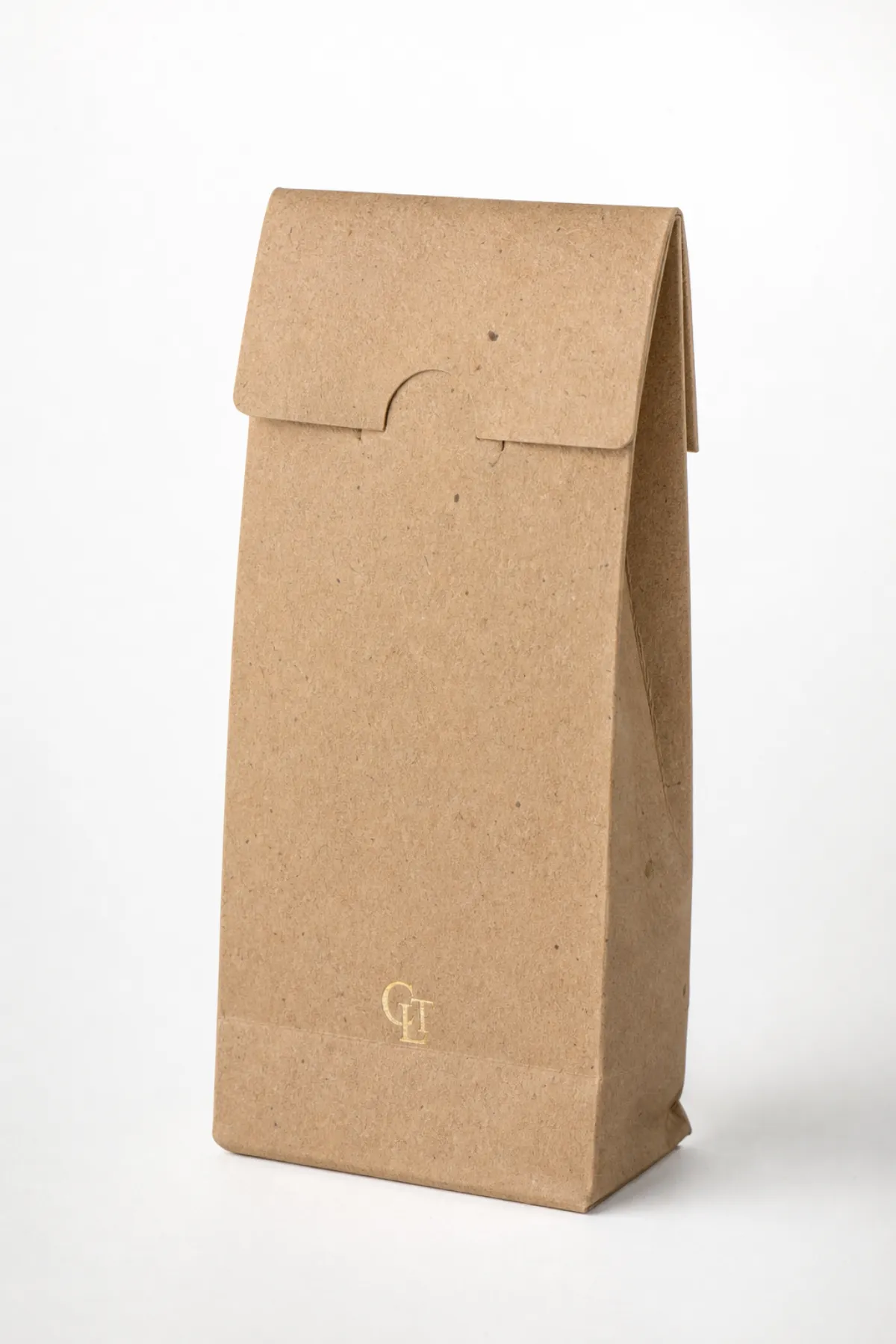
People judge packaging quickly. Painfully quickly, sometimes. A bag enters the scene before the product does, and that first reading can shape expectations about price, care, and polish. Branded hemp paper bags stand out because the material cues hit immediately: the texture looks natural, the tone usually runs softer than bright white paper, and the whole package suggests that the brand paid attention before the item was even lifted out.
Most hemp paper bags are built from paper stock containing hemp fiber blends or hemp-based content, then converted into retail carriers, gift bags, food-service bags, or event bags. In practice, the paper is selected, printed, cut, folded, glued, and fitted with handles. No mystery sits inside the process. It is mechanical, repeatable, and visible in every seam. The final object can still feel more deliberate than a standard kraft or plastic alternative, especially if the design works with the natural surface rather than fighting it.
Brands choose branded hemp paper bags for a few consistent reasons. The tactile surface can make a modest purchase feel more thoughtful. The muted, earthy look can support sustainability messaging without needing a speech at checkout. The bag also keeps working after the sale as a moving advertisement, a carry item seen in public, and sometimes a reuse item for storage. That second and third life matter. A bag reused three times is doing more marketing than one that hits the bin on the first walk out the door.
There is a buyer logic here too. Standard kraft can do the job, but it is familiar. Plastic can keep costs down, but it weakens the sustainability story. Branded hemp paper bags occupy a more specific middle ground: a premium-looking, natural carrier with enough distinction to justify a brand decision instead of a commodity purchase. That distinction only survives if the spec is honest. Paper that is too light, handles that are weak, or artwork that is too busy will flatten the premium feel fast.
If the bag feels flimsy in the hand, the brand feels flimsy too. Buyers notice that before the logo has a chance to speak.
Selectivity matters more than enthusiasm. Not every brand needs branded hemp paper bags. A high-volume discount retailer may care most about speed and cost. A luxury cosmetic label may care more about texture and a muted color field. A bakery may need grease resistance before it needs anything else. The packaging choice should follow the use case, not the mood board.
The strongest applications usually appear in boutiques, farm shops, wellness brands, gift retail, curated events, and premium food service. In each of those settings, the bag is part of the experience rather than a plain transport shell. For those brands, branded hemp paper bags are less a trend than a match: the carrier says the same thing the product says.
I once watched a small skincare brand swap from glossy white carry bags to a hemp-content paper bag with a single deep-green mark. Nothing else changed. Same product, same counter, same price point. Yet the checkout conversation changed almost immediately. Customers held the bag a little longer, and staff stopped apologizing for the packaging. That kind of shift is small on a spreadsheet and huge in the room.
How branded hemp paper bags are made and finished
Production begins with paper stock selection. That sounds ordinary, but it determines nearly everything else. A hemp-fiber blend may produce a visible natural texture and a tonal quality that differs from conventional kraft. Recycled-content paper can strengthen the environmental story yet show more variation in surface tone. Virgin pulp blends can improve consistency and printability, though some brands prefer more visible recycled or plant-based content. Branded hemp paper bags usually sit somewhere along that spectrum rather than at one extreme.
After the paper is chosen, the converting process starts. The material is cut to size, folded into bag form, glued at the seams, and reinforced where needed. Handles are attached next, by machine or by hand depending on volume and structure. If the bag is meant for heavier merchandise, the base and handle attachments matter far more than many buyers realize. A pretty bag with weak reinforcement is not premium; it is a failure waiting for weight.
Printing comes once the structure is set. Flexographic printing is common for larger runs because it handles repeat jobs efficiently and works well for simpler logos. Digital printing helps with shorter runs, tests, and artwork that changes from order to order. For branded hemp paper bags, the best option usually depends on quantity, artwork complexity, and how tightly the brand needs color to hold. Natural-fiber papers often suit one- or two-color graphics because the surface itself becomes part of the design language. That is not a limitation so much as a design decision.
Finish choices tend to stay restrained. Matte and uncoated surfaces let the material feel honest and tactile. Heavy coatings can undermine recyclability goals, so buyers often keep finishes light unless the bag needs extra scuff resistance or moisture protection. If the bag will carry food or travel through damp conditions, ask what barrier or coating is actually in place. Sustainability language gets slippery fast when performance layers are not disclosed clearly.
Here is a practical way to think through the design decisions:
- Bag size determines what the customer can carry without folding, sagging, or stressing the seams.
- Gusset depth affects both capacity and shelf presence.
- Base reinforcement matters for weight-bearing and upright display.
- Handle style changes grip comfort and the premium feel.
- Print coverage affects how visible the logo is against the natural paper tone.
Brand placement depends on the style. Some brands want a bold logo centered on the panel. Others prefer a quieter mark, a small emblem, a short line of copy, or a subtle deboss-style effect that uses texture instead of color. On branded hemp paper bags, restraint often reads more expensive than crowded artwork. Too much ink can fight the fiber look that made the bag appealing in the first place.
For sourcing standards, ask whether the paper chain has FSC documentation or comparable fiber traceability. If the bag supports a wider sustainability program, the paperwork matters almost as much as the finish. The FSC's chain-of-custody framework is a useful reference point for buyers who need their claims to stand up under scrutiny: FSC. For packaging design and recovery guidance, the Sustainable Packaging Coalition at Packaging.org is another practical industry reference.
Branded hemp paper bags are not made by magic. They are built through a series of decisions, and each one changes the look, the cost, and the performance in the real world.
Cost, pricing, and MOQ for branded hemp paper bags
Pricing is where many buyers get surprised, and not always in a pleasant way. Branded hemp paper bags are priced through a mix of material blend, bag dimensions, print complexity, handle type, finish, and quantity. Unit price can look high at low volume because fixed costs have to land somewhere. Plates, tooling, setup, proofs, and color matching do not shrink just because the order is small.
At a broad level, unit pricing usually falls as volume rises. That is true for most custom packaging. Branded hemp paper bags often start in a premium category, which makes the gap between a 500-piece order and a 5,000-piece order feel even steeper. A buyer testing a new store opening may pay a noticeably higher per-unit cost than a chain buyer who can commit to a larger run and repeat later.
MOQ, or minimum order quantity, changes by supplier. Some vendors accept smaller test runs to win a first order or support a launch. Others set a higher minimum because the production line is tuned for efficiency rather than experimentation. Neither approach is wrong. The better question is whether the MOQ fits your launch risk. If you need to test a style, a lower MOQ may be worth the higher unit cost. If the size and artwork are already settled, a larger run may save real money.
The main cost drivers are easy to list and easy to underestimate:
- Material blend: more specialized hemp content can push cost up.
- Size and gusset: larger bags use more stock and more labor.
- Print coverage: one-color logos are cheaper than full-panel graphics.
- Handle choice: rope, ribbon, or reinforced paper handles cost more than basic flat handles.
- Finish: coatings, lamination, or specialty inks add expense.
- Freight: bulky packaging can cost more to move than buyers expect.
For comparison, here is a practical pricing table buyers can use as a rough conversation starter. These are broad estimates only, and they change with region, specification, and order timing.
| Option | Typical MOQ | Indicative unit cost | Best fit | Main tradeoff |
|---|---|---|---|---|
| Stock hemp-look paper bag, no print | 250-500 | $0.35-$0.70 | Pop-ups, events, quick retail use | Limited brand control |
| Custom branded hemp paper bags, one-color logo | 1,000-3,000 | $0.28-$0.55 | Boutiques, gift shops, wellness retail | Setup fees still matter |
| Custom branded hemp paper bags with reinforced handles and full-panel print | 3,000-10,000 | $0.55-$1.20 | Luxury retail, premium gifting, seasonal campaigns | Higher unit cost and longer lead time |
Two buyers can receive wildly different quotes and both can be accurate. One may be comparing a 120 gsm stock bag with a simple logo. The other may be asking for a custom size, a heavier board, and a reinforced handle. That is why quote comparisons need to rest on the same spec sheet. Otherwise, the comparison turns into apples against a fruit basket, and the cheapest number wins for the wrong reason.
Hidden costs deserve attention too. Sample charges can apply. Proofing can take time. Rush fees are common if artwork arrives late. Freight may be separate, or it may be bundled in a way that makes the unit price look better than the landed cost. Storage can matter if the bags arrive before the launch date. For a packaging budget, the real number is the landed cost, not the headline unit price.
Buyers who want branded hemp paper bags to feel premium should ask about color count and plate costs. A one-color logo may be inexpensive to set up, but each extra color can raise the cost in a way that surprises teams used to digital collateral. If the design can be simplified without losing impact, the budget usually benefits.
The cleanest way to manage price is to build the spec from the use case outward. If the bag has to carry a 1 kg candle and travel by courier, do not spec it like a pastry bag. If it is for an in-store gift handoff, do not overbuild it like a shipping carton. Branded hemp paper bags perform best when the engineering matches the actual job.
Process and turnaround: from brief to delivery
The timeline starts earlier than many buyers expect. Before a supplier can quote branded hemp paper bags properly, they usually need bag dimensions, quantity, artwork files, target color count, sustainability requirements, and the final delivery date. If any of those inputs are vague, the quote becomes a placeholder rather than a plan.
Proofing is the first real checkpoint. A digital mockup shows placement, scale, and basic artwork fit. A material sample shows tone, texture, and handle feel. A physical prototype or pre-production sample is even better if the bag is custom or the load is heavy. Skipping that stage can cost you later, because a logo that looks balanced on screen may sit too high on a folded panel or disappear into a paper texture that absorbs more ink than expected.
Turnaround depends on complexity. Simple stock bags can move quickly. Custom branded hemp paper bags with specialty inks, structural reinforcements, or unusual dimensions need more lead time because every extra variable creates another delay point. If you need a short-run launch for an event or seasonal drop, ask for the fastest realistic schedule, not the optimistic one.
A typical sequence looks like this:
- Brand brief and quantity estimate.
- Quote based on a defined spec.
- Artwork submission and dieline check.
- Digital proof and revisions.
- Sample approval if required.
- Production.
- Packing, freight booking, and delivery.
That sequence sounds straightforward, but each step can stretch if the brief is incomplete. A brand color not defined in Pantone or another clear reference can trigger another round of revisions. A logo supplied only as a JPEG can slow proofing because the file is not ideal for print. A late change to handle style can alter the schedule even if the artwork has already been approved.
For buyers who ship branded hemp paper bags alongside other packaging components, logistics matter just as much as print. If the bags are going into e-commerce parcels, ask whether the supply chain has been tested against common transit conditions such as drop, vibration, or compression. ISTA test methods are often used as a reference point for this kind of planning. The bag is not a carton, but the same discipline applies: it should survive the route it is expected to take.
One detail that often gets ignored is delivery buffer. A supplier quote is not a guaranteed arrival date. Weather, customs, port congestion, warehouse delays, or artwork revisions can all shift the schedule. If your store opening or event date is fixed, build in slack. A week of buffer can feel unnecessary right up until the week you need it.
The smartest branded hemp paper bags projects treat production as a series of approvals rather than a single purchase order. That mindset reduces last-minute panic and gives the packaging team room to correct issues before they become expensive.
Key factors that affect performance and branding
Strength is the first test. A beautiful bag that fails under load will not earn repeat use, and repeat use is one of the quiet advantages of branded hemp paper bags. Paper weight, fiber blend, gusset depth, and handle attachment all influence whether the bag can handle daily retail activity or only light gifting. If the bag is meant for bottles, candles, boxed goods, or heavier merchandise, ask for a load guideline and do not assume the material name tells the whole story.
Print visibility is the second test. Natural fibers can soften color vibrancy, which can be an advantage or a drawback depending on the brand. Earth-toned labels, wellness products, and artisan goods often benefit from that softer look. Brands that depend on exact color matching, high-contrast graphics, or glossy visual impact may need to adjust expectations. On branded hemp paper bags, the substrate is part of the palette.
Tactile branding matters more than teams sometimes admit. Texture can communicate premium, handmade, authentic, or eco-aware in a way that a flat white bag cannot. The texture still has to fit the product category. A rough, uncoated finish can feel right for an organic cafe and wrong for a luxury fragrance counter. The bag should support the purchase price, not create a mismatch.
Durability and moisture resistance are practical concerns, especially for food service, wellness, and ecommerce. If a customer might carry the bag through rain, a damp car boot, or a kitchen spill, ask what the finish actually does. Some bags tolerate a bit of moisture. Others do not. If a barrier layer is needed, be clear about how it affects recyclability or compostability claims. Those claims are easy to mishandle and hard to undo.
There is also a broader customer-journey issue. The bag is not separate from the product. It shapes shelf display, checkout feel, transport, and the memory of the purchase. That is why branded hemp paper bags work best when the design echoes the brand's tone instead of trying to outshine the item inside. A good carrier adds context. It does not steal the scene.
The most effective packaging usually shows disciplined restraint. It says enough to be memorable, but not so much that the product gets buried under its own wrapping.
One useful trick is to test the bag under real lighting. A natural-fiber surface may look warm in a design file and dull under store LEDs. A logo that appears crisp on screen may soften at the edges once printed on textured stock. That is not a defect by itself; it is a reminder that branded hemp paper bags are physical objects, not digital proofs.
For that reason, buyers should compare samples side by side whenever possible. Put a plain kraft bag next to a hemp-blend bag. Put a full-coverage print next to a one-color mark. Put a flat-handle version next to a rope or rope-look handle. The differences are obvious when you hold them, and those differences often matter more than the quote.
Common mistakes when ordering branded hemp paper bags
The biggest mistake is choosing by appearance alone. A sample can look excellent in a showroom or on a white background and still fail the actual job. If the handle is wrong, the base is weak, or the paper is too light for the product weight, the bag will disappoint the first time it is used. For branded hemp paper bags, aesthetics are necessary but not sufficient.
Artwork prep is the second trap. Low-resolution logos, unapproved color palettes, and layouts that crowd the panel can make an otherwise premium carrier look rushed. Natural-fiber stock is forgiving in some ways and unforgiving in others. It can hide small irregularities, yet it can also make poor artwork look less controlled. If the design is not clean before it reaches the printer, the final result probably will not rescue it.
Skipping a sample test is another expensive habit. A proper sample tells you more than a rendering ever will. It shows fold quality, print clarity, handle strength, and how the bag feels once weighted. If the supplier offers a sample or pre-production proof, use it. The cost of a sample is usually small compared with the cost of a full run that misses the mark.
Sustainability claims can also become a problem if they are too broad. Do not assume that a bag is recyclable, compostable, or certified just because it includes hemp fiber. Ask for the actual material composition, the recovery guidance, and the documentation that supports the claim. If the supplier cannot explain the claim clearly, do not put it on the packaging. Branded hemp paper bags should make the sustainability story clearer, not riskier.
There is a planning mistake that shows up constantly: the team forgets the shipping buffer. A launch date gets set, the design gets approved late, and suddenly the bag has to travel faster than the budget or route can support. Rush production can be possible, but it usually costs more and leaves less room for mistakes. That is a bad trade unless the event truly cannot move.
Here are the warning signs I watch for in buyer requests:
- The brief says "premium" but never defines weight, size, or use case.
- The logo file is a screenshot instead of a vector file.
- The quote omits freight, proofing, or sample costs.
- The team wants a sustainability claim without asking for documentation.
- The launch date has no buffer at all.
One more point: not every supplier defines branded hemp paper bags the same way. Some are selling hemp-content paper. Others are selling a hemp-inspired aesthetic with blended fibers and natural finishes. That distinction matters. Ask for the fiber breakdown, the paper weight, and the handle construction before you compare offers. Otherwise, the lowest quote may simply be the lightest spec.
Expert tips and next steps for branded hemp paper bags
Start with the use case, not the logo. That sounds obvious, but it separates a bag that performs from a bag that merely exists. Define what the bag must carry, how long it needs to last, whether it will be reused, and where it will be seen. Once those answers are clear, branded hemp paper bags become much easier to spec because the material, structure, and print method all have a job to do.
Ask for side-by-side samples whenever possible. Compare different paper weights. Compare handle styles. Compare a plain natural finish with a printed version in store lighting, not just on a desktop monitor. A 120 gsm bag and a 160 gsm bag can look similar on paper but feel very different in the hand. That difference often decides whether a customer reuses the bag or tosses it.
Keep the artwork disciplined. A single strong logo treatment frequently outperforms a crowded design on natural-fiber stock. If the bag already has a tactile, earthy look, it does not need visual clutter. For branded hemp paper bags, clarity usually beats decoration. Think of the bag as a frame for the brand, not a billboard trying to fill every millimeter.
Build a supplier checklist before you place the order:
- Price and what is included.
- MOQ and whether it can be adjusted.
- Sample policy and proofing schedule.
- Lead time and whether it includes revisions.
- Freight method and delivery window.
- Sustainability documentation for fiber content and claims.
That checklist protects the project from ambiguity. It also makes supplier comparisons fair. A quote that looks cheap may be missing freight, sample approval, or a handle reinforcement upgrade. Another quote may look expensive but include all of those items. The details tell the real story.
One more practical move: request two quotes on the same spec, then order one sample round before committing to the full volume. That approach slows the project by a little and saves far more if the first spec needs adjustment. It also reduces the risk of discovering too late that the bag is either too weak, too plain, or too expensive for its purpose. For brands building a more responsible packaging story, that extra step is usually worth it.
Bottom line: branded hemp paper bags make sense when the load, the print, and the timeline all line up. They can elevate a retail handoff, support a sustainability narrative, and extend brand visibility beyond the sale, but only if the spec is realistic. Choose the Right material, test the structure, and confirm the documentation, and branded hemp paper bags will do real work for the brand instead of just looking good for a moment. If the choice is still between a prettier sample and a stronger spec, pick the one that survives the customer's first walk to the car. That is the one that earns its keep.
What makes branded hemp paper bags different from standard kraft bags?
They often have a more distinctive fiber texture and a more intentional natural look than typical kraft. That can make them feel more premium at checkout, especially for brands that want the packaging to signal sustainability without looking generic. The real difference depends on the fiber blend, paper weight, and bag construction, not just the label on the spec sheet.
Are branded hemp paper bags strong enough for retail products?
Yes, if the size, paper weight, handle style, and base reinforcement match the product weight. A light gift bag and a bag for boxed candles are not the same thing. For heavier items, ask for load guidance and test a sample before placing the full order. The material name alone does not guarantee performance.
How much do branded hemp paper bags usually cost?
Cost depends on quantity, dimensions, print complexity, handle type, and whether the order is stock or fully custom. Small runs usually cost more per unit because setup and proofing are spread across fewer bags. The cleanest comparison is to ask for quotes on the same spec sheet, then compare landed cost instead of just the headline unit price.
What is the typical lead time for branded hemp paper bags?
Lead time changes with custom size, print method, artwork revisions, and current production capacity. Simple orders can move faster than custom projects with specialty finishes or reinforced structures. Build in extra time for proofs, sample approval, freight booking, and any last-minute artwork changes so the launch date does not get squeezed.
What files do I need to order branded hemp paper bags?
Vector artwork is usually best because it keeps logos sharp at print scale. It also helps to provide brand colors, safe zones, and any dieline or template files the supplier requests. Clean files reduce proofing delays and lower the chance of expensive changes after production has already started.


