Buyer Fit Snapshot
| Best fit | Branded Mailer Bag MOQ Order projects where brand print, material claims, artwork control, MOQ, and repeat-order consistency need to be specified before quoting. |
|---|---|
| Quote inputs | Share finished size, material target, print colors, finish, packing count, annual reorder estimate, ship-to region, and any compliance wording. |
| Proofing check | Approve dieline scale, logo placement, barcode or warning zones, color tolerance, closure strength, and carton packing before bulk production. |
| Main risk | Vague material claims, crowded artwork, missing packing details, or unclear freight terms can make a low unit price expensive after revisions. |
Fast answer: Branded Mailer Bag MOQ Order: Pricing, Specs, Process should be specified like a repeatable production item. The safest quote records material, print method, finish, artwork proof, packing count, and reorder notes in one written spec.
Production checks before approval
Compare the actual filled-product size with the drawing, then confirm tolerance on folds, seals, hang holes, label areas, and retail display edges. Reserve space for logos, QR codes, warning copy, and material claims before decorative graphics fill the panel.
Quote comparison points
Review material grade, print process, finish, sampling route, tooling charges, carton quantity, and freight assumptions side by side. A quote is only useful when the supplier can repeat the same color, closure quality, and packing count on the next order.
Branded Mailer Bag MOQ Order: Pricing, Specs, Process
A branded mailer bag MOQ order is not just a packaging purchase. It is a tradeoff between cost, damage risk, storage space, and how your brand appears before anyone touches the product. A slightly higher unit price can still make sense if it reduces reships, raises perceived value, or keeps you from tying up cash in a pile of boxes nobody is ready to use.
For apparel, accessories, subscription goods, cosmetics, supplements, and other lightweight retail items, the outer mailer is often the first physical brand touchpoint. That makes the brief more technical than decorative. Size, film thickness, print coverage, closure type, and MOQ all affect the final cost in ways a plain packaging buy usually does not. If you are still comparing formats, our Custom Poly Mailers page is a useful starting point because it shows how a simple spec can keep unit cost under control while still giving you brand presence.
Buyers fall into the same trap all the time. They choose the cheapest plain mailer, then spend the savings on repacking, damage claims, and inconsistent presentation. That is a very efficient way to waste money while feeling disciplined about it. A better approach is to treat the bag as part of the shipping system. The point is not to pay for decoration. The point is to match quantity, material, and print method to the actual shipping profile so your MOQ works with cash flow instead of fighting it.
Why a Branded Mailer Bag MOQ Order Can Beat Cheap Generic Packaging
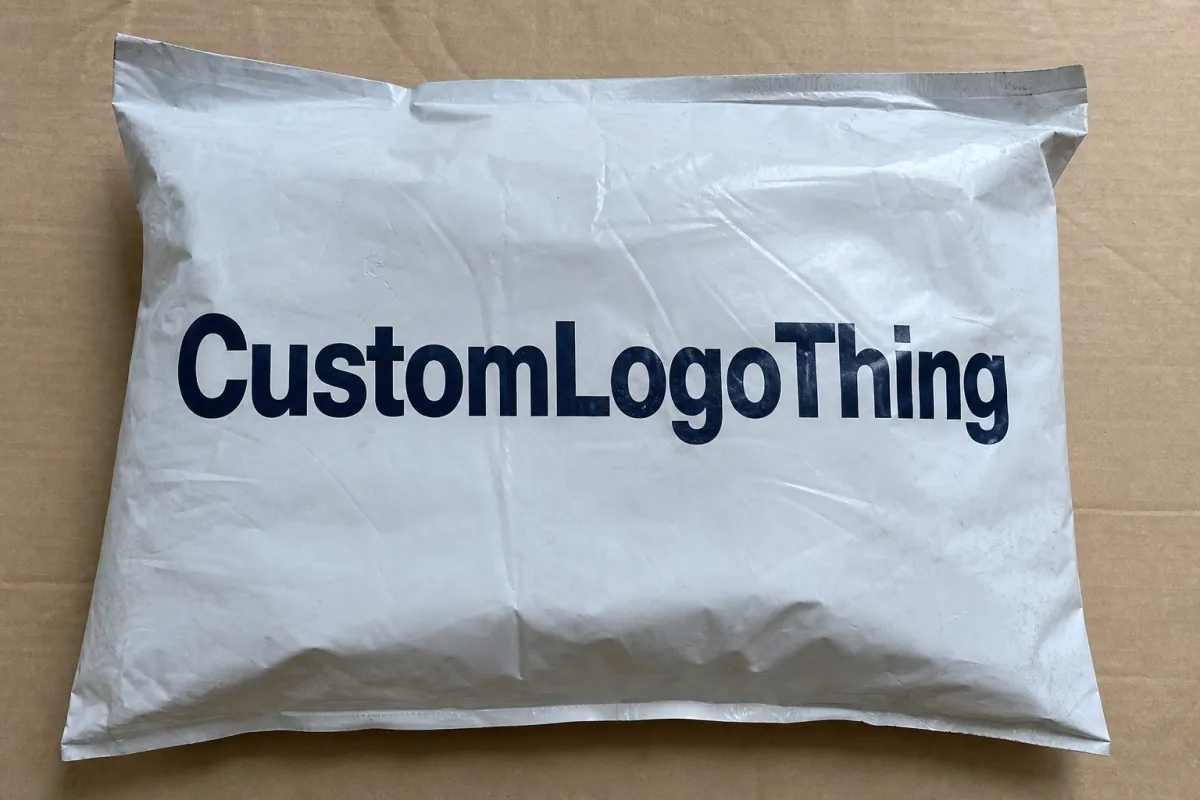
Packaging changes how value feels before the product is even opened. A plain white or clear mailer may look cheaper on a spreadsheet, but it can also make the shipment feel less intentional. That matters more than many buyers admit. The outer bag is not background noise. It is the first brand cue in the delivery.
From a packaging buyer's point of view, the real choice is rarely between "nice" and "basic." It is between a modest packaging spend and the chance to protect margin through fewer damage claims, stronger repeat purchase behavior, and a cleaner unboxing experience. If a branded bag lifts perceived value by making the shipment feel consistent and professional, it earns its place in the budget without needing marketing theatre.
MOQ planning is what separates a smart order from an expensive one. Order too little and the per-unit price climbs because setup charges and tooling fees get spread across fewer bags. Order too much and you lock cash into inventory that may sit for months. Neither option is clever. The sweet spot usually sits where forecast demand, storage space, and pricing tiers meet.
The cheapest quote is not always the lowest landed cost. A slightly better-built bag can reduce void-fill, protect the product in transit, and lower the odds of a second shipment. One avoided reshipment can wipe out the price gap across dozens of bags. That is why branded mailer bags work best as a transaction tool, not a vanity add-on.
There is also a repeatability angle. If you ship every week, a generic mailer creates variation. A branded bag gives you a consistent presentation. That consistency matters across seasonal launches, wholesale replenishment, and subscription deliveries, where the customer sees the packaging more often than the ad that got them there.
A mailer bag should earn its place by doing the job: protect the shipment, fit the product, and support the brand without wasting money on features the order does not need.
If you want a reference point for how packaging choices connect to repeat buying and production planning, our Case Studies page is useful. It shows how different briefs change the spec, the quantity, and the finished result.
Mailer Bag Product Options That Affect Your Order
Buyers usually start by comparing five formats: poly mailers, paper mailers, compostable mailers, padded mailers, and specialty courier bags. Each has its own cost structure, print behavior, and handling profile. The right choice depends on what is inside the bag, how far it ships, and how much presentation matters at the doorstep.
| Mailer Type | Best For | Typical MOQ / Unit Cost Snapshot | Buying Notes |
|---|---|---|---|
| Poly mailers | Apparel, soft goods, lightweight retail items | Often 1,000-5,000 pcs; roughly $0.10-$0.28 per unit at mid-volume | Lowest cost per piece, strong print area, good moisture resistance |
| Paper mailers | Brands that want a paper-forward look and easier material sorting | Often 1,000-5,000 pcs; roughly $0.22-$0.48 per unit | Good for FSC-based sourcing; usually stiffer, less stretch, more premium feel |
| Compostable mailers | Eco-positioned brands and lower-weight items | Often 2,000-10,000 pcs; roughly $0.24-$0.55 per unit | Check the claim carefully; many films need industrial composting conditions, and documentation should match the market you sell into |
| Padded mailers | Cosmetics, accessories, small electronics, fragile kits | Often 1,000-5,000 pcs; roughly $0.30-$0.70 per unit | Higher protection, more material, useful where breakage or scuffing is a concern |
| Specialty courier bags | Returns, multi-stop distribution, operational shipments | Often 2,000-10,000 pcs; roughly $0.18-$0.40 per unit | Useful for tamper evidence, document pockets, or operational handling needs |
That table is the starting point, not the answer. A beauty brand may choose paper because the tactile feel supports the product story. A fast-moving apparel label may choose poly because the bag needs to stay light, print cleanly, and keep bulk pricing favorable. The better choice is usually the one that fits the item, the route, and the expected claim rate.
Closure style matters too. Standard adhesive seals are common because they are quick to pack and keep the finish neat. Tamper-evident strips add confidence for higher-value shipments. Tear strips matter when the customer experience depends on easy opening. Gusseted builds create extra room for thicker products or inserts. A narrow, flat mailer can look efficient on paper and then fail at packing time if the insert stack is too thick.
Print method changes the economics as well. Single-color branding is usually the easiest way to keep setup costs down. Multi-color or full-coverage designs improve shelf and doorstep presence, but they can raise the quote through extra plates, setup charges, or longer proofing. Matte and gloss finishes also affect feel and legibility. Matte usually looks more restrained and premium. Gloss can make color feel stronger, though fingerprints and glare may be more visible.
Use case should decide the format before the artwork gets too far ahead. Apparel can often ship in a lighter poly mailer without issue. Cosmetics and supplements may need a sturdier build to avoid corners telegraphing through the surface. Subscription boxes may need a more polished outer layer because the outer bag becomes part of the monthly ritual. If you are weighing a few of these options, the Wholesale Programs page can help frame what recurring purchases look like in practice.
For buyers who want a structured way to think about parcel durability, the ISTA test family is a practical reference point. It does not replace a supplier quote, and it does not guarantee success in every network, but it gives you a common language for vibration, drop exposure, and compression.
Specifications for a Branded Mailer Bag Order
The fastest way to get an accurate quote is to define the bag clearly before asking for pricing. Suppliers can work from a rough brief, but unclear specs create revisions, delays, and quote noise. A solid branded mailer bag MOQ order starts with six items:
- Size - internal dimensions, not just the product width
- Material thickness - film gauge for poly, gsm for paper, or the equivalent build spec
- Print colors - one color, two colors, or full-coverage artwork
- Bag style - flat, gusseted, padded, courier, or specialty closure
- Adhesive type - standard seal, permanent seal, or tamper-evident strip
- Shipping destination - freight cost changes with lane, volume, and delivery region
Size is more nuanced than many first-time buyers expect. Product dimensions alone are not enough. Folding, inserts, labels, tissue, and the clearance needed for the seal all matter. A hoodie in a folded stack behaves differently from a flat garment card. A cosmetic kit with a brochure and insert card may need more headroom than the product dimensions suggest. If the bag is too tight, packing slows down. If it is too large, the shipment can look loose and less controlled.
Artwork is another place where detail saves time. Vector files are preferred because they scale cleanly for print plates or digital preparation. If the logo must sit in a specific zone, note that clearly. If colors are brand-critical, provide Pantone references or another fixed standard instead of trusting screen appearance. Ask for the dieline early if you need to check logo placement against folds, seals, or tear strips. A supplier cannot approve a design that has not been mapped to the real bag geometry.
File preparation should be specific. Confirm whether the supplier wants PDF, AI, EPS, or another format. Ask for bleed requirements, safe zones, and any limits on gradients, fine lines, or reverse type. Small text can disappear on flexible packaging. Thin lines can break up on films or textured paper. A careful proof avoids the common revision cycle where the design looks fine on screen and then loses clarity in print.
Performance and compliance details matter whenever the bag carries a claim. If you are describing recyclability, compostability, or recycled content, make sure the supplier can document the claim. If paper is part of the strategy, ask whether the material is sourced to FSC requirements or another recognized chain-of-custody program. If the packaging must survive parcel distribution, ask what transit or drop testing was used. Some teams reference ISTA procedures such as parcel testing, which helps because it gives the discussion a concrete standard instead of a vague promise.
Moisture resistance and puncture resistance should not be treated as marketing copy. They are practical traits. A poly bag may handle damp conditions better than paper, but paper can still be the right answer if the item is light and the brand wants a paper-forward presentation. A padded mailer can reduce surface damage, but it also adds cost and thickness. The right answer depends on what fails first in shipping: scuffing, bending, moisture, or impact.
For teams that need the bag to carry a sustainability message, documentation is not optional. Ask what can be supported in writing and what cannot. That is the difference between a useful packaging claim and a risky one. The EPA's recycling guidance is a good reminder that end-of-life language should reflect actual collection and recovery conditions, not wishful thinking.
Cost, Pricing, MOQ, and Quote Drivers
The main pricing variables are easy to list and easy to underestimate. Material choice, print complexity, size, order quantity, setup charges, tooling fees, and whether the design uses one side or multiple print panels all affect the final quote. Freight matters too. Taxes matter too. A buyer who looks only at the headline unit price can miss the real cost of the order.
MOQ works the same way across many packaging categories: lower quantities usually cost more per unit because fixed production costs are spread across fewer bags. Larger runs reduce cost per piece, but they also create more inventory to store and manage. The sweet spot is rarely the biggest discount. It is the quantity where the lower unit cost still fits your usage rate and warehouse capacity.
Here is a practical way to think about tiered pricing for a branded mailer bag MOQ order:
- Small test run - useful for a launch, but the unit price is usually highest because setup costs are not diluted
- Mid-volume run - often the best balance of cash outlay and unit cost for growing brands
- Higher-volume run - best for stable SKUs with reliable reorder patterns and enough storage space
For many buyers, the real question is not "Can I afford the bag?" It is "At what quantity does the next price break justify the extra inventory?" That is why tiered quotes matter. If a supplier gives you pricing at 1,000, 3,000, 5,000, and 10,000 units, you can see where the savings begin to flatten. Sometimes the jump from 3,000 to 5,000 units is worth it. Sometimes it is not. The answer depends on monthly throughput, not theory.
Setup charges deserve attention. Some suppliers fold them into the unit price. Others itemize them. Both approaches can be honest, but you need to know which one you are comparing. The same goes for tooling fees. A quote with low unit pricing can become expensive if the plates, setup, prepress, or sampling are charged separately. Ask for the landed total before you approve anything.
A simple budget model helps. If a branded mailer costs $0.18 per unit at 5,000 pieces and a plain mailer costs $0.11, the difference is $350 before freight and tax. That may look like a clean cost increase. But if the branded option cuts one reshipment cycle, supports stronger repeat purchase perception, or removes the need for a second label application, the delta is easier to justify. The packaging line item is only one part of order economics.
The better question is not "What is the cheapest option?" It is "What is the lowest-cost option that still protects the product and supports the brand?" That is a more grounded buying standard, and it usually leads to better long-term results.
If you want the quote to reflect actual supply chain cost rather than just product cost, ask for:
- Material spec and print spec on the same line
- Any tooling fees or setup charges listed separately
- Freight estimate to your delivery postcode
- Lead time by step, not one blended number
- Pricing at more than one quantity tier
Process and Timeline: From Quote to Delivery
A clean process reduces surprises. The order path is usually straightforward, but delays tend to show up in the same places every time. The basic sequence is:
- Inquiry - you send size, quantity, artwork, and delivery details
- Spec confirmation - the supplier checks material, print, and bag construction
- Artwork review - files are checked for bleed, resolution, and placement
- Proof approval - you confirm the layout before production begins
- Production - the bags are printed, finished, and inspected
- Quality check - cartons, print, seals, and counts are verified
- Packing and shipment - the order is prepared for transit
Delays usually happen because artwork is incomplete, the color count was not specified, or the buyer changes quantity after the proof is issued. Each of those problems is fixable, but each one also adds time. If the order is time-sensitive, it is smarter to clear them early than to rush a proof at the end of the schedule.
Lead time should be broken into three parts. First is proof turnaround, which often takes one to three business days if the brief is complete. Second is production time, which can range from about 10 to 20 business days for many standard orders, depending on complexity and quantity. Third is transit time, which depends on shipping method and destination. A domestic shipment may arrive in a few business days. Cross-border freight can take longer and may involve customs or brokerage steps.
That split matters because buyers often hear one number and assume it includes everything. It usually does not. Production might be fast while freight is slow. Or the proof might take longer because the artwork needs adjustment. Ask where the schedule starts and where it ends.
For urgent launches, a practical planning window is four to six weeks from first brief to arrival. For a first-time branded order, six to eight weeks is safer because the artwork review and proofing stage tends to be more active. Seasonal promotions need even more buffer, especially if the order has to arrive before a sales peak. A purchase that lands late is not a bargain, no matter how attractive the unit cost looked on approval day.
Sampling can save time later. If the bag is for a new line or a high-value campaign, ask for a sample or a dieline review before full approval. That extra step can prevent costly changes after production starts. A sample also helps stakeholders judge the real surface, not just the screen rendering. Paper texture, film gloss, seal behavior, and print tone are easier to judge in hand.
If you are comparing order paths across products, our FAQ page is a useful companion resource because it covers common packaging questions that come up before proof approval.
Why Choose Us for Branded Mailer Bag Orders
The value proposition should be plain. Buyers want packaging expertise, clear quoting, responsive proofing, and support across small and mid-sized MOQ runs. They also want a supplier who can explain tradeoffs in direct terms. That is the difference between a quote that looks attractive and an order That Actually Works in production.
Quality control is a commercial advantage, not a buzzword. A mailer bag must look the same from the first carton to the last. If the print drifts, the seal fails, or the dimensions vary too much, the packing team feels it immediately. Consistency matters even more for recurring shipments, because each inconsistency compounds over time. A branded bag is supposed to make the operation easier to trust, not harder to manage.
Consultation also reduces waste. A supplier that understands packaging can help match material, print method, and order quantity to the actual shipping profile instead of overspecifying the bag. That can cut unnecessary weight, lower freight exposure, and keep the order from drifting into features that do not support the product. From a procurement angle, this is where the savings live: not in dramatic promises, but in avoiding excess.
If your buying pattern includes repeat replenishment, structured Wholesale Programs can be helpful because the reorder logic becomes easier to manage. You know the spec, the quantity band, and the expected timing. That makes planning cleaner for finance, operations, and fulfillment.
There is also a practical service benefit. Faster answers, fewer production surprises, and a smoother path from branded concept to repeatable packaging supply all matter more than flashy language. A supplier should help you get to a usable order, not just a pretty mockup. That is especially true for buyers balancing budget pressure with presentation requirements.
For many brands, the winning formula is simple: clear spec, realistic quantity, and a quote that breaks out the real costs. When those pieces are visible, decision-making gets much easier. The order stops feeling like guesswork and starts looking like a process.
That is where Custom Logo Things can add value. The work is not about pushing the most expensive option. It is about finding a mailer that fits the product, the timetable, and the budget without hidden friction.
Next Steps to Place a Branded Mailer Bag MOQ Order
If you are ready to move, gather the essentials before asking for a quote. That makes the answer faster and more accurate. The best packaging briefs usually include the same core details every time:
- Bag size or product dimensions
- Target quantity and one or two alternate tiers
- Artwork files and brand color references
- Print count and any special placement notes
- Delivery postcode or destination country
- Launch date or required-in-hand date
Once you have the basics, compare at least two quantity tiers. A lower unit cost might justify a larger order, but only if the added stock fits your usage pattern. If monthly shipments are steady, a higher MOQ may make sense. If demand is still being tested, a smaller run may be the smarter call even if the unit price is a bit higher. Cash flow usually wins over theoretical savings.
Ask for a sample or a dieline review if the bag is new, if the product is high value, or if the design includes tight logo placement. A quick check at the proof stage can prevent a costly mistake later. You want confidence in the bag before the production line starts.
Then move in sequence: submit the specs, confirm the proof, approve the production schedule, and release the order. That is the cleanest way to place a branded mailer bag MOQ order that matches budget and timeline. If you want to review product fit before you send artwork, our Case Studies page can help you compare real packaging choices, and our FAQ page covers the common pre-order questions that slow buyers down.
The best results usually come from practical decisions, not dramatic ones. Choose the bag that protects the shipment, supports the brand, and keeps unit cost honest. Approve the proof carefully. Buy at a quantity that fits demand. That is how a branded mailer bag MOQ order turns into a clean, repeatable packaging supply rather than a one-time guess.
FAQ
What is the usual MOQ for a branded mailer bag order?
MOQ varies by material, print method, and bag size, but it is usually set to cover production setup and keep unit pricing workable. In many cases, suppliers quote starting points around 1,000 to 5,000 pieces for standard formats, with lower or higher thresholds depending on the build. Ask for pricing at several quantities so you can see the breakpoints between a test run and a lower-cost repeat order.
Can I order different sizes in one branded mailer bag MOQ order?
Often yes, but each size may be treated as a separate line item with its own setup and MOQ requirement. That means the total project can be approved together while the pricing still reflects each individual size. If you need mixed sizes, Request a Quote that shows each one clearly so you can compare total spend, unit cost, and the likely storage burden.
How do I prepare artwork for a branded mailer bag quote?
Send vector artwork when possible, along with brand colors, logo placement notes, and any text that must appear on the bag. Confirm whether the supplier needs a dieline, bleed margin, and preferred file format before proofing starts. The faster the artwork is cleaned up, the faster the quote can move into proof approval and production.
How long does production usually take after approval?
Lead time depends on order complexity, material availability, and quantity, but production usually begins after proof approval and payment confirmation. Many standard orders need about 10 to 20 business days for production, plus transit time. Allow extra time for first-time orders because artwork review, sampling, and shipping can each add another step to the schedule.
What lowers the cost per unit on a branded mailer bag MOQ order?
Higher quantity, simpler print setups, fewer colors, and standard bag sizes usually lower the unit cost. Comparing quotes with the same specifications is the best way to see where the real savings come from. If one quote looks cheaper, check whether tooling fees, setup charges, freight, or sampling were included before you compare it to another supplier.


