Buyer Fit Snapshot
| Best fit | Custom Archive Boxes Wholesale projects where brand print, material claims, artwork control, MOQ, and repeat-order consistency need to be specified before quoting. |
|---|---|
| Quote inputs | Share finished size, material target, print colors, finish, packing count, annual reorder estimate, ship-to region, and any compliance wording. |
| Proofing check | Approve dieline scale, logo placement, barcode or warning zones, color tolerance, closure strength, and carton packing before bulk production. |
| Main risk | Vague material claims, crowded artwork, missing packing details, or unclear freight terms can make a low unit price expensive after revisions. |
Fast answer: Custom Archive Boxes Wholesale: Pricing, Specs, Process should be specified like a repeatable production item. The safest quote records material, print method, finish, artwork proof, packing count, and reorder notes in one written spec.
Production checks before approval
Compare the actual filled-product size with the drawing, then confirm tolerance on folds, seals, hang holes, label areas, and retail display edges. Reserve space for logos, QR codes, warning copy, and material claims before decorative graphics fill the panel.
Quote comparison points
Review material grade, print process, finish, sampling route, tooling charges, carton quantity, and freight assumptions side by side. A quote is only useful when the supplier can repeat the same color, closure quality, and packing count on the next order.
custom archive boxes wholesale makes sense when records need to stay organized, protected, and easy to retrieve later instead of getting stuffed into random cartons or stacked in cabinets that were never meant for long-term storage. Bad archive storage fails quietly at first. Then it starts wasting labor, damaging files, and creating the kind of small operational mess that spreads across an entire department.
For office moves, retention archives, warehouse file storage, and interdepartment transfers, the box decision should be driven by fit, labeling, stacking behavior, and reorder consistency before anyone gets distracted by the lowest unit price. That is not an exciting answer. It is the correct one.
If a team spends even 2 minutes fixing a label, shifting contents, or re-stacking one box out of every ten, the labor cost climbs fast. At 100 boxes, that adds up to more than 3 hours of avoidable work. At 500 boxes, it becomes a project people remember for the wrong reasons. Buyers comparing Custom Packaging Products and Wholesale Programs usually land on a standard archive box program because consistency beats patchwork sourcing every time.
Why Custom Archive Boxes Wholesale Pays Off in Real Operations
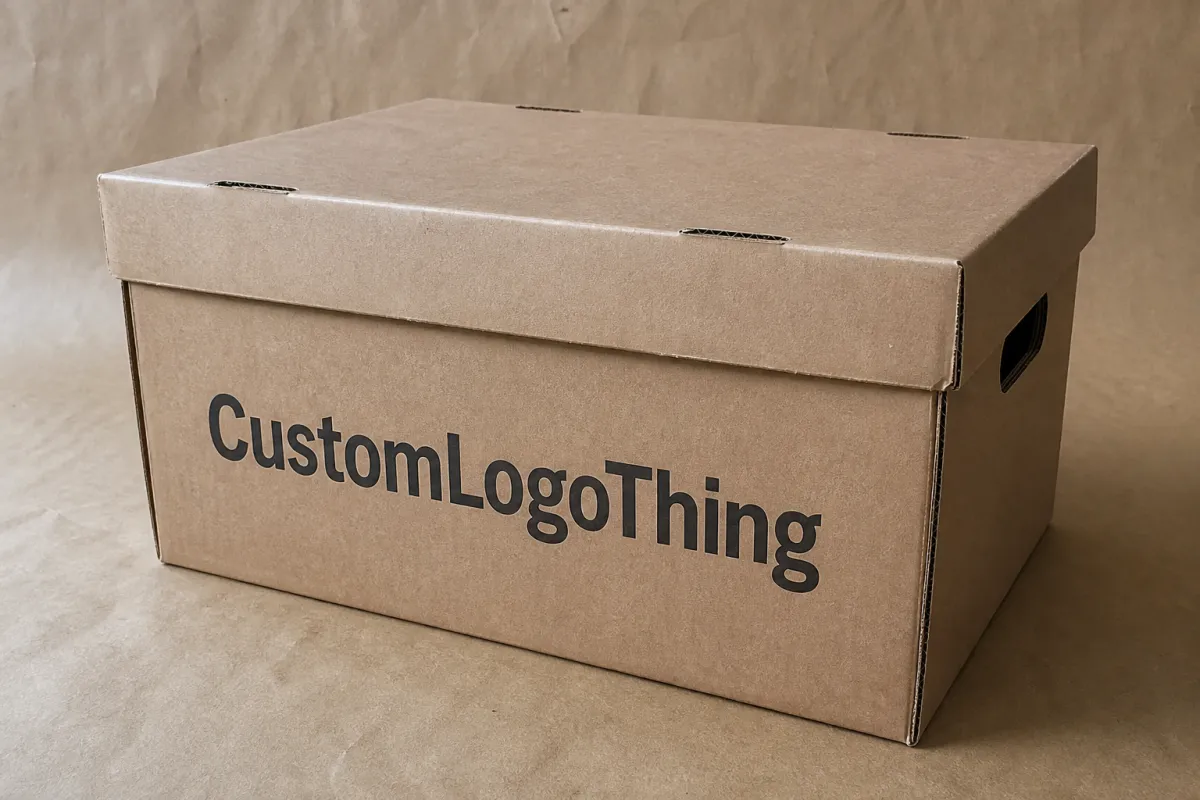
Archive storage is really a cost problem wearing a filing label. The box has to do more than hold paper. It needs to stack cleanly, fit the shelf, survive repeated handling, accept labels that stay readable, and keep contents from shifting during storage or transit. Wholesale buying matters because the box can be built around the way the operation actually works. With custom archive boxes wholesale, the dimensions, print layout, closure style, and board strength can be matched to the job instead of guessed.
Retail cartons and random office boxes look inexpensive until they start slowing everything down. One box is a little too wide for the shelf. Another lid bows after a few fills. A third refuses to hold a barcode label without peeling at the seam, so staff tape over it and move on. Those are small failures. They still show up every week in retrieval time and shelf clutter.
A controlled wholesale program gives the buyer consistency across departments, sites, and reorders. That means cleaner shelving, better inventory control, and fewer minutes lost hunting for the right file box. It also makes training easier. If every carton behaves the same way, new staff stop learning three versions of the same task.
Archive storage also has a damage problem that gets ignored too often. Weak corrugated edges collapse when boxes are lifted by handholds. Dust sneaks in through sloppy closures. Humidity softens underbuilt board. Files meant to stay in sequence bend, slide, or tip, and somebody ends up re-filing the whole stack. A stronger box reduces that mess. In a lot of operations, the real savings come from fewer damaged records, fewer repacks, and faster retrieval when one file needs to come out of a stack of 200.
A good archive box does not just hold paper. It protects labor, shelf space, and records integrity at the same time.
Wholesale purchasing also makes planning less painful. A team can standardize box sizes for letter files, legal files, project records, or off-site retention storage and then reorder on a predictable schedule. Budgeting gets simpler. Facilities teams can build shelving and pallet layouts without guessing. Instead of bending the storage plan around whatever box happens to be available, the box program is built around the storage environment.
That matters even more for buyers managing multiple locations. The same box can be labeled the same way, stacked the same way, and retrieved the same way. If your operation handles records retention, audit files, or archived client materials, those details matter more than glossy presentation ever will. Records storage rewards discipline. It does not care how pretty the carton looked in a mockup.
Custom Archive Box Product Details: Materials, Styles, and Use Cases
The board is the first decision that matters. For bulk storage, corrugated is usually the most economical choice because it balances cost, stackability, and protection. A common spec is single-wall corrugated in the 200# test or 32 ECT range for lighter file loads. When contents get heavier, get handled often, or live in tall stacks, buyers often move up to 275# test or 44 ECT. That extra strength does not sound dramatic. It is the difference between a box that stays square and one that mushrooms under load.
Fiberboard styles make sense when the buyer wants a firmer feel without the expense of rigid construction. They are often used for document archives, samples, and internal storage programs where the box gets opened and closed repeatedly. Rigid board has its place too, especially for premium presentation, long-term protection, or mixed heavy contents. It is not the cheapest route. It can still be the right one if the archive is treated like a protected asset instead of a temporary container.
Style matters just as much as board. Lift-off lid archive boxes are common because they are simple to use, easy to stack, and easy to label. Drop-front archive cartons make retrieval faster when staff need to pull files repeatedly from the front instead of removing the lid every time. Banker-style file boxes work well for office moves and day-to-day records storage because they are familiar, compact, and easy to carry. Mailer-style storage boxes show up less often in long-term archiving, but they can suit projects that need a more secure closure and a cleaner branded look.
Printing and identification are where branding meets records management. One-color logos, department names, retention codes, barcode panels, and sequential numbering all improve usability. A box that can be recognized at a glance saves time every time somebody touches it. That becomes even more useful when archive storage spans multiple departments. A clean one-color imprint often does more real work than full-color decoration, because it improves visibility without pushing cost into the range that flashy Custom Printed Boxes can reach in consumer-facing retail packaging.
Archive storage is not the same thing as standard product packaging. Product boxes tend to optimize for display and shipping. Archive boxes optimize for retention, retrieval, and repetition. The design logic changes even if the same supplier handles both. For archives, simple and durable usually wins.
| Archive Box Option | Best Use Case | Typical Strengths | Tradeoffs | Indicative Wholesale Range |
|---|---|---|---|---|
| Single-wall corrugated, 200# / 32 ECT | Lighter files, internal document storage, lower-cost bulk programs | Good value, easy to stack, widely available | Less margin for heavy loads or rough handling | $0.75-$1.40 per unit at larger runs |
| Heavy-duty corrugated, 275# / 44 ECT | Heavier files, repeated lifting, off-site storage, mixed contents | Better crush resistance, stronger side walls, more stable under load | Higher unit price and sometimes slightly longer lead time | $1.05-$2.10 per unit at larger runs |
| Fiberboard or reinforced board | Frequent access archives, premium file programs, controlled office environments | Cleaner appearance, firmer panels, good for repeated handling | Can cost more than standard corrugated, depending on size and finish | $1.20-$2.60 per unit at larger runs |
| Rigid board archive box | Long-term storage, heavier documents, premium archival presentation | Excellent stiffness, strong presentation, durable feel | Highest cost and not always necessary for simple records storage | $2.25-$4.50 per unit at larger runs |
The pricing ranges above are directional, not a promise. Freight, coatings, print coverage, tooling, and board availability can move them around quickly. That is normal. Anyone quoting archive packaging without a few caveats is probably selling a fantasy instead of a carton.
Small design details can swing the buying decision. Hand holes matter if staff move boxes often. Reinforced corners matter when boxes get stacked and restacked. Dividers help when one box holds multiple file sets or project lots. Labels and barcode windows improve control when a records team needs to scan or audit inventory without opening every carton. The right add-ons depend on how much handling the box sees, not just how long it sits on a shelf.
For operations that move boxes between sites, transit stress needs a look too. If palletized shipment, vibration, and stacking are part of the path, test the assumptions against guidance from ISTA. On the sourcing side, FSC certification can matter when procurement wants documented fiber origin. Those details do not replace fit and strength decisions, but they help buyers lock in a cleaner long-term specification.
Specifications That Matter Before You Order
Internal dimensions come first. Outside measurements do not tell the buyer whether the files will fit without crushing, bending, or hanging over the edge. A box that looks right on paper can still fail if the inside height is too tight for tabbed folders, dividers, or mixed document sets. Letter files, legal files, photographs, and samples all behave differently. Archive storage should be measured from the contents outward, not from the carton inward.
Before quoting, confirm the core specs in a way that strips out guesswork. Length, width, and height are only the starting point. Ask for board caliper, flute type, stacking strength, closure style, print coverage, handle cutouts, and whether the corners or seams need reinforcement. If the box will be opened repeatedly, the closure style matters a lot. A lift-off lid works for occasional access. A front-opening design is easier for active files. A bad closure creates irritation every time someone reaches for a folder.
Storage conditions change the spec too. A box stored in a dry office cabinet does not need the same durability as one used in an off-site records warehouse. If the box will be lifted often, loaded onto carts, or re-stacked after partial use, that handling should push the specification upward. Moisture, dust, and temperature swings all chip away at performance over time. A box chosen for a quiet office can fall apart in a warehouse corridor or transfer room.
Load matters more than many buyers expect. A carton filled with paper is heavier than it looks, and the weight is rarely even once binders, folders, and inserts are added. Heavy archive cartons may need stronger board, better seams, or even double-wall construction if they sit high on shelving. The question is not just “Will the box hold the files?” It is “Will the box still hold shape after the third lift and the tenth stack move?” That is the question worth asking.
- Measure the contents first: letter, legal, mixed files, samples, or photographs need different internal clearance.
- Confirm the environment: office storage, warehouse shelving, off-site archive, or moving van transit changes the spec.
- Check the load: paper weight adds up quickly, especially in large file runs.
- Plan the label system: barcode placement and write-on panels should stay visible when stacked.
- Match the box to the shelf: shelf depth, pallet pattern, and racking height should be set before production.
Label visibility is one of the easiest details to botch. If the label lands under a lid flange, a handle flap, or a stack edge, retrieval slows down right away. Barcode panels have the same problem. A well-placed code can be scanned without moving the carton. A bad one forces extra handling and extra errors. In records management, that kind of friction stacks up.
For buyers who need repeatability over the long haul, the best move is to create a spec sheet that gets reused on every reorder. That sheet should include internal dimensions, board grade, print position, closure type, and acceptable tolerances. A box program gets easier to manage when the specification is disciplined from the start.
Custom Archive Boxes Wholesale Pricing, MOQ, and Quote Factors
Price is usually the first number buyers ask for, but the quote only makes sense once the full specification is known. In custom archive boxes wholesale, the biggest pricing drivers are material, size, print complexity, order quantity, finishing, and tooling. A simple one-color archive box in standard corrugated can be very efficient at volume. A rigid style with custom inserts, full-panel print, or unusual dimensions costs more because setup and material waste rise quickly.
The minimum order quantity, or MOQ, depends on the production method and whether the supplier already has the right tooling. Standard one-color archive boxes often support lower minimums than highly customized rigid styles. That happens because one job is easier to set up, run, and repeat. Custom structures usually need die-making, proof approval, and a longer production window. Larger runs lower unit cost because the setup gets spread across more boxes. Smaller runs can still make sense, but the buyer should expect a premium for changeover and make-ready time.
One of the fastest ways to get a real quote is to send a complete brief. Include internal dimensions, target quantity, preferred material, print needs, delivery ZIP code, and any handling constraints such as palletized receiving, warehouse racking, or off-site storage. If the carton must fit a drawer, shelf, or pallet pattern, say so plainly. A quote based on vague dimensions rarely helps anyone.
Buyers should compare total landed cost instead of unit price alone. Freight, palletization, sample charges, rush fees, and reorder economics all matter. A supplier with a slightly higher unit price but cleaner freight handling and better repeatability can still produce a lower total cost across the year. That is where buying custom archive boxes wholesale stops being a volume purchase and starts acting like a planning tool.
Here is the part that gets ignored too often: the cheapest box is not always the least expensive choice. If an underbuilt carton creates damage, slows staff, or forces a redesign after the first use cycle, the savings disappear fast. Paying for a box that fits, stacks, and labels correctly from the start usually beats saving a few cents and bleeding dollars in labor later.
A useful quote request should also ask for tiered pricing. Buyers who know the next annual use band can see the cost curve clearly and decide whether a slightly larger order makes sense. That helps a lot for archive programs with repeating replenishment, records retention cycles, or predictable office move calendars.
Production Steps, Lead Time, and Delivery Timeline
The production path for archive boxes is simple when the brief is complete and messy when it is not. A reliable supplier should move through discovery, spec confirmation, quote approval, artwork or dieline review, proof or sample approval, production, inspection, and shipment. Each step keeps a costly mistake from landing later. Skipping a proof might save a day. It can also create a week of rework if the fit is wrong or the barcode panel ends up in the wrong place.
Delays usually come from incomplete dimensions, late artwork changes, or midstream material swaps. If the buyer switches from corrugated to reinforced board after quoting, the schedule can move immediately. If the labeling system is still under review, the packaging design team may need to revise the layout before approval. The cleanest way to shorten lead time is to finish the brief before the order is placed.
Lead times vary by structure. Standard archive cartons with simple print usually move faster than specialty boxes with inserts, extra reinforcement, or complex closures. A straightforward run may ship in roughly 10 to 15 business days after proof approval, while more customized constructions can take longer. That range depends on plant load, material availability, and whether tooling is already in place. Buyers should ask for both production time and transit time, because those are not the same thing.
Shipping method changes the delivery window too. Parcel delivery works for smaller carton counts, but once the order becomes a real wholesale run, LTL freight or full pallets usually makes more sense. Pallet shipments protect the stack and reduce handling. They also require someone to receive, inspect, and store the load. If the archive boxes are going straight to an office, that receiving plan should be confirmed before the truck shows up. If they are going to a warehouse or records center, the pallet pattern should match the racking system.
A smart procurement team builds in buffer time. Approvals get delayed. Art files need edits. Replenishment forecasts change. If archive storage is tied to a relocation, audit, or seasonal records cycle, the reorder should be scheduled early enough that nobody is forced into a rush buy. Rush buys usually raise cost and shrink the options.
For strict programs, ask for a sample or prototype before production, especially when print, barcodes, or unusual sizing are involved. That small step catches the kinds of errors that hide in a PDF and show up instantly in a physical box.
Why Choose Us for Wholesale Archival Packaging
Wholesale archive programs only work when the boxes stay consistent from batch to batch. That sounds basic because it is basic, and it still matters. A buyer managing records across departments cannot afford one run that is slightly taller, another that prints in a lighter shade, and a third that lands with loose tolerances. Consistency in size and print quality is what keeps the archive system stable. It also makes reorders easy.
We focus on direct wholesale production rather than generic reseller sourcing. That usually means more control over dimensions, material choices, and print details. That matters when the buyer needs a box for a specific shelving layout or retention process. Generic suppliers often push standard stock forms because they are easier to move. A more disciplined supplier can tune the box to the operation instead of making the operation adapt to the box.
Support is part of the value. Sizing help, material guidance, proof review, and reorder planning reduce mistakes before they become expensive. Buyers do not always need a complicated package. They need the right one. In many cases, a one-color logo, a clear write-on panel, and a clean internal dimension are better than a fancy spec sheet that ignores how staff actually handle the carton. That is especially true for branded packaging used in internal programs, where function matters more than flash.
Practical structure also cuts waste. Better fit means fewer filler materials. Better stacking means fewer collapsed cartons. Better label placement means fewer repacks. Those are small gains by themselves, but together they make a measurable difference in labor and material use. For a procurement team that tracks cost per storage unit, the savings show up in fewer damaged boxes and a more predictable replenishment cycle.
Why buyers stay with a good archive program:
- Cleaner stack height and shelf fit.
- Less time spent relabeling or reboxing.
- Better control over records retention and retrieval.
- More predictable reorder timing and budget planning.
- Lower waste from cartons that fail before the records do.
If your team also buys packaging for other lines, it helps to treat archive cartons as part of the same packaging system, not a side order. The same discipline that improves package branding in other programs can keep records storage orderly here. A supplier that understands both custom printed boxes and archival workflows is better positioned to advise on finish, strength, and scale.
From a buyer’s perspective, the right partner asks useful questions: How heavy is the load? How often will the box be opened? Does the label need to face outward on a shelf? Are you buying for one site or many? Those questions lead to better cartons and fewer surprises. That is the standard worth paying for.
Next Steps to Place Your Wholesale Archive Box Order
The simplest way to move from research to purchase is to treat the archive box like a specification project. Start by measuring the files or items that will live in the box. Then decide whether the storage environment is dry office shelving, warehouse storage, off-site retention, or a mixed use case. After that, choose the quantity band, because MOQ and unit pricing depend heavily on the size of the run. Once those pieces are known, the rest of the quote gets much easier to judge.
Before asking for pricing, write down the practical details that affect the order: internal dimensions, board preference, closure style, print needs, barcode placement, and expected reorder frequency. If the boxes will be labeled by department or retention period, include that too. A good quote is specific enough to compare, not vague enough to confuse. Buyers who send complete specs usually get better answers faster.
If the order includes artwork, numbering, or barcodes, review a proof or sample before production. That matters even more for programs used by multiple teams, since a label that looks fine in a mockup can become hard to read once stacked. One physical check can prevent an expensive correction. It can also show whether the lid clears the contents and whether the write-on panel stays visible.
Internal approval checklist:
- Confirmed internal dimensions.
- Selected board type and strength.
- Agreed quantity band and reorder expectation.
- Verified delivery address and receiving method.
- Approved print, barcode, and label placement.
Compare options by total cost, not just unit price. Include freight, palletizing, samples, and the likely cost of a future reorder. Then decide which spec protects the operation best over time. That is the actual buying decision behind custom archive boxes wholesale. If the box reduces handling time, protects records, and fits the storage system, it has already earned its place.
Send the supplier exact measurements and a clear use case, then ask for a quote built around those facts. If the box needs to survive shelving, transit, and repeated retrieval, the specification should reflect all three. That is the cleanest path to a program that works on the floor instead of just in the spreadsheet.
The takeaway is simple: measure the contents, define the storage environment, Choose the Right board strength, and lock in the label plan before ordering. Do that, and the archive box stops being a disposable container and becomes a controlled part of the records system.
FAQ
What is the usual MOQ for custom archive boxes wholesale?
MOQ depends on the board type, print method, and whether a die already exists. Standard one-color archive boxes often support lower minimums than rigid or highly customized styles because they are simpler to set up and run. The easiest way to compare options is to ask for tiered pricing at several quantity breaks so you can see how the unit cost changes as volume increases. There is no single universal MOQ that applies to every supplier or structure.
How do I get an accurate quote for custom archive boxes wholesale?
Send internal dimensions, preferred material, closure style, print requirements, and exact quantity. Include the delivery ZIP code or destination so freight is priced correctly. If the boxes must fit a shelf, file drawer, pallet pattern, or racking system, mention that up front. The more specific the brief, the less likely you are to receive a quote that needs a rewrite later.
Which material is best for wholesale archive storage boxes?
Corrugated board is a strong choice for economical bulk storage and stacking. Reinforced board or rigid board is better when the contents are heavier, handled often, or stored for the long term. Match the material to the environment first, then refine by budget and branding needs. For many buyers, that means choosing strength where it matters and keeping the finish simple.
What is the typical production time for custom archive boxes wholesale orders?
Simple orders usually move faster than jobs that need custom printing, inserts, or special board grades. Proof approval and artwork readiness can shorten or extend the schedule more than production itself. Ask for both production time and transit time so you know the full delivery window. That way, your team can plan receiving and storage without last-minute pressure. For planning purposes, treat any quoted lead time as an estimate until the proof is approved.
Can I add barcodes, numbering, or department labels to custom archive boxes wholesale?
Yes, and those details often improve retrieval speed and inventory control. Barcodes, sequential numbering, and color-coded panels are especially useful for records management systems. Confirm label placement before production so the code stays visible when the box is stacked. A good label layout can save time on every single retrieval.

