Buyer Fit Snapshot
| Best fit | Branded Mailer Envelopes with Logo projects where brand print, material claims, artwork control, MOQ, and repeat-order consistency need to be specified before quoting. |
|---|---|
| Quote inputs | Share finished size, material target, print colors, finish, packing count, annual reorder estimate, ship-to region, and any compliance wording. |
| Proofing check | Approve dieline scale, logo placement, barcode or warning zones, color tolerance, closure strength, and carton packing before bulk production. |
| Main risk | Vague material claims, crowded artwork, missing packing details, or unclear freight terms can make a low unit price expensive after revisions. |
Fast answer: Branded Mailer Envelopes with Logo: Film, Print, MOQ, and Carton Packing should be specified like a repeatable production item. The safest quote records material, print method, finish, artwork proof, packing count, and reorder notes in one written spec.
Production checks before approval
Compare the actual filled-product size with the drawing, then confirm tolerance on folds, seals, hang holes, label areas, and retail display edges. Reserve space for logos, QR codes, warning copy, and material claims before decorative graphics fill the panel.
Quote comparison points
Review material grade, print process, finish, sampling route, tooling charges, carton quantity, and freight assumptions side by side. A quote is only useful when the supplier can repeat the same color, closure quality, and packing count on the next order.
Branded Mailer Envelopes with Logo: Design & Print Guide
A plain envelope tends to disappear the moment it lands on a desk or porch. Branded mailer envelopes with logo do the opposite: they turn the package into a visible part of the brand experience, not just a wrapper around the shipment. That matters because the mailer is often the first branded surface a customer sees, sometimes before the product has even been opened.
For packaging buyers, that first contact is not decoration. It shapes recognition, perceived quality, and the confidence a recipient feels before opening the parcel. A neat, well-printed mailer can make a modest sample feel deliberate and valuable. A tired, oversized envelope can make a premium item look like office mail. The difference shows up fast, usually in the first glance.
What branded mailer envelopes with logo really change
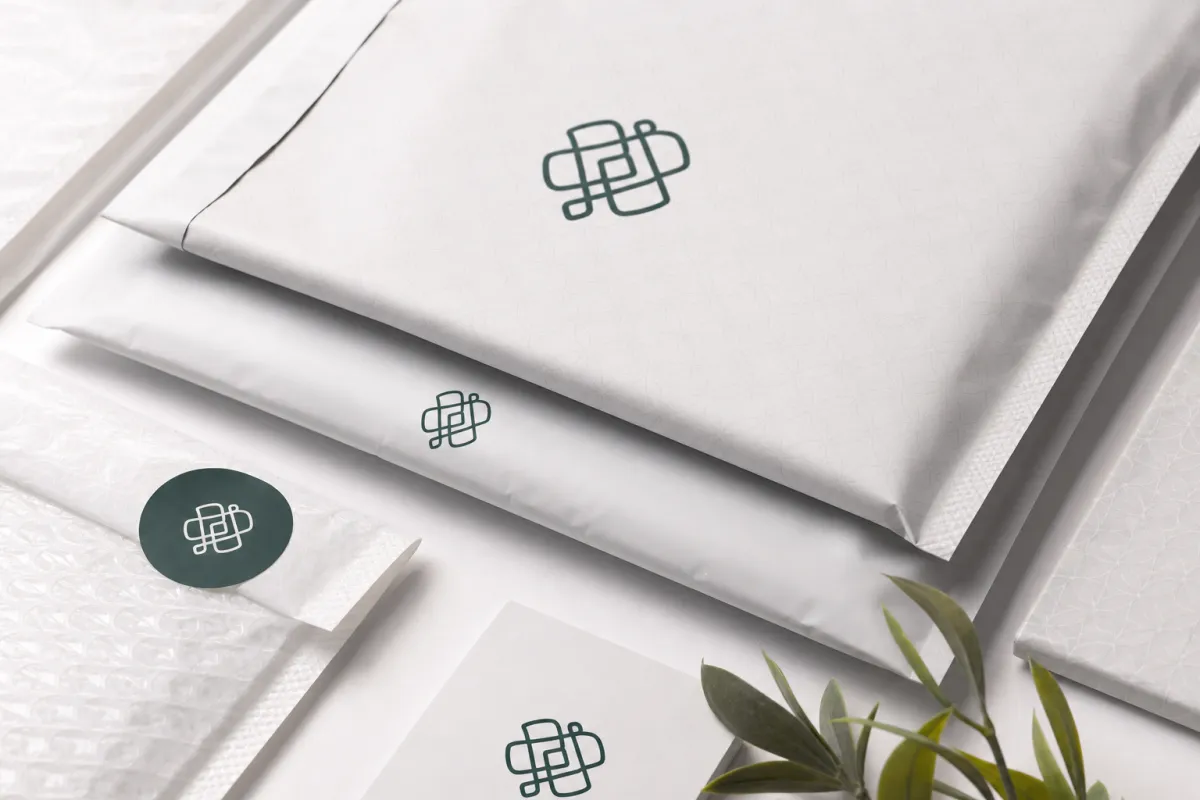
The detail most teams underestimate is simple: the mailer is usually seen before the product. Branded mailer envelopes with logo are not only protective shells; they are the opening line of the brand story in transit. If the outer package feels intentional, the whole shipment reads as more valuable, even before anyone checks what is inside.
That idea gets clearer once the term is defined. Branded mailer envelopes with logo are outer packaging formats made to ship documents, samples, inserts, apparel, subscription pieces, or lightweight products while carrying the sender’s identity on the surface. Depending on the contents and the route, that can mean printed paper mailers, poly mailers, padded envelopes, or rigid formats.
A premium skincare sample arriving in a plain kraft envelope can feel like paperwork. The same sample in a clean logo-printed mailer feels like a launch moment. The product did not change. The packaging did.
That shift affects more than appearance. A branded exterior helps with recognition, especially for repeat customers who receive shipments outside the store or website they bought from. It also supports perceived quality. People make quick judgments about value, and packaging is one of the fastest shortcuts. If the envelope looks flimsy or generic, the item inside may be assumed to be ordinary. If the mailer is crisp, aligned, and proportioned well, the brand starts ahead.
Memory plays a part too. A well-executed mailer tends to stick because it becomes part of the product experience rather than a neutral carrier. That is why many teams treat branded mailer envelopes with logo as part of marketing spend instead of only a shipping cost. The envelope can carry a logo, a tagline, a pattern, or a color block that becomes familiar across repeated orders. Repetition builds recognition the same way a storefront sign does.
“A buyer never sees the postage label first; they see the package face.”
That observation sounds plain, yet it carries real weight in packaging work. A shipment has to survive carriers, sorting belts, mail drops, and porch delivery. The visual job of the mailer is to stay legible through all of that. Branded mailer envelopes with logo can outperform an unmarked envelope even when the contents are identical, simply because the outer surface keeps speaking for the brand.
For teams comparing options, the question is rarely whether branding matters. The better question is how much brand signal the envelope should carry without hurting function, postage efficiency, or pack-out speed. A good spec balances those pressures instead of letting one of them dominate.
How branded mailer envelopes with logo work in the real world
In practical terms, branded mailer envelopes with logo have three jobs: contain, protect, and communicate. The structure handles the first two. The print handles the third. That sounds obvious until you look at where projects go wrong. Some teams focus on the logo and forget the seal, the opening style, or the way the envelope behaves once it is stacked on a packing bench.
Structure comes first. Paper mailers are common for documents, flat inserts, and retail kits. Poly mailers are better when moisture resistance and tear strength matter. Padded mailers add cushioning for small fragile items. Rigid mailers help protect photos, certificates, artwork, and anything that needs to stay flat. Each format can be branded, yet the surface and print result are not the same.
Seal type matters more than many buyers expect. Self-seal adhesive strips are standard for speed. Peel-and-seal closures with tamper evidence are useful for higher-value items. Some folders use tuck flaps or adhesive closures that support quick packing without extra tape. The opening style changes the unboxing moment too. A clean flap feels more considered than a messy taped closure, even if the contents inside are unchanged.
The print method Shapes the Final look. Flexographic printing can be efficient for larger runs and bold graphics. Digital printing often works better for short runs, quick changes, or variable artwork. Screen printing can deliver strong color on some materials, though it is less common for complex envelope work. Fine edges, thin text, and subtle color shifts all respond differently to each method. A solid one-color mark can look sharp on recycled kraft. A full-panel design with gradients may call for another approach entirely.
Surface finish affects how branded mailer envelopes with logo read in transit. Matte surfaces reduce glare and can make logos easier to see under warehouse lights or on camera. Gloss can look brighter, though it may show scuffs sooner. Soft-touch lamination feels elevated, but it adds cost and may not suit every shipping environment. If the piece is going through rough handling, durability deserves the first look and beauty the second.
Inside a fulfillment workflow, the envelope passes through a simple sequence: pack, seal, label, sort, ship, receive. Each step changes the brand impression. At the packing station, the envelope needs to open cleanly and seal quickly. During carrier pickup, it needs to survive stacking and abrasion. At the recipient’s door, the logo still has to be legible after conveyor contact, weather, or friction from another parcel. Branded mailer envelopes with logo perform best when they are designed for the full trip, not only for the mockup.
I have seen more than one mailer look flawless in a proof and then fail in real handling because the adhesive softened in a warm receiving room or the printed panel scuffed against a carton seam. That is the part teams are gonna feel later if they skip the sample stage. The file can be perfect and the package still needs to survive hands, humidity, pressure, and a little chaos.
Packaging teams often look to testing standards such as ISTA protocols and related ASTM methods when durability is part of the brief. The right test depends on the shipment profile, but the logic stays the same: simulate handling before committing to a full run. The ISTA standards library is a useful starting point, and the EPA recycling guidance helps when material claims include recycled content or end-of-life language.
That last point matters because material claims should be accurate and documentable. If the envelope uses recycled fiber, the supplier paperwork should support that statement. If it is FSC-certified, the chain of custody needs to be clear. A logo is only part of the story; the substrate also carries credibility.
Design and material factors that affect performance
Size comes first. A mailer that is too large creates movement inside the package, which can lead to corner damage, crooked presentation, and higher postage. One that is too tight bulges, weakens seals, and slows packing. Branded mailer envelopes with logo work best when the dimensions fit the contents closely, with just enough room for inserts, sleeves, or protective tissue.
A practical starting point is the exact product size, then only the space needed for safe insertion and a clean closure. Flat paper goods may need very little extra room. Apparel or sample kits may need more. Oversizing is costly in two directions. You pay for more material, and you may pay more postage if the piece moves into a larger mail class.
Durability comes next. Ask how the envelope will hold up against tearing, bending, moisture, and pressure. Poly mailers often win on water resistance and puncture tolerance. Paper mailers can be stronger than they look if the fiber grade is right, though they are less forgiving in wet conditions. Padded formats help with abrasion and light impact. Rigid envelopes protect form, though they do not cushion like padded options. Branded mailer envelopes with logo should be chosen for the route, not only for the catalog description.
Visual choices matter more than many print buyers expect. Contrast is the deciding factor. A dark logo on a dark background can vanish at distance. Thin typography can disappear once the envelope is scanned, stacked, or lightly scuffed. In practice, a logo placed in the upper third or centered on the main panel often reads best because it stays visible in photos, mail slots, and shelf stacks. As a rough guide, covering about 15% to 30% of the visible panel with branding is often enough for recognition without crowding the surface.
That does not mean every envelope should feel loud. Some of the strongest branded mailer envelopes with logo designs are restrained: one mark, one accent color, one clear message. Minimalism can feel premium when the proportions are right. The issue is not simplicity. The issue is weak spacing, poor contrast, and typography that is too small to survive handling.
Finish and coating decisions should support both appearance and shipping performance. A water-based coating on paper can improve scuff resistance. Uncoated kraft can look honest and material-led, though it may pick up dirt more easily. A matte varnish can help keep logos readable. Spot gloss can highlight the mark, but it should not create a slippery surface that makes labels or barcodes fail to adhere. If the envelope needs variable data, return labels, or shipping warnings, test the print surface before approval.
Closure strength deserves the same attention. A beautiful envelope that pops open during transit creates a mess and a customer service problem. Many teams order samples and test them with the exact contents, not a substitute. Real inserts, real weight, real adhesive, real labels. That is the shortest path to confidence.
For brands with a broader shipping system, it helps to think of the envelope as one layer in a sequence. The insert card, invoice, tissue, and outer shipper should all feel related. If you also use outer packaging such as our Custom Poly Mailers, the visual language should stay aligned so the recipient reads one brand story rather than several disconnected pieces.
Packaging professionals often compare this step to a retail shelf decision. A customer only sees the front panel for a moment, so every millimeter has to work. The same logic applies here. In a stack of deliveries, branded mailer envelopes with logo get a short window to stand out, and that window is won through contrast, proportion, and material discipline rather than decoration alone.
| Mailer format | Best use | Typical print feel | Approx. unit cost at 5,000 units | Notes |
|---|---|---|---|---|
| Paper mailer | Documents, flat inserts, lightweight kits | Clean, matte, easy to brand | $0.18-$0.38 | Good for kraft or coated paper; moisture resistance is limited unless treated |
| Poly mailer | Apparel, flexible goods, moisture-sensitive shipments | Bright color, strong logo contrast | $0.20-$0.45 | More tear resistant; print look depends on film quality and ink system |
| Padded mailer | Small fragile items, accessories, premium samples | Balanced branding with added protection | $0.35-$0.85 | Interior cushioning adds weight and cost, but reduces damage risk |
| Rigid mailer | Photos, artwork, certificates, flat premium goods | Sharp, structured, high perceived value | $0.45-$1.10 | Helps with flat protection, but may raise postage if dimensions increase |
Branded mailer envelopes with logo: process and timeline
The process is usually straightforward, as long as the brief is clear. With branded mailer envelopes with logo, the timeline normally begins with size, material, and print intent. If those three are not settled early, the rest of the schedule tends to wobble. Artwork can be perfect and still fail if the envelope dimensions, closure type, or print area are not set correctly.
The first deliverable is often a dieline. That file shows the flat layout, fold lines, seal zones, bleed areas, and safe zones. Many delays happen here because artwork is built before the dieline is approved. A logo that sits neatly on screen may be too close to a fold or seal in production. The first proof is usually where money is saved, because it exposes cropping issues, weak contrast, and text that will not read after folding.
Artwork prep comes next. Vector files are best, usually in AI, EPS, or print-ready PDF format. High-resolution raster files can work for simpler jobs, but they reduce flexibility if the printer needs to adjust line weight or recolor a logo. For branded mailer envelopes with logo, clean artwork is not only a technical preference. It often determines whether the finished piece looks sharp or slightly soft at the edges.
The sample stage matters just as much. A physical sample tells you things a screen mockup cannot show: texture, stiffness, closure feel, and the way color behaves under light. If the envelope is for subscription kits or customer orders, place real contents inside the sample. If possible, run it through the actual fulfillment line. The strongest approval comes from the same hands and equipment that will handle the full order.
Lead time depends on material availability, print complexity, finishing, and freight. A simple branded mailer may move in roughly 12 to 15 business days after proof approval if stock materials are available. A custom build with special coatings, multiple print passes, or rigid construction can take longer, especially during seasonal rushes. Large orders also need tighter scheduling because packing and transport capacity become part of the timeline, not only production time.
Here is a practical example of how a launch schedule often unfolds for branded mailer envelopes with logo:
- Brief and sizing: define contents, dimensions, shipping method, and quantity.
- Dieline and structure review: confirm fold positions, seals, bleed, and print panels.
- Artwork submission: send vector files, brand colors, and placement notes.
- Digital proof: check copy, contrast, barcode space, and legal text.
- Physical sample: test with real contents and actual labels.
- Production sign-off: approve once fit, color, and closure are confirmed.
- Run and receive: plan receiving space so cartons are counted and stored cleanly.
That schedule can compress or expand depending on order size and complexity. A small reorder with no changes may move quickly. A new launch with custom sizing, recycled content claims, or specialty finish usually needs more breathing room. The cleanest projects usually build in time for one approval cycle that can catch a problem before the press starts. That difference matters. It separates a smooth rollout from a frantic correction.
For teams with launch windows, seasonal drops, or coordinated campaigns, the safer move is to work backward from the ship date and build in a buffer. If the envelope is central to the reveal, it should never be treated like a generic consumable. Branded mailer envelopes with logo can carry a campaign, but only when the production clock is respected.
Branded mailer envelopes with logo: cost, pricing, and MOQ
Pricing is where the conversation turns concrete. Branded mailer envelopes with logo can look inexpensive at first glance and still vary a lot once materials, print coverage, and quantity are considered. The main drivers are size, substrate, number of print colors, finish, and whether the artwork covers a small logo area or the whole panel.
MOQ, or minimum order quantity, exists because setup time, print calibration, and material sourcing all carry fixed costs. A press does not care whether you need 500 units or 5,000; the setup still has to happen. That is why smaller runs usually have a higher per-unit price. For buyers, the trade-off is straightforward: lower quantity means less inventory risk, but the unit cost usually rises. Higher quantity lowers the unit price but requires storage space and a clearer reorder plan.
On a practical level, a simple logo on a standard mailer may sit in a modest pricing band, while full-coverage artwork, metallic ink, or custom coatings raise the number. If a quote for branded mailer envelopes with logo looks unusually low, ask what is included. Is the proof separate? Is freight included? Does the quote assume one color or full coverage? Are there extra charges for artwork revisions? A low headline price can hide setup or packaging costs.
Here is a straightforward way to compare quotes without losing the thread:
- Material: paper, poly, padded, or rigid, plus any recycled content or certification.
- Print method: one-color, multi-color, digital, flexo, or specialty finish.
- Unit quantity: true MOQ and price breaks at higher tiers.
- Setup fees: dieline prep, plates, screens, color matching, or proof charges.
- Freight: inbound material cost, outbound shipping, and any split shipment charges.
- Extras: inserts, variable data, or secondary packaging if included in the quote.
The list feels basic, but it catches a lot of hidden cost. The same project can be priced very differently depending on whether the envelope supports a one-time campaign or an ongoing fulfillment stream. If the use case is recurring, a higher-quality mailer can be cheaper over time because it cuts damage, improves presentation, and avoids reorder surprises. The lowest unit price is not always the least expensive package.
There is also a useful comparison lens. A plain envelope saves money upfront, but it does not sell the brand at the door. A branded version may add cents to the unit price and still create more value through recognition, repeat purchases, and fewer complaints about weak presentation. That matters in premium subscriptions, sample programs, and direct-to-consumer orders where unboxing is part of the experience. Branded mailer envelopes with logo are one of those purchases where the margin story and the marketing story overlap cleanly.
Storage is another practical factor. If you buy in quantity, receiving and warehousing matter. Flat-packed envelopes can take less space than rigid formats, yet the volume adds up quickly. Make sure reorder cadence fits your storage and fulfillment rhythm. A shortage during a campaign hurts more than paying a slightly higher unit price for a safer quantity. Packaging is full of those quiet trade-offs.
If you want to see how presentation decisions influence brand perception, our Case Studies page is a useful place to compare outcomes across packaging formats. The details are where the pricing conversation becomes meaningful.
Common mistakes when ordering branded mailer envelopes with logo
The most expensive mistake is designing before confirming dimensions. It happens constantly. A logo looks clean on the mockup, the colors are approved, and then the real product does not fit. That forces a redesign, introduces reprint risk, and can even change postage. Branded mailer envelopes with logo should start with item dimensions, not the artwork file.
Overdesign causes trouble too. Too much text, too many colors, and too many visual claims can bury the logo instead of supporting it. The envelope starts to look crowded. Worse, it can read like a flyer instead of packaging. Strong branded mailer envelopes with logo often use restraint: one dominant mark, one supporting message, and a layout with enough breathing room to feel deliberate.
Fulfillment realities get overlooked more often than teams admit. A stunning mailer that seals too slowly can bottleneck the line. A closure that sticks inconsistently creates rework. A paper finish that looks beautiful on a table may scuff badly in a packing bin. If the format does not match pack-out speed, the brand pays for that in labor. Printing should support operations, not slow them down.
Skipping sample testing is another costly habit. A sample reveals what a file cannot show: how the envelope holds a product, whether the adhesive stays secure, and how the mailer looks once the shipping label is placed. For branded mailer envelopes with logo, the sample stage is where the project becomes real. It is also where many issues can still be fixed at low cost rather than high cost.
There are also subtler mistakes that show up later. One is choosing logo placement that disappears when the package is stacked or photographed. Another is picking a color that looks vibrant in digital proofing but weak on the actual substrate. A third is assuming recycled or FSC-certified material will automatically perform like virgin stock. It will not always. Fiber structure, coating, and finish all affect the final result, and each one deserves a check.
From a buyer’s point of view, the safest review process is boring in the best way. Check size. Check fit. Check closure. Check color. Check label placement. Check what happens when the envelope is handled roughly. That sequence sounds basic, but it catches most of the issues that later become customer complaints.
For teams comparing envelope behavior against other packaging formats, the lesson is clear: a package should survive the real trip, not only the pitch deck. Branded mailer envelopes with logo succeed when the brand story and the shipping story stay in step.
Expert tips and next steps for branded mailer envelopes with logo
Order samples first. That is the simplest advice and still the one most often skipped. A physical sample set lets you test real contents, real labels, and real handling. If a sample feels too loose, too flimsy, or too slick to print cleanly, the problem will not disappear in production. Branded mailer envelopes with logo should be proven under practical conditions before volume is committed.
Build a short launch checklist so nothing gets lost in email threads. The list does not need to be fancy, but it should include artwork approval, size confirmation, material selection, production sign-off, receiving plan, and reorder trigger. If the envelope is tied to a campaign, add ship date and buffer. If it is tied to fulfillment, add storage and replenishment thresholds. A small checklist can save a large order.
Align the envelope with the rest of the shipment. The insert card, invoice, tissue, and sealing method should all feel like they belong to the same brand system. When that happens, the customer experience feels coherent rather than assembled. That coherence is exactly where branded mailer envelopes with logo earn their keep. They do not work alone. They work as the visible lead in a packaging ensemble.
If sustainability is part of the brief, ask for documentation rather than assumptions. Recycled paper, recyclable films, and FSC-certified fiber can all matter, but the material choice still needs to support the actual job. A sustainable envelope that tears in transit does not help the brand or the planet. A highly durable envelope that cannot be recovered or recycled may not fit the story you want to tell. The right answer depends on the product, route, and customer expectation.
Here is the decision rule I would use for most projects: choose the smallest, toughest, most legible mailer that protects the item and fits the brand voice. If two options are close, test them side by side. If the premium option materially improves presentation, the added cost may be justified. If not, keep it simple. That is how strong packaging programs stay disciplined.
For brands comparing presentation systems across different formats, our Case Studies page can help show how those choices play out in the field. And if your mailer needs to work alongside another outer layer, our Custom Poly Mailers page is a practical reference for material and print decisions.
In the end, branded mailer envelopes with logo are not about decoration alone. They are about recognition, protection, and the quiet efficiency of a well-planned shipper. Get the dimensions right. Match the material to the route. Keep the artwork readable. Test before you buy. Do that, and the mailer stops being a generic shipping supply and starts doing real brand work with every delivery.
What are branded mailer envelopes with logo used for?
They are used to ship documents, samples, subscriptions, inserts, and lightweight products while keeping the brand visible on the outside. Branded mailer envelopes with logo help routine deliveries feel intentional, which can improve recognition and perceived value. They are especially useful when the package itself is part of the customer experience, not just a container.
Are branded mailer envelopes with logo more expensive than plain envelopes?
Usually yes, but the price gap depends on size, material, print complexity, finish, and quantity. In many cases, branded mailer envelopes with logo cost more upfront but deliver stronger presentation, better unboxing impact, and more consistent brand recall. Comparing unit price without considering marketing value can miss the bigger picture.
How long does it take to produce branded mailer envelopes with logo?
Production time depends on artwork readiness, proof approvals, material availability, and whether the order is a standard or custom build. Simple branded mailer envelopes with logo jobs can move faster, while special finishes, larger runs, or Custom Die Cuts usually add lead time. The fastest path is to approve print-ready files early and confirm specs before production starts.
What file do I need for a logo on mailer envelopes?
Vector artwork is best, usually in AI, EPS, or print-ready PDF format, because it scales cleanly without blurring. High-resolution raster files may work for simple branded mailer envelopes with logo projects, but they can limit print quality and adjustment flexibility. Include brand colors, safe margins, and a clear placement guide so the printer can proof accurately.
How do I choose the right size for branded mailer envelopes with logo?
Start with the exact dimensions of what will go inside, then add just enough room for protection and easy insertion. Test the size with real contents to check fit, movement, closure strength, and postage implications. The best branded mailer envelopes with logo are usually the smallest format that still protects the item well, because oversized packaging can raise cost and reduce polish.


