Buyer Fit Snapshot
| Best fit | Custom Die Cut Sleeves Wholesale projects where brand print, material claims, artwork control, MOQ, and repeat-order consistency need to be specified before quoting. |
|---|---|
| Quote inputs | Share finished size, material target, print colors, finish, packing count, annual reorder estimate, ship-to region, and any compliance wording. |
| Proofing check | Approve dieline scale, logo placement, barcode or warning zones, color tolerance, closure strength, and carton packing before bulk production. |
| Main risk | Vague material claims, crowded artwork, missing packing details, or unclear freight terms can make a low unit price expensive after revisions. |
Fast answer: Custom Die Cut Sleeves Wholesale: Pricing, Specs, MOQ should be specified like a repeatable production item. The safest quote records material, print method, finish, artwork proof, packing count, and reorder notes in one written spec.
Production checks before approval
Compare the actual filled-product size with the drawing, then confirm tolerance on folds, seals, hang holes, label areas, and retail display edges. Reserve space for logos, QR codes, warning copy, and material claims before decorative graphics fill the panel.
Quote comparison points
Review material grade, print process, finish, sampling route, tooling charges, carton quantity, and freight assumptions side by side. A quote is only useful when the supplier can repeat the same color, closure quality, and packing count on the next order.
Custom Die Cut Sleeves Wholesale: Pricing, Specs, MOQ
Many packaging teams reach a point where the base carton, tray, bottle, or gift set already does its job, yet the shelf presence still feels unfinished. That is where Custom Die Cut sleeves wholesale earns its place. A well-fitted sleeve sharpens the presentation, separates variants cleanly, and gives the pack a more deliberate retail appearance without forcing a full structural rebuild. The package underneath keeps its function, while the sleeve handles the visible branding work.
That flexibility matters in product lines that keep expanding. One carton can support multiple flavors, scents, sizes, or seasonal versions once the sleeve carries the active artwork and the SKU-specific details. Instead of reworking the main box every time the marketing calendar changes, the sleeve becomes the adjustable surface. For brands managing more than one launch cycle, custom die cut sleeves wholesale gives buyers a practical way to reduce waste, simplify approvals, and keep a growing catalog organized.
Custom Logo Things works with wholesale buyers who want details that can be checked, not loose promises that disappear once the quote arrives. Most teams want the same answers first: does the sleeve fit, does the print hold up, and can the order land on schedule without hidden costs? Those answers come from the substrate, the dieline, the finish, the quantity, and the amount of prepress work already completed. The sections below break those pieces down so custom die cut sleeves wholesale can move from concept to purchase order with fewer surprises.
Why Custom Die Cut Sleeves Wholesale Can Replace a Full Rebox
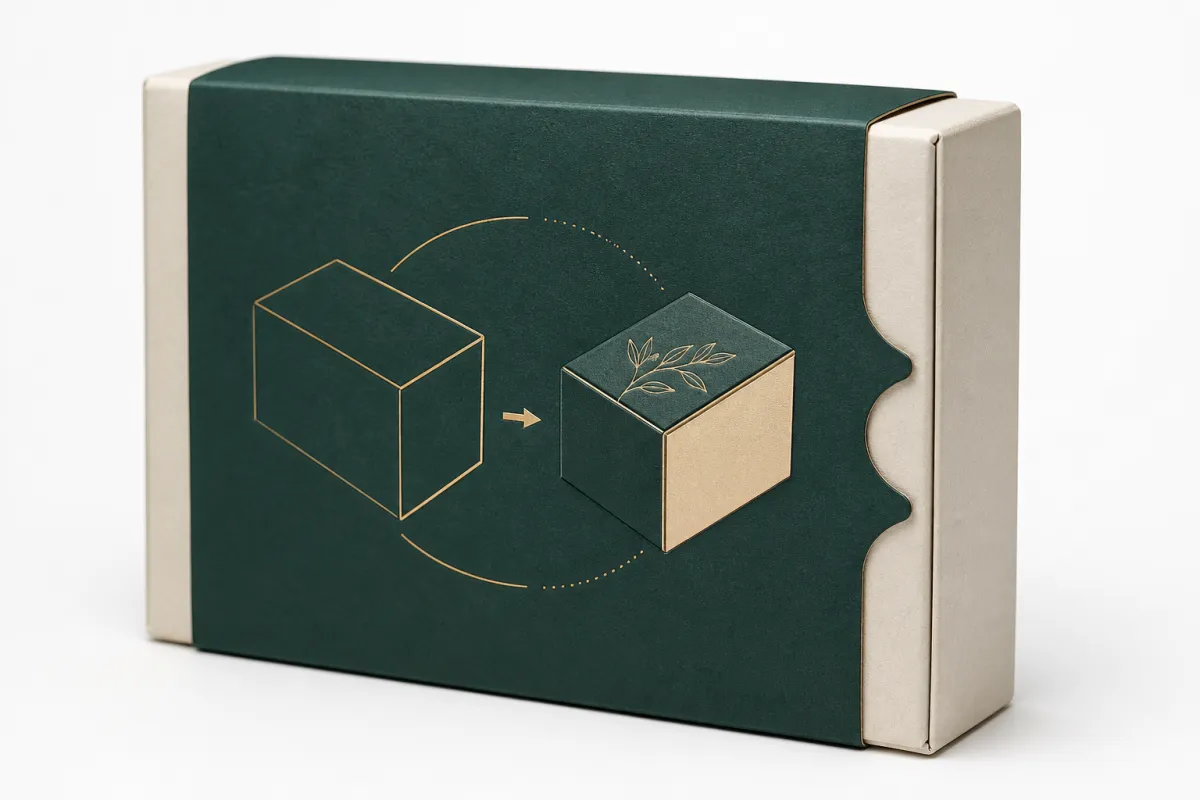
Custom die cut sleeves wholesale often makes better business sense than a full rebox because it changes the way the package reads on shelf without changing the engineering underneath. If the primary carton already protects the product and stacks correctly, a sleeve can add stronger branding, clearer flavor or size cues, and a more polished retail appearance at a lower structural cost. That difference is not cosmetic. It changes the amount of development work a team has to carry into the next production cycle.
Sleeves also fit naturally into existing packing workflows. A stock carton, rigid tray, clamshell, bottle bundle, or gift set can look far more intentional once a die cut wrap is applied. The sleeve becomes the front-facing communication layer. It is where the customer sees color, hierarchy, claims, and the tone of the product line. For custom die cut sleeves wholesale, one printed component can often do the work of several separate packaging elements.
The cost structure is easier to control as well. A full custom box usually brings more tooling decisions, more structural testing, and more risk when the primary package is already locked in. A sleeve keeps the base architecture intact and focuses spend on the outer layer. For custom die cut sleeves wholesale, that can be the cleaner route, especially when a launch is still settling or a SKU may change again after rollout.
Shelf performance is another reason buyers keep returning to sleeves. Seasonal promotions, limited editions, fragrance and flavor separation, and line extensions all benefit from fast visual distinction. A plain pack becomes easier to shop once the sleeve carries strong product naming, color blocking, or variant bands. In crowded retail packaging, shoppers rarely study every item closely; they scan for cues. Custom die cut sleeves wholesale gives brands those cues without asking operations to absorb a full redesign.
Repeat ordering has its own value. Once the dieline is saved and the package dimensions are confirmed, the next order usually moves faster than the first. That helps programs that ship in waves or run the same sleeve across several promotion windows. Custom die cut sleeves wholesale is not only a design decision; it is also a sourcing choice that can make replenishment cleaner and more predictable.
Many buyers compare sleeves against boxes too late, after artwork is nearly locked. The better comparison happens earlier, before the structure is finalized. If the primary package can stay in place, the sleeve usually becomes the more practical path. For buyers building out a broader sourcing plan, Custom Logo Things also organizes options through its Wholesale Programs and the wider range of Custom Packaging Products.
“A sleeve is not just decoration. It is a decision about speed, fit, and how much packaging complexity a team wants to carry into the next order cycle.”
For brands managing several SKUs, custom die cut sleeves wholesale can also lower internal friction. Marketing gets room for storytelling. Operations keeps the same base pack. Procurement compares repeat pricing more easily. Those groups do not always want the same thing, and sleeves often give them a middle ground that is easier to approve than a complete rebox.
What Custom Die Cut Sleeves Wholesale Includes
Custom die cut sleeves wholesale refers to a printed wrap or band that is cut to shape and folded so it fits over a primary package. That package might be a carton, a tray, a jar, a bottle cluster, or a multi-pack. The sleeve may be open-ended, partially closed, scored for folds, or built with tuck features that help it stay in place after assembly. Some styles use a glue seam, while others rely on a lock tab or friction fit. The construction depends on how the product is packed and how much handling it will see.
Construction depends on the product and how it moves through the line. Open-ended sleeves are common when fast application and low handling friction matter. Wrap bands work well when the brand wants a label-like look with more surface area. Tuck-lock styles suit packs that need a more intentional retail packaging presentation. In custom die cut sleeves wholesale, the dieline is the technical core; everything else follows from that shape.
Material selection changes the feel right away. SBS board gives a bright, clean surface and usually supports sharper print. Kraft board signals a more natural or earthy position. Coated stocks can help color pop, especially for saturated graphics or image-heavy layouts. Recycled board is often chosen when sustainability messaging matters, though the material still has to match how the pack will be handled. If the sleeve needs to survive shipping, display, and repeated touch, that requirement belongs in the spec from the beginning.
Branding use cases stay fairly consistent across categories. A good sleeve can carry the logo, product name, flavor or scent identifier, ingredients, barcode zone, batch-coding space, and a promotional message without crowding the base package. That is where package branding becomes more efficient. Instead of making one carton do every job, custom die cut sleeves wholesale lets the outer layer manage the visible hierarchy while the primary pack stays functional.
Common applications include cosmetics, food, supplements, candles, apparel accessories, and gift sets. Each category asks the sleeve to solve a different problem. Cosmetics need a premium look. Food products often need clear variant separation. Supplements may need room for compliance copy. Candle brands want a more giftable presentation. Apparel and accessory packs need a polished first impression. The technical framework is similar even when the visual language shifts.
One practical rule holds across those categories: sleeves work best when the structural package already performs well. If the carton collapses, the closure fails, or the product shifts too much in transit, a sleeve will not correct those issues. It only improves the outer presentation. That is why custom die cut sleeves wholesale should be reviewed alongside the primary package rather than treated as a decorative afterthought.
For teams that think about packaging in layers, the sleeve sits between a label and a fully custom printed box. It gives more visual space than a label, less structural complexity than a new box, and more flexibility than a permanently printed container. That middle position is what makes custom die cut sleeves wholesale so useful in commercial packaging programs where artwork changes often.
Specifications Buyers Need Before Ordering
If you want custom die cut sleeves wholesale approved quickly, the specification packet needs to be complete. Missing dimensions slow the process. Vague artwork notes create avoidable back-and-forth. Strong projects start with the package size, the sleeve size, the overlap requirement, and a clear idea of where the sleeve will sit on the finished product. Without those details, even a good design can end up with a poor fit.
Start with the measurements that actually control the job. Finished width, depth, height, wrap allowance, flap style, and any lock or tuck feature should all be documented. If the sleeve slides over a carton, use the outer assembled dimensions. If it wraps a bottle or jar set, confirm the diameter and spacing on the final packed unit, not on the component parts alone. For custom die cut sleeves wholesale, the gap between assumed size and actual size is where rework usually begins.
Material spec comes next. Buyers often choose 14pt, 16pt, or 18pt SBS when they want a crisp print surface and a clean retail look. Kraft is a common choice for natural positioning, while heavier board can help when the sleeve needs extra stiffness. This is where print quality and display behavior meet. A lighter stock may be cheaper, but it can curl more easily, show handling wear sooner, or feel less premium in the hand.
Artwork requirements should be settled before production starts. That includes dieline approval, bleed allowance, safe zone, resolution, and color mode. If the brand expects color matching, say so early. If a logo needs to stay within a specific Pantone range, state that clearly. For custom die cut sleeves wholesale, the artwork file is more than a creative asset; it is a production control document.
Finishing choices can shift both appearance and turnaround. Matte coating gives a softer surface. Gloss creates more retail brightness. Soft-touch adds a tactile premium effect. Spot UV can isolate logos or product names. Foil and embossing add more visual weight, though they usually raise cost and complexity. Perforation, windows, and tear features should only be added if they support the real use case. Fancy finishes are easy to sell and expensive to fix.
Compliance and logistics matter just as much as design. Barcode placement should preserve scanability. Space should remain for batch coding or regulatory copy when needed. If the product will be machine-packed, dimensional tolerance becomes critical. If it is hand-applied, the sleeve can be a little more forgiving, but the fold logic still needs to be clear. Many teams ordering custom die cut sleeves wholesale also ask for transit testing aligned with standards such as ISTA methods, especially when the sleeve and base pack travel together through distribution.
Pack-out deserves attention too. Sleeves may ship flat, nested, or folded. That choice affects freight and assembly labor. A lower print price can turn into a higher landed cost if the sleeve takes longer to assemble or consumes more carton space in transit. For that reason, custom die cut sleeves wholesale should be priced as part of the full packaging system, not only as printed board.
Custom Die Cut Sleeves Wholesale Pricing, MOQ, and Quote Drivers
Custom die cut sleeves wholesale pricing usually comes down to a small group of measurable variables. Board grade, sleeve size, print coverage, finishing depth, and production method move the quote more than nearly anything else. Many buyers assume the artwork itself is the largest cost driver. It is not. A heavy ink flood on a large sleeve with foil, UV, or unusual folds will cost more than a simple two-color layout on a standard format.
MOQ makes the economics visible. Small runs can work well, especially for a new line or a test launch, but unit cost is usually higher because setup still has to be covered. Larger wholesale quantities often bring the price down because the fixed work is spread over more units. For custom die cut sleeves wholesale, asking for tiered pricing up front helps you see where the price breaks begin instead of guessing.
Quote speed improves when the supplier has complete information. Send exact dimensions, quantity tiers, substrate preference, finish preference, artwork status, ship-to ZIP code, and the target launch date. Include a sample pack or a photo of the current package if you have one. That image can prevent a long chain of clarification emails. With custom die cut sleeves wholesale, the quote can only be as accurate as the specification packet behind it.
Hidden costs should be made explicit. Ask whether the quote includes plates, proofs, setup, freight, and reprint allowances. Ask whether any special tooling is included, especially if the sleeve shape is unusual. Ask when the turnaround clock starts, whether at proof approval or at order receipt. Packaging buyers compare suppliers more accurately when those items are spelled out. Otherwise, two quotes that appear close on paper can land very differently once freight and setup are added.
| Production Method | Typical MOQ | Typical Unit Cost | Best Fit | Notes |
|---|---|---|---|---|
| Digital print | 250-1,000 units | $0.28-$0.65 | Short launches, test runs, fast artwork changes | Lower setup burden, usually better for smaller custom die cut sleeves wholesale orders |
| Offset print | 1,000-5,000+ units | $0.10-$0.28 | Stable SKUs, larger replenishment orders, color-critical work | Better unit economics once volume is high enough to absorb setup |
| Hybrid workflow | 500-3,000 units | $0.15-$0.40 | Multi-SKU programs with moderate volume and controlled artwork variance | Often a practical middle path for custom die cut sleeves wholesale |
Those ranges are planning numbers, not universal pricing. A small sleeve with limited coverage may land under the ranges above, while a heavy-coverage design with foil, embossing, or a custom shape can sit higher. The point is not to promise a fixed price. The point is to understand how the job behaves before the estimate arrives.
For buyers comparing suppliers, the quote should also show whether the run uses a saved dieline or needs fresh structural work. A reused dieline is usually faster and cheaper. A brand-new structure can still be worth it, but it should be a deliberate choice. That is especially true for custom die cut sleeves wholesale, where the sleeve may need to serve multiple products across a line and therefore benefit from a stable template.
A useful procurement habit is to request pricing at three tiers. Ask at 500, 2,500, and 10,000 units, for example. That gives a clearer picture of where the business case improves. It also shows whether the MOQ comes from process realities or supplier preference. For high-volume branded packaging, those numbers matter more than a generic “competitive price” promise ever will.
The lowest quote is not always the best buy. If the sleeve needs rework, if the finish is inconsistent, or if the dieline is not matched properly to the primary package, the cost of one bad production run can erase the savings from a cheaper estimate. That is why custom die cut sleeves wholesale should be judged on fit, consistency, and landed cost, not unit price alone.
Production Process, Timeline, and Turnaround
The production path for custom die cut sleeves wholesale is usually predictable once the inputs are locked. It begins with brief intake, followed by dieline review or creation, artwork upload, proofing, approval, production, finishing, inspection, and shipment. The sequence is standard, yet delays still show up when a file is incomplete or the sleeve has not been checked against the real package.
Missing information causes the most common slowdown. If the supplier does not know the final dimensions, the fold style, or the finish preference, the job stalls. Late proof changes create another kind of delay. A color correction may seem small, but if it arrives after the proof is approved, the schedule and cost can both move. For custom die cut sleeves wholesale, the first proof is often the cheapest place to catch a mistake.
Timing depends on quantity and complexity. Proof review may take a day or more, especially if several stakeholders need to sign off. Production can range from a short digital run to a longer offset schedule when finishing is involved. Specialty treatments such as foil, embossing, or spot UV add time because they require additional passes. Simple custom die cut sleeves wholesale orders can move quickly when the artwork is final and the dieline has already been established.
Rush work is possible in some cases, but only when the scope is realistic. Faster approval windows help. Simpler finishes help. Clean art files help. The more complex the sleeve, the less a rush option can solve. If a project can move faster, it is often because the buyer removed uncertainty early. That is the part many teams overlook. Speed is not only a supplier issue; it is also a specification issue.
Quality control should never be treated as paperwork. Registration needs to be checked so text and graphics land where they should. Cut accuracy matters because even a small error can affect how the sleeve wraps or locks. Color consistency matters because the sleeve is often the most visible part of the package. Pack-out verification matters because flat shipping can reveal flaws that a digital proof never shows. A careful supplier will inspect all of that before the order leaves the floor.
Packaging standards can help guide the process. The FSC chain-of-custody framework is useful when sustainability claims are part of the spec, and transit testing aligned with ISTA methods helps confirm that the sleeve and primary pack can survive distribution. Neither standard replaces good design. Both help prove that the design is ready for real shipping conditions.
One useful benchmark applies here: if a proof looks visually correct but has not been checked dimensionally, do not approve it yet. That is how avoidable reprints happen. A sleeve can look right on screen and still be wrong in hand. For custom die cut sleeves wholesale, the physical package has the final say, not the mockup.
Why Choose Us for Custom Die Cut Sleeves Wholesale
Buyers choose custom die cut sleeves wholesale suppliers for different reasons, but the most reliable reason is measurable control. Fast responses help, yet speed alone does not make a strong packaging partner. The real value shows up when the supplier understands fit, graphics, board behavior, and the realities of branded packaging across repeat orders.
A supplier with packaging discipline can reduce avoidable mistakes before they become expensive. If the dieline is built correctly, the artwork lands where it should. If the material is matched to the use case, the sleeve stays presentable after handling. If the pricing is transparent, buyers can compare options without rebuilding the estimate from scratch. For custom die cut sleeves wholesale, that combination matters more than a flashy pitch.
Consistency becomes even more important after the first run ships. Many programs fail on reorder, not on launch. The initial order gets approved, but the second order reveals that the dieline was not saved clearly, the color expectations were never documented, or the pack-out method changed. A good supplier protects the repeat cycle. That is why custom die cut sleeves wholesale should be treated as an ongoing packaging asset rather than a one-time print job.
Multi-SKU programs benefit from that same discipline. If the sleeve structure stays constant, artwork can change without restarting the process each time. That helps brands moving between flavors, regions, sizes, or seasonal sets. It also helps procurement because one base template can support several product lines. For companies building custom printed boxes, sleeves often become the lower-risk companion piece that keeps the portfolio organized.
Custom Logo Things supports buyers who want a direct answer on specifications, materials, and timelines. The focus stays on making the sleeve work in the field, on shelf, and in replenishment. That means clear communication, useful prepress review, and pricing that reflects real production choices. If your team is comparing wholesale programs, the goal is to make custom die cut sleeves wholesale easier to approve, easier to reorder, and easier to defend internally.
For brands trying to keep product packaging aligned across growth phases, the sleeve is often the smarter spend. It carries the visual burden while the base pack stays stable. That reduces complexity and leaves room for future changes. In a category where launches move fast and inventory can shift overnight, that kind of packaging discipline has value that is easy to measure but easy to overlook until it is missing.
Next Steps to Order Custom Die Cut Sleeves Wholesale
The quickest way to move custom die cut sleeves wholesale forward is to send a complete spec packet. Include product dimensions, target quantity, substrate preference, finish preference, and any brand or compliance requirements. If the sleeve is meant for a carton, bottle, tray, or multi-pack, include a sample or photo of the assembled package. That gives the supplier enough information to check fit and shelf presentation before production begins.
Ask for tiered pricing before you decide on quantity. A solid quote should show where the cost breaks begin so you can compare the MOQ against your launch plan or reorder forecast. If multiple SKUs will share one template, say that early. Shared structure can reduce setup complexity and help custom die cut sleeves wholesale move through approval faster.
Proof approval deserves patience. Check artwork placement, barcode area, fold lines, and the final dieline against the physical package. If the sleeve carries claims, ingredient copy, or regulatory text, make sure those elements stay readable at the actual print size. A low-resolution proof is not enough. For custom die cut sleeves wholesale, a careful proof costs less than a correction run.
Set your reorder point before the first shipment lands. That sounds basic, yet it is where many brands lose time. If the sleeve will be used monthly, seasonally, or in campaign bursts, make the next order easier by saving the approved specs and tracking the unit price at multiple volumes. That is how wholesale buying starts paying back across the long run.
If you need a broader packaging plan, review the structure options beside the sleeve as well. Sometimes the sleeve should pair with a standard carton. Sometimes it fits better with a more premium tray or a custom printed box. The stronger the system is planned, the less correction work appears later. That is the practical edge of custom die cut sleeves wholesale: it gives packaging teams a flexible, repeatable way to lift presentation without forcing a full structural redesign.
For a brand that wants cleaner shelf presence, better SKU separation, and a packaging format that can move with the business, custom die cut sleeves wholesale is a strong commercial choice. Send the specs, check the fit, compare the tiered pricing, and lock the proof only after the dieline matches the product in hand. That is the shortest path to a sleeve that prints well, packs well, and keeps working on reorder.
FAQ
What is the minimum order for custom die cut sleeves wholesale?
The MOQ for custom die cut sleeves wholesale usually depends on material, print method, and finishing. Simple designs can often start lower, especially with digital production, while complex retail finishes may require a higher run to make the unit cost practical. A good supplier should give tiered pricing so you can see where the price drops begin and decide whether the MOQ fits your launch or reorder plan.
How do I measure a sleeve for custom die cut sleeves wholesale?
Measure the package width, depth, and height, then account for overlap, flap style, and any tuck or lock feature. If the sleeve slides over a carton or bottle, use the assembled outer dimensions of the finished package, not the flat component size. For custom die cut sleeves wholesale, a sample or dieline is the safest way to confirm fit before production begins.
Which material is best for custom die cut sleeves wholesale?
SBS board is a strong choice when you want crisp print and a clean retail look. Kraft works well for natural, organic, or eco-positioned brands, while coated stocks are better when color accuracy and contrast matter. The best answer for custom die cut sleeves wholesale depends on the image you want to project, the finish you need, and how the sleeve will handle moisture, shipping wear, or frequent touching.
How long does custom die cut sleeves wholesale production take?
Timeline depends on proof approval, quantity, finishing, and whether the artwork is final when you request the quote. Simple runs can move faster, but revisions, specialty finishes, and tight color matching usually add time. Shipping time is separate from production time, so confirm both when planning a launch or restock for custom die cut sleeves wholesale.
Can I order multiple SKUs in one custom die cut sleeves wholesale run?
Yes, many buyers run multiple versions from a shared template when the sleeve size stays the same. Using one dieline with artwork changes can reduce setup complexity and make replenishment easier. That approach is especially useful for flavors, scents, sizes, regions, or seasonal variants in custom die cut sleeves wholesale programs.

